
 Download PDF
Market Overview
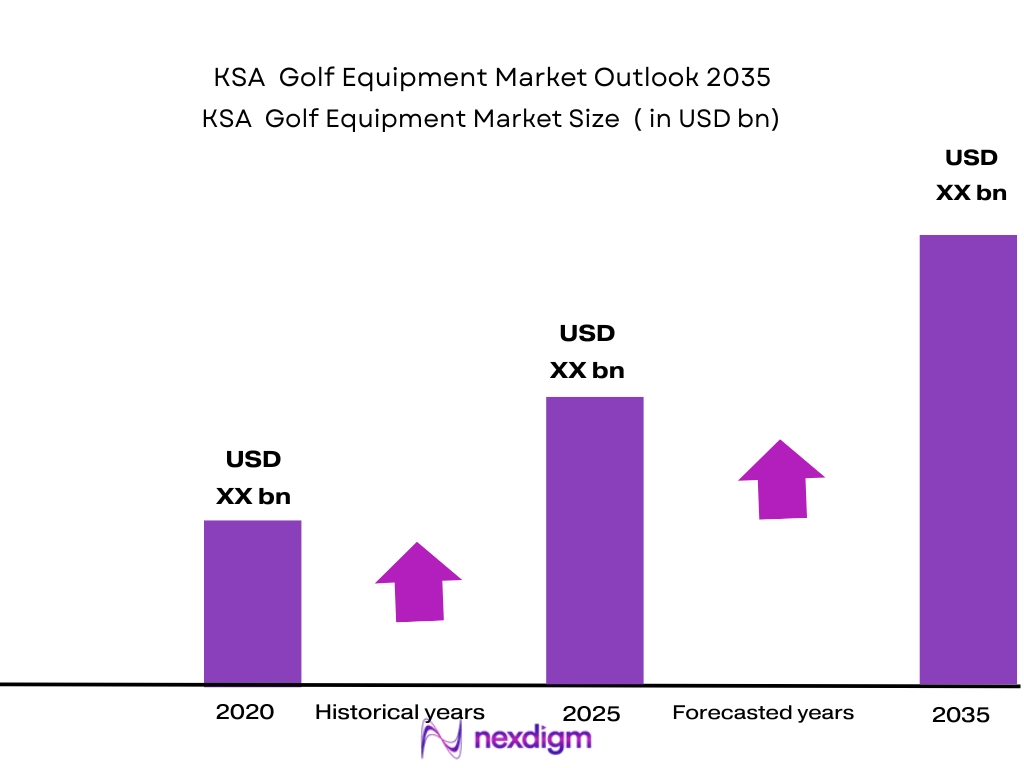
The KSA Golf Equipment Market is projected to reach USD ~ billion, driven by factors such as rising interest in sports tourism, government initiatives to develop sports infrastructure, and the growing adoption of golf among the youth. The increased investment in golf courses and international golfing events, as well as an affluent consumer base, are significant contributors to the market’s growth. This growth is also supported by the expansion of retail channels and the increasing availability of high-quality, innovative golf equipment.
Dominant regions in the KSA golf equipment market include Riyadh, Jeddah, and the Eastern Province. These regions are home to major golf courses, high-end retail stores, and significant golf events, which help fuel demand for equipment. Riyadh and Jeddah, with their affluent population and established golf infrastructure, lead the market. Additionally, the government’s focus on diversifying the economy and increasing tourism under the Vision 2030 initiative is expected to enhance the market’s growth prospects across the country.
Market Segmentation
By Product Type
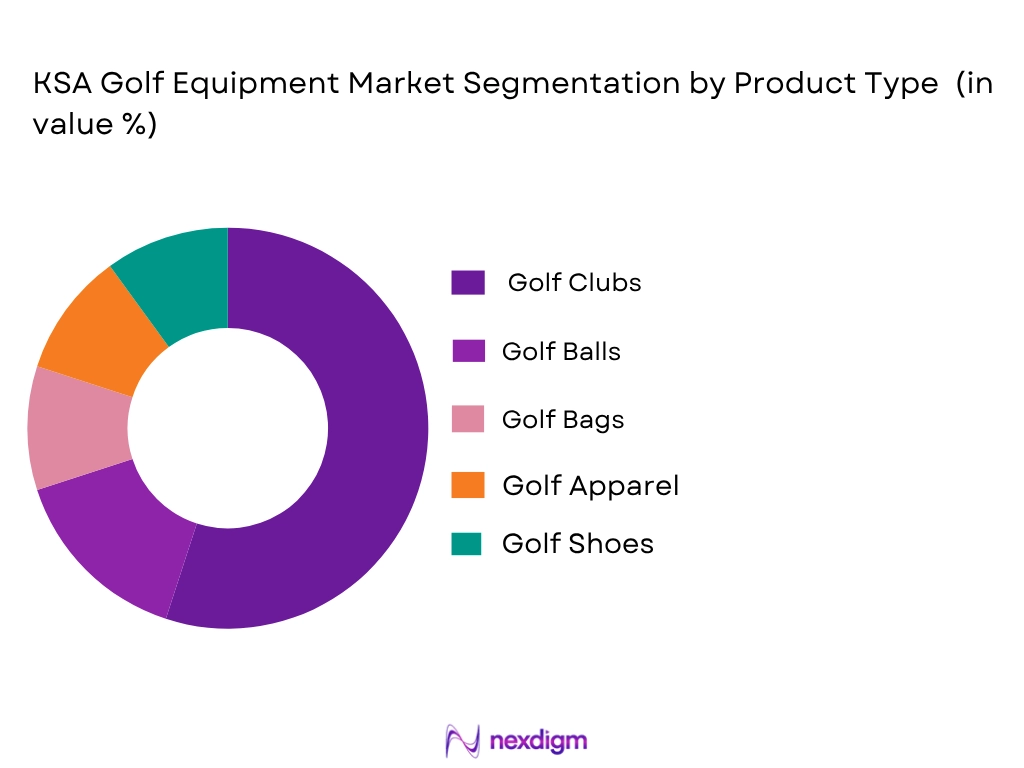
The KSA Golf Equipment Market is segmented by product type into golf clubs, golf balls, golf bags, golf apparel, golf shoes, and accessories. Recently, golf clubs have dominated the market due to the rising demand for high-performance and custom-made clubs. Factors such as brand loyalty, technological innovation in club design, and the increasing number of golfers seeking personalized equipment contribute to the dominance of this segment. Custom clubs, especially those made with advanced materials like titanium and carbon fiber, are highly sought after, driving the demand in the premium market.
By Distribution Channel
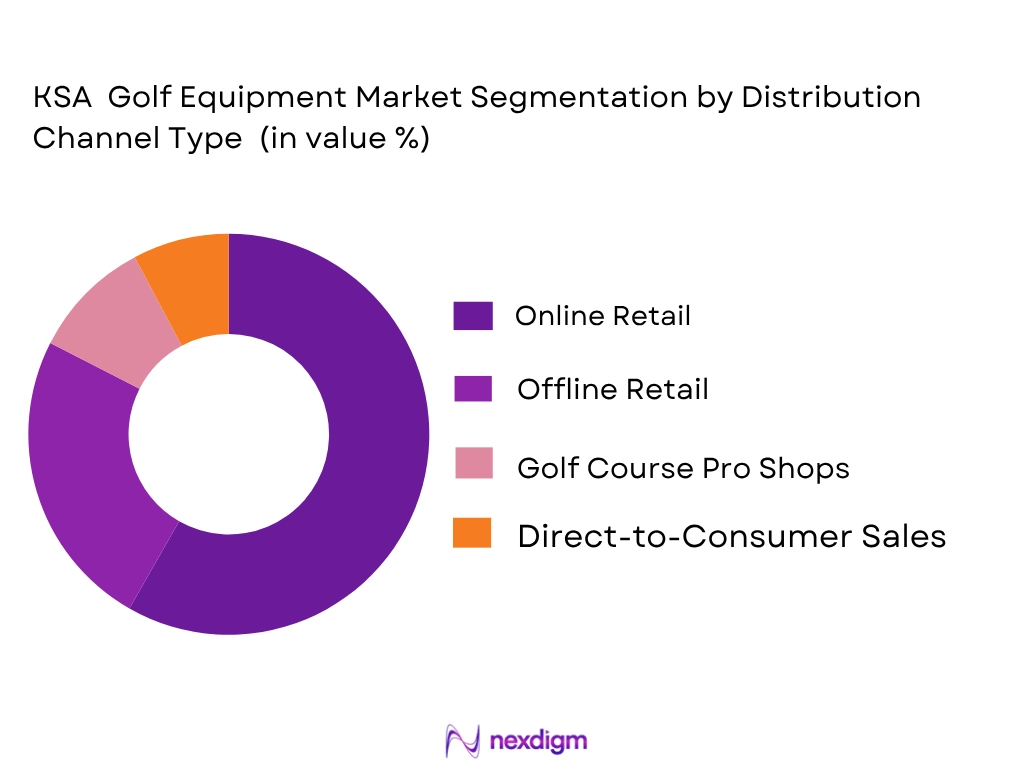
The market is segmented by distribution channel into online retail, offline retail, golf course pro shops, and direct-to-consumer sales. Recently, online retail has gained a dominant market share, driven by the growing popularity of e-commerce and the convenience it offers consumers. With platforms offering a wide range of products and the ability to compare prices, online shopping has become a preferred choice for golf equipment buyers. The growth of digital channels, along with attractive discounts and the ability to deliver products directly to consumers, has propelled online retail to the forefront of the market.
Competitive Landscape
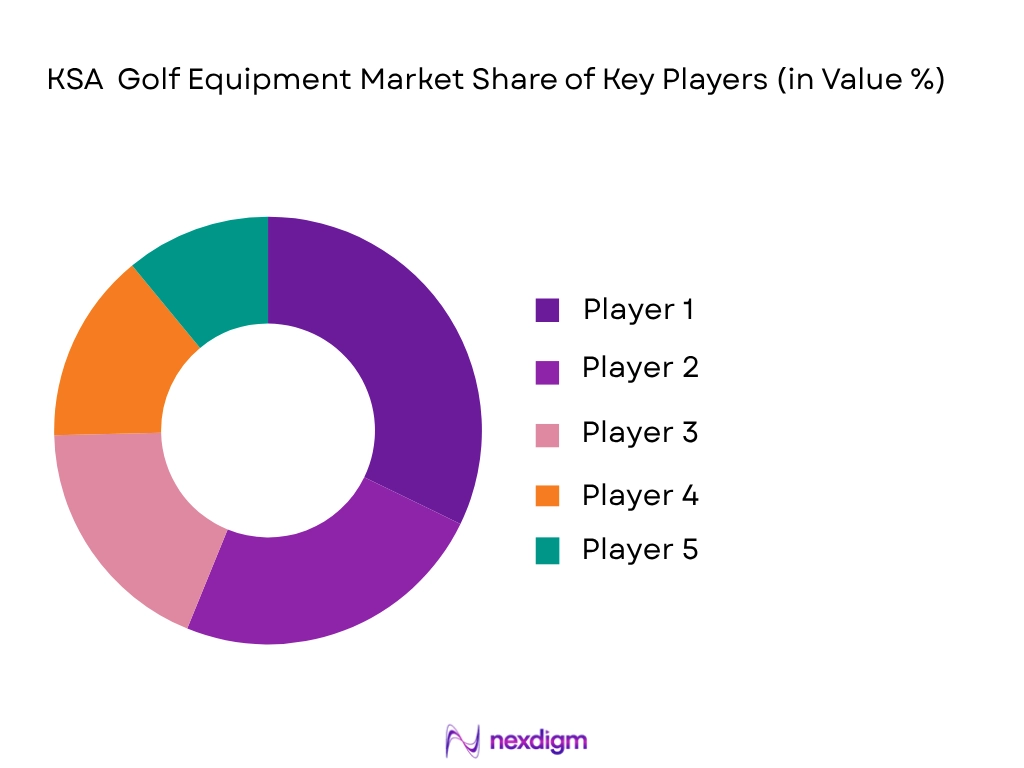
The KSA Golf Equipment Market is competitive and characterized by the presence of both global and local players. Leading international brands such as Callaway Golf, TaylorMade, and Titleist dominate the market, offering innovative products and customizing solutions to meet local preferences. The market is also witnessing consolidation, as global companies collaborate with local distributors to expand their reach in the region. Retail expansion and a growing base of affluent consumers seeking premium products have increased competition, pushing companies to innovate and optimize their retail networks to enhance customer engagement.
| Company Name | Establishment Year | Headquarters | Technology Focus | Market Reach | Key Products | Revenue | Market-Specific Parameter |
| Callaway Golf | 1982 | Carlsbad, CA | ~ | ~ | ~ | ~ | ~ |
| TaylorMade Golf | 1979 | Carlsbad, CA | ~ | ~ | ~ | ~ | ~ |
| Titleist | 1932 | Fairhaven, MA | ~ | ~ | ~ | ~ | ~ |
| Ping Golf | 1959 | Phoenix, AZ | ~ | ~ | ~ | ~ | ~ |
| Cobra Golf | 1973 | Carlsbad, CA | ~ | ~ | ~ | ~ | ~ |
KSA Golf Equipment Market Analysis
Growth Drivers
Increase in Golf Participation
The increase in golf participation in Saudi Arabia is one of the most significant growth drivers for the golf equipment market. As the country experiences a rise in interest towards golf, both as a leisure activity and competitive sport, there has been a surge in demand for golf equipment. This trend is especially evident among the younger population and professionals who are keen on adopting golf as part of their lifestyle. With government efforts to promote the sport and new golf courses being developed across the country, more individuals are taking up golf, leading to increased demand for high-quality golf products, ranging from clubs to accessories.
Rising Disposable Income
Rising disposable income in Saudi Arabia has played a crucial role in the expansion of the golf equipment market. As the country’s middle class grows, more consumers have the purchasing power to invest in leisure activities like golf. Higher disposable incomes allow individuals to afford premium golf equipment, such as customized clubs, golf bags, and performance-enhancing golf balls. This has been further bolstered by a growing number of affluent individuals in urban centers, which has created a strong market for high-end golf products. As economic development continues, the trend toward increased spending on recreational activities is expected to drive further growth in the golf equipment sector.
Market Challenges
High Import Tariffs
One of the main challenges in the KSA golf equipment market is the high import tariffs imposed on foreign golf products. Saudi Arabia relies heavily on imports for most golf equipment, and these tariffs increase the final cost of products, making them more expensive for consumers. The high price of imported equipment is especially burdensome for entry-level golfers who are more price-sensitive. These tariffs can also restrict the availability of a wide range of golf products, limiting consumer choice and slowing down the market’s growth. Importers are often forced to pass these costs on to consumers, making it harder to attract new customers to the sport.
Price Sensitivity among Consumers
Price sensitivity remains a significant challenge in the Saudi golf equipment market, particularly among new golfers. While there is strong demand for premium golf products among wealthy consumers, many entry-level golfers find the high costs of golf clubs and accessories to be a deterrent. With the sport still emerging in Saudi Arabia, the average consumer is often hesitant to spend large amounts on equipment, especially when starting out. Price sensitivity limits the potential customer base for golf equipment manufacturers, who must consider more affordable pricing strategies or offer entry-level products to make golf more accessible to a broader audience.
Opportunities
Growth in Golf Tourism
Golf tourism presents a major opportunity for the golf equipment market in Saudi Arabia. With the country becoming an increasingly popular golfing destination, there has been a notable rise in international golfers visiting for leisure and competitive events. Golf tournaments, such as the Saudi International, attract large numbers of international tourists, boosting the demand for golf-related services and products. The expansion of golf resorts and luxurious golf courses in key tourist destinations further strengthens the country’s appeal as a golf tourism hub. This influx of golfers increases the demand for rental equipment, while also encouraging the purchase of new products, providing opportunities for both local and international brands to cater to a growing market.
Introduction of Affordable and Customizable Golf Equipment
As the demand for golf equipment grows, there is a significant opportunity for the introduction of affordable and customizable options. While high-end, premium equipment remains popular, the introduction of more affordable products can help expand the consumer base to include a wider range of golfers. Moreover, customization options such as adjustable clubs, personalized golf balls, and tailored fittings are becoming increasingly attractive to both amateurs and professionals. Offering customizable equipment allows brands to cater to golfers seeking improved performance and personalized solutions. By addressing the price sensitivity in the market and providing tailored options, golf brands can tap into a broader audience, including beginners and intermediate players.
Future Outlook
The future of the KSA Golf Equipment Market looks promising, with continued growth expected over the next five years. Government support through Vision 2030 and a focus on sports infrastructure will lead to a surge in golf participation, creating further demand for golf equipment. Technological advancements in golf equipment and growing consumer interest in performance-enhancing products will likely drive the market forward. Additionally, the increasing role of tourism and international golf events in the country will further boost market prospects. As more local and international brands enter the market, competition will intensify, leading to improved product offerings and customer engagement strategies.
Major Players
- Callaway Golf
- TaylorMade Golf
- Titleist
- Ping Golf
- Cobra Golf
- Wilson Sporting Goods
- Mizuno
- Bridgestone Golf
- Srixon
- Nike Golf
- Adams Golf
- Cleveland Golf
- Odyssey Golf
- Tour Edge Golf
- PING Golf
Key Target Audience
- Investments and venture capitalist firms
- Government and regulatory bodies
- Golf course operators
- Golf retailers and distributors
- Professional golf players
- Golf enthusiasts and hobbyists
- Manufacturers of sports equipment
- Private golf clubs and resorts
Research Methodology
Step 1: Identification of Key Variables
The research begins by identifying the key variables that influence the golf equipment market, such as product types, distribution channels, and regional demand patterns.
Step 2: Market Analysis and Construction
Market data is analyzed to build a comprehensive picture of the market’s size, growth trends, segmentation, and competitive landscape.
Step 3: Hypothesis Validation and Expert Consultation
The next step involves validating hypotheses through expert consultations and primary research to ensure accuracy and relevance.
Step 4: Research Synthesis and Final Output
Finally, all findings are synthesized into a comprehensive report that includes insights, market trends, and actionable recommendations for stakeholders.

- Executive Summary
- Research Methodology (Market Definitions and Scope of Golf Equipment, Classification Framework: Clubs, Balls, Bags, Apparel, Shoes, Golf Carts, GPS Devices, and Accessories, Market Data Collection Approach, Industry Expert Interviews, Bottom-Up and Top-Down Market Modeling, Assumptions on Product Pricing, Demand Forecasting, and Consumption Patterns, Limitations and Data Triangulation Techniques, TAM/SAM/SOM Modeling Framework Based on Consumer Demand and Product Penetration)

- Definition and Scope
- Evolution of the Golf Equipment Ecosystem in KSA
- Timeline of Regulatory and Industry Reforms
- Golf Equipment Lifecycle and Distribution Channels
- Value Chain Analysis
- Stakeholder Ecosystem

- Growth Drivers
Increase in Golf Participation
Rising Disposable Income
Tourism and Golfing Events
Growth of Golf Courses in KSA
Adoption of Advanced Golf Technologies - Market Challenges
High Import Tariffs
Price Sensitivity among Consumers
Limited Golf Infrastructure in Rural Areas
Competition from Local and International Brands
High Cost of Premium Golf Equipment - Opportunities
Growth in Golf Tourism
Introduction of Affordable and Customizable Golf Equipment
Expansion of E-commerce Channels
Increase in Corporate Golf Events
Golf Infrastructure Development - Market Trends
Technological Advancements in Golf Equipment
Rising Popularity of Custom Golf Equipment
Sustainable Golf Equipment
Growth in Women’s and Junior Golf Segments
Digital Transformation in Golf Retail - Government Regulations
Import Regulations and Tariffs
Standards for Golf Equipment Quality and Safety
Taxation Impact on Golf Equipment Industry
Intellectual Property Rights Protection
Sports and Tourism Development Policies - SWOT Analysis
- Porter’s Five Forces
- Impact of Technological Advancements on the Market
- Consumer Behavior Shifts in the Golf Equipment Market

- By Value, 2020–2025
- By Units Sold, 2020–2025
- By Average Price per Unit, 2020–2025

- By Product Type (In Value %)
Golf Clubs
Golf Balls
Golf Bags
Golf Apparel
Golf Shoes
Golf Carts and GPS Devices
Accessories - By Distribution Channel (In Value %)
Online Retail
Offline Retail
Golf Course Pro Shops
Direct-to-Consumer Sales - By Consumer Demographics (In Value %)
Male Golfers
Female Golfers
Youth Golfers
Corporate and Institutional Buyers - By Price Segment (In Value %)
Premium
Mid-range
Budget

- Market Share of Major Players
By Value
By Units Sold
By Product Portfolio
By Distribution Network
TAM Coverage Ratio - Cross Comparison Parameters (Product Innovation, Pricing, Distribution Network, Brand Equity, Regional Coverage, Client Retention Rate, Market Reach, Online Presence, Product Innovation, Customer Support, Manufacturing Facilities, Distribution Network, Customer Satisfaction, Pricing Strategy, Sustainability Practices)
- SWOT Analysis of Major Players
- Pricing Benchmarking
Strategic Initiatives of Leading Golf Equipment Brands - Detailed Profiles of Major Companies
Callaway Golf
TaylorMade Golf
Titleist (Acushnet)
Cobra Golf
Ping Golf
Wilson Sporting Goods
Nike Golf
Srixon
Bridgestone Golf
Mizuno
Adams Golf
Cleveland Golf
Odyssey Golf
Tour Edge Golf
PING Golf

- Golf Consumption Patterns and Trends
- Cost Sensitivity and Brand Loyalty
- Consumer Preferences for Golf Equipment
- Golf Equipment Lifecycle and Usage Trends
- End User TAM Analysis

- By Value, 2026–2035
- By Units Sold, 2026–2035
- By Average Price per Unit, 2026–2035


 Request a Sample
 Ask for Customization
 Get a Quote
 Enquire Now