
 Download PDF
Market Overview
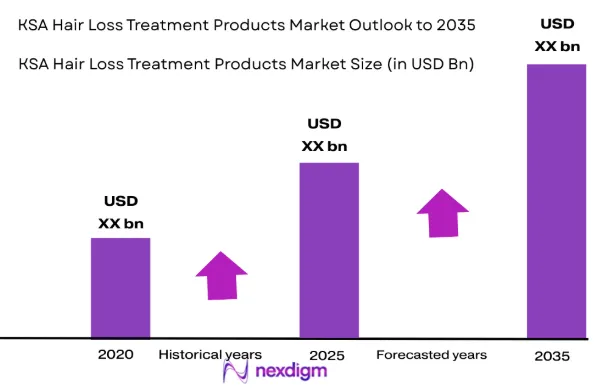
The KSA hair loss treatment products market is valued at approximately USD ~billion, with substantial growth driven by the increasing prevalence of hair loss issues across both men and women. This demand is further fueled by rising consumer awareness and an evolving cultural shift towards personal care. The market has witnessed a surge in product offerings, ranging from topical treatments to oral supplements, driven by the availability of innovative, non-invasive solutions. The market is growing robustly due to advancements in technology and the increasing number of beauty-conscious consumers seeking solutions for hair regrowth.
Saudi Arabia, particularly cities like Riyadh and Jeddah, dominate the hair loss treatment market. Riyadh, being the capital, boasts a high concentration of consumers, healthcare institutions, and salons providing professional services. Jeddah’s coastal location also contributes to its prominence, as the city sees a large influx of expats and a growing middle-class population investing in hair care solutions. These cities are major hubs for the market, driven by high disposable incomes, a growing awareness of personal aesthetics, and a demand for advanced hair restoration treatments.
Market Segmentation
By Product Type
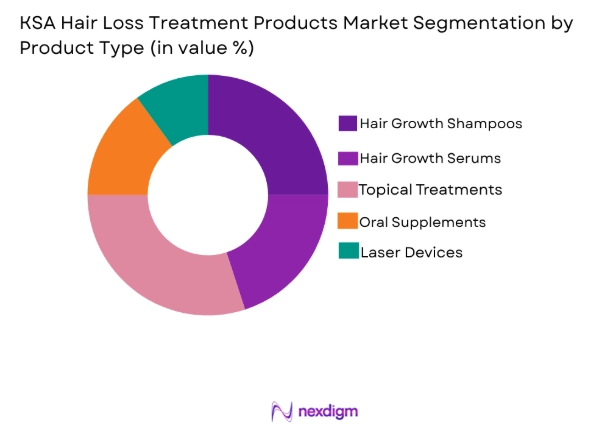
The KSA hair loss treatment market is segmented by product type into Hair Growth shampoos, Hair Growth serums, topical treatments, oral supplements, and laser devices. Among these, topical treatments, including minoxidil-based products, hold a dominant market share. Their widespread popularity is driven by their proven effectiveness in promoting hair regrowth. Minoxidil, available in both foam and liquid forms, is one of the most recommended over-the-counter treatments, with established consumer trust due to its visibility and the backing of dermatologists. The ease of use and accessibility of topical treatments further drive their adoption in the market.
By Application Type
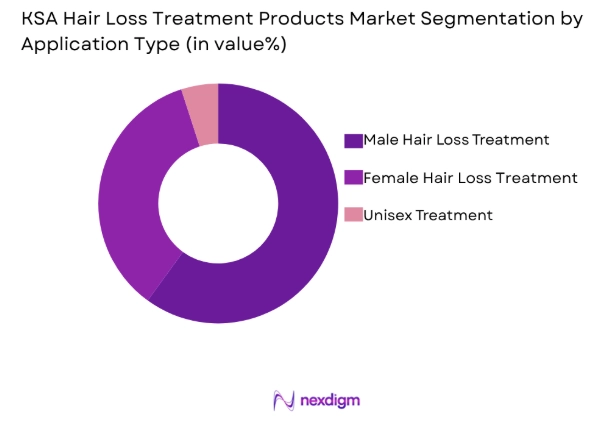
The KSA hair loss treatment market is also segmented by application into male and female hair loss treatments. Male hair loss treatments dominate the market due to the higher prevalence of androgenic alopecia among men, a condition commonly referred to as male-pattern baldness. The increasing awareness of treatment options, supported by targeted marketing campaigns and recommendations from healthcare professionals, has led to a growing demand for these products. Although female hair loss treatments have also gained significant traction, they remain a smaller segment as compared to male-oriented treatments.
Competitive Landscape
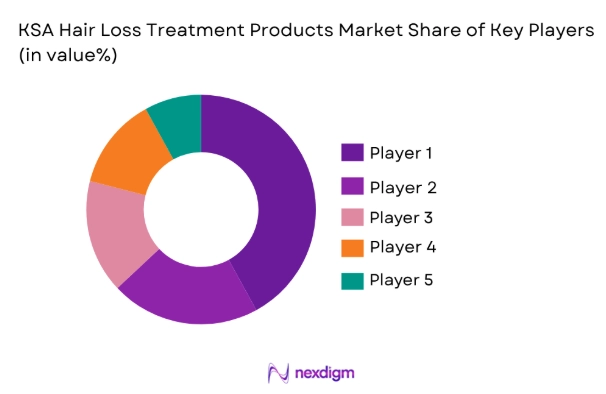
The KSA hair loss treatment products market is dominated by several global and regional players, such as Merck & Co., Inc., Revita, and Nutrafol. These companies have established strong brand recognition and customer loyalty through effective marketing and product efficacy. The market is also seeing the rise of local brands, which are expanding their offerings to cater to the increasing demand for personalized and culturally aligned treatments. The consolidation of leading players within the market signals a competitive landscape marked by strong brand influence, effective product distribution channels, and significant R&D investments.
| Company | Establishment Year | Headquarters | Market Strategy | Product Range | Technology Used | Distribution Channels |
| Merck & Co., Inc. | 1891 | USA | ~ | ~ | ~ | ~ |
| Revita | 2003 | USA | ~ | ~ | ~ | ~ |
| Nutrafol | 2010 | USA | ~ | ~ | ~ | ~ |
| Al Haramain Perfumes & Cosmetics | 1970 | KSA | ~ | ~ | ~ | ~ |
| Swanson Health Products | 1969 | USA | ~ | ~ | ~ | ~ |
KSA Hair Loss Treatment Products Market Analysis
Growth Drivers
Increasing Prevalence of Hair Loss Issues
Hair loss, particularly androgenic alopecia (male-pattern baldness), has become an increasing concern in Saudi Arabia, affecting a significant portion of the population. The Saudi Food and Drug Authority (SFDA) reports a rising number of dermatology visits, with hair loss being one of the leading conditions treated in clinics. According to the World Health Organization (WHO), Saudi Arabia’s male population over the age of 30 is particularly vulnerable to hair loss, with more than 60% of men facing some form of hair thinning by age 50. The prevalence of female hair loss is also on the rise, driven by various factors, including hormonal imbalances and stress. This growing incidence of hair loss fuels the demand for effective treatment products, resulting in a growing market for hair loss solutions in Saudi Arabia.
Growing Awareness of Hair Health
Increasing awareness of personal appearance and well-being in Saudi Arabia is contributing significantly to the growing demand for hair health products. The Saudi population has seen an increase in health-conscious behaviors, especially among younger demographics, who are increasingly seeking preventive treatments for hair loss. According to the Saudi General Authority for Statistics, the number of consumers seeking beauty and wellness treatments in urban areas like Riyadh and Jeddah has been rising annually, driven by the influence of social media and celebrity endorsements. As hair health becomes more integral to personal grooming and confidence, products for hair loss treatment are gaining traction, further propelling market growth.
Market Challenges
Regulatory and Compliance Barriers
The regulatory landscape surrounding hair loss treatments in Saudi Arabia is stringent, posing a challenge for both local and international players entering the market. The Saudi Food and Drug Authority (SFDA) enforces strict guidelines for the approval of pharmaceuticals and cosmetics, which can delay product entry and increase operational costs for manufacturers. Additionally, there are regulatory hurdles for marketing claims, as products must undergo rigorous testing for efficacy and safety before being approved for public sale. With the SFDA ensuring consumer safety through these regulations, manufacturers face higher compliance costs and longer timelines to bring their products to market.
Price Sensitivity and Consumer Preferences
Price sensitivity is a significant challenge in the Saudi market, particularly for hair loss treatments, which often require continuous use. With an increasing number of treatment options available, consumers are becoming more selective about where they allocate their spending. Despite the growing middle-class population, the Global Economic Monitor highlights that consumer spending in Saudi Arabia remains cautious due to inflation and other macroeconomic factors, such as global commodity price volatility. This price-conscious behavior limits the adoption of premium hair care products and makes the market highly competitive, with local and international brands vying for the attention of price-sensitive consumers.
Opportunities
Rising Demand for Natural and Organic Hair Loss Products
The demand for natural and organic hair loss treatment products is expanding rapidly in Saudi Arabia. As consumer awareness increases regarding the harmful effects of chemicals and synthetic ingredients, more individuals are shifting toward eco-friendly and organic options. A survey by the Saudi Ministry of Environment, Water, and Agriculture found that 41% of Saudi consumers prefer products that contain organic ingredients, with a growing preference for herbal-based solutions. This growing trend for natural products provides significant opportunities for companies to innovate and cater to the demand for organic alternatives. Additionally, the increasing consumer shift towards sustainability and health-conscious living provides a solid foundation for the expansion of this market segment.
Expanding Online Retail Channels
Online retail is rapidly becoming a key channel for hair loss treatment products in Saudi Arabia. With the increase in internet penetration and smartphone use, more consumers are purchasing personal care products online. As of 2023, approximately 95% of the Saudi population has access to the internet, with e-commerce sales growing by 22% year-over-year in the region, according to the Saudi Communications and Information Technology Commission. This surge in online shopping, especially among younger consumers, is creating a valuable opportunity for hair loss product companies to leverage digital platforms for direct-to-consumer sales. The growing trust in online shopping and the availability of home delivery services are making online channels an increasingly preferred method for purchasing hair treatment products.
Future Outlook
Over the next few years, the KSA hair loss treatment products market is expected to witness substantial growth, driven by technological innovations in treatment modalities and the growing consumer preference for non-surgical hair restoration solutions. With an increasing focus on personalized care and a broader acceptance of aesthetic treatments, market players are poised to introduce advanced products tailored to individual needs. Moreover, with a rise in disposable income and expanding awareness, especially among younger demographics, the market is set to experience an upward trajectory, backed by both global and local brands’ innovations.
Major Players
- Merck & Co., Inc.
- Revita
- Nutrafol
- Al Haramain Perfumes & Cosmetics
- Swanson Health Products
- Bioscalin
- HairMax
- Kirkland Signature
- L’Oreal Professional Products
- Vichy Laboratories
- Olaplex
- Al-Dawaa Pharmacies
- Jarrow Formulas
- Viviscal
- Regenepure
Key Target Audience
- Investments and Venture Capitalist Firms
- Government and Regulatory Bodies
- Hair Restoration Clinics
- Beauty and Personal Care Retail Chains
- Dermatologists and Healthcare Providers
- Pharmacies and Drugstores
- Health and Wellness Centers
- Cosmetic Surgeons
Research Methodology
Step 1: Identification of Key Variables
The first step in our research methodology involves identifying the key variables that drive the KSA hair loss treatment products market. This is achieved by gathering data from both secondary and primary sources, including industry reports, expert interviews, and consumer behavior data. The objective is to map out the key drivers such as consumer preferences, technological advancements, and regional factors.
Step 2: Market Analysis and Construction
In this phase, we compile historical and current data regarding market size, growth rates, and trends. This includes assessing the performance of major segments and sub-segments, such as product type and application. Detailed market penetration statistics are gathered to create a comprehensive understanding of the market landscape.
Step 3: Hypothesis Validation and Expert Consultation
Market hypotheses are developed and validated through consultations with industry experts, including dermatologists, brand managers, and market analysts. These consultations are conducted through interviews and surveys, providing deeper insights into the consumer behavior, treatment efficacy, and market potential.
Step 4: Research Synthesis and Final Output
In the final stage, we refine the research findings by synthesizing expert insights and data obtained through both top-down and bottom-up approaches. This process allows us to create a final, accurate, and validated market report that reflects the most reliable and up-to-date information.

- Executive Summary
- Research Methodology (Market Definitions and Assumptions, Abbreviations, Market Sizing Approach, Consolidated Research Approach, Understanding Market Potential Through In-Depth Industry Interviews, Primary Research Approach, Limitations and Future Conclusions)

- Definition and Scope
- Overview Genesis
- Timeline of Major Players
- Business Cycle
- Supply Chain and Value Chain Analysis

- Growth Drivers
Increasing Prevalence of Hair Loss Issues
Growing Awareness of Hair Health
- Market Challenges
Regulatory and Compliance Barriers
Price Sensitivity and Consumer Preferences
- Opportunities
Rising Demand for Natural and Organic Hair Loss Products
Expanding Online Retail Channels
- Trends
Shift Toward Non-Surgical Treatments
Adoption of Personalized and Targeted Hair Care Solutions
- Government Regulation
Regulations on Pharmaceutical and Over-the-Counter Products
Import Tariffs and Duties on Hair Loss Treatment Products - SWOT Analysis
- Porter’s Five Forces
- Competition Ecosystem

- By Value, 2020-2025
- By Volume, 2020-2025
- By Average Price, 2020-2025

- By Product Type (In Value %)
Hair Growth Shampoos
Hair Growth Serums
Topical Treatments
Oral Supplements
Laser Devices
- By Application (In Value %)
Male Hair Loss Treatment
Female Hair Loss Treatment
Unisex Treatment
- By Distribution Channel (In Value %)
Pharmacies and Drugstores
Online Retail
Specialty Stores
Supermarkets/Hypermarkets
Direct Sales
- By Region (In Value %)
Central Region
Eastern Region
Western Region
Southern Region - By End User (In Value %)
Individuals
Clinics and Dermatologists
Hair Restoration Centers
Cosmetic and Wellness Clinics

- Market Share of Major Players on the Basis of Value/Volume
- Market Share of Major Players by Product Type
- Cross Comparison Parameters (Company Overview, Business Strategies, Recent Developments, Strengths, Weaknesses, Organizational Structure, Revenues, Revenues by Product Type, Number of Distribution Touchpoints, Distribution Channels, Number of Dealers and Distributors, Margins, Production Plant, Capacity, Unique Value Offering, and Others)
- SWOT Analysis of Major Players
- Pricing Analysis Based on SKUs for Major Players in the KSA Hair Loss Treatment Products Market
- Detailed Profiles of Major Companies
Al Haramain Perfumes & Cosmetics
Al-Dawaa Pharmacies
Saudicare
Basharacare
Merck & Co., Inc.
Pfizer
Novartis
Kirkland Signature
Propecia
Revita
L’Oreal Professional Products
Hairmax
Nutrafol
Viviscal
Shiseido Company, Limited

- Market Demand and Utilization
- Purchasing Power and Budget Allocations
- Needs, Desires, and Pain Point Analysis
- Decision-Making Process
- Regulatory and Compliance Requirements

- By Value, 2026-2035
- By Volume, 2020-2035
- By Average Price, 2020-2035


 Request a Sample
 Ask for Customization
 Get a Quote
 Enquire Now