
 Download PDF
Market Overview
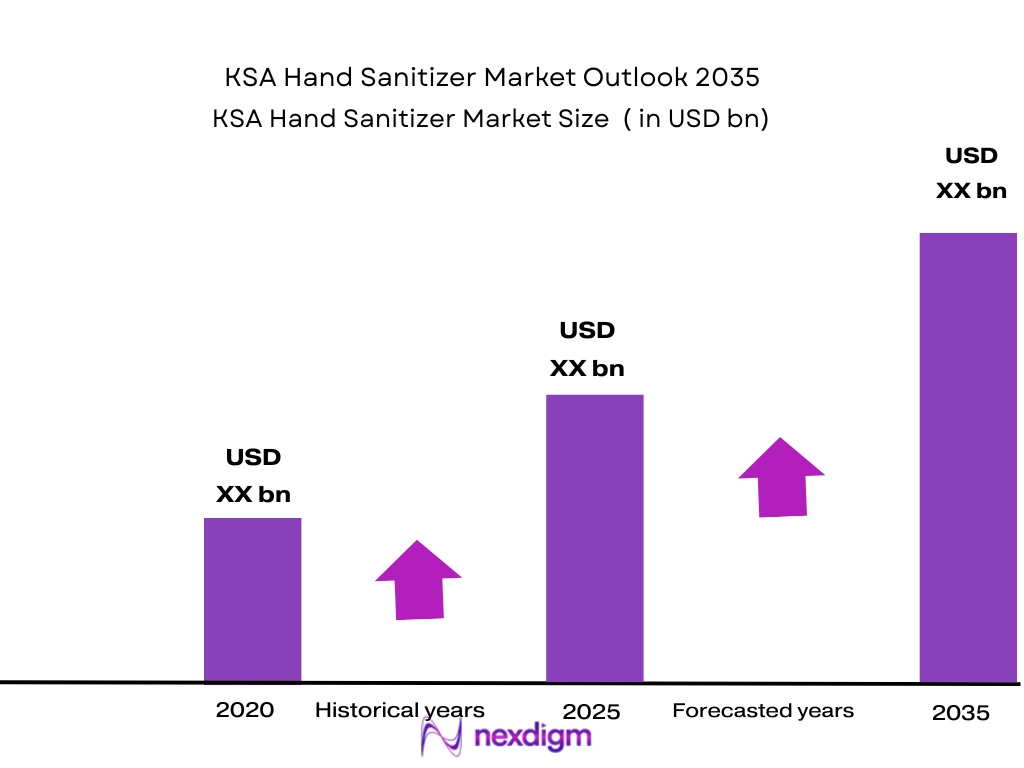
The KSA hand sanitizer market is valued at approximately USD ~ billion, primarily driven by increased awareness of hygiene practices and the impact of the COVID-19 pandemic. The market witnessed significant growth due to heightened consumer demand for hygiene products, as individuals and organizations alike sought to maintain higher levels of sanitation. Additionally, the market is propelled by government regulations mandating hygiene measures across various sectors such as healthcare, food services, and hospitality, further supporting the demand for hand sanitizers in Saudi Arabia.
The dominant cities in the KSA hand sanitizer market include Riyadh, Jeddah, and Dammam. These cities benefit from a combination of factors, including high population density, urbanization, and a robust healthcare and commercial infrastructure. Riyadh, the capital, is a significant driver of demand due to its central role in business and government activities. Jeddah, with its large commercial and tourist base, also contributes heavily to the consumption of hand sanitizers, particularly in the hospitality and food sectors. Dammam, located in the Eastern Province, benefits from the concentration of industrial activities and large oil and gas industries.
Market Segmentation
By Product Type
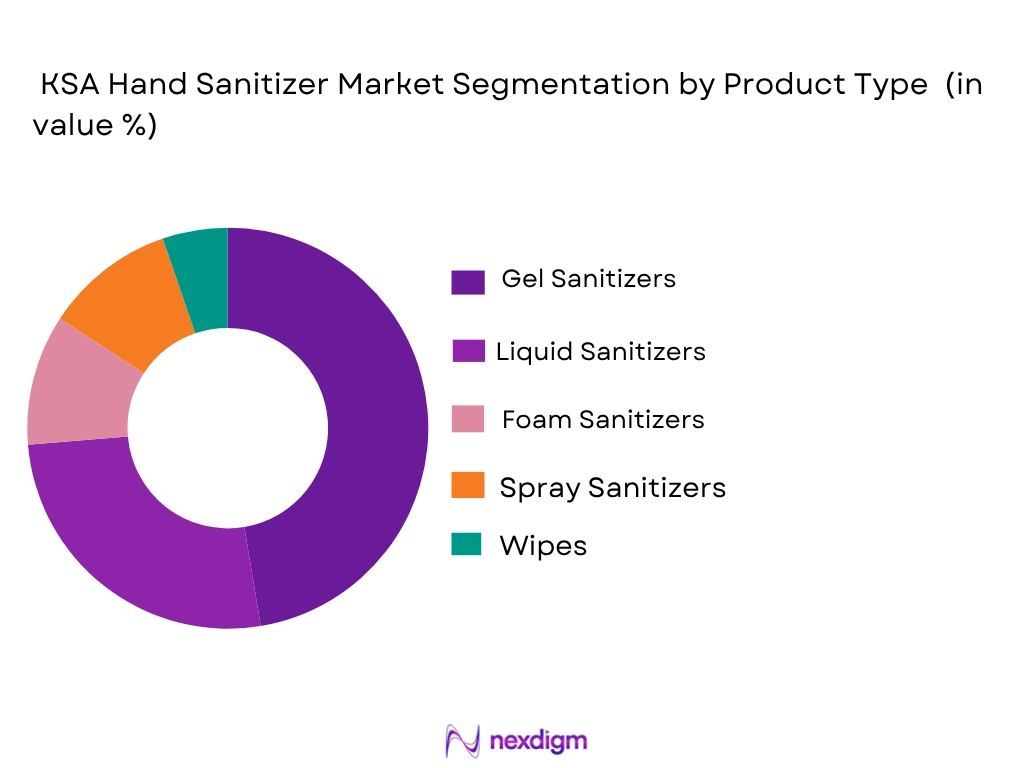
The KSA hand sanitizer market is segmented by product type into gel sanitizers, liquid sanitizers, foam sanitizers, wipes, and spray sanitizers. The gel sanitizer segment holds the dominant market share due to its widespread availability, convenience, and ease of use. Gel-based sanitizers offer quick application and leave a non-greasy finish, making them preferred by both consumers and businesses. Additionally, gel sanitizers have a strong presence in healthcare, retail, and educational institutions, where frequent sanitization is crucial. The demand for gel sanitizers is further bolstered by their effectiveness in killing germs, a feature highly valued during the ongoing public health awareness campaigns.
By Ingredients Type
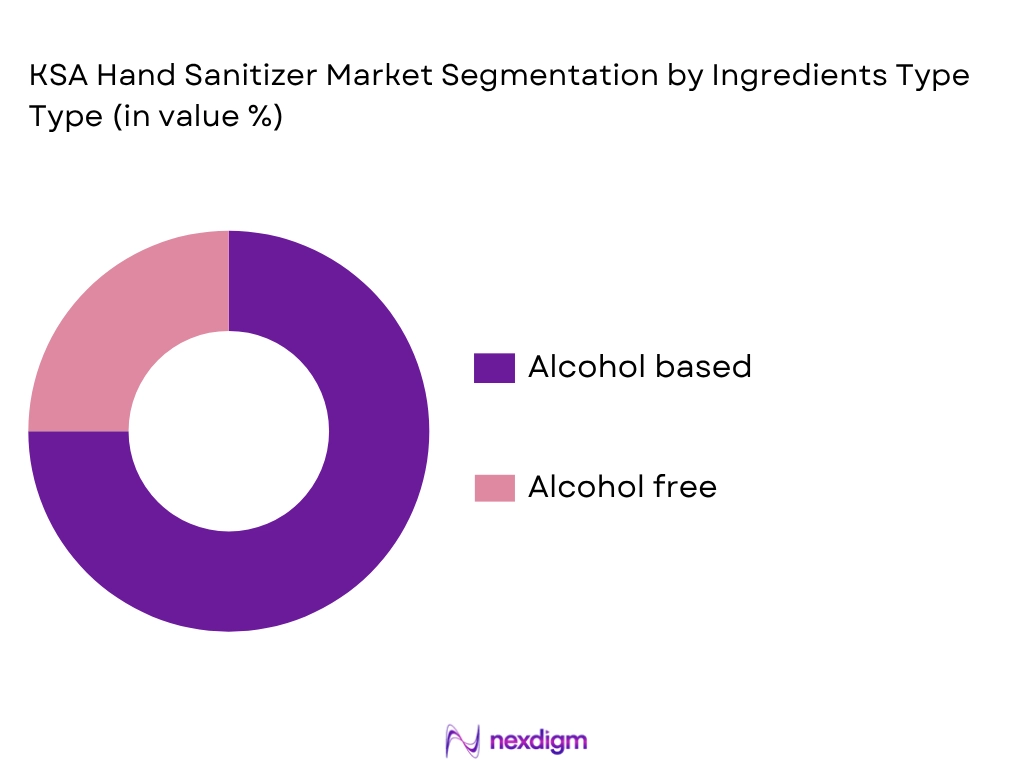
The KSA hand sanitizer market is also segmented by ingredient type into alcohol-based sanitizers and alcohol-free sanitizers. Alcohol-based sanitizers dominate the market share due to their proven efficacy in killing harmful microorganisms. Alcohol-based sanitizers are widely used in healthcare facilities, schools, offices, and public places, where the need for hygiene and disease prevention is paramount. Additionally, alcohol-free sanitizers are gaining traction, especially in segments focused on skin care and sensitive users, as they are gentler on the skin while still maintaining effectiveness in daily hygiene routines. However, alcohol-based sanitizers continue to lead due to their superior germ-killing properties.
Competitive Landscape
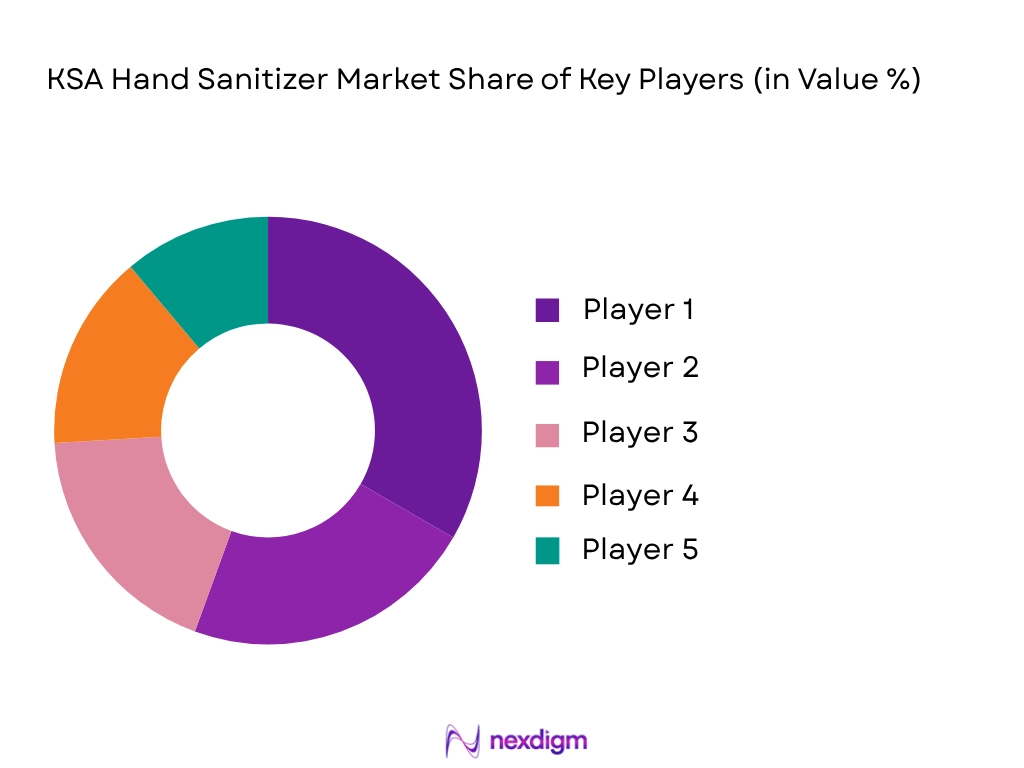
The KSA hand sanitizer market is dominated by a mix of local and global brands, with key players such as Reckitt Benckiser, Procter & Gamble, Unilever, Henkel, and GOJO Industries holding substantial market shares. These companies maintain their dominance by offering a wide range of sanitizing products and leveraging strong distribution channels. For example, Reckitt Benckiser’s Dettol and Unilever’s Lifebuoy are highly recognized brands in Saudi Arabia, benefiting from established consumer trust in the healthcare segment. Additionally, GOJO’s Purell, a leading international brand, is gaining popularity, particularly in commercial and industrial sectors.
| Company Name | Establishment Year | Headquarters | Revenue (USD) | Key Product(s) | Market Focus | Production Capacity |
| Reckitt Benckiser | 1823 | United Kingdom | ~ | ~ | ~ | ~ |
| Procter & Gamble | 1837 | United States | ~ | ~ | ~ | ~ |
| Unilever | 1929 | Netherlands/UK | ~ | ~ | ~ | ~ |
| Henkel | 1876 | Germany | ~ | ~ | ~ | ~ |
| GOJO Industries | 1946 | United States | ~ | ~ | ~ | ~ |
KSA Hand Sanitizer Market Analysis
Growth Drivers
Rising Health and Hygiene Awareness
Health and hygiene awareness in Saudi Arabia has seen a significant increase, especially following the global COVID-19 pandemic. According to the Saudi Ministry of Health, hygiene measures, including the use of hand sanitizers, became a central part of the public health strategy. By 2022, the government’s focus on sanitization was further reinforced through initiatives like the “National Campaign for Health Awareness,” promoting personal hygiene across all sectors. The awareness surrounding health safety has been significantly elevated, with the kingdom prioritizing public health due to rising concerns about infectious diseases, contributing to increased demand for sanitizers.
Government Regulations and Hygiene Policies
The Saudi government has implemented stringent hygiene and health policies to combat infections, particularly following the COVID-19 pandemic. In 2022, the Ministry of Health introduced regulations that required businesses in the healthcare and food sectors to maintain high standards of hygiene, mandating hand sanitizers in public spaces and businesses. Additionally, the introduction of more stringent cleanliness policies, including regular disinfection of facilities, increased the reliance on hand sanitizers across industries. These
Market Challenges
High Dependency on Imported Raw Materials
Saudi Arabia’s hand sanitizer market faces challenges regarding the dependency on imported raw materials, particularly ethanol and other chemicals essential for production. In 2022, Saudi Arabia imported 80% of its ethanol used in manufacturing hand sanitizers, relying on suppliers from countries like the US and Brazil. This dependency has made the market vulnerable to international supply chain disruptions and price volatility, which can affect the cost and availability of sanitizers in the domestic market. Efforts to establish local ethanol production have been discussed but remain in early stages.
Price Sensitivity and Competitive Market
The KSA hand sanitizer market is highly competitive, with a vast number of local and international players competing for market share. The competition has led to a price-sensitive market, especially among budget-conscious consumers. According to data from the Saudi Ministry of Commerce, the retail prices of hand sanitizers in 2022 fluctuated due to variations in raw material costs and the competitive pricing strategies of manufacturers. While this benefits consumers in terms of lower prices, it also challenges companies to maintain profitability in a crowded market their operations.
Opportunities
Expanding Local Manufacturing Capacities
One of the key opportunities in the Saudi hand sanitizer market is expanding local manufacturing capacities. In 2022, the Saudi government launched initiatives aimed at increasing local production of personal care and hygiene products, including hand sanitizers. The “Made in Saudi” initiative, launched by the Saudi Ministry of Industry and Mineral Resources, encourages domestic manufacturing to reduce dependency on imports and stimulate the local economy. With the government’s continued support, local manufacturers are expected to increase production, creating opportunities for both new and established companies to grow their market share.
Innovations in Alcohol-Free and Eco-Friendly Sanitizers
The demand for alcohol-free and eco-friendly hand sanitizers is growing in Saudi Arabia, driven by an increasing consumer preference for products that are gentle on the skin and environmentally sustainable. In 2022, several local and international brands introduced alcohol-free alternatives, responding to concerns over skin irritation from frequent use of alcohol-based products. Additionally, eco-conscious consumers are increasingly seeking sanitizers with biodegradable packaging. The growing demand for these products presents a significant opportunity for innovation and market expansion, particularly in the premium and health-conscious segments.
Future Outlook
Over the next 5 years, the KSA hand sanitizer market is expected to experience steady growth driven by continued hygiene awareness, government initiatives, and the increasing prevalence of healthcare and industrial safety standards. The market will be further supported by technological advancements in product formulations, such as alcohol-free sanitizers and eco-friendly packaging, which align with evolving consumer preferences. Moreover, the increasing adoption of hand sanitizers in industrial, manufacturing, and hospitality sectors is expected to boost market demand.The market will continue to expand as more businesses, educational institutions, and public spaces invest in hygiene solutions. With ongoing health campaigns and the government’s commitment to public safety, the hand sanitizer market is poised for robust growth, with opportunities in both alcohol-based and alcohol-free segments.
Major Players
- Reckitt Benckiser
- Procter & Gamble
- Unilever
- Henkel
- GOJO Industries
- Johnson & Johnson
- Kimberly-Clark
- Beiersdorf
- Medline Industries
- Diversey Holdings
- Sani-Hands
- Microban International
- Dettol (Reckitt Benckiser)
- Lifebuoy (Unilever)
- Purell (GOJO Industries)
Key Target Audience
- Manufacturers of hand sanitizers
- Distributors and wholesalers in hygiene products
- Retailers and supermarkets
- Hospitals and healthcare providers
- Schools and educational institutions
- Government and regulatory bodies (Ministry of Health, Saudi Standards, Metrology and Quality Organization)
- Industrial and manufacturing companies
- Investments and venture capitalist firms
Research Methodology
Step 1: Identification of Key Variables
This phase involves identifying the key variables affecting the KSA hand sanitizer market. Extensive desk research will be conducted, utilizing secondary and proprietary databases to gather market data on product types, consumer preferences, distribution channels, and major players. This step aims to define the critical factors influencing the market dynamics.
Step 2: Market Analysis and Construction
Historical data on market size, growth patterns, and industry trends will be compiled. We will assess the contribution of various product types and ingredients, focusing on how each segment is performing in terms of market growth. Service quality and revenue generation data will also be analyzed to ensure accuracy.
Step 3: Hypothesis Validation and Expert Consultation
Market hypotheses will be developed and validated through consultations with industry experts via interviews and surveys. Insights from manufacturers, distributors, and retailers will be incorporated into the analysis to verify the market data and refine growth projections.
Step 4: Research Synthesis and Final Output
The final step involves synthesizing the data gathered and ensuring its consistency through direct engagement with key industry players. Insights from these consultations will validate the market estimates and enable a comprehensive analysis of market trends, key drivers, and growth opportunities.

- Executive Summary
- Research Methodology (Market Definitions and Assumptions, Abbreviations, Market Sizing Approach, Consolidated Research Approach, Understanding Market Potential Through In-Depth Industry Interviews, Primary Research Approach, Limitations and Future Conclusions)

- Definition and Scope
- Market Dynamics Overview
- Market Genesis
- Major Players and Market Timeline
- Business Cycle and Trends
- Supply Chain and Value Chain Analysis

- Growth Drivers
Rising Health and Hygiene Awareness
Government Regulations and Hygiene Policies
Increased Demand Due to COVID-19
Growing E-commerce and Retail Distribution Channels
- Market Challenges
High Dependency on Imported Raw Materials
Price Sensitivity and Competitive Market
Variability in Product Quality and Standards
Regulatory Compliance and Local Manufacturing Constraints
- Opportunities
Expanding Local Manufacturing Capacities
Innovations in Alcohol-Free and Eco-Friendly Sanitizers
Rising Demand in Industrial and Commercial Applications
Growth in Online Sales and Retail Networks
- Key Trends
Shift Towards Alcohol-Free and Skin-Friendly Formulations
Increased Demand for Eco-Friendly Packaging
Innovation in Product Forms (Wipes, Sprays, etc.)
Growth in Personal Care and Travel-Size Sanitizers - Government Regulations
Overview of KSA Health and Safety Guidelines
Regulatory Standards and Approvals
Impact of COVID-19 Regulations on Sanitizer Production and Distribution - SWOT Analysis
- Porter’s Five Forces

- By Value, 2020–2025
- By Volume, 2020–2025
- By Average Price, 2020–2025

- By Product Type (In Value %)
Gel Sanitizers
Liquid Sanitizers
Foam Sanitizers
Wipes
Spray Sanitizers - By Ingredient Type (In Value %)
Alcohol-Based Sanitizers
Alcohol-Free Sanitizers - By Application (In Value %)
Healthcare
Household and Personal Care
Industrial and Manufacturing
Food Service and Hospitality
Retail and Commercial
Direct Sales
Distributors and Wholesalers
Retail Pharmacies - By Distribution Channel (In Value %)
Supermarkets and Hypermarkets
Online Channels

- Market Share of Major Players by Value/Volume
- Market Share of Major Players by Product Type
- Cross Comparison Parameters(Company Overview, Business Strategies, Recent Developments, Strength, Weakness, Organizational Structure, Revenues, Revenues by Product Type, Number of Touchpoints, Distribution Channels, Number of Dealers and Distributors, Margins, Production Plant, Capacity, Unique Value Offering, etc.)
- SWOT Analysis of Major Players
- Pricing Analysis Based on Product Categories for Major Players
- Detailed Profiles of Major Companies
Reckitt Benckiser Group plc
Procter & Gamble Co.
Unilever
GOJO Industries, Inc.
Henkel AG & Co. KGaA
Kimberly-Clark Corporation
3M Company
Sani-Hands, Inc.
Purell (a subsidiary of GOJO)
Beiersdorf AG
Medline Industries, Inc.
Lifebuoy (Unilever)
Dettol (Reckitt Benckiser)
Al Haramain Perfumes
Saudi Chemical Company

- Market Demand and Utilization
- Purchasing Power and Budget Allocations
- Regulatory and Compliance Requirements
- Needs, Desires, and Pain Point Analysis
- Decision-Making Process

- By Value, 2026–2035
- By Volume, 2026–2035
- By Average Price, 2026–2035


 Request a Sample
 Ask for Customization
 Get a Quote
 Enquire Now