
 Download PDF
Market Overview
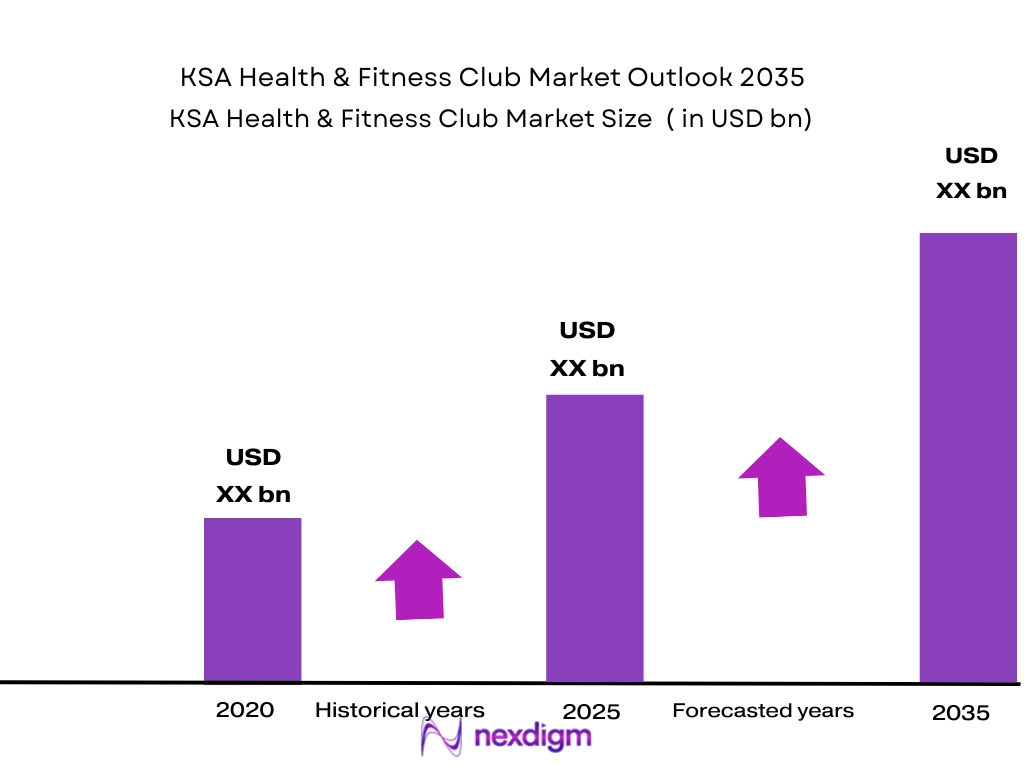
The KSA health and fitness club market has reached a valuation of approximately USD ~ billion based on a recent historical assessment, driven by increasing consumer spending on preventive healthcare, rising gym memberships, and expanding urban infrastructure supporting wellness lifestyles. The market size reflects growing investments by private operators and government-backed initiatives under Vision 2030, encouraging physical activity. Additionally, the proliferation of premium fitness chains, subscription-based models, and women-focused facilities has significantly contributed to overall market expansion.
Major urban centers such as Riyadh, Jeddah, and the Eastern Province dominate the KSA health and fitness club market due to higher population density, stronger purchasing power, and better-developed commercial infrastructure. These cities attract both international and domestic fitness brands, creating a competitive ecosystem with diverse service offerings. Cultural shifts toward healthier lifestyles, increasing female workforce participation, and the availability of modern gym facilities further reinforce the dominance of these metropolitan regions in shaping consumer demand patterns.
Market Segmentation
By Club Type
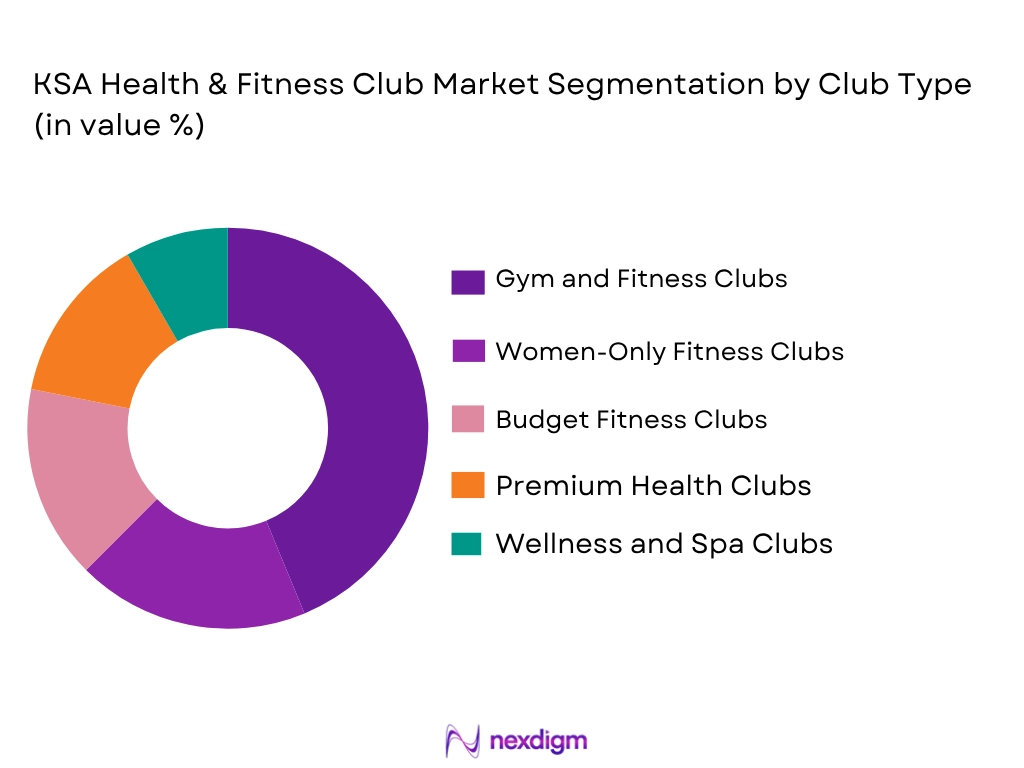
KSA health and fitness club market is segmented by product type into gym and fitness clubs, boutique fitness studios, women-only fitness clubs, premium health clubs, and wellness and spa clubs. Recently, gym and fitness clubs have a dominant market share due to factors such as widespread accessibility, affordability compared to premium offerings, and strong brand presence across urban centers. These facilities cater to a broad demographic, including beginners and experienced fitness enthusiasts, offering flexible membership options and extensive equipment availability, making them the preferred choice for the majority of consumers.
By Membership Model
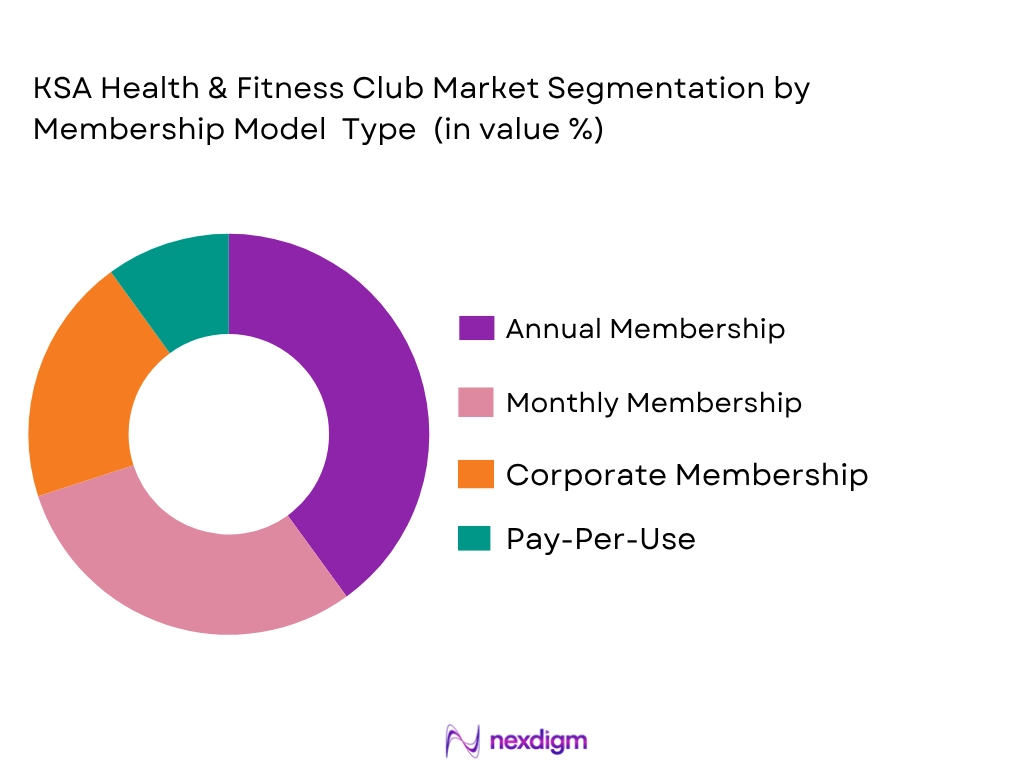
KSA health and fitness club market is segmented by product type into monthly membership, annual membership, pay-per-use, and corporate membership packages. Recently, annual membership has a dominant market share due to factors such as cost efficiency, long-term commitment incentives, and bundled service offerings. Consumers prefer annual plans for better pricing advantages and access to premium facilities, while clubs promote these packages to ensure steady revenue streams and improved customer retention.
Competitive Landscape
The KSA health and fitness club market is moderately consolidated, with a mix of international chains and strong regional players competing for market dominance. Large operators leverage brand recognition, advanced equipment, and digital integration to attract consumers, while local players focus on affordability and accessibility. Strategic partnerships, expansion into underserved areas, and specialization in niche segments such as women-only fitness are key competitive strategies shaping the market.
| Company Name | Establishment Year | Headquarters | Technology Focus | Market Reach | Key Products | Revenue (USD) | Number of Clubs |
| Fitness First | 1993 | UAE | ~~ | ~ | ~ | ~ | ~ |
| Gold’s Gym | 1965 | USA | ~ | ~ | ~ | ~ | ~ |
| Anytime Fitness | 2002 | USA | ~ | ~ | ~ | ~ | ~ |
| Fitness Time | 2008 | Saudi Arabia | ~ | ~ | ~ | ~ | ~ |
| Snap Fitness | 2003 | USA | ~ | ~ | ~ | ~ | ~ |
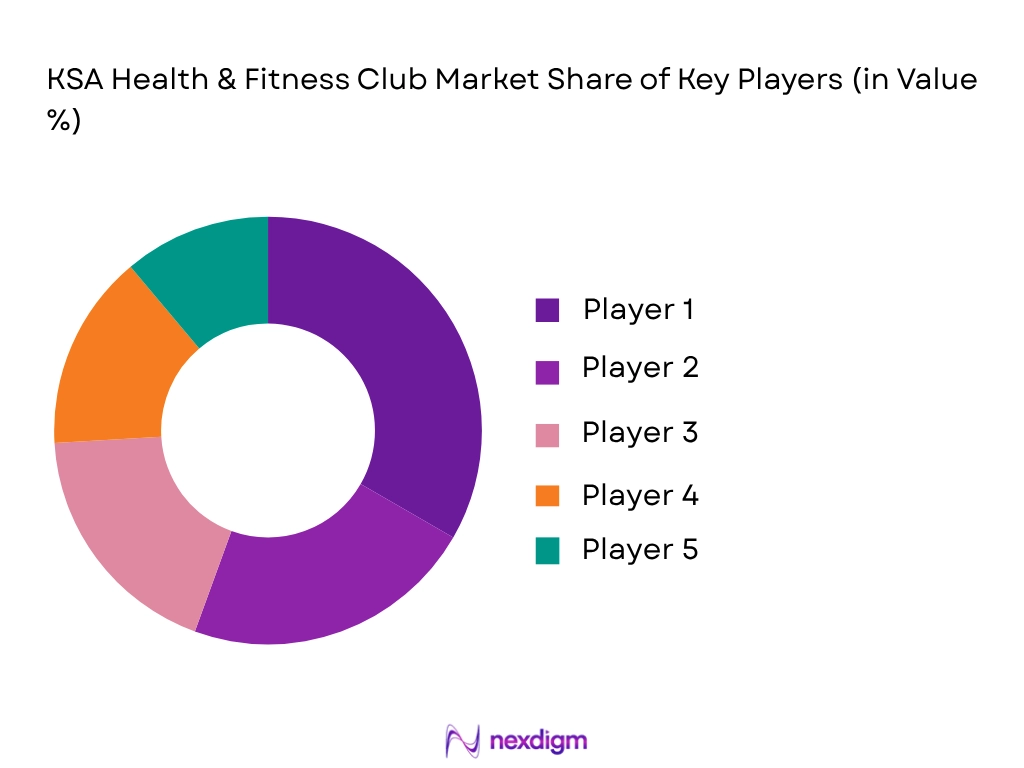
KSA Health & Fitness Club Market Analysis
Growth Drivers
Increasing Health Awareness and Preventative Healthcare
Rising awareness around obesity, cardiovascular diseases, stress management, and preventive healthcare is encouraging South African consumers to join health and fitness clubs. Urban consumers are increasingly viewing gym memberships as part of a healthier lifestyle rather than a discretionary expense. Fitness clubs offering structured workout plans, nutrition support, personal training, and wellness assessments are gaining traction among young professionals and middle-income households. The shift toward preventive healthcare is also supported by employers, insurers, and wellness programs that encourage regular physical activity. This is expected to increase recurring memberships and support long-term growth in organized fitness clubs.
Growth of Budget and Value-Based Fitness Clubs
Budget and mid-tier fitness clubs are expanding rapidly in South Africa as consumers seek affordable access to professional fitness infrastructure. High inflation and price sensitivity have made value-based memberships more attractive than premium club subscriptions. Chains offering flexible pricing, no-frills facilities, convenient locations, and monthly payment options are gaining popularity among students, young adults, and working professionals. This model allows operators to penetrate larger consumer segments while maintaining scale through high membership volumes. The growth of budget fitness formats is expected to increase overall club participation and expand the market beyond affluent urban consumers.
Challenges
High Membership Costs in Premium Clubs
Premium health and fitness clubs in South Africa often face affordability challenges due to high membership fees, joining costs, and additional charges for personal training or specialized programs. While affluent consumers may continue to prefer high-end clubs, a large portion of the population remains highly price sensitive. Economic pressure, unemployment, and rising household expenses can make premium fitness memberships difficult to sustain. This limits the addressable market for luxury and premium operators. High pricing also increases cancellation risk, especially when consumers do not use club facilities regularly or perceive limited value from their membership.
Limited Club Penetration in Smaller Cities and Townships
Health and fitness club penetration remains concentrated in major urban areas such as Johannesburg, Cape Town, Pretoria, and Durban. Smaller cities, townships, and semi-urban locations often have limited access to organized fitness facilities due to lower income levels, infrastructure gaps, security concerns, and weaker commercial real estate availability. Operators may find it difficult to achieve sufficient membership volumes in these areas. This restricts market expansion and leaves a large potential consumer base underserved. To grow sustainably, fitness clubs need affordable formats, localized pricing, smaller facility models, and community-based engagement strategies.
Opportunities
Expansion into Underserved Cities and Semi-Urban Regions
South Africa offers strong opportunities for fitness club expansion in underserved cities, townships, and semi-urban regions. Many consumers outside major metropolitan centers have limited access to organized gyms, creating space for affordable and compact fitness formats. Operators can develop smaller clubs with essential equipment, flexible memberships, localized pricing, and community-focused programs. Partnerships with malls, residential complexes, schools, and local employers can help improve accessibility and reduce real estate risks. Expanding beyond premium urban locations can help fitness companies reach new customer segments and increase national market penetration over the long term.
Integration of Smart Fitness Technology and AI
Smart fitness technology and AI present significant opportunities for South African fitness clubs to improve member engagement and service personalization. Clubs can use mobile apps, wearable integrations, digital progress tracking, AI-based workout plans, and virtual coaching to support members inside and outside the gym. These tools help improve retention by making fitness routines more measurable and personalized. Technology can also support automated payments, attendance tracking, class booking, and targeted promotions. As consumers become more comfortable with digital fitness solutions, clubs that combine physical infrastructure with smart technology can differentiate themselves and increase membership value.
Future Outlook
The KSA health and fitness club market is expected to witness steady growth over the next five years, driven by increasing health awareness, urbanization, and government-backed initiatives. Technological advancements such as AI-driven fitness solutions and hybrid service models will redefine consumer engagement. Regulatory support and investments in sports infrastructure will further accelerate market expansion. Additionally, rising participation among women and younger demographics will play a crucial role in shaping future demand patterns.
Major Players
- Fitness First
- Gold’s Gym
- Anytime Fitness
- Fitness Time
- Snap Fitness
- PureGym
- Curves
- Body Fit Training
- F45 Training
- 9Round
- Leejam Sports Company
- Arena Fitness
- VivaFit
- OrangeTheory Fitness
- UFC Gym
Key Target Audience
- Fitness club operators
- Corporate wellness program managers
- Real estate developers
- Healthcare providers
- Sports infrastructure companies
- Investments and venture capitalist firms
- Government and regulatory bodies
- Franchise operators
Research Methodology
Step 1: Identification of Key Variables
Key variables such as membership trends, pricing structures, demographic patterns, and infrastructure development were identified through extensive secondary research. These variables were selected based on their direct impact on market growth and performance indicators.
Step 2: Market Analysis and Construction
The market was constructed using a combination of top-down and bottom-up approaches, incorporating data from industry reports, company disclosures, and government publications to ensure accuracy and reliability.
Step 3: Hypothesis Validation and Expert Consultation
Findings were validated through consultations with industry experts, fitness professionals, and stakeholders to ensure alignment with real-world market conditions and emerging trends.
Step 4: Research Synthesis and Final Output
All data points were synthesized into a comprehensive report, ensuring consistency, logical flow, and actionable insights for stakeholders and decision-makers.

- Executive Summary
- Research Methodology (Market Definitions and Assumptions, Abbreviations and Terminology, Data Sources and Validation Approach, KSA Health & Fitness Club Market Sizing Methodology, Primary and Secondary Research Benchmarks, Market Reliability and Confidence Intervals)

- Industry Definition and Scope
- Market Genesis and Evolution in KSA
- Consumer Adoption Patterns
- Market Value Chain and Distribution Architecture
- Import and Export Dynamics

- Growth Drivers
Increasing Health Awareness and Preventative Healthcare
Growing Urban Population and Rising Disposable Income
Expansion of Corporate Wellness Programs
Increasing Demand for Structured Fitness Regimes
Government Support under Vision 2030 - Challenges
High Membership Costs in Premium Clubs
Dependence on Imported Equipment
Limited Club Penetration in Tier-2 and Tier-3 Cities
Retention Challenges and Membership Dropouts
Operational and Infrastructure Constraints - Opportunities
Expansion into Untapped Cities and Regions
Growth of Women-Only Fitness Clubs
Integration of Smart Fitness Technology and AI
Partnerships with Corporates and Institutions
Development of Hybrid Fitness Club Models - Trends
Rise of Boutique and Specialized Fitness Clubs
Subscription-Based Membership Models
Integration of Fitness Apps with Club Memberships
Focus on Holistic Wellness and Mental Health
Growth in Outdoor and Community Fitness Activities - Government Regulations
Health and Safety Standards for Fitness Clubs
Licensing Requirements for Fitness Facilities and Trainers
Regulations for Digital Fitness Integration in Clubs
Government Initiatives Promoting Active Lifestyles - SWOT Analysis
- Porter’s Five Forces

- By Market Value, 2020-2025
- By Number of Members, 2020-2025
- By Average Membership Fee, 2020-2025
- By Club Type Revenue Contribution, 2020-2025

- By Club Type (In Value %)
Gym and Fitness Clubs
Boutique Fitness Studios
Women-Only Fitness Clubs
Premium Health Clubs
Wellness and Spa Clubs - By Membership Model (In Value %)
Monthly Membership
Annual Membership
Pay-Per-Use
Corporate Membership Packages - By Consumer Demographic (In Value %)
Urban Professionals
Young Adults (Ages 18-35)
Middle-Income Households
Senior Fitness Segment
Corporate Employees
Women’s Fitness Segment - By Price Tier (In Value %)
Budget / Entry-Level Clubs
Mid-Tier Clubs
Premium Clubs
Luxury / Exclusive Clubs - By Region (In Value %)
Riyadh
Jeddah
Eastern Province
Makkah
Other Regions

- Market Share by Club Type
- Number of Members by Key Players
- Cross Comparison Parameters (Company Overview, Service Portfolio Strength, Location Footprint, Technology Integration, Pricing Strategy, Brand Positioning, Customer Preference Score, Revenue, Growth Trajectory)
- Company Profiles
Fitness First
Gold’s Gym
Anytime Fitness
Fitness Time
Snap Fitness
PureGym
Curves
Body Fit Training
9Round
F45 Training
Leejam Sports Company
Arena Fitness

- Membership Decision Drivers
- Brand Loyalty and Retention Patterns
- Payment Preferences and Subscription Behavior
- Usage Patterns and Engagement Levels
- Pain Points in Membership and Services

- By Market Value, 2026-2035
- By Number of Members, 2026-2035
- By Average Membership Fee, 2026-2035
- By Club Type Revenue Contribution, 2026-2035


 Request a Sample
 Ask for Customization
 Get a Quote
 Enquire Now