
 Download PDF
 Download PDF
Market Overview
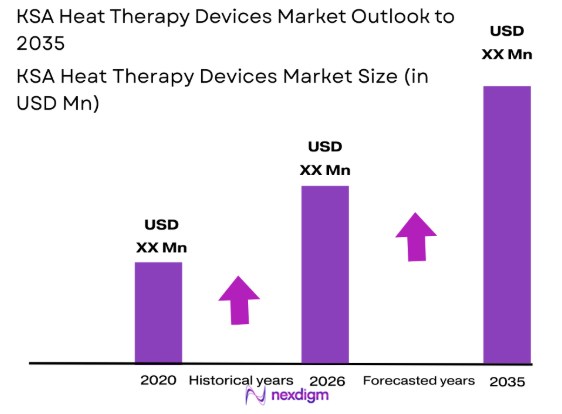
The KSA Heat Therapy Devices market has been experiencing significant growth, with a substantial increase in demand for non-invasive pain management solutions. The market size has been valued at approximately USD ~ million, driven by the growing awareness of home-based healthcare and pain relief solutions. Factors such as an increasing preference for affordable healthcare alternatives and a rising aging population contribute to the market’s robust growth trajectory. The technological advancements in heat therapy devices, along with the growing adoption of homecare products, further fuel this expansion.
The dominant regions in this market include major urban centers such as Riyadh, Jeddah, and Dammam. These cities benefit from higher disposable incomes, advanced healthcare infrastructure, and greater consumer awareness. Furthermore, the increasing demand for heat therapy devices in both healthcare institutions and home settings is driving market growth in these urban hubs. Additionally, government initiatives aimed at improving healthcare accessibility are helping to foster an environment conducive to the market’s growth.
Market Segmentation
By Product Type
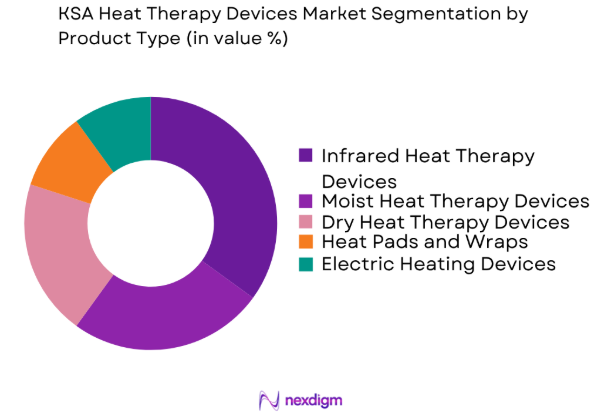
The KSA Heat Therapy Devices market is segmented by product type into infrared heat therapy devices, moist heat therapy devices, dry heat therapy devices, heat pads and wraps, and electric heating devices. Recently, infrared heat therapy devices have dominated the market share due to factors such as higher efficiency, widespread consumer preference, and the increasing popularity of smart devices that can be integrated into daily health routines.
By End-User Segment
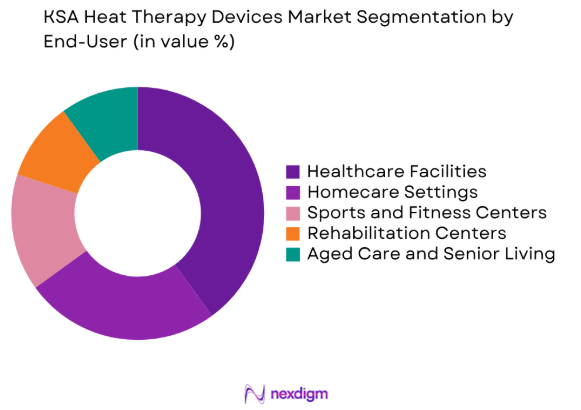
The market for KSA Heat Therapy Devices is segmented by end-user segment into healthcare facilities, homecare settings, sports and fitness centers, rehabilitation centers, and aged care and senior living facilities. Healthcare facilities have recently gained dominance due to the increasing adoption of non-invasive pain management techniques and the rising prevalence of musculoskeletal disorders, particularly in hospital settings.
Competitive Landscape
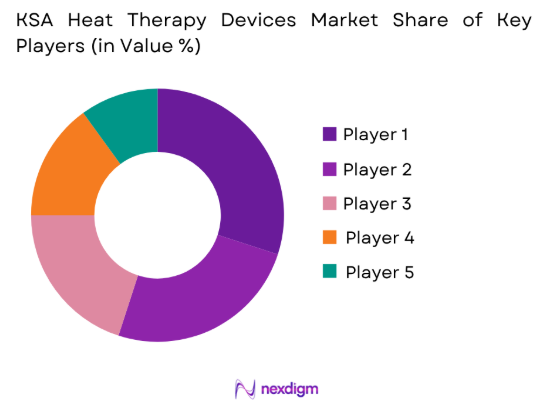
The KSA Heat Therapy Devices market is highly competitive, with several key players dominating the landscape. Market consolidation has been observed as companies strive to offer advanced technology and cater to the growing demand for homecare and healthcare applications. Major players in the industry focus on technological innovation and strategic partnerships to expand their market reach and improve their product offerings.
| Company Name | Establishment Year | Headquarters | Technology Focus | Market Reach | Key Products | Revenue | Additional Parameter |
| Omron Healthcare | 1933 | Japan | ~ | ~ | ~ | ~ | ~ |
| Beurer GmbH | 1919 | Germany | ~ | ~ | ~ | ~ | ~ |
| Philips Healthcare | 1891 | Netherlands | ~ | ~ | ~ | ~ | ~ |
| Panasonic | 1918 | Japan | ~ | ~ | ~ | ~ | ~ |
| BTL Industries | 1993 | Czech Republic | ~ | ~ | ~ | ~ | ~ |
KSA Heat Therapy Devices Market Analysis
Growth Drivers
Increasing Adoption of Homecare Solutions
The growing preference for at-home healthcare solutions is a key growth driver for the KSA Heat Therapy Devices market. Consumers are increasingly seeking non-invasive pain management options for use in the comfort of their homes. This trend is fueled by the desire for convenience and cost-effective alternatives. Additionally, Saudi Arabia’s aging population is driving the demand for home-based therapy, as elderly individuals require frequent pain relief. The availability of affordable, user-friendly heat therapy devices in retail and online outlets has further boosted market reach. Government initiatives to enhance healthcare accessibility and reduce healthcare facility pressure also support the adoption of home-based therapy products, leading to market expansion.
Technological Advancements in Heat Therapy Devices
Technological advancements are another key growth driver for the KSA Heat Therapy Devices market. Consumers are increasingly drawn to devices with advanced features like smart sensors, mobile app integration, and customizable settings, which provide personalized heat therapy treatments. The growing popularity of wearable heat therapy devices also contributes to this trend, offering convenience and on-the-go pain relief. For instance, wearable heat wraps provide discreet, continuous therapy without disrupting daily activities. The integration of wireless technology and IoT allows for remote control and monitoring, enhancing the user experience. These innovations are making heat therapy devices more appealing to health-conscious consumers, leading to higher market demand and investment in more sophisticated products.
Market Challenges
High Cost of Advanced Devices
A key challenge for the KSA Heat Therapy Devices market is the high cost of advanced systems. Despite growing demand for homecare devices, many consumers hesitate to invest in pricier products due to financial limitations. Advanced devices with features like IoT integration, smart sensors, and customizable settings tend to be significantly more expensive than basic models. This price gap hinders the adoption of high-tech heat therapy solutions, especially among low-income households. Although affordable options are becoming more available, many consumers still prefer cheaper, less advanced alternatives. Manufacturers face the challenge of balancing innovation with affordability, prompting them to offer financing options and discounts to make advanced devices more accessible.
Regulatory Hurdles in Device Approvals
A significant challenge in the KSA Heat Therapy Devices market is navigating regulatory hurdles related to medical device certifications. The Saudi Food and Drug Authority (SFDA) mandates that all health-related devices meet strict safety and efficacy standards before entering the market. While these regulations protect consumers, they often result in delays and increased operational costs for manufacturers. The approval process can be lengthy and complex, involving compliance with both local and international standards. Furthermore, frequent changes in regulatory requirements can complicate the approval process. These challenges can hinder market growth, as manufacturers face difficulties in introducing new products and expanding their market presence in a timely manner.
Opportunities
Expansion of Aged Care Facilities
As the aging population in Saudi Arabia grows, there is an increasing demand for effective, non-invasive therapies to manage chronic pain and mobility issues. This creates a significant opportunity for the KSA Heat Therapy Devices market, especially in aged care and rehabilitation centers. Heat therapy devices are commonly used for conditions such as arthritis, muscle pain, and joint stiffness, which are prevalent among the elderly. As healthcare systems focus more on eldercare, the demand for these devices will continue to rise. Moreover, the integration of heat therapy solutions in senior living communities and rehabilitation facilities will likely increase, leading to the widespread adoption of these devices in healthcare settings.
Technological Integration with Smart Healthcare Systems
The integration of heat therapy devices with smart healthcare systems presents a significant growth opportunity. With the rise of wearable technologies and IoT, these devices can now connect to mobile apps and cloud platforms for real-time monitoring and control. This connectivity enables users to track their progress, adjust settings remotely, and receive personalized treatment recommendations. As smart health solutions gain popularity, heat therapy devices offering these features are attracting tech-savvy consumers. Additionally, healthcare providers can use these technologies for remote patient monitoring, improving care and satisfaction. As demand for personalized health solutions grows, the KSA Heat Therapy Devices market stands to benefit from these technological advancements.
Future Outlook
The KSA Heat Therapy Devices market is expected to continue growing over the next five years, driven by advancements in product technology and an increasing focus on non-invasive pain management solutions. Technological developments such as IoT-enabled devices and wearable solutions will likely enhance consumer demand, while government regulations and support for health initiatives will foster market expansion. Moreover, growing consumer awareness and the increasing adoption of home-based healthcare products will further accelerate market growth. The next five years are likely to witness a surge in smart, connected devices, with heat therapy playing a pivotal role in wellness and rehabilitation sectors.
Major Players
- Omron Healthcare
- Beurer GmbH
- Philips Healthcare
- Panasonic
- BTL Industries
- Sunbeam Products
- LG Electronics
- Medtronic
- Xiaomi
- HoMedics
- HAPY
- HealthMate
- Therabath
- XieFang
- Inada
Key Target Audience
- Investments and venture capitalist firms
- Government and regulatory bodies
- Healthcare providers and clinics
- Homecare service providers
- Rehabilitation centers
- Sports organizations
- Fitness equipment retailers
- Consumers seeking pain relief solutions
Research Methodology
Step 1: Identification of Key Variables
The first step involves identifying the key variables that will influence the KSA Heat Therapy Devices market, including technology trends, consumer preferences, and regulatory factors.
Step 2: Market Analysis and Construction
Data from primary and secondary sources are collected and analyzed to construct a comprehensive view of the market, including size, trends, and segmentation.
Step 3: Hypothesis Validation and Expert Consultation
Expert consultations and hypothesis validation are conducted to ensure the accuracy of market predictions and to refine the analysis.
Step 4: Research Synthesis and Final Output
The research is synthesized into a final report, integrating insights and data to provide actionable recommendations for stakeholders in the KSA Heat Therapy Devices market.

- Executive Summary
- Research Methodology (Definitions, Scope, Industry Assumptions, Market Sizing Approach, Primary & Secondary Research Framework, Data Collection & Verification Protocol, Analytic Models & Forecast Methodology, Limitations & Research Validity Checks)

- Market Definition and Scope
- Value Chain & Stakeholder Ecosystem
- Regulatory / Certification Landscape
- Sector Dynamics Affecting Demand
- Strategic Initiatives & Infrastructure Growth

- Growth Drivers
Growing awareness of non-invasive pain management solutions
Increasing adoption of at-home healthcare devices
Rising healthcare spending in Saudi Arabia - Market Challenges
High cost of advanced heat therapy systems
Regulatory hurdles in medical device approvals
Limited consumer education on the benefits of heat therapy devices - Market Opportunities
Expanding elderly population creating demand for homecare devices
Advancements in wearable and smart heat therapy devices
Government initiatives promoting health and wellness - Trends
Integration of IoT and smart features in heat therapy devices
Focus on eco-friendly and energy-efficient devices
Rise of personalized and customized heat therapy solutions - Government Regulations
- SWOT Analysis of Key Competitors
- Porter’s Five Forces

- By Market Value 2020-2025
- By Installed Units 2020-2025
- By Average System Price 2020-2025
- By System Complexity Tier 2020-2025

- By System Type (In Value%)
Infrared Heat Therapy Devices
Moist Heat Therapy Devices
Dry Heat Therapy Devices
Heat Pads and Wraps
Electric Heating Devices - By Platform Type (In Value%)
Standalone Heat Therapy Devices
Mobile Heat Therapy Devices
Smart Heat Therapy Systems
Wearable Heat Therapy Devices
Professional Medical Heat Therapy Equipment - By Fitment Type (In Value%)
Portable Fitment Devices
Wearable Fitment Devices
Stationary Fitment Devices
In-bed Fitment Devices
Flexible Fitment Devices - By End User Segment (In Value%)
Healthcare Facilities
Homecare Settings
Sports and Fitness Centers
Rehabilitation Centers
Aged Care and Senior Living Facilities - By Procurement Channel (In Value%)
Online Retailers
Physical Medical Device Retailers
Hospitals and Healthcare Institutions
Distributors and Suppliers
Direct B2B Sales

- Market Share Analysis
- Cross Comparison Parameters (Device Type, Platform Type, End User Segment, Region, Price Range, Technology Type, Brand Recognition, Distribution Channels, Customer Demographics, Regulatory Compliance)
- SWOT Analysis of Key Competitors
- Pricing & Procurement Analysis
- Key Players
BTL Industries
Omron Healthcare
Beurer GmbH
Philips Healthcare
LG Electronics
Panasonic Corporation
Medtronic
Xiaomi
Sunbeam Products
Johnson & Johnson
HAPY
ThermoFlow
HealthMate
HoMedics
XieFang

- Healthcare providers seeking efficient pain management solutions
- Consumers in need of affordable home-based therapy products
- Sports teams and fitness professionals looking for recovery tools
- Elderly individuals and rehabilitation centers

- Forecast Market Value, 2026-2035
- Forecast Installed Units, 2026-2035
- Price Forecast by System Tier, 2026-2035
- Future Demand by Platform, 2026-2035


 Request a Sample
 Ask for Customization
 Get a Quote
 Enquire Now