

 Download PDF
 Download PDF
Market Overview
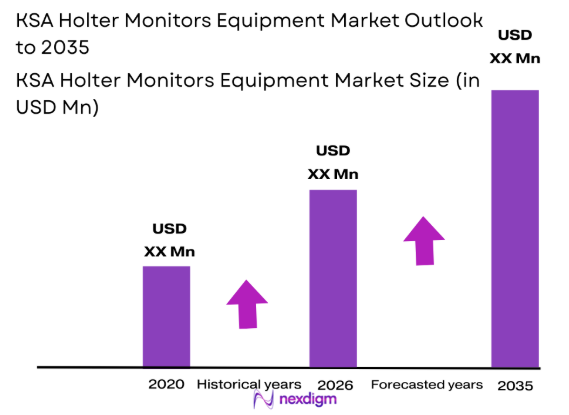
The KSA Holter Monitors Equipment market is a rapidly growing segment within the healthcare industry, with a significant market size driven by the increasing prevalence of cardiovascular diseases. Based on a recent historical assessment, the market is expected to reach USD ~ million, fueled by advancements in wearable technologies and the rising demand for non-invasive cardiac monitoring systems. This growth is also supported by the increased adoption of Holter monitors across hospitals, clinics, and home healthcare settings, offering continuous and reliable heart health tracking solutions.
Saudi Arabia, along with other parts of the Middle East, is emerging as a dominant region in the Holter monitor market due to significant healthcare infrastructure investments. Major cities like Riyadh and Jeddah are central to this expansion, benefiting from government initiatives to improve medical care, particularly in cardiology. Furthermore, the country’s strong healthcare policies and increasing healthcare awareness contribute to the growing demand for advanced diagnostic tools such as Holter monitors.
Market Segmentation
By Product Type
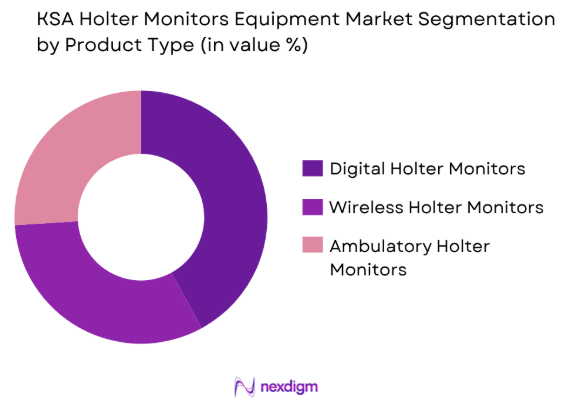
The KSA Holter Monitors Equipment market is segmented by product type into digital Holter monitors, wireless Holter monitors, and ambulatory Holter monitors. Recently, digital Holter monitors have garnered a dominant market share due to factors such as their high precision, ease of use, and compatibility with modern diagnostic platforms. This product segment offers hospitals and healthcare providers enhanced capabilities in monitoring heart conditions, thus gaining popularity in the region.
By End-User Segment
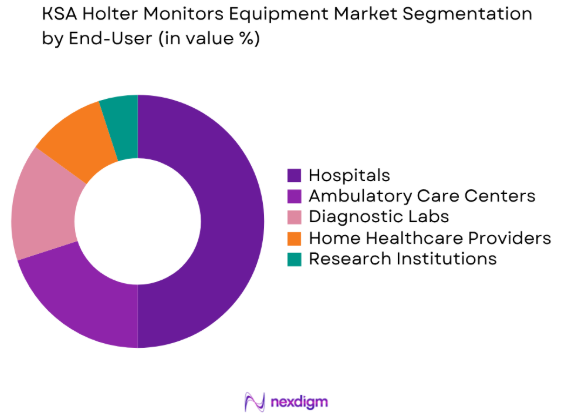
The KSA Holter Monitors Equipment market is segmented by end-user into hospitals, ambulatory care centers, diagnostic labs, home healthcare providers, and research institutions. Recently, hospitals have emerged as the dominant end-user segment, driven by the increasing prevalence of cardiovascular diseases and the need for continuous heart monitoring systems. Hospitals utilize Holter monitors to provide patients with a comprehensive analysis of cardiac health, thereby facilitating early detection and effective treatment.
Competitive Landscape
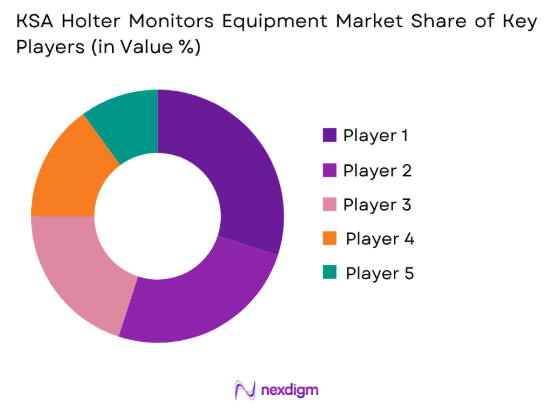
The competitive landscape of the KSA Holter Monitors Equipment market is highly dynamic, characterized by a mix of global players and regional healthcare equipment manufacturers. The market has seen increased consolidation, with major companies expanding their product portfolios through mergers, acquisitions, and strategic partnerships. These players continue to innovate, offering integrated solutions that combine Holter monitoring with other cardiac diagnostic technologies. The presence of well-established players ensures that the market remains competitive, with companies continuously striving to enhance their technological capabilities and market reach.
| Company Name | Establishment Year | Headquarters | Technology Focus | Market Reach | Key Products | Revenue (USD) | Additional Parameter |
| GE Healthcare | 1892 | Chicago, USA | ~ | ~ | ~ | ~ | ~ |
| Philips Healthcare | 1891 | Amsterdam, NL | ~ | ~ | ~ | ~ | ~ |
| Medtronic | 1949 | Dublin, Ireland | ~ | ~ | ~ | ~ | ~ |
| BioTelemetry | 2000 | Malvern, USA | ~ | ~ | ~ | ~ | ~ |
| Abbott Laboratories | 1888 | Chicago, USA | ~ | ~ | ~ | ~ | ~ |
KSA Holter Monitors Equipment Market Analysis
Growth Drivers
Increase in Cardiovascular Disease Prevalence
The increasing prevalence of cardiovascular diseases, especially in the Middle East, significantly drives the demand for Holter monitoring equipment. As heart-related conditions rise due to lifestyle factors and aging populations, the need for continuous heart monitoring grows. Holter monitors allow for long-term tracking of heart health, helping to detect arrhythmias and other cardiac issues early. This capability is crucial in identifying potential risks before they become severe, which is why Holter monitors are becoming a preferred tool in hospitals and healthcare settings. The ability to monitor patients remotely and continuously is playing a vital role in advancing cardiovascular care in the region.
Technological Advancements in Wearable Devices
Advancements in wearable technology have greatly improved the performance and adoption of Holter monitoring devices. Innovations like wireless capabilities, real-time monitoring, and integration with mobile applications have increased the popularity of Holter monitors in KSA. These technologies enable continuous and remote tracking of heart health, allowing healthcare providers to monitor patients more effectively. The shift towards non-invasive, user-friendly devices has made Holter monitors more accessible, providing patients with a more convenient and less intrusive way to manage their cardiac health. This shift has led to the widespread adoption of Holter monitors across healthcare settings, driving the rapid growth of the market in Saudi Arabia.
Market Challenges
High Costs of Advanced Systems
A major challenge in the KSA Holter Monitors Equipment market is the high cost of advanced monitoring systems. While these devices offer superior accuracy and functionality, their expensive nature limits their adoption, particularly in smaller healthcare centers and rural areas. The significant initial investment required to purchase the equipment, along with ongoing maintenance and operational costs, often deters smaller medical facilities from upgrading to the latest Holter monitors. As a result, the financial barriers associated with these systems hinder their widespread implementation, especially in regions with limited budgets, making it challenging for all healthcare establishments to access and benefit from the latest cardiac monitoring technology.
Regulatory and Certification Hurdles
Another key challenge in the KSA Holter Monitors Equipment market is the complex regulatory approval process for new medical devices. Navigating Saudi Arabia’s stringent regulatory frameworks and securing the required certifications can significantly delay product launches and increase costs for manufacturers. As the healthcare sector expands, manufacturers are under pressure to comply with local regulations while ensuring their products meet international quality standards. This dual requirement for adherence to both local and global benchmarks creates a considerable challenge, as it not only extends the time to market but also raises operational costs. This regulatory burden poses a significant obstacle to the timely introduction of new Holter monitoring technologies in the region.
Opportunities
Rising Demand for Remote Patient Monitoring
The growing trend of remote patient monitoring offers a significant opportunity for the KSA Holter Monitors Equipment market. As healthcare providers increasingly adopt telemedicine and virtual consultations, the demand for devices that enable remote monitoring has risen. Wireless and portable Holter monitors are particularly well-suited for remote cardiac monitoring, allowing patients to receive continuous care without frequent hospital visits. This shift towards at-home and remote healthcare delivery enhances patient convenience and accessibility to care, driving the adoption of Holter monitors. With the increasing focus on telehealth and remote monitoring solutions, the market for Holter monitors in Saudi Arabia is poised for substantial growth in the coming years.
Government Initiatives in Healthcare Expansion
Saudi Arabia’s Vision 2030 plan, which focuses on enhancing healthcare infrastructure and introducing advanced medical technologies, creates significant opportunities for the Holter monitor market. The government’s investments in healthcare modernization, alongside the drive for advanced diagnostic equipment, are increasing demand for devices like Holter monitors. As part of its national health strategy, Saudi Arabia is expanding healthcare facilities and promoting preventive healthcare measures, which further supports the growth of the Holter monitors market. These initiatives aim to provide better healthcare services and diagnostic tools, paving the way for widespread adoption of Holter monitors, ensuring continued market growth in the years ahead.
Future Outlook
The future of the KSA Holter Monitors Equipment market is promising, with expected growth driven by technological advancements, rising demand for remote monitoring, and increased awareness of cardiovascular health. The adoption of innovative features such as real-time data streaming and integration with mobile health apps will enhance the user experience and broaden the market. Furthermore, the government’s commitment to improving healthcare infrastructure will likely support the expansion of the market, with increased investments and regulatory support. Technological improvements in system affordability and accessibility will also drive wider adoption, contributing to the market’s growth over the next five years.
Major Players
- GE Healthcare
- Philips Healthcare
- Medtronic
- BioTelemetry
- Abbott Laboratories
- Welch Allyn
- Nihon Kohden
- Siemens Healthineers
- Zoll Medical
- Schiller AG
- Spacelabs Healthcare
- Mindray
- Innomed
- Fukuda Denshi
- BPL Medical Technologies
Key Target Audience
- Investments and venture capitalist firms
- Government and regulatory bodies
- Healthcare providers and hospitals
- Medical equipment distributors
- Telemedicine providers
- Home healthcare service providers
- Health insurance companies
- Cardiology research institutions
Research Methodology
Step 1: Identification of Key Variables
Identify and define the key market variables, including product types, end-user segments, and geographical regions to focus research efforts.
Step 2: Market Analysis and Construction
Conduct an in-depth analysis of the market, including evaluating growth trends, technological developments, and demand drivers.
Step 3: Hypothesis Validation and Expert Consultation
Validate hypotheses with experts from the healthcare and medical device sectors to ensure findings are accurate and relevant.
Step 4: Research Synthesis and Final Output
Consolidate the research findings into a comprehensive market report, ensuring all data points and analysis are aligned with the report objectives.

- Executive Summary
- Research Methodology (Definitions, Scope, Industry Assumptions, Market Sizing Approach, Primary & Secondary Research Framework, Data Collection & Verification Protocol, Analytic Models & Forecast Methodology, Limitations & Research Validity Checks)

- Market Definition and Scope
- Value Chain & Stakeholder Ecosystem
- Regulatory / Certification Landscape
- Sector Dynamics Affecting Demand
- Strategic Initiatives & Infrastructure Growth

- Growth Drivers
Increased prevalence of cardiovascular diseases
Advancements in wearable health monitoring technology
Growing awareness of preventive healthcare and early diagnosis - Market Challenges
High cost of advanced Holter monitoring systems
Regulatory hurdles and certification delays
Limited infrastructure in remote and rural regions - Market Opportunities
Expansion of telemedicine and remote patient monitoring
Rising demand for home healthcare solutions
Adoption of AI and machine learning in Holter monitoring - Trends
Integration of Holter monitoring with IoT and smart devices
Increasing demand for multi-functional monitoring systems
Adoption of cloud-based storage and analysis for patient data - Government Regulations
- SWOT Analysis of Key Competitors
- Porter’s Five Forces

- By Market Value, 2020-2025
- By Installed Units, 2020-2025
- By Average System Price, 2020-2025
- By System Complexity Tier, 2020-2025

- By System Type (In Value%)
Wireless Holter Monitors
Digital Holter Monitors
Ambulatory Holter Monitors
Battery-powered Holter Monitors
Real-time Monitoring Holter Systems - By Platform Type (In Value%)
Cloud-based Platforms
PC-based Platforms
Mobile Device Integration Platforms
Standalone System Platforms
Hybrid Platform Systems - By Fitment Type (In Value%)
Chest Strap Fitment
Adhesive Patch Fitment
Wearable Clip Fitment
Arm Band Fitment
Pocket-sized Device Fitment - By End User Segment (In Value%)
Hospitals and Clinics
Ambulatory Care Centers
Diagnostic Laboratories
Home Healthcare Providers
Research and Medical Institutions - By Procurement Channel (In Value%)
Direct Sales
Distributors and Retailers
Online Sales Channels
Government Tenders and Healthcare Contracts
Medical Equipment Expos and Conferences

- Market Share Analysis
- Cross Comparison Parameters (Technology innovation, Product pricing, Market penetration, Brand strength, Customer service)
- SWOT Analysis of Key Competitors
- Pricing & Procurement Analysis
- Key Players
GE Healthcare
Philips Healthcare
Medtronic
BioTelemetry
Nihon Kohden
Abbott Laboratories
Welch Allyn
Hill-Rom
Siemens Healthineers
Zoll Medical
Schiller AG
Spacelabs Healthcare
Mindray
Innomed
Fukuda Denshi

- Hospitals focusing on cardiology departments
- Diagnostic labs offering cardiac tests
- Ambulatory care centers for non-invasive monitoring
- Homecare providers integrating wearable health solutions

- Forecast Market Value, 2026-2035
- Forecast Installed Units, 2026-2035
- Price Forecast by System Tier, 2026-2035
- Future Demand by Platform, 2026-2035


 Request a Sample
 Ask for Customization
 Get a Quote
 Enquire Now