

 Download PDF
Market Overview
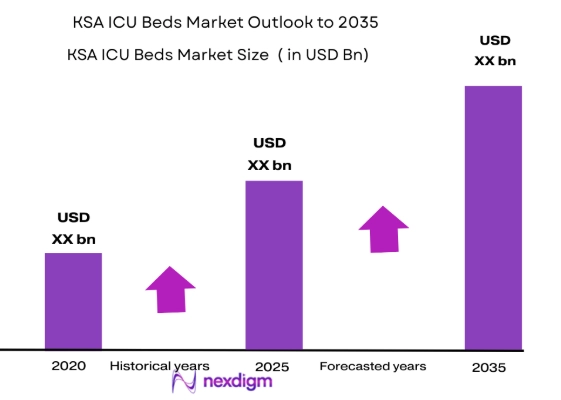
The ICU bed market is witnessing robust growth, fueled by increasing healthcare investments, technological advancements, and a rising demand for critical care solutions. As healthcare infrastructure expands globally, the demand for ICU beds has steadily risen, particularly in regions with established healthcare systems like the United States, Germany, and Japan. The growing aging population, combined with a surge in critical illness cases, is driving the adoption of advanced ICU technologies. Innovations in smart and automated ICU beds, aimed at improving patient care quality and efficiency, are expected to further enhance the market dynamics. With governments and healthcare providers prioritizing better patient safety and care standards, the market is poised to continue its upward trajectory, with projections indicating a potential reach of USD ~ billion.
In addition to developed nations, emerging markets such as India and China are showing significant growth potential due to improving healthcare infrastructure and rising awareness around critical care standards. These regions are experiencing an increase in the number of hospitals and healthcare providers, with a growing emphasis on advanced medical equipment and ICU technology. As a result, the global ICU bed market is anticipated to see steady growth, driven by rising healthcare budgets, a need for specialized care, and technological advancements in bed solutions. With global market forecasts predicting a compound annual growth rate (CAGR) of around 4.7% to 8.7%, the ICU bed market is set for continued expansion, supported by the increasing adoption of advanced critical care solutions.
Market Segmentation
By Product Type
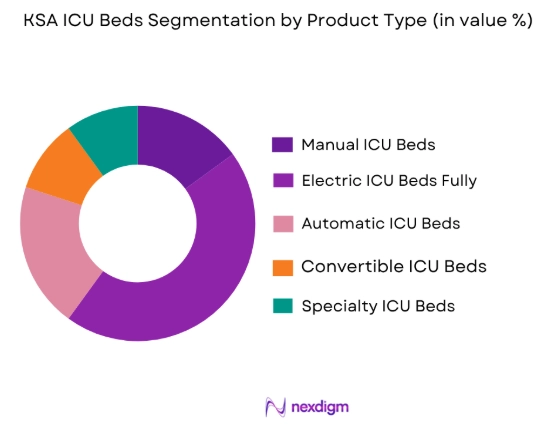
The ICU bed market is segmented by product type into manual, electric, fully automatic, convertible, and specialty ICU beds. Recently, the electric ICU bed sub-segment has garnered a dominant market share due to the increasing preference for high-tech features, such as adjustability and enhanced patient comfort. These beds offer better patient care management, comfort, and ease of use compared to manual alternatives, making them highly favored by both healthcare providers and patients. Moreover, electric beds are preferred for their ability to reduce the physical strain on healthcare staff, facilitating smoother patient movement and adjustments. The electric ICU bed’s adaptability to various patient needs, including those requiring intensive care, has further contributed to its growth in the ICU bed market.
By Platform Type
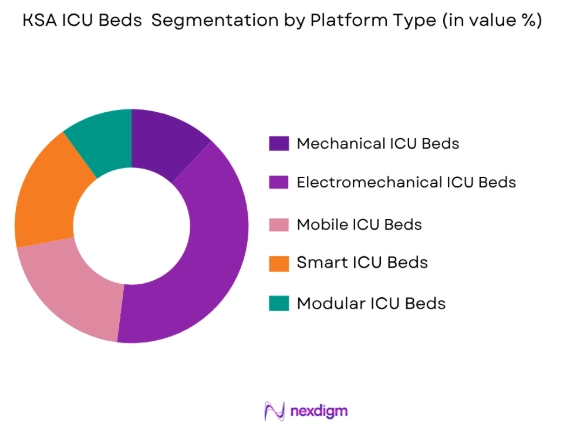
The ICU bed market is segmented by platform type into mechanical, electromechanical, mobile, smart, and modular ICU beds. The electromechanical ICU bed sub-segment has experienced rapid growth due to its hybrid technology, combining the advantages of mechanical functionality with the precision of electromechanical components. These beds enable more precise adjustments and enhanced patient care, making them the preferred choice in critical care settings. With the growing demand for integrated healthcare systems, electromechanical ICU beds provide increased flexibility and reliability, which explains their market dominance. Moreover, hospitals are increasingly investing in this technology due to its potential to improve overall patient outcomes and minimize hospital costs.
Competitive Landscape
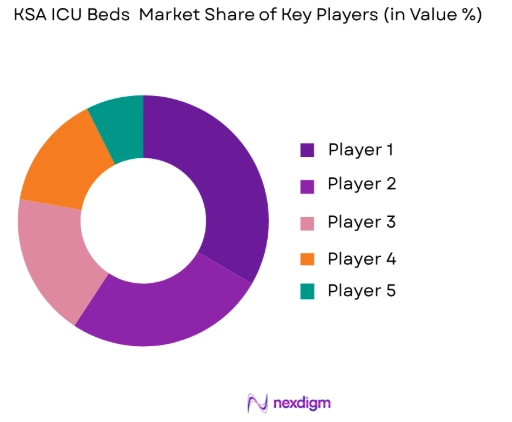
The ICU bed market is highly competitive, with consolidation occurring among major players aiming to strengthen their market positions. These players are engaged in strategic mergers, acquisitions, and collaborations to expand their product portfolios and technological expertise. The market is also marked by frequent innovations in bed design and features, as companies race to meet the growing demands for more efficient, patient-friendly, and technologically advanced ICU solutions. Dominant players in the market include companies offering automated systems, smart beds, and solutions integrated with other healthcare technologies. Their ability to meet regulatory standards and develop cutting-edge products has positioned them as strong contenders in a market with growing demand.
| Company Name | Establishment Year | Headquarters | Technology Focus | Market Reach | Key Products | Revenue | Additional Market-Specific Parameter |
| Medtronic | 1949 | Ireland | ~ | ~ | ~ | ~ | ~ |
| Philips Healthcare | 1891 | Netherlands | ~ | ~ | ~ | ~ | ~ |
| Hill-Rom | 1929 | USA | ~ | ~ | ~ | ~ | ~ |
| Stryker Corporation | 1941 | USA | ~ | ~ | ~ | ~ | ~ |
| Siemens Healthineers | 1847 | Germany | ~ | ~ | ~ | ~ | ~ |
KSA ICU Beds Market Analysis
Growth Drivers
Increasing Healthcare Infrastructure Investments
Saudi Arabia is significantly expanding its healthcare infrastructure as part of strategic national development plans under Vision 2030, which includes US $65 billion in healthcare infrastructure investments aimed at modernizing and expanding hospitals and related facilities. This broad allocation supports the procurement and deployment of advanced medical equipment such as ICU beds, enabling public and private hospitals to enhance critical care capacity. Expanded infrastructure directly increases ICU bed demand as facilities aim to meet rising critical care needs tied to both demographic and epidemiological shifts.
Rising Geriatric Population
Saudi Arabia’s demographic profile is shifting toward an older population, with chronic conditions such as hypertension and diabetes highly prevalent among older adults; for example, nearly 49 percent of Saudis aged 65+ report hypertension, and 47 percent report diabetes, according to national estimates. An aging population correlates with increased incidence of conditions requiring critical care services in ICU settings, driving demand for ICU beds that support long‑term monitoring and complex treatment regimens.
Market Challenges
Regulatory Compliance Challenges
The healthcare sector in Saudi Arabia is governed by evolving regulatory frameworks that ensure safety and performance of medical devices and hospital equipment. Innovations and medical technologies, including ICU beds with advanced monitoring and connectivity features, must comply with registration requirements of the Saudi FDA and meet accreditation standards tied to hospital licensure. Navigating these compliance pathways can result in extended time to market and increased upfront validation costs for manufacturers and suppliers entering the ICU beds segment.
Lack of Skilled Workforce
Despite investments in healthcare infrastructure, Saudi Arabia continues to face workforce shortages in critical care, which can limit effective utilization of ICU beds and advanced technologies. Vision 2030 workforce plans outline recruitment targets of 175,000 healthcare professionals by 2030 to bolster staffing, including doctors, nurses, and allied professionals, highlighting existing gaps. The shortage of skilled intensivists and ICU support staff constrains hospitals’ ability to scale critical care capacity despite physical bed availability.
Market Opportunities
Growing Demand for Advanced ICU Beds
The increasing prevalence of chronic diseases and complex care needs is steering hospitals toward the adoption of advanced ICU beds equipped with electric adjustment, integrated monitoring, and patient safety systems. Although direct Saudi ICU bed counts are not widely published, Middle East market trends indicate a strategic shift toward technologically enhanced beds that improve clinical outcomes and reduce caregiver burden, aligning with broader healthcare quality improvement goals. This demand presents opportunities for suppliers specializing in smart ICU solutions.
Expansion of Private Healthcare Sector
The private healthcare sector in Saudi Arabia is expanding its footprint, complementing public healthcare services through new hospitals and specialty clinics that require dedicated ICU facilities. Private sector bed capacity has been notably increased through ongoing expansions and establishment of new hospitals, indicating strong institutional demand for ICU beds with advanced features. This growth in private care infrastructure enhances procurement channels for suppliers and supports diversification of ICU bed offerings tailored to private hospital specifications.
Future Outlook
The future outlook of the ICU bed market appears promising, with significant growth anticipated over the next few years. Technological advancements such as automation, IoT, and AI integration will continue to reshape the market, driving demand for advanced ICU bed systems. Additionally, healthcare infrastructure development in emerging markets will create a surge in demand for ICU beds, further fueling market expansion. Regulatory support from governments around the world will also play a crucial role in ensuring the widespread adoption of advanced healthcare technologies, including ICU beds. As hospitals continue to prioritize patient safety, comfort, and operational efficiency, the demand for smart and high-tech ICU beds is set to increase, offering considerable growth opportunities for market players.
Major Players
- Medtronic
- Philips Healthcare
- Hill-Rom
- Stryker Corporation
- Siemens Healthineers
- GE Healthcare
- Drägerwerk AG
- Getinge Group
- Arjo
- Invacare Corporation
- Linet Group
- Baumer Healthcare
- Merivaara
- Fu Shun Hsin
- K Care Healthcare
Key Target Audience
- Investments and venture capitalist firms
- Government and regulatory bodies
- Private hospital chains
- Healthcare equipment suppliers
- Critical care facilities
- ICU bed manufacturers
- Healthcare technology providers
- Insurance companies
Research Methodology
Step 1: Identification of Key Variables
We identified the key market variables, including technological trends, geographic demands, and regulatory frameworks, to understand the dynamics driving market growth.
Step 2: Market Analysis and Construction
The market was analyzed through primary research, industry reports, and competitor analysis to construct a comprehensive market profile and segmentation.
Step 3: Hypothesis Validation and Expert Consultation
We validated our hypotheses through consultations with industry experts, healthcare providers, and key stakeholders within the ICU bed market.
Step 4: Research Synthesis and Final Output
The final output was synthesized from the research findings, expert consultations, and market data, leading to a comprehensive and reliable market report.

- Executive Summary
- Research Methodology (Definitions, Scope, Industry Assumptions, Market Sizing Approach, Primary & Secondary Research Framework, Data Collection & Verification Protocol, Analytic Models & Forecast Methodology, Limitations & Research Validity Checks, Data Sources and Forecast Modeling Methodology, Primary Research Framework, Limitations and Judgment Calls)

- Market Definition and Scope
- Value Chain & Stakeholder Ecosystem
- Regulatory / Certification Landscape
- Sector Dynamics Affecting Demand
- Strategic Initiatives & Infrastructure Growth

- Growth Drivers
Increasing Healthcare Infrastructure Investments
Rising Geriatric Population
Technological Advancements in ICU Beds - Market Challenges
High Initial Costs
Regulatory Compliance Challenges
Lack of Skilled Workforce - Market Opportunities
Growing Demand for Advanced ICU Beds
Expansion of Private Healthcare Sector
Government Initiatives for Healthcare Expansion - Trends
Integration of IoT in ICU Beds
Customization of ICU Beds
Adoption of Automation in ICU Care - Government Regulations
- SWOT Analysis of Key Competitors
- Porter’s Five Forces

- By Revenue, 2020-2025
- By Units Deployed, 2020-2025
- By Average Selling Price, 2020-2025

- By Product Type (In Value%)
Manual ICU Beds
Electric ICU Beds
Fully Automatic ICU Beds
Convertible ICU Beds
Specialty ICU Beds - By Platform Type (In Value%)
Mechanical ICU Beds
Electromechanical ICU Beds
Mobile ICU Beds
Smart ICU Beds
Modular ICU Beds - By Fitment Type (In Value%)
Fixed ICU Beds
Modular ICU Beds
Portable ICU Beds
Customizable ICU Beds
Emergency ICU Beds - By End User Segment (In Value%)
Public Hospitals
Private Hospitals
Research & Academic Institutions
Specialized ICU Facilities
Home Care Providers - By Procurement Channel (In Value%)
Direct Procurement from Manufacturers
Government Tenders
Third-Party Suppliers
Online Procurement Platforms
Hospitals’ Internal Procurement Units

- Market Share of Major Players
- Market Share by ICU Bed Type Segment
- Market Share Analysis
- Cross Comparison Parameters (After‑Sales Service Network Coverage, Regulatory Approvals & Certifications Held, Warranty, Maintenance & Lifecycle Support Terms,
Distribution Channel Coverage, Production Capacity/Local Assembly Footprint, Pricing Tier Positioning, R&D Investment Focus, Customization & OEM Hospital Integration Experience) - Pricing & Procurement Analysis
- Key Players
Hill‑Rom
Stryker Corporation
Getinge Group
Fritz Stephan GmbH
Drägerwerk AG & Co. KGaA
GE Healthcare
Philips Healthcare
Medtronic
Sysmex Corporation
Invacare Corporation
Joerns Healthcare
ArjoHuntleigh
Linet Group
Ergotron Inc.
UHS

- Public Hospitals Demand
- Private Hospitals Demand
- Demand from Specialized ICU Facilities
- Demand from Home Care Providers

- By Revenue, 2026-2035
- By Units Deployed, 2026-2035
- By Average Selling Price, 2026-2035


 Request a Sample
 Ask for Customization
 Get a Quote
 Enquire Now