

 Download PDF
Market Overview
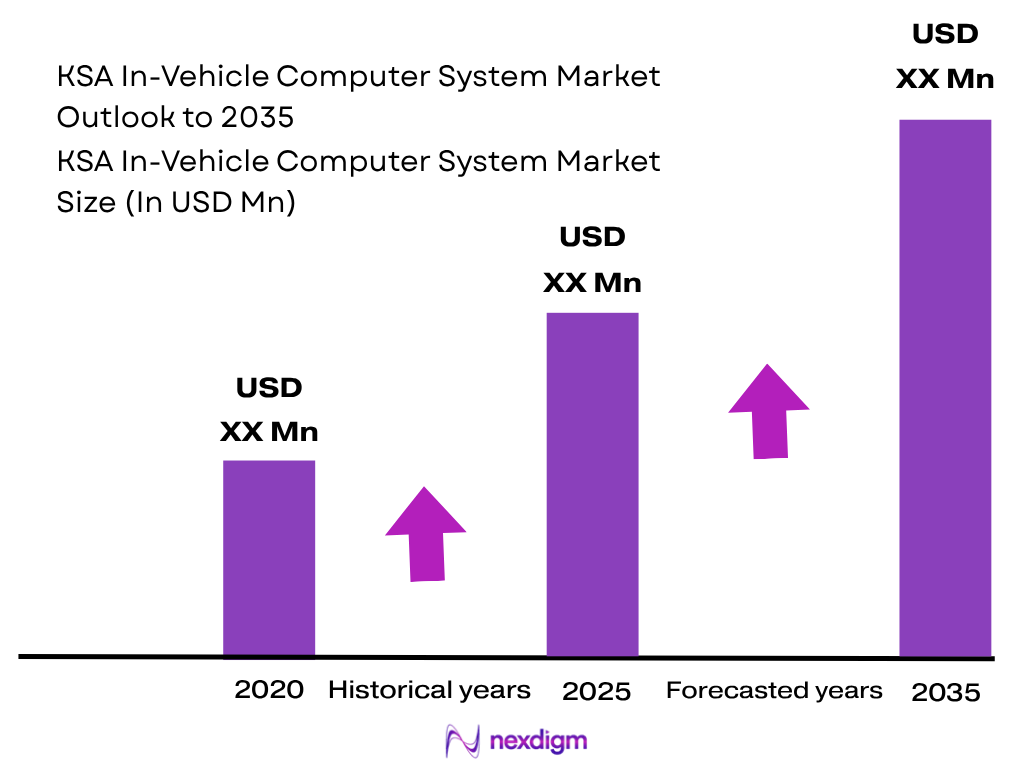
The KSA In-Vehicle Computer System market is valued at approximately USD ~ billion in 2024, supported by increasing vehicle digitization, connected mobility adoption, and rising integration of advanced automotive electronics. The market growth is driven by the transition toward software-defined vehicles, increasing deployment of digital cockpit solutions, and expanding demand for advanced driver assistance system (ADAS) computing platforms. The Kingdom’s automotive sector is also benefiting from growing investment in smart transportation infrastructure and vehicle technology modernization under national mobility transformation initiatives.
The KSA In-Vehicle Computer System market is concentrated around major automotive and technology hubs including Riyadh, Jeddah, Dammam, and the Eastern Province due to their concentration of vehicle sales networks, technology infrastructure, fleet operators, and smart mobility projects. Riyadh dominates because of its position as the economic center and the implementation of intelligent transportation initiatives, while Jeddah and Dammam benefit from strong commercial vehicle demand, logistics activity, and automotive service ecosystems. The presence of premium vehicle users and connected mobility adoption further supports regional technology deployment.
Market Segmentation
By System Type
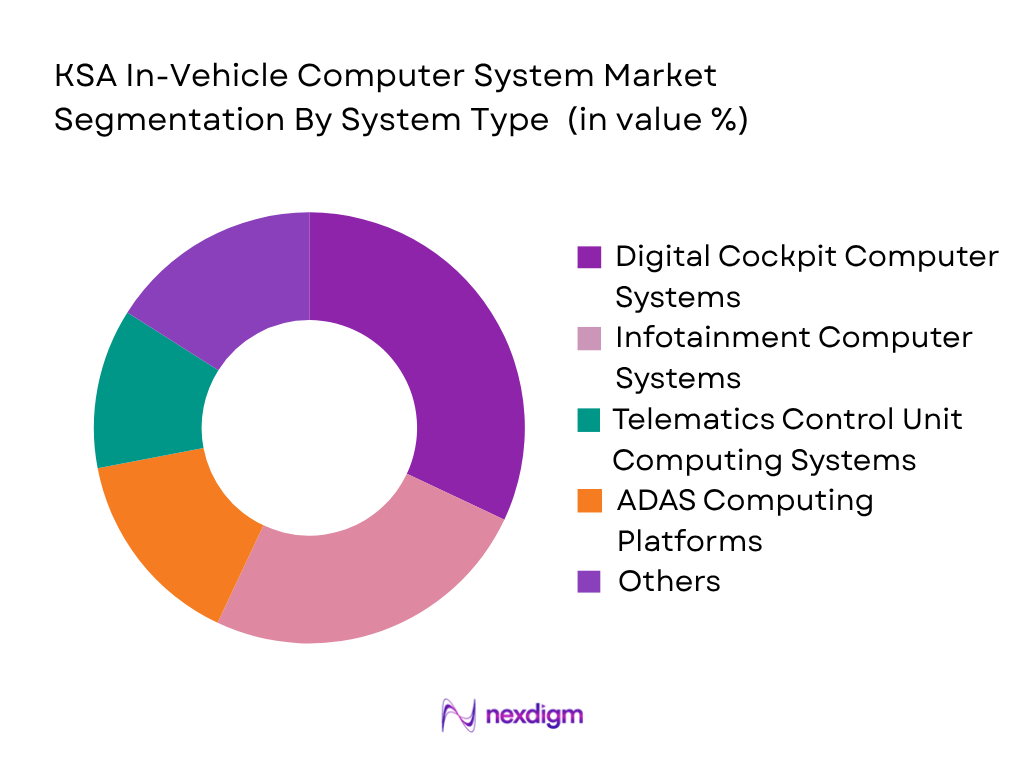
The KSA In-Vehicle Computer System market is segmented by system type into infotainment computer systems, digital cockpit computer systems, telematics control units, ADAS computing platforms, vehicle gateway computers, central vehicle computing platforms, and instrument cluster computing systems. Digital cockpit computer systems represent the dominant segment due to increasing consumer preference for advanced user interfaces, integrated displays, connected services, and premium vehicle experiences. Automotive manufacturers are increasingly incorporating centralized cockpit solutions combining infotainment, navigation, communication, and vehicle control functions. The growing penetration of premium vehicles and electric vehicles in Saudi Arabia has accelerated adoption of high-performance computing platforms capable of supporting multiple digital applications.
By Vehicle Type
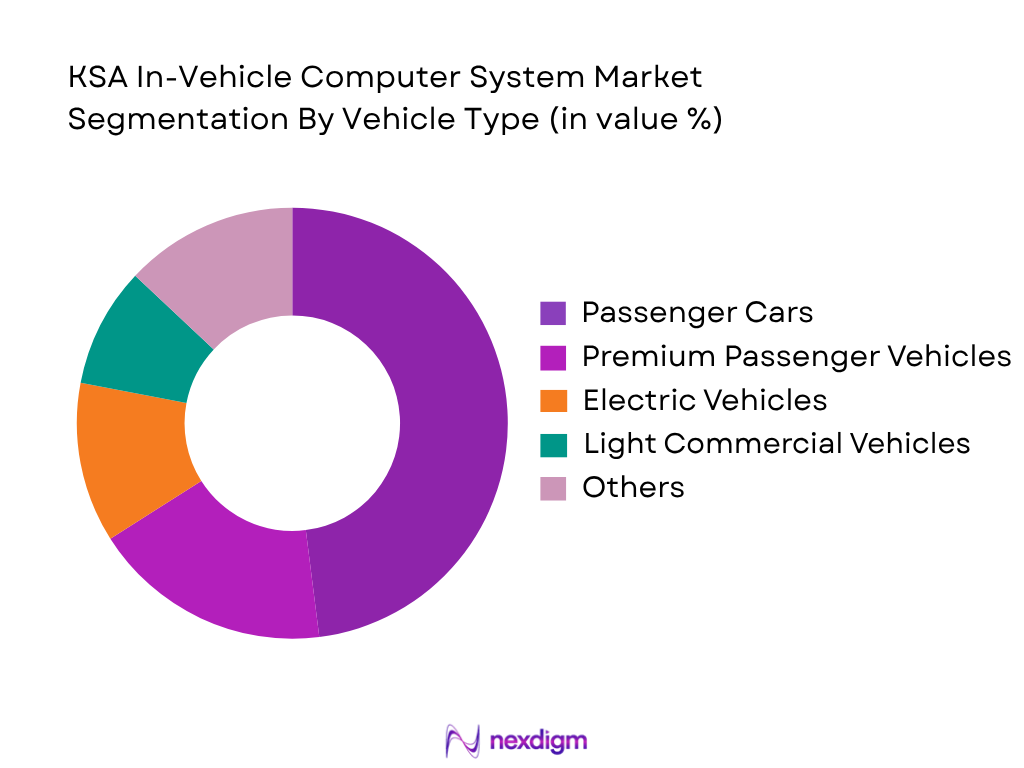
The KSA In-Vehicle Computer System market is segmented by vehicle type into passenger cars, premium passenger vehicles, electric vehicles, hybrid vehicles, light commercial vehicles, heavy commercial vehicles, buses, and specialty vehicles. Passenger cars account for the leading share due to high vehicle ownership levels, increasing adoption of connected vehicle features, and strong demand for technologically advanced automotive systems. Saudi Arabia’s consumer preference toward SUVs, luxury vehicles, and technologically equipped passenger vehicles has encouraged OEMs to integrate advanced computing systems as standard features. Additionally, rising EV adoption is increasing demand for centralized computing architectures and battery management-related computing platforms.
Competitive Landscape
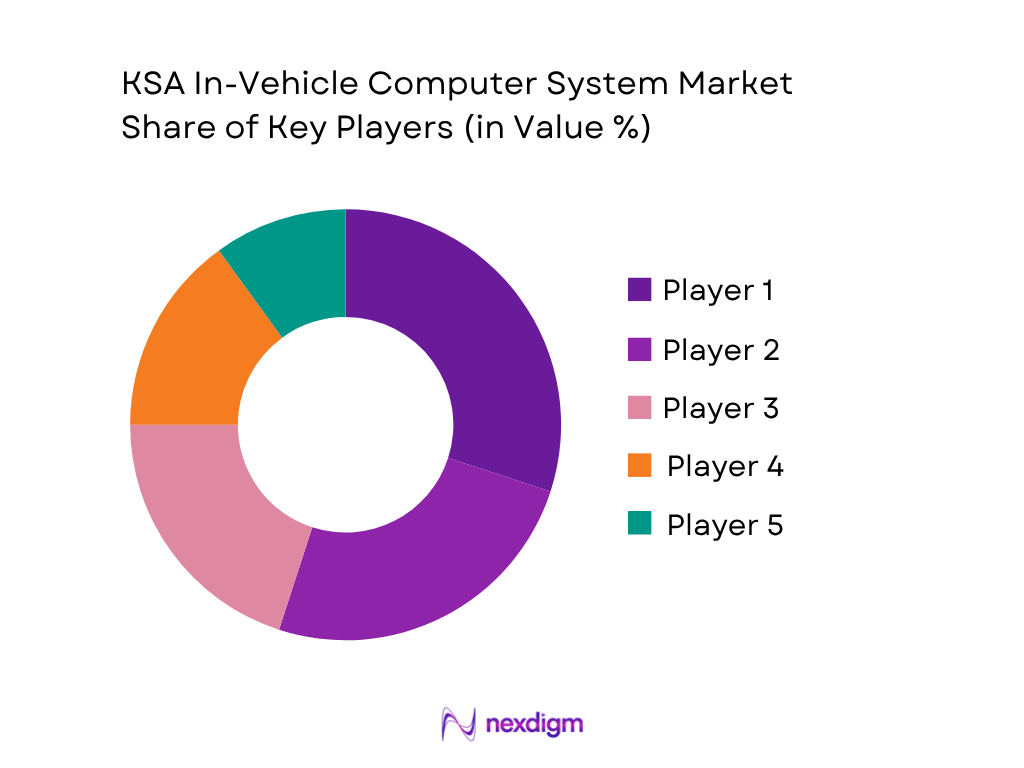
The KSA In-Vehicle Computer System market is characterized by the presence of global automotive technology suppliers, semiconductor companies, and vehicle manufacturers developing connected vehicle platforms. Competition is driven by capabilities in digital cockpit solutions, automotive processors, ADAS computing, cybersecurity, and OEM partnerships. Leading companies are focusing on centralized vehicle architectures and software-defined vehicle technologies to address future mobility requirements in Saudi Arabia.
| Major Player | Establishment Year | Headquarters | Digital Cockpit Capability | ADAS Computing | Connectivity & Telematics | Automotive Semiconductor Integration | OEM Integration | Software & OTA Capability |
| HARMAN International | 1980 | Stamford, Connecticut, USA | ~ | ~ | ~ | ~ | ~ | ~ |
| Bosch Mobility | 1886 | Stuttgart, Germany | ~ | ~ | ~ | ~ | ~ | ~ |
| Continental AG | 1871 | Hanover, Germany | ~ | ~ | ~ | ~ | ~ | ~ |
| DENSO Corporation | 1949 | Kariya, Aichi, Japan | ~ | ~ | ~ | ~ | ~ | ~ |
| Qualcomm Technologies | 1985 | San Diego, California, USA | ~ | ~ | ~ | ~ | ~ | ~ |
KSA In-Vehicle Computer System Market Analysis
Growth Drivers
Rising Vehicle Fleet and Automotive Activity
The expansion of the installed vehicle base is a direct structural driver for the KSA In-Vehicle Computer System market because every new connected, digitally equipped, or electronically upgraded vehicle increases potential demand for infotainment computers, digital cockpit controllers, telematics units, gateway processors and ADAS computing platforms. GASTAT reported more than 15.8 million registered vehicles in use in 2024, representing an increase from the previous year, while newly issued vehicle registrations exceeded 1.0 million units. Road-transport activity also remains substantial, with serious traffic accidents exceeding 17.2 thousand during the year, reinforcing the relevance of electronic safety, diagnostics and driver-assistance technologies. Invest Saudi identifies approximately 860,000 vehicles sold in 2024, demonstrating the scale of annual vehicle demand available for technology integration. The country’s macroeconomic environment also supports automotive technology investment: the World Bank records US$1,239.8 billion in GDP and US$35,121.7 GDP per capita for 2024, while IMF data indicate 3.5% non-oil real GDP growth. This combination of a large vehicle parc, continuing vehicle sales, expanding non-oil economic activity and rising automotive technology content creates a strong demand foundation for in-vehicle computing systems.
Accelerating Digitalization and Connected Mobility Infrastructure
Increasing digital intensity across the Saudi economy is strengthening the technological foundation required for connected vehicles and sophisticated in-vehicle computing. GASTAT’s Digital Economy Statistics show that the digital economy represented 16.0% of GDP in 2024, compared with 15.6% in the preceding year, while ICT-sector operating revenues reached SAR 249.8 billion. Telecommunications activities generated SAR 133.9 billion, and computer-programming activities generated SAR 31.1 billion, demonstrating the availability of domestic digital capabilities relevant to connected-car platforms, cloud services, vehicle software and data processing. ICT-goods imports also reached SAR 67.9 billion, including SAR 36.8 billion of telecommunications equipment, supporting access to connectivity hardware and electronic components. At the macroeconomic level, World Bank data place Saudi Arabia’s 2024 GDP at US$1,239.8 billion, with GDP growth of 2.0%, while IMF data indicate private-sector credit growth of 10.1%, reflecting continued financing activity within the economy. These conditions support investment in connected mobility, digital cockpits, telematics and vehicle software, while the development of smart-city and intelligent-transportation infrastructure creates additional integration opportunities for automotive computing platforms.
Market Challenges
Dependence on Imported Automotive Electronics and Semiconductor Ecosystems
The KSA In-Vehicle Computer System market remains exposed to international electronics supply chains because sophisticated automotive processors, memory, connectivity modules, sensors and computing components are largely sourced through global technology ecosystems. GASTAT reported ICT-goods imports of SAR 67.9 billion in 2024, compared with SAR 54.9 billion in the preceding year, while telecommunications equipment alone represented SAR 36.8 billion. This import dependence can increase exposure to shipping disruptions, geopolitical developments, semiconductor allocation constraints and changes in global component availability. The issue is particularly important for in-vehicle computing because a modern digital cockpit or ADAS platform requires multiple processors, communication interfaces and electronic control components rather than a single locally sourced part. Saudi Arabia’s 2024 imports of goods and services were equivalent to 28.8% of GDP, according to IMF data, illustrating the broader importance of external supply chains to domestic economic activity. At the same time, IMF data show central-government debt at 28.7% of GDP and a fiscal balance of -3.3% of GDP, reinforcing the need for disciplined investment allocation. Building local electronics capabilities therefore requires sustained industrial investment, supplier qualification and technical development rather than simple assembly localization.
Complexity of Software, Cybersecurity and Vehicle-System Integration
Increasing computing content per vehicle creates a significant integration challenge because infotainment, telematics, digital cockpits, ADAS, connectivity, cybersecurity and vehicle-control functions must operate reliably across common electronic architectures. The challenge is particularly relevant as the Saudi automotive ecosystem moves toward connected and software-intensive vehicles. GASTAT recorded SAR 31.1 billion in ICT-sector operating revenue from computer-programming activities in 2024, indicating an established digital-services base, but automotive software requires additional capabilities in functional safety, real-time operating systems, vehicle networking and cybersecurity. The ICT sector’s total operating revenue reached SAR 249.8 billion, while employee compensation reached SAR 29.2 billion, highlighting the scale of resources required to sustain digital capabilities. At the broader economic level, IMF data show private-sector credit growth of 10.1% and broad-money growth of 8.8%, supporting continued investment activity but also increasing the importance of effective capital deployment. For automotive suppliers, system complexity can lengthen validation cycles and require specialized engineering teams. Cybersecurity is similarly critical because connected vehicles create interfaces between onboard systems, mobile networks, cloud platforms and external services, making secure architecture and continuous software maintenance essential for commercial deployment.
Market Opportunities
Expansion of Local Automotive Manufacturing and EV Computing Ecosystems
The development of Saudi Arabia’s domestic automotive manufacturing ecosystem creates an opportunity to increase the local integration of in-vehicle computing technologies across newly manufactured vehicles. Invest Saudi identifies approximately 860,000 vehicles sold in 2024 and an official production target of 600,000 vehicles per year by 2035, alongside objectives to attract 4–5 OEMs and develop a broader component ecosystem. The country’s industrial strategy therefore provides a pathway for computing-system suppliers to move beyond imported replacement electronics toward direct OEM integration, engineering partnerships and localized technology programs. EV manufacturing is particularly relevant because electric vehicles typically require sophisticated computing for battery management, thermal management, connectivity, energy optimization and digital cockpit functions. Saudi Arabia’s broader economic diversification provides supporting conditions: World Bank data record US$1,239.8 billion of GDP in 2024, while IMF data show non-oil real GDP growth of 3.5%. GASTAT also reports ICT-sector operating revenues of SAR 249.8 billion, providing an expanding domestic technology ecosystem that can support software, connectivity and electronics partnerships. These conditions create opportunities for suppliers of centralized computing platforms, automotive processors, telematics units, cybersecurity systems and software-defined vehicle technologies as local vehicle production develops.
Integration of High-Performance Computing, Connectivity and Smart-Mobility Technologies
The increasing intersection between automotive electronics and Saudi Arabia’s digital infrastructure creates opportunities for suppliers offering high-performance processors, cloud-connected vehicle platforms, AI-enabled ADAS, telematics and cybersecurity. GASTAT reports that Saudi Arabia’s digital economy reached 16.0% of GDP in 2024, while ICT-sector operating revenues reached SAR 249.8 billion; telecommunications alone generated SAR 133.9 billion and computer-programming activities generated SAR 31.1 billion. ICT-goods imports reached SAR 67.9 billion, including SAR 36.8 billion in telecommunications equipment, providing a substantial technology-import base for advanced vehicle connectivity. The automotive opportunity is reinforced by more than 15.8 million vehicles in use and approximately 860,000 vehicles sold during 2024, creating a large installed base for connected services and technology upgrades. IMF data additionally indicate 5.7% real consumption growth in services-related activity in its 2024 assessment, while World Bank data record GDP per capita of US$35,121.7. Together, these indicators support an environment in which vehicle owners, fleets and OEMs can increasingly adopt connected infotainment, digital cockpit, telematics, ADAS and cloud-linked computing functions.
Future Outlook
The KSA In-Vehicle Computer System market is positioned for sustained expansion as Saudi Arabia develops a more localized automotive manufacturing ecosystem and accelerates digital mobility adoption. Future demand is expected to shift from individual electronic control units toward integrated digital cockpit, domain and central-computing architectures. EV manufacturing, connected mobility, ADAS deployment and software-defined vehicle technologies will increase computing requirements per vehicle. The planned expansion of Saudi automotive production and investment in digital infrastructure should create additional opportunities for automotive computing, cybersecurity, telematics and high-performance processor suppliers. Saudi Arabia’s automotive strategy targets 600,000 vehicles of annual production capacity by 2035, while the Ceer industrial complex represents a $1.33 billion contract value and a 1 million m² development area.
Major Players
- HARMAN International
- Bosch Mobility
- Continental AG
- DENSO Corporation
- LG Electronics Vehicle Component Solutions
- Panasonic Automotive Systems
- Aptiv PLC
- Valeo
- ZF Friedrichshafen
- Visteon Corporation
- NXP Semiconductors
- Qualcomm Technologies
- Renesas Electronics
- Ficosa International
- VinFast
Key Target Audience
- Automotive OEMs and Vehicle Manufacturers
- Electric Vehicle Manufacturers and Smart Mobility Companies
- Automotive Tier-1 Electronics Suppliers
- Automotive Semiconductor and Computing Platform Providers
- Fleet Management and Mobility Service Providers
- Investments and Venture Capitalist Firms
- Government and Regulatory Bodies (Ministry of Transport and Logistic Services, Ministry of Industry and Mineral Resources, Saudi Standards Metrology and Quality Organization, Communications, Space and Technology Commission)
- Automotive Software, Connectivity and Cybersecurity Solution Providers
Research Methodology
Step 1: Identification of Key Variables
The initial phase involves constructing an ecosystem map covering Saudi automotive OEMs, imported vehicle brands, Tier-1 suppliers, semiconductor providers, technology companies, fleet operators and regulatory institutions. The assessment identifies variables including vehicle parc, new registrations, vehicle electrification, connected-vehicle penetration, digital cockpit deployment, ADAS adoption and automotive electronics localization. Government automotive and digital-economy statistics are used to establish the market’s structural baseline.
Step 2: Market Analysis and Construction
Historical and current information is compiled to assess deployment of infotainment computers, digital cockpit computers, telematics control units, ADAS computing platforms and centralized vehicle computers. The analysis combines vehicle-registration data, automotive production indicators, technology adoption, OEM platform strategies and supplier capabilities. Bottom-up calculations are structured around vehicle categories, system penetration and computing-system deployment per vehicle.
Step 3: Hypothesis Validation and Expert Consultation
Market hypotheses are validated through interviews with automotive OEMs, Tier-1 electronics suppliers, semiconductor companies, fleet operators and connected-mobility stakeholders. Discussions focus on computing architecture preferences, OEM sourcing strategies, ADAS requirements, connectivity platforms, cybersecurity expectations and software integration. Findings are cross-checked against publicly available regulatory, industrial and corporate information.
Step 4: Research Synthesis and Final Output
The final phase integrates demand-side and supply-side findings to establish the KSA In-Vehicle Computer System market framework. System-level estimates are reconciled with vehicle registrations, automotive manufacturing developments and technology deployment indicators. Competitive benchmarking then evaluates supplier positioning across digital cockpit technology, ADAS computing, connectivity, semiconductor capability, software and OEM integration.

- Executive Summary
- Research Methodology (Market Definition and Scope, KSA In-Vehicle Computer System Classification, Automotive Computing Architecture Assessment, Vehicle Infotainment System Mapping, Advanced Driver Assistance System Computing Analysis, Vehicle Connectivity Platform Evaluation, Telematics Control Unit Assessment, Digital Cockpit Architecture Mapping, Automotive Electronic Control Unit Integration Analysis, Electric Vehicle Computing Platform Evaluation, Autonomous Mobility Technology Assessment, Automotive Software Ecosystem Mapping)

- Definition and Scope
- KSA In-Vehicle Computer System Industry Evolution and Development of Connected Vehicle and Smart Mobility Ecosystem
- In-Vehicle Computer System Architecture, Hardware Configuration and Software Integration Structure
- KSA In-Vehicle Computer System Value Chain Analysis
- KSA In-Vehicle Computer System Supply Chain Analysis
- Infotainment Computer, Digital Cockpit Computer, Telematics Computer, ADAS Computer, Vehicle Gateway Computer and Central Computing Platform Ecosystem Analysis
- Automotive Computing System Integration Assessment Across Passenger Vehicles, Commercial Vehicles, Electric Vehicles and Autonomous Driving Platforms

- Growth Drivers (Vision 2030 Smart Mobility Initiatives, Increasing Connected Vehicle Adoption, Expansion of Electric Vehicle Ecosystem, Rising Demand for Digital Cockpit Technologies, Growth of Advanced Driver Assistance Systems, Increasing Automotive Electronics Integration, Development of Autonomous Transportation Infrastructure)
- Market Challenges (High Dependence on Imported Automotive Electronics Components, Limited Domestic Semiconductor Manufacturing Capability, Complex Automotive Software Integration Requirements, Cybersecurity Risks in Connected Vehicles, High Cost of Advanced Computing Platforms, Limited Local Automotive Software Development Ecosystem)
- Market Opportunities (Expansion of Electric Vehicle Manufacturing Ecosystem, Development of Local Automotive Technology Supply Chain, Growth of Smart City Transportation Platforms, Increasing Adoption of Centralized Vehicle Computing Architecture, Expansion of Fleet Telematics Solutions, Increasing Demand for Connected Commercial Vehicles, Development of Autonomous Mobility Applications)
- Market Trends (Adoption of Software Defined Vehicles, Growth of Central Vehicle Computing Platforms, Increasing Integration of Artificial Intelligence-Based Automotive Computing, Expansion of Cloud Connected Vehicle Services, Growth of Automotive Cybersecurity Solutions, Increasing Use of High Performance Automotive Processors, Development of Smart Cockpit Technologies)
- Government Regulations and Standards (Saudi Vision 2030 Transportation Initiatives, Saudi Standards Metrology and Quality Organization Automotive Standards, Ministry of Transport and Logistic Services Regulations, Electric Vehicle Infrastructure Regulations, Data Protection and Cybersecurity Framework, Automotive Safety and Connectivity Standards)
- SWOT Analysis
- Porter’s Five Forces Analysis
- PESTLE Analysis
- Stakeholder Ecosystem
- Competition Ecosystem

- By Market Value (2020-2025)
- By In-Vehicle Computer System Installation Volume (2020-2025)
- By Passenger Vehicle In-Vehicle Computer System Deployment Volume (2020-2025)
- By Commercial Vehicle In-Vehicle Computer System Deployment Volume (2020-2025)
- By Electric Vehicle In-Vehicle Computer System Deployment Volume (2020-2025)
- By Connected Vehicle Computing System Deployment Volume (2020-2025)
- By Fleet Telematics Computing System Deployment Volume (2020-2025)
- By Aftermarket In-Vehicle Computer System Upgrade Volume (2020-2025)
- By Average Selling Price of In-Vehicle Computer Systems (2020-2025)

- By System Type (In Value %)
Infotainment Computer Systems
Digital Cockpit Computer Systems
Telematics Control Unit Computing Systems
Advanced Driver Assistance System Computing Platforms
Vehicle Gateway Computer Systems
Central Vehicle Computing Platforms
Instrument Cluster Computing Systems
Rear Seat Entertainment Computing Systems - By Vehicle Type (In Value %)
Passenger Cars
Premium Passenger Vehicles
Electric Passenger Vehicles
Hybrid Vehicles
Light Commercial Vehicles
Heavy Commercial Vehicles
Buses and Public Transport Vehicles
Fleet and Special Purpose Vehicles - By Application Type (In Value %)
Vehicle Infotainment Applications
Navigation and Connected Services
Advanced Driver Assistance Applications
Vehicle Diagnostics and Telematics Applications
Digital Instrument Cluster Applications
Vehicle-to-Everything Communication Applications
Autonomous Driving Computing Applications
Fleet Management Applications - By Connectivity Technology (In Value %)
4G LTE Connected Vehicle Systems
5G Automotive Computing Systems
Bluetooth and Wi-Fi Enabled Vehicle Systems
Vehicle-to-Vehicle Communication Systems
Vehicle-to-Infrastructure Communication Systems
Cloud Connected Vehicle Platforms - By Propulsion Type (In Value %)
Internal Combustion Engine Vehicles
Gasoline Vehicles
Diesel Vehicles
Hybrid Electric Vehicles
Plug-in Hybrid Electric Vehicles
Battery Electric Vehicles
Fuel Cell Electric Vehicles - By Sales Channel (In Value %)
Automotive OEM Integration
Tier-1 Automotive Supplier Network
Automotive Electronics Distributors
Connected Vehicle Technology Providers
Aftermarket Vehicle Electronics Installers
Online Automotive Electronics Platforms - By Region (In Value %)
Riyadh Automotive Technology Cluster
Jeddah Automotive Distribution Hub
Eastern Province Automotive Industrial Region
Dammam Mobility Technology Cluster
Makkah Transportation Ecosystem
Madinah Smart Mobility Region
NEOM Smart City Mobility Development Zone

- Market Share of Major Players (By Revenue, System Type, Vehicle Segment, Propulsion Type, OEM Integration Contracts, Connectivity Technology Adoption, Hardware Platform Presence, Software Capability Distribution)
- Cross Comparison Parameters (In-Vehicle Computing Platform Portfolio Breadth, Automotive Processor and Semiconductor Integration Capability, Digital Cockpit Technology Capability, ADAS Computing Performance, Connected Vehicle Platform Integration Capability, OEM Partnership and Supply Network Coverage, Software Development and Over-The-Air Update Capability, Cybersecurity and Data Protection Technology Capability)
- SWOT Analysis of Major Players
- Pricing Analysis by System Category and Vehicle Segment
- Detailed Profiles of Major Companies
Harman International – Automotive Infotainment Computers, Digital Cockpit Platforms and Connected Vehicle Solutions
Bosch Mobility – Vehicle Computing Systems, Telematics Platforms and Automotive Electronics Solutions
Continental AG – Automotive Computers, Digital Cockpit Systems and Vehicle Architecture Solutions
Denso Corporation – Automotive Computing Units, Connectivity Systems and Electronic Platforms
LG Electronics Vehicle Component Solutions – Digital Cockpit Systems and Automotive Computing Platforms
Panasonic Automotive Systems – Infotainment Computers and Connected Vehicle Technologies
Aptiv PLC – Vehicle Computing Architecture and Advanced Mobility Systems
Valeo SE – Smart Cockpit Systems, ADAS Computing and Vehicle Electronics Solutions
ZF Friedrichshafen – Central Vehicle Computing Platforms and Autonomous Driving Systems
Visteon Corporation – Digital Cockpit Computers and Vehicle Electronics Platforms
NXP Semiconductors – Automotive Processing Solutions and Vehicle Computing Semiconductors
Qualcomm Technologies – Automotive Cockpit Platforms and Connected Vehicle Computing Solutions
Renesas Electronics – Automotive Microcontrollers and Computing Platforms
Ficosa International – Telematics Systems and Vehicle Connectivity Solutions
VinFast – Electric Vehicle Computing Platforms and Smart Vehicle Technologies

- End User Segmentation Assessment
- Passenger Vehicle Manufacturer Analysis
- Electric Vehicle Manufacturer Analysis
- Commercial Vehicle Manufacturer Analysis
- Fleet Operator and Logistics Company Analysis
- Automotive Tier-1 Supplier Analysis
- Connected Vehicle Service Provider Analysis
- Automotive Software and Technology Solution Provider Analysis
- Automotive Aftermarket Electronics Installer Analysis

- By Market Value (2026-2035)
- By In-Vehicle Computer System Installation Volume (2026-2035)
- By Passenger Vehicle In-Vehicle Computer System Deployment Volume (2026-2035)
- By Commercial Vehicle In-Vehicle Computer System Deployment Volume (2026-2035)
- By Electric Vehicle In-Vehicle Computer System Deployment Volume (2026-2035)
- By Connected Vehicle Computing System Deployment Volume (2026-2035)
- By Fleet Telematics Computing System Deployment Volume (2026-2035)
- By Aftermarket In-Vehicle Computer System Upgrade Volume (2026-2035)


 Request a Sample
 Ask for Customization
 Get a Quote
 Enquire Now