
 Download PDF
Market Overview
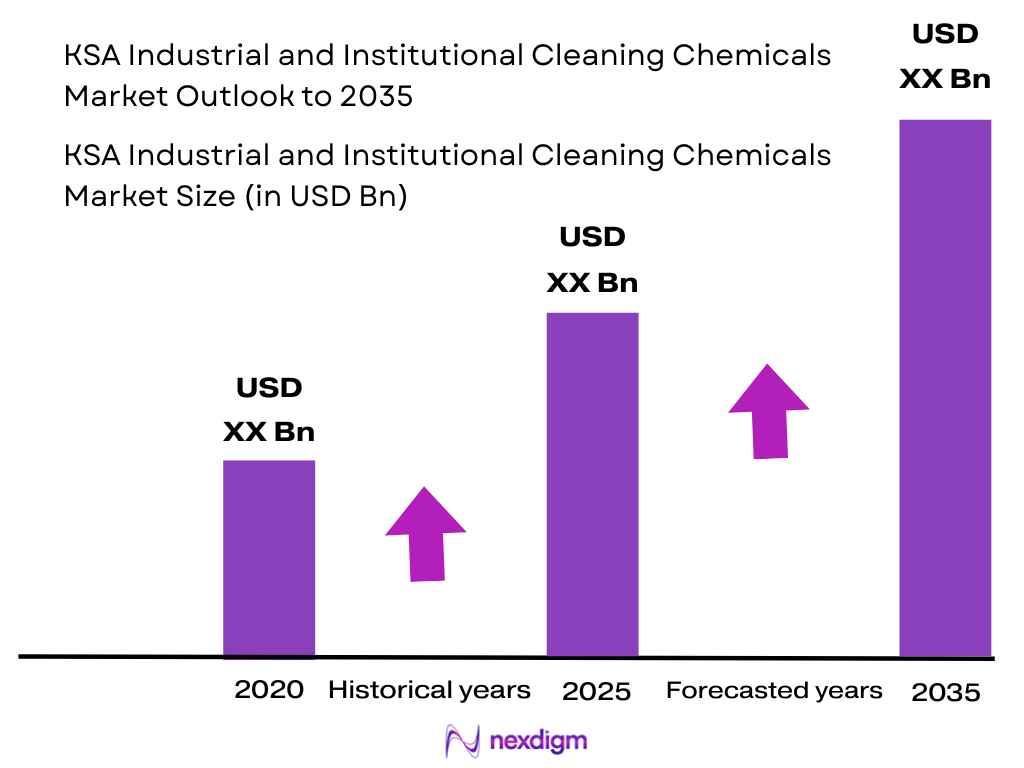
The KSA Industrial and Institutional Cleaning Chemicals Market is valued at ~USD XX million, with demand underpinned by the Kingdom’s large industrial and institutional operating base. Saudi Arabia’s GDP increased from USD 1,067.58 billion to USD 1,239.80 billion across the latest two World Bank observations, while GDP per capita reached USD 35,121.7 in the latest observation. GASTAT reported nominal GDP of SAR 4,703 billion, with non-oil activities expanding strongly. These conditions support recurring chemical consumption across industrial plants, healthcare facilities, hospitality properties, commercial buildings and food-processing operations.
Riyadh, Jeddah, Dammam and the wider Eastern Province represent the principal demand centres because they combine government facilities, healthcare infrastructure, hospitality assets, commercial buildings, manufacturing operations, ports, refineries and petrochemical complexes. Riyadh alone had 115 hospitals, while Makkah had 99, within a national total of 516 hospitals, illustrating the scale of institutional cleaning requirements. The Eastern Province’s concentration of energy, petrochemical and industrial facilities creates specialized demand for degreasers and industrial cleaners, while Riyadh’s commercial and government concentration supports broad institutional consumption.
Market Segmentation
By Product Type
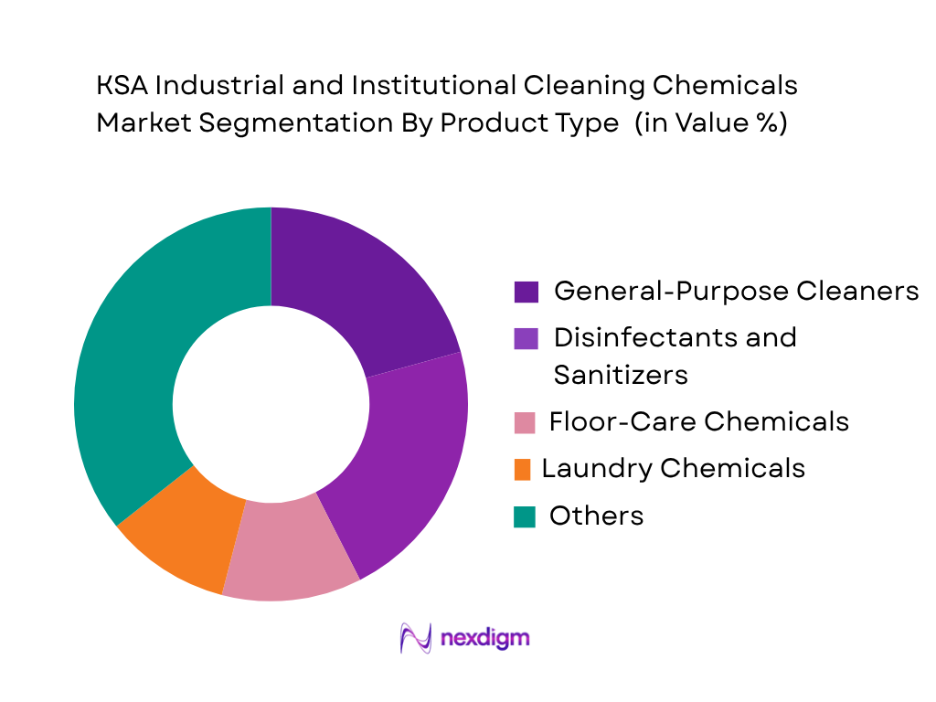
The KSA Industrial and Institutional Cleaning Chemicals Market is segmented by product type into general-purpose cleaners, disinfectants and sanitizers, floor-care chemicals, laundry chemicals, warewashing chemicals, kitchen and food-service cleaners, industrial degreasers, glass and surface cleaners, restroom cleaners, vehicle-wash chemicals and specialty industrial cleaners. Disinfectants and sanitizers are expected to represent the dominant product category, with a ~XX% market share in 2024, because healthcare, hospitality, foodservice and institutional facilities require recurring microbial-control and high-touch-surface sanitation. Saudi food establishments are required to use permitted disinfectants and follow specified concentration and contact-time instructions, reinforcing demand for professionally formulated products. Healthcare facilities also require systematic environmental cleaning and infection-control procedures. The country’s 516 hospitals and 5,779 primary healthcare centres and medical complexes create a substantial institutional base for recurring cleaning and disinfection requirements. Industrial facilities simultaneously consume specialty cleaners and degreasers, but disinfectants benefit from broader cross-sector applicability.
By End-Use Industry
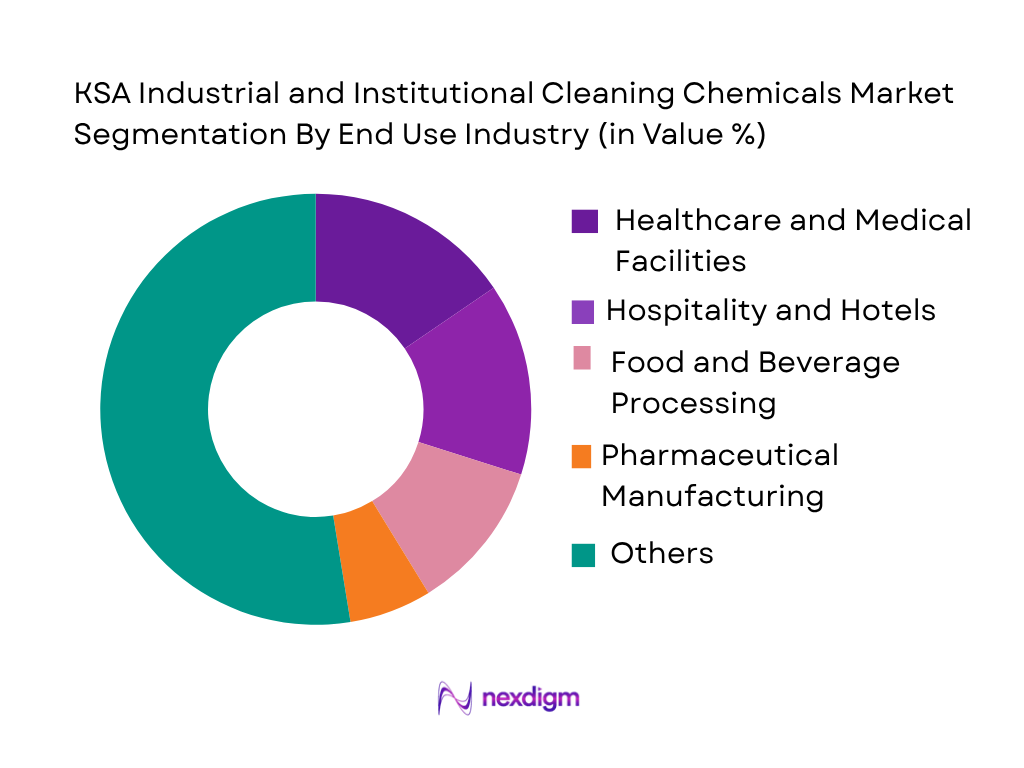
The market is segmented by end-use industry into healthcare and hospitals, hospitality and hotels, food and beverage processing, pharmaceutical manufacturing, oil and gas, petrochemicals and chemicals, manufacturing, commercial offices, retail and shopping centres, transportation facilities, educational institutions and government facilities. Healthcare and hospitals are expected to hold the leading position, representing ~XX% of the market in 2024, because cleaning and disinfection are continuous operational requirements rather than periodic maintenance activities. The Kingdom recorded 516 hospitals, 129,772 physicians and 243,336 nurses, demonstrating the scale of healthcare infrastructure requiring environmental hygiene, floor cleaning, surface sanitation, restroom cleaning and equipment-related chemical applications. Hospitality and food processing provide additional high-frequency demand, while oil and gas and petrochemicals generate intensive requirements for degreasing and equipment cleaning. The combination of institutional hygiene protocols and expanding non-oil economic activity creates diversified consumption across both institutional and industrial customers.
Competitive Landscape
The KSA Industrial and Institutional Cleaning Chemicals Market includes global chemical and hygiene suppliers alongside specialized professional-cleaning manufacturers and regional distributors. Competition is shaped by product breadth, industrial formulation capability, regulatory documentation, local distribution, technical service, dosing technology and ability to serve large multi-site customers. International suppliers with established professional-hygiene portfolios compete with regional suppliers through customization, availability and local customer relationships.
| Company | Establishment | Headquarters | Product Portfolio | Key KSA Applications | Distribution Model | Specialty Capability | Sustainability Position |
| Ecolab Inc. | 1923 | St. Paul, USA | ~ | ~ | ~ | ~ | ~ |
| Diversey Holdings | 1923 | Fort Mill, USA | ~ | ~ | ~ | ~ | ~ |
| Henkel AG & Co. KGaA | 1876 | Düsseldorf, Germany | ~ | ~ | ~ | ~ | ~ |
| BASF SE | 1865 | Ludwigshafen, Germany | ~ | ~ | ~ | ~ | ~ |
| Reckitt | 1819 | Slough, UK | ~ | ~ | ~ | ~ | ~ |
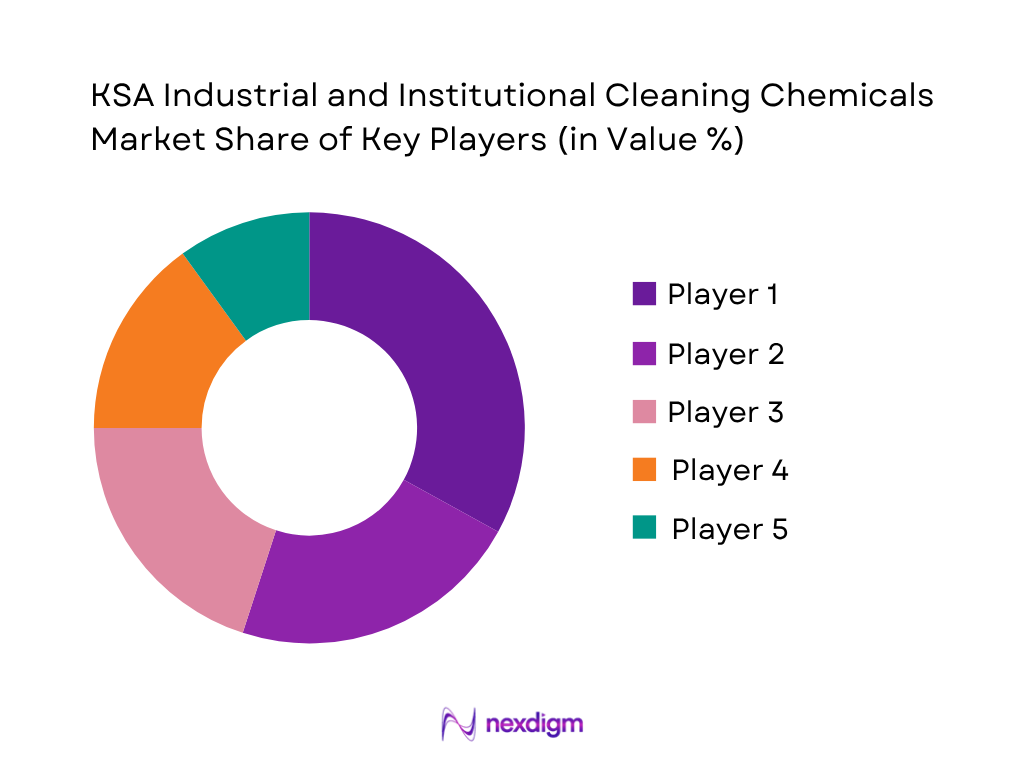
KSA Industrial and Institutional Cleaning Chemicals Market Analysis
Growth Drivers
Industrial Diversification
Industrial diversification is strengthening recurring demand for industrial and institutional cleaning chemicals across manufacturing plants, petrochemical facilities, logistics sites, food-processing units and commercial operations in Saudi Arabia. The World Bank records Saudi Arabia’s 2024 GDP at USD 1,239.8 billion, up from USD 1,109 billion in 2023, while GDP per capita reached USD 35,121.7. The IMF reported that non-oil real GDP grew by 4.5 in 2024, supported by retail, hospitality and construction, demonstrating the expansion of activities outside hydrocarbons. GASTAT’s Industrial Production Index also showed manufacturing activity increasing by 6.3 in December 2024 compared with December 2023, while chemical and chemical-product manufacturing increased by 4.8. This industrial expansion directly increases requirements for heavy-duty degreasers, surface cleaners, process-area sanitation chemicals, floor-care products and specialty maintenance formulations. Petrochemical and manufacturing facilities require frequent removal of oils, hydrocarbons, dust, process residues and contaminants from production equipment and operational areas. The diversification of economic activity therefore broadens the customer base beyond conventional industrial users and supports recurring institutional cleaning requirements across newly developed commercial and industrial facilities.
Healthcare Infrastructure Expansion
Healthcare infrastructure expansion is a major structural driver of industrial and institutional cleaning-chemical consumption because hospitals, clinics, laboratories and medical complexes require continuous cleaning, disinfection and contamination-control procedures. Saudi Arabia recorded 516 hospitals and 5,779 primary healthcare centres and medical complexes in 2024, according to GASTAT, creating a large institutional base requiring disinfectants, sanitizers, floor cleaners, restroom chemicals, surface cleaners and specialized healthcare formulations. The same statistics recorded 129,772 physicians and 243,336 nurses, reflecting the scale of healthcare operations taking place within facilities where environmental hygiene is an ongoing requirement. Riyadh alone accounted for 115 hospitals, while Makkah had 99 hospitals, creating concentrated procurement centres for professional cleaning chemicals. Saudi Arabia’s population reached 35,300,280 in 2024, according to the World Bank, while GDP per capita reached USD 35,121.7, supporting continued investment capacity for institutional services. Healthcare facilities also require cleaning chemicals compatible with high-touch surfaces, patient areas, operating environments and sanitation protocols. Consequently, expansion of healthcare capacity increases both the number of chemical-consuming facilities and the frequency of cleaning applications, supporting sustained demand for specialized institutional cleaning formulations.
Market Challenges
Imported Specialty-Chemical Dependency
Dependence on imported specialty chemicals creates supply-chain exposure for Saudi Arabia’s industrial and institutional cleaning-chemical market, particularly for advanced surfactants, specialty solvents, enzymes, disinfectant actives, formulation additives and high-performance industrial cleaners. The issue is relevant because Saudi Arabia’s industrial transformation is simultaneously increasing domestic consumption requirements. The World Bank reports 2024 GDP of USD 1,239.8 billion, while the IMF recorded USD 1,068 billion in its 2024 nominal-GDP assessment, illustrating the scale of the economy and its substantial industrial procurement base. GASTAT reported a 6.3 increase in manufacturing activity in December 2024, including a 4.8 increase in chemical and chemical-product manufacturing. As manufacturing, healthcare, hospitality and food processing expand, buyers require increasingly specialized cleaning formulations rather than only commodity detergents. Imported inputs can expose formulators to international logistics disruptions, customs procedures, foreign supplier availability and longer replenishment cycles. This can complicate inventory planning for distributors serving geographically dispersed customers across Riyadh, Jeddah, Dammam and industrial clusters in the Eastern Province. Local blending and formulation capacity can reduce some of these risks, but specialty active ingredients may still require international sourcing. The challenge therefore concerns supply continuity, formulation flexibility and the ability to maintain consistent product specifications for industrial customers. Source: World Bank, IMF and GASTAT.
Water Scarcity and Chemical Compliance Requirements
Water scarcity and increasingly demanding chemical-management requirements create an important operational challenge for professional cleaning-chemical users in Saudi Arabia. The Kingdom had a population of 35,300,280 in 2024, according to the World Bank, while its arid climate creates substantial pressure to manage water consumption across industrial, healthcare, hospitality and commercial facilities. Cleaning operations can require repeated dilution, rinsing and wastewater generation, making water efficiency an important consideration when selecting professional formulations. At the same time, industrial and institutional users must manage chemical storage, handling, dilution, worker exposure, labeling and disposal requirements. GASTAT reported that Saudi manufacturing activity increased by 6.3 in December 2024, while chemical and chemical-product manufacturing increased by 4.8, indicating a growing industrial base where chemical-management practices become increasingly relevant. For cleaning-chemical suppliers, formulations must therefore balance cleaning performance with controlled dosing, lower residue, reduced water consumption and appropriate wastewater characteristics. Industrial sites can also require products designed for specific contaminants without damaging equipment or interfering with downstream wastewater treatment. These constraints increase the importance of formulation engineering, technical training and dosing systems. Suppliers that cannot demonstrate consistent application performance, safe handling procedures and compatibility with customer wastewater-management systems may face barriers to adoption in large industrial and institutional accounts.
Market Opportunities
Green Cleaning Chemistry and Bio-Based Formulations
The transition toward green cleaning chemistry creates an opportunity for suppliers to introduce bio-based surfactants, enzymatic cleaners, biodegradable formulations and lower-impact chemical systems for Saudi industrial and institutional customers. Saudi Arabia’s 2024 GDP reached USD 1,239.8 billion, while non-oil real GDP expanded by 4.5, according to the World Bank and IMF respectively, demonstrating a broadening economic base capable of supporting specialized cleaning technologies. GASTAT reported 2,163 hotels and 398,574 hotel rooms in 2024, creating substantial recurring requirements for housekeeping, laundry, kitchen and surface-cleaning chemicals. Healthcare infrastructure adds another major application base, with 516 hospitals and 5,779 primary healthcare centres and medical complexes. These facilities can benefit from formulations designed to deliver effective cleaning while reducing unnecessary chemical loading, residue and environmental burden. Bio-based surfactants can be incorporated into general-purpose, floor-care and institutional formulations, while enzymes can target protein, grease and organic residues in foodservice, healthcare and hospitality applications. Green chemistry can also support procurement differentiation for organizations seeking more sustainable cleaning programs. The opportunity is therefore not limited to replacing conventional ingredients; it extends to reformulating concentrated products, optimizing dilution ratios and integrating safer chemistry into professional cleaning protocols.
Concentrated Formulations, Automated Dosing and Smart Dispensing
Concentrated formulations, automated dosing and smart dispensing systems represent an important opportunity because they can reduce chemical wastage, improve consistency and support water-efficient cleaning across large industrial and institutional facilities. Saudi Arabia recorded 35.3 million people in 2024 and GDP of USD 1,239.8 billion, according to the World Bank, while IMF data show non-oil real GDP growth of 4.5 supported by retail, hospitality and construction. GASTAT reported 2,163 hotels with 398,574 rooms, alongside 516 hospitals, creating large multi-site environments where repeated manual chemical dilution can create variability in application performance. Automated dosing can deliver predetermined quantities of disinfectants, laundry chemicals, warewashing products and floor-care solutions, while smart dispensers can provide usage monitoring and replenishment information. Concentrated chemistry can further reduce the volume of product transported and stored relative to ready-to-use formulations. For industrial users, controlled dosing is particularly relevant where cleaning chemistry must be matched to specific equipment, contamination levels and process conditions. The opportunity also extends to facility-management companies serving multiple buildings, where standardized dispensing systems can improve operational control across sites. Suppliers combining chemistry, dispensing hardware, training and digital monitoring can therefore move beyond commodity chemical sales toward integrated cleaning-management solutions.
Future Outlook
The KSA Industrial and Institutional Cleaning Chemicals Market is expected to expand over the forecast period as industrial diversification, healthcare infrastructure, hospitality development and facility-management outsourcing increase professional cleaning requirements. Demand is expected to shift toward concentrated formulations, controlled dosing, low-residue disinfectants, enzymatic chemistry and water-efficient cleaning systems. Healthcare, food processing, hospitality and industrial facilities are expected to remain important consumption centres, while Vision 2030-linked infrastructure and industrial development should broaden the customer base. The transition toward sustainable chemistry is also expected to encourage lower-VOC formulations, biodegradable ingredients, reduced packaging and automated dispensing technologies.
Major Players
- Ecolab Inc.
- Diversey Holdings
- Henkel AG & Co. KGaA
- BASF SE
- Reckitt
- The Procter & Gamble Company
- Unilever PLC
- 3M Company
- SC Johnson Professional
- The Clorox Company
- Zep Inc.
- Spartan Chemical Company
- Christeyns NV
- STERIS plc
- Kimberly-Clark Corporation
Key Target Audience
- Industrial and Institutional Cleaning Chemical Manufacturers
- Facility Management and Contract Cleaning Companies
- Healthcare Procurement Organizations
- Hospitality and Hotel Procurement Departments
- Food and Beverage Processing Companies
- Oil, Gas, Petrochemical and Manufacturing Companies
- Investments and Venture Capitalist Firms (Public Investment Fund, Saudi Venture Capital Company, Jada Fund of Funds)
- Government and Regulatory Bodies (Saudi Food and Drug Authority, Saudi Standards, Metrology and Quality Organization, Ministry of Environment, Water and Agriculture)
Research Methodology
Step 1: Identification of Key Variables
The initial stage establishes the KSA Industrial and Institutional Cleaning Chemicals ecosystem, covering manufacturers, formulators, distributors, facility-management companies and end users. Product-level variables include chemistry, formulation, application, dosage and end-use industry. Demand variables include facility type, cleaning frequency, industrial activity and procurement structure.
Step 2: Market Analysis and Construction
Historical market information is compiled using product-level, end-use and channel-level analysis. The bottom-up approach assesses chemical consumption across healthcare, hospitality, food processing, pharmaceuticals, oil and gas, petrochemicals, manufacturing and commercial facilities. The top-down assessment validates the market against industrial and institutional activity.
Step 3: Hypothesis Validation and Expert Consultation
Market hypotheses are tested through interviews with chemical manufacturers, distributors, facility-management providers, industrial procurement teams and professional cleaning operators. Discussions focus on product substitution, application requirements, procurement criteria, formulation preferences, distribution structures and changes in cleaning protocols.
Step 4: Research Synthesis and Final Output
The final assessment integrates secondary information, supply-side intelligence and demand-side validation. Market estimates are triangulated across product categories, end-use industries, applications and distribution channels. Competitive analysis is then used to evaluate product portfolios, technical capabilities, local presence and strategic positioning.

- Executive Summary
- Research Methodology (Market Definition and Scope, Product Inclusion and Exclusion Criteria, Market Taxonomy, Top-Down Market Sizing, Bottom-Up Market Sizing, Volume-to-Value Conversion, Supply-Side Assessment, Demand-Side Assessment, Import and Export Validation, Distributor Mapping, End-User Validation, Primary Expert Interviews, Secondary Data Assessment, Data Triangulation, Forecasting Model, Scenario Analysis, Market Assumptions, Data Limitations)

- Definition and Scope
- Industry Evolution and Development Landscape
- KSA Industrial and Institutional Cleaning Chemicals Ecosystem
- Industrial and Institutional Cleaning Chemicals Value Chain
- Raw Material-to-Formulation Value Chain
- Domestic Manufacturing, Blending and Formulation Landscape
- Import Dependency and International Supply Network

- Growth Drivers (Industrial Diversification, Healthcare Infrastructure Expansion, Hospitality and Tourism Development, Food Processing Growth, Oil and Gas Facility Maintenance, Commercial Real Estate Expansion, Facility Management Outsourcing, Industrial Hygiene Requirements)
- Market Challenges (Imported Specialty-Chemical Dependency, Petrochemical Raw Material Exposure, Water Scarcity, Chemical Compliance Requirements, Wastewater Treatment Requirements, Skilled Application Workforce Constraints, Product Quality Variability, Fragmented Distribution Structure)
- Market Opportunities (Green Cleaning Chemistry, Bio-Based Surfactants, Enzymatic Cleaners, Concentrated Formulations, Low-VOC Chemistry, Water-Efficient Cleaning, Automated Chemical Dosing, Smart Dispensing, Sustainable Packaging, Local Formulation and Manufacturing)
- Emerging Market Trends (Concentrated Chemistry, Sustainable Formulations, Enzyme-Based Cleaning, Low-Residual Disinfection, Automated Dosing, Smart Dispensing, Water-Minimizing Cleaning, Bio-Based Ingredients, Digital Facility Management, Total-Cost-of-Cleaning Optimization)
- Regulatory and Compliance Framework (SASO Detergent Technical Regulations, GSO Standards, GHS Classification, Industrial Product Labeling, Chemical Safety, Hazardous Chemical Storage, Occupational Safety, Environmental Compliance, Wastewater Discharge, Food-Contact Hygiene, Healthcare Disinfection Requirements)
- SWOT Analysis
- Porter’s Five Forces Analysis
- PESTLE Analysis

- By Market Value (2020-2025)
- By Volume Consumption (2020-2025)
- By Product Category (2020-2025)
- By Raw Material (2020-2025)
- By Chemistry Type (2020-2025)
- By Formulation Type (2020-2025)
- By Application (2020-2025)

- By Product Type (In Value %)
General-Purpose Cleaners
Disinfectants and Sanitizers
Floor Care Chemicals
Laundry Care Chemicals
Warewashing and Dishwashing Chemicals
Kitchen and Food-Service Cleaners
Industrial Degreasers
Glass and Surface Cleaners
Restroom and Washroom Cleaners
Vehicle Wash Chemicals
Carpet and Upholstery Cleaners
Specialty Industrial Cleaners - By Raw Material (In Value %)
Surfactants
Chlor-Alkali Chemicals
Solvents
Acids
Builders and Chelating Agents
Biocides and Antimicrobial Agents
Enzymes
Fragrances and Specialty Additives - By Chemistry Type (In Value %)
Alkaline Cleaning Chemistry
Acidic Cleaning Chemistry
Solvent-Based Chemistry
Enzyme-Based Chemistry
Biocide-Based Chemistry
Surfactant-Based Chemistry
Bio-Based and Plant-Derived Chemistry - By Formulation Type (In Value %)
Ready-to-Use Liquids
Concentrated Liquids
Powders
Foams
Tablets and Solid Doses
Wipes and Pre-Moistened Formats
Low-Foam Formulations
High-Foam Formulations - By End-Use Industry (In Value %)
Healthcare and Hospitals
Hospitality and Hotels
Food and Beverage Processing
Pharmaceutical Manufacturing
Oil and Gas
Petrochemicals and Chemicals
Manufacturing and Industrial Plants
Commercial Offices and Business Parks
Retail and Shopping Centres
Airports and Transportation Facilities
Educational and Institutional Facilities
Government and Public Facilities - By Cleaning Application (In Value %)
Hard-Surface Cleaning
Floor Cleaning and Maintenance
Equipment and Machinery Cleaning
Clean-in-Place Cleaning
Open-Plant Cleaning
Industrial Degreasing
Manual Warewashing
Automatic Warewashing
Laundry Cleaning
Restroom Sanitation
High-Touch Surface Disinfection
Precision and Specialty Cleaning - By Facility Type (In Value %)
Hospitals and Medical Centres
Hotels and Resorts
Restaurants and Commercial Kitchens
Food Processing Plants
Pharmaceutical Facilities
Oil and Gas Facilities
Petrochemical Complexes
Factories and Manufacturing Facilities
Shopping Malls and Retail Complexes
Corporate Offices
Airports and Transport Facilities
Schools and Universities
Government Buildings

- Market Share Analysis of Major Players (By Value, Product Category, Raw Material, Chemistry Type, End-Use Industry, Application, Customer Type, Distribution Channel)
- Cross Comparison Parameters (Product Portfolio Breadth, Professional Cleaning SKU Coverage, Domestic Manufacturing Footprint, Specialty Chemistry Capability, Sustainable Chemistry Portfolio, Automated Dosing Capability, Distribution Network Reach, Facility Management Customer Coverage)
- Major Player SWOT Analysis
- Detailed Profiles of Major Companies
Ecolab Inc.
Solenis
BASF SE
Henkel AG & Co. KGaA
Reckitt Benckiser Group plc
Unilever PLC
The Procter & Gamble Company
3M Company
SC Johnson Professional
The Clorox Company
Zep Inc.
Spartan Chemical Company
Christeyns NV
STERIS plc
Kimberly-Clark Corporation

- Healthcare and Hospitals
- Hospitality and Hotels
- Food and Beverage Processing
- Manufacturing and Industrial Facilities
- Pharmaceutical Manufacturing

- By Market Value (2026-2035)
- By Volume Consumption (2026-2035)
- By Product Category (2026-2035)
- By Raw Material (2026-2035)
- By Chemistry Type (2026-2035)
- By Formulation Type (2026-2035)
- By Application (2026-2035)


 Request a Sample
 Ask for Customization
 Get a Quote
 Enquire Now