

 Download PDF
 Download PDF
Market Overview
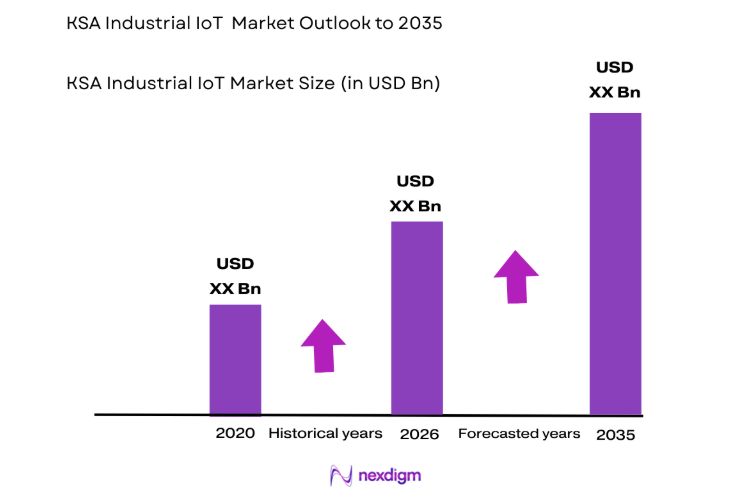
Saudi Arabia’s Industrial Internet of Things market reached about USD ~ based on a recent historical assessment compiled from international ICT databases and national digital economy statistics. Expanding industrial digitalization across oil refining petrochemicals utilities logistics and mining operations drives adoption of connected sensors predictive maintenance software industrial gateways and analytics platforms supporting real time monitoring asset performance optimization and data driven decision making across major industrial infrastructure networks and production facilities nationwide today overall.
Industrial IoT deployment within Saudi Arabia concentrates heavily in Riyadh Dhahran Jubail and Dammam where large energy petrochemical manufacturing and logistics complexes operate highly automated facilities requiring advanced connectivity sensors and industrial analytics platforms. International technology vendors collaborate with national energy companies industrial zones and smart manufacturing initiatives enabling large scale digital infrastructure rollouts supporting predictive maintenance remote asset monitoring production optimization and integrated industrial data ecosystems across strategic economic cities and export oriented industrial corridors.
Market Segmentation
By Component
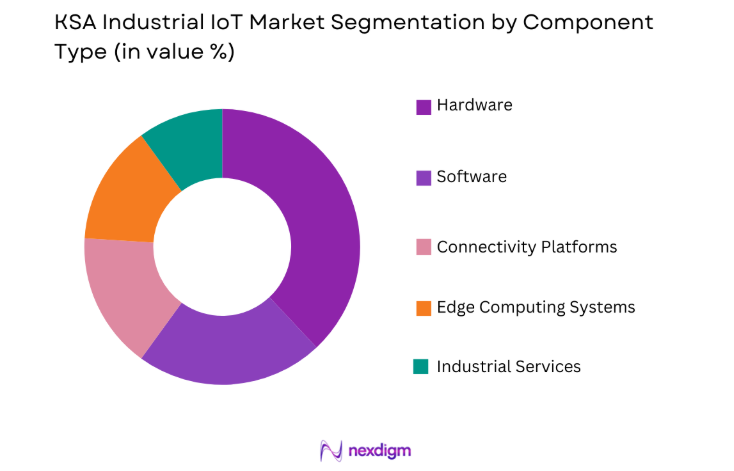
By Component KSA Industrial IoT market is segmented by product type into Hardware, Software, Connectivity Platforms, Edge Computing Systems, and Industrial Services. Recently, Hardware has a dominant market share due to factors such as demand patterns, brand presence, infrastructure availability, or consumer preference. Industrial operators across energy manufacturing utilities and logistics sectors continue prioritizing large scale deployment of connected industrial sensors machine monitoring devices gateways and programmable controllers that enable real time data acquisition across critical infrastructure assets. Massive industrial facilities in petrochemical complexes refineries and manufacturing plants require thousands of connected devices to monitor operational performance safety conditions and maintenance requirements. These deployments create sustained demand for industrial hardware systems capable of operating in harsh environments while supporting secure connectivity and continuous data transmission across industrial networks.
By End Use Industry
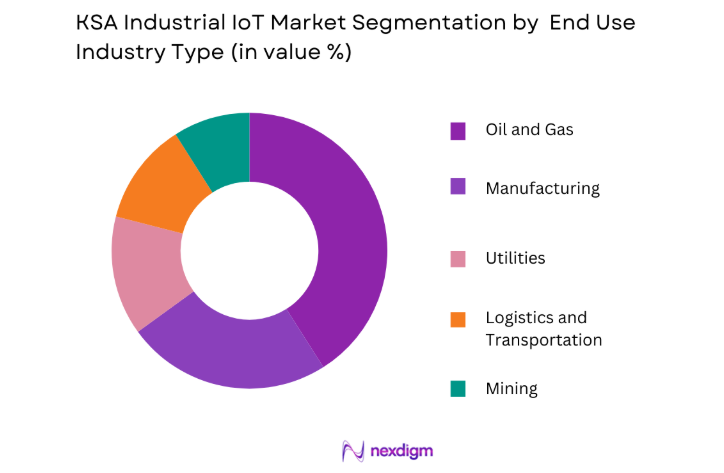
By End Use Industry KSA Industrial IoT market is segmented by End Use Industry type into Oil and Gas, Manufacturing, Utilities, Logistics and Transportation, and Mining. Recently, Oil and Gas has a dominant market share due to factors such as demand patterns, brand presence, infrastructure availability, or consumer preference. Saudi Arabia operates one of the largest energy production ecosystems globally with extensive upstream exploration downstream refining petrochemical processing and energy export infrastructure requiring continuous operational monitoring and asset management. Industrial IoT platforms allow energy companies to track pipeline performance monitor equipment reliability detect operational anomalies and optimize production efficiency across geographically distributed facilities. As energy infrastructure expands alongside industrial diversification programs oil and gas operators increasingly integrate IIoT architectures supporting predictive maintenance automated inspection and advanced industrial analytics.
Competitive Landscape
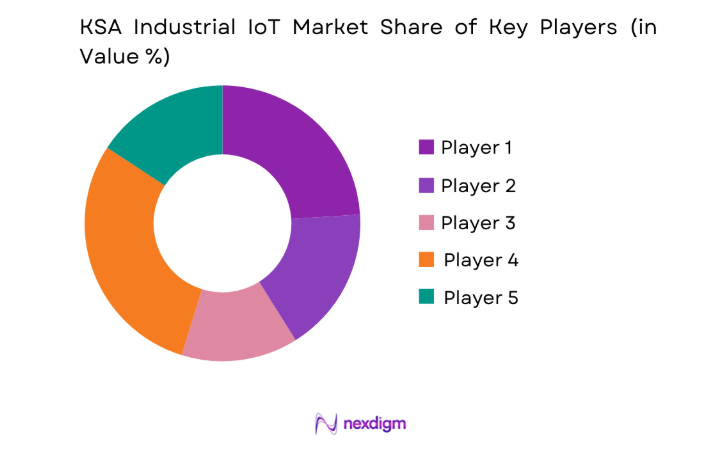
The KSA Industrial IoT market demonstrates a moderately consolidated competitive environment where global technology vendors collaborate with regional system integrators and industrial automation providers to deliver integrated IIoT solutions. Large multinational technology companies dominate platform development cloud infrastructure industrial analytics and sensor technologies while local industrial technology firms focus on deployment integration and sector specific industrial solutions. Partnerships between telecommunications providers industrial automation companies and cloud computing vendors significantly influence the competitive landscape as industrial enterprises increasingly demand secure scalable connectivity platforms and data driven operational intelligence.
| Company Name | Establishment Year | Headquarters | Technology Focus | Market Reach | Key Products | Revenue | Industrial Platform Ecosystem |
| Siemens AG | 1847 | Germany | ~ | ~ | ~ | ~ | ~ |
| Honeywell International | 1906 | United States | ~ | ~ | ~ | ~ | ~ |
| Cisco Systems | 1984 | United States | ~ | ~ | ~ | ~ | ~ |
| ABB Ltd | 1988 | Switzerland | ~ | ~ | ~ | ~ | ~ |
| Schneider Electric | 1836 | France | ~ | ~ | ~ | ~ | ~ |
KSA Industrial IoT Market Analysis
Growth Drivers
Large Scale Industrial Digital Transformation Programs Across Energy and Manufacturing Infrastructure
Saudi Arabia’s industrial modernization strategy strongly encourages adoption of Industrial Internet of Things technologies across large scale energy manufacturing logistics and mining operations. National industrial diversification initiatives prioritize digital infrastructure capable of improving operational efficiency asset utilization and predictive maintenance across complex industrial facilities. Energy companies operate vast upstream exploration sites pipelines refining complexes and petrochemical plants that require continuous equipment monitoring and performance optimization. IoT systems enable industrial operators to deploy connected sensors across machinery pipelines compressors and processing units generating large volumes of operational data. These systems support predictive maintenance models that reduce unexpected equipment failure and improve production continuity across large facilities. Industrial data analytics platforms process sensor information to identify operational anomalies optimize equipment usage and minimize maintenance costs. Government supported industrial zones and smart manufacturing programs further encourage manufacturers to integrate automation platforms machine monitoring solutions and digital production management systems. As industrial operators pursue higher efficiency safety and operational transparency demand for IIoT technologies continues expanding across Saudi Arabia’s energy intensive industrial economy.
Expansion of Smart Industrial Infrastructure and Connected Energy Systems
Rapid development of connected infrastructure across power generation water utilities transportation networks and industrial logistics systems significantly strengthens demand for Industrial Internet of Things technologies across Saudi Arabia. National infrastructure programs increasingly integrate digital monitoring systems that provide real time visibility across distributed operational assets including pipelines electricity grids water treatment facilities and transportation infrastructure. IIoT technologies allow infrastructure operators to deploy sensors capable of monitoring pressure flow temperature vibration and equipment health conditions across critical industrial systems. These monitoring platforms enable predictive maintenance strategies that prevent costly infrastructure failures and operational disruptions. Energy utilities integrate connected industrial control systems to optimize electricity distribution grid performance and improve reliability across rapidly growing urban and industrial zones. Industrial logistics hubs and port facilities deploy IoT enabled tracking systems that monitor cargo handling equipment warehouse automation platforms and transportation fleets. Smart industrial cities and manufacturing clusters deploy connected infrastructure capable of supporting autonomous operations industrial analytics and automated production environments. As infrastructure complexity increases industrial organizations increasingly adopt IoT systems capable of managing operational intelligence across integrated digital infrastructure ecosystems.
Market Challenges
Cybersecurity Vulnerabilities Across Industrial Control and Connected Infrastructure Systems
Industrial Internet of Things systems significantly expand the digital attack surface across critical industrial infrastructure including energy production facilities manufacturing plants transportation networks and utilities infrastructure. As industrial equipment becomes increasingly connected through industrial networks and cloud platforms organizations face growing risks related to cyber intrusions ransomware attacks and operational sabotage targeting industrial control systems. Many industrial facilities operate legacy automation systems that were not originally designed with modern cybersecurity protections creating vulnerabilities when integrated with connected IIoT architectures. Cybersecurity breaches affecting industrial networks could disrupt energy production supply chains logistics systems or manufacturing operations causing substantial economic and operational consequences. Protecting industrial data streams operational technology networks and remote monitoring platforms requires complex cybersecurity frameworks capable of detecting and mitigating digital threats in real time. Implementing secure network architecture encryption protocols identity management systems and industrial intrusion detection platforms significantly increases deployment costs for IIoT systems. Industrial organizations must also continuously update cybersecurity policies train personnel and monitor operational technology networks to maintain secure infrastructure environments. These cybersecurity concerns often slow adoption of large scale IoT deployments particularly across critical national infrastructure sectors.
High Implementation Costs and Complex Integration with Legacy Industrial Systems
Many industrial enterprises across Saudi Arabia operate long established manufacturing plants energy facilities and infrastructure assets equipped with legacy automation systems developed before modern IIoT technologies emerged. Integrating advanced industrial sensors cloud analytics platforms edge computing infrastructure and digital monitoring systems into existing industrial environments requires complex system integration and significant capital investment. Industrial operators must often replace outdated equipment upgrade industrial networks install secure connectivity infrastructure and deploy new data management platforms capable of processing large operational datasets. Integration complexity increases further when industrial facilities operate multiple automation technologies from different vendors using incompatible communication protocols. These technical challenges require specialized engineering expertise system integration services and extensive operational testing to ensure reliable deployment. Large scale industrial transformation programs therefore involve substantial upfront investment which can delay adoption among smaller industrial enterprises or infrastructure operators with limited technology budgets. Organizations must also invest in workforce training programs that prepare engineers technicians and operators to manage advanced digital infrastructure environments. These financial and operational barriers can slow implementation of comprehensive IIoT ecosystems across industrial sectors.
Opportunities
Development of Smart Industrial Cities and Digitally Connected Manufacturing Zones
Saudi Arabia continues developing advanced industrial zones economic cities and manufacturing clusters designed to support diversified industrial growth beyond traditional oil production activities. These modern industrial zones integrate digital infrastructure including high speed industrial connectivity smart logistics networks automated manufacturing facilities and advanced industrial monitoring platforms. Industrial Internet of Things technologies serve as foundational infrastructure supporting real time monitoring automation predictive maintenance and data driven decision making across large industrial ecosystems. Smart industrial cities deploy connected sensors and monitoring systems across utilities transportation manufacturing facilities and logistics infrastructure enabling integrated operational intelligence across the entire industrial environment. Industrial companies operating within these zones benefit from shared digital infrastructure including industrial cloud platforms data analytics networks and advanced communication technologies. IIoT systems enable manufacturers to operate highly automated production lines integrated supply chains and digital quality control systems supporting high productivity and operational transparency. As Saudi Arabia continues expanding industrial development zones and technology focused economic cities the demand for integrated IIoT platforms supporting smart industrial infrastructure will grow significantly across manufacturing and logistics sectors.
Integration of Artificial Intelligence and Advanced Industrial Data Analytics Platforms
Rapid advances in artificial intelligence machine learning and big data analytics create substantial opportunities for expanding Industrial Internet of Things capabilities across complex industrial environments. IIoT platforms generate vast volumes of operational data from sensors machinery industrial control systems and connected infrastructure assets. Artificial intelligence powered analytics systems analyze these datasets to identify patterns predict equipment failures optimize production schedules and detect operational inefficiencies across industrial processes. Energy companies deploy AI powered predictive maintenance models capable of identifying potential equipment faults before operational failures occur significantly reducing downtime and maintenance costs. Manufacturing facilities integrate machine learning algorithms with IIoT platforms to optimize production workflows detect product quality deviations and improve manufacturing efficiency. Industrial logistics companies analyze sensor data from transportation fleets warehouse automation systems and cargo handling equipment to improve supply chain performance. As industrial organizations increasingly adopt advanced analytics technologies the integration of AI driven intelligence within IIoT ecosystems will enable highly automated industrial operations across Saudi Arabia’s rapidly evolving digital economy.
Future Outlook
The KSA Industrial IoT market is expected to experience strong expansion over the coming years as industrial digitalization accelerates across manufacturing energy logistics and infrastructure sectors. Increasing deployment of smart manufacturing technologies predictive maintenance platforms and connected industrial systems will continue driving adoption of IoT architectures. Government supported industrial diversification programs and large scale smart city initiatives will further strengthen digital infrastructure investment. Advances in artificial intelligence edge computing and industrial analytics platforms will enable more intelligent automated industrial ecosystems.
Major Players
- Siemens AG
- Honeywell International
- Cisco Systems
- ABB Ltd
- Schneider Electric
- IBM Corporation
- Microsoft Corporation
- General Electric
- Oracle Corporation
- Emerson Electric
- Rockwell Automation
- Huawei Technologies
- Bosch Rexroth
- Yokogawa Electric Corporation
- Hitachi Industrial Equipment Systems
Key Target Audience
- Industrial Automation Companies
- Oil and Gas Operators
- Manufacturing Companies
- Utilities Infrastructure Providers
- Logistics and Transportation Companies
- Investments and venture capitalist firms
- Government and regulatory bodies
Research Methodology
Step 1: Identification of Key Variables
The research process begins by identifying critical market variables influencing Industrial IoT adoption including industrial automation investments connectivity infrastructure digital manufacturing strategies and national industrial policy initiatives. Data sources include industrial production reports technology adoption databases and infrastructure investment statistics.
Step 2: Market Analysis and Construction
Industrial sector datasets infrastructure development statistics and enterprise technology adoption indicators are analyzed to construct the market structure. Segmentation models evaluate technology deployment across industries components and operational use cases within Saudi industrial ecosystems.
Step 3: Hypothesis Validation and Expert Consultation
Industry specialists technology vendors industrial automation engineers and infrastructure analysts review the initial research framework. Expert validation ensures accurate representation of technology deployment trends investment drivers and industrial digitization strategies.
Step 4: Research Synthesis and Final Output
All validated insights are integrated into a structured market model combining industrial investment data technology adoption patterns and infrastructure development indicators to produce the final KSA Industrial IoT market report.

- Executive Summary
- Research Methodology (Definitions, Scope, Industry Assumptions, Market Sizing Approach, Primary & Secondary Research Framework, Data Collection & Verification Protocol, Analytic Models & Forecast Methodology, Limitations & Research Validity Checks)

- Market Definition and Scope
- Value Chain & Stakeholder Ecosystem
- Regulatory / Certification Landscape
- Sector Dynamics Affecting Demand

- Growth Drivers
Expansion of Smart Manufacturing and Industry 4.0 Programs Across Saudi Industrial Zones
Increasing Deployment of IoT Monitoring Systems in Oil and Gas Infrastructure
Growth of Digital Infrastructure and Data Centers Supporting Connected Industrial Systems - Market Challenges
Cybersecurity Risks Associated with Connected Industrial Infrastructure
High Deployment Costs for Industrial IoT Platforms and Infrastructure
Integration Challenges with Legacy Industrial Control Systems - Market Opportunities
Development of Smart Industrial Cities Utilizing Connected Infrastructure
Expansion of Predictive Maintenance Platforms Across Industrial Facilities
Adoption of Artificial Intelligence Driven Industrial Data Analytics Systems - Trends
Increasing Adoption of Edge Computing Technologies in Industrial IoT Architectures
Growing Integration of Artificial Intelligence and Machine Learning in Industrial Data Platforms - Government Regulations
- SWOT Analysis
- Porter’s Five Forces

- By Market Value, 2020-2025
- By Installed Units, 2020-2025
- By Average System Price, 2020-2025
- By System Complexity Tier, 2020-2025

- By System Type (In Value%)
Industrial IoT Sensors and Devices
Industrial IoT Connectivity Platforms
Industrial IoT Data Analytics Platforms
Industrial IoT Edge Computing Systems
Industrial IoT Cybersecurity Solutions - By Platform Type (In Value%)
Oil and Gas Industrial Monitoring Platforms
Manufacturing and Smart Factory Platforms
Energy and Utilities Infrastructure Platforms
Logistics and Supply Chain Monitoring Platforms - By Fitment Type (In Value%)
New Industrial IoT Infrastructure Deployment
Retrofit IoT Integration for Existing Industrial Facilities
Cloud Based Industrial IoT Platforms
Hybrid Edge Cloud Industrial IoT Architectures - By End User Segment (In Value%)
Oil and Gas Industry
Manufacturing and Industrial Production
Energy and Utilities Operators

- Market Share Analysis
- Cross Comparison Parameters (IoT Platform Capability, Device Connectivity Portfolio, Industrial Application Coverage, Data Analytics Integration, Cybersecurity Capability, Pricing Structure, Research and Development Strength)
- SWOT Analysis of Key Competitors
- Pricing & Procurement Analysis
- Key Players
Siemens AG
Cisco Systems
IBM Corporation
Microsoft Corporation
Schneider Electric
Honeywell International
ABB Ltd
Emerson Electric
Rockwell Automation
Hitachi Ltd
Bosch IoT Solutions
PTC Inc
Oracle Corporation
General Electric Digital
Huawei Technologies

- Oil and Gas Operators Deploying IoT Sensors for Real Time Pipeline and Facility Monitoring
- Manufacturing Companies Implementing Smart Factory Platforms for Operational Efficiency
- Energy Infrastructure Operators Utilizing IoT Systems for Grid and Facility Monitoring
- Logistics Operators Using Connected IoT Platforms for Supply Chain Visibility

- Forecast Market Value, 2026-2035
- Forecast Installed Units, 2026-2035
- Price Forecast by System Tier, 2026-2035
- Future Demand by Platform, 2026-2035


 Request a Sample
 Ask for Customization
 Get a Quote
 Enquire Now