

 Download PDF
Market Overview
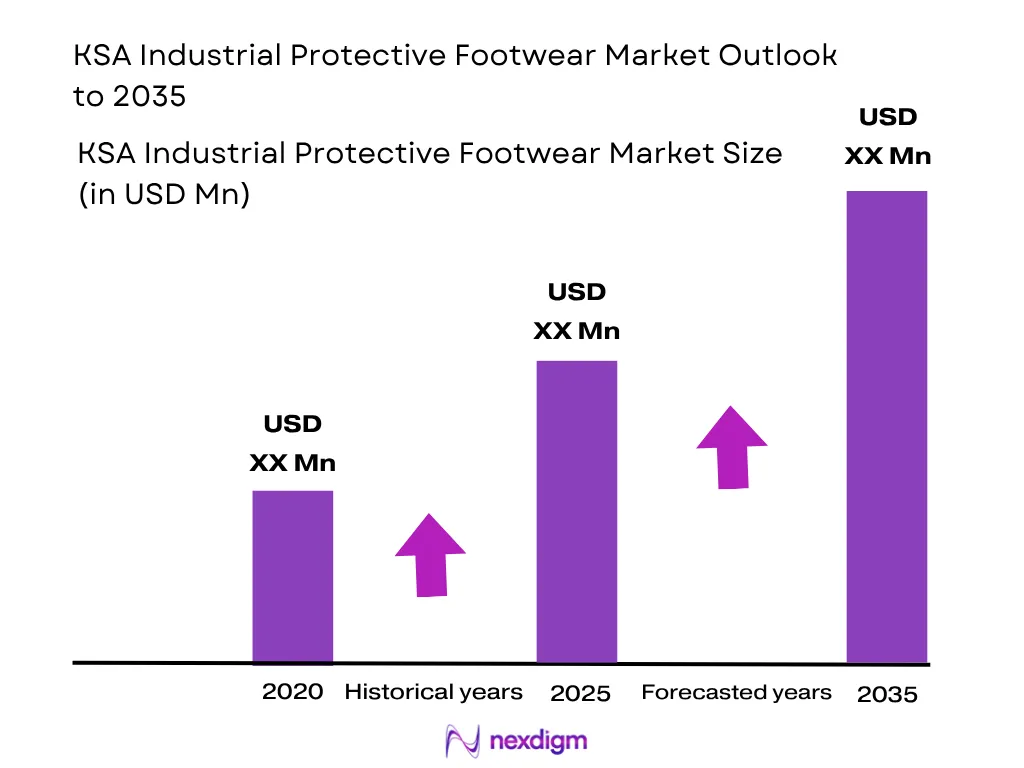
The KSA Industrial Protective Footwear market is valued at USD ~ million in 2025. This market is primarily driven by the expanding industrial sector, the increasing focus on safety regulations, and the growing awareness of workplace safety. The demand for protective footwear in sectors such as oil & gas, construction, and manufacturing has fueled growth. Furthermore, regulations such as those enforced by the Saudi Arabian Standards Organization (SASO) contribute to consistent demand for compliant safety footwear in industrial environments, which ensures a steady market expansion.
The dominant cities in the KSA Industrial Protective Footwear market include Riyadh, Jeddah, and Dammam. Riyadh, as the capital and a business hub, sees substantial demand driven by government infrastructure projects and industrial expansions. Jeddah and Dammam are key due to their strategic locations in the oil and petrochemical industries, which have rigorous safety standards. These cities’ industrial activity and adherence to safety protocols significantly influence the demand for protective footwear, especially in heavy industries like oil, construction, and manufacturing.
Market Segmentation
By Material Type
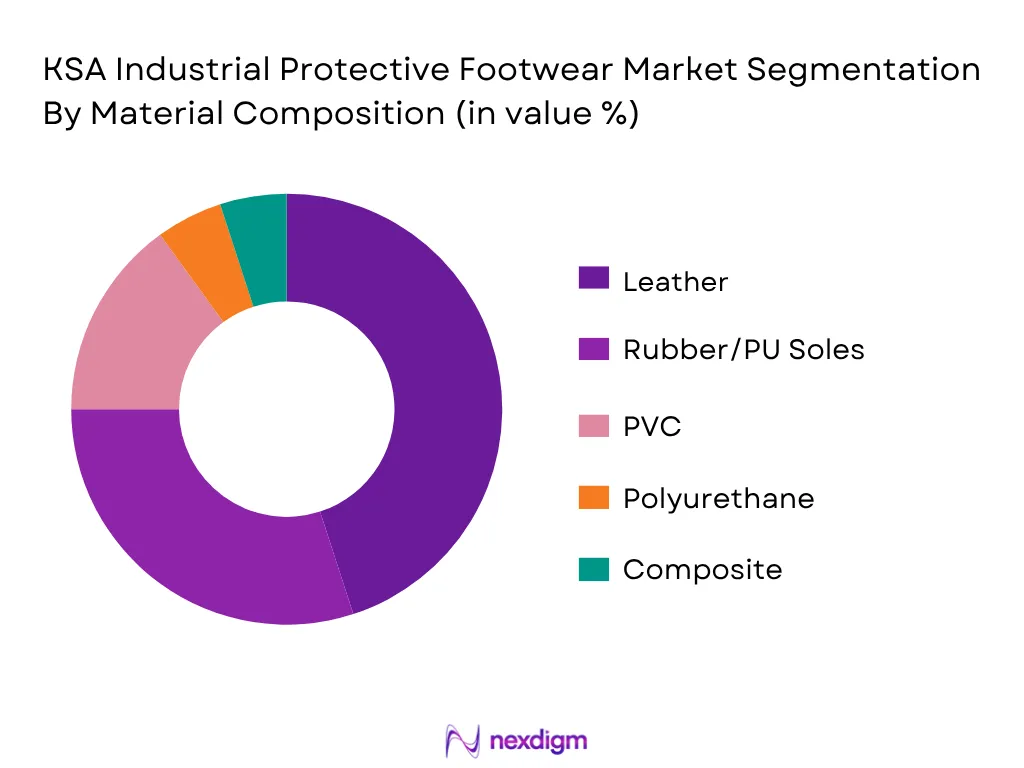
The KSA Industrial Protective Footwear market is segmented by material types including leather, rubber, PVC, polyurethane, and composite materials. Leather-based footwear dominates this segment. This dominance is attributed to leather’s durability, comfort, and protective qualities, which are essential for workers exposed to hazardous environments such as construction sites and oil rigs. Leather footwear is not only resistant to physical wear but also provides thermal insulation and is well-suited for high-risk work environments.
By Protective Feature Type
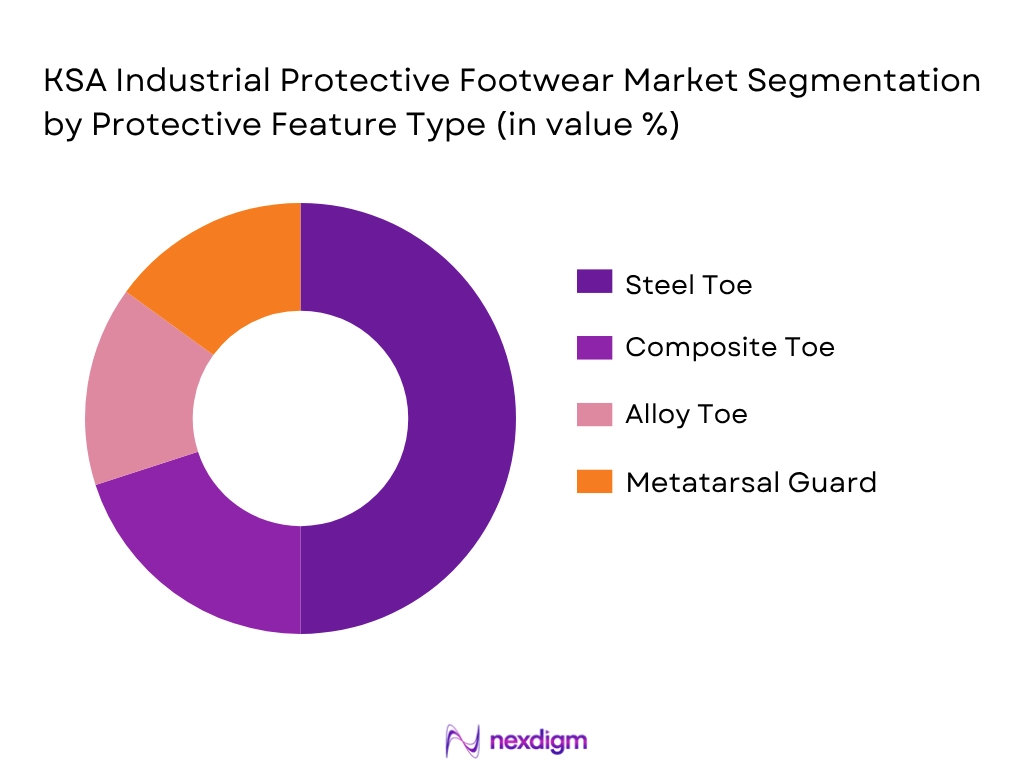
The market for industrial protective footwear is segmented by protective feature types, including steel toe, composite toe, alloy toe, and metatarsal guard. The steel toe segment holds the largest market share due to its proven effectiveness in protecting workers from heavy falling objects. Steel toe boots are the most widely used in industries like construction and manufacturing, where high levels of physical protection are required. This feature remains a standard choice for safety-conscious employers and workers across the Kingdom.
Competitive Landscape
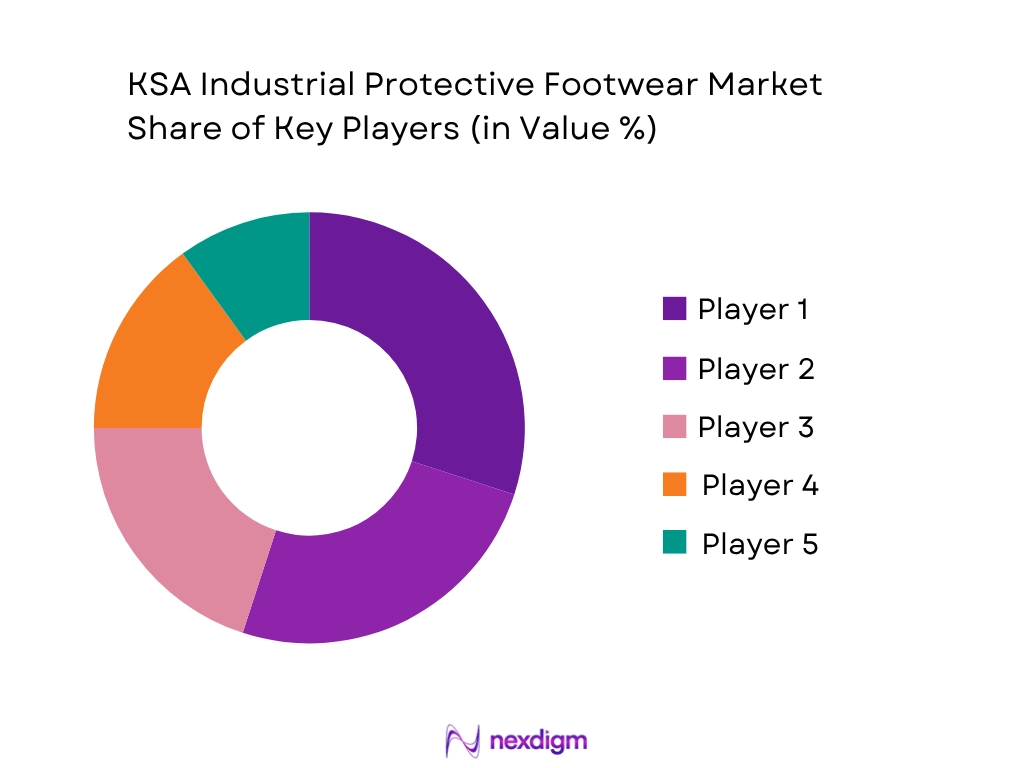
The KSA Industrial Protective Footwear market is characterized by a mix of local and international players. Major companies include global brands like Honeywell and Caterpillar, as well as regional players such as Al-Dawaa and Gulf Safety. These companies compete on product quality, pricing strategies, and compliance with local safety regulations. The market is consolidated, with a few large players holding significant influence, but there is also room for innovation and new entrants focusing on specific segments like ergonomic footwear and eco-friendly materials.
| Company Name | Establishment Year | Headquarters Location | Revenue (USD M) | Product Range | Distribution Channels | Certifications |
| Honeywell International | 1906 | USA | ~ | ~ | ~ | ~ |
| Caterpillar Inc. | 1925 | USA | ~ | ~ | ~ | ~ |
| Al-Dawaa Group | 1993 | Saudi Arabia | ~ | ~ | ~ | ~ |
| Gulf Safety | 1998 | Saudi Arabia | ~ | ~ | ~ | ~ |
| Uvex Safety Group | 1926 | Germany | ~ | ~ | ~ | ~ |
Market Dynamics & Analysis
Growth Drivers
Regulatory Enforcement Rigor
In 2024, the KSA government continues to reinforce safety regulations, including mandatory compliance with the Saudi Arabian Standards Organization (SASO) for industrial safety footwear. The increased adoption of stringent safety standards has resulted from a rising number of workplace accidents and injuries. The government’s commitment to industrial safety has been highlighted through multiple regulations in sectors like construction, manufacturing, and oil & gas, enforcing the use of protective equipment. As part of Saudi Vision 2030, the government has intensified its focus on improving workplace safety to ensure the growth of safer, more sustainable industries. The Saudi Arabian Ministry of Labor and Social Development’s focus on industrial safety will see more regulations for high-risk work environments, further increasing demand for protective footwear.
Industrial Expansion & Project Pipelines
The industrial expansion in the KSA market is evident from the country’s increasing investments in sectors like construction, oil & gas, and manufacturing. For example, Saudi Arabia is set to increase its investments in infrastructure development, especially with projects such as the NEOM mega city, which is expected to see investments of over USD 500 billion. This commitment is also supported by KSA’s increasing focus on diversifying its non-oil industries. In 2024, the total value of ongoing projects in Saudi Arabia is projected to be above USD 1.2 trillion, including numerous industrial projects. As these projects progress, safety regulations surrounding worker protection will continue to stimulate the demand for industrial protective footwear, thereby driving market growth in 2024 and beyond.
Market Challenges
Raw Material Price Volatility (Leather & Rubber Indices)
In 2024, the market faces the challenge of fluctuating raw material prices, particularly for leather and rubber, which are key components in protective footwear production. The price of leather has been affected by disruptions in global supply chains and changes in agricultural practices, leading to higher material costs. Similarly, the cost of rubber has been volatile due to fluctuations in global demand, especially for tires and industrial goods. These fluctuations are expected to continue into 2025, as global production faces pressure from climate change-related disruptions and geopolitical factors. In 2024, rubber prices saw an average increase of 10% from the previous year, as reported by the International Rubber Study Group (IRSG), further challenging the industry’s ability to maintain stable prices for protective footwear.
Compliance Certification Barriers
Compliance certification remains a significant barrier in the KSA industrial protective footwear market. In 2024, the Saudi Standards, Metrology and Quality Organization (SASO) continues to enforce rigorous safety standards that manufacturers must meet to enter the market. However, many international manufacturers face difficulties in meeting these local certification requirements, which delay product entry and increase the cost of doing business. For instance, SASO’s certification process is stringent, requiring detailed testing and documentation, and the application process is often complex for companies unfamiliar with the local regulatory environment. The process can take several months, which can hinder time-to-market for products and limit the competitive landscape for new entrants.
Market Opportunities
Adoption of Lightweight & Ergonomic Designs
In 2024, the demand for lightweight and ergonomic industrial protective footwear is increasing, driven by greater emphasis on worker comfort and reduced fatigue. Workers in sectors such as construction, logistics, and manufacturing are increasingly seeking footwear that not only meets safety requirements but also offers enhanced comfort for long working hours. As per a report by the Saudi Ministry of Labor, there has been a marked shift in preferences toward lightweight footwear options that feature breathable materials and flexible designs to increase wearability and reduce injury. Current trends indicate that employees are prioritizing ergonomic features like cushioned insoles and flexible midsoles. As industrial workforces continue to grow, manufacturers are expected to invest in innovative designs, increasing the demand for ergonomic footwear solutions.
Localization of Manufacturing Under Vision 2030
Saudi Vision 2030 continues to focus on increasing local manufacturing capabilities, which presents opportunities for the KSA industrial protective footwear market. The government is offering incentives for companies to localize their production within the Kingdom, aiming to create a more self-sufficient industrial sector. By 2024, Saudi Arabia is aiming to localize 50% of its manufacturing needs in key sectors, including industrial safety products. This initiative includes collaborations with global footwear manufacturers to establish production plants in the Kingdom, ensuring that they can meet local demand while complying with safety standards. The focus on local manufacturing is expected to reduce dependency on imports and lower the overall cost of production, making protective footwear more accessible for the growing industrial workforce.
Future Outlook
Over the next decade, the KSA Industrial Protective Footwear market is expected to witness steady growth, driven by the increasing adoption of safety standards and regulations in the industrial sectors. The forecasted CAGR for the period between 2026 and 2035 is anticipated to be 5.2%. The growth will be fueled by advancements in footwear technology, with a focus on lightweight, ergonomic designs and the increasing demand for compliance with safety standards in the rapidly expanding construction, oil, and gas industries.
Major Players
- Honeywell International
- Caterpillar Inc.
- Al-Dawaa Group
- Gulf Safety
- Uvex Safety Group
- Bata Industrials
- MSA Safety Inc.
- 3M Company
- Red Wing Shoes
- Timberland Pro
- Cofra Group
- Wolverine World Wide Inc.
- Dunlop Protective Footwear
- VF Corporation (Dickies/Work Brands)
- Skechers Work Division
Key Target Audience
- Manufacturers and Suppliers of Protective Footwear
- Construction Companies
- Oil & Gas Industry Players
- Safety Managers and Officers in Industrial Sectors
- Government and Regulatory Bodies (e.g., Saudi Arabian Standards Organization (SASO), Ministry of Labor and Social Development)
- Industrial Equipment and Safety Gear Distributors
- Investments and Venture Capitalist Firms
- Retailers of Safety Footwear
Research Methodology
Step 1: Identification of Key Variables
The initial phase involves identifying the core variables that drive the KSA Industrial Protective Footwear market, such as material types, protective features, and industry-specific requirements. This step relies on desk research, utilizing secondary data sources such as government regulations, industry publications, and market reports to create a comprehensive ecosystem map.
Step 2: Market Analysis and Construction
Data will be analyzed to determine market size, growth rate, and key trends. The analysis includes evaluating the competitive landscape, material type dominance, and regional demand across KSA. Quantitative data, including revenue projections, will be gathered from reports by local authorities and verified sources.
Step 3: Hypothesis Validation and Expert Consultation
The hypotheses developed in Step 2 will be validated through consultations with industry experts, manufacturers, and end-users in KSA. Interviews and surveys will provide real-time insights into purchasing trends, technological advancements, and regulatory challenges affecting the market.
Step 4: Research Synthesis and Final Output
The final phase involves synthesizing all collected data and insights, ensuring consistency with market trends, and validating the findings through additional expert interviews. This will result in a comprehensive, accurate, and actionable market report tailored to stakeholders in the industrial protective footwear sector.

- Executive Summary
- Research Methodology (Market Definitions, Terminology, SASO & ISO Safety Footwear Standards, Market Sizing Approach (Revenue vs. Unit Shipments vs. Price Realization), Data Normalization Procedures, Primary Research Structure (Interviews with Safety Officers, Procurement Leads), Secondary Research (Regulatory Databases, Import/Export Publications), Research Limitations and Risk Controls)

- Definition & Scope
- Market Genesis & Policy Drivers
- Regulatory Framework
- Value Chain Mapping
- Supply–Distribution Network (OEMs, Distributors, Authorized Resellers)

- Growth Drivers(Regulatory Enforcement Rigor, Industrial Expansion & Project Pipelines, Import‑Export Duty & Tariff Influences)
- Market Challenges (Raw Material Price Volatility (Leather & Rubber Indices), Compliance Certification Barriers, Counterfeit / Low‑Standard Product Penetration)
- Market Opportunities(Adoption of Lightweight & Ergonomic Designs, Localization of Manufacturing Under Vision 2030, Digital Adoption – E‑Procurement Trends )
- Market Trends(Sustainability & Recyclability (Eco‑Footprint Metrics), Customization for Industry‑Specific Hazards, E‑Commerce & Supply Chain Digitization)
- Safety Standards & Compliance(SASO, ISO, ANSI Benchmarks, Third‑Party Certification Penetration)
- Porter’s Five Forces Analysis(Supplier Power, Buyer Power, Competitive Rivalry)
- SWOT Analysis (Market & Key Players)

- By Value (2020-2025)
- By Volume (2020-2025)
- By Average Unit Price (2020-2025)

- By Material Type (In Value%)
Leather
Rubber
PVC
Polyurethane
Composite/Metatarsal Guard - By Protective Feature Type (In Value%)
Steel Toe
Composite Toe
Alloy/Aluminum Toe
Metatarsal Guard
Anti‑Static / Electrically Insulative - By End‑Use Industry (In Value%)
Oil & Gas (Hazard Exposure Index, Workforce Scale)
Construction & Infrastructure (Site Safety Enforcement Metrics)
Manufacturing (Plant Safety Compliance)
Chemicals/Pharmaceuticals (Corrosion & Contamination Standards)
Logistics and Transportation - By Distribution Channel (In Value%)
Industrial Safety Distributors
Authorized Brand Dealers
E‑Commerce / Online B2B Portals
Direct OEM Supply Contracts
Retail Safety Equipment Outlets - By Region within KSA (In Value%)
Central (Industrial Hubs)
Eastern Province (Oil & Petrochemical Corridors)
Western Region (Ports and Logistics)
Northern & Southern (Emerging Industrial Zones)

- Market Share (Revenue & Volume) by Company
- Competitive Positioning Metrics (Capacity, Distribution Coverage, Compliance Certification Count, SKU Breadth, Price Band Position)
- Pricing Matrix (SKU‑Level Price Benchmarking)
- Competitive Cross‑Comparison Parameters(Corporate Overview, Product Portfolio (Material & Feature Depth), SASO/ISO Safety Certifications, Distribution Network Strength, Brand Equity Scores, Revenue by Segment & Geography, R&D Investments (Material Tech & Ergonomics), After‑Sales & Warranty Offerings )
SWOT Analysis of Key Players (Strengths, Weaknesses, Opportunities, Threats) - Safety Footwear Pricing Analysis (SKU‑Level)
- Detailed Company Profiles
Honeywell International Inc.
Wolverine World Wide Inc.
Cofra Group
Uvex Safety Group
Bata Industrials
Dunlop Protective Footwear
VF Corporation (Dickies/Work Brands)
MSA Safety Inc.
3M Company
Red Wing Shoes
Caterpillar Footwear
Timberland Pro
Skechers Work Division
Rahman Group
ELTEN GmbH

- Demand Drivers by Sector
- Procurement Processes & Tender Dynamics
- Budget Allocation Patterns (Safety Spend Ratios)
- Pain Points, Compliance, Fit & Comfort
- Decision‑Making Criteria (Total Cost of Ownership Models)

- By Value (2026-2035)
- By Volume (2026-2035)
- By Average Price (2026-2035)


 Request a Sample
 Ask for Customization
 Get a Quote
 Enquire Now