
 Download PDF
 Download PDF
Market Overview
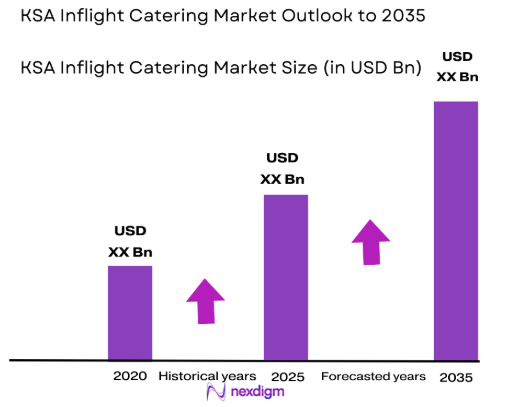
The KSA Inflight Catering Market is projected to reach USD ~ billion based on a recent historical assessment, driven by the growing aviation industry in Saudi Arabia. This market’s growth is fueled by increasing air travel, especially within the region and internationally, as well as rising demand for diverse in-flight catering services, ranging from basic meals to luxury dining options. The government’s investment in aviation infrastructure, such as airport expansion and fleet growth, also supports this trend. Furthermore, the market benefits from the increased adoption of technology to improve catering logistics and quality.
Saudi Arabia’s dominance in the market is driven by its strategic position as a major hub for international air travel and the large number of pilgrims visiting the country annually. Cities like Riyadh, Jeddah, and Mecca lead the demand for inflight catering, supported by the booming tourism industry, particularly for Hajj and Umrah. Additionally, the country’s focus on enhancing air transport networks and the rise in business travel also bolster the inflight catering sector. Strong regional connectivity and heavy investments in airport and airline infrastructure further enhance the demand.
Market Segmentation
By Product Type
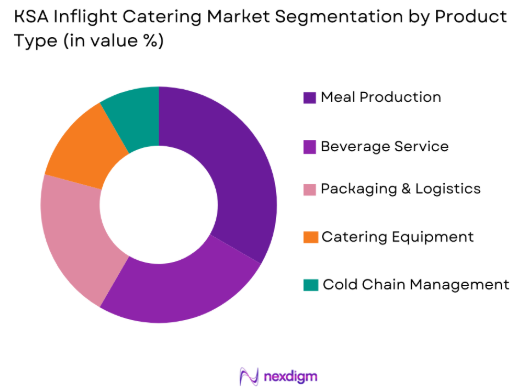
The KSA Inflight Catering Market is segmented by product type into meal production, beverage service, packaging & logistics, catering equipment, and cold chain management. Recently, meal production has dominated the market share due to the continuous increase in demand for fresh, gourmet, and culturally diverse meals by passengers. Airlines, especially those targeting premium customers, have invested heavily in meal production capabilities to meet these needs, which has led to significant market dominance. The growing demand for customized in-flight dining experiences, including halal and special dietary options, has also contributed to this trend. Furthermore, meal production has seen an increase in automation, with advanced technology streamlining food preparation and distribution, reducing costs, and ensuring better quality control. As a result, the sub-segment holds a leading position in the market share, driven by passenger expectations for quality and the airline industry’s emphasis on catering excellence.
By Platform Type
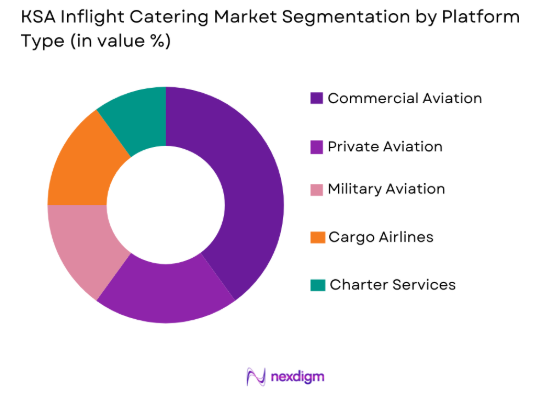
The KSA Inflight Catering Market is segmented by platform type into commercial aviation, private aviation, military aviation, cargo airlines, and charter services. Recently, commercial aviation has a dominant market share due to the increasing number of domestic and international flights and growing airline fleets. The continuous rise in air travel demand, including leisure and business tourism, has driven commercial aviation’s significant role in inflight catering. Airlines have prioritized enhancing the passenger experience, which includes offering a variety of meal options, which has further solidified the dominance of this segment. Moreover, commercial aviation’s reliance on in-house and outsourced catering services has bolstered its market leadership, as airlines look to differentiate themselves through quality food offerings. The sector’s continued growth, along with improvements in catering technologies, ensures that commercial aviation will remain the largest segment in the inflight catering market.
Competitive Landscape
The KSA Inflight Catering Market is highly competitive, with a mix of established players and regional providers vying for market share. Leading players focus on differentiating their offerings by providing unique in-flight dining experiences, and leveraging cutting-edge technology to streamline catering services. Furthermore, consolidation in the industry has allowed for larger providers to expand their reach and improve economies of scale. These major players, often backed by partnerships with airlines, are highly influential in shaping the future of inflight catering services.
| Company Name | Establishment Year | Headquarters | Technology Focus | Market Reach | Key Products | Revenue | Service Innovation |
| Saudi Airlines Catering | 1981 | Riyadh, Saudi Arabia | ~ | ~ | ~ | ~ | ~ |
| Al-Dawaa Pharmacies | 1993 | Riyadh, Saudi Arabia | ~ | ~ | ~ | ~ | ~ |
| Gulf Catering Co. | 1985 | Jeddah, Saudi Arabia | ~ | ~ | ~ | ~ | ~ |
| Abela & Co. | 1987 | Riyadh, Saudi Arabia | ~ | ~ | ~ | ~ | ~ |
| Emirates Flight Catering | 1989 | Dubai, UAE | ~ | ~ | ~ | ~ | ~ |
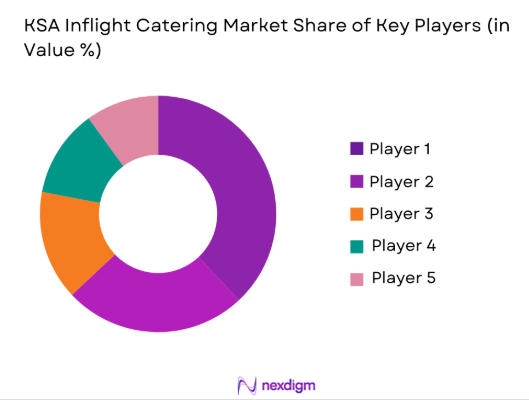
KSA Inflight Catering Market Analysis
Growth Drivers
Increasing air travel demand
As the aviation sector grows, there is a direct increase in demand for inflight catering. The rise in leisure, business, and pilgrimage travel, particularly to and from Saudi Arabia, has caused airlines to enhance passenger experiences by improving their catering services. This has led to higher investment in food production, packaging, and delivery solutions by major airlines. Airlines are particularly focused on catering to premium customers who expect a high level of service, further propelling market growth. The expansion of domestic and international flights, coupled with expanding fleets, further fuels the need for catering services on a larger scale. Additionally, the frequent flights to destinations such as Mecca and Medina, owing to religious tourism, demand higher quality catering solutions for passengers. All these factors contribute to sustained growth in the inflight catering market.
Government support and investments in aviation
The Saudi government has focused on expanding aviation infrastructure, including new airports and airlines, which drives demand for inflight catering services. By investing in the modernization of airports and increasing flight frequency, there is a direct effect on the catering requirements. Airlines are also encouraged to modernize their inflight services, including food offerings, to provide an enhanced experience. Furthermore, Saudi Vision 2035 has highlighted tourism as a key focus area, with a specific emphasis on religious tourism, which has led to increased air travel. In response, the government’s active involvement in expanding aviation infrastructure drives inflight catering market growth, as more passengers require dining services on flights. Enhanced connectivity within the region, including flights from and to major tourist cities, boosts inflight catering demand, contributing to market growth.
Market Challenges
High operational and logistics costs
A major challenge for the inflight catering market in Saudi Arabia is the high cost of operations, particularly the costs associated with food production, transportation, and storage. With the increasing number of flights and meal requirements, catering companies must manage a complex logistics network, which can strain resources. These high costs are amplified by fluctuating fuel prices, which add an extra layer of unpredictability to transportation expenses. Catering companies are forced to balance cost efficiency with service quality, which can sometimes be difficult given the high expectations of passengers, especially in premium cabins. Additionally, maintaining freshness and meeting food safety standards adds operational complexity. The combination of rising operational costs and logistical challenges makes it difficult for companies to remain profitable while providing high-quality catering services at competitive prices.
Regulatory food safety and health standards
Strict regulations surrounding food safety and health standards pose significant challenges for the inflight catering market. Catering services must comply with both national and international regulations governing food handling, storage, and preparation to ensure the safety of passengers. These regulations are particularly stringent for airlines operating internationally. Failure to adhere to these guidelines can result in fines or reputational damage. Meeting these standards also requires continuous investment in technology, staff training, and infrastructure to ensure compliance. Furthermore, the rise in health-conscious consumers has led to more demand for specialized meals, such as gluten-free, vegetarian, or low-calorie options, further complicating food production and certification processes. Catering companies must continually adapt to changing regulations and consumer preferences, which adds to the operational burden and increases costs.
Opportunities
Rise in demand for healthier and specialty meals
As consumers become more health-conscious, there is a rising demand for healthier and specialty meals, such as organic, low-calorie, and vegan options. This shift is driving innovation within the inflight catering market. Airlines and catering companies are adapting to these dietary trends by offering a broader variety of meals that cater to specific health concerns. With the growing focus on well-being, passengers are increasingly seeking meals that not only taste good but also contribute to their overall health. This presents an opportunity for catering companies to develop new menus that reflect these changing preferences, including meals that are free from preservatives and additives. Airlines that successfully tap into this demand for healthy and specialty meals stand to gain a competitive edge in a crowded marketplace.
Expansion of technological solutions
The growth of technology-driven solutions presents an opportunity for the inflight catering market to improve efficiency, reduce costs, and enhance service quality. From automated meal preparation systems to AI-based logistics solutions, the inflight catering industry can benefit from advances in technology that streamline operations and improve food safety. Additionally, digital platforms for meal customization and ordering allow passengers to personalize their in-flight dining experiences, increasing customer satisfaction. Catering companies that invest in automation and data-driven solutions can reduce labor costs, improve turnaround times, and provide more personalized services. The integration of AI and IoT in meal production and logistics will allow catering companies to scale their operations more effectively, meet growing demand, and reduce waste, creating significant opportunities for growth.
Future Outlook
Over the next five years, the KSA Inflight Catering Market is expected to experience steady growth, driven by the expanding aviation industry and increasing consumer demand for premium dining experiences. Technological innovations in catering logistics, such as AI and automation, will play a pivotal role in improving operational efficiency and quality control. Regulatory support for food safety and the growing emphasis on sustainability will influence market dynamics, especially in relation to packaging and waste management. Demand for healthier, specialty, and locally sourced meals will continue to rise, particularly in premium cabin classes, driving the adoption of customized and diverse meal offerings. In addition, Saudi Arabia’s efforts to enhance its tourism sector will further fuel growth, particularly in catering services for religious tourism.
Major Players
- Saudi Airlines Catering
- Al-Dawaa Pharmacies
- Gulf Catering Co.
- Abela & Co.
- Emirates Flight Catering
- Gate Gourmet
- Newrest
- LSG Sky Chefs
- Dnata Catering
- Qatar Aviation Services
- Servair
- Sky Chef
- Lufthansa Group
- Air India Catering
- Singapore Airlines Catering
Key Target Audience
- Investments and venture capitalist firms
- Government and regulatory bodies
- Airlines and aviation operators
- Catering service providers
- Airport authorities
- Aircraft manufacturers
- Hospitality service companies
- Foodservice technology providers
Research Methodology
Step 1: Identification of Key Variables
The first step involves identifying the critical variables driving the KSA Inflight Catering Market, including demand patterns, technological advancements, regulatory frameworks, and market trends.
Step 2: Market Analysis and Construction
Data is gathered from primary and secondary sources to build a comprehensive market model that incorporates historical data, consumer behavior, and industry dynamics.
Step 3: Hypothesis Validation and Expert Consultation
Expert consultations, including interviews with key industry players and stakeholders, help validate the initial hypotheses and refine the market model.
Step 4: Research Synthesis and Final Output
The final research output is synthesized, ensuring all findings are aligned with the defined scope and objectives, and presented in an easy-to-understand format for decision-makers.

- Executive Summary
- Research Methodology (Definitions, Scope, Industry Assumptions, Market Sizing Approach, Primary & Secondary Research Framework, Data Collection & Verification Protocol, Analytic Models & Forecast Methodology, Limitations & Research Validity Checks)

- Market Definition and Scope
- Value Chain & Stakeholder Ecosystem
- Regulatory / Certification Landscape
- Sector Dynamics Affecting Demand
- Strategic Initiatives & Infrastructure Growth

- Growth Drivers
Increase in air travel
Rising demand for premium in-flight services
Adoption of sustainable practices
Technological advancements in catering logistics
Government investments in aviation infrastructure - Market Challenges
High operational costs
Regulatory compliance for food safety
Fluctuating fuel and transport costs
Logistical complexities in catering delivery
Dependency on global supply chains - Market Opportunities
Growing demand for gourmet and specialized meals
Opportunities in premium class catering services
Expansion in cloud-based catering solutions - Trends
Shift towards sustainable packaging
Adoption of AI for catering logistics
Emergence of automation in meal production
Focus on health-conscious meal options
Rising use of local ingredients for cultural diversity - Government Regulations & Defense Policy
Aviation food safety regulations
Waste management policies in aviation
Incentives for sustainable aviation practices

- By Market Value, 2020-2025
- By Installed Units, 2020-2025
- By Average System Price, 2020-2025
- By System Complexity Tier, 2020-2025

- By System Type (In Value%)
Meal Production
Beverage Service
Packaging & Logistics
Catering Equipment
Cold Chain Management - By Platform Type (In Value%)
Commercial Aviation
Private Aviation
Military Aviation
Cargo Airlines
Charter Services - By Fitment Type (In Value%)
On-premise Catering
Cloud-based Solutions
Hybrid Catering Solutions
Modular Catering Units
Integrated Catering Solutions - By End User Segment (In Value%)
Airlines
Private Jet Operators
Airports
Catering Companies
Government Agencies - By Procurement Channel (In Value%)
Direct Procurement
Tenders & Bidding
Third-party Distributors
Partnerships
Online Platforms - By Material / Technology (in Value%)
Sustainable Packaging
Temperature-controlled Materials
AI-driven Catering Systems
Automated Catering Equipment
Catering Logistics Technology

- Market structure and competitive positioning
- Market share snapshot of major players
- Cross Comparison Parameters (Meal Production, Beverage Service, Packaging & Logistics, Catering Equipment, Cold Chain Management, Commercial Aviation, On-premise Catering, AI-driven Catering Systems, Airlines, Tenders & Bidding)
- SWOT Analysis of Key Players
- Pricing & Procurement Analysis
- Porter’s Five Forces
- Key Players
Saudi Airlines Catering
Al-Dawaa Pharmacies
Gulf Catering Co.
Alwazir Catering
AlMokha Catering
Arabian Food Supplies
Qatar Aviation Services
Abela & Co.
Emirates Flight Catering
Gate Gourmet
Lufthansa Group
Newrest
Servair
Sky Chef
Dnata Catering

- Airlines increasing demand for personalized services
- Private jet operators investing in premium meal offerings
- Government agencies focusing on efficient catering solutions
- Catering companies expanding offerings for international flights

- Forecast Market Value, 2026-2035
- Forecast Installed Units, 2026-2035
- Price Forecast by System Tier, 2026-2035
- Future Demand by Platform, 2026-2035


 Request a Sample
 Ask for Customization
 Get a Quote
 Enquire Now