

 Download PDF
Market Overview
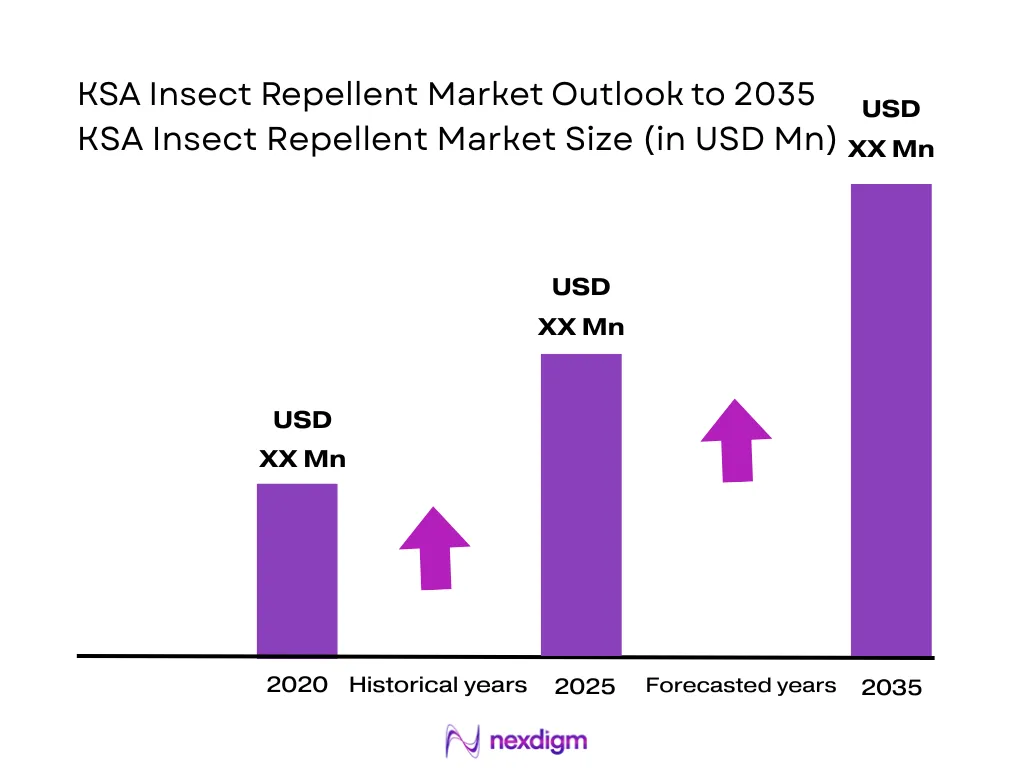
The Saudi Arabia insect repellent market is valued at USD ~ Million based on historical and benchmarking data, with analysis covering recent revenue performance through 2024, reflecting observable demand levels across consumer and institutional segments. Growth has been driven by rising awareness of vector‑borne diseases such as malaria and dengue, increased outdoor activity among residents, and heightened travel flows including pilgrimage tourism, which amplify demand for protective solutions.
Key cities such as Riyadh, Jeddah, and Dammam dominate the market due to their high population densities, affluent consumer bases, and significant retail and healthcare infrastructure supporting distribution. These urban centers also attract large seasonal and business travel traffic, which in turn elevates demand for insect repellent products across pharmacies, supermarkets, and online channels. Their strategic role as commercial and tourism hubs supports deeper retail penetration and broader product availability than in smaller urban areas.
Market Segmentation
By Target Insect Type
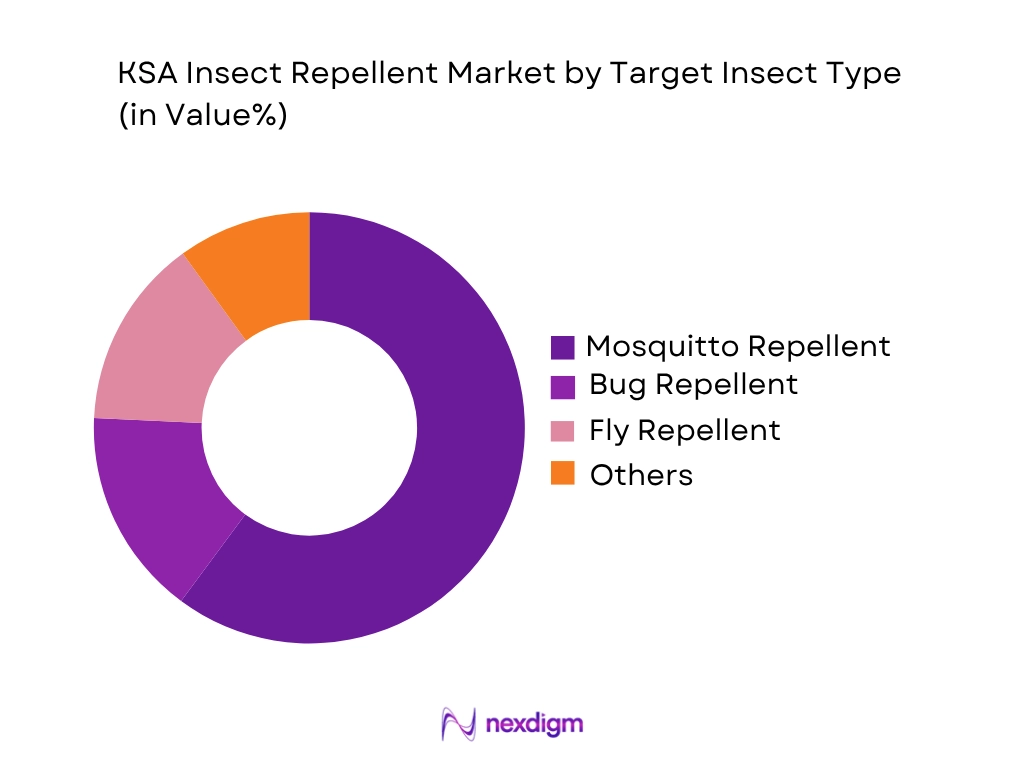
By target insect type, the Saudi insect repellent market is led by mosquito repellent, which holds the largest share of the 2024 segment mix. This dominance is attributable to the higher prevalence and public health emphasis on mosquito‑borne disease prevention, especially in urban and peripheral communities where domestic and travel‑related mosquito exposure is frequent. Consumer preference for products that offer reliable protection against mosquitoes translates to higher shelf demand across pharmacy and retail channels. In contrast, bugs and fly repellents are more niche, often purchased seasonally or for specific environments like outdoor catering and hospitality, which limits their share relative to mosquito‑focused formats.
By Product Format
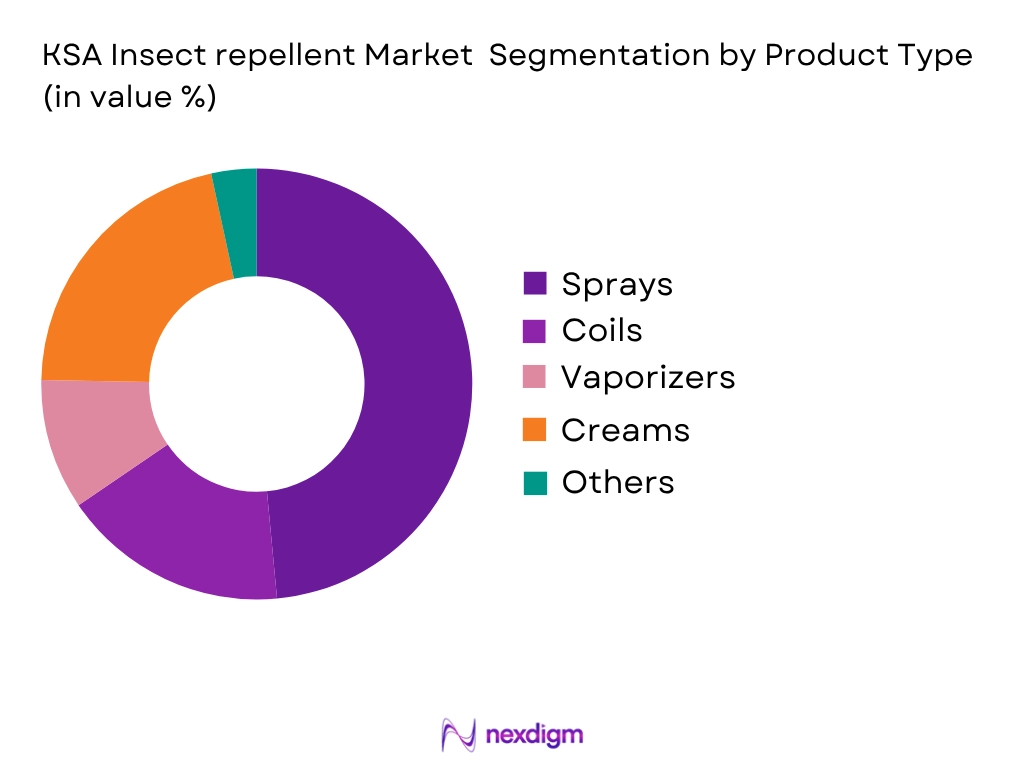
Under product format segmentation, sprays and aerosols dominate the Saudi market due to their versatility, ease of use, and broad consumer familiarity across age groups. These formats provide flexible application scenarios, making them attractive for both household protection and travel use. Creams and lotions constitute the second largest sub‑segment, especially among health‑conscious users who prioritize skin‑safe, longer‑lasting formulas. Coils and sticks maintain relevance in residential settings and outdoor social events due to perceived coverage benefits. Emerging categories like wearable patches are gaining traction but remain limited in overall share due to relatively higher unit pricing and consumer experimentation phases.
Competitive Landscape
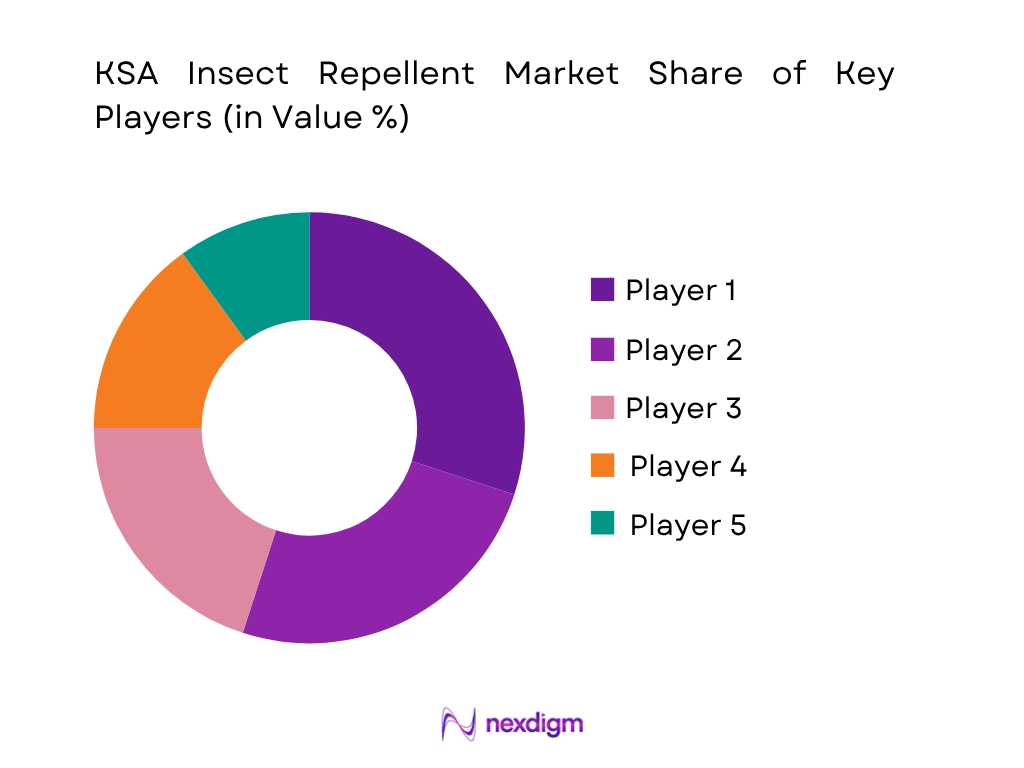
The KSA insect repellent market is moderately consolidated with a combination of global FMCG players and regional distributors shaping the competitive environment. Major competition centers on brand equity, product efficacy, distribution reach, and portfolio diversity across both synthetic and natural formulations. The competitive landscape reflects a mix of legacy consumer brands and targeted repellent specialists offering both mainstream and innovative products tailored to Saudi consumer preferences.
| Company | Establishment | Headquarters | Product Portfolio Breadth | Distribution Footprint | Retail Channels Covered | Ingredient Focus | Regional Presence |
| Reckitt Benckiser | 1823 | UK | ~ | ~ | ~ | ~ | ~ |
| SC Johnson | 1886 | US | ~ | ~ | ~ | ~ | ~ |
| Godrej Consumer Products | 1897 | India | ~ | ~ | ~ | ~ | ~ |
| Dabur India | 1884 | India | ~ | ~ | ~ | ~ | ~ |
| Henkel AG | 1876 | Germany | ~ | ~ | ~ | ~ | ~ |
KSA Insect Repellent Market Analysis
Growth Drivers
Rising Human Mobility and Outdoor Activity Linked to Tourism and Population Dynamics
Saudi Arabia’s insect repellent demand is increasingly supported by surges in human mobility, tourism, and overall population growth, which inherently raise exposure to insect vectors during travel and outdoor recreation. Official government data shows that in the latest tourism statistics, Saudi Arabia recorded approximately 116 million total tourists (including 29.7 million inbound visitors and 86.2 million domestic trips) in the most recent reporting period, reflecting continued expansion in both international and domestic travel activity. This high volume of mobility is linked to broader economic diversification efforts that promote sightseeing, pilgrimage, cultural festivals, and leisure tourism, resulting in strong seasonal and year‑round outdoor human presence in environments where insects are prevalent. Simultaneously, World Bank population figures indicate the Kingdom’s total population stands at approximately 35.3 million people, with a population growth rate of around 4.6% per annum, indicating expanding domestic consumer bases and urban‑peripheral connectivity that facilitate outdoor leisure patterns. Increased outdoor engagement correlated with tourism and rising population movement significantly sustains demand for insect protection products used by both residents and visitors during travel, camping, hospitality, and public events where vector exposure risk is elevated.
Economic Diversification and Expanding Non‑Oil Services Sector Supporting Consumer Spending Patterns
The economic landscape in Saudi Arabia is shifting toward broad‑based consumption and services growth, creating indirect support for consumer categories like insect repellents through greater discretionary spending on health, leisure, and outdoor goods. Government statistics reveal real GDP expansion in 2024, with overall GDP growing approximately 1.3% year‑on‑year, and non‑oil sectors capturing much of that growth as oil activities declined while services and retail segments expanded. Within the non‑oil economy, sectors such as wholesale and retail trade, hospitality, and leisure services have reported notable growth—retail and hospitality activities grew over 8% in recent performance indicators—driven by increased activity in tourism and domestic services. This broader shift toward non‑oil economic activity supports increased household consumption across diversified categories, including health‑oriented and outdoor protection products. Additionally, Saudi Arabia’s GDP per capita is above USD 35,000, which corresponds to higher purchasing power relative to many regional peers. As consumers allocate more income toward leisure, travel, health protection, and lifestyle items, products like insect repellents become embedded in purchase portfolios for protective and convenience purposes, encouraging manufacturers to innovate and widen distribution to meet rising consumer spending capacity.
Challenges
Highly Seasonal Demand Fluctuations Linked to Climatic Patterns and Consumer Awareness Cycles
One of the most notable challenges in the KSA insect repellent market arises from strong seasonality in insect activity driven by climatic variations, which in turn produces uneven demand throughout the year. Saudi Arabia’s climate profile includes hot desert conditions across much of the Kingdom, wherein insect populations such as mosquitoes and flies proliferate primarily during warmer months and after episodic rainfall. Unlike markets with more temperate climates that sustain year‑round vector activity, insect bite concerns in the Kingdom tend to intensify in specific periods, leading to spikes in demand for repellents rather than consistent baseline purchasing. This seasonal consumption pattern forces manufacturers and distributors to manage significant inventory and distribution planning challenges to avoid stockouts during peak months and overstock during low‑demand periods. Compounding this seasonal fluctuation is limited publicly available data on incidence rates for vector‑borne diseases at a granular level, which constrains the ability of marketers and policymakers to precisely forecast demand. Even though over 97% of adults in Saudi Arabia report good or better overall health status, anecdotal prevalence of insect bite irritation and allergic reactions drive episodic demand, which nevertheless remains concentrated rather than stable.
Competitive Substitution from Alternative Protection Measures and Lifestyle Choices
In the KSA consumer environment, insect repellent products face substitution pressure from non‑chemical and alternative protection approaches, which presents a structural challenge for sustained market penetration. With rising health consciousness and government‑led public health messaging indicating high general health ratings (over 97% of adults reporting good or better health), many consumers increasingly prefer natural or precautionary measures like clothing barriers, protective nets, and lifestyle adjustments to reduce insect exposure. In addition, Saudi urban expansion and enhanced indoor cooling infrastructure diminish perceived risk of insect interaction within households, leading many consumers to deprioritize chemical repellents in favor of non‑product interventions. For instance, home air‑conditioning usage and sealed environments in metropolitan centers like Riyadh reduce the immediacy of insect contact compared to rural settings where outdoor work and agricultural activity remain more prevalent. These alternative protective behaviors challenge insect repellent companies to position products effectively against both non‑chemical strategies and adjacent protective goods (e.g., mosquito nets, indoor traps), thereby complicating category expansion in segments where repellents are not yet entrenched.
Opportunities
Expansion of Outdoor Leisure and Cultural Events Driving Repellent Use Cases
Growing participation in outdoor cultural, leisure, and entertainment activities across Saudi Arabia presents a tangible opportunity for insect repellent brands to align product offerings with evolving consumer lifestyles. Recent tourism data indicates that inbound visitors peaked at approximately 29.7 million individuals and domestic trips exceeded 86.2 million, signalling robust engagement in recreational and social travel across diverse environments. Outdoor events, festivals, and urban leisure installations—spanning cultural, sporting, and entertainment attractions—are increasingly calendared year‑round. Such activities frequently involve open‑air environments where insect contact becomes an operational concern for attendees, creating a contextual demand use case for personal protective repellents integrated into travel kits, event safety messaging, and hospitality services. For example, major cultural attractions and tourism sites host millions of visitors annually, inherently encouraging ancillary product use such as insect protection to enhance visitor comfort and safety. Initiatives like national heritage festivals and seasonal campaigns accentuate outdoor footfall, offering repellent brands an opening to partner with event organizers, retail partners, and hospitality venues to position products as essential outdoor accessories rather than incidental chemical solutions.
Leveraging Rising Urbanization and Retail Modernization to Deepen Market Penetration
Saudi Arabia’s urban and retail landscape evolution offers a substantive growth opportunity for insect repellent products by expanding geographic and channel reach. With approximately 84.5% of the population residing in urban centers, Saudi consumer purchasing increasingly gravitates toward organized retail formats such as supermarkets, hypermarkets, and modern pharmacy chains, as well as burgeoning e‑commerce penetration supported by improved logistics infrastructure. Urban density in cities like Riyadh, Jeddah, and Dammam enhances distribution economics by enabling manufacturers to achieve higher shelved visibility and faster stock turnover in concentrated population hubs. Meanwhile, direct‑to‑consumer digital platforms allow brands to access consumer segments that prioritize convenience and home delivery, broadening penetration beyond traditional point‑of‑sale channels. Urban lifestyle data supported by population figures of about 35.3 million inhabitants indicates sustained internal migration to city centers, increasing standardized consumption patterns amenable to preventive products like insect repellents. By integrating omnichannel retail strategies and localized marketing campaigns in urban hotspots, companies can improve product accessibility, educate consumers on use cases, and convert seasonal buying into habitual purchase behavior.
Future Outlook
Over the next decade, the KSA insect repellent market is expected to continue expanding steadily, influenced by sustained public health awareness, tourism‑linked demand cycles (including pilgrimages), and shifting consumer preferences toward safer and eco‑friendly repellent formats. Growth will also be supported by e‑commerce channel expansion, enabling wider access to both global brands and niche natural products. Additionally, regulatory frameworks are aligning to encourage product quality and certification standards, which may further stimulate product innovation and consumer confidence. The ongoing urbanization trend and heightened engagement in outdoor recreation will sustain baseline demand for insect protection solutions, with potential upside linked to seasonality and public health initiatives.
Major Players
- Reckitt Benckiser Group plc
- SC Johnson & Son Inc.
- Godrej Consumer Products Ltd.
- Dabur India Ltd.
- Henkel AG & Co. KGaA
- Johnson & Johnson
- Spectrum Brands Holdings Inc.
- Jyothy Laboratories
- Bayer AG
- Enesis Group
- Herbal Armor
- Murphy’s Naturals
- Pigeon Corporation
- Saudi Pharmaceutical Industries & Medical Appliances Corporation (SPIMACO)
- Nahdi Medical Co.
Key Target Audience
- Consumer Packaged Goods (CPG) Manufacturers
- Retail Chain Buyers & Category Managers
- Investments and Venture Capitalist Firms
- Institutional Procurement Teams
- Government and Regulatory Bodies
- E‑commerce Platforms & Marketplace Strategists
- Active Ingredient Suppliers & Formulation Partners
- Distribution & Logistics Partners in Personal Care
Research Methodology
Step 1: Identification of Key Variables
Initial research involved mapping critical stakeholders in the Saudi insect repellent ecosystem. Secondary data sources including industry reports, SFDA registries, retail scanner datasets, and import statistics were used to define variables like product formats, active ingredients, and distribution channels.
Step 2: Market Analysis & Construction
Historical revenue and volume data were analyzed to construct the base market size. This included assessing penetration by format and insect type, price trends, and channel adoption patterns. Qualitative factors such as consumer preference shifts and vector disease awareness were integrated to contextualize quantitative findings.
Step 3: Hypothesis Validation & Expert Consultation
Hypotheses regarding market growth drivers and barriers were validated via interviews with industry practitioners, including category managers, distribution partners, and product developers. These engagements provided insights on pricing sensitivity, regional demand variations, and competitive strategies.
Step 4: Research Synthesis & Final Output
Market data was synthesized to align bottom‑up estimates with top‑down projections, ensuring reconciliation between observed retail performance and macroeconomic indicators. Forecast modeling incorporated scenario analysis reflecting potential regulatory and demand‑side shifts.

- Executive Summary
- Research Methodology (Market Definitions & Assumptions, Abbreviations and Metrics, Market Sizing Frameworks, Primary & Secondary Data Sources, Benchmarking & Forecasting Approach, Limitations & Data Quality Controls)

- Market Definition & Scope
- Historical Market Genesis & Evolution
- Disease Vector Landscape & Public Health Impact
- Value Chain Mapping
- Product Life Cycle & Adoption Curve
- Regulatory & Compliance Architecture

- Growth Drivers (Rising vector‑borne disease awareness & preventive behavior, Hot climactic conditions sustaining insect activity)
- Challenges (Competitive pressure from synthetic solutions, Seasonal demand fluctuations, Regulatory approval complexity)
- Opportunities (E‑commerce penetration, Innovative delivery formats (wearables, biodegradable coils)
- Market Trends (Health & wellness positioning, Sustainability and eco‑labeling, Precision targeting)
- Government & Regulatory Policy Effects (SFDA biocide rules, Public health campaigns, Taxation & import duties)
- SWOT & Porter’s Five Forces Analysis (Structural barriers, supplier dynamics, threat of substitutes)

- Market Revenue (2020-2026)
- Market Volume Consumption (2020-2026)
- Average Selling Price Analysis (2020-2026)

- By Insect Target (In Value %)
Mosquito Repellents
Fly Repellents
Bug & Ant Repellents
Tick Repellents
Others - By Product Format (In Value %)
Sprays & Aerosols
Creams & Lotions
Coils & Sticks
Vaporizers & Electric Devices
Wearables & Patch Systems - By Active Ingredient Category (In Value %)
DEET‑based
Picaridin & IR3535
Botanical & Natural
Others - By Distribution Channel (In Value %)
Pharmacies & Drug Stores
Supermarkets & Hypermarkets
E‑commerce Platforms
Traditional Retail & Grocery Outlets
Specialty Outdoor & Travel Retail - By End‑Use Application (In Value %)
Residential & Household Use
Commercial & Institutional
Healthcare & Public Health Programs
Outdoor Recreation & Tourism
Industrial & Occupational Protection - By Geographic Region (In Value %)
Central Region
Western Region
Eastern Region
Southern & Southwestern Zones
Northern Region

- Market Share – Leading Players
- Cross‑Comparison Parameters (Market‑specific, Company Ownership Type, Product Portfolio Breadth
- SKU Count & Innovation Index (Market Coverage % by Channel, Average Price Positioning, Distribution Intensity, Consumer Ratings & Compliance Certification, Marketing & Promotion Spend vs Revenue)
- SWOT Profiles of Major Players
- Pricing & SKU Structure Analysis (Leading SKU ASPs across channels)
- Company Profiles
Reckitt Benckiser Group plc
SC Johnson & Son Inc.
Godrej Consumer Products Ltd.
Dabur India Ltd.
Jyothy Laboratories
Spectrum Brands Holdings Inc.
Henkel AG & Co KGaA
Johnson & Johnson
Bayer AG
Enesis Group
Herbal Armor
Murphy’s Naturals
Saudi Pharmaceutical Industries & Medical Appliances Corporation
Nahdi Medical Co.
Life Pharmacy

- Consumer Adoption Patterns (Urban vs rural)
- Price Elasticity & Value Sensitivity
- Distribution Preference Metrics
- Product Efficacy Perception & Repeat Purchase
- Seasonal Usage Trends & Forecast

- Revenue Projection (2026-2035)
- Volume Forecast by Segment (2026-2035)
- ASP Trend Scenarios (2026-2035)
- High‑Impact Market Scenarios (2026-2035)


 Request a Sample
 Ask for Customization
 Get a Quote
 Enquire Now