
 Download PDF
Market Overview
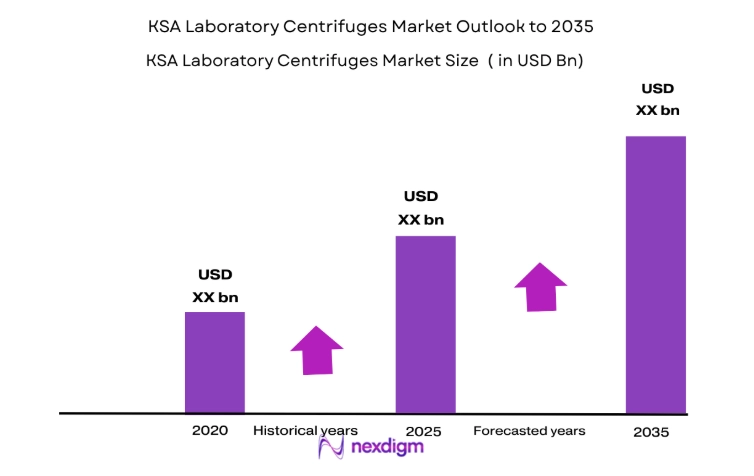
The market for laboratory centrifuges in Saudi Arabia is experiencing significant growth, driven by an increasing demand for high-quality diagnostic tools and laboratory equipment. Based on a recent historical assessment, the market size is estimated to reach approximately USD ~ million in 2024. This growth is largely fueled by the expanding healthcare and pharmaceutical industries, alongside the increasing demand for diagnostic testing in hospitals and research facilities. Technological advancements, particularly in the development of automated centrifuges, are also contributing to the market’s expansion, as these devices improve efficiency and accuracy in laboratory processes. Moreover, the government’s focus on enhancing healthcare infrastructure and investing in research and development plays a vital role in furthering the adoption of laboratory centrifuges across the country.
In terms of geographic dominance, major cities such as Riyadh, Jeddah, and Dhahran are the primary hubs for the market due to their advanced healthcare infrastructure and the presence of key research and medical institutions. Riyadh, as the capital city, benefits from a large concentration of hospitals, research centers, and medical universities, while Jeddah’s proximity to seaports makes it a critical point for the importation of laboratory equipment. Additionally, Dhahran, known for its scientific and technological advancements, has seen a surge in demand for centrifuges due to its growing focus on medical research and diagnostics. The government’s vision to diversify the economy and improve healthcare services further accelerates the market’s growth in these regions.
Market Segmentation
By Product Type:
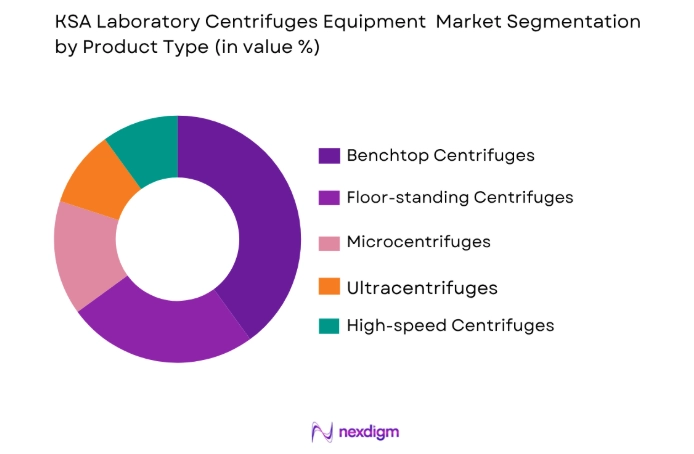
The laboratory centrifuges market is segmented by product type into benchtop, floor-standing, microcentrifuges, ultracentrifuges, and high-speed centrifuges. Recently, benchtop centrifuges have dominated the market share due to factors such as their compact design, ease of use, and suitability for smaller laboratories or research settings. Their affordability and versatility have made them the preferred choice for hospitals and clinical laboratories, driving significant demand in these segments. The high demand for benchtop centrifuges can also be attributed to the increasing preference for user-friendly, space-efficient laboratory equipment that meets the requirements of both educational and research institutions.
By Platform Type:
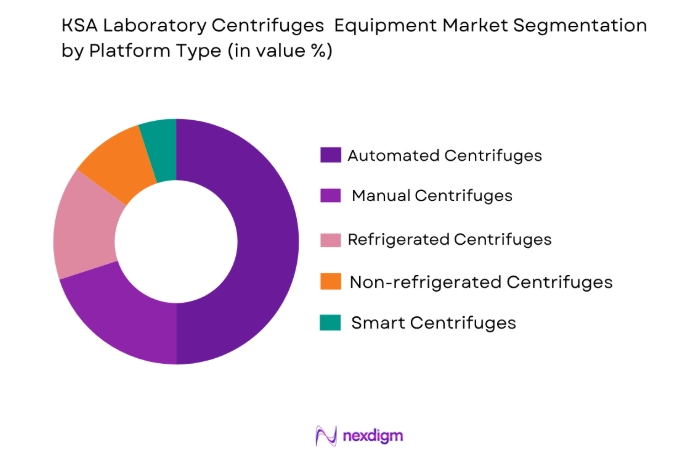
The market is segmented by platform type into manual centrifuges, automated centrifuges, refrigerated centrifuges, non-refrigerated centrifuges, and smart centrifuges. Automated centrifuges have a dominant market share due to the increasing demand for efficiency, consistency, and high throughput in laboratories. These centrifuges, which require minimal user intervention, are preferred in high-demand environments such as clinical and pharmaceutical laboratories. Automated systems also reduce human error and improve accuracy, making them particularly valuable in research and diagnostic applications where precision is critical. The integration of automation in laboratory equipment has been a key driver of market growth in this segment.
Competitive Landscape
The competitive landscape of the laboratory centrifuges market is highly fragmented, with both global and regional players contributing to market growth. The market is seeing consolidation with several major players increasing their focus on technological advancements and strategic partnerships. These players are focusing on product innovation, expanding their distribution networks, and strengthening their service offerings. Additionally, the influence of established brands remains strong, with companies working to maintain their competitive edge through better customer service and improved product quality. The rise in demand for automated and smart centrifuges is shaping the future direction of the market.
| Company Name | Establishment Year | Headquarters | Technology Focus | Market Reach | Key Products | Revenue |
| Thermo Fisher Scientific | 1956 | Waltham, MA, USA | ~ | ~ | ~ | ~ |
| Beckman Coulter | 1935 | Brea, CA, USA | ~ | ~ | ~ | ~ |
| Eppendorf | 1945 | Hamburg, Germany | ~ | ~ | ~ | ~ |
| Hettich Lab Technology | 1904 | Tuttlingen, Germany | ~ | ~ | ~ | ~ |
| Sigma-Aldrich (Merck) | 1975 | St. Louis, MO, USA | ~ | ~ | ~ | ~ |
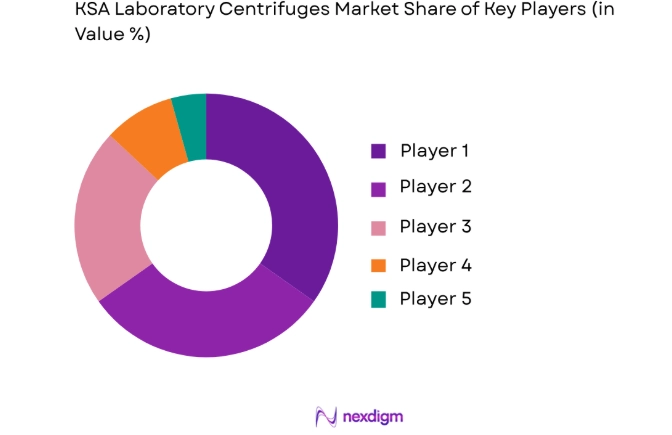
KSA Laboratory Centrifuges Market Analysis
Growth Drivers
Technological Advancements in Centrifugation Equipment:
The growth of the laboratory centrifuges market is largely driven by technological advancements, particularly in automation and smart technologies. Automation in centrifugation systems allows for higher throughput and minimal user intervention, making these systems particularly valuable in clinical and pharmaceutical laboratories. As the demand for efficient, high-precision diagnostic equipment increases, automated centrifuges offer the advantage of reducing human error and ensuring more accurate results. The integration of IoT (Internet of Things) in centrifuges, allowing for remote monitoring and enhanced performance tracking, also drives market growth. This has allowed laboratories to streamline their operations, increase efficiency, and reduce operational costs. The demand for automated and smart centrifuge systems is expected to continue growing as healthcare institutions and research labs adopt advanced technologies to stay competitive and meet the rising need for high-throughput testing. Furthermore, continuous research and development into making these devices more energy-efficient and user-friendly ensures that technological advancements remain a key driver of market expansion.
Expansion of Healthcare Infrastructure in Saudi Arabia:
Another critical driver of the laboratory centrifuges market is the expanding healthcare infrastructure in Saudi Arabia. The Saudi government has been heavily investing in healthcare as part of its Vision 2030 plan, which aims to diversify the economy and enhance the country’s healthcare services. This includes the construction of new hospitals, research facilities, and diagnostic centers, all of which require advanced laboratory equipment such as centrifuges. Additionally, the growing prevalence of chronic diseases, an aging population, and the rising demand for diagnostic testing contribute to the need for more laboratory equipment. The government’s push to modernize healthcare and encourage research in the life sciences sector further drives the demand for high-quality laboratory centrifuges. With the healthcare sector expected to grow exponentially, the demand for centrifuges and other diagnostic tools is anticipated to rise, making this expansion a significant driver for the market.
Market Challenges
High Cost of Advanced Centrifuge Systems:
One of the significant challenges facing the laboratory centrifuges market is the high cost of advanced centrifuge systems. While automated and high-speed centrifuges offer improved efficiency and performance, their initial cost can be prohibitive, particularly for smaller laboratories and healthcare institutions with limited budgets. These high upfront costs can deter investment in advanced systems, particularly in developing markets or smaller facilities where cost efficiency is crucial. Moreover, maintenance and operating costs for high-tech centrifuge systems can be expensive, especially with specialized components and servicing requirements. As a result, many laboratories and hospitals are constrained by budgetary limitations, making it difficult to adopt the latest centrifuge technologies. This cost barrier hampers the broader adoption of advanced centrifuge systems and creates a challenge for manufacturers trying to increase penetration in cost-sensitive markets.
Stringent Regulatory Requirements:
The laboratory centrifuge market is also challenged by stringent regulatory requirements, particularly in the healthcare and medical sectors. The process of obtaining regulatory approval for new laboratory equipment can be time-consuming, expensive, and complex. Manufacturers must comply with various national and international standards for quality, safety, and performance, including certifications from regulatory bodies such as the FDA (U.S. Food and Drug Administration) and the CE (Conformité Européene). These regulations can delay product launches and increase production costs, which, in turn, can affect the price and availability of laboratory centrifuges. Additionally, as regulatory frameworks evolve, manufacturers are faced with the challenge of ensuring that their products remain compliant with new standards, which can be an ongoing cost. Such regulatory challenges may restrict market growth by limiting the speed at which new technologies are adopted and available to end-users.
Opportunities
Rising Demand for Laboratory Automation:
A key opportunity for the laboratory centrifuges market is the growing demand for laboratory automation. Automation in laboratories has become a central focus for improving operational efficiency, reducing human error, and enhancing throughput. Laboratories across various sectors, including clinical diagnostics, pharmaceutical research, and biotechnology, are increasingly adopting automated systems to streamline processes and reduce manual intervention. This shift towards automation is expected to drive demand for automated centrifuge systems, which can offer higher efficiency and accuracy compared to traditional models. Additionally, the integration of artificial intelligence (AI) and machine learning in laboratory systems to optimize centrifugation processes presents a significant opportunity for growth in the market. As automation technology continues to advance, the adoption of automated centrifuges is anticipated to rise, creating substantial market potential for manufacturers.
Expanding Biotech and Pharmaceutical Research:
Another opportunity lies in the expanding biotech and pharmaceutical research sectors. As the demand for new drugs, therapies, and personalized medicine continues to rise, there is an increasing need for high-quality laboratory equipment, including centrifuges. The growing number of biotech and pharmaceutical companies, particularly in emerging markets, is expected to drive demand for centrifuges used in research and development activities. Furthermore, with the growing focus on genomics, proteomics, and other life science fields, the need for centrifuges in research and diagnostics is set to increase. As these industries expand, laboratory centrifuges will remain essential tools for biological sample separation and analysis, thus opening new avenues for market growth. With increasing investment in the biotechnology and pharmaceutical sectors, centrifuge manufacturers can capitalize on this expanding opportunity by offering specialized solutions tailored to the needs of these industries.
Future Outlook
The future outlook for the laboratory centrifuges market in Saudi Arabia over the next five years appears robust, driven by a combination of technological advancements and government initiatives. The market is expected to experience sustained growth, propelled by increasing investments in healthcare infrastructure and a growing emphasis on medical research. The ongoing development of automated and smart centrifuge systems is anticipated to revolutionize laboratory operations, enhancing efficiency and precision. Additionally, the regulatory environment is expected to support innovation, as authorities continue to implement standards that facilitate the adoption of advanced laboratory technologies. As demand for diagnostic testing and research escalates, the laboratory centrifuge market will continue to evolve, with increasing adoption of cutting-edge solutions in both public and private sectors.
Major Players
- ThermoFisher Scientific
- Beckman Coulter
- Eppendorf
- Hettich Lab Technology
- Sigma-Aldrich (Merck)
- Alfa Laval
- LabnetInternational
- VWR International
- Sartorius AG
- Centrifuge Systems, Inc.
- Koki Holdings Co.
- Scilogex
- Ohaus Corporation
- LabconcoCorporation
- HermleLabortechnik GmbH
Key Target Audience
- Investments and venture capitalist firms
- Government and regulatory bodies
- Healthcare institutions
- Pharmaceutical companies
- Research laboratories
- Biotechnology firms
- Medical device manufacturers
- Diagnostic laboratories
Research Methodology
Step 1: Identification of Key Variables
The first step involves identifying the key variables influencing the laboratory centrifuges market, such as product types, technologies, and regional factors. This is crucial for constructing accurate market models.
Step 2: Market Analysis and Construction
Next, a comprehensive market analysis is conducted, including historical data collection, segmentation, and trend identification to build a solid foundation for forecasting future growth.
Step 3: Hypothesis Validation and Expert Consultation
Industry experts are consulted to validate hypotheses and assumptions drawn from initial research, ensuring that all findings reflect real-world market dynamics.
Step 4: Research Synthesis and Final Output
The final step involves synthesizing all data and insights to create a comprehensive market report, providing clear conclusions and actionable recommendations for stakeholders.

- Executive Summary
- Research Methodology (Definitions, Scope, Industry Assumptions, Market Sizing Approach, Primary & Secondary Research Framework, Data Collection & Verification Protocol, Analytic Models & Forecast Methodology, Limitations & Research Validity Checks)

- Market Definition and Scope
- Value Chain & Stakeholder Ecosystem
- Regulatory / Certification Landscape
- Sector Dynamics Affecting Demand

- Growth Drivers
Increasing demand for diagnostic testing
Rising investments in life sciences
Advances in laboratory automation - Market Challenges
High initial cost of laboratory centrifuges
Complexity of installation and maintenance
Regulatory challenges in medical device approvals - Market Opportunities
Rising adoption of laboratory automation systems
Technological advancements in centrifuge systems
Expanding healthcare infrastructure in KSA - Trends
Shift towards energy-efficient centrifuges
Growth in personalized medicine testing
Integration of smart technology in laboratory equipmen - Government Regulations

- By Market Value, 2020-2025
- By Installed Units, 2020-2025
- By Average System Price, 2020-2025
- By System Complexity Tier, 2020-2025

- By System Type (In Value%)
Benchtop Centrifuges
Floor-standing Centrifuges
Microcentrifuges
Ultracentrifuges
High-speed Centrifuges - By Platform Type (In Value%)
Manual Centrifuges
Automated Centrifuges
Refrigerated Centrifuges
Non-refrigerated Centrifuges
Smart Centrifuges - By Fitment Type (In Value%)
Standalone Units
Integrated Systems
Modular Systems
Portable Units
Fixed Speed Units - By EndUser Segment (In Value%)
Hospitals
Research Laboratories
Pharmaceutical Companies
Clinical Laboratories
Biotech Firms

- Market Share Analysis
- CrossComparison Parameters (System Type, Platform Type, Procurement Channel, End-User Segment, Geographic Reach)
- SWOT Analysis of Key Competitors
- Pricing & Procurement Analysis
- Porter’s Five Forces
- Key Players
Alfaisal Medical Equipment
King Faisal Specialist Hospital & Research Centre
Saudi Medical Solutions
Jeddah Lab Services
Al-Dawaa Pharmacies
Saudi Pharmaceutical Industries
Al Harbi Trading
Bio-Rad Laboratories
Medtronic
Thermo Fisher Scientific
Beckman Coulter
Becton Dickinson
Hettich Lab Technology
VWR International
Sartorius AG

- Hospitals’ growing diagnostic services demand
- Expanding research in genetics and molecular biology
- Rising clinical laboratory needs for faster results
- Increased adoption of automated laboratory systems

- Forecast Market Value, 2026-2035
- Forecast Installed Units, 2026-2035
- Price Forecast by System Tier, 2026-2035
- Future Demand by Platform, 2026-2035


 Request a Sample
 Ask for Customization
 Get a Quote
 Enquire Now