

 Download PDF
 Download PDF
Market Overview
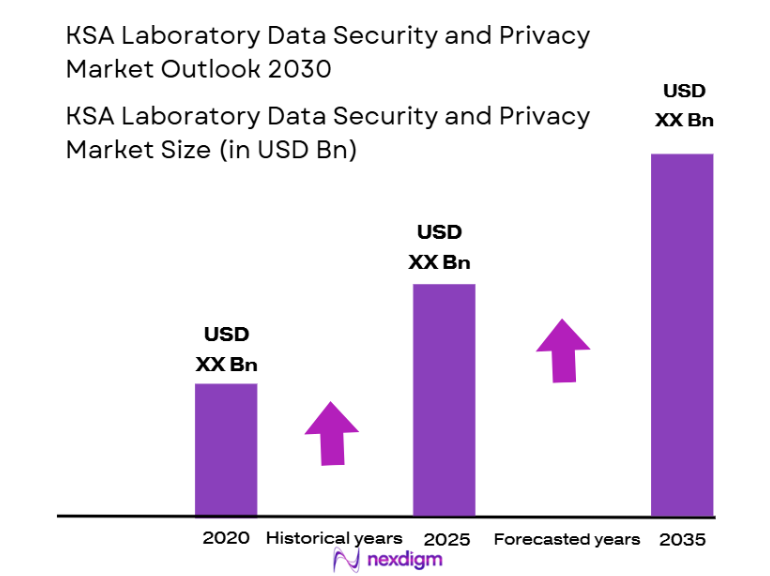
The KSA Laboratory Data Security and Privacy market is projected to grow significantly, with a market size of USD ~ billion, driven by increasing demand for robust data protection solutions across laboratory settings. Factors such as escalating data breaches, stringent regulations, and the adoption of cloud-based technologies are propelling market growth. Laboratories are increasingly prioritizing cybersecurity measures to safeguard sensitive research data, while investments in advanced data encryption, network security, and endpoint protection are seeing a surge.
In terms of geographic dominance, the Kingdom of Saudi Arabia stands as the leader in laboratory data security, primarily due to its thriving healthcare and research sectors. The rapid digital transformation within the country, supported by government initiatives like the Vision 2030 framework, has driven the demand for enhanced data protection solutions. Urban centers such as Riyadh, Jeddah, and Dhahran are key hubs for data-driven innovations, with extensive adoption of data security technologies across both government and private laboratories.
Market Segmentation
By Product Type
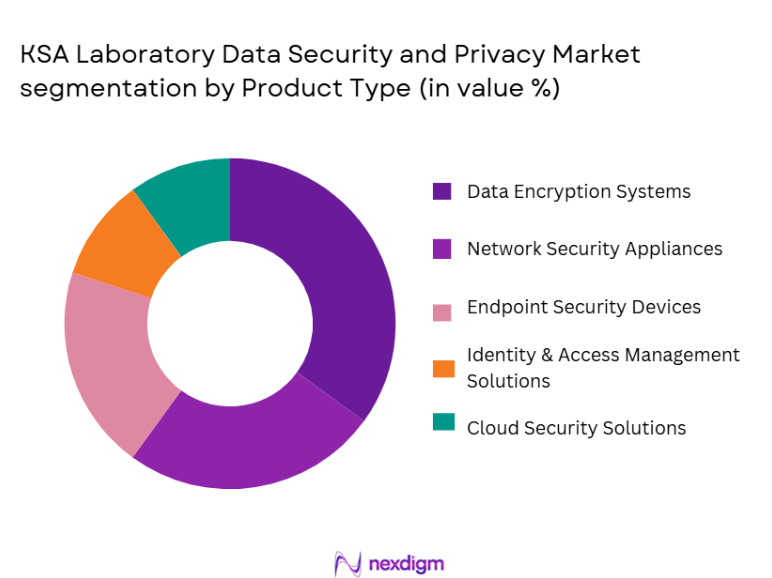
The KSA Laboratory Data Security and Privacy market is segmented by product type into data encryption systems, network security appliances, endpoint security devices, identity and access management solutions, and cloud security solutions. Recently, data encryption systems have a dominant market share due to increasing concerns over data theft, strict regulations, and the need for secure data exchange among laboratory professionals.
By End-User
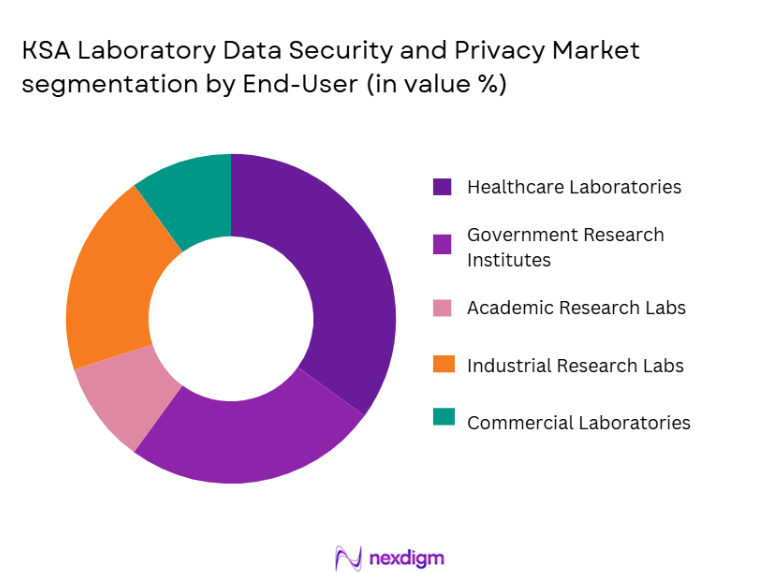
The market is segmented by end-user into healthcare laboratories, government research institutions, academic research labs, industrial research labs, and commercial laboratories. Healthcare laboratories have emerged as the dominant sub-segment due to increasing regulations around patient data security and the expanding number of diagnostic tests.
Competitive Landscape
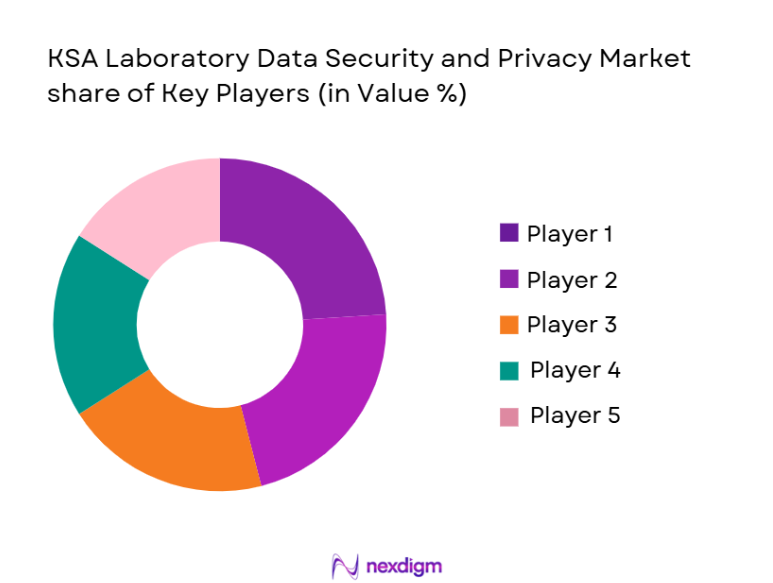
The KSA Laboratory Data Security and Privacy market is moderately consolidated, with major players dominating the core technology areas of encryption, identity management, and network security. Leading technology providers benefit from strong government relationships and established infrastructure, making it difficult for new entrants to penetrate the market. The presence of global players, coupled with local entities offering specialized solutions, strengthens market competition.
| Company Name | Establishment Year | Headquarters | Technology Focus | Market Reach | Key Products | Revenue | Additional Parameter |
| Cisco Systems | 1984 | USA | ~ | ~
|
~
|
~
|
~
|
| McAfee | 1987 | USA | ~
|
~
|
~
|
~
|
~
|
| Palo Alto Networks | 2005 | USA | ~
|
~
|
~
|
~
|
~
|
| Fortinet | 2000 | USA | ~
|
~
|
~
|
~
|
~
|
| Trend Micro | 1988 | Japan | ~
|
~
|
~
|
~
|
~
|
KSA Laboratory Data Security and Privacy Market Analysis
Growth Drivers
Increasing Cybersecurity Threats
The rise in data breaches and cyber-attacks on sensitive research and healthcare data has fueled the demand for robust laboratory data security solutions. As laboratories transition from traditional methods to digital and cloud-based platforms, they become more vulnerable to cyber-attacks. Growing concerns over intellectual property theft, unauthorized access to confidential data, and the increasing sophistication of cyber threats require continuous advancements in cybersecurity systems. This driver is particularly influential in sectors such as healthcare, where the exposure of patient data can lead to severe legal and financial repercussions. The demand for encrypted data storage, secure communication systems, and comprehensive access control solutions is set to continue its upward trajectory as cyber threats become more complex. As a result, laboratories are investing heavily in next-generation security technologies, which is accelerating market growth.
Strict Government Regulations
Government policies and regulations around data privacy and security are another significant driver behind the growing adoption of data security solutions in laboratory settings. The Saudi Arabian government has implemented various laws, including the Personal Data Protection Law, to ensure that data, particularly sensitive research and healthcare data, is adequately protected. Laboratories are compelled to comply with these regulations to avoid fines and legal consequences. The regulatory pressure encourages investments in secure storage solutions, encryption, and access management systems that comply with national and international standards. The growing demand for compliance with data protection laws is further pushing laboratories to integrate high-quality data security and privacy solutions.
Market Challenges
High Implementation Costs
One of the major challenges facing laboratories in KSA is the high upfront cost of implementing advanced data security systems. Laboratory environments often operate under tight budgets, and the initial investment in security technologies such as encryption, firewall systems, and identity management software can be significant. These costs can be a deterrent for smaller research labs or institutions operating with limited resources. Additionally, ongoing maintenance, software updates, and the need for skilled personnel to manage and operate these systems further add to the overall financial burden. Despite these challenges, the long-term benefits of protecting sensitive data outweigh the initial costs for most laboratories.
Complexity in Integration with Existing Systems
Many laboratories in KSA face challenges in integrating new data security systems with their existing infrastructure. Legacy systems are often not compatible with modern security solutions, requiring costly and time-consuming overhauls or workarounds. Moreover, some laboratories have siloed data environments, which complicates the process of implementing uniform security protocols. This integration complexity makes it difficult for laboratories to adopt cutting-edge technologies like cloud-based security solutions or data analytics platforms that could further enhance data protection and compliance efforts. Despite these integration hurdles, the push for better cybersecurity continues to drive laboratory adoption of advanced security technologies.
Opportunities
AI and Machine Learning in Data Security
The integration of Artificial Intelligence (AI) and Machine Learning (ML) in laboratory data security presents a significant growth opportunity. AI-powered security systems can detect anomalous behavior, predict potential vulnerabilities, and enhance real-time data protection by automatically adjusting security measures in response to emerging threats. Machine learning algorithms can learn from past incidents and continuously improve data security protocols, providing laboratories with a proactive approach to managing risks. This opportunity is particularly relevant in laboratories dealing with large volumes of data, as AI and ML can streamline the management of sensitive information and enhance overall data privacy.
Cloud-based Security Solutions
Cloud-based security solutions are gaining popularity in laboratory settings due to their scalability, cost-effectiveness, and ease of implementation. As more laboratories shift their operations to cloud environments, they require robust cloud security solutions to safeguard their data. The ability to securely store, process, and analyze large datasets in the cloud without compromising privacy is a major driving force behind this opportunity. Additionally, the increasing adoption of hybrid cloud environments offers laboratories the flexibility to manage both on-premises and cloud-based data security requirements. This trend is expected to create lucrative opportunities for cloud security providers in the coming years.
Future Outlook
The future of the KSA Laboratory Data Security and Privacy market looks promising, with continuous advancements in technology and regulatory frameworks supporting growth. Over the next few years, we expect further adoption of AI-driven security systems, cloud-based solutions, and robust data encryption technologies. Government initiatives focused on cybersecurity and the increasing reliance on digital platforms across laboratories will continue to drive the demand for advanced data protection. As regulations become stricter and cyber threats more sophisticated, laboratories will invest in cutting-edge solutions to ensure their data remains secure and compliant with national and international standards.
Major Players
- Cisco Systems
- McAfee
- Palo Alto Networks
- Fortinet
- Trend Micro
- Check Point Software
- Symantec
- CrowdStrike
- FireEye
- Kaspersky Lab
- RSA Security
- Sophos
- Barracuda Networks
- CyberArk
- Proofpoint
Key Target Audience
- Investments and venture capitalist firms
- Government and regulatory bodies
- Research and development labs
- Healthcare institutions
- Data privacy compliance officers
- IT infrastructure providers
- Cybersecurity solution providers
- Laboratory managers
Research Methodology
Step 1: Identification of Key Variables
We identified key factors influencing the market such as technological advancements, regulations, and end-user requirements.
Step 2: Market Analysis and Construction
Data collection was done through primary and secondary sources, followed by comprehensive market analysis to estimate size and growth.
Step 3: Hypothesis Validation and Expert Consultation
Consultations with industry experts and stakeholders validated our market assumptions and hypotheses.
Step 4: Research Synthesis and Final Output
The data was synthesized into actionable insights, leading to the development of a comprehensive market report.

- Executive Summary
- Research Methodology (Definitions, Scope, Industry Assumptions, Market Sizing Approach, Primary & Secondary Research Framework, Data Collection & Verification Protocol, Analytic Models & Forecast Methodology, Limitations & Research Validity Checks)

- Market Definition and Scope
- Value Chain & Stakeholder Ecosystem
- Regulatory / Certification Landscape
- Sector Dynamics Affecting Demand
- Strategic Initiatives & Infrastructure Growth

- Growth Drivers
Increasing Cyber Threats in Healthcare and Research
Rising Government Regulations on Data Privacy
Adoption of Advanced Encryption Technologies
Growing Use of Cloud Solutions in Laboratories
Increasing Investment in Data Security
- Market Challenges
High Implementation and Maintenance Costs
Lack of Skilled Security Professionals
Integration Complexities with Existing Systems
Regulatory Compliance Challenges
Data Breaches and Security Threats - Market Opportunities
Adoption of AI in Security Solutions
Expanding Cloud Security Solutions for Laboratories
Integration of Blockchain for Data Integrity - Trends
Shift towards Zero Trust Architecture
Growth of Cybersecurity-as-a-Service (CSaaS)
Increased Adoption of Data Privacy Technologies - Government Regulations
Data Protection Regulations for Healthcare Data
Regulatory Frameworks for Data Storage and Security
Compliance with National Cybersecurity Policies

- By Market Value 2020-2025
- By Installed Units 2020-2025
- By Average System Price 2020-2025
- By System Complexity Tier 2020-2025

- By System Type (In Value%)
Data Encryption Systems
Secure Communication Networks
Cloud-Based Data Security Solutions
Access Control and Authentication Systems
Backup and Disaster Recovery Systems - By Platform Type (In Value%)
Cloud Platforms
On-Premise Solutions
Hybrid Platforms
Mobile Data Security Solutions
IoT-Integrated Data Security Platforms - By Fitment Type (In Value%)
Integrated Fitments
Standalone Fitments
Cloud-Based Fitments
Mobile-Based Fitments
Remote Access Fitments - By EndUser Segment (In Value%)
Healthcare Laboratories
Academic Research Institutions
Pharmaceutical Research Labs
Government Research Agencies
Private Sector Laboratories - By Procurement Channel (In Value%)
Direct Sales
Online Marketplaces
Resellers and System Integrators
Third-Party Managed Services
Government Procurement Programs

- Market Share Analysis
- CrossComparison Parameters
[Data Encryption, Cloud Integration, Regulatory Compliance, Network Security, System Compatibility] - SWOT Analysis of Key Competitors
- Pricing & Procurement Analysis
- Porter’s Five Forces
- Key Players
IBM
Cisco Systems
McAfee
Fortinet
Palo Alto Networks
Check Point Software Technologies
Trend Micro
Symantec
Sophos
Barracuda Networks
CyberArk
FireEye
RSA Security
CrowdStrike
Proofpoint

- Healthcare laboratories seeking compliance with international data privacy standards
- Academic institutions investing in secure platforms to manage research data
- Pharmaceutical companies requiring high-security solutions for clinical trials data
- Government agencies enforcing stricter data protection measures in laboratory settings

- Forecast Market Value 2026-2030
- Forecast Installed Units 2026-2030
- Price Forecast by System Tier 2026-2030
- Future Demand by Platform 2026-2030


 Request a Sample
 Ask for Customization
 Get a Quote
 Enquire Now