

 Download PDF
Market Overview
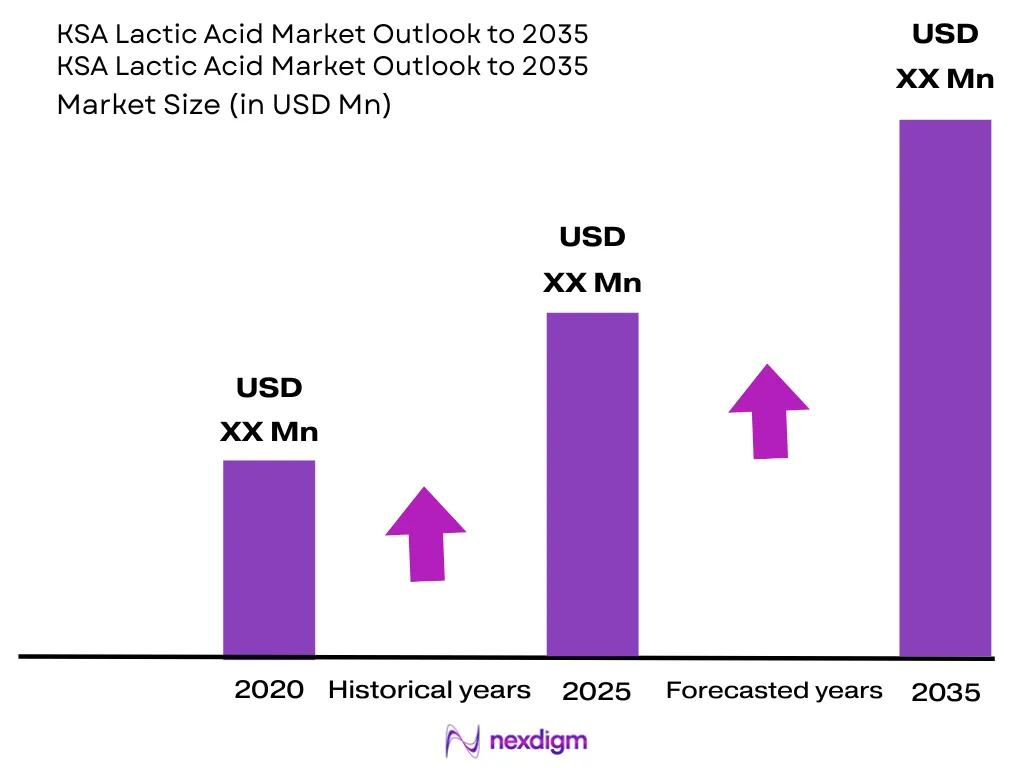
The KSA Lactic Acid Market was valued at USD ~ Million in 2024 and is anticipated to expand at a CAGR of ~% during 2026–2035. The market is primarily driven by the Kingdom’s expanding food processing, pharmaceutical, and packaging industries, rising demand for biodegradable plastics, and government-backed efforts to build a domestic sustainable materials sector under Vision 2030. Saudi Arabia’s bioplastics market, closely tied to downstream lactic acid demand through polylactic acid (PLA), was valued at approximately USD 125.1 million in 2024 and is projected to reach USD 345.73 million by 2033, with PLA identified as the leading bioplastics subsegment. Government support includes an estimated SAR 500 million (approximately USD 133 million) allocated toward research and development in sustainable materials, aligned with Vision 2030’s economic diversification goals, while the Kingdom’s packaging sector, a key downstream consumer of PLA, is projected to reach close to SAR 30 billion (approximately USD 8 billion) in value, sustaining demand for lactic acid across food, pharmaceutical, packaging, and industrial applications.
Market Segmentation
By Raw Material
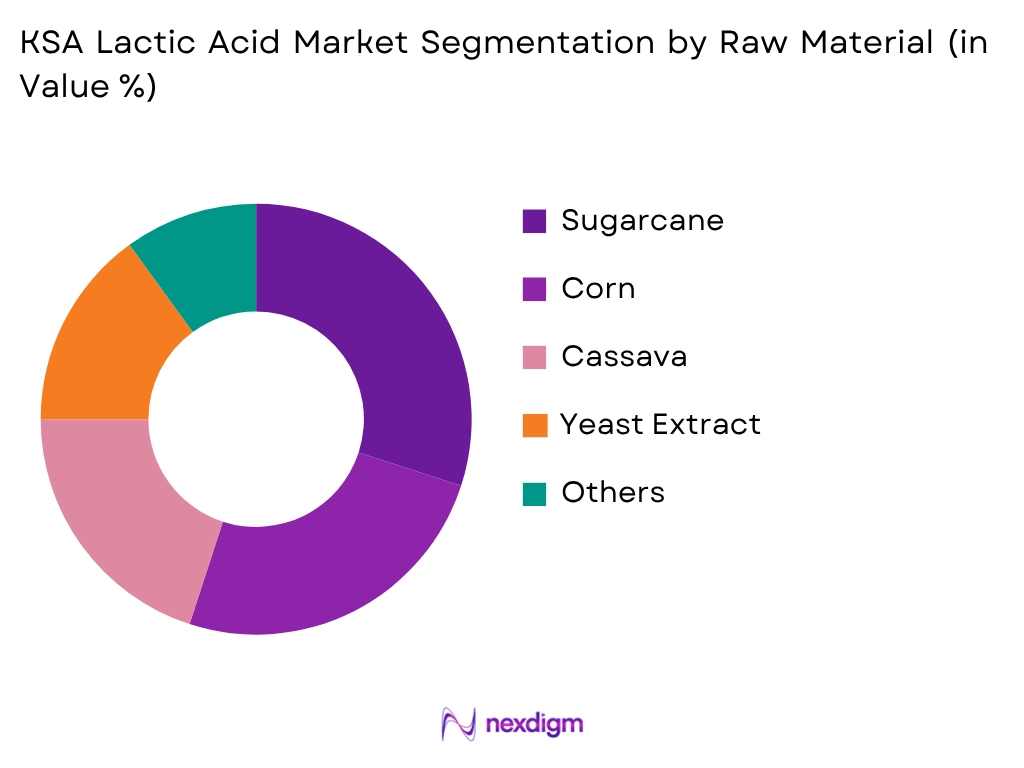
The KSA Lactic Acid Market is segmented by raw material into sugarcane, corn (maize), cassava, yeast extract, and other crops. Sugarcane dominates the market owing to its high fermentable sugar content, cost-efficient conversion process, and strong availability through global supply chains serving Saudi Arabia. As the Kingdom relies heavily on imported lactic acid rather than domestic production, leading international manufacturers predominantly utilize sugarcane as the primary fermentation feedstock for food-grade and industrial-grade lactic acid, ensuring high purity and production efficiency. Sugarcane-based lactic acid is extensively consumed across Saudi Arabia’s food and beverage, pharmaceutical, personal care, and biodegradable plastics industries due to its consistent quality and compliance with international food safety standards. Meanwhile, corn remains another significant feedstock because of its established fermentation technology and reliable starch supply, whereas cassava and yeast extract account for smaller shares, primarily through imports from Asian producers. The growing emphasis on sustainable bio-based chemicals and biodegradable materials is also supporting continued demand for sugarcane-derived lactic acid across the Kingdom.
By Application
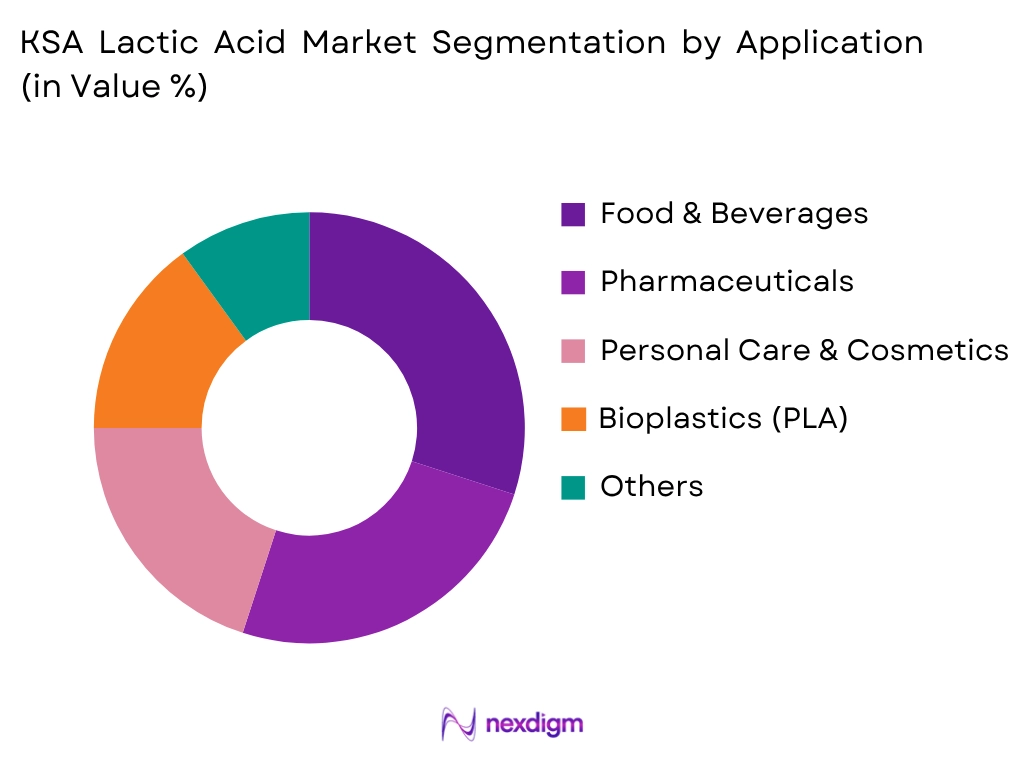
Food & Beverages currently accounts for a leading share of the KSA Lactic Acid Market, reflecting lactic acid’s established role as an acidulant, preservative, and flavor enhancer in dairy products, baked goods, sauces, and beverages, alongside rising demand for halal-compliant and clean-label food additives. Biodegradable Polymers (PLA) represents the fastest-growing application, supported by Saudi Arabia’s expanding bioplastics sector and rising demand from the packaging industry, where PLA is increasingly used as a sustainable alternative to conventional plastics in food service ware, flexible packaging, and consumer goods. Pharmaceuticals and Personal Care & Cosmetics applications are also expanding steadily, supported by Saudi Arabia’s growing pharmaceutical manufacturing base and premium personal care market, while Industrial Applications continue to grow in tandem with the Kingdom’s broader petrochemical and specialty chemicals sector.
Competitive Landscape
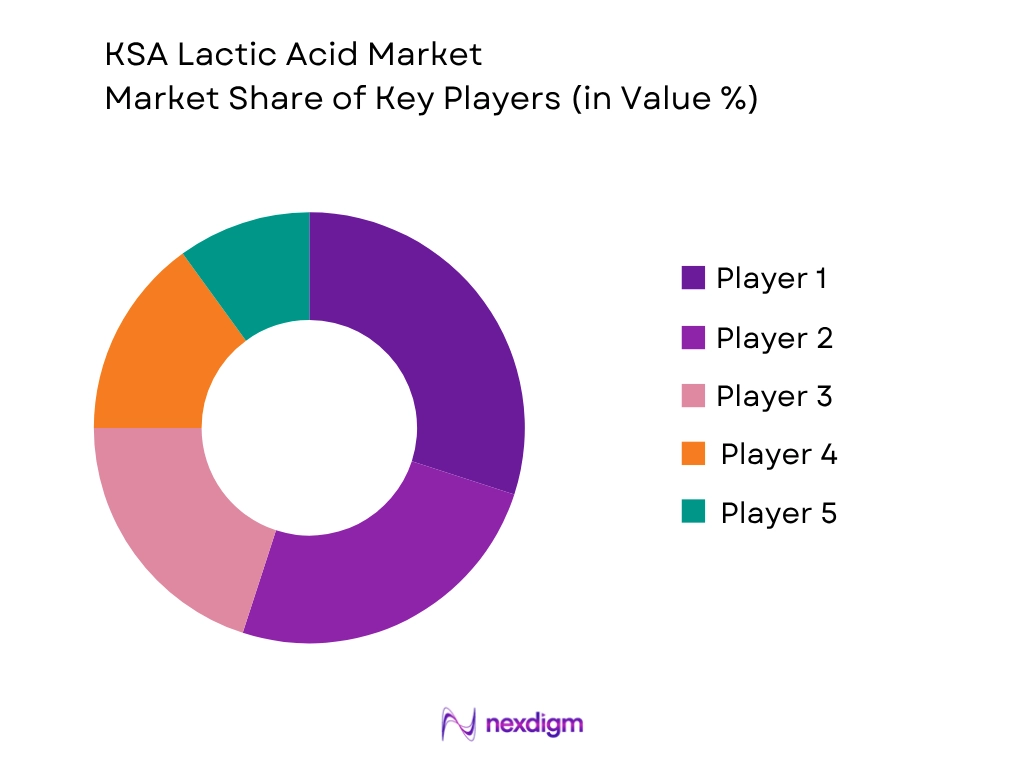
The KSA Lactic Acid Market is import-dependent and moderately fragmented, supplied largely by established global fermentation and PLA producers alongside a small but growing base of Saudi biotech ventures exploring fermentation-based bioplastics. SABIC, the Kingdom’s own petrochemical champion and one of the world’s top five chemical producers, has an active circular economy and bioplastics portfolio and is well positioned to expand into bio-based chemicals such as lactic acid and PLA as part of its broader sustainability strategy. Saudi biotech startup Plastus, based in Khobar, has demonstrated the Kingdom’s growing fermentation-biotech capability by producing biodegradable PHA bioplastics from organic waste, winning the USD 250,000 LEAP23 Rocket Fuel Pitch Challenge and securing backing from the National Technology Development Programme and KAUST’s TAQADAM accelerator; while PHA is chemically distinct from lactic acid-derived PLA, this ecosystem signals rising local fermentation and bio-based materials expertise. In the interim, global players such as NatureWorks, BASF SE, Total Corbion PLA, and Corbion continue to serve Saudi food, pharmaceutical, and packaging buyers through import and distribution channels, competing on purity grade, supply reliability, and technical application support.
| Company | Establishment Year | Headquarters | Primary Product Portfolio | Lactic Acid Portfolio
|
Manufacturing Presence | Major End-Use Industries | Key Strategic Focus | Certifications & Compliance |
| SABIC | 1976 | ~ | ~ | ~ | ~ | ~ | ~ | ~ |
| BASF SE | 1865 | ~ | ~ | ~ | ~ | ~ | ~ | ~ |
| NatureWorks LLC | 1997 | ~ | ~ | ~ | ~ | ~ | ~ | ~ |
| Corbion | 1919 | ~ | ~ | ~ | ~ | ~ | ~ | ~ |
| Total Corbion PLA | 2016 | ~ | ~ | ~ | ~ | ~ | ~ | ~ |
KSA Lactic Acid Market Analysis
Growth Drivers
Government-Backed Push into Bioplastics and Sustainable Materials
The KSA lactic acid market is benefiting from the Kingdom’s broader push to build a domestic sustainable materials sector under Vision 2030. Saudi Arabia’s bioplastics market, a key downstream consumer of lactic acid through PLA, was valued at approximately USD 125.1 million in 2024 and is projected to reach USD 345.73 million by 2033, growing at a CAGR of 10.7%, with PLA identified as the leading bioplastics subsegment given its versatility in packaging and consumer goods. The Saudi government has allocated an estimated SAR 500 million (approximately USD 133 million) toward research and development in sustainable materials, aiming to enhance local production capabilities and reduce reliance on imported plastics in line with Vision 2030’s diversification goals. SABIC, the Kingdom’s flagship petrochemical company and one of the top five chemical producers globally, has built an active circular economy and bioplastics portfolio, positioning it as a natural candidate to expand into bio-based chemicals including lactic acid and PLA as part of the national sustainability agenda.
Expansion of Packaging, Food Processing, and Pharmaceutical Industries
Rising demand from Saudi Arabia’s packaging, food processing, and pharmaceutical industries continues to underpin lactic acid consumption. The Kingdom’s packaging sector, a major end-use industry for PLA-based bioplastics, is projected to reach close to SAR 30 billion (approximately USD 8 billion) in value, driven by demand for sustainable packaging solutions in the food and beverage industry. Saudi Arabia’s food and beverage market, valued at close to USD 60 billion in 2024, continues to expand alongside a young, rapidly urbanizing population, sustaining demand for food-grade lactic acid as an acidulant and preservative. Approximately 70% of the Saudi population is expected to prioritize eco-friendly products according to a survey by the Saudi Ministry of Environment, reflecting growing consumer demand that is encouraging food, packaging, and personal care manufacturers to reformulate products using bio-based and biodegradable ingredients, including lactic acid and its polymer derivatives.
Market Challenges
Heavy Dependence on Imported Lactic Acid and Fermentation Feedstocks
Saudi Arabia’s arid climate and limited arable land mean the Kingdom has minimal domestic cultivation of corn, sugarcane, or cassava, the primary carbohydrate feedstocks used in fermentation-based lactic acid production. As a result, the substantial majority of lactic acid consumed in the Kingdom today is imported from established producers in Asia-Pacific, Europe, and North America, exposing buyers to global commodity price volatility, shipping costs, and supply chain disruption. While Saudi biotech ventures such as Plastus have demonstrated local fermentation capability using organic waste and date palm byproducts as alternative feedstocks, these efforts remain focused on PHA bioplastics rather than lactic acid or PLA production at commercial scale, leaving a structural gap between the Kingdom’s growing downstream demand for lactic acid-derived materials and the near-absence of local fermentation infrastructure to supply it.
High Technical and Capital Intensity of Fermentation-Based Production
Fermentation-based lactic acid production requires precise control of nutrient optimization, strain selection, and downstream purification to achieve the optical purity required for food, pharmaceutical, and PLA-grade applications, making it a technically demanding and capital-intensive process relative to petrochemical synthesis routes that leverage the Kingdom’s existing hydrocarbon infrastructure. Establishing new fermentation capacity in Saudi Arabia would require significant investment in bioreactor infrastructure, purification technology, and specialized technical expertise that is still at an early stage of development locally. Regulatory compliance adds further complexity: food-grade lactic acid products sold in the Kingdom must comply with the SFDA’s GSO 2500 additive regulation, while industrial and chemical products must meet SASO standards and Ministry of Industry and Mineral Resources licensing requirements, extending timelines and costs for new market entrants and prospective domestic producers alike.
Market Opportunities
Localization of Lactic Acid and PLA Manufacturing under Vision 2030
Saudi Arabia’s Vision 2030 program and National Industrial Development and Logistics Program are creating openings for lactic acid and PLA manufacturers to establish local fermentation and polymerization facilities rather than relying solely on imports. SABIC’s scale, existing petrochemical infrastructure, and stated circular economy ambitions position it as a potential anchor investor or joint-venture partner for global lactic acid and PLA producers seeking to localize production in the Kingdom, following a similar model to Total Corbion PLA’s international joint ventures. Government-backed innovation funding, including the SAR 500 million earmarked for sustainable materials R&D and accelerator programs such as KAUST’s TAQADAM and the National Technology Development Programme that have already supported Saudi bioplastics ventures like Plastus, provide a funding pathway for further fermentation-based materials innovation, including potential lactic acid production using date palm and organic waste byproducts as alternative feedstocks.
Growth in Sustainable Packaging and Pharmaceutical-Grade Applications
The rapid growth of Saudi Arabia’s packaging sector, projected to reach close to USD 8 billion in value, combined with rising consumer demand for eco-friendly products, is creating substantial opportunities for PLA-based sustainable packaging solutions that rely on lactic acid as a feedstock. The Kingdom’s expanding pharmaceutical manufacturing base and premium personal care market are similarly increasing demand for high-purity, pharmaceutical- and cosmetic-grade lactic acid used in controlled-release drug formulations and personal care products. With Saudi Arabia’s bioplastics market still in a relatively early stage of development compared to more mature markets, and strong government backing through Vision 2030’s economic diversification agenda, the Kingdom offers considerable headroom for lactic acid demand growth across food, packaging, pharmaceutical, and personal care applications over the coming decade.
Future Outlook
The KSA Lactic Acid Market is expected to witness sustained expansion over the forecast period, supported by continued government investment in sustainable materials under Vision 2030, rising consumer preference for biodegradable and eco-friendly products, and ongoing growth in Saudi Arabia’s food, packaging, and pharmaceutical manufacturing sectors. Growing investment in bioplastics infrastructure, potential localization of lactic acid and PLA production by SABIC or international joint-venture partners, and continued government support for fermentation-based biotech ventures will further accelerate demand for both bio-based and specialty-grade lactic acid. The market is also likely to benefit from Saudi Arabia’s position as a regional manufacturing and distribution hub, supplying lactic acid and PLA-based materials to neighboring Gulf markets as regional bioplastics adoption continues to rise.
Major Players
- SABIC
- NatureWorks
- BASF SE
- Total Corbion PLA
- Corbion
- Plastus
- Galactic
- COFCO Biochemical
- Henan Jindan Lactic Acid Technology
- Musashino Chemical
- ADM
- Cargill
- Danimer Scientific
- Futerro
- Mitsubishi Chemical Corporation
Key Target Audience
- Lactic Acid and PLA Manufacturers
- Food & Beverage Processing Companies
- Bioplastics and Packaging Manufacturers
- Pharmaceutical and Personal Care Manufacturers
- Industrial and Petrochemical Manufacturers
- Investment and Venture Capitalist Firms
- Government and Regulatory Bodies (Saudi Food and Drug Authority – SFDA, Saudi Standards, Metrology and Quality Organization – SASO, Ministry of Industry and Mineral Resources)
- Chemical Distributors and Industrial Raw Material Suppliers
Research Methodology
Step 1: Identification of Key Variables
The research process begins with identifying the complete ecosystem of the KSA Lactic Acid Market, including feedstock importers, fermentation and lactic acid producers, PLA and bioplastics manufacturers, ingredient distributors, food and pharmaceutical processors, and regulatory authorities. Extensive secondary research is conducted using company reports, government publications, trade associations, customs statistics, industry journals, and proprietary databases to determine the variables influencing market demand, pricing, production, consumption, and technological developments.
Step 2: Market Analysis and Construction
Historical market information is collected and analyzed to estimate market size, import volumes, application-wise demand, and pricing trends. A combination of top-down and bottom-up approaches is used to estimate market revenues and validate segment-level performance. Consumption patterns across food & beverages, biodegradable polymers, pharmaceuticals, personal care, and industrial applications are evaluated to establish an accurate representation of the industry.
Step 3: Hypothesis Validation and Expert Consultation
The preliminary findings are validated through Computer-Assisted Telephone Interviews (CATIs) and structured discussions with chemical distributors, procurement managers, process engineers, regulatory experts, and senior executives operating within the Saudi chemicals and bioplastics industry. These interviews help verify market assumptions, competitive developments, technology adoption trends, pricing dynamics, and future investment opportunities while refining the overall market estimates.
Step 4: Research Synthesis and Final Output
The final stage integrates insights obtained from primary interviews with quantitative information collected through secondary sources. Data triangulation techniques are applied to reconcile differences between supply-side and demand-side estimates, ensuring robust market forecasting. The report is then reviewed through multiple quality assurance checkpoints to deliver a comprehensive analysis covering market size, segmentation, competitive landscape, future outlook, and strategic recommendations for industry stakeholders.

- Executive Summary
- Research Methodology (Market Definitions and Assumptions, Abbreviations, Market Sizing Approach, Top-Down Analysis, Bottom-Up Analysis, Demand-Side Assessment, Supply-Side Assessment, Primary Industry Interviews, Secondary Research Validation, Data Triangulation, Forecasting Framework, Limitations and Future Conclusions)

- Definition and Scope
- Market Evolution and Industry Genesis
- Timeline of Major Industry Developments
- Lactic Acid Industry Value Chain Analysis
- Supply Chain Analysis

- Growth Drivers (Rising Demand for Biodegradable Plastics, Expansion of Food Processing Industry, Growing Pharmaceutical Manufacturing, Increasing Personal Care Production, Government Sustainability Initiatives, Growth in Industrial Applications)
- Market Challenges (High Production and Feedstock Import Costs, Limited Domestic Fermentation Feedstock Availability, Price Competition from Petrochemical-Derived Acids, Technical Complexity of High-Purity Production, Regulatory Compliance Complexity, Supply Chain Concentration Risk)
- Market Opportunities (Localization of Lactic Acid and PLA Manufacturing, Expansion of the Bioplastics Value Chain, Growth in Pharmaceutical-Grade Lactic Acid, Organic Waste-to-Bioplastics Innovation, Regional Export Hub Development, Circular Economy Integration)
- Market Trends (Vertical Integration into PLA, Rising High-Purity L-Lactic Acid Demand, Bio-Based Feedstock Diversification, Single-Use Plastic Bans Accelerating Substitution, Strategic International Partnerships, Industrial Zone Manufacturing Investment)
- Government Regulations (SFDA Food Additive Regulations, SASO Industrial and Chemical Standards, Ministry of Industry and Mineral Resources Licensing, Single-Use Plastic Bans, National Industrial Development and Logistics Program, Food Safety Standards)
- Import and Export Analysis (Trade Volume, Major Import Sources, Export Destinations, HS Code Analysis, Trade Balance)
- Raw Material Availability Analysis (Imported Corn, Sugarcane and Cassava Feedstocks, Petrochemical Propylene Feedstocks, Date Palm and Organic Waste Feedstocks, Regional Feedstock Logistics)
- Technology Landscape (Fermentation Technologies, Purification and Separation Technologies, Lactide Production and Polymerization, Continuous Fermentation Systems, Downstream Processing Innovation)
- Sustainability Assessment (Circular Economy Alignment, Carbon Footprint Reduction, Single-Use Plastic Substitution, Renewable Feedstock Sourcing, Waste Valorization)
- PESTLE Analysis
- SWOT Analysis
- Porter’s Five Forces Analysis
- Stakeholder Ecosystem
- Competition Ecosystem

- By Market Value (2020-2025)
- By Volume Consumption (2020-2025)
- By Average Selling Price (2020-2025)

- By Raw Material (In Value %)
Sugarcane
Corn
Cassava
Yeast Extract
Molasses
Other Crops - By Application (In Value %)
Food & Beverages
Biodegradable Polymers (PLA)
Pharmaceuticals
Personal Care & Cosmetics
Industrial Applications
Animal Feed & Nutrition - By Distribution Channel (In Value %)
Direct Sales to Manufacturers
Chemical Distributors
Industrial Ingredient Suppliers
Online B2B Chemical Platforms
Specialty Ingredient Suppliers - By End User (In Value %)
Food Processing Companies
Bioplastics & Packaging Manufacturers
Pharmaceutical Companies
Personal Care Manufacturers
Industrial Chemical Manufacturers - By Region (In Value %)
Central Region
Western Region
Eastern Province
Southern Region
Northern Region

- Market Share of Major Players (By Value, Volume, Type, Application Industry, Product Category)
- Cross Comparison Parameters (Fermentation Capacity, Purification Technology, PLA Integration, Application Technical Support Capability, Manufacturing Capacity, Regulatory Compliance & Certifications, Customer Base, Innovation & New Product Launch Frequency)
- SWOT Analysis of Major Players
- Pricing Analysis by Grade and Application
- Production Capacity Analysis
- Manufacturing Footprint Analysis
- Distribution Network Analysis
- Innovation Benchmarking
- Detailed Profiles of Major Companies
SABIC
NatureWorks
BASF SE
Total Corbion PLA
Corbion
Plastus
Galactic
COFCO Biochemical
Henan Jindan Lactic Acid Technology
Musashino Chemical
ADM
Cargill
Danimer Scientific
Futerro
Mitsubishi Chemical Corporation

- Consumption Pattern Analysis (Industrial Usage, Batch Size, Application Penetration, Seasonal Demand, Reformulation Activity)
- Purchasing Criteria (Purity Grade, Regulatory Compliance, Cost Efficiency, Supply Reliability, Optical Purity, Shelf Life)
- Procurement and Supplier Selection Analysis
- Bio-Based Adoption Assessment
- Premium vs Conventional Grade Demand
- Product Attribute Preference Analysis (Optical Purity, Concentration Grade, Color and Clarity, pH Stability, Microbial Load, Certification Status)
- Sustainability & ESG Influence on Procurement Decisions
- Pain Point Analysis
- Decision-Making Process

- By Market Value (2026-2035)
- By Volume Consumption (2026-2035)
- By Average Selling Price (2026-2035)


 Request a Sample
 Ask for Customization
 Get a Quote
 Enquire Now