
 Download PDF
 Download PDF
Market Overview
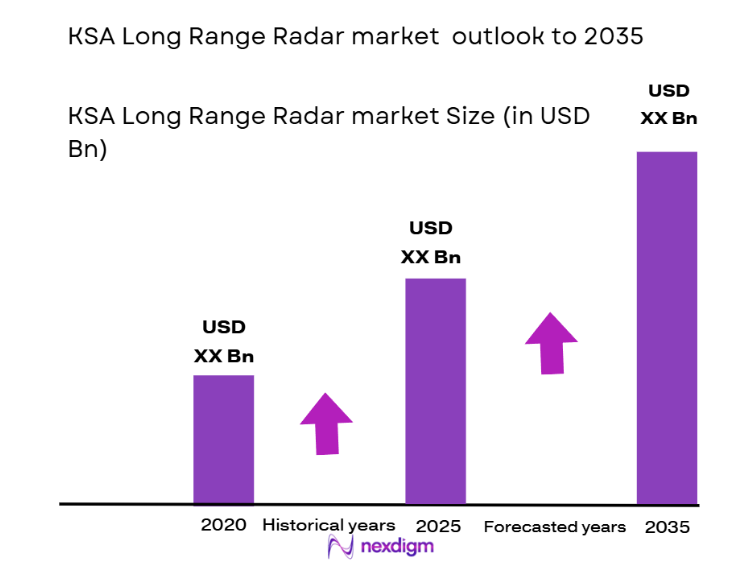
The long-range radar market in the Kingdom of Saudi Arabia has seen considerable growth in recent years due to increasing defense budgets, technological advancements, and rising security concerns. The market size has reached a significant value in recent years, largely driven by the demand for surveillance and monitoring capabilities across various sectors. Military applications, particularly for border surveillance and air defense systems, contribute significantly to the market size. Based on recent assessments, the market is valued at over USD ~ billion in the country, with projections indicating steady growth.
Countries in the Middle East, particularly Saudi Arabia, have maintained a strong presence in the defense sector, with a significant portion of investments flowing towards radar systems for surveillance and defense. Riyadh and Jeddah are among the major cities leading this charge due to their strategic locations and large defense-related infrastructure. The need for advanced security measures, technological upgrades, and robust defense systems has fostered market dominance in these areas. Additionally, collaborations with global defense technology providers have strengthened their positions in the radar systems market.
Market Segmentation
By Product Type
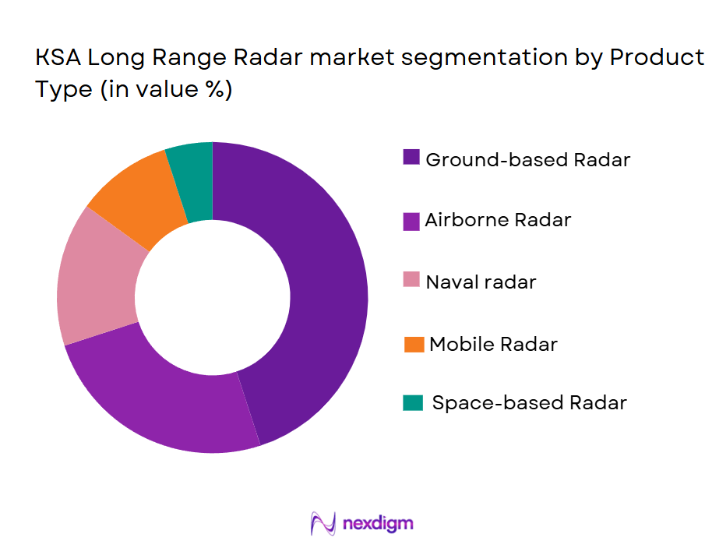
The long-range radar market in Saudi Arabia is segmented by product type into Airborne Radar, Ground-Based Radar, Naval Radar, Space-Based Radar, and Mobile Radar. Recently, Ground-Based Radar has dominated the market share due to its wide range of applications in border security, surveillance, and defense monitoring. These systems are highly valued for their ability to operate in harsh environments and provide real-time data. Furthermore, local governments and defense sectors have favored ground-based systems due to their cost-effectiveness and ease of maintenance, contributing to the growing demand for these systems.
By Platform Type
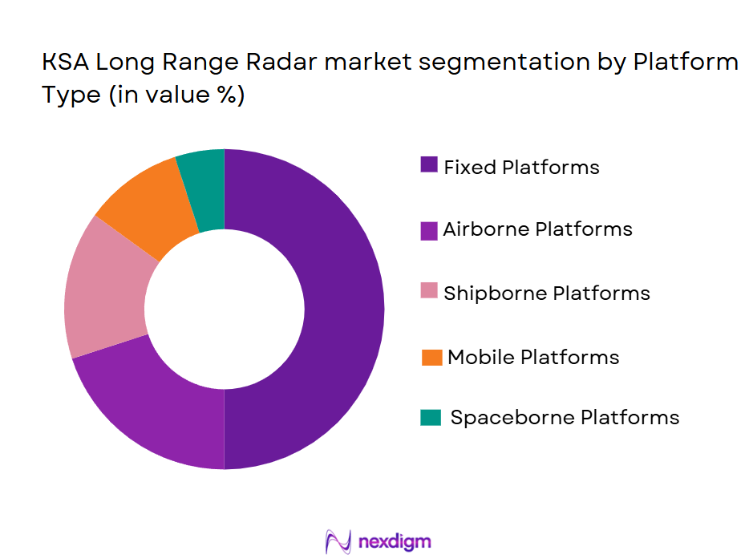
The market is segmented by platform type into Fixed Platforms, Mobile Platforms, Shipborne Platforms, Airborne Platforms, and Spaceborne Platforms. Among these, Fixed Platforms have dominated the market due to their role in large-scale, continuous surveillance operations. Fixed radar systems are integral to both military and civilian applications in Saudi Arabia, particularly for airspace monitoring, border surveillance, and environmental monitoring. Their reliability, minimal maintenance requirements, and capability to provide stable coverage have driven the demand for fixed platforms.
Competitive Landscape
The long-range radar market in Saudi Arabia is highly competitive, with a mix of global and regional players focusing on both technological advancements and market consolidation. Leading companies, such as Lockheed Martin, Thales Group, and Raytheon Technologies, continue to dominate the market with their advanced radar technologies and solutions. The market sees a blend of partnerships, joint ventures, and local manufacturing initiatives that are shaping the competitive landscape. Additionally, regional defense suppliers are increasingly enhancing their portfolios to meet local demand for advanced radar systems.
| Company Name | Establishment Year | Headquarters | Technology Focus | Market Reach | Key Products | Revenue (USD) | Military Systems Focus |
| Lockheed Martin | 1912 | Bethesda, USA | ~ | ~ | ~ | ~ | ~ |
| Thales Group | 1893 | Paris, France | ~ | ~ | ~ | ~ | ~ |
| Raytheon Technologies | 1922 | Waltham, USA | ~ | ~ | ~ | ~ | ~ |
| BAE Systems | 1999 | Farnborough, UK | ~ | ~ | ~ | ~ | ~ |
| Saab AB | 1937 | Linköping, Sweden | ~ | ~ | ~ | ~ | ~ |
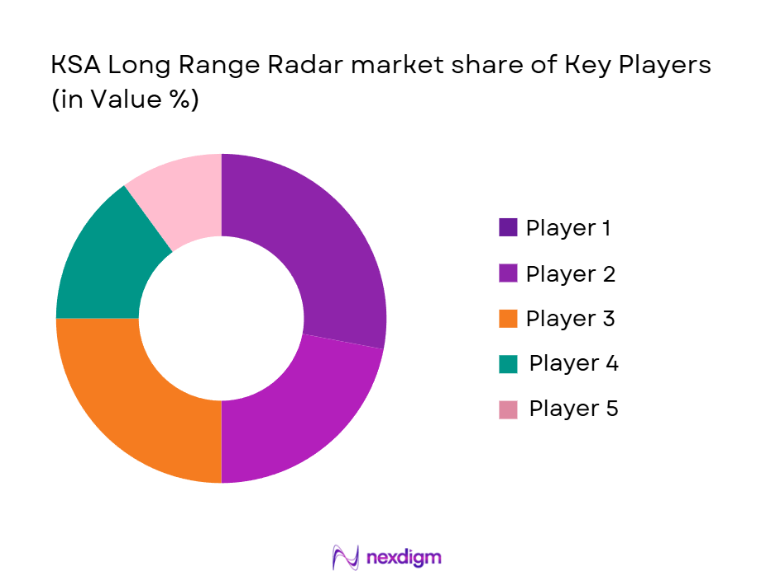
KSA Long Range Radar Market Analysis
Growth Drivers
Technological Advancements
Technological advancements in radar systems, such as digital signal processing and high-definition imaging, are significant drivers of the KSA Long Range Radar market. These innovations have enabled radar systems to become moreaccurate, efficient, and adaptable to various defense and security applications. The integration of artificial intelligence and machine learning into radar systems enhances their ability to detect and track multiple targets simultaneously, improving real-time response capabilities. As technology evolves, radar systems are becoming increasingly sophisticated, driving demand across multiple sectors, including aerospace, military defense, and homeland security. With these advancements, Saudi Arabia’s long-range radar market is expected to grow, as both domestic and international customers seek cutting-edge solutions for surveillance and defense.
Rising Geopolitical Tensions
Geopolitical tensions in the Middle East continue to drive demand for advanceddefensetechnologies, particularly long-range radar systems. Saudi Arabia, located at the heart of the region, has significantly increased its defense spending in recent years to counter regional security threats. The Kingdom’s efforts to modernize its defense capabilities have spurred the procurement of state-of-the-art radar systems for surveillance, missile defense, and border protection. With the rise of potential conflicts and the need for enhanced national security, the demand for sophisticated radar systems is expected to grow. Furthermore, as Saudi Arabia positions itself as a regional power, its defense investments will continue to fuel the expansion of the radar market, making it a critical segment of the broader defense infrastructure.
Market Challenges
High Initial Investment
A significant challenge for the KSA Long Range Radar market is the highinitialinvestment required for advanced radar systems. Long-range radar technologies often involve complex installation processes, integration with other defense systems, and ongoing maintenance costs. While the benefits of these systems are undeniable, the upfront capital expenditure can be a barrier for smaller defense contractors or organizations with limited budgets. For Saudi Arabia, which relies heavily on government funding for defense projects, the costs associated with procurement and installation can delay decision-making processes and impact market growth. As a result, defense ministries must carefully balance the need for modern radar systems with budget constraints, slowing the pace of adoption.
Regulatory Constraints
Regulatory frameworks that governdefenseprocurement in Saudi Arabia are often complex and can present barriers to market growth. The strict regulations on defense contracts, technology imports, and military exports pose challenges for foreign companies seeking to enter the market. Additionally, defense equipment regulations that require licenses and approval processes can delay radar system deployments. Despite efforts to promote local defense manufacturing and reduce dependency on foreign suppliers, regulatory complexities continue to hinder the speed at which new radar technologies are integrated into the Saudi defense sector. These regulatory factors present a significant challenge to expanding the radar market, as they affect procurement timelines and the accessibility of cutting-edge technologies.
Opportunities
Increasing Demand for Autonomous Systems
The shift towards autonomous systems in the defense sector represents a major opportunity for the KSA Long Range Radar market. Autonomous radar systems, capable of operating without human intervention, offer greater efficiency, accuracy, and reduced reliance on personnel, making them ideal for modern military operations. Saudi Arabia’s Vision 2030 program, which emphasizes technological innovation and the modernization of military capabilities, creates a favorable environment for the adoption of these systems. The use of autonomous radar systems in surveillance, border protection, and air defense will likely grow as the demand for efficient and scalable defense solutions increases. This trend presents opportunities for both international and domestic players to develop advanced radar systems tailored to meet the Kingdom’s security needs.
Expansion of Regional Security Programs
Saudi Arabia’s focus on regional security, driven by both domestic and international concerns, presents a significant opportunity for the long-range radar market. With its strategic position in the Middle East, the Kingdom has increased itsdefensespending and is actively seeking to improve its defense capabilities. As part of Vision 2030, Saudi Arabia is expanding its defense programs, focusing on enhancing surveillance, missile defense, and border security. These initiatives are expected to drive long-term demand for advanced radar systems, particularly for applications such as air surveillance, coastal monitoring, and missile detection. The growing regional security threats and the Kingdom’s commitment to strengthening its defense infrastructure provide a conducive environment for the market’s growth in the coming years.
Future Outlook
Over the next five years, the long-range radar market in Saudi Arabia is expected to experience steady growth driven by continued technological advancements, increasing defense spending, and rising security needs. Investments in radar systems will continue to rise as the Kingdom modernizes its military capabilities, and growing geopolitical tensions further enhance the need for comprehensive surveillance solutions. With support from the government, particularly through defense-related initiatives, the market is poised to see strong demand for both air and ground-based radar systems. Technological innovations, such as AI integration, will also help fuel market expansion by improving the efficiency and accuracy of radar systems, leading to further investments in research and development.
Major Players
- Lockheed Martin
- Thales Group
- Raytheon Technologies
- BAE Systems
- Saab AB
- Northrop Grumman
- Leonardo
- Harris Corporation
- L3 Technologies
- Elbit Systems
- Indra Sistemas
- Honeywell International
- General Dynamics
- Kongsberg Gruppen
- UAE Systems
Key Target Audience
- Investments and venture capitalist firms
- Government and regulatory bodies
- Military contractors and defense agencies
- Aerospace manufacturers and operators
- National security agencies
- Border security agencies
- Infrastructure development firms
- Maritime defense sectors
Research Methodology
Step 1: Identification of Key Variables
Market trends, growth drivers, and regional dynamics are identified and assessed for their relevance to the long-range radar market. This step ensures a comprehensive understanding of factors influencing the market.
Step 2: Market Analysis and Construction
The collected data is analyzed to construct a clear picture of the market size, segmentation, and forecast. This involves in-depth review of industry reports, expert opinions, and market performance.
Step 3: Hypothesis Validation and Expert Consultation
Consultation with industry experts and key stakeholders validates the initial market assumptions. These insights are incorporated to refine market forecasts and ensure accuracy.
Step 4: Research Synthesis and Final Output
The final output synthesizes all findings, providing a detailed analysis of the long-range radar market, its segmentation, dynamics, and growth opportunities.

- Executive Summary
- Research Methodology (Definitions, Scope, Industry Assumptions, Market Sizing Approach, Primary & Secondary Research Framework, Data Collection & Verification Protocol, Analytic Models & Forecast Methodology, Limitations & Research Validity Checks)

- Market Definition and Scope
- Value Chain & Stakeholder Ecosystem
- Regulatory / Certification Landscape
- Sector Dynamics Affecting Demand
- Strategic Initiatives & Infrastructure Growth

- Growth Drivers
Technological Advancements
National Defense Spending
Rising Security Concerns - Market Challenges
High Initial Investment
Complexity in Integration
Regulatory Constraints - Market Opportunities
Increase in Geopolitical Tensions
Rising Demand for Advanced Surveillance
Shift towards Autonomous Systems - Trends
Shift towards Multi-Function Radars
Integration with AI and Machine Learning
Advancements in Radar Detection Technology - Government Regulations
Export Control Regulations
Military Procurement Guidelines
Environmental and Safety Standards

- By Market Value 2020-2025
- By Installed Units 2020-2025
- By Average System Price 2020-2025
- By System Complexity Tier 2020-2025

- By System Type (In Value%)
Airborne Radar
Ground-Based Radar
Naval Radar
Space-Based Radar
Mobile Radar - By Platform Type (In Value%)
Fixed Platforms
Mobile Platforms
Shipborne Platforms
Airborne Platforms
Spaceborne Platforms - By Fitment Type (In Value%)
OEM Fitment
Aftermarket Fitment
Retrofit Fitment
Modular Fitment
Custom Fitment - By EndUser Segment (In Value%)
Defense
Aerospace
Marine
Homeland Security
Public Safety - By Procurement Channel (In Value%)
Direct Procurement
Government Procurement
Third-Party Procurement
OEM Procurement
Public Sector Procurement

- Market Share Analysis
- CrossComparison Parameters (Market Share, Growth Rate, System Complexity, Geographic Expansion, Technological Advancements
- SWOT Analysis of Key Competitors
- Pricing & Procurement Analysis
- Porter’s Five Forces
- Key Players
Lockheed Martin
Thales Group
Raytheon Technologies
BAE Systems
Northrop Grumman
Leonardo
Saab AB
Harris Corporation
L3 Technologies
Elbit Systems
Indra Sistemas
Honeywell International
General Dynamics
Kongsberg Gruppen
UAE Systems

- Military & Defense Contractors
- Aerospace Operators
- Government Agencies
- Private Security Services

- Forecast Market Value 2026-2035
- Forecast Installed Units 2026-2035
- Price Forecast by System Tier 2026-2035
- Future Demand by Platform 2026-2035


 Request a Sample
 Ask for Customization
 Get a Quote
 Enquire Now