
 Download PDF
Market Overview
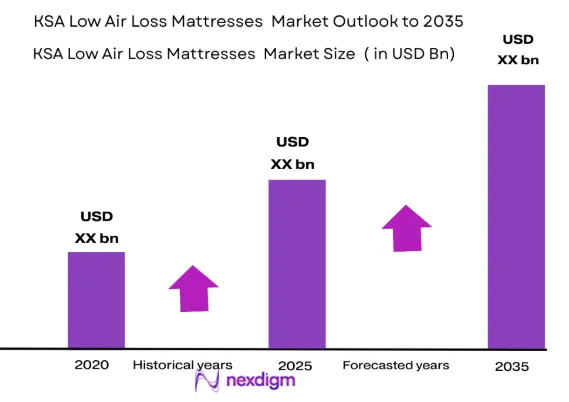
The KSA Low Air Loss Mattresses market is experiencing significant growth, driven by increasing demand in the healthcare sector. Based on a recent historical assessment, the market size for the year is estimated to be approximately USD ~ billion. This growth is primarily fueled by the rising number of patients suffering from pressure ulcers and the aging population, alongside growing healthcare infrastructure. These factors are compounded by advancements in mattress technologies, such as improved materials and smart systems, which enhance patient comfort and safety. The healthcare sector is witnessing a shift toward high-quality, pressure-relieving solutions, thus pushing the demand for low air loss mattresses.
Dominating the market in terms of demand are key cities in the Kingdom of Saudi Arabia, such as Riyadh, Jeddah, and Dammam. These cities are home to the largest healthcare facilities and the most significant number of geriatric patients, making them crucial hubs for the market. The strong healthcare infrastructure, along with government initiatives to enhance medical care, plays a significant role in the dominance of these regions. Additionally, these areas benefit from higher healthcare budgets and access to the latest medical technologies, further supporting the widespread adoption of low air loss mattresses in hospitals and care centers.
Market Segmentation
By Product Type
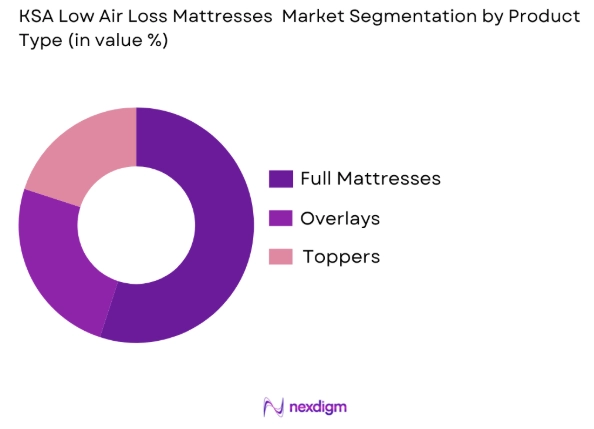
The KSA Low Air Loss Mattresses market is segmented by product type into full mattresses, overlays, and toppers. Recently, full mattresses have a dominant market share due to the growing preference for complete solutions in critical care settings. These mattresses provide superior comfort and pressure relief, making them a popular choice in hospitals and long-term care facilities. Factors such as increased patient comfort and the need for long-term support in these settings contribute to the growing demand for full mattresses. These mattresses are designed to address severe pressure ulcers, making them essential for the treatment of bedridden patients, which further drives their demand.
By Platform Type
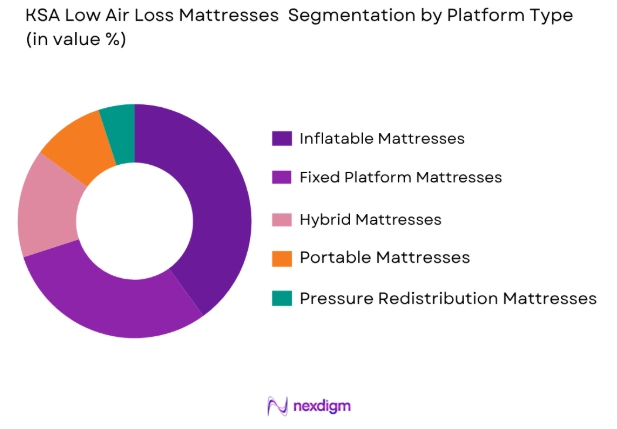
The market is segmented by platform type into fixed platform mattresses, inflatable mattresses, hybrid mattresses, portable mattresses, and pressure redistribution mattresses. Among these, inflatable mattresses have a dominant market share due to their lightweight, cost-effective nature, making them widely preferred in home care settings. The ease of use, combined with the effective redistribution of pressure, ensures comfort for patients at home. This has become especially crucial as more patients with chronic conditions prefer home care solutions rather than staying in hospitals or care facilities.
Competitive Landscape
The KSA Low Air Loss Mattresses market features a competitive landscape dominated by both local and international players, with several major companies consolidating their positions through strategic partnerships and technological advancements. Key players are expanding their market reach through innovations in product offerings, while others focus on enhancing distribution networks to cater to the growing demand in healthcare settings. The influence of major players in the market is significant, with ongoing product development and partnerships forming the backbone of market competition. As the market matures, consolidation is expected, with larger firms gaining an increasing share of the market by leveraging economies of scale and advanced technologies.
| Company Name | Establishment Year | Headquarters | Technology Focus | Market Reach | Key Products | Revenue (USD) |
| Arjo | 1957 | Sweden | ~ | ~ | ~ | ~ |
| Invacare Corporation | 1885 | USA | ~ | ~ | ~ | ~ |
| Hill-Rom Holdings, Inc. | 1929 | USA | ~ | ~ | ~ | ~ |
| Stryker Corporation | 1941 | USA | ~ | ~ | ~ | ~ |
| Medline Industries, Inc. | 1910 | USA | ~ | ~ | ~ | ~ |
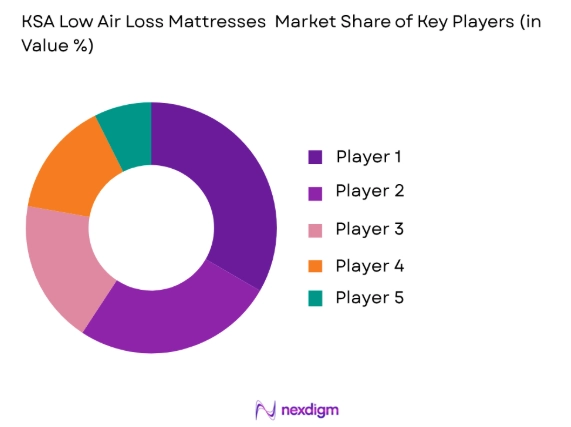
KSA Low Air Loss Mattresses Market Outlook 2035
Growth Drivers
Increasing Prevalence of Pressure Ulcers & Chronic Wounds
The prevalence of pressure ulcers and chronic wounds in Saudi Arabia is increasing due to the aging population and the rise in chronic conditions such as diabetes. In 2022, there were approximately 4.5 million people living with diabetes in Saudi Arabia, a number expected to grow to 5.5 million by 2030. Diabetic patients are particularly susceptible to chronic wounds and pressure ulcers, driving the demand for advanced therapeutic mattresses. Moreover, according to the Saudi Ministry of Health, pressure ulcers are a common problem in long-term care, with over 15,000 cases reported annually. These health challenges fuel the demand for specialized mattresses that reduce pressure and provide optimal healing environments.
Rising Demand in Home Healthcare & Long-Term Care
Saudi Arabia’s home healthcare and long-term care sector is witnessing significant growth due to an increasing preference for in-home care and rising healthcare costs. The Saudi Ministry of Health has highlighted that by 2025, over 15% of the population will be over the age of 60, a demographic that typically requires extended care services. This shift is creating a higher demand for therapeutic devices such as low air loss mattresses, especially in the home care setting. Additionally, the Saudi government’s Vision 2030 initiative is focused on improving the home healthcare infrastructure, which is expected to increase the adoption of advanced medical equipment like pressure-relieving mattresses.
Challenges
High Cost of Advanced Therapeutic Mattresses
Advanced low air loss mattresses often come with a high price tag, which can be a significant barrier in both home healthcare and long-term care facilities in Saudi Arabia. According to the latest report from the Saudi Ministry of Finance, healthcare spending in the Kingdom was expected to reach SAR 148 billion by 2024, but the high cost of specialized therapeutic mattresses limits their accessibility, especially in smaller or underfunded care facilities. Furthermore, despite the rising prevalence of pressure ulcers, the high initial cost of such mattresses prevents their widespread use in hospitals, clinics, and nursing homes. As such, cost remains one of the key barriers to market penetration.
Limited Clinical Awareness Among Smaller Facilities
Smaller healthcare facilities in Saudi Arabia often face challenges in adopting specialized medical technologies like low air loss mattresses due to limited clinical awareness and training. Despite the increasing prevalence of pressure ulcers, studies by the Saudi Ministry of Health reveal that many smaller facilities do not have the required staff or resources to integrate such advanced therapeutic devices into their care plans. This is further compounded by a shortage of specialized training for healthcare providers on how to utilize such equipment effectively. This lack of awareness prevents the broader adoption of advanced mattresses in rural and underserved areas.
Opportunities
Integration with Home Healthcare Services
The growing shift towards home healthcare services in Saudi Arabia presents significant opportunities for the expansion of low air loss mattresses. With the number of home healthcare patients increasing, especially among the elderly, there is a rising demand for devices that can improve patient comfort and aid in the healing of pressure ulcers. In 2022, the number of patients receiving home healthcare services in Saudi Arabia exceeded 30,000, and this number is set to grow in the coming years. The integration of low air loss mattresses with home healthcare services will likely drive adoption, as they offer a cost-effective and reliable solution for treating and preventing pressure ulcers at home.
Technological Advancements & Smart Mattresses
Technological advancements in smart mattresses are expected to revolutionize the therapeutic mattress market in Saudi Arabia. The integration of sensors and monitoring systems in low air loss mattresses, which can track patient movement, adjust firmness, and notify caregivers about pressure points, is gaining traction. By 2024, over 10,000 smart medical devices, including smart therapeutic mattresses, are expected to be deployed across hospitals and care facilities in Saudi Arabia. This innovation enhances patient care and reduces the risk of pressure ulcers, aligning with the country’s broader healthcare modernization efforts under Vision 2030.
Future Outlook
The future of the KSA Low Air Loss Mattresses market is optimistic, with steady growth expected in the coming years. Technological advancements in mattress design, coupled with increasing awareness of pressure ulcers and the need for patient comfort, will continue to drive demand. Additionally, government support for the healthcare sector, including investments in healthcare infrastructure, will foster growth. The rising elderly population and the expansion of home care services will also contribute to the market’s positive outlook. However, challenges such as the high cost of advanced mattresses and regulatory hurdles may affect growth rates in the short term. Despite these challenges, the market is poised for a gradual increase in adoption, especially with the anticipated growth of the healthcare sector under Saudi Arabia’s Vision 2030.
Major Players
- Arjo
- Invacare Corporation
- Hill-Rom Holdings, Inc.
- Stryker Corporation
- Medline Industries, Inc.
- Linet spol. s r.o.
- Drive DeVilbiss Healthcare
- Span America Medical Systems, Inc.
- Direct Healthcare Group
- GF Health Products, Inc.
- Roho, Inc.
- Simplicity Hospital Products
- Paramount Bed
- Herbert-Metzger GmbH
- Acelity Inc.
Key Target Audience
- Investments and venture capitalist firms
- Government and regulatory bodies
- Healthcare providers and hospital management
- Insurance companies focusing on healthcare products
- Medical equipment distributors and suppliers
- Elderly care centers and nursing homes
- Home care service providers
- Medical product wholesalers
Research Methodology
Step 1: Identification of Key Variables
The initial step involves identifying key variables that impact the market, such as market size, growth trends, and technological developments.
Step 2: Market Analysis and Construction
This step focuses on constructing the market framework by analyzing historical data, current market conditions, and potential growth areas.
Step 3: Hypothesis Validation and Expert Consultation
In this stage, hypotheses about the market dynamics are validated through consultations with industry experts and stakeholders.
Step 4: Research Synthesis and Final Output
The final output is synthesized by combining data from various sources and methodologies to provide a comprehensive market report.

- Executive Summary
- Research Methodology (Market Definitions and Standardizations Assumptions and Normalizations, Data Sources and Triangulation Logic, Bottom‑Up Market Sizing and Validation Approach, Top‑Down Opportunity Estimation Protocol, Primary Research Intercept Framework, Limitations and Future Method Refinements)

- Definition and Scope
- Market Genesis and Evolution
- Healthcare System & Patient Care Trends in KSA
- Industry Value Chain and Distribution Architecture

- Growth Drivers
Increasing Prevalence of Pressure Ulcers & Chronic Wounds
Rising Demand in Home Healthcare & Long‑Term Care - Challenges
High Cost of Advanced Therapeutic Mattresses
Limited Clinical Awareness Among Smaller Facilities - Opportunities
Integration with Home Healthcare Services
Technological Advancements & Smart Mattresses - Trends
Connected / IoT‑Enabled Patient Support Systems
Customized Care Protocol Adoption - Market Regulatory & Compliance Landscape
Medical Device Registration & Approvals
Healthcare Procurement Policies
Import Duty & Tariff Regulations
Patient Safety & Product Standards - SWOT Analysis
- Ecosystem Mapping
- Porter’s Five Forces Analysis

- By Current Market Size – Value (SAR) & Volume, 2020‑2025
- By Market Density, 2020‑2025
- By Price Band Analysis, 2020‑2025

- By Product (In Value%)
Full Mattresses
Overlays
Toppers - By Platform (In Value%)
Fixed Platform Mattresses
Inflatable Mattresses
Hybrid Mattresses
Portable Mattresses
Pressure Redistribution Mattresses - By Distribution Channel (In value %)
Hospital Procurement & Tender
Specialty Medical Equipment Distributors
E‑Commerce Platforms
Direct OEM Channel
Retail Medical Stores - By Price Tier (In value %)
Economy / Basic Systems
Mid‑Tier
Premium / Advanced Therapeutic Systems - By Feature Set (In value %)
Pressure Redistribution Systems
Integrated Monitoring & Alarm Systems
Battery‑Supported / Portable Units - By Geography (In value %)
Riyadh & Central KSA
Eastern Province
Western Province (Jeddah/Makkah Corridor)
Southern KSA
Northern KSA

- Market Share by Value & Volume
- Brand Positioning / Value Proposition Mapping
- Cross‑Comparison Parameters (Company Overview Product Portfolio Breadth, Distribution and Sales Channels, After‑Sales Service & Warranty Coverage, Hospital & Clinical Tendering Success, Technology & Feature Differentiation, Service Network Reach, Pricing & Contract Offers, Brand Reputation & Customer Feedback, Training & Clinical Support Services, Regulatory Compliance Record)
- Competitor Analysis and Profiles
Invacare Corporation
Hill‑Rom (Hill‑Rom Holdings)
Drive DeVilbiss Healthcare
GF Health Products
Span‑America
Medline Industries
Arjo AB
Stryker Corporation
Nova Medical Products
Joerns Healthcare
Local OEM & Regional Distributors

- Purchase Decision Criteria
- Usage Frequency & Clinical Application
- Brand Loyalty & Repurchase Trends
- Price Sensitivity & Value Awareness

- By Current Market Size – Value (SAR) & Volume, 2026‑2035
- By Market Density, 2026‑2035
- By Price Band Analysis, 2026‑2035


 Request a Sample
 Ask for Customization
 Get a Quote
 Enquire Now