
 Download PDF
Market Overview
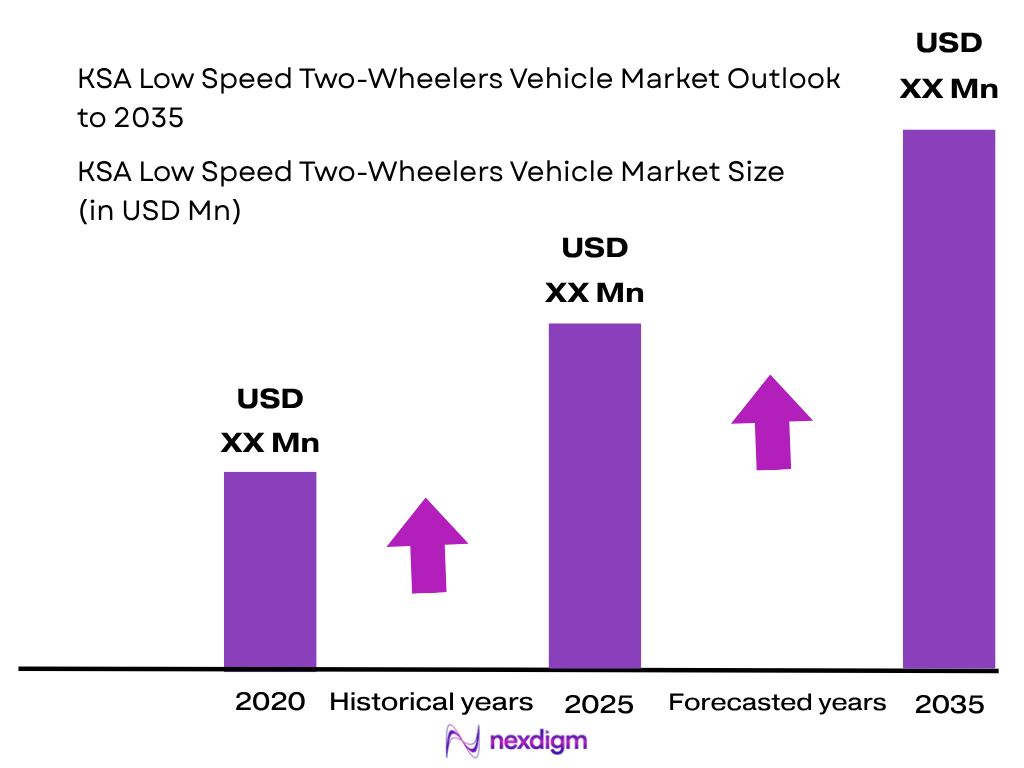
The KSA Low Speed Two-Wheelers Vehicle Market is valued at ~USD 15.73 billion in 2024, supported by increasing adoption of compact urban mobility solutions, expansion of last-mile delivery services, and rising interest in electric mobility alternatives. The market size is driven by growing demand from delivery fleets, individual commuters, and commercial users seeking affordable transportation options. The market recorded a valuation of ~USD 14.28 billion in 2023, reflecting increasing penetration of electric scooters, low-speed electric motorcycles, and fleet-oriented mobility solutions across Saudi Arabia.
The KSA Low Speed Two-Wheelers Vehicle Market is concentrated in major urban centres including Riyadh, Jeddah, Dammam, Khobar, and Dhahran, driven by higher population density, developed road infrastructure, stronger delivery ecosystems, and greater adoption of smart mobility solutions. Riyadh dominates due to its expanding urban transportation requirements and commercial activity, while Jeddah and Eastern Province cities benefit from tourism, logistics operations, and increasing demand for efficient last-mile transportation solutions.
Market Segmentation
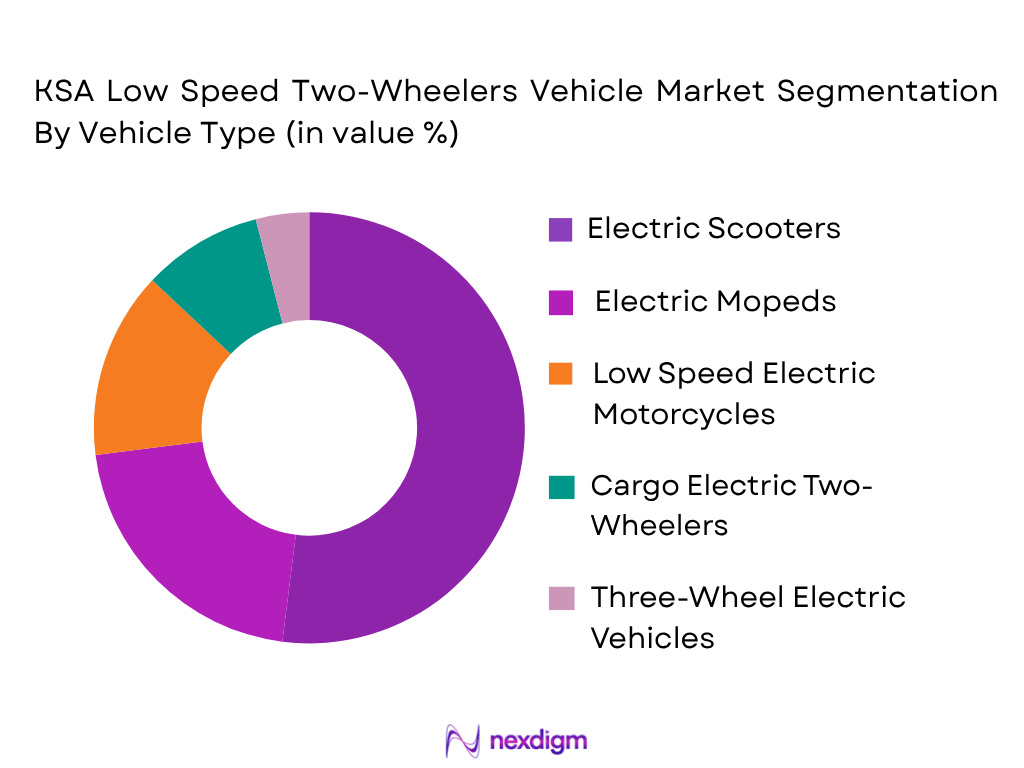
By Vehicle Type
Electric scooters represent the dominant segment in the KSA Low Speed Two-Wheelers Vehicle Market, supported by their affordability, compact design, ease of operation, and suitability for short-distance urban mobility. Electric scooters are increasingly preferred by delivery riders, individual users, and shared mobility operators due to lower operating costs compared with conventional vehicles. The segment benefits from rising adoption of app-based delivery services and increasing demand for convenient personal transportation solutions in congested urban areas. Additionally, improvements in lithium-ion battery technology, enhanced driving range, and availability of lightweight models have strengthened consumer acceptance of electric scooters across major Saudi Arabian cities.
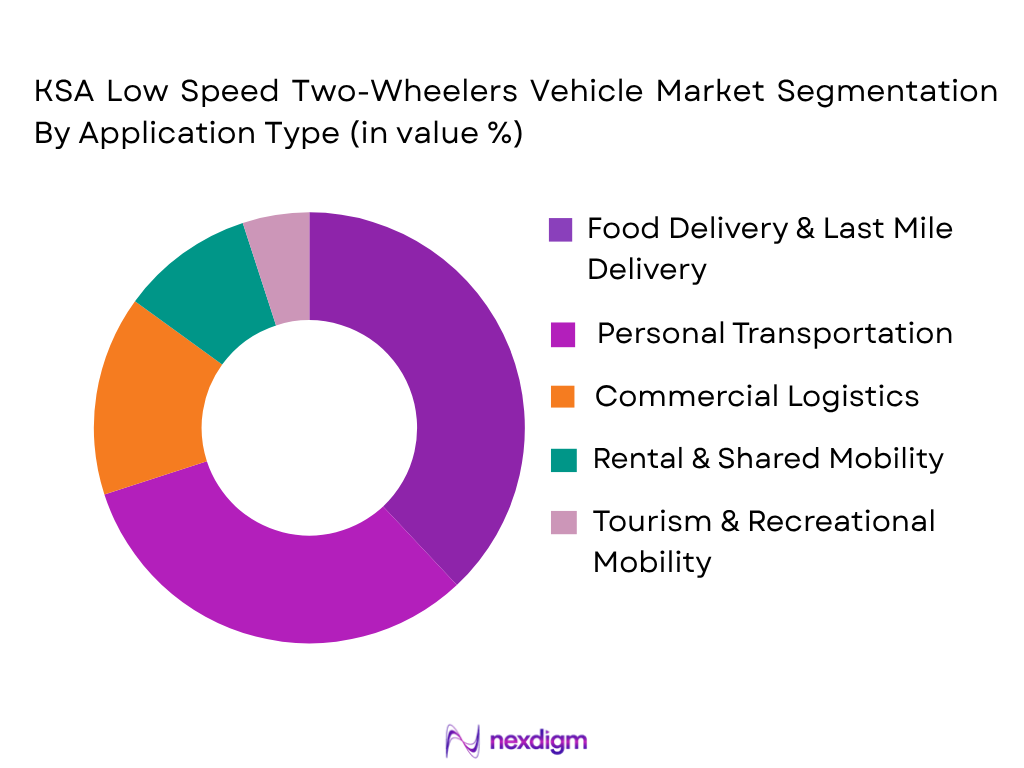
By Application Type
Food delivery and last-mile delivery applications account for the leading segment in the KSA Low Speed Two-Wheelers Vehicle Market, driven by rapid expansion of online food ordering platforms, e-commerce logistics, and demand for cost-efficient delivery operations. Delivery companies are increasingly integrating electric scooters and low-speed electric vehicles into their fleets to reduce operating expenses and improve urban delivery efficiency. The segment is supported by high utilization rates, lower maintenance requirements, and suitability for short-distance delivery routes. Growing investment from logistics operators and mobility service providers is further accelerating adoption of low-speed two-wheelers for commercial applications.
Competitive Landscape
The KSA Low Speed Two-Wheelers Vehicle Market consists of international electric mobility manufacturers, regional distributors, and emerging mobility solution providers. The competitive environment is influenced by product range, battery technology, dealership presence, fleet partnerships, and after-sales service capabilities. Global brands compete through advanced electric drivetrain technologies, while regional players focus on distribution expansion and localized customer support.
| Company | Establishment Year | Headquarters | Key Products | Battery Technology | Primary Customer Segment | Distribution Model |
| Yadea | 2001 | ~ | ~ | ~ | ~ | ~ |
| NIU Technologies | 2014 | ~ | ~ | ~ | ~ | ~ |
| Segway-Ninebot | 2015 | ~ | ~ | ~ | ~ | ~ |
| Vmoto | 1999 | ~ | ~ | ~ | ~ | ~ |
| Gogoro | 2011 | ~ | ~ | ~ | ~ | ~ |
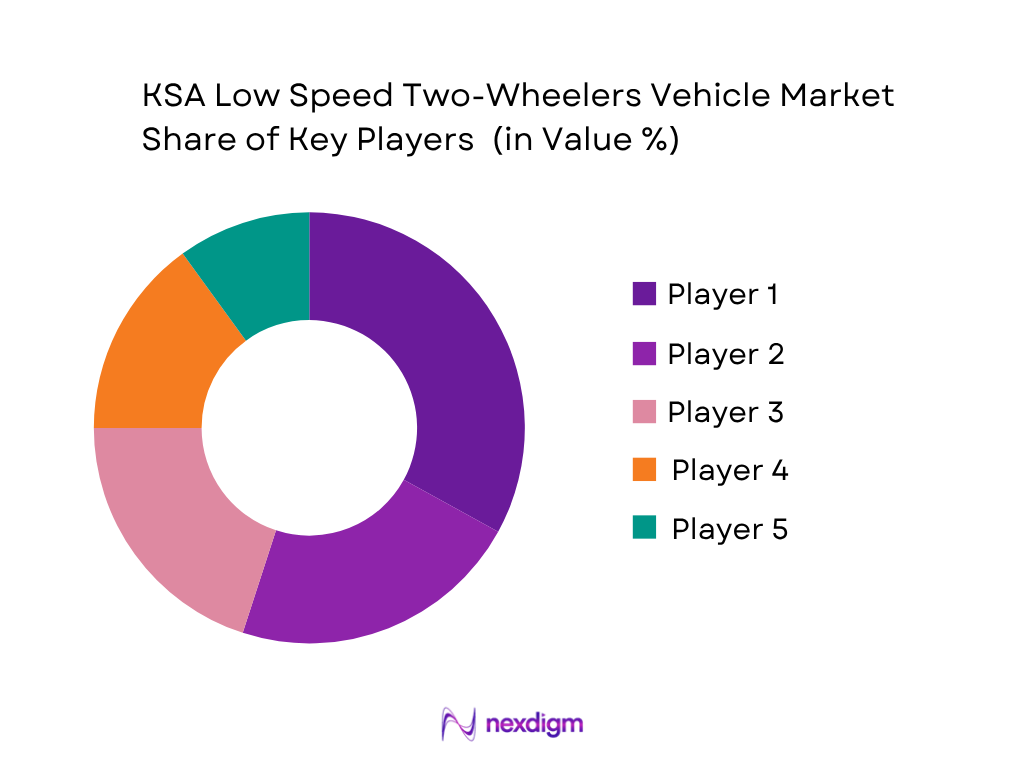
KSA Low Speed Two-Wheelers Vehicle Market Analysis
Market Growth Drivers
Rising Last-Mile Delivery Demand
The increasing requirement for efficient last-mile transportation solutions is a major growth driver for the KSA Low Speed Two-Wheelers Vehicle Market, supported by rapid expansion of digital commerce and urban delivery activities. Saudi Arabia recorded 36.3 million internet users in 2024, representing widespread digital connectivity that supports online retail and delivery ecosystems, according to DataReportal based on telecommunications and government datasets. The Kingdom’s e-commerce sector is supported by high digital adoption, with the Communications, Space & Technology Commission reporting more than 39 million mobile subscriptions in 2024, enabling app-based food delivery, logistics, and on-demand services. Riyadh, Jeddah, and Dammam have emerged as major delivery hubs due to dense urban populations and concentrated commercial activity. The General Authority for Statistics reported that Saudi Arabia’s population reached approximately 35.3 million people in 2024, increasing demand for convenient urban delivery networks. Low-speed electric two-wheelers provide operational advantages for delivery operators through easier navigation in congested areas, reduced space requirements, and suitability for short-distance routes. The growth of platforms offering food, grocery, and parcel delivery services is encouraging logistics companies to explore lightweight electric mobility solutions for improving delivery efficiency and fleet sustainability.
Government Vision 2030 Mobility Initiatives
Government-led sustainable transportation initiatives under Saudi Arabia’s Vision 2030 framework are supporting the adoption of alternative mobility solutions, including low-speed electric two-wheelers. The Saudi Ministry of Transport and Logistic Services has continued implementing transportation modernization programs focused on reducing emissions, improving urban mobility efficiency, and developing sustainable transport infrastructure. Saudi Arabia’s National Transport and Logistics Strategy aims to enhance logistics performance and position the Kingdom as a global transportation hub. According to the International Energy Agency, Saudi Arabia’s electric vehicle transition is being supported by increasing policy attention toward electrification and charging infrastructure development. The Saudi Green Initiative targets the reduction of carbon emissions and includes environmental programs aimed at improving sustainability across economic sectors. The Ministry of Energy reported that renewable energy projects are expanding as part of the Kingdom’s energy diversification strategy, supporting a broader ecosystem for electric mobility adoption. Low-speed two-wheelers align with these initiatives due to their lower energy requirements, suitability for urban travel, and ability to support cleaner transportation options for consumers, delivery operators, and commercial fleets.
Market Challenges
Limited Charging Infrastructure Availability
Limited availability of dedicated charging infrastructure remains a challenge for the KSA Low Speed Two-Wheelers Vehicle Market, particularly for consumers and commercial operators requiring reliable daily vehicle utilization. Although Saudi Arabia is accelerating electric mobility infrastructure development, charging availability remains concentrated in major urban locations such as Riyadh, Jeddah, and Eastern Province cities. The Ministry of Energy has been supporting electric vehicle charging infrastructure expansion through national programs, while the Saudi Electric Vehicle Charging Infrastructure Development Initiative targets the deployment of charging facilities across the Kingdom. The International Energy Agency reported that global electric vehicle charging infrastructure expansion remains a key requirement for accelerating electric mobility adoption, highlighting the importance of adequate charging accessibility. Saudi Arabia’s geographic size, covering approximately 2.15 million square kilometres, creates additional infrastructure deployment challenges due to large distances between population centres. For low-speed two-wheelers, which are frequently used for delivery and short-distance transportation, limited charging availability can impact operational reliability and fleet utilization. The development of localized charging networks, workplace charging facilities, and battery swapping solutions will be essential to overcome infrastructure-related barriers.
Extreme Climate Conditions Impact on Battery Performance
Extreme climatic conditions in Saudi Arabia create operational challenges for low-speed electric two-wheelers, particularly regarding battery efficiency, vehicle range stability, and component durability. Saudi Arabia experiences high temperatures during summer months, with several regions regularly recording temperatures exceeding 45°C, according to climate data from the National Center for Meteorology. Lithium-ion batteries used in electric two-wheelers are sensitive to prolonged exposure to high temperatures, which can influence charging efficiency, battery lifespan, and overall vehicle performance. The World Bank identifies climate conditions as an important factor affecting infrastructure and technology resilience in regions exposed to extreme environmental conditions. Saudi Arabia’s desert environment also creates challenges related to dust exposure, requiring improved vehicle protection systems and maintenance practices. Low-speed two-wheelers used for delivery applications often operate for extended hours during daytime periods, increasing exposure to heat-related performance issues. Manufacturers operating in the Kingdom need to introduce thermal management systems, climate-adapted battery solutions, and enhanced durability standards to ensure reliable performance under Saudi Arabia’s environmental conditions.
Market Opportunities
Electric Delivery Fleet Expansion
The expansion of electric delivery fleets represents a significant opportunity for the KSA Low Speed Two-Wheelers Vehicle Market due to increasing logistics activity and the growing requirement for efficient urban transportation solutions. Saudi Arabia’s logistics sector continues to expand as part of Vision 2030 economic diversification initiatives, with the Transport General Authority focusing on improving freight and delivery infrastructure. The Kingdom recorded more than 35 million population in 2024, creating a large consumer base for food delivery, grocery delivery, and online commerce services. According to the Communications, Space & Technology Commission, Saudi Arabia maintained strong digital adoption with internet penetration exceeding 99% in 2024, supporting digital ordering platforms and delivery-based business models. Electric low-speed two-wheelers are suitable for delivery operations due to their compact structure, lower energy consumption, and ability to operate efficiently within urban areas. Fleet operators can integrate these vehicles for short-distance delivery routes in cities such as Riyadh and Jeddah, where delivery density is high. Increasing focus on sustainable logistics practices and corporate environmental commitments creates additional opportunities for electric scooter fleets, battery management services, and commercial mobility partnerships.
Battery Swapping Infrastructure Development
Battery swapping infrastructure development presents an opportunity for accelerating low-speed electric two-wheeler adoption in Saudi Arabia by addressing charging limitations and improving fleet operational efficiency. Battery swapping allows commercial users to replace depleted batteries quickly, reducing vehicle downtime and increasing daily utilization. Saudi Arabia’s growing interest in electric mobility infrastructure is supported by government initiatives promoting charging networks and alternative transportation technologies. The Saudi Ministry of Energy has been working on electric vehicle infrastructure development as part of national mobility transformation efforts. The Kingdom’s urban concentration supports battery swapping models, as major cities such as Riyadh, Jeddah, and Dammam have high delivery activity and dense transportation demand. According to the General Authority for Statistics, Saudi Arabia’s urban population concentration creates favourable conditions for shared mobility and commercial fleet solutions. Battery swapping networks can support delivery riders, rental operators, and corporate fleets by providing faster energy replenishment compared with conventional charging methods. The development of localized battery exchange ecosystems can create opportunities for infrastructure providers, vehicle manufacturers, and mobility companies seeking to establish scalable electric two-wheeler operations in Saudi Arabia.
Future Outlook
Over the forecast period, the KSA Low Speed Two-Wheelers Vehicle Market is expected to demonstrate strong expansion driven by increasing urban mobility requirements, rising adoption of electric transportation solutions, and growing commercial fleet electrification. The market is expected to benefit from improvements in charging infrastructure, battery technology advancements, and increasing investments from mobility companies. Government initiatives supporting sustainable transportation are expected to further encourage adoption of low-speed electric two-wheelers. The market is projected to grow at a CAGR of ~XX% during 2026-2035, reaching a future market size of ~USD XX billion by 2035.
Major Players
- Yadea
- NIU Technologies
- Segway-Ninebot
- Vmoto
- Horwin
- Super Soco
- Gogoro
- Silence
- Ather Energy
- Ola Electric
- Hero Electric
- TVS Motor Company
- Bajaj Auto
- Honda Motor Company
- Yamaha Motor Company
Key Target Audience
- Investments and venture capitalist firms
- Government and regulatory bodies (Saudi Ministry of Transport and Logistic Services, Saudi Standards, Metrology and Quality Organization, Ministry of Energy Saudi Arabia)
- Electric two-wheeler manufacturers
- Battery technology companies
- Delivery and logistics fleet operators
- Mobility-as-a-Service providers
- Two-wheeler distributors and dealership networks
- Charging infrastructure and battery swapping companies
Research Methodology
Step 1: Identification of Key Variables
The initial stage involves developing a comprehensive ecosystem map of the KSA Low Speed Two-Wheelers Vehicle Market covering OEMs, importers, distributors, fleet operators, battery suppliers, regulatory authorities, and mobility service providers. Extensive secondary research is conducted through industry databases, company reports, government publications, and transportation-related resources to identify key market variables.
Step 2: Market Analysis and Construction
Historical market information is collected and analysed through demand-side and supply-side assessments. This phase evaluates vehicle sales volumes, import trends, pricing structures, fleet adoption patterns, distribution channels, and application-level demand to construct a detailed market estimation framework.
Step 3: Hypothesis Validation and Expert Consultation
Market assumptions are validated through discussions with industry participants including vehicle manufacturers, distributors, fleet operators, logistics companies, and mobility solution providers. Expert consultations provide insights into operational trends, consumer behaviour, pricing dynamics, and future adoption patterns.
Step 4: Research Synthesis and Final Output
The final stage combines quantitative and qualitative findings to generate a validated market assessment. Direct interactions with industry stakeholders are used to verify market sizing, competitive positioning, segmentation analysis, and future growth opportunities within the KSA Low Speed Two-Wheelers Vehicle Market.

- Executive Summary
- Research Methodology (Market Definition and Scope, Low Speed Two-Wheelers Classification Framework, Vehicle Categorization Approach, Market Sizing Methodology, Top-Down Market Assessment, Bottom-Up Market Assessment, Demand-Side Analysis, Supply-Side Analysis, Primary Interviews with OEMs, Importers, Dealers and Fleet Operators, Secondary Research Framework, Data Validation and Triangulation, Forecasting Model, Market Assumptions, Research Limitations)

- Definition and Scope of Low Speed Two-Wheelers Market
- Market Evolution and Industry Development Timeline
- KSA Two-Wheeler Regulatory Landscape and Vehicle Classification Framework
- Low Speed Two-Wheelers Market Value Chain Analysis
- Manufacturing and Import Ecosystem Analysis

- Market Growth Drivers (Urban Congestion Reduction, Rising Last-Mile Delivery Demand, Expansion of E-Commerce Platforms, Increasing Adoption of Sustainable Mobility Solutions, Growing Consumer Interest in Affordable Personal Transportation, Government Vision 2030 Mobility Initiatives, Rising Fuel Cost Sensitivity, Increasing Corporate Fleet Electrification)
- Market Challenges (Limited Charging Infrastructure Availability, Extreme Climate Conditions Impact on Battery Performance, Consumer Awareness Constraints, Regulatory Uncertainty for Certain Vehicle Categories, Dependence on Imported Vehicles and Components, Limited After-Sales Service Coverage, Low Resale Value Perception)
- Market Opportunities (Electric Delivery Fleet Expansion, Battery Swapping Infrastructure Development, Corporate Mobility Solutions, Tourism and Recreational Mobility Applications, Domestic Assembly Opportunities, Smart Mobility Integration, Premium Electric Scooter Adoption)
- Market Trends (Electric Two-Wheeler Transition, Fleet Electrification by Delivery Companies, Subscription-Based Mobility Models, Lightweight Urban Mobility Solutions, Connected Two-Wheelers, IoT-Enabled Vehicle Tracking, Advanced Battery Technology Adoption)
- Government Regulations and Industry Standards (Saudi Vision 2030 Transportation Initiatives, Electric Vehicle Regulations, Import Regulations, Vehicle Registration Requirements, Safety Standards, Battery Import Compliance, Environmental Regulations, Charging Infrastructure Guidelines)
- SWOT Analysis
- Porter’s Five Forces Analysis
- PESTLE Analysis

- By Market Value (2020-2025)
- By Unit Sales Volume (2020-2025)
- By Vehicle Fleet Size (2020-2025)
- By Average Selling Price (2020-2025)
- By Import Value (2020-2025)
- By Domestic Assembly Contribution (2020-2025)
- By Powertrain Segment Contribution (2020-2025)

- By Vehicle Type (In Value %)
Electric Scooters
Electric Mopeds
Electric Motorcycles
Low Speed Electric Motorcycles
Three-Wheel Electric Vehicles
Cargo Electric Two-Wheelers
Delivery-Oriented Low Speed Two-Wheelers
Recreational Low Speed Two-Wheelers
Personal Mobility Electric Vehicles - By Powertrain Type (In Value %)
Battery Electric Two-Wheelers
Lithium-Ion Battery Powered Vehicles
Lead Acid Battery Powered Vehicles
Hybrid Two-Wheelers
Internal Combustion Engine Low Speed Two-Wheelers - By Application (In Value %)
Personal Transportation
Food Delivery and Last Mile Delivery
Commercial Logistics
Tourism and Recreation
Industrial Mobility
Security and Campus Mobility - By End User (In Value %)
Individual Consumers
Delivery Riders
Corporate Fleets
Rental and Shared Mobility Operators
Government and Institutional Users - By Region (In Value %)
Central Region
Western Region
Eastern Region
Southern Region
Northern Region - By City Tier (In Value %)
Riyadh Metropolitan Area
Jeddah Urban Cluster
Dammam–Khobar–Dhahran Region
Secondary Cities
Emerging Urban Areas

- Market Share of Major Players (By Revenue, Unit Sales, Vehicle Category, Powertrain Type, Distribution Channel, Application Segment)
- Cross Comparison Parameters (Vehicle Portfolio Coverage, Electric Two-Wheeler Model Availability, Battery Technology Offering, Battery Capacity Range, Motor Power Range, Maximum Speed Capability, Charging Technology Capability, Distribution Network Strength)
- Pricing Benchmark Analysis (By Vehicle Category, Battery Capacity, Performance Level, Application Type)
- SWOT Analysis
- Detailed Profile of Major Players
Yadea
NIU Technologies
Segway-Ninebot
Vmoto
Horwin
Super Soco
Gogoro
Silence
Ather Energy
Ola Electric
Hero Electric
TVS Motor Company
Bajaj Auto
Honda Motor Company
Yamaha Motor Company

- Consumer Adoption Analysis
- Consumer Demographic Assessment
- Urban Mobility Behavior Analysis
- Consumer Spending Analysis
- Purchase Decision Factors
- Consumer Pain Point Assessment

- By Market Value (2026-2035)
- By Unit Sales Volume (2026-2035)
- By Vehicle Fleet Size (2026-2035)
- By Average Selling Price (2026-2035)
- By Import Value (2026-2035)
- By Domestic Assembly Contribution (2026-2035)
- By Powertrain Segment Contribution (2026-2035)


 Request a Sample
 Ask for Customization
 Get a Quote
 Enquire Now