
 Download PDF
 Download PDF
Market Overview
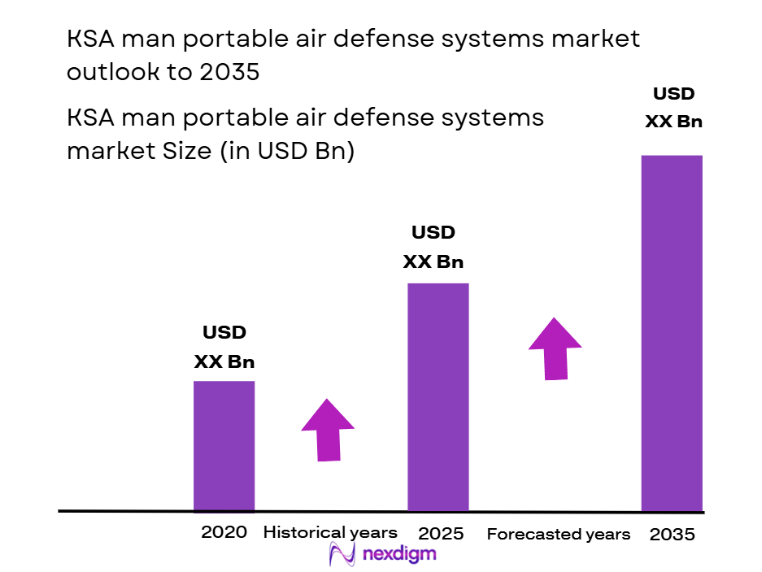
The KSA Man Portable Air Defense Systems market size is projected to experience significant growth, driven by increasing defense spending and the rising need for advanced air defense solutions in Saudi Arabia. With a growing focus on homeland security and the protection of critical infrastructure, the market is expected to reach a value of USD ~ billion by the middle of the next decade. Technological advancements in defense systems, including improved missile interception capabilities and lightweight solutions, are further driving the demand in the region.
The dominance of Saudi Arabia in the KSA Man Portable Air Defense Systems market is primarily attributed to its strategic military goals and growing defense budget. Based on a recent historical assessment, major cities such as Riyadh and Jeddah are witnessing increased demand due to their central roles in the defense infrastructure. The government’s commitment to modernizing the country’s defense capabilities and fostering strategic partnerships with global defense companies plays a pivotal role in driving growth across these urban centers.
Market Segmentation
By Product Type
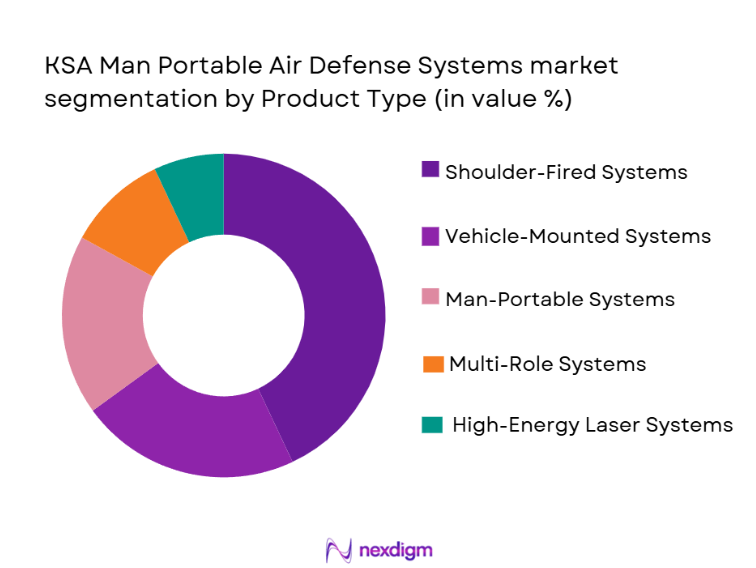
The KSA Man Portable Air Defense Systems market is segmented by product type into shoulder-fired systems, vehicle-mounted systems, man-portable systems, multi-role systems, and high-energy laser systems. Recently, shoulder-fired systems have a dominant market share due to factors such as increasing demand for portable, lightweight, and highly mobile defense solutions. These systems offer rapid deployment and are increasingly favored by military forces for both defense and offensive operations. Additionally, the rising need for more versatile, easily deployable air defense solutions has further propelled the demand for shoulder-fired systems across various sectors.
By Platform Type
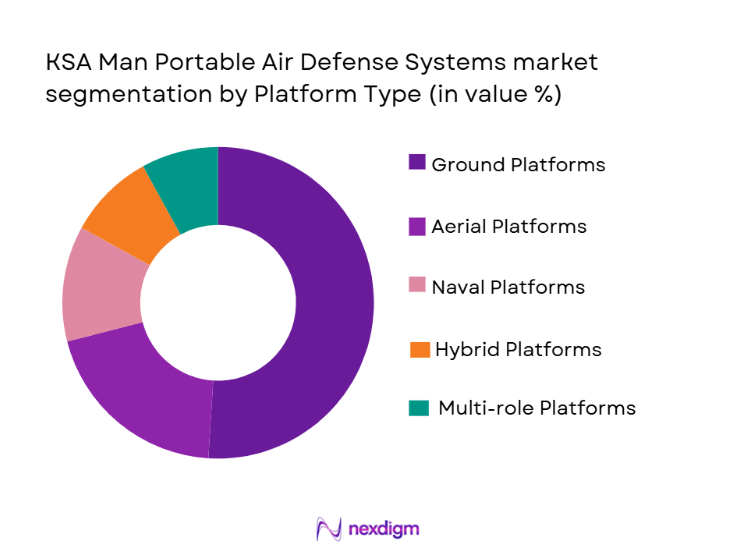
The market is segmented by platform type into ground platforms, aerial platforms, naval platforms, hybrid platforms, and multi-role platforms. Ground platforms dominate the market due to their robustness and versatility in various defense operations. These platforms are often integrated with sophisticated detection and targeting systems, providing enhanced precision and long-range capabilities. The growing demand for portable, on-the-ground solutions that can be quickly deployed in urban and open terrain scenarios has driven the popularity of ground platforms in the region.
Competitive Landscape
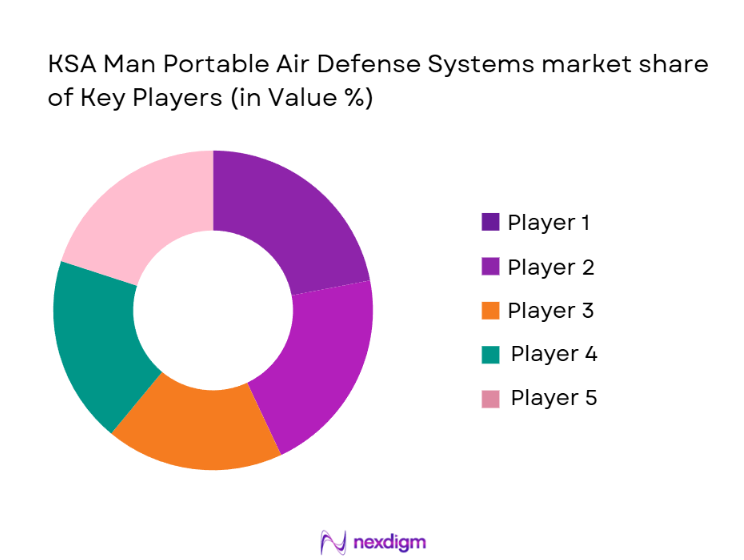
The competitive landscape of the KSA Man Portable Air Defense Systems market is marked by a combination of established global players and regional companies. With increasing demand for technologically advanced systems, consolidation in the market is becoming more apparent as companies form strategic alliances and partnerships to strengthen their market positions. Major players focus on offering innovative products with enhanced missile defense capabilities and lightweight features to stay ahead of competitors.
| Company Name | Establishment Year | Headquarters | Technology Focus | Market Reach | Key Products | Revenue (USD) |
| Lockheed Martin | 1912 | Bethesda, Maryland | ~ | ~ | ~ | ~ |
| Raytheon Technologies | 2020 | Waltham, Massachusetts | ~ | ~ | ~ | ~ |
| Thales Group | 2000 | Paris, France | ~ | ~ | ~ | ~ |
| MBDA | 2001 | Le Plessis-Robinson, France | ~ | ~ | ~ | ~ |
| Saab Group | 1989 | Linköping, Sweden | ~ | ~ | ~ | ~ |
KSA Man Portable Air Defense Systems Market Analysis
Growth Drivers
Technological Advancements
The rapid development of advanced technologies in air defense systems is a key growth driver in the KSA Man Portable Air Defense Systems market. The demand for more efficient, faster, and highly accurate air defense systems has spurred innovations in missile interception, radar detection, and system integration. Technologies such as smart sensors, AI-powered targeting systems, and lightweight materials have led to the creation of more sophisticated systems that are both portable and effective in combat. The ability of these systems to target and neutralize incoming threats with greater precision and range is driving their widespread adoption, particularly in military sectors.
Government Defense Spending
Another significant growth driver in the KSA Man Portable Air Defense Systems market is the substantial increase in defense spending by the Saudi Arabian government. The country is focused on modernizing its defense infrastructure to enhance its military capabilities in the face of regional threats. This financial commitment supports the development and procurement of cutting-edge defense technologies, particularly man-portable air defense systems. As part of its Vision 2030 program, Saudi Arabia aims to increase domestic defense manufacturing and expand its defense portfolio, further bolstering the market’s growth prospects.
Market Challenges
High System Costs
One of the primary challenges facing the KSA Man Portable Air Defense Systems market is the high cost associated with advanced air defense systems. While the need for cutting-edge defense solutions continues to grow, the cost of procurement and maintenance remains a significant barrier for many defense sectors. High-quality systems, such as man-portable air defense missile systems and vehicle-mounted platforms, often come with high research and development costs. These high expenses impact the affordability for governments and private contractors, especially in countries with limited defense budgets or where economic conditions are volatile.
Regulatory Hurdles and Export Controls
Another challenge in the KSA Man Portable Air Defense Systems market is the complex regulatory environment and export controls that affect the procurement of defense systems. Many of the most advanced air defense systems are manufactured by companies based in regions with stringent export controls, particularly in the U.S. and Europe. Saudi Arabia’s reliance on international suppliers makes it vulnerable to changing trade policies and geopolitical tensions. Moreover, regulatory constraints in the exportation of defense technologies further complicate the acquisition of advanced systems for the Saudi military, potentially hindering the growth of the market.
Opportunities
Rising Demand for Homeland Security
The growing threat of terrorism and political instability in the Middle East has created a substantial opportunity for the KSA Man Portable Air Defense Systems market. Saudi Arabia’s increased focus on homeland security has led to a higher demand for portable, easily deployable defense systems that can protect critical infrastructure from airborne threats. These systems are ideal for securing high-value targets such as airports, oil refineries, and military bases, contributing to their growing popularity. The expansion of security measures in urban and border areas further enhances the demand for such systems, providing significant growth potential for the market.
Strategic Partnerships for Technological Advancements
There is also an opportunity for market players to enter into strategic partnerships with local defense manufacturers in Saudi Arabia. These partnerships can help overcome barriers to entry posed by high procurement costs and export restrictions. By collaborating with regional firms, global defense manufacturers can enhance their presence in the market, share technology, and streamline the production of air defense systems that meet the specific needs of the Saudi military. Such alliances will be crucial in maintaining a competitive edge as the country continues to modernize its defense forces.
Future Outlook
The future outlook for the KSA Man Portable Air Defense Systems market over the next five years is highly positive, with substantial growth expected due to technological advancements, increased government spending on defense, and growing demand for homeland security solutions. The continued modernization of Saudi Arabia’s defense infrastructure, driven by the Vision 2030 initiative, will lead to the widespread adoption of more advanced, lightweight air defense systems. Additionally, the market will witness the integration of cutting-edge technologies such as AI, machine learning, and smart sensors, which will enhance system capabilities and performance. The demand for portable air defense systems will also grow as regional security threats increase, with particular focus on defending critical infrastructure.
Major Players
- Lockheed Martin
- Raytheon Technologies
- Thales Group
- MBDA
- Saab Group
- Rheinmetall AG
- Kongsberg Gruppen
- L3 Technologies
- General Dynamics
- BAE Systems
- Northrop Grumman
- Leonardo S.p.A.
- Rafael Advanced Defense Systems
- Elbit Systems
- Honeywell International
Key Target Audience
- Investments and venture capitalist firms
- Government and regulatory bodies
- Military defense contractors
- Homeland security agencies
- Defense technology firms
- Defense procurement departments
- Air defense system manufacturers
- Aerospace and defense solution providers
Research Methodology
Step 1: Identification of Key Variables
The first step involves identifying the key variables influencing the market, such as technological advancements, government spending, and geopolitical factors. This helps in understanding the scope of the market and its key drivers.
Step 2: Market Analysis and Construction
This step involves analyzing current market trends, examining historical data, and constructing the market landscape, including its segmentation, growth drivers, challenges, and opportunities.
Step 3: Hypothesis Validation and Expert Consultation
In this stage, the market hypotheses are validated through consultations with industry experts, key stakeholders, and relevant decision-makers in the defense sector.
Step 4: Research Synthesis and Final Output
Finally, the findings from previous steps are synthesized into a comprehensive market report, which provides in-depth insights, forecasts, and strategic recommendations for market participants.

- Executive Summary
- Research Methodology (Definitions, Scope, Industry Assumptions, Market Sizing Approach, Primary & Secondary Research Framework, Data Collection & Verification Protocol, Analytic Models & Forecast Methodology, Limitations & Research Validity Checks)

- Market Definition and Scope
- Value Chain & Stakeholder Ecosystem
- Regulatory / Certification Landscape
- Sector Dynamics Affecting Demand
- Strategic Initiatives & Infrastructure Growth

- Growth Drivers
Increase in Regional Military Spending
Rising Threat from Airborne Terrorism
Technological Advancements in Missile Systems - Market Challenges
High Costs of Advanced Systems
Limited Local Manufacturing Capabilities
Political Instability and Supply Chain Disruptions - Market Opportunities
Growing Defense Budget in the Middle East
Advancements in Counter UAV Technology
Increased Focus on Homeland Security - Trends
Shift Towards Portable Anti-Aircraft Solutions
Integration of AI and Smart Technology
Increase in Multi-Role and Hybrid Systems - Government Regulations
Tightened Export Controls on Defense Systems
Mandatory Safety Standards for Air Defense Systems
Development of New Defense Frameworks

- By Market Value 2020-2025
- By Installed Units 2020-2025
- By Average System Price 2020-2025
- By System Complexity Tier 2020-2025

- By System Type (In Value%)
Shoulder-Fired Systems
Vehicle-Mounted Systems
Man-Portable Systems
Multi-Role Systems
High-Energy Laser Systems - By Platform Type (In Value%)
Ground Platforms
Aerial Platforms
Naval Platforms
Hybrid Platforms
Multi-Role Platforms - By Fitment Type (In Value%)
Lightweight Systems
Heavyweight Systems
Portable Systems
Fixed-Mount Systems
Semi-Mobile Systems - By EndUser Segment (In Value%)
Military Defense
Homeland Security
Private Sector & Contractors
Government Agencies
Training Institutions - By Procurement Channel (In Value%)
Direct Government Contracts
Private Sector Purchases
Defense Contractors
International Supply Chains
OEM and Supplier Network

- Market Share Analysis
- CrossComparison Parameters (System Type, Platform Type, Procurement Channel, Fitment Type, End-User Segment)
- SWOT Analysis of Key Competitors
- Pricing & Procurement Analysis
- Porter’s Five Forces
- Key Players
Lockheed Martin
Raytheon Technologies
Thales Group
MBDA
Saab Group
Rheinmetall AG
Boeing
Northrop Grumman
General Dynamics
L3 Technologies
Kongsberg Gruppen
Korea Aerospace Industries
Almaz-Antey
Rafael Advanced Defense Systems
Sukhoi Company

- Military Defense Sector Growth
- Increasing Homeland Security Requirements
- Growth in Private Sector Applications
- Importance of Training & Simulation Programs

- Forecast Market Value 2026-2035
- Forecast Installed Units 2026-2035
- Price Forecast by System Tier 2026-2035
- Future Demand by Platform 2026-2035


 Request a Sample
 Ask for Customization
 Get a Quote
 Enquire Now