
 Download PDF
Market Overview
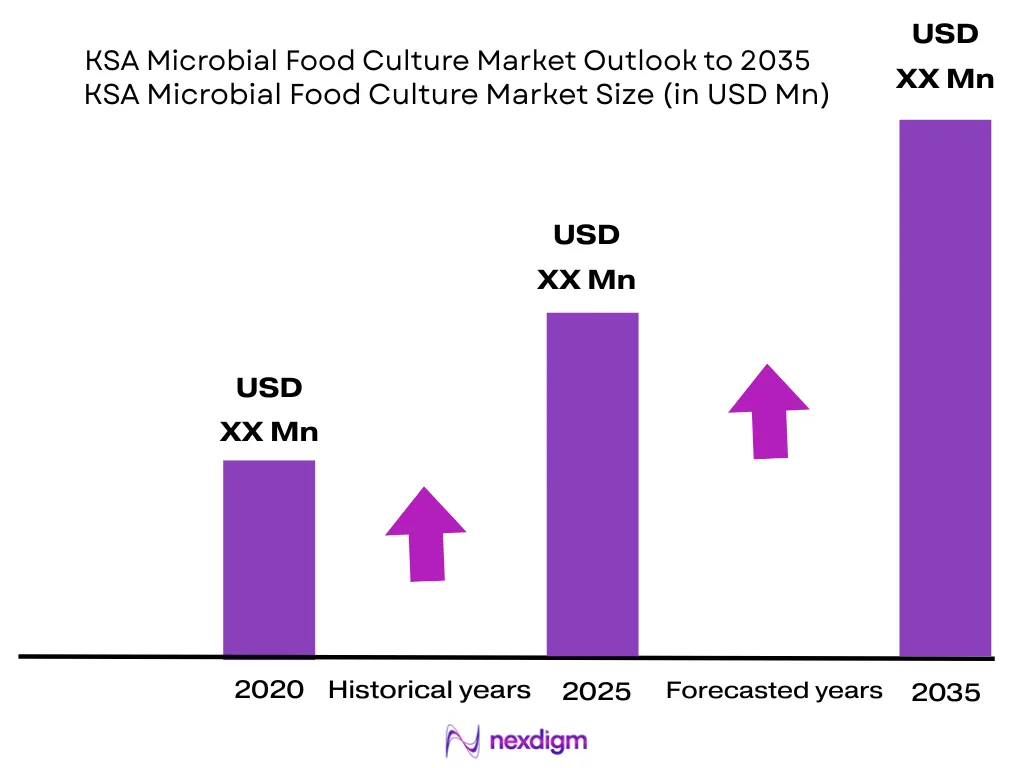
The KSA Microbial Food Culture Market is valued at approximately USD ~ million and is forecast to expand at a CAGR of % during 2026–2035. Saudi Arabia’s population increased from 33.7 million to 35.3 million, while nominal economic output moved from SAR 4.5 trillion to SAR 4.7 trillion. This expanding consumer and manufacturing base supports demand for cultures used in laban, yoghurt, cheese, bakery products, probiotic drinks, and fermented camel-milk products. Riyadh, Al Kharj, Jeddah, Dammam, Al Ahsa, Qassim, and Makkah dominate the KSA Microbial Food Culture Market because they concentrate dairy farms, food factories, bakeries, central kitchens, refrigerated warehouses, ports, and ingredient distributors. The population expanded by 1.6 million people, while manufacturing excluding petroleum refining contributed approximately SAR 428 billion to economic output. Riyadh and Al Kharj lead dairy processing, whereas Jeddah and Dammam provide import access and regional distribution infrastructure.
Market Segmentation
By Culture Type
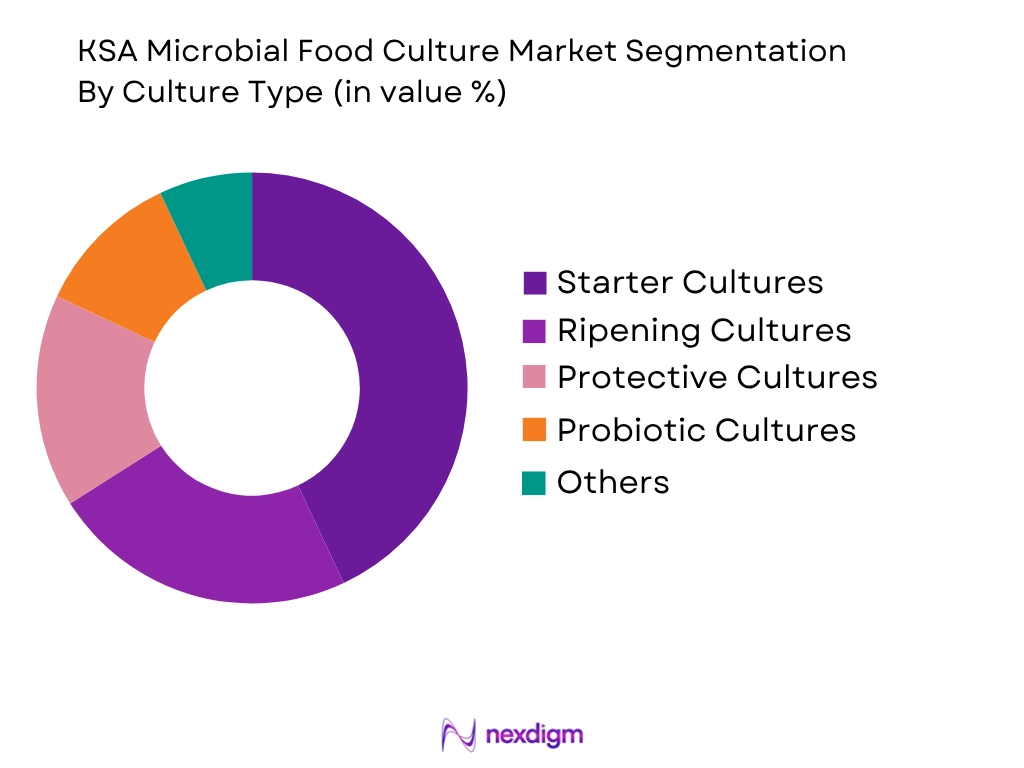
The KSA Microbial Food Culture Market is segmented into starter cultures, probiotic cultures, protective cultures, adjunct and ripening cultures, customized mixed cultures, and indigenous microbial cultures. Starter cultures hold the dominant position because they initiate controlled fermentation in laban, yoghurt, cultured milk, cheese, bread, and selected beverages. Large Saudi dairy processors need predictable acidification, viscosity, flavour, and production time across continuous manufacturing operations. Direct-vat inoculation cultures are particularly suitable because they reduce the preparation and contamination risks associated with maintaining mother cultures. Thermophilic cultures support yoghurt and drinking-yoghurt applications, while mesophilic systems are used in selected cheeses and cultured dairy products. Novonesis offers fermented-milk cultures designed for consistent quality, texture, shelf-life improvement, sugar reduction, and high-protein applications. Probiotic cultures form an important higher-value category but require strain documentation and viable-count stability. Protective cultures are used selectively to control spoilage, while ripening cultures remain concentrated in specialty cheese applications.
By Application
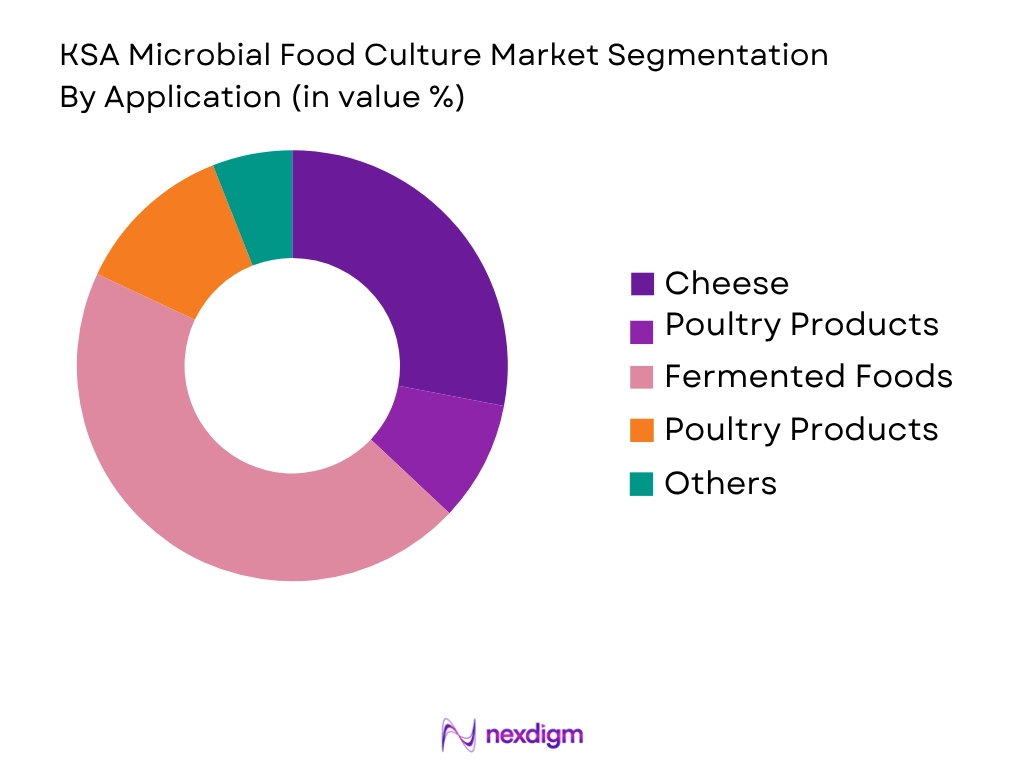
The KSA Microbial Food Culture Market is segmented into fermented dairy products, cheese, bakery and sourdough products, fermented beverages, meat and poultry products, and plant-based fermented foods. Fermented dairy products hold the dominant position because laban, yoghurt, drinking yoghurt, probiotic milk, cultured cream, and dairy desserts require starter cultures during every production batch. Cultures regulate pH reduction, gel strength, viscosity, flavour development, and post-acidification, making them essential processing inputs. Saudi Arabia’s established dairy-processing base and strong consumer familiarity with laban create recurrent culture demand. Cheese applications include fresh white cheese, labneh-type products, mozzarella, brined cheese, cream cheese, and specialty ripened varieties. Bakery fermentation is also significant because industrial bread, Arabic flatbread, pita, samoli, and sourdough products require yeast or mixed microbial systems. Camel-milk fermentation remains smaller but strategically important because its distinct protein composition requires culture selection and process optimization rather than direct replication of cow-milk fermentation protocols.
Competitive Landscape
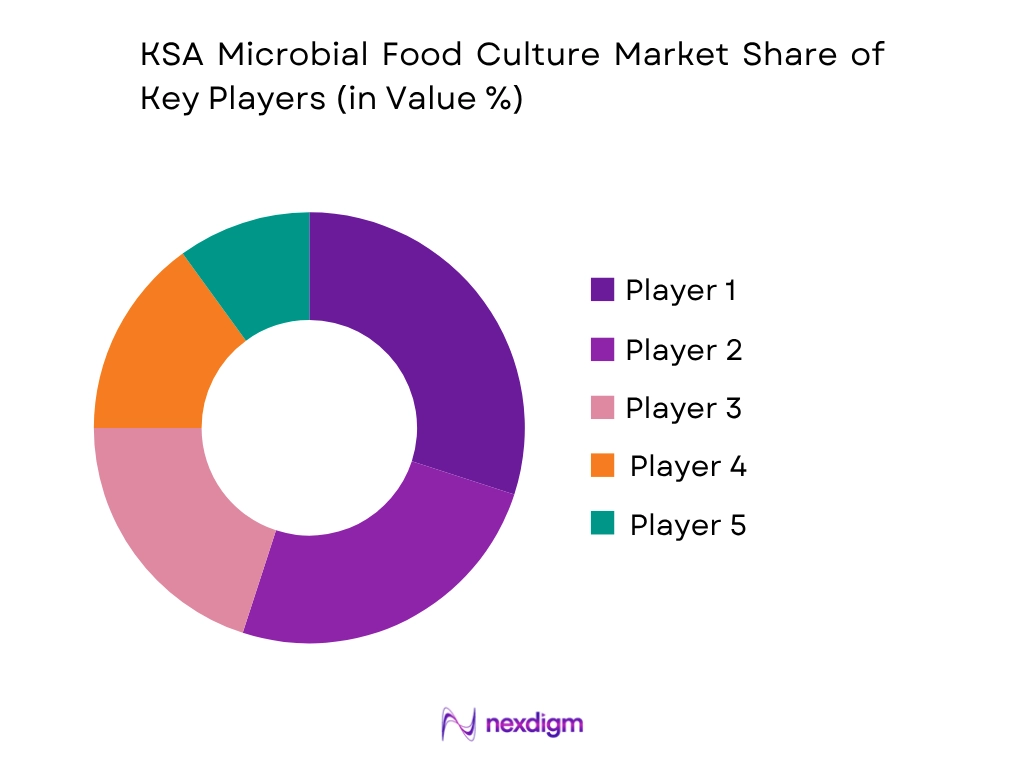
The KSA Microbial Food Culture Market is led mainly by multinational bioscience and fermentation companies supplying through direct industrial accounts, regional offices, specialist distributors, and food-ingredient importers. Competition is shaped by strain-library depth, culture activity, phage resistance, halal documentation, SFDA compliance support, local inventory, and factory-level technical assistance. Novonesis and IFF have broad fermented-dairy portfolios, dsm-firmenich is strong in probiotics and nutritional ingredients, while Lallemand and Lesaffre bring specialist cheese, yeast, sourdough, and fermentation capabilities.
| Company | Establishment Year | Headquarters | Core Culture Portfolio | Principal Applications | Product Formats | KSA Route to Market | Technical Capability | Strategic Differentiation |
| Novonesis | 2024 as merged entity | Lyngby, Denmark | ~ | ~ | ~ | ~ | ~ | ~ |
| International Flavors & Fragrances | 1958 | New York, United States | ~ | ~ | ~ | ~ | ~ | ~ |
| dsm-firmenich | 2023 as merged entity | Kaiseraugst and Maastricht | ~ | ~ | ~ | ~ | ~ | ~ |
| Lallemand | 1915 | Montreal, Canada | ~ | ~ | ~ | ~ | ~ | ~ |
| Lesaffre | 1853 | Marcq-en-Barœul, France | ~ | ~ | ~ | ~ | ~ | ~ |
KSA Microbial Food Culture Market Analysis
Growth Drivers
Expansion of Urban Consumption and Fermented Dairy Demand
Saudi Arabia’s expanding urban population supports recurring demand for microbial cultures used in laban, yoghurt, drinking yoghurt, cheese, probiotic milk, fermented camel-milk products, bakery products, and functional beverages. The General Authority for Statistics recorded 35,300,280 residents in 2024, creating a large consumer base concentrated around Riyadh, Jeddah, Makkah, Madinah, Dammam, Al Khobar, and other metropolitan centres. Urban consumers are served through supermarkets, convenience outlets, digital grocery platforms, restaurants, hotels, schools, hospitals, airline caterers, and institutional kitchens, all of which require standardized products with predictable taste, acidity, texture, and storage performance. This operating environment favours commercial starter cultures over spontaneous fermentation because industrial manufacturers must reproduce the same laban or yoghurt characteristics across numerous batches and distribution points. Saudi dairy farms produced approximately 2.7 billion litres of raw milk in 2024, according to GASTAT. Riyadh Region accounted for approximately 1.6 billion litres, while the Eastern Region produced approximately 1.1 billion litres. Specialized agricultural projects maintained approximately 233,000 dairy cows, providing a substantial substrate base for cultured dairy manufacturing. The country’s annual availability of milk reached 70.3 litres per person, reinforcing demand for milk-based products that can be differentiated through fermentation. Microbial cultures support this conversion by controlling pH reduction, gel formation, viscosity, aroma, whey separation, and post-acidification. Thermophilic cultures are required for yoghurt and several drinking-yoghurt formulations, while mesophilic cultures support selected cheese, cultured cream, and fermented-milk applications. Saudi Arabia’s economy also provides the purchasing capacity for premium and functional food categories. GASTAT placed nominal gross domestic product at approximately SAR 4.7 trillion in 2024, while real economic output expanded by 1.3 points. Non-oil activities increased by 4.3 points, indicating continued development of manufacturing, trade, logistics, accommodation, foodservice, and consumer-oriented industries. In 2025, nominal output reached SAR 4.789 trillion, while real economic activity increased by 4.5 points, providing a wider commercial foundation for food innovation. Urban consumers are increasingly exposed to Greek-style yoghurt, high-protein dairy, probiotic drinks, reduced-sugar fermented products, speciality cheese, sourdough, and plant-based yoghurt alternatives. Each category requires cultures selected for different biological functions. High-protein products need strains capable of forming texture in concentrated milk systems, whereas reduced-sugar formulations require cultures that generate acceptable flavour without depending on high sweetness. Long distribution routes require controlled post-acidification so products do not become excessively sour before consumption. Population concentration also makes technical support commercially viable because suppliers can maintain refrigerated stocks and application teams near several large processors. Urbanization therefore drives the KSA microbial food culture market through a combination of population scale, organized food distribution, industrial dairy availability, diversified product demand, and stricter requirements for manufacturing consistency.
Industrial Localization and Expansion of Food Manufacturing
Saudi Arabia’s industrial localization agenda is strengthening demand for microbial cultures by shifting more dairy, cheese, bakery, beverage, meat, and functional-food production into domestic factories. The National Industrial Strategy identifies food processing as a strategic activity connected to supply security, import substitution, manufacturing diversification, and regional exports. GASTAT reported that Saudi real gross domestic product expanded by 1.3 points in 2024, while non-oil activities increased by 4.3 points. The comprehensive national-accounts update placed nominal output at approximately SAR 4.7 trillion, following an updated SAR 4.5 trillion for 2023. In 2025, nominal gross domestic product reached SAR 4.789 trillion, with non-oil activities increasing by 4.9 points. These macroeconomic indicators show that the commercial environment supporting domestic food manufacturing, cold-chain logistics, packaging, wholesale distribution, laboratories, and industrial services continues to deepen. Local fermentation creates recurrent microbial-culture demand because starter organisms are consumed during each production batch. A finished imported yoghurt does not create domestic culture use, whereas a Saudi plant producing yoghurt every day requires continuous supplies of thermophilic starter cultures, protective systems, probiotics, and technical support. The same relationship applies to laban, cheese, sourdough, fermented beverages, and selected meat products. Saudi raw-milk output provides a strong industrial foundation. Specialized cattle farms produced approximately 2.7 billion litres in 2024, with Riyadh and the Eastern Region forming the principal production centres. This concentration supports integrated dairy operations in and around Al Kharj, Riyadh, Al Ahsa, and the Eastern Province, where milk collection, processing, packaging, refrigerated storage, and distribution can be coordinated at industrial scale. Large plants need cultures with documented acidification curves because delayed fermentation can occupy tanks, interrupt filling lines, and affect delivery schedules. Direct-vat inoculation cultures reduce dependence on mother-culture preparation and make culture activity easier to standardize across facilities. Saudi Arabia’s industrial development framework also improves the infrastructure available to culture suppliers. Industrial cities provide utilities, laboratories, warehousing, transportation links, and food-manufacturing clusters. Vision 2030 reporting indicates that more than 6,000 factories participated in industrial inclusion initiatives, while over 4,400 factories were connected with projects and international corporations. These networks can support collaboration between global microbial-culture developers, Saudi ingredient distributors, dairy companies, packaging businesses, and testing laboratories. Industrial bakery manufacturing provides another demand channel. Arabic flatbread, pita, samoli, sandwich rolls, frozen dough, and premium sourdough require yeast and bacterial cultures capable of controlling dough development, flavour, proofing time, and tolerance to automated production. Cheese localization increases demand for starter, adjunct, surface, and ripening cultures used in mozzarella, fresh white cheese, labneh-style products, brined cheese, cream cheese, and speciality varieties. Industrialization therefore strengthens the microbial food culture market by converting final-food imports into domestic fermentation activity, increasing batch frequency, expanding local quality-control requirements, and creating sufficient customer density for refrigerated inventory and application laboratories.
Market Challenges
Import Dependence, High Temperatures, and Culture Viability Risks
The KSA microbial food culture market remains highly dependent on imported proprietary strains, creating biological, logistical, and operational risks. Most concentrated starter, probiotic, protective, and ripening cultures are manufactured outside Saudi Arabia using controlled strain banks, sterile fermentation, cell concentration, cryoprotection, and freeze-drying or freezing technologies. The finished preparations must then move through international transportation, customs clearance, importer storage, regional warehouses, and last-mile distribution before reaching a food processor. The Saudi Food and Drug Authority requires imported food items and relevant foreign establishments to complete registration and import-control procedures, adding documentation and inspection stages that must be coordinated without compromising product temperature. Frozen cultures may require continuous deep-frozen storage, while freeze-dried products still require protection from excessive heat, humidity, oxygen, and repeated handling. Saudi Arabia’s external climate makes this requirement especially important. A package may remain visually intact after heat exposure even though microbial activity has declined. Reduced activity can extend fermentation time, delay packaging, and create variable finished-product quality. The operational exposure is substantial because Saudi dairy farms produced approximately 2.7 billion litres of raw milk in 2024, and annual milk availability reached 70.3 litres per resident. Large volumes of laban, yoghurt, cheese, and cultured milk must therefore be processed and distributed reliably across a population of 35,300,280. A culture failure in a large dairy tank can affect significantly more product than an equivalent failure in an artisanal unit. In yoghurt, weak starter activity may cause insufficient acidity, weak gels, whey separation, or uncontrolled post-acidification. In cheese, it can alter curd development, moisture, salt uptake, flavour, and ripening. In bakery operations, poor yeast or sourdough activity can affect proofing time, product volume, crumb structure, and line throughput. Saudi Arabia’s economic and industrial scale increases the commercial consequences of these failures. Nominal gross domestic product reached approximately SAR 4.7 trillion in 2024, while non-oil economic activity increased by 4.3 points. Expanding food factories and hospitality businesses require dependable culture inventories, but imported cultures can be exposed to freight disruption, customs delays, geopolitical events, or limited emergency availability. Importers must balance insufficient stock against excessive inventory that may lose activity or expire. Bacteriophages present an additional challenge inside dairy plants. These viruses infect specific bacterial starter strains and can delay or stop acidification even when the culture has been transported correctly. Effective control requires culture rotation, hygienic zoning, whey segregation, air-flow management, sanitation, and rapid identification of the affected strain. Culture stability also depends on processor behaviour after delivery. Staff must maintain calibrated storage equipment, record temperatures, rotate lots, limit the time packs spend in preparation areas, and follow validated dosing procedures. Suppliers that maintain local safety stocks, temperature-monitoring systems, emergency replacement arrangements, and application specialists will have an advantage. Import dependency is therefore not simply a trade issue; it creates a continuous biological-risk chain extending from foreign production through Saudi logistics and factory fermentation.
Limited Specialized Fermentation Skills and Application Complexity
Saudi Arabia’s food-manufacturing expansion creates demand for trained microbiologists, dairy technologists, fermentation engineers, regulatory specialists, and quality professionals, but microbial-culture applications require a narrower skill set than general food production. The challenge is not merely finding operators; it is finding personnel capable of linking strain behaviour with raw-material composition, heat treatment, sanitation, processing temperature, product formulation, and shelf-life objectives. Vision 2030 industrial programs had supported more than 22,000 industrial positions for Saudi nationals by the end of 2024, while thousands of factories were connected to localization and industrial-development initiatives. These figures demonstrate workforce expansion, but advanced fermentation remains technically demanding. A yoghurt technologist must distinguish between weak culture activity, bacteriophage infection, antibiotic residues in milk, incorrect incubation temperature, poor heat treatment, excessive stabilizer interaction, and environmental contamination. The corrective action differs for each cause. Cheese manufacturing adds further complexity because starter cultures interact with rennet, moisture, salt, curd treatment, pressing, and ripening conditions. Protective cultures must be validated against the organisms actually causing spoilage in a particular formulation; they cannot be assumed to perform equally across all products. Probiotic applications require strain-level identity, viable-count measurement, oxygen management, storage testing, and evidence supporting the intended positioning. Saudi camel-milk fermentation creates a particularly market-specific technical barrier. Camel milk differs from cow milk in protein composition, buffering characteristics, and gel formation. Standard yoghurt cultures may acidify slowly or produce weak texture unless the strain combination, heat treatment, solids content, fermentation temperature, and stabilizing system are optimized. Saudi livestock and dairy systems produced approximately 2.7 billion litres of cow milk in 2024, but the strategic development of camel-milk products introduces a second substrate with different fermentation behaviour. Bakery cultures also require specialized knowledge because yeast and lactic acid bacteria must perform under variable flour quality, salt levels, frozen storage, mechanical mixing, and proofing conditions. The macroeconomic environment increases the number of businesses requiring these skills. Saudi Arabia recorded approximately SAR 4.7 trillion in nominal output in 2024, with non-oil activities expanding by 4.3 points. In 2025, real gross domestic product increased by 4.5 points, including a 4.9-point increase in non-oil activities. As food factories, restaurant chains, central kitchens, and nutrition companies expand, technical hiring and training must keep pace. Smaller processors may lack microbiology laboratories or dedicated fermentation specialists, causing production and quality staff to manage culture selection alongside many other responsibilities. Incorrect storage, thawing, rehydration, or inoculation may then produce inconsistent results. This raises the burden on culture suppliers, which must provide factory trials, Arabic-language operating procedures, troubleshooting, strain rotation, fermentation-curve analysis, and staff training. Geographic dispersion also matters because highly specialized technical teams are more accessible in Riyadh, Jeddah, and Dammam than in remote dairy or food-processing locations. The market therefore depends on developing local application laboratories, pilot fermenters, rapid microbial testing, and technical-service teams capable of supporting processors from strain selection through industrial validation.
Market Opportunities
Advanced Fermentation Technology and Camel-Milk Culture Development
Saudi Arabia has a significant opportunity to expand microbial food culture adoption through automated fermentation, digital monitoring, culture stabilization, and the development of strains suited to camel milk and regional food substrates. The country possesses the industrial and economic foundation required for such investments. Nominal gross domestic product reached approximately SAR 4.7 trillion in 2024, real output increased by 1.3 points, and non-oil activities expanded by 4.3 points. In 2025, nominal output reached SAR 4.789 trillion, while real non-oil activity increased by 4.9 points. The digital economy represented 16.0 points out of every 100 points of gross domestic product in 2024, compared with 15.6 points in 2023, according to GASTAT. This digital base supports the adoption of sensors, automated dosing, data analytics, and predictive process control in dairy and food factories. Fermentation systems can continuously monitor pH, temperature, agitation, dissolved oxygen, and processing time. Abnormal acidification can therefore be identified before an entire batch is lost. Automated dosing can reduce human error and ensure that culture quantities correspond with tank volume and product formulation. Digital records also strengthen traceability by linking culture lots, production conditions, quality results, and finished-product batches. Direct-vat inoculation cultures offer another practical advancement because they simplify culture handling and reduce contamination associated with plant-level starter propagation. Freeze-drying and improved cryoprotectants can increase culture survival during transportation and storage in Saudi climatic conditions. Microencapsulation can protect probiotics from oxygen, acidity, and processing stress, supporting their use in yoghurt, drinking dairy, wellness shots, and functional foods. Camel-milk fermentation provides the strongest country-specific innovation opportunity. Saudi Arabia has a substantial camel-production heritage, but fermented camel-milk products remain technically more difficult than conventional cow-milk yoghurt. Strain-screening programs can identify lactic acid bacteria that provide suitable acidification, flavour, texture, and probiotic viability in camel milk. Potential applications include fermented camel milk, yoghurt-style products, probiotic beverages, cultured desserts, cheese, and cow-camel milk blends. The country’s 35,300,280 residents, annual milk availability of 70.3 litres per person, and large hospitality and pilgrimage economy provide multiple channels for differentiated dairy products. Technology can also support reduced-sugar, high-protein, lactose-reduced, and ambient fermented dairy. Exopolysaccharide-producing cultures may improve texture without complete dependence on stabilizers. Protective cultures can inhibit selected spoilage organisms when combined with hygiene, refrigeration, and packaging. Saudi date production reached approximately 1.923 million tonnes in 2024, while the country contained more than 37.6 million palm trees, including over 32 million productive trees. This agricultural base creates an additional opportunity to investigate microbial systems for date-based fermented beverages, functional ingredients, and cereal-date formulations. Current industrial, agricultural, digital, and demographic indicators therefore provide a credible foundation for future market growth without requiring speculative forecasts.
International Collaboration and GCC Fermentation Solutions Hub
Saudi Arabia’s trade connectivity, industrial policy, dairy-processing scale, and central position within the Gulf create an opportunity to develop a regional microbial-culture distribution and application hub. International collaboration can give Saudi processors access to proprietary strain libraries, probiotic documentation, protective-culture systems, cheese-ripening expertise, phage-management programs, genomic identification tools, and advanced freeze-drying technologies. Saudi partners can contribute regulatory knowledge, halal documentation, Arabic labelling support, local customer relationships, industrial sites, warehousing, and understanding of laban, camel milk, Arabic bread, dates, and regional sensory preferences. The opportunity is supported by the country’s current economic base. GASTAT recorded nominal gross domestic product of approximately SAR 4.7 trillion in 2024, while non-oil activities increased by 4.3 points. In 2025, real economic growth reached 4.5 points, and nominal output increased to SAR 4.789 trillion. The national population reached 35,300,280 in 2024, providing a substantial home market from which suppliers can build regional operations. Saudi dairy farms produced approximately 2.7 billion litres of raw milk, including 1.6 billion litres in Riyadh Region and 1.1 billion litres in the Eastern Region. This concentration gives international culture developers access to large processors capable of conducting pilot trials and industrial-scale validation. Collaboration can follow a staged localization model. The first stage can involve importing finished frozen or freeze-dried cultures and holding validated safety inventory inside the Kingdom. The second can add local application laboratories, customer trials, technical training, quality testing, and smaller pack sizes. Later stages can include repacking, blending, pilot fermentation, indigenous strain screening, and selected domestic production. Full-scale microbial-culture manufacturing requires sterile fermenters, strain banks, cell-concentration equipment, cryoprotection, freeze-drying, microbiological quality control, and contamination prevention, making gradual localization more practical than immediate construction of a complete culture factory. Vision 2030 industrial programs provide a framework for these partnerships. More than 6,000 factories benefited from industrial inclusion initiatives, and over 4,400 factories were connected with projects and international corporations. Such networks can link global bioscience companies with Saudi dairy groups, food manufacturers, universities, laboratories, ingredient distributors, and industrial-city authorities. Saudi Arabia can also serve neighbouring Gulf markets because refrigerated inventory positioned in Riyadh, Jeddah, or the Eastern Province can support customers in Kuwait, Bahrain, the United Arab Emirates, Oman, and Qatar. Regional warehousing would reduce lead times and improve emergency replacement capability compared with individual shipments from Europe, North America, or Asia. International partnerships can also address the skills gap through laboratory exchanges, operator training, certification, remote fermentation monitoring, and joint product-development teams. The most differentiated model would combine imported proprietary strains with Saudi application expertise in laban, camel milk, high-temperature distribution, halal-compliant formulations, date substrates, and Arabic bakery products. International collaboration therefore creates future growth not merely through additional imports but through technology transfer, local validation, workforce development, regional inventory, and the gradual formation of a Saudi-based fermentation-solutions ecosystem.
Future Outlook
The KSA Microbial Food Culture Market is expected to expand during 2026–2035 as Saudi Arabia increases domestic food manufacturing under its industrial and food-security strategies. Demand will extend beyond conventional yoghurt starters toward probiotic strains, protective cultures, camel-milk systems, cheese-ripening cultures, and fermentation solutions for bakery and plant-based products. Local technical support, halal documentation, SFDA registration assistance, and validated temperature-controlled distribution will become important competitive differentiators. Starter cultures will remain the foundation of the market because they are consumed in every laban, yoghurt, cultured milk, and cheese production cycle. Direct-vat inoculation systems should gain further acceptance by reducing plant-level starter propagation and providing standardized microbial activity across factories. Probiotic cultures will support the expansion of functional dairy products, wellness beverages, and nutritional formulations. Commercial success will depend on documented strain identity, suitable cell counts, compatibility with the product matrix, and survival throughout the declared shelf life. Novonesis notes that probiotics in fermented dairy must remain alive through shelf life and correspond with the strain-level evidence supporting their intended benefit.
Major Players
- Novonesis
- International Flavors & Fragrances
- dsm-firmenich
- Lallemand
- Lesaffre
- Kerry Group
- Sacco System
- CSK Food Enrichment
- Biochem
- Angel Yeast
- AB Biotek
- LB Bulgaricum
- Biena
- Dalton Biotecnologie
- Mediterranea Biotecnologie
Key Target Audience
- Dairy, laban, and yoghurt processors
- Camel-milk and cheese manufacturers
- Industrial bakery and sourdough producers
- Fermented-beverage and functional-food companies
- Food-ingredient importers and distributors
- Investments and venture capitalist firms
- Private-equity and strategic food-industry investors
- Government and regulatory bodies
Research Methodology
Step 1: Identification of Key Variables
The initial phase involves constructing an ecosystem map covering microbial-culture manufacturers, importers, distributors, dairy processors, cheese producers, bakeries, camel-milk companies, beverage manufacturers, and regulators. Desk research identifies the principal variables affecting demand, including culture format, strain type, application, batch dosage, processor scale, import dependency, halal compliance, and cold-chain requirements.
Step 2: Market Analysis and Construction
Historical market information is compiled by culture type, microorganism, application, end-user, supply origin, and region. The bottom-up approach examines food-processor output, fermentation frequency, culture dosage, and commercial-culture penetration. The top-down approach reviews industrial activity, dairy and food production, culture imports, distributor revenues, and the operating presence of multinational suppliers.
Step 3: Hypothesis Validation and Expert Consultation
Preliminary hypotheses are validated through computer-assisted telephone interviews with culture suppliers, dairy technologists, microbiologists, procurement managers, quality personnel, food-ingredient distributors, and regulatory specialists. These interviews examine purchasing cycles, product qualification, culture performance, storage losses, customer conversion, technical-service requirements, and supplier-selection criteria.
Step 4: Research Synthesis and Final Output
Supply-side and demand-side findings are triangulated to reconcile supplier shipments, distributor inventory, and processor consumption. Segment shares and forecasts are tested against culture dosage, production volumes, product formats, import lead times, regulatory requirements, and expert feedback. The final output provides an internally consistent assessment of market structure, competition, and growth opportunities.

- Executive Summary
- Research Methodology (Market Definitions and Assumptions, Product Inclusion and Exclusion Criteria, Abbreviations, Market Sizing Approach, Top-Down Analysis, Bottom-Up Analysis, Culture-Dosage Consumption Model, Dairy-Processing Output Assessment, Demand-Side Assessment, Supply-Side Assessment, Import-Based Supply Assessment, Primary Industry Interviews, Data Triangulation, Forecasting Framework, Scenario Analysis, Limitations and Future Conclusions)

- Definition and Scope
- Market Evolution and Industry Genesis
- Development of Commercial Food Fermentation in Saudi Arabia
- Transition from Imported Fermented Foods to Local Manufacturing
- Transition from Mother Cultures to Direct-Vat Inoculation Systems
- Role of Microbial Cultures in Saudi Food Manufacturing
- Evolution of Laban, Yoghurt, Cheese and Fermented Beverage Applications
- Development of Camel Milk Fermentation

- Growth Drivers (Expansion of Local Dairy Processing, High Laban and Yoghurt Consumption, Growth of Cheese Manufacturing, Food-Security Localization, Development of Camel Milk Products, Expansion of Industrial Bakeries, Functional and Probiotic Product Demand, Growth of Hospitality and Institutional Catering)
- Market Challenges (Dependence on Imported Proprietary Strains, High Ambient Temperatures, Frozen Cold-Chain Requirements, Culture Viability Loss, Limited Local Culture Manufacturing, Bacteriophage Contamination, Raw-Milk Variability, Regulatory Documentation Complexity)
- Market Opportunities (Camel Milk Culture Development, Protective Cultures for Clean-Label Preservation, Local Culture Blending and Repacking, Probiotic Functional Beverages, Date and Cereal Fermentation, Cultures for Arabic Bread and Sourdough, Application Laboratory Expansion, GCC Distribution Hub Development)
- Market Trends (Direct-Vat Inoculation, Freeze-Dried Culture Adoption, Multi-Strain Blends, Mild-Acidification Systems, Exopolysaccharide-Producing Cultures, Ambient Laban Technology, Clean-Label Bioprotection, Phage-Robust Culture Rotation, Personalized Probiotics and Customized Cultures for Camel Milk)
- SWOT Analysis
- Porter’s Five Forces Analysis
- PESTLE Analysis

- By Market Value (2020-2025)
- By Culture Consumption Volume (2020-2025)
- By Active Microbial Preparation Volume (2020-2025)

- By Culture Type (In Value %)
Starter Cultures
Probiotic Cultures
Protective and Biopreservation Cultures
Adjunct and Ripening Cultures
Aroma and Flavour Development Cultures
Customized Mixed Cultures
Indigenous Microbial Culture Preparations - By Application (In Value %)
Fermented Dairy Products
Cheese and Ripened Dairy Products
Bakery and Sourdough Products
Fermented Beverages
Meat and Poultry Products
Fermented Vegetables and Pickled Foods - By Distribution Model (In Value %)
Direct Sales by Culture Manufacturers
Authorized Food-Ingredient Distributors
Specialist Dairy-Ingredient Distributors
Bakery and Brewing Ingredient Distributors
Food-Ingredient Importers
Application-Solution Providers - By Region (In Value %)
Central Region
Western Region
Eastern Region
Northern Region
Southern Region

- Market Share of Major Players (By Value, Culture Volume, Application, Culture Type, Customer Segment and Distribution Model)
- Cross Comparison Parameters (Culture Portfolio Breadth, Microbial-Strain Library Depth, Laban and Camel Milk Application Coverage, Culture Format and Heat-Stability Performance, Saudi Technical-Support Capability, SFDA and Halal Documentation Strength, Local Inventory and Distribution Reach, Product Innovation and Customization Capability)
- SWOT Analysis of Major Players
- Detailed Profiles of Major Companies
Novonesis
International Flavors & Fragrances
dsm-firmenich
Lallemand
Lesaffre
Kerry Group
Sacco System
CSK Food Enrichment
Biochem
Angel Yeast
AB Biotek
LB Bulgaricum
Biena
Dalton Biotecnologie
Mediterranea Biotecnologie

- Dairy Processor Analysis
- Camel Milk Processor Analysis
- Cheese Manufacturer Analysis
- Bakery Manufacturer Analysis
- Fermented Beverage Producer Analysis

- By Market Value (2026-2035)
- By Culture Consumption Volume (2026-2035)
- By Active Microbial Preparation Volume (2026-2035)


 Request a Sample
 Ask for Customization
 Get a Quote
 Enquire Now