

 Download PDF
Market Overview
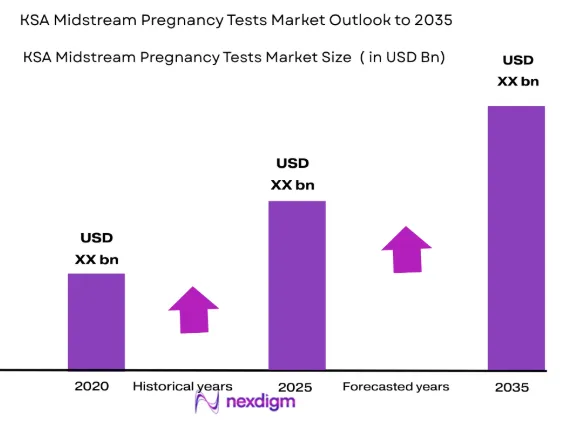
The KSA Midstream Pregnancy Tests market is valued at USD ~ billion based on historical data and current market performance. The market is primarily driven by an increase in the demand for home-based diagnostic products, rising awareness regarding early pregnancy detection, and the increasing preference for convenient testing methods. Additionally, government initiatives supporting healthcare accessibility and advancements in testing technologies have played a significant role in the market’s expansion. Consumer preference is shifting towards non-invasive, easy-to-use pregnancy tests, further driving market growth. The increased penetration of e-commerce and pharmacies has also facilitated market access, providing wider distribution.
The KSA Midstream Pregnancy Tests market is dominated by major urban centers such as Riyadh, Jeddah, and Dammam, with Riyadh being the central hub for retail and healthcare services. These cities have a higher concentration of pharmacies and hospitals, making them crucial to market penetration. Additionally, Riyadh and Jeddah are known for their dense populations and higher purchasing power, which increases the demand for pregnancy test products. Furthermore, these regions benefit from well-established distribution channels and are often the first locations where innovative healthcare products are introduced and widely adopted.
Market Segmentation
By Product Type
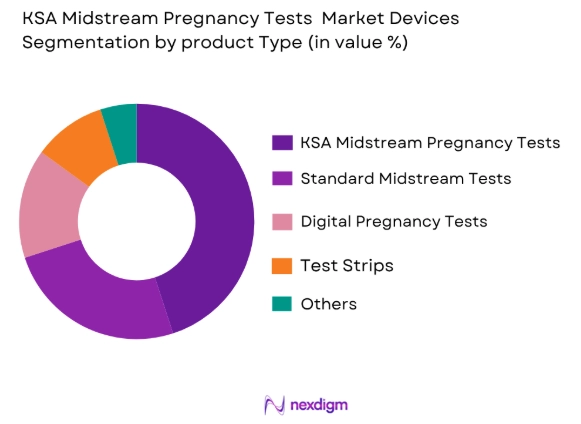
The KSA Midstream Pregnancy Tests market is segmented by product type into early detection pregnancy tests, standard midstream tests, digital pregnancy tests, test strips, and others. Currently, early detection pregnancy tests dominate the market share in this segment. This dominance is due to the growing preference for accurate, fast, and reliable testing methods that offer results as early as possible. These tests allow women to detect pregnancy even before a missed period, giving them a head start on important healthcare decisions. The ease of use, along with the development of more advanced detection technologies, contributes to the rise in early detection test adoption across KSA.
By Distribution Channel
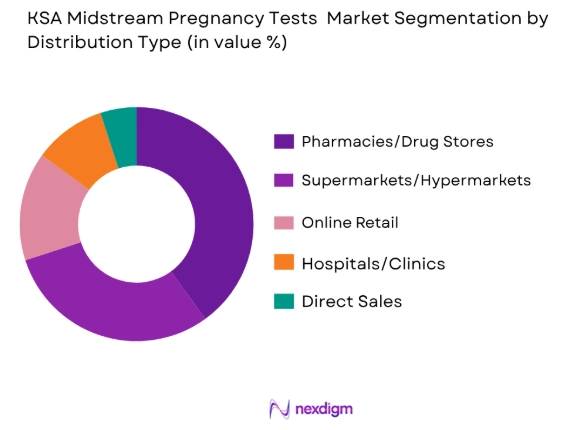
In the KSA Midstream Pregnancy Tests market, distribution is primarily through pharmacies, supermarkets, online retail platforms, hospitals/clinics, and direct sales. Pharmacies and supermarkets have a dominant share in the distribution of midstream pregnancy tests. This is because they offer convenience, accessibility, and competitive pricing. Pharmacies provide a direct point of sale, often in close proximity to consumers’ homes, and are trusted sources for health-related products. The role of e-commerce platforms is also increasing, as they allow consumers to order products privately and have them delivered to their doorsteps, adding convenience and discretion to the purchasing process.
Competitive Landscape
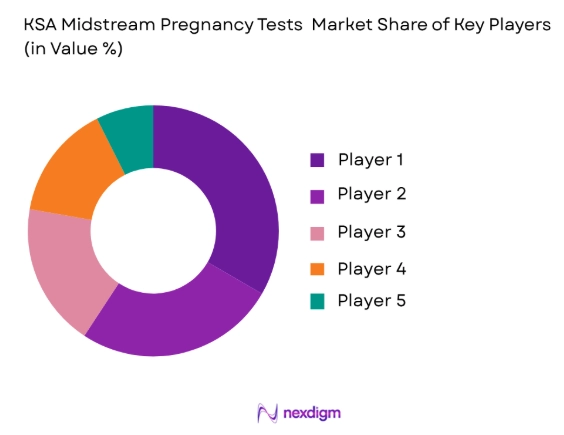
The KSA Midstream Pregnancy Tests market is highly competitive, with several key players dominating the space. The market is consolidated with global and regional brands striving for brand loyalty and market penetration. Companies like Procter & Gamble, First Response, and Clearblue are the leading players, leveraging extensive distribution networks, strong brand recognition, and technological innovation to maintain their dominance. The market also sees a rising number of local manufacturers and brands that focus on affordability and ease of use, catering to the cost-sensitive segment of the population.
| Company Name | Establishment Year | Headquarters | Product Range | Distribution Network | Technology/Innovation | Annual Revenue (USD) |
| Procter & Gamble | 1837 | Cincinnati, USA | ~ | ~ | ~ | ~ |
| First Response (Church & Dwight) | 1846 | New Jersey, USA | ~ | ~ | ~ | ~ |
| Clearblue (SPD Swiss Precision Diagnostics) | 1986 | Geneva, Switzerland | ~ | ~ | ~ | ~ |
| AccuMed | 2000 | USA | ~ | ~ | ~ | ~ |
| Pregmate | 2005 | USA | ~ | ~ | ~ | ~ |
Indonesia Air Quality Monitoring System Market Analysis
Growth Drivers
Increasing Awareness and Acceptance of Pregnancy Tests
The awareness and acceptance of pregnancy tests have significantly increased in Saudi Arabia over the past few years, particularly as the population becomes more health-conscious and proactive about personal healthcare. With an increasing number of women gaining access to educational resources and healthcare, there is a growing understanding of the importance of early pregnancy detection. Government health campaigns and the rising availability of information through digital platforms have played a key role in encouraging the use of pregnancy tests. As more women recognize the importance of knowing their pregnancy status early, the market for midstream pregnancy tests continues to grow. The shift in cultural attitudes and the availability of more accessible health resources have contributed significantly to this rise in awareness. As of 2024, Saudi Arabia’s health sector reforms have been encouraging proactive healthcare, thereby influencing consumer demand for home pregnancy tests.
Rising Demand for Quick and Accurate Testing Methods
The demand for quick and accurate pregnancy tests in Saudi Arabia is driven by consumer preferences for convenience, reliability, and speed in their health-related decisions. Midstream pregnancy tests, which provide results within minutes and are easy to use, align with this demand. With an increasing number of women looking for at-home solutions, the preference for testing methods that do not require a doctor’s visit has soared. Saudi women, particularly in urban centers, are increasingly seeking tests that offer privacy, reliability, and speed. As the population becomes more familiar with the efficiency of midstream tests, the market is expected to expand. Technological improvements have made these tests more precise and user-friendly, further fueling this trend. In 2024, advancements in product design, offering features like easy-to-read results and higher accuracy levels, continue to boost consumer confidence in home pregnancy tests.
Challenges
High Costs of High-End Digital Tests
While digital pregnancy tests are gaining popularity for their accuracy and ease of use, the high cost associated with these tests presents a barrier to widespread adoption, especially among lower-income segments of the population. Digital tests, which offer features such as clear digital readouts and earlier detection, often come with a significantly higher price point compared to traditional midstream tests. This price disparity creates a challenge for price-sensitive consumers, particularly those from middle- and lower-income groups who may prefer more affordable options. As of 2024, the retail price of high-end digital tests in Saudi Arabia can be upwards of 50 to 70 SAR per test, making it a less accessible option for a portion of the population. This challenge is particularly evident in rural areas, where disposable income is typically lower than in urban centers.
Regulatory Barriers and Approval Delays
Regulatory challenges pose significant hurdles for companies trying to introduce new midstream pregnancy test products into the Saudi market. The approval process for health products in Saudi Arabia can be lengthy and complex, with delays in product certifications and regulatory approvals. The Saudi Food and Drug Authority (SFDA) sets stringent requirements for the approval of medical devices, including pregnancy tests, which can delay the entry of new products into the market. These regulatory delays can slow market growth, particularly for companies that wish to introduce new, innovative, or improved products to meet consumer demand. With a growing focus on product safety and quality, navigating regulatory requirements has become an increasingly important challenge for brands in the pregnancy test market.
Opportunities
Introduction of Eco-Friendly and Sustainable Test Products
As consumer interest in sustainability increases, there is a significant opportunity for the introduction of eco-friendly and sustainable midstream pregnancy test products in the Saudi market. With rising awareness about environmental issues, many consumers are now seeking products that have minimal environmental impact. Eco-friendly pregnancy tests, which use biodegradable materials and reduce plastic waste, are becoming more appealing to environmentally-conscious consumers. This presents a key opportunity for brands to innovate and introduce more sustainable product options. Companies that incorporate recyclable packaging, reduce plastic use, or adopt environmentally friendly manufacturing processes could tap into a growing market segment focused on sustainability. This aligns with global trends toward sustainability in consumer products, which are expected to gain further momentum in Saudi Arabia in the coming years.
Emerging Demand for At-Home Fertility Solutions
An emerging opportunity in the Saudi market is the rising demand for at-home fertility solutions, which complements the growth of the midstream pregnancy test market. Saudi women are increasingly becoming more proactive about their reproductive health and are seeking ways to monitor their fertility at home. This growing interest in fertility tracking is likely to drive the demand for advanced pregnancy tests that offer more accurate readings and feature integrated fertility monitoring. As women look for ways to manage their fertility, at-home testing kits that provide insights into ovulation cycles, fertility windows, and early pregnancy detection are expected to gain popularity. This demand for fertility-related solutions represents a natural extension of the midstream pregnancy test market, creating a profitable opportunity for brands to diversify their offerings.
Future Outlook
Over the next few years, the KSA Midstream Pregnancy Tests market is expected to grow significantly, driven by continuous advancements in testing technology and growing consumer awareness. The increasing demand for more accurate and earlier detection methods, coupled with the shift towards at-home healthcare solutions, will be key drivers for the market. Additionally, with the growing penetration of e-commerce and improved access to healthcare products in both urban and rural areas, the market is poised for further expansion. The emphasis on innovative packaging and eco-friendly solutions will also play a pivotal role in shaping the market’s future landscape.
Major Players
- Procter & Gamble
- First Response (Church & Dwight)
- Clearblue (SPD Swiss Precision Diagnostics)
- AccuMed
- Pregmate
- Easy@Home
- ClinicalGuard
- Fairhaven Health
- Rite Aid
- Walgreens
- Boots Pharmacy
- Geratherm
- Medline Industries
- Mylan
- HCG Pregnancy Test
Key Target Audience
- Investment and Venture Capitalist Firms
- Government and Regulatory Bodies (Ministry of Health, Saudi Food and Drug Authority)
- Private Healthcare Providers
- Retail Chains and Supermarket Chains
- E-commerce Platforms and Online Retailers
- Pharmaceutical Distribution Companies
- Manufacturers of Medical and Diagnostic Products
- Major Pharmacies and Drug Store Chains
Research Methodology
Step 1: Identification of Key Variables
The initial phase involves constructing an ecosystem map encompassing all major stakeholders within the KSA Midstream Pregnancy Tests Market. This step is underpinned by extensive desk research, utilizing a combination of secondary and proprietary databases to gather comprehensive industry-level information. The primary objective is to identify and define the critical variables that influence market dynamics.
Step 2: Market Analysis and Construction
In this phase, we will compile and analyze historical data pertaining to the KSA Midstream Pregnancy Tests Market. This includes assessing market penetration, the ratio of marketplaces to service providers, and the resultant revenue generation. Furthermore, an evaluation of service quality statistics will be conducted to ensure the reliability and accuracy of the revenue estimates.
Step 3: Hypothesis Validation and Expert Consultation
Market hypotheses will be developed and subsequently validated through computer-assisted telephone interviews (CATIS) with industry experts representing a diverse array of companies. These consultations will provide valuable operational and financial insights directly from industry practitioners, which will be instrumental in refining and corroborating the market data.
Step 4: Research Synthesis and Final Output
The final phase involves direct engagement with multiple pregnancy test manufacturers to acquire detailed insights into product segments, sales performance, consumer preferences, and other pertinent factors. This interaction will serve to verify and complement the statistics derived from the bottom-up approach, thereby ensuring a comprehensive, accurate, and validated analysis of the KSA Midstream Pregnancy Tests Market.

- Executive Summary
- Research Methodology (Market Definitions and Assumptions, Abbreviations, Market Sizing Approach, Consolidated Research Approach, Understanding Market Potential Through In-Depth Industry Interviews, Primary Research Approach, Limitations and Future Conclusions)

- Definition and Scope
- Market Landscape and Genesis
- Historical Timeline of Market Development
- Business Cycle and Trends
- Supply Chain and Value Chain Analysis
- Regulatory Landscape

- Growth Drivers
Increasing Awareness and Acceptance of Pregnancy Tests
Rising Demand for Quick and Accurate Testing Methods
Growth in Disposable Income and Female Empowerment - Market Challenges
High Costs of High-End Digital Tests
Regulatory Barriers and Approval Delays
Product Quality Variability - Opportunities
Introduction of Eco-Friendly and Sustainable Test Products
Emerging Demand for At-Home Fertility Solutions - Trends
Innovations in Testing Technology (Digital/AI Integration)
Shifting Consumer Preferences Towards Non-Invasive Methods - Government Regulation
Local Approval Requirements
Compliance with Safety Standards - SWOT Analysis
- Stakeholder Ecosystem
- Porter’s Five Forces
- Competition Ecosystem

- By Value, 2020-2025
- By Volume, 2020-2025
- By Average Price, 2020-2025

- By Product Type (In Value %)
Early Detection Pregnancy Tests
Standard Midstream Tests
Digital Pregnancy Tests
Test Strips
Others - By Distribution Channel (In Value %)
Pharmacies/Drug Stores
Supermarkets/Hypermarkets
Online Retail
Hospitals/Clinics
Direct Sales - By End-User (In Value %)
Individual Consumers
Healthcare Providers
Retail Consumers - By Region (In Value %)
Central Region
Eastern Region
Western Region
Southern Region - By Packaging Type (In Value %)
Single Use
Multi-Pack
Bulk Packs

- Market Share of Major Players on the Basis of Value/Volume
- Cross Comparison Parameters (Company Overview, Business Strategies, Product Portfolios, Production Capacity, Distribution Networks, Financial Performance, Recent Developments, SWOT Analysis, Innovation and R&D, Global Presence, Customer Segments, Brand Recognition)
- SWOT Analysis of Major Players
- Pricing Analysis of Major Players in the Market
- Detailed Profiles of Major Companies
Procter & Gamble
First Response
Clearblue
AccuMed
One Step Pregnancy Test
Pregmate
Easy@Home
ClinicalGuard
Fairhaven Health
Rite Aid
Walgreens
Boots Pharmacy
Geratherm
Medline Industries
Mylan

- Market Demand and Utilization
- Purchasing Power and Consumer Behavior
- Regulatory and Compliance Requirements
- Consumer Pain Points and Decision-Making Drivers
- Market Trends in Consumer Preferences

- By Value, 2026-2035
- By Volume, 2026-2035
- By Average Price, 2026-2035


 Request a Sample
 Ask for Customization
 Get a Quote
 Enquire Now