
 Download PDF
 Download PDF
Market Overview
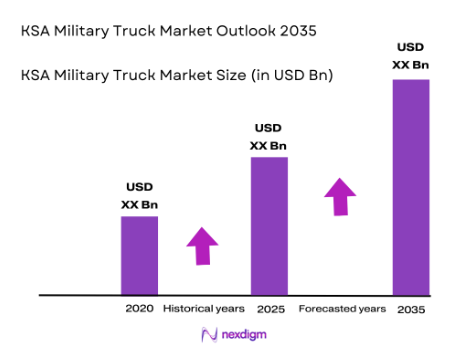
The KSA military truck market is valued at approximately USD ~ billion, driven by the country’s increased defense spending and modernization initiatives. Saudi Arabia’s military budget for 2023 was estimated at USD 61.8 billion, marking a steady growth in defense expenditures. This growth reflects the nation’s ongoing focus on strengthening its military logistics and capabilities. The demand for military trucks is fueled by the country’s strategic need to maintain a well-equipped military, capable of handling both domestic and regional threats. These trucks support critical military operations, from troop transportation to logistics support in various terrains.
The KSA military truck market is primarily driven by demand in Riyadh and other key urban centers, which serve as strategic hubs for the Saudi military. These cities host major military bases and defense contractors, contributing to the concentration of military truck procurement. The Kingdom’s dominance in the market is also reinforced by its ongoing military collaborations with global defense powers, including the United States and European countries. These international relationships foster both local production and the importation of advanced military trucks and related technologies to support Saudi Arabia’s defense objectives.
KSA Military Truck Market Segmentation
By Product Type
The KSA military truck market is segmented by product type into light tactical trucks, medium tactical trucks, heavy tactical trucks, logistics support vehicles, and specialized military vehicles. Recently, light tactical trucks have seen a dominant share in Saudi Arabia, primarily due to their versatility and mobility in desert terrains. These trucks are crucial for rapid deployment and the movement of troops and equipment. The Saudi military’s focus on quick-response operations and logistical efficiency makes light tactical trucks a preferred choice in the current market. The demand for such trucks is enhanced by their ease of use and lower maintenance costs compared to heavier alternatives. 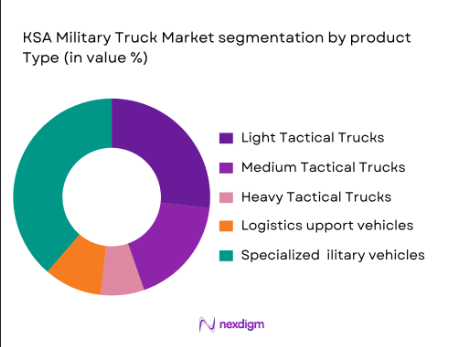
By Platform Type
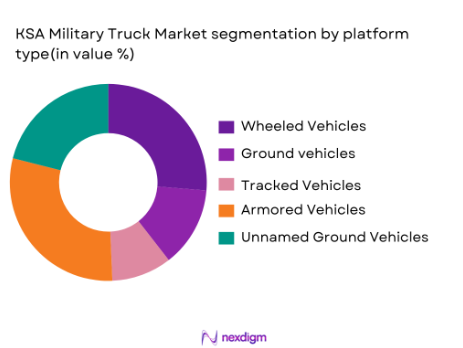
The KSA military truck market is also segmented by platform type, including ground vehicles, wheeled vehicles, tracked vehicles, armored vehicles, and unmanned ground vehicles. Wheeled vehicles dominate this segment due to their high mobility, lower operational costs, and better performance on various terrains, including the desert. The Saudi military prioritizes wheeled platforms for ease of maintenance and cost-effectiveness in non-combat operations. These vehicles are also crucial for maintaining a logistical edge in rapid deployment scenarios and are more adaptable for international deployments in various operational environments.
Competitive Landscape
The KSA military truck market is dominated by both local manufacturers and global defense players, reflecting the strategic importance of military logistics in the Kingdom. Companies such as General Dynamics, Oshkosh Defense, and Rheinmetall lead the market, alongside Saudi defense contractors like the Saudi Arabian Military Industries (SAMI). The concentration of these companies in the market ensures a competitive environment, where innovation and technology integration are key drivers of market growth. This consolidation allows for the development of highly specialized military trucks tailored to the unique needs of the Saudi Arabian military.
| Company | Establishment Year | Headquarters | Market Expertise | Production Capacity | Technological Capabilities | Regional Presence |
| General Dynamics | 1899 | USA | – | – | – | – |
| Oshkosh Defense | 1917 | USA | – | – | – | – |
| Rheinmetall | 1889 | Germany | – | – | – | – |
| SAMI (Saudi Arabian Military Industries) | 2017 | Saudi Arabia | – | – | – | – |
| MAN Truck & Bus | 1897 | Germany | – | – | – | – |
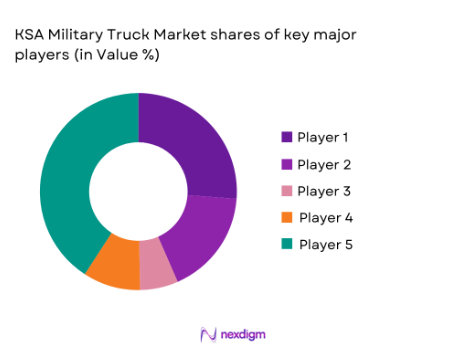
KSA Military Truck Market Dynamics
Growth Drivers
Increased defense budget allocation for military modernization
Saudi Arabia’s defense budget for 2024 was USD ~ billion, marking a significant portion of the national expenditure dedicated to military advancements. This investment is directed towards modernization programs, which include acquiring specialized military vehicles, such as trucks used for logistical support and combat operations. The substantial defense spending reflects Saudi Arabia’s strategic need to enhance its military capabilities in response to regional security concerns, driving demand for advanced and specialized military trucks. This funding supports the continued development of state-of-the-art military logistics and combat vehicle fleets.
Demand for specialized logistics vehicles in remote terrains
Saudi Arabia’s geographical features, including vast deserts and rugged terrains, create unique challenges for military logistics. This has led to the increasing demand for specialized military trucks capable of operating in extreme conditions. The Saudi military relies heavily on vehicles designed for desert and rough terrain, with a particular focus on those that can support troop transportation, equipment relocation, and emergency responses in remote regions. The need for such vehicles is underscored by Saudi Arabia’s strategic emphasis on maintaining rapid mobility and readiness for both domestic and regional military operations.
Market Challenges
High cost of acquiring advanced military trucks
The acquisition of advanced military trucks involves high costs, especially for vehicles with specialized features, such as armored protection, enhanced mobility, and integrated communication systems. For instance, military-grade trucks designed for use in harsh desert conditions often require extensive modifications, which drive up production and procurement costs. Additionally, the importation of advanced military vehicles from foreign suppliers also incurs significant logistical and tariff-related costs. These high expenses create budgetary challenges for the Saudi military, especially when expanding or modernizing vehicle fleets.
Integration of advanced mission systems and technologies
The integration of advanced mission systems and technologies, such as real-time data communication, battlefield tracking, and autonomous vehicle systems, presents a significant challenge for the KSA military truck market. Many existing trucks require extensive retrofitting to accommodate new systems, which leads to high costs and operational delays. The complexity of integrating multiple technologies, including weapon systems, surveillance tools, and logistical software, often creates technical barriers and results in prolonged deployment times. This also impacts the efficiency of military operations, especially in rapidly evolving conflict scenarios.
Market Opportunities
Localization of truck manufacturing and service support
Saudi Arabia is actively pursuing local manufacturing of military vehicles, including trucks, to reduce reliance on foreign suppliers and enhance its defense industry’s capabilities. This effort is supported by the government’s Vision 2030 initiative, which aims to localize defense manufacturing and create jobs within the Kingdom. Local production not only reduces procurement lead times but also provides greater control over quality, customization, and maintenance support. Additionally, it strengthens Saudi Arabia’s ability to develop and deploy vehicles tailored to its specific operational needs in challenging environments.
Advancements in hybrid and electric military trucks
Saudi Arabia’s push toward environmental sustainability and energy efficiency has opened the door for advancements in hybrid and electric military trucks. The Kingdom has allocated significant funds to the development of green technologies in defense equipment. This includes military trucks that are more fuel-efficient and environmentally friendly, which could reduce operational costs in the long term. The current focus is on incorporating hybrid engines into logistics vehicles, which would allow military operations to reduce their carbon footprint while maintaining high operational performance.
Future Outlook
Over the next decade, the KSA military truck market is expected to witness significant growth, driven by continuous investments in defense infrastructure, increased regional defense collaborations, and technological advancements in military vehicle systems. As Saudi Arabia continues to modernize its military logistics and expand its defense partnerships, the demand for specialized military trucks will increase. Additionally, the development of autonomous vehicle technologies and hybrid trucks will further transform the market, enhancing operational efficiency and sustainability in military operations. This will ensure that the Saudi military remains at the forefront of technological advancements in military logistics.
Major Players in the KSA Military Truck Market
- General Dynamics
- Oshkosh Defense
- Rheinmetall
- SAMI (Saudi Arabian Military Industries)
- MAN Truck & Bus
- Tatra Trucks
- Isuzu Motors
- Hyundai Heavy Industries
- Navistar Defense
- BAE Systems
- Volvo Defense
- Mercedes-Benz Defense
- Caterpillar
- Tata Motors Defense
- IVECO Defence Vehicles
Key Target Audience
- Saudi Ministry of Defense
- Saudi Arabian National Guard
- Military logistics contractors
- Global defense contractors
- Defense procurement agencies
- Government and regulatory bodies
- Investments and venture capitalist firms
- Military vehicle maintenance and repair companies
Research Methodology
Step 1: Identification of Key Variables
The initial step involves mapping the ecosystem to identify key stakeholders within the KSA Military Truck Market. This phase utilizes secondary research sources, including government publications and defense industry reports, to define the critical variables that influence market dynamics. The goal is to outline the technological, economic, and regulatory factors impacting the demand for military trucks in Saudi Arabia.
Step 2: Market Analysis and Construction
This phase focuses on compiling and analyzing historical data to identify trends and market penetration for military trucks in Saudi Arabia. By examining data on military budgets, defense contracts, and logistics requirements, we will provide a clear view of current market dynamics. Additionally, we assess pricing strategies, service levels, and military readiness programs that influence truck procurement.
Step 3: Hypothesis Validation and Expert Consultation
Market hypotheses will be developed and validated through direct consultations with industry experts. These include military logistics providers, defense contractors, and procurement officers within Saudi Arabia. These consultations provide insights into future trends, market challenges, and growth drivers that may not be fully captured in secondary data sources.
Step 4: Research Synthesis and Final Output
The final phase involves synthesizing the findings from previous steps and compiling them into a comprehensive market report. Direct engagement with military manufacturers and defense contractors ensures that the final output reflects the most accurate and up-to-date market landscape. These findings will be cross-verified with data from government and defense sources to ensure accuracy and reliability.

- Executive Summary
- Research Methodology (Definitions, Scope, Industry Assumptions, Market Sizing Approach, Primary & Secondary Research Framework, Data Collection & Verification Protocol, Analytic Models & Forecast Methodology, Limitations & Research Validity Checks)

- Market Definition and Scope
- Value Chain & Stakeholder Ecosystem
- Regulatory / Certification Landscape
- Sector Dynamics Affecting Demand
- Strategic Initiatives & Infrastructure Growth

- Growth Drivers
Increased defense budget allocation for military modernization
Demand for specialized logistics vehicles in remote terrains
Partnerships with global defense technology leaders - Market Challenges
Regulatory barriers to foreign military equipment procurement
High cost of acquiring advanced military trucks
Integration of advanced mission systems and technologies - Market Opportunities
Localization of truck manufacturing and service support
Advancements in hybrid and electric military trucks
Expanding defense ties with international partners - Trends
Integration of autonomous and AI-driven logistics vehicles
Shift towards multi-role military trucks with advanced capabilities
Focus on sustainability and energy efficiency in defense equipment

- By Market Value 2020-2025
- By Installed Units 2020-2025
- By Average System Price 2020-2025
- By System Complexity Tier 2020-2025

- By System Type (In Value%)
Light Tactical Trucks
Medium Tactical Trucks
Heavy Tactical Trucks
Specialized Military Trucks
Logistics Support Vehicles - By Platform Type (In Value%)
Ground Vehicles
Wheeled Vehicles
Tracked Vehicles
Armored Vehicles
Unmanned Ground Vehicles - By Fitment Type (In Value%)
OEM Fitment
Retrofit
Upgrades & Enhancements
Customization Fitment
Maintenance & Support Fitment - By End User Segment (In Value%)
Saudi Ministry of Defense
Saudi Arabian National Guard
Private Defense Contractors
International Defense Allies
Military Logistics Providers - By Procurement Channel (In Value%)
Direct Government Procurement
Public-Private Partnerships
Defense Contractors & Suppliers
Foreign Military Sales
OEM Dealer Networks

- Market Share Analysis
- Cross Comparison Parameters (Market Share, Pricing, System Complexity, Technological Integration, Procurement Channels)
- SWOT Analysis of Key Competitors
- Pricing & Procurement Analysis
- Porter’s five forces
- Detailed Company Profiles
General Dynamics
Oshkosh Defense
Rheinmetall
Isuzu Motors
Tatra Trucks
Navistar Defense
MAN Truck & Bus
Volvo Defense
Caterpillar
BAE Systems
Hyundai Heavy Industries
Mercedes-Benz
Iveco
KMW (Krauss-Maffei Wegmann)
Tata Motors Defense

- Focus on sustainability and energy efficiency in defense equipment Increasing military expenditure driving procurement across all defense sectors
- Growth in joint defense exercises with allied nations influencing truck demand
- Expanding defense requirements from Saudi Arabian National Guard
Private sector involvement in providing military logistics and maintenance services

- Forecast Market Value 2026-2035
- Forecast Installed Units 2026-2035
- Price Forecast by System Tier 2026-2035
- Future Demand by Platform 2026-2035


 Request a Sample
 Ask for Customization
 Get a Quote
 Enquire Now