
 Download PDF
 Download PDF
Market Overview
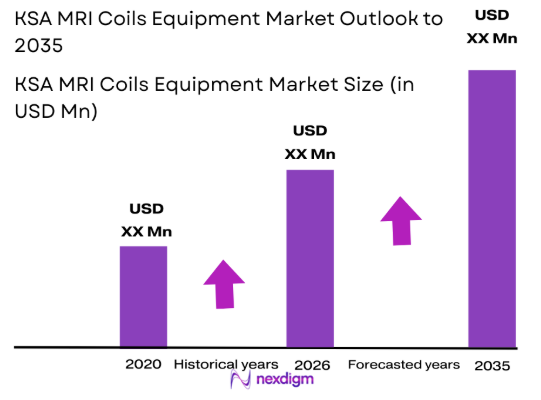
The market for KSA MRI coils equipment is expected to experience substantial growth driven by the rising demand for advanced diagnostic imaging technologies in healthcare. The market size, based on a recent historical assessment, is valued at approximately USD ~ million, with a significant portion of growth attributed to the increased adoption of MRI technology in hospitals and diagnostic centers. A shift toward high-field and portable MRI systems further boosts market dynamics as these systems offer improved resolution and accessibility.
Dominant countries within the region, such as Saudi Arabia, are leading the market due to ongoing investments in healthcare infrastructure and the increasing demand for state-of-the-art diagnostic equipment. Cities like Riyadh and Jeddah have emerged as key hubs, benefiting from government-backed initiatives to modernize healthcare facilities. Additionally, the rise in medical tourism and government funding in the healthcare sector are contributing to the growth in these cities, making them primary contributors to the expansion of the MRI coils equipment market.
Market Segmentation
By Product Type
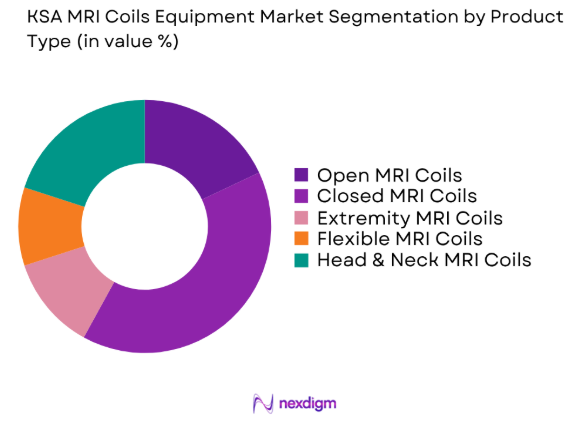
KSA MRI coils equipment market is segmented by product type into open MRI coils, closed MRI coils, extremity MRI coils, flexible MRI coils, and head & neck MRI coils. The closed MRI coils sub-segment has recently achieved a dominant market share due to factors such as increased demand for high-resolution imaging, robust system designs, and the wide use of closed systems in both clinical and research settings. These systems have higher compatibility with advanced MRI machines, and their ability to provide more detailed and accurate imaging has made them the preferred choice for hospitals and diagnostic centers.
By Platform Type
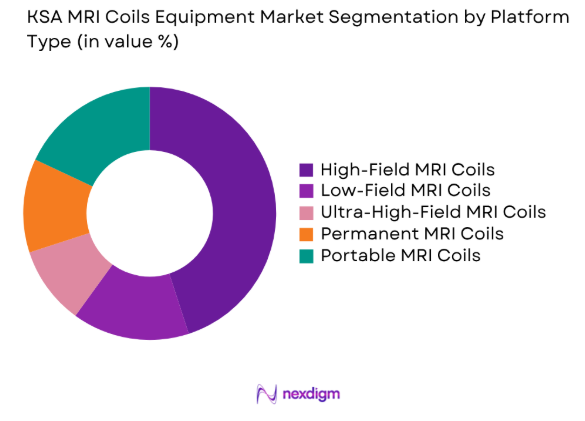
KSA MRI coils equipment market is segmented by platform type into high-field MRI coils, low-field MRI coils, ultra-high-field MRI coils, permanent MRI coils, and portable MRI coils. The high-field MRI coils sub-segment leads the market as they provide superior imaging quality, offering higher resolution and precision for both clinical and research purposes. The growing adoption of high-field MRI systems across medical centers and diagnostic imaging facilities is driving the demand for high-field MRI coils, reinforcing its market dominance.
Competitive Landscape
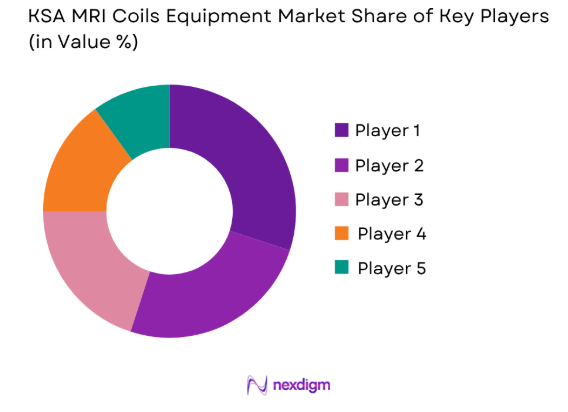
The competitive landscape of the KSA MRI coils equipment market is characterized by significant involvement from both global players and regional companies. Major players focus on technological innovations, particularly in high-field and portable MRI systems, while addressing the increasing demand for advanced imaging techniques. The market is consolidating as key manufacturers continue to enhance their product portfolios, with a notable presence of companies offering both MRI coils and related components for full MRI system integration.
| Company Name | Establishment Year | Headquarters | Technology Focus | Market Reach | Key Products | Revenue | Additional Market-Specific Parameter |
| GE Healthcare | 1892 | Chicago, USA | ~ | ~ | ~ | ~ | ~ |
| Philips Healthcare | 1891 | Amsterdam, NL | ~ | ~ | ~ | ~ | ~ |
| Siemens Healthineers | 1847 | Erlangen, Germany | ~ | ~ | ~ | ~ | ~ |
| Canon Medical Systems | 1933 | Tokyo, Japan | ~ | ~ | ~ | ~ | ~ |
| Hitachi Medical Systems | 1949 | Tokyo, Japan | ~ | ~ | ~ | ~ | ~ |
KSA MRI Coils Equipment Market Analysis
Growth Drivers
Increased Demand for Advanced Diagnostic Imaging
The healthcare sector in Saudi Arabia is witnessing growing demand for advanced diagnostic imaging technologies, including MRI, driving the need for MRI coils. This growth is primarily fueled by rising healthcare demands due to an aging population and the increasing prevalence of chronic diseases. Hospitals are upgrading their MRI systems to improve diagnostic accuracy, further boosting the demand for high-quality MRI coils. Additionally, the Saudi government’s initiatives to enhance healthcare infrastructure and broaden access to medical services are accelerating the adoption of advanced imaging technologies across the Kingdom. These efforts are playing a critical role in meeting the rising healthcare needs and enhancing diagnostic capabilities.
Government Investment in Healthcare Infrastructure
Government initiatives like Vision 2030 have led to substantial investments in Saudi Arabia’s healthcare sector, focusing on the development of state-of-the-art medical facilities with the latest diagnostic technologies, including MRI systems. The ongoing modernization of hospitals and clinics, particularly in cities like Riyadh and Jeddah, has created strong demand for high-quality MRI coils to complement these advanced imaging technologies. Additionally, government-backed healthcare programs and collaborations with international medical companies are enhancing the market landscape, providing a favorable environment for MRI coil manufacturers. The continuous expansion of healthcare infrastructure and increased adoption of modern diagnostic tools are expected to drive further demand for MRI coils across the Kingdom, supporting the growth of the market.
Market Challenges
High Costs of MRI Equipment
A significant challenge facing the MRI coils equipment market in Saudi Arabia is the high cost of MRI systems and components. MRI machines, along with their coils, require substantial investments, which can be a barrier for hospitals and diagnostic centers, especially in smaller regions. Despite the high demand for advanced imaging technologies, the steep upfront costs limit the number of installations and coil replacements, hindering market expansion. Additionally, ongoing maintenance and operational costs contribute to the financial burden, making it difficult for some healthcare providers to adopt the latest technologies. These financial challenges pose a considerable obstacle to the widespread adoption and utilization of advanced MRI coils in Saudi Arabia’s healthcare sector.
Skilled Workforce Shortage
The shortage of trained medical professionals, especially radiologists and MRI technicians, presents a significant challenge for the optimal use of MRI equipment in Saudi Arabia. As MRI systems advance, they demand a skilled workforce for effective operation and maintenance. The scarcity of these professionals results in higher operational costs for healthcare facilities and reduces the efficiency of MRI systems. This shortage of skilled personnel impedes the widespread adoption and optimal utilization of MRI systems and coils, limiting their full potential. Consequently, this issue affects the overall growth of the market, as healthcare providers struggle to deploy and maintain cutting-edge MRI technologies due to the lack of qualified workforce.
Opportunities
Growth in Medical Tourism
Saudi Arabia’s growing medical tourism industry offers significant opportunities for the MRI coils equipment market. The Kingdom has become a leading destination for medical tourists from the Middle East and beyond, seeking high-quality treatments. As medical tourism increases, there is a heightened demand for advanced diagnostic technologies, including MRI systems. This influx of patients is expected to drive the need for more MRI coils, as hospitals and clinics expand their diagnostic capabilities to accommodate international patients. The rising popularity of Saudi Arabia as a medical tourism hub will continue to fuel the demand for state-of-the-art MRI equipment, presenting a key growth opportunity for MRI coil manufacturers in the region.
Partnerships with Technology Providers
An additional growth opportunity in the KSA MRI coils equipment market is the potential for collaborations between MRI equipment manufacturers and technology firms. Partnerships aimed at enhancing MRI coil technology, particularly through AI integration and software advancements, could lead to the creation of more efficient and cost-effective MRI coils. These innovations would improve imaging quality, lower operational costs, and provide healthcare facilities with enhanced diagnostic capabilities. As a result, hospitals could offer better diagnostic services, driving increased demand for advanced MRI equipment. Such technological collaborations would be key in addressing the rising need for high-performance MRI coils in the Saudi Arabian healthcare sector.
Future Outlook
Over the next five years, the market for KSA MRI coils equipment is expected to see sustained growth, driven by the continued investments in healthcare infrastructure and an increasing focus on advanced imaging solutions. Technological advancements, such as AI integration and the development of portable MRI coils, will likely fuel further market expansion. Additionally, the government’s Vision 2030 plan will continue to drive healthcare development, contributing to the growing demand for MRI technology across the Kingdom. Enhanced focus on improving healthcare quality and accessibility will also help strengthen the market’s future outlook.
Major Players
- GE Healthcare
- Philips Healthcare
- Siemens Healthineers
- Canon Medical Systems
- Hitachi Medical Systems
- Fujifilm Healthcare
- EsaoteS.p.A.
- Carestream Health
- Toshiba Medical Systems
- NeusoftMedical Systems
- Hologic
- Medtronic
- NihonKohdenCorporation
- Samsung Healthcare
- Shimadzu Corporation
Key Target Audience
- Investments and venture capitalist firms
- Government and regulatory bodies
- Healthcare providers and hospitals
- Diagnostic and imagingcenters
- Medical equipment distributors
- MRI system manufacturers
- Radiology and imaging professionals
- Healthcare system integrators
Research Methodology
Step 1: Identification of Key Variables
Identify key market variables such as market size, growth drivers, and challenges to establish the foundation of the study.
Step 2: Market Analysis and Construction
Analyze historical data and construct a market model using both primary and secondary research methodologies.
Step 3: Hypothesis Validation and Expert Consultation
Validate hypotheses and assumptions with expert consultations, including interviews with industry professionals.
Step 4: Research Synthesis and Final Output
Synthesize the research findings into a comprehensive report, ensuring all market dynamics and trends are captured.

- Executive Summary
- Research Methodology (Definitions, Scope, Industry Assumptions, Market Sizing Approach, Primary & Secondary Research Framework, Data Collection & Verification Protocol, Analytic Models & Forecast Methodology, Limitations & Research Validity Checks)

- Market Definition and Scope
- Value Chain & Stakeholder Ecosystem
- Regulatory / Certification Landscape
- Sector Dynamics Affecting Demand
- Strategic Initiatives & Infrastructure Growth

- Growth Drivers
Increase in diagnostic imaging requirements
Technological advancements in MRI coil design
Government investment in healthcare infrastructure - Market Challenges
High cost of MRI coil systems
Lack of skilled professionals
Maintenance and operational costs - Market Opportunities
Rising demand for advanced diagnostic imaging
Emerging demand from remote healthcare centers
Collaborations with tech firms for innovative solutions - Trends
Growing use of portable MRI systems
Development of lighter and flexible coils
Integration of AI in MRI coil technology - Government Regulations
- SWOT Analysis of Key Competitors
- Porter’s Five Forces

- By Market Value, 2020-2025
- By Installed Units, 2020-2025
- By Average System Price, 2020-2025
- By System Complexity Tier, 2020-2025

- By System Type (In Value%)
Open MRI Coils
Closed MRI Coils
Extremity MRI Coils
Flexible MRI Coils
Head & Neck MRI Coils - By Platform Type (In Value%)
High-Field MRI Coils
Low-Field MRI Coils
Ultra-High-Field MRI Coils
Permanent MRI Coils
Portable MRI Coils - By Fitment Type (In Value%)
Standard Fitment Coils
Custom Fitment Coils
Disposable Fitment Coils
Reusable Fitment Coils
Modular Fitment Coils - By End User Segment (In Value%)
Hospitals
Diagnostic Centers
Research Laboratories
Ambulatory Surgical Centers
Outpatient Clinics - By Procurement Channel (In Value%)
Direct Procurement
Distributors
Online Platforms
Government Tenders
Private Sector Procurement

- Market Share Analysis
- Cross Comparison Parameters (System Type, Platform Type, Procurement Channel, End User Segment, Fitment Type, Market Value, Installed Units, Average System Price, System Complexity Tier, Technology Integration)
- SWOT Analysis of Key Competitors
- Pricing & Procurement Analysis
- Key Players
GE Healthcare
Philips Healthcare
Siemens Healthineers
Canon Medical Systems
Hitachi Medical Systems
Fujifilm Healthcare
Esaote S.p.A.
Carestream Health
Toshiba Medical Systems
Neusoft Medical Systems
Hologic
Medtronic
Nihon Kohden Corporation
Samsung Healthcare
Shimadzu Corporation

- Increased healthcare expenditure driving demand
- Need for advanced imaging in research labs
- Growth of outpatient clinics expanding coil usage
- Demand from specialized diagnostic centers

- Forecast Market Value, 2026-2035
- Forecast Installed Units, 2026-2035
- Price Forecast by System Tier, 2026-2035
- Future Demand by Platform, 2026-2035


 Request a Sample
 Ask for Customization
 Get a Quote
 Enquire Now