

 Download PDF
Market Overview
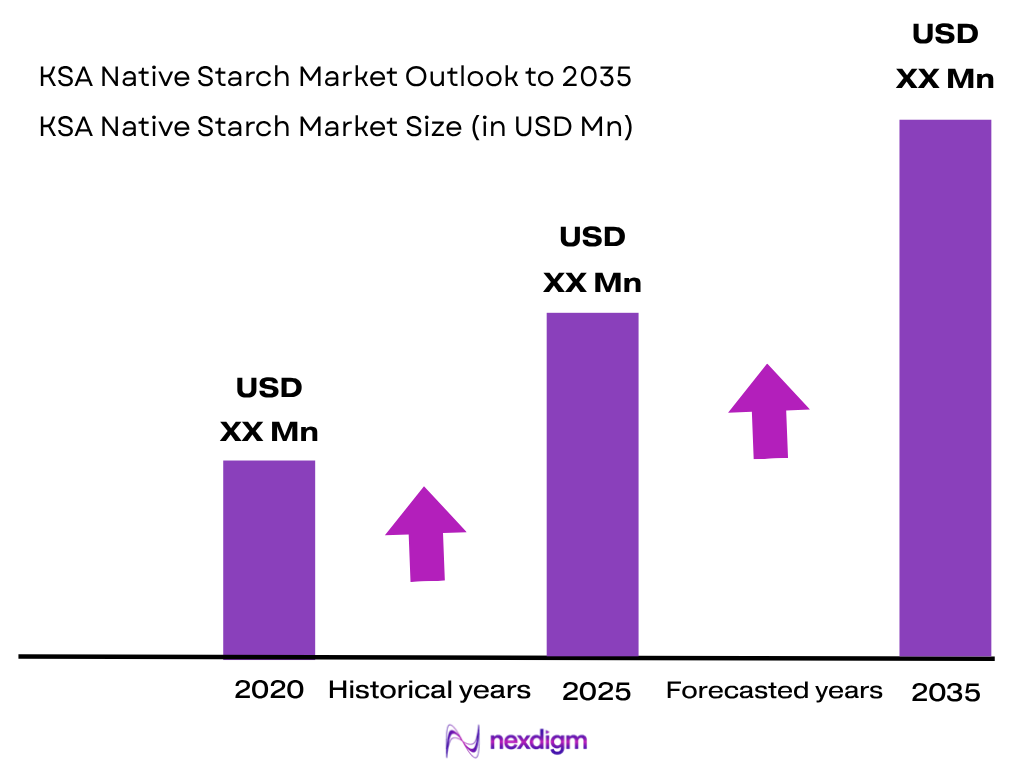
The KSA Native Starch Market is valued at USD ~ billion in 2024 and is expected to grow at a CAGR of XX% during 2026-2035. The market growth is supported by increasing demand for starch-based ingredients across food processing, bakery, confectionery, dairy, processed meat, and industrial applications. Saudi Arabia’s expanding food manufacturing ecosystem, supported by economic diversification initiatives, has increased the requirement for functional ingredients such as native starch. The market remains dependent on imported starch varieties including corn, wheat, and tapioca starch due to limited domestic agricultural starch production capacity.
The growth of the KSA Native Starch Market is closely linked with increasing processed food consumption, expansion of domestic food production facilities, and rising demand for clean-label ingredients. According to Saudi Arabia’s food industry development initiatives, the Kingdom has been focusing on improving local food manufacturing capabilities and reducing dependence on imported finished food products. Native starch is increasingly preferred due to its natural origin, compatibility with halal food production, and multifunctional properties including thickening, binding, stabilization, and texture enhancement.
Market Segmentation
By Raw Material Type
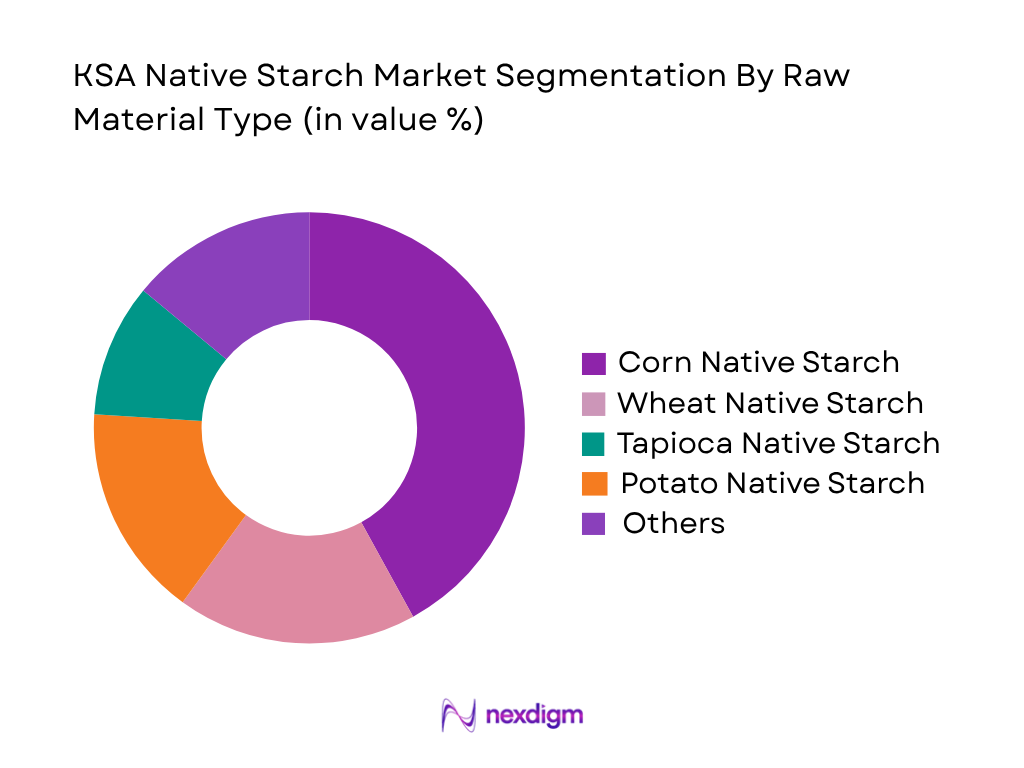
The KSA Native Starch Market is segmented by raw material type into corn native starch, wheat native starch, potato native starch, tapioca native starch, rice native starch, and specialty native starches. Corn native starch represents the dominant segment in the KSA Native Starch Market due to its widespread industrial usage, availability through international supply networks, and cost advantages compared with other starch sources. Corn starch is extensively used across food processing applications such as sauces, bakery products, confectionery, processed foods, and beverages due to its strong thickening and stabilizing properties. The availability of established global suppliers and import channels has strengthened corn starch adoption in Saudi Arabia. Wheat and tapioca starch continue to gain demand due to their application-specific characteristics in bakery, gluten-free products, and specialty food formulations.
By Application Type
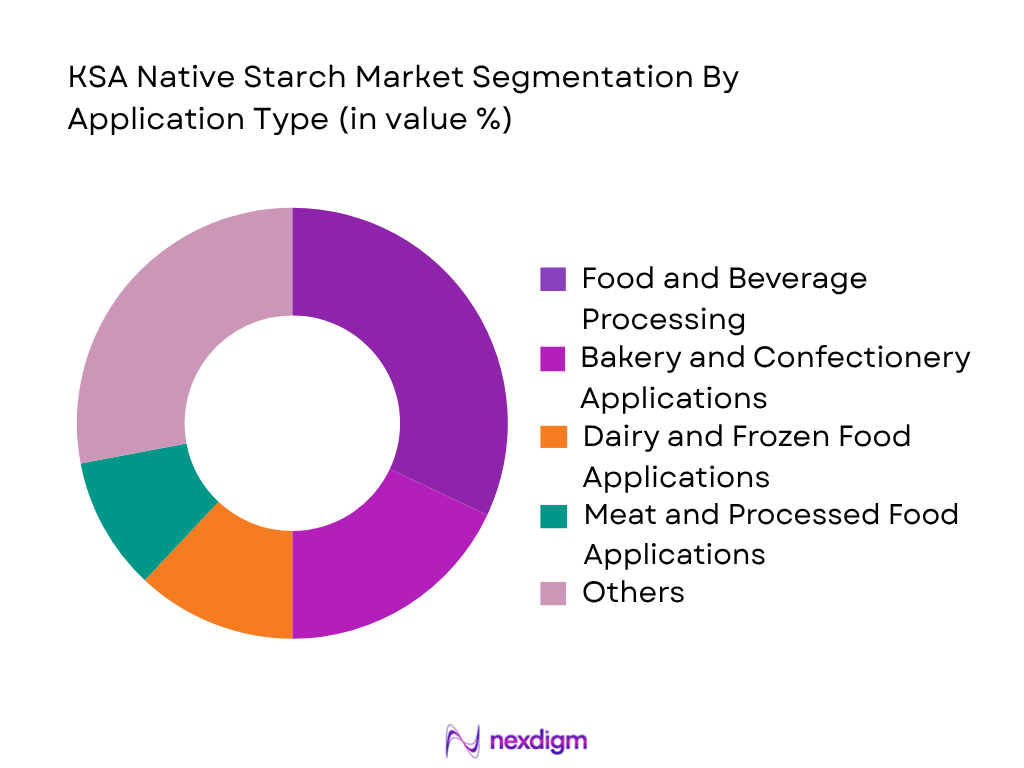
The KSA Native Starch Market is segmented by application type into food and beverage processing, bakery and confectionery applications, dairy and frozen food applications, meat and processed food applications, sauces and convenience foods, pharmaceutical and nutraceutical applications, paper and packaging applications, textile and industrial applications, and animal feed applications. Food and beverage processing represents the leading application segment due to increasing investment in food manufacturing facilities, rising demand for processed food products, and growing utilization of natural functional ingredients. Native starch is widely used as a thickener, stabilizer, binder, and texture enhancer in processed foods, beverages, and convenience products. The expansion of bakery, dairy, and ready-to-eat food production has increased starch consumption across the Kingdom. Additionally, demand from food manufacturers seeking clean-label ingredients continues to support the application growth of native starch.
Competitive Landscape
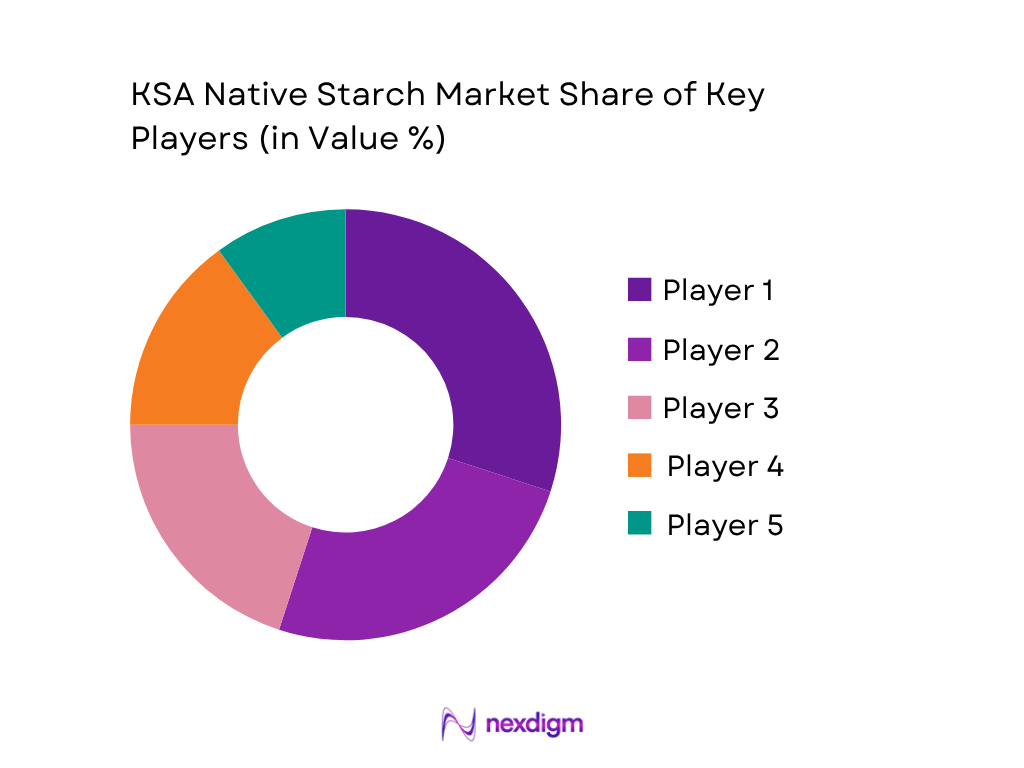
The KSA Native Starch Market is characterized by the presence of global starch manufacturers, ingredient suppliers, and regional distributors supplying food, beverage, pharmaceutical, and industrial users. The competitive environment is influenced by raw material sourcing capabilities, international supply chain networks, processing technologies, product portfolio breadth, and ability to provide customized starch solutions. Major players compete through expansion of food ingredient portfolios, development of specialty starch products, halal certification capabilities, and strong distribution partnerships across Saudi Arabia. Global companies with established starch processing capabilities maintain a strong presence through imports and regional supply agreements.
| Company | Establishment Year | Headquarters | Key Product Portfolio | Raw Material Expertise | Application Coverage | Processing Capability | Distribution Network | Certification Coverage |
| Ingredion Incorporated | 1906 | Westchester, USA | ~ | ~ | ~ | ~ | ~ | ~ |
| Cargill Incorporated | 1865 | Minnesota, USA | ~ | ~ | ~ | ~ | ~ | ~ |
| Archer Daniels Midland Company (ADM) | 1902 | Illinois, USA | ~ | ~ | ~ | ~ | ~ | ~ |
| Tate & Lyle PLC | 1921 | London, UK | ~ | ~ | ~ | ~ | ~ | ~ |
| Roquette Frères | 1933 | Lestrem, France | ~ | ~ | ~ | ~ | ~ | ~ |
KSA Native Starch Market Analysis
Growth Drivers
Expansion of Processed Food Manufacturing and Demand for Functional Starch Ingredients
The expansion of processed food manufacturing continues to support native starch consumption as food producers increasingly require natural texturizers, binders, and stabilizers across bakery, dairy, confectionery, sauces, and convenience food categories. The United States processed food industry benefits from a large-scale agricultural ecosystem, with the U.S. Department of Agriculture reporting that the country produced approximately 15.1 billion bushels of corn during the latest crop cycle, providing a significant raw material base for corn starch processing. The World Bank reported that the United States economy recorded a GDP value exceeding USD 29 trillion, supporting consumer spending and food manufacturing activity. Native starch demand is further supported by increasing production of packaged foods, where manufacturers use starch-based ingredients to improve viscosity, moisture retention, and product consistency. The U.S. Census Bureau reported that food manufacturing remains one of the largest manufacturing segments in the country, supported by thousands of processing facilities across meat, dairy, bakery, and beverage categories. The availability of domestic agricultural inputs, advanced starch extraction infrastructure, and continuous growth of food processing operations strengthens the role of native starch as a key ingredient in industrial food applications. Additionally, the expansion of ready-to-eat meals, frozen food products, and convenience-based consumption patterns is encouraging manufacturers to increase their dependence on starch-based functional ingredients. Growing investment in food processing automation and formulation improvements is also creating additional opportunities for native starch suppliers to serve large-scale food manufacturers.
Increasing Adoption of Clean Label and Plant-Based Food Ingredients
The shift toward clean label and plant-derived ingredients is increasing demand for native starch products across food and beverage applications. The movement toward naturally sourced ingredients has encouraged food producers to replace artificial additives with starch-based alternatives that provide functional benefits while maintaining simpler ingredient declarations. The U.S. Food and Drug Administration continues to maintain regulatory frameworks supporting the use of food-grade starch ingredients, enabling manufacturers to incorporate native starch into a wide range of products including baked goods, dairy alternatives, sauces, and prepared foods. The USDA reported that organic food sales in the United States exceeded USD 60 billion, reflecting increasing consumer interest in naturally positioned food products. The U.S. Department of Agriculture also reported that plant-based agricultural production remains a major component of domestic farming activity, with crops such as corn, wheat, and potatoes serving as important feedstocks for starch processing. Increasing demand for gluten-free foods, plant-based alternatives, and minimally processed ingredients is encouraging food manufacturers to utilize native starch for texture improvement and formulation stability, supporting broader adoption across multiple end-use industries. Furthermore, food manufacturers are increasingly focusing on ingredient transparency, nutritional positioning, and sustainable sourcing practices, which is encouraging the adoption of naturally derived starch solutions. This trend is creating opportunities for native starch producers to develop specialized products for health-focused foods, functional beverages, and alternative protein formulations.
Market Challenges
Volatility in Agricultural Raw Material Supply and Crop Yield Conditions
The native starch market remains influenced by fluctuations in agricultural commodity availability, particularly for corn, wheat, potato, and tapioca-based starch production. Changes in weather conditions, input costs, and farming output can affect raw material availability and processing efficiency. The U.S. Department of Agriculture reported that U.S. corn production reached approximately 15.1 billion bushels, highlighting the large dependence of starch processors on agricultural output. However, crop production remains affected by seasonal variations, including drought conditions, changing precipitation patterns, and fluctuations in harvested acreage. The National Oceanic and Atmospheric Administration continues monitoring climate-related events affecting agricultural regions, creating uncertainty for commodity-based industries. Native starch producers require consistent quality and volume of agricultural inputs to maintain production schedules for food and industrial customers. Rising fertilizer requirements, transportation costs, and energy consumption in agricultural operations can also influence raw material economics. These supply-side factors create challenges for starch manufacturers in maintaining stable procurement strategies while meeting increasing demand from food processing, pharmaceutical, and industrial customers. Additionally, global agricultural trade conditions, inventory fluctuations, and supply chain disruptions can influence availability of imported starch sources such as tapioca. Producers must increasingly focus on supplier diversification, inventory management, and advanced procurement strategies to reduce exposure to raw material volatility.
Competition from Modified Starch and Alternative Functional Ingredients
Native starch manufacturers face competitive pressure from modified starches and alternative functional ingredients that provide enhanced performance characteristics in specialized applications. While native starch remains widely used due to its natural composition and broad availability, some food and industrial manufacturers prefer modified starch solutions for improved heat stability, freeze-thaw resistance, viscosity control, and processing performance. The U.S. food manufacturing sector continues investing in product innovation, with the Bureau of Economic Analysis reporting significant contributions from food manufacturing activities within the broader manufacturing economy. This innovation environment encourages companies to evaluate multiple ingredient solutions based on application requirements. Additionally, pharmaceutical, paper, and industrial users increasingly seek customized ingredient properties, creating demand for specialized alternatives. Regulatory requirements around food labeling, ingredient transparency, and consumer preferences for recognizable ingredients also influence formulation decisions. Native starch producers therefore face the challenge of improving functionality through processing innovation while maintaining the natural positioning of their products. Companies must invest in research and development to improve starch performance, expand specialty applications, and compete effectively with modified starch producers. The increasing availability of functional hydrocolloids, gums, and synthetic alternatives further intensifies competition in applications requiring advanced stability and performance characteristics.
Market Opportunities
Growth of Plant-Based Food Products and Alternative Protein Applications
The expansion of plant-based food categories creates opportunities for native starch suppliers by increasing demand for natural binding and texture-enhancing ingredients. Native starch is increasingly utilized in plant-based meat alternatives, dairy substitutes, and prepared foods to improve structure, mouthfeel, moisture retention, and product stability. The United States Department of Agriculture reported that the country maintains one of the largest agricultural production systems globally, with extensive cultivation of corn, wheat, and potato crops that provide feedstock availability for starch processing. The U.S. Food and Drug Administration continues supporting regulatory frameworks for food ingredient safety, enabling manufacturers to incorporate starch-based ingredients into innovative food formulations. Growth in plant-based product development is encouraging food manufacturers to explore starch solutions that provide functional performance while maintaining clean label positioning. Native starch suppliers can expand opportunities by developing application-focused products for plant-based burgers, dairy-free beverages, frozen foods, nutritional products, and meat substitutes. Increasing investment in sustainable food production and alternative protein manufacturing creates additional demand pathways for starch-based ingredients across the food processing ecosystem. Furthermore, food companies are increasing their focus on improving sensory characteristics of plant-based products, where starch plays an important role in achieving desired texture and consistency. This creates opportunities for native starch manufacturers to collaborate with food processors and develop customized starch formulations.
Development of Sustainable Bio-Based Industrial Applications
The increasing focus on sustainable materials is creating opportunities for native starch utilization beyond traditional food applications. Starch-based materials are being explored for biodegradable packaging, paper processing, adhesives, coatings, and other bio-based industrial applications as manufacturers seek alternatives to petroleum-derived materials. The World Bank reported continued global emphasis on sustainable development and resource efficiency, encouraging industries to adopt renewable raw materials and environmentally responsible production methods. In the United States, the Environmental Protection Agency continues promoting waste reduction and sustainable material management practices, supporting interest in bio-based solutions. Native starch derived from agricultural resources such as corn and potatoes provides renewable characteristics suitable for industrial formulations. Paper manufacturers utilize starch-based products for coating and strengthening applications, while packaging companies investigate starch-derived materials for environmentally focused solutions. The availability of domestic agricultural production supports the development of bio-based material supply chains. Increasing sustainability requirements from manufacturers and consumers provide native starch producers with opportunities to diversify beyond food applications and develop higher-value industrial starch solutions. Growing interest in biodegradable packaging, renewable adhesives, and sustainable manufacturing processes is expected to encourage further adoption of starch-based industrial materials. This diversification can help producers reduce dependence on food applications and expand their presence across industrial sectors.
Future Outlook
The KSA Native Starch Market is expected to witness continued expansion during the forecast period, supported by increasing food manufacturing activities, rising demand for clean-label ingredients, and growing adoption of starch-based solutions across multiple industries. The market outlook is influenced by Saudi Arabia’s food security initiatives, investment in domestic processing capabilities, and increasing demand for functional ingredients. Expansion of bakery, dairy, processed food, and pharmaceutical industries is expected to create additional opportunities for native starch suppliers. Increasing preference for natural and plant-based ingredients will further support market development.
The future growth of the KSA Native Starch Market will also be supported by advancements in starch processing technologies, development of specialty starch solutions, and increasing focus on sustainable ingredient sourcing. Manufacturers are expected to strengthen their regional presence through partnerships with distributors and food processing companies. Demand from industrial applications such as paper, packaging, and textile processing will continue to contribute to market diversification.
Major Companies
- Ingredion Incorporated
- Cargill Incorporated
- Archer Daniels Midland Company (ADM)
- Tate & Lyle PLC
- Roquette Frères
- Tereos
- Agrana Beteiligungs-AG
- Emsland Group
- Avebe
- Royal Cosun
- Kerry Group
- Batory Foods
- MGP Ingredients
- Amilina
- National Starch Food Innovation
Key Target Audience
- Food and beverage manufacturers
- Bakery and confectionery manufacturers
- Dairy processing companies
- Pharmaceutical and nutraceutical manufacturers
- Paper and packaging manufacturers
- Industrial ingredient distributors
- Investments and venture capitalist firms (Saudi Venture Capital Company, Public Investment Fund)
- Government and regulatory bodies (Saudi Food and Drug Authority, Ministry of Environment Water and Agriculture, Saudi Standards Metrology and Quality Organization)
Research Methodology
Step 1: Identification of Key Variables
The initial phase involves developing a comprehensive ecosystem map covering raw material suppliers, starch processors, importers, distributors, food manufacturers, and industrial users operating within the KSA Native Starch Market. Secondary research is conducted to identify important market variables including raw material availability, application demand, import dependency, processing capabilities, and end-use industry requirements.
Step 2: Market Analysis and Construction
This stage involves analyzing historical market trends related to native starch consumption, application penetration, import patterns, and industry demand. Supply-side and demand-side assessments are conducted to evaluate market dynamics across food processing, bakery, pharmaceutical, and industrial sectors. Data validation is performed through industry-level analysis and market triangulation.
Step 3: Hypothesis Validation and Expert Consultation
Market assumptions are validated through discussions with industry participants including ingredient suppliers, distributors, food manufacturers, and starch users. These consultations provide insights into procurement patterns, application trends, product preferences, and competitive positioning within the KSA Native Starch Market.
Step 4: Research Synthesis and Final Output
The final stage combines quantitative and qualitative findings to develop a comprehensive market assessment. Information collected from manufacturers, distributors, and end-use industries is analyzed to validate market estimates, identify growth opportunities, and provide strategic insights for stakeholders operating in the KSA Native Starch Market.

- Executive Summary
- Research Methodology (Market Definition and Scope, KSA Native Starch Market Classification, Corn Native Starch Demand Assessment, Wheat Native Starch Consumption Analysis, Potato Native Starch Supply Evaluation, Tapioca Native Starch Import Assessment, Rice Native Starch Application Analysis, Native Starch Production and Processing Capacity Mapping, Food Processing Industry Demand Assessment, Bakery and Confectionery Starch Requirement Analysis, Dairy and Frozen Food Starch Utilization Assessment, Meat Processing and Convenience Food Starch Demand Evaluation, Pharmaceutical and Nutraceutical Starch Application Assessment, Paper and Packaging Industry Starch Consumption Analysis, Textile and Industrial Starch Application Assessment, Import Dependency and Raw Material Availability Analysis)

- Definition and Scope
- KSA Native Starch Industry Evolution and Development of Starch Processing and Food Ingredient Infrastructure
- Corn Native Starch, Wheat Native Starch, Potato Native Starch, Tapioca Native Starch, Rice Native Starch, Specialty Native Starch Varieties
- KSA Native Starch Value Chain Analysis
- KSA Native Starch Supply Chain Analysis
- Agricultural Raw Material Suppliers, Importers and Traders, Starch Processors, Food Ingredient Manufacturers, Industrial Users, Distributors, Food Processing Companies, End-Use Industries
- Native Starch Integration Across Bakery Products, Dairy Applications, Processed Foods, Sauces and Dressings, Confectionery Products, Meat Processing, Pharmaceutical Manufacturing, Paper Production, Textile Processing, Industrial Applications

- Growth Drivers (Expansion of Food Processing Industry, Growth of Bakery and Confectionery Manufacturing, Increasing Consumption of Processed Foods, Rising Demand for Clean Label Ingredients, Growth of Dairy and Frozen Food Production, Expansion of Pharmaceutical Manufacturing, Increasing Industrial Applications of Bio-Based Ingredients, Development of Food Manufacturing Infrastructure under Vision 2030)
- Market Challenges (High Dependence on Imported Raw Materials, Limited Domestic Starch Production Capacity, Agricultural Resource Constraints, Fluctuation in Global Commodity Prices, Supply Chain Disruptions, Logistics and Import Dependency Challenges, Competition from Modified Starch Alternatives, Regulatory Compliance Requirements)
Market Opportunities (Growth of Food Manufacturing Investments, Expansion of Local Ingredient Processing Facilities, Increasing Demand for Natural Food Additives, Growth of Plant-Based Food Products, Expansion of Halal Food Processing Applications, Sustainable Bio-Based Industrial Material Development, Specialty Native Starch Product Innovation, Increasing Regional Export Opportunities)
Market Trends (Clean Label Ingredient Adoption, Natural Starch Preference, Growth of Halal Certified Ingredients, Non-GMO Starch Demand, Premium Food Ingredient Development, Sustainable Ingredient Sourcing, Advanced Starch Processing Technologies, Plant-Based Food Application Growth, Functional Native Starch Innovation)
Regulatory and Standards Landscape (Saudi Food and Drug Authority Food Ingredient Regulations, Saudi Standards Metrology and Quality Organization Standards, Halal Food Certification Requirements, Food Safety Management System Requirements, Imported Food Product Regulations, Packaging and Labeling Standards, Industrial Ingredient Quality Standards) - SWOT Analysis
- Porter’s Five Forces Analysis
- PESTLE Analysis
- Stakeholder Ecosystem
- Competition Ecosystem

- By Market Value (2020-2025)
- By Native Starch Consumption Volume (2020-2025)
- By Native Starch Import Volume (2020-2025)
- By Corn Native Starch Consumption Volume (2020-2025)
- By Wheat Native Starch Consumption Volume (2020-2025)
- By Tapioca Native Starch Import Volume (2020-2025)

- By Raw Material Type (In Value %)
Corn Native Starch
Wheat Native Starch
Potato Native Starch
Tapioca Native Starch
Rice Native Starch
Other Specialty Native Starches - By Application Type (In Value %)
Food and Beverage Processing
Bakery and Confectionery Applications
Dairy and Frozen Food Applications
Meat and Processed Food Applications
Sauces, Dressings and Convenience Foods
Pharmaceutical and Nutraceutical Applications
Paper and Packaging Applications
Textile and Industrial Applications
Animal Feed Applications - By Functionality Type (In Value %)
Thickening Starch
Binding Starch
Gelling Starch
Stabilizing Starch
Texture Enhancement Starch
Moisture Retention Starch
Film Forming Starch - By End-Use Industry (In Value %)
Food Manufacturing Industry
Beverage Industry
Bakery Industry
Confectionery Industry
Dairy Processing Industry
Pharmaceutical Industry
Nutraceutical Industry
Paper Manufacturing Industry
Textile Industry
Chemical and Industrial Processing Industry - By Distribution Channel (In Value %)
Direct Import and Manufacturer Supply
Food Ingredient Distributors
Industrial Ingredient Distributors
Wholesale Distribution Channels
Specialty Ingredient Suppliers
Online Ingredient Platforms
Contract Manufacturing Supply Networks - By Region (In Value %)
Riyadh Region
Makkah Region
Eastern Province
Madinah Region
Asir Region
Qassim Region

- Market Share of Major Players (By KSA Revenue, Native Starch Import Volume, Corn Starch Sales Volume, Wheat Starch Sales Volume, Food Application Exposure, Industrial Application Exposure, Manufacturing and Processing Capacity, Import Distribution Network, Product Portfolio Breadth, Customer Industry Coverage, Certification Coverage, Regional Supply Capability)
- Cross Comparison Parameters (Native Starch Revenue, Raw Material Processing Capability Across Corn-Wheat-Potato-Tapioca, Starch Production and Processing Capacity, Food Application Portfolio Breadth, Industrial Application Capability, Halal and Food Safety Certification Coverage, Distribution Network Reach, Specialty Native Starch Development Capability)
- SWOT Analysis of Major Players
- Competitive Positioning Matrix
- Native Starch Product Portfolio and Application Benchmarking
- Starch Extraction, Refining and Processing Technology Assessment
- Detailed Profiles of Major Companies
Ingredion Incorporated
Cargill Incorporated
Archer Daniels Midland Company (ADM)
Tate & Lyle PLC
Roquette Frères
Tereos
Agrana Beteiligungs-AG
Emsland Group
Avebe
Royal Cosun
Kerry Group
Batory Foods
MGP Ingredients
Amilina
National Starch Food Innovation

- Food Manufacturer Native Starch Procurement Assessment
- Bakery Product Manufacturer Ingredient Requirement Analysis
- Confectionery Manufacturer Starch Application Assessment
- Dairy Processing Industry Texture Ingredient Analysis
- Meat Processing Industry Binding Ingredient Assessment
- Pharmaceutical Manufacturer Excipient Requirement Analysis
- Nutraceutical Industry Starch Application Assessment
- Paper Manufacturing Industry Starch Consumption Analysis
- Textile Industry Starch Application Assessment
- Industrial Manufacturer Bio-Based Ingredient Assessment
- Foodservice Ingredient Procurement Assessment
- Ingredient Distributor Inventory and Procurement Assessment

- By Market Value (2026-2035)
- By Native Starch Consumption Volume (2026-2035)
- By Native Starch Import Volume (2026-2035)
- By Corn Native Starch Consumption Volume (2026-2035)
- By Wheat Native Starch Consumption Volume (2026-2035)
- By Tapioca Native Starch Import Volume (2026-2035)


 Request a Sample
 Ask for Customization
 Get a Quote
 Enquire Now