
 Download PDF
Market Overview
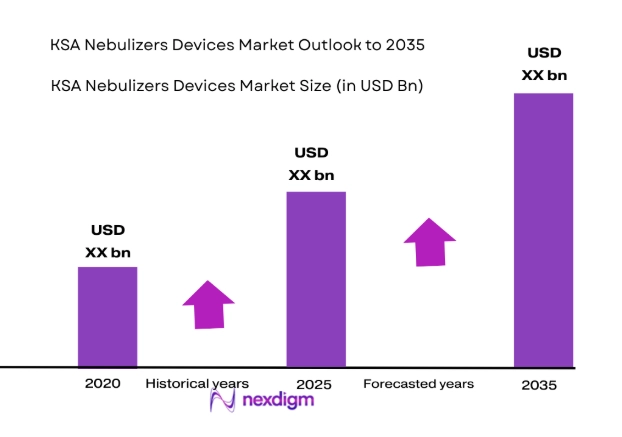
The KSA nebulizers devices market is valued at USD ~ million, with substantial growth driven by the increasing prevalence of respiratory diseases and the rising demand for home healthcare solutions. Advances in technology, such as the development of portable and battery-powered devices, are further fueling market expansion. The Saudi healthcare sector’s growing investment in medical devices and infrastructure also contributes significantly to market growth. With rising awareness and government initiatives, the demand for nebulizers is expected to continue its upward trajectory.
The major cities in Saudi Arabia, including Riyadh, Jeddah, and Dammam, dominate the nebulizers market. Riyadh, as the capital and largest city, leads the demand due to its established healthcare infrastructure and the concentration of hospitals and clinics. Jeddah, as a major port city, is another key player, while Dammam benefits from the growing healthcare sector and its strategic location. The dominance of these cities is supported by their advanced medical facilities, government initiatives for healthcare improvement, and increasing awareness of respiratory diseases.
Market Segmentation
By Product Type
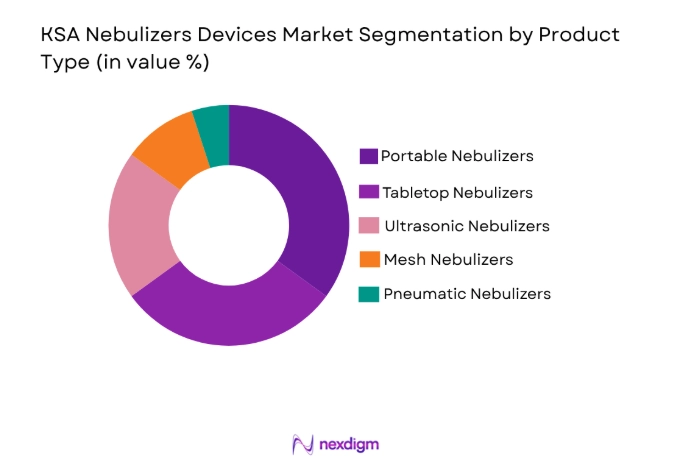
The KSA nebulizers devices market is segmented by product type into tabletop nebulizers, portable nebulizers, ultrasonic nebulizers, mesh nebulizers, and pneumatic nebulizers. Among these, portable nebulizers have the largest market share due to increasing demand for user-friendly, compact devices that cater to homecare needs. The rise in chronic respiratory conditions such as asthma and COPD, along with the preference for portable solutions, has contributed to the dominance of portable nebulizers. Additionally, these devices offer the advantage of flexibility and ease of use, making them highly popular among consumers looking for effective and convenient treatments.
By Platform Type
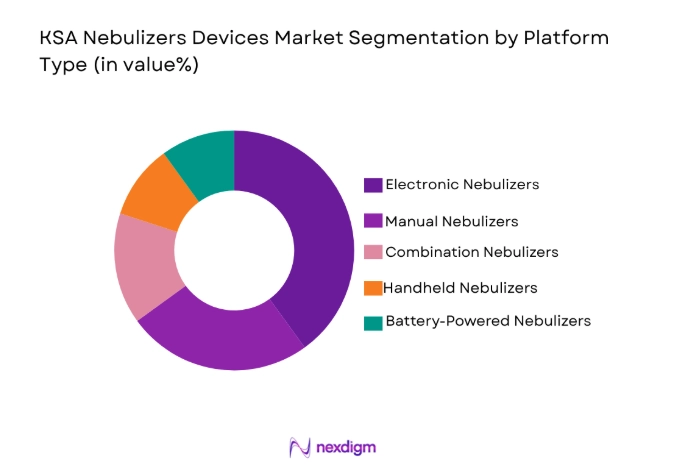
The market is segmented by platform type into electronic nebulizers, manual nebulizers, combination nebulizers, handheld nebulizers, and battery-powered nebulizers. Electronic nebulizers dominate the market due to their efficiency and ease of use, particularly for patients with respiratory disorders requiring regular treatments. Electronic nebulizers provide more consistent and accurate mist output, which ensures effective medication delivery. As the demand for high-quality and reliable nebulization devices increases, electronic nebulizers remain the preferred choice for both healthcare providers and patients seeking effective treatment options.
Competitive Landscape
The competitive landscape of the KSA nebulizers devices market is characterized by the presence of established multinational medical device manufacturers and specialized respiratory care firms. Market consolidation is evident as larger players leverage broader product portfolios, distribution networks, and after‑sales support to secure preference among hospitals, clinics, and homecare providers. Strategic collaborations with local distributors and compliance with Saudi regulatory standards further reinforce competitive positioning. Innovation in portable and high‑efficiency nebulizer technology remains a key differentiator influencing adoption.
| Company Name | Establishment Year | Headquarters | Technology Focus | Market Reach | Key Products | Revenue (Approx) | Regulatory Approvals |
| Philips Healthcare | 1891 | Netherlands | ~ | ~ | ~ | ~ | ~ |
| Omron Healthcare | 1933 | Japan | ~ | ~ | ~ | ~ | ~ |
| GE Healthcare | 1892 | USA | ~ | ~ | ~ | ~ | ~ |
| Drive DeVilbiss Healthcare | 1881 | USA | ~ | ~ | ~ | ~ | ~ |
| Vyaire Medical | 2012 | USA | ~ | ~ | ~ | ~ | ~ |
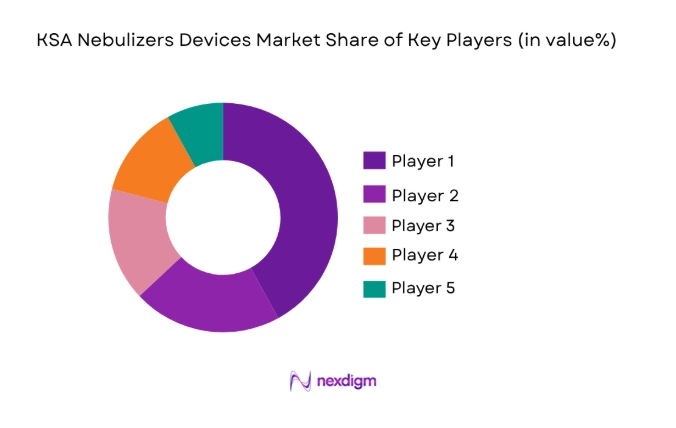
KSA Nebulizers Devices Market Analysis
Growth Drivers
Increasing Prevalence of Respiratory Disorders
The growing incidence of respiratory conditions such as asthma, chronic obstructive pulmonary disease (COPD), and bronchitis in Saudi Arabia is a major driver of the nebulizers market. Respiratory diseases are a significant public health concern, with a large proportion of the population, particularly the elderly and those with pre-existing conditions, affected. As these diseases become more prevalent, the demand for effective and accessible treatment options like nebulizers is rising. Nebulizers offer a user-friendly and efficient means of delivering respiratory medications, particularly for home treatment. The increased number of patients with respiratory illnesses is driving healthcare providers and patients alike to adopt nebulizers as the preferred treatment option. Additionally, the government’s health initiatives focused on managing respiratory conditions are encouraging the use of nebulizers. These efforts are vital in reducing the burden of respiratory diseases and pushing forward the market’s growth by ensuring that more people gain access to these treatment devices.
Technological Advancements in Nebulizers
Technological innovations in nebulizer devices are another major growth driver in the KSA market. The shift from traditional nebulizers to advanced systems, including portable, battery-powered, and ultrasonic nebulizers, has revolutionized the market. These modern nebulizers offer enhanced functionality, greater efficiency in treatment, and improved user experience. The portability and compactness of the devices make them ideal for homecare settings, increasing their appeal among patients who seek convenience and ease of use. Additionally, these advanced nebulizers are equipped with features that ensure precise medication delivery, reduce treatment times, and optimize the overall therapeutic experience. As new technologies emerge, the adoption of nebulizers in both clinical and home healthcare environments is expected to grow rapidly. The increasing awareness of these advanced, high-tech devices and their benefits is contributing significantly to the market’s expansion, making it an attractive segment for consumers and healthcare providers alike.
Market Challenges
High Cost of Advanced Nebulizers
One of the significant challenges faced by the KSA nebulizers devices market is the high cost of advanced nebulizer systems. While advancements in technology have improved the quality of nebulizers, their prices remain higher than traditional models. This pricing disparity makes it difficult for a large portion of the population, especially those in rural areas, to afford these high-end devices. Although insurance coverage for medical devices exists, it does not always fully cover the cost of advanced nebulizers, creating a financial barrier for many potential users. The high cost of these devices could restrict the growth of the nebulizers market, particularly among the lower-income segments of the population. In a healthcare system focused on making advanced medical technologies accessible to a larger part of the population, overcoming the cost challenge remains a critical factor in expanding the market for nebulizers.
Regulatory Barriers in the Healthcare Sector
Another challenge that could hinder market growth is the complex and time-consuming regulatory process for medical devices in Saudi Arabia. The Saudi Food and Drug Authority (SFDA) imposes stringent regulatory requirements that medical device manufacturers must comply with to ensure safety and efficacy. The approval process often includes extensive testing, certification, and adherence to national health standards, which can take a considerable amount of time. For manufacturers, this results in delayed market entry for innovative products, which could prevent them from capitalizing on emerging trends or addressing the growing demand for advanced nebulizers. The high costs associated with the regulatory process further raise the barriers for new entrants, slowing market growth and making it harder for consumers to access newer, more effective nebulizer models.
Opportunities
Expansion of Home Healthcare Services
One of the most significant opportunities for the KSA nebulizers devices market lies in the growing demand for home healthcare services. The increasing preference for remote patient care, especially in the aftermath of the pandemic, has shifted the focus towards at-home treatments. As more patients seek alternatives to traditional hospital visits, portable and easy-to-use nebulizers have gained significant traction. The Saudi government’s efforts to support home healthcare services are creating a favorable environment for the market to expand. These initiatives aim to reduce the burden on hospital systems and provide patients with cost-effective, comfortable, and convenient treatment options at home. Furthermore, home healthcare services are generally more affordable than in-hospital care, making nebulizers an attractive treatment choice for patients with chronic respiratory conditions. As homecare becomes more mainstream, the demand for nebulizers, which are a crucial component of at-home respiratory care, is expected to continue to rise.
Government Initiatives for Healthcare Improvements
The Saudi government has been heavily investing in healthcare infrastructure to enhance accessibility and the overall quality of medical services. This initiative presents a significant opportunity for the nebulizers market, as the government focuses on improving healthcare delivery, particularly for chronic respiratory conditions like asthma and COPD. With increased funding for healthcare institutions and initiatives aimed at modernizing the sector, the availability and distribution of medical devices, including nebulizers, are expected to grow. These government efforts are likely to lead to increased adoption of nebulizers across hospitals, clinics, and homecare settings. Furthermore, the government’s long-term vision for healthcare improvement ensures that nebulizers will become more readily available to a larger portion of the population, further driving the market’s growth. The government’s continued commitment to enhancing healthcare services provides a robust foundation for the expansion of the nebulizers market in Saudi Arabia.
Future Outlook
The future outlook of the KSA nebulizers devices market looks promising, with continued technological advancements, government support, and growing demand for home healthcare. The market is expected to expand significantly, driven by innovations in portable and battery-powered nebulizers, which are expected to see widespread adoption. Additionally, the increasing prevalence of respiratory disorders and aging population will continue to fuel demand. Regulations and healthcare infrastructure improvements will also play a role in supporting market growth over the next five years.
Major Players
- Philips Healthcare
- Omron Healthcare
- GE Healthcare
- AeroLife
- CareFusion Corporation
- Drive DeVilbiss Healthcare
- BD (Becton Dickinson)
- Pari Pharma
- Invacare Corporation
- Sunovion Pharmaceuticals
- Vyaire Medical
- Medtronic
- Roche Diagnostics
- Medel S.p.A
- Hill-Rom Holdings
Key Target Audience
- Investments and venture capitalist firms
- Government and regulatory bodies
- Healthcare providers and hospitals
- Medical device distributors
- Home healthcare providers
- Pharmaceutical companies
- Nebulizer manufacturers
Research Methodology
Step 1: Identification of Key Variables
Key market variables are identified through industry analysis, market research, and historical data review.
Step 2: Market Analysis and Construction
Comprehensive market analysis is performed based on data from primary and secondary sources, building a structured market model.
Step 3: Hypothesis Validation and Expert Consultation
Experts from the medical devices sector and key industry stakeholders are consulted to validate hypotheses and refine market forecasts.
Step 4: Research Synthesis and Final Output
Final output is synthesized from the analysis, expert feedback, and validated data to generate a comprehensive market report.

- Executive Summary
- Research Methodology (Definitions, Scope, Industry Assumptions, Market Sizing Approach, Primary & Secondary Research Framework, Data Collection & Verification Protocol, Analytic Models & Forecast Methodology, Limitations & Research Validity Checks)

- Market Definition and Scope
- Value Chain & Stakeholder Ecosystem
- Regulatory / Certification Landscape
- Sector Dynamics Affecting Demand
- Strategic Initiatives & Infrastructure Growth

- Growth Drivers
Increasing Prevalence of Respiratory Disorders
Technological Advancements in Nebulizers
Rising Awareness about Home Healthcare - Market Challenges
High Cost of Advanced Nebulizers
Regulatory Barriers in the Healthcare Sector
Lack of Skilled Personnel for Operation - Market Opportunities
Expansion of Home Healthcare Services
Government Initiatives for Healthcare Improvements
Growing Focus on Respiratory Health - Trends
Shift Towards Portable and Compact Devices
Increasing Demand for Battery-Powered Systems - Government Regulations
SWOT Analysis
Porter’s Five Forces

- By Market Value, 2020-2025
- By Installed Units, 2020-2025
- By Average System Price, 2020-2025
- By System Complexity Tier, 2020-2025

- By System Type (In Value%)
Tabletop Nebulizers
Portable Nebulizers
Ultrasonic Nebulizers
Mesh Nebulizers
Pneumatic Nebulizers - By Platform Type (In Value%)
Electronic Nebulizers
Manual Nebulizers
Combination Nebulizers
Handheld Nebulizers
Battery-Powered Nebulizers - By Fitment Type (In Value%)
Personal Fitment
Hospital Fitment
Home Care Fitment
Clinical Fitment - By End User Segment (In Value%)
Hospitals
Home Care
Clinics

- Market Share Analysis
- Cross Comparison Parameters (Price, Technology, Product Range, Brand Loyalty, Distribution Network, Customer Support, Market Reach)
- SWOT Analysis of Key Competitors
Pricing & Procurement Analysis - Key Players
Philips Healthcare
Omron Healthcare
GE Healthcare
AeroLife
CareFusion Corporation
Drive DeVilbiss Healthcare
BD (Becton Dickinson)
Pari Pharma
Invacare Corporation
Sunovion Pharmaceuticals
Vyaire Medical
Medtronic
Roche Diagnostics
Medel S.p.A
Hill-Rom Holdings

- Hospitals’ Growing Demand for High-Efficiency Nebulizers
- Home Care Segment’s Shift Towards Portable Devices
- Clinics’ Preference for Affordable Nebulizers
- Increasing Demand from Elderly Population

- Forecast Market Value, 2026-2035
- Forecast Installed Units, 2026-2035
- Price Forecast by System Tier, 2026-2035
- Future Demand by Platform, 2026-2035


 Request a Sample
 Ask for Customization
 Get a Quote
 Enquire Now