
 Download PDF
 Download PDF
Market Overview
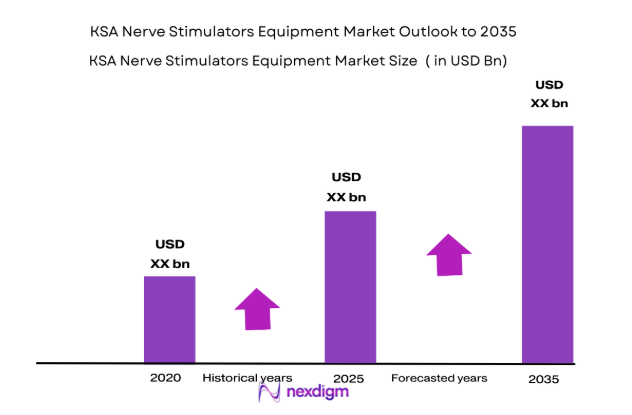
The KSA Nerve Stimulators Equipment market has experienced substantial growth due to increased demand for advanced healthcare technologies, coupled with the rising prevalence of neurological disorders such as chronic pain, epilepsy, and motor function disabilities. The market size for nerve stimulators in Saudi Arabia is expected to reach USD ~ million based on a recent historical assessment, driven by a surge in healthcare investments, technological advancements in neuromodulation, and the increasing adoption of non-invasive treatment options for pain management and rehabilitation.
The dominant cities and countries in the KSA Nerve Stimulators Equipment market include major metropolitan areas like Riyadh and Jeddah, driven by robust healthcare infrastructure and government initiatives supporting advanced medical technologies. Saudi Arabia’s growing focus on improving healthcare facilities, especially in terms of neurological and rehabilitation treatments, has led to increased market penetration in these regions. Additionally, the country’s ongoing healthcare sector reforms have enhanced the adoption of high-tech medical devices, particularly in urban settings where the demand for advanced treatment options is higher.
Market Segmentation
By Product Type
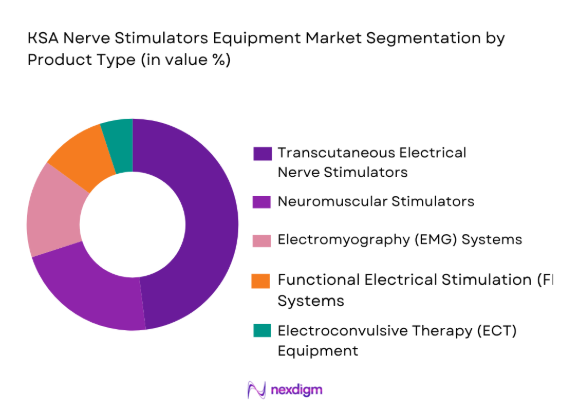
The KSA Nerve Stimulators Equipment market is segmented by product type into various sub-segments. Recently, the Transcutaneous Electrical Nerve Stimulators (TENS) segment has dominated the market share due to factors such as growing demand for non-invasive treatments, increased patient awareness, and the relatively lower cost of TENS devices. Moreover, TENS units have been gaining popularity in both healthcare settings and at-home care, as they offer significant pain management benefits with minimal side effects. Their ability to cater to a wide range of chronic pain conditions makes them a preferred choice among healthcare providers and patients alike, further driving their market dominance.
By End-User Segment
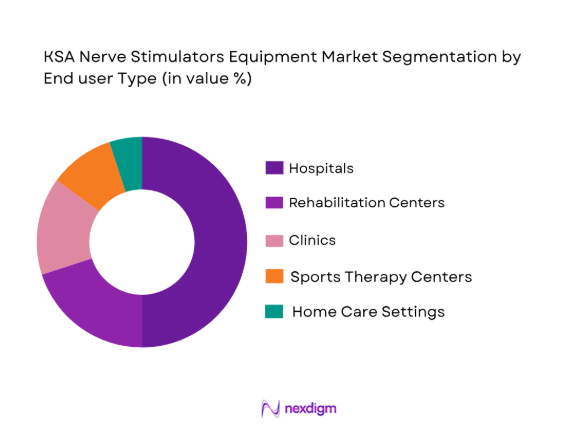
The KSA Nerve Stimulators Equipment market is segmented by end-user into hospitals, clinics, rehabilitation centers, sports therapy centers, and home care settings. The hospital segment has gained significant market share due to the increasing number of specialized neurological departments, growing healthcare investments, and the rising incidence of neurological disorders. Hospitals in Saudi Arabia are incorporating nerve stimulators to improve the quality of care for patients dealing with chronic pain, neurological disorders, and physical rehabilitation needs. Additionally, advancements in hospital-based treatment protocols for pain management and neuromodulation contribute to the dominance of this segment.
Competitive Landscape
The KSA Nerve Stimulators Equipment market is highly competitive, with several global and regional players consolidating their positions through strategic mergers, acquisitions, and product innovations. Major players influence the market with their advanced technological capabilities and expansive distribution networks. The competitive rivalry is also shaped by the continuous development of new, efficient, and cost-effective nerve stimulator technologies that cater to the diverse needs of patients and healthcare providers in Saudi Arabia.
| Company Name | Establishment Year | Headquarters | Technology Focus | Market Reach | Key Products | Revenue (USD Million) | Market-Specific Parameter |
| Medtronic | 1949 | Minneapolis, USA | ~ | ~ | ~ | ~ | ~ |
| Boston Scientific | 1979 | Marlborough, USA | ~ | ~ | ~ | ~ | ~ |
| Zynex, Inc. | 1996 | Englewood, USA | ~ | ~ | ~ | ~ | ~ |
| NeuroMetrix, Inc. | 1996 | Waltham, USA | ~ | ~ | ~ | ~ | ~ |
| Omron Healthcare | 1933 | Kyoto, Japan | ~ | ~ | ~ | ~ | ~ |
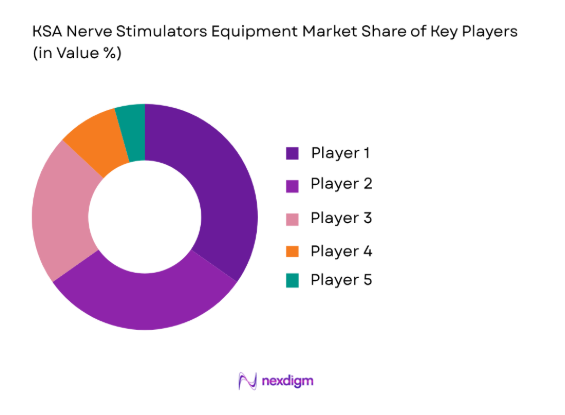
KSA Nerve Stimulators Equipment Market Analysis
Growth Drivers
Technological Advancements in Non-Invasive Neurological Devices
The continuous innovation in non-invasive neurological devices is a key growth driver for the KSA Nerve Stimulators Equipment market. The increasing demand for effective and safer treatment options has led to the widespread adoption of non-invasive therapies such as TENS and electroconvulsive therapy. These advancements are not only enhancing patient outcomes but also reducing recovery times, making these technologies more attractive to both healthcare providers and patients. Moreover, new technologies such as wireless TENS units and portable nerve stimulators have further fueled market demand. As more patients seek non-invasive treatments for chronic pain and neurological disorders, the market for nerve stimulators continues to grow.
Healthcare Infrastructure Development in Saudi Arabia
Saudi Arabia’s ongoing healthcare infrastructure development plays a significant role in the growth of the KSA Nerve Stimulators Equipment market. With increasing government investments in healthcare and the establishment of specialized medical centers, there is an elevated demand for advanced medical technologies such as nerve stimulators. The Saudi government’s Vision 2030 initiative, which aims to improve healthcare services and accessibility, has accelerated the adoption of advanced medical technologies across the country. The development of more specialized hospitals and rehabilitation centers has further boosted the market for nerve stimulators, making them a crucial part of modern healthcare treatment offerings.
Market Challenges
High Cost of Advanced Nerve Stimulator Equipment
One of the primary challenges hindering the growth of the KSA Nerve Stimulators Equipment market is the high cost associated with advanced nerve stimulator devices. While these devices offer significant therapeutic benefits, the cost of acquisition and maintenance can be prohibitive for many healthcare providers, particularly smaller clinics and rehabilitation centers. This challenge is exacerbated by the relatively high cost of specialized training for healthcare professionals to operate these devices. Although demand for advanced medical equipment is rising, the cost factor remains a barrier for wide-scale adoption, especially in the public healthcare sector where budgets are limited.
Regulatory Hurdles and Certification Delays
Regulatory challenges and delays in obtaining certifications for new medical devices present significant obstacles in the KSA Nerve Stimulators Equipment market. The Saudi Food and Drug Authority (SFDA) enforces stringent regulations to ensure the safety and efficacy of medical devices, which often leads to lengthy approval processes. Manufacturers seeking to enter the Saudi market must navigate these complex regulatory requirements, which can result in extended timeframes for product launches. Additionally, the lack of uniformity in regulatory processes for medical devices across the Gulf Cooperation Council (GCC) region further complicates market entry and expansion for international players.
Opportunities
Expansion of Homecare and Rehabilitation Markets
The increasing adoption of homecare treatments presents a major opportunity for the KSA Nerve Stimulators Equipment market. As more patients seek to manage their chronic pain and neurological conditions at home, the demand for portable and user-friendly nerve stimulators has grown. This trend is further supported by the Saudi government’s push to expand home healthcare services as part of its Vision 2030 initiative. The growth in the rehabilitation sector, particularly in home settings, offers a substantial opportunity for nerve stimulator manufacturers to cater to a wider customer base. Manufacturers that focus on developing affordable, easy-to-use devices will be well-positioned to capitalize on this growing market segment.
Growing Demand for Neurological Rehabilitation Devices
The KSA Nerve Stimulators Equipment market has significant growth potential driven by the increasing demand for neurological rehabilitation devices. Saudi Arabia’s aging population and the rising incidence of neurological disorders such as stroke, Parkinson’s disease, and multiple sclerosis are driving the need for advanced rehabilitation therapies. Nerve stimulators play a critical role in facilitating recovery by stimulating nerve activity and promoting motor function restoration. As healthcare systems in Saudi Arabia place a stronger emphasis on rehabilitation services, the demand for these devices is expected to rise. This growing focus on neurological rehabilitation offers manufacturers new avenues to expand their product offerings and market share.
Future Outlook
The future outlook for the KSA Nerve Stimulators Equipment market is promising, with expected continued growth driven by technological advancements, supportive government policies, and increasing demand for non-invasive treatments. Over the next five years, the market is poised to experience rapid expansion, especially as healthcare reforms and infrastructure developments further enhance the adoption of advanced medical devices. New innovations in portable and wireless nerve stimulators will drive greater patient accessibility and adoption. In addition, the regulatory environment in Saudi Arabia is expected to evolve, facilitating easier market entry for international players and stimulating competition, which will benefit the overall market.
Major Players
- Medtronic
- Boston Scientific
- Zynex, Inc.
- NeuroMetrix, Inc.
- Omron Healthcare
- ElectroCore
- STYMCO Technologies
- NueMedics
- H-Wave
- InnovativeNeurotronics
- NervoStim
- Therapeutics Inc.
- NeuroSigma
- DJO Global
- Neurolief
Key Target Audience
- Investments and venture capitalist firms
- Government and regulatory bodies
- Healthcare providers and hospitals
- Medical device distributors
- Neurological rehabilitationcenters
- Homecare service providers
- Pharmaceutical companies
- Insurance companies
Research Methodology
Step 1: Identification of Key Variables
In this step, critical factors influencing market growth, such as technological advancements, regulatory environment, and consumer demand, are identified and defined to establish the market scope.
Step 2: Market Analysis and Construction
This phase involves collecting data from credible sources, analyzing the market trends, and building a comprehensive model to estimate the market size, growth trajectory, and key market segments.
Step 3: Hypothesis Validation and Expert Consultation
Data collected is validated by consulting with industry experts, healthcare professionals, and key stakeholders to ensure the accuracy and relevance of the findings.
Step 4: Research Synthesis and Final Output
The final output synthesizes all research findings into a comprehensive market report, including actionable insights and future market forecasts.

- Executive Summary
- Research Methodology (Definitions, Scope, Industry Assumptions, Market Sizing Approach, Primary & Secondary Research Framework, Data Collection & Verification Protocol, Analytic Models & Forecast Methodology, Limitations & Research Validity Checks)

- Market Definition and Scope
- Value Chain & Stakeholder Ecosystem
- Regulatory / Certification Landscape
- Sector Dynamics Affecting Demand
- Strategic Initiatives & Infrastructure Growth

- Growth Drivers
Increasing prevalence of neurological disorders
Advancements in non-invasive treatment methods
Rising healthcare expenditure and medical infrastructure development - Market Challenges
High cost of advanced nerve stimulators
Regulatory hurdles and certification complexities
Lack of skilled professionals for advanced device operation - Market Opportunities
Emerging market demand for homecare devices
Technological advancements in wireless and portable devices
Government initiatives for expanding healthcare access - Trends
Shift towards non-invasive therapies
Increased adoption of wearable stimulators
Growing focus on personalized treatment solutions
Government Regulations
SWOT Analysis of Key Competitors
Porter’s Five Forces

- By Market Value, 2020-2025
- By Installed Units, 2020-2025
- By Average System Price, 2020-2025
- By System Complexity Tier, 2020-2025

- By System Type (In Value%)
Neuromuscular Stimulators
Transcutaneous Electrical Nerve Stimulators (TENS)
Electromyography (EMG) Systems
Functional Electrical Stimulation (FES) Systems
Electroconvulsive Therapy (ECT) Equipment - By Platform Type (In Value%)
Portable Devices
Stationary Systems
Wearable Stimulators
Wireless Platforms
Mobile Applications - By Fitment Type (In Value%)
Non-invasive Fitment
Invasive Fitment
Single-use Fitment
Multi-use Fitment
Customizable Fitment - By EndUser Segment (In Value%)
Hospitals
Clinics
Rehabilitation Centers
Sports Therapy Centers
Home Care Settings - By Procurement Channel (In Value%)
Direct Procurement from Manufacturers
Third-party Distributors
Online Platforms
B2B Procurement Networks
Medical Equipment Auctions

- Market Share Analysis
- CrossComparison Parameters (Price, Product Quality, Technological Innovation, Customer Service, Brand Reputation)
- SWOT Analysis of Key Competitors
- Pricing & Procurement Analysis
- Porter’s Five Forces
- Key Players
Medtronic
Boston Scientific
Zynex, Inc.
Abbott Laboratories
NeuroMetrix, Inc.
Omron Healthcare
ElectroCore
STYMCO Technologies
NueMedics
H-Wave
Innovative Neurotronics
NervoStim
Therapeutics Inc.
NeuroSigma
DJO Global

- Hospitals and healthcare institutions
- Physical rehabilitation centers
- Sports therapy and performance enhancement
- Homecare and outpatient care facilities

- Forecast Market Value, 2026-2035
- Forecast Installed Units, 2026-2035
- Price Forecast by System Tier, 2026-2035
- Future Demand by Platform, 2026-2035


 Request a Sample
 Ask for Customization
 Get a Quote
 Enquire Now