
 Download PDF
Market Overview
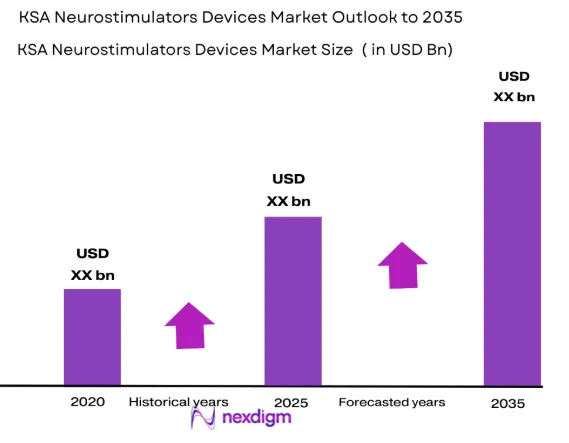
The KSA neurostimulators devices market demonstrates a steadily expanding footprint, supported by increasing investments in advanced neurological care and the rising burden of chronic pain and neurological disorders. Based on a recent historical assessment, the market size reached approximately USD ~ billion, driven by the growing adoption of implantable neurostimulation systems and expanding access to specialized healthcare infrastructure. Strong procurement activity from tertiary hospitals and government-backed healthcare programs continues to reinforce demand for technologically advanced therapeutic devices.
Riyadh and Jeddah remain the most dominant urban centers due to their concentration of advanced hospitals, skilled neurosurgeons, and access to cutting-edge medical technologies. These cities benefit from strong public healthcare investment and private sector participation, enabling early adoption of neurostimulation devices. Additionally, Dammam and the Eastern Province show increasing traction owing to expanding healthcare facilities and industrial workforce health needs, which contribute to higher diagnosis and treatment rates of neurological conditions.
Market Segmentation
By Product Type
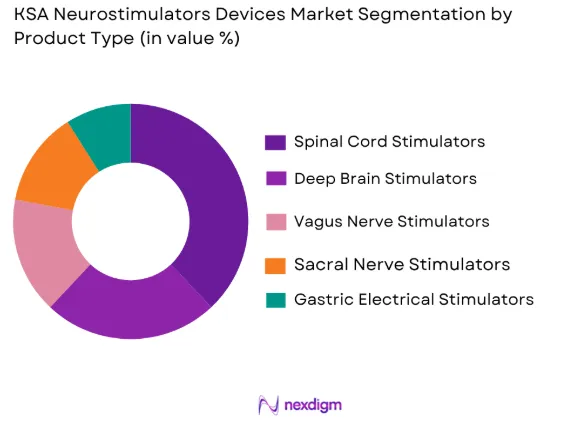
KSA Neurostimulators Devices market is segmented by product type into spinal cord stimulators, deep brain stimulators, vagus nerve stimulators, sacral nerve stimulators, and gastric electrical stimulators. Recently, spinal cord stimulators have a dominant market share due to factors such as their widespread use in chronic pain management, strong clinical acceptance, and availability across major hospitals. These devices benefit from established reimbursement pathways and increasing physician familiarity, while their adaptability across multiple pain indications ensures sustained demand within both public and private healthcare systems.
By End User Segment
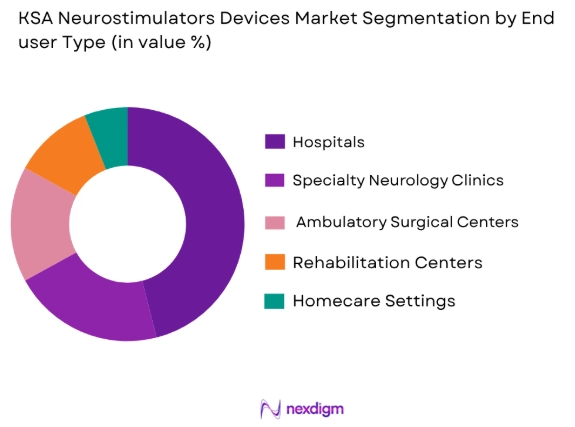
KSA Neurostimulators Devices market is segmented by end user into hospitals, ambulatory surgical centers, specialty neurology clinics, rehabilitation centers, and homecare settings. Recently, hospitals have a dominant market share due to factors such as access to advanced surgical infrastructure, availability of skilled professionals, and higher patient inflow for complex neurological procedures. Hospitals also benefit from government funding and centralized procurement systems, allowing them to acquire high-cost neurostimulation devices and deliver comprehensive post-operative care, further strengthening their leadership position in the market.
Competitive Landscape
The KSA neurostimulators devices market is moderately consolidated, with global medical device manufacturers holding significant influence due to their advanced product portfolios and strong distribution networks. Leading players leverage technological innovation, regulatory expertise, and partnerships with local distributors to maintain competitive positioning. Market entry barriers remain high due to stringent regulatory requirements and the need for clinical validation, reinforcing the dominance of established multinational companies.
| Company Name | Establishment Year | Headquarters | Technology Focus | Market Reach | Key Products | Revenue | Implant Technology Type |
| Medtronic plc | 1949 | Ireland | ~ | ~ | ~ | ~ | ~ |
| Abbott Laboratories | 1888 | USA | ~ | ~ | ~ | ~ | ~ |
| Boston Scientific | 1979 | USA | ~ | ~ | ~ | ~ | ~ |
| LivaNova PLC | 2015 | UK | ~ | ~ | ~ | ~ | ~ |
| Nevro Corp. | 2006 | USA | ~ | ~ | ~ | ~ | ~ |
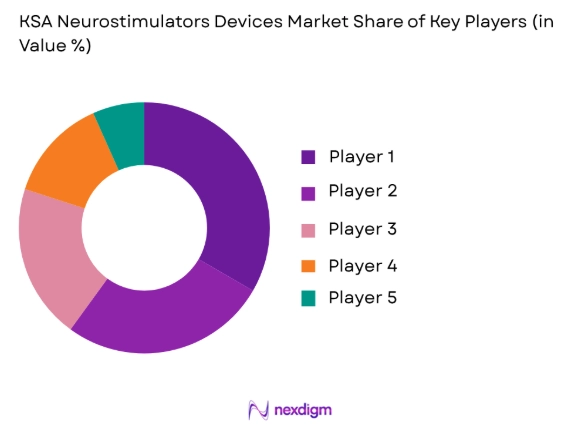
KSA Neurostimulators Devices Market Analysis
Growth Drivers
Rising Prevalence of Neurological Disorders and Chronic Pain Conditions
The increasing incidence of neurological disorders and chronic pain conditions is a primary driver for the expansion of the KSA neurostimulators devices market, as these devices offer effective long-term treatment alternatives where conventional therapies often fail. The growing aging population contributes significantly to the burden of diseases such as Parkinson’s disease, epilepsy, and chronic back pain, which require advanced neuromodulation therapies for effective management. Healthcare providers are increasingly adopting neurostimulators due to their proven clinical efficacy in improving patient quality of life and reducing dependency on pharmaceutical treatments. Chronic pain management, particularly for spinal conditions, has seen substantial growth, leading to higher demand for spinal cord stimulators across major healthcare institutions. Additionally, increasing awareness among patients and physicians regarding minimally invasive treatment options is encouraging the adoption of neurostimulation devices. The expansion of diagnostic capabilities in urban healthcare centers further supports early identification of neurological conditions, thereby increasing treatment volumes. Government healthcare reforms focused on non-communicable diseases are also contributing to the rising utilization of advanced medical devices. Furthermore, the economic burden of long-term medication use has encouraged healthcare providers to shift toward device-based therapeutic approaches. This shift is particularly evident in tertiary hospitals where advanced surgical capabilities are available. As a result, the sustained increase in neurological disorder prevalence continues to create strong demand momentum for neurostimulators across the Kingdom.
Expansion of Healthcare Infrastructure and Government Investments
The rapid expansion of healthcare infrastructure in Saudi Arabia plays a crucial role in driving the neurostimulators devices market, as new hospitals and specialized centers increase the accessibility of advanced treatments. Government initiatives under national healthcare transformation programs have significantly boosted investments in modern medical technologies, including neuromodulation devices. Public healthcare institutions are increasingly equipped with advanced surgical facilities, enabling the adoption of complex neurostimulation procedures. Additionally, private sector participation in healthcare is growing, leading to the establishment of high-end specialty clinics that cater to neurological conditions. These developments are supported by regulatory frameworks that encourage the import and local distribution of advanced medical devices. The presence of skilled healthcare professionals, including neurosurgeons and pain specialists, is also improving due to targeted training programs and international collaborations. Furthermore, the integration of digital health systems enhances patient management and device monitoring, improving treatment outcomes. Procurement processes are becoming more streamlined, allowing hospitals to acquire advanced devices efficiently. The increasing focus on patient-centric care models further promotes the adoption of minimally invasive technologies such as neurostimulators. As healthcare accessibility improves across urban and semi-urban regions, the demand for neuromodulation therapies continues to expand, reinforcing the growth trajectory of the market.
Market Challenges
High Cost of Neurostimulator Devices and Limited Reimbursement Coverage
The high cost associated with neurostimulator devices and their implantation procedures presents a significant challenge for market growth, particularly in regions where reimbursement frameworks are still evolving. These devices involve complex technology and surgical expertise, leading to substantial upfront expenses that can limit patient accessibility. While public healthcare institutions may absorb some of these costs, private healthcare providers often pass them on to patients, restricting adoption among middle-income groups. Additionally, the absence of comprehensive reimbursement policies for advanced neuromodulation therapies creates financial barriers for patients seeking treatment. Insurance coverage for such procedures is often limited or subject to strict eligibility criteria, further reducing affordability. Hospitals may also face budget constraints when procuring high-cost devices, especially in facilities with limited funding. The cost factor is particularly impactful for non-essential or elective procedures, where patients may opt for alternative treatments. Furthermore, maintenance and follow-up costs associated with neurostimulators add to the overall financial burden. This challenge is compounded by the need for periodic device replacement or upgrades, which increases long-term expenses. As a result, cost-related barriers continue to hinder widespread adoption despite the clinical benefits offered by neurostimulation technologies.
Shortage of Skilled Professionals and Technical Expertise
The limited availability of skilled professionals capable of performing neurostimulation procedures poses a significant constraint on market expansion in Saudi Arabia. Neurostimulator implantation requires specialized training in neurosurgery and pain management, and the current workforce is insufficient to meet the growing demand. Although major cities have access to qualified specialists, smaller regions and rural areas face shortages, leading to disparities in healthcare access. Training programs for advanced neuromodulation techniques are still developing, and the adoption of new technologies often requires continuous professional education. Additionally, the complexity of device programming and post-operative management necessitates multidisciplinary expertise, including neurologists, surgeons, and biomedical engineers. Healthcare institutions may face challenges in recruiting and retaining such specialized talent, particularly in competitive markets. The reliance on international expertise further adds to operational costs and may limit scalability. Furthermore, the learning curve associated with new neurostimulation technologies can delay their adoption in clinical practice. This shortage of expertise not only impacts the volume of procedures but also affects patient outcomes and satisfaction. Addressing this gap requires sustained investment in medical education and training infrastructure to support the growing demand for neurostimulation therapies.
Opportunities
Adoption of Advanced Rechargeable and Wireless Neurostimulation Technologies
The increasing adoption of advanced rechargeable and wireless neurostimulation technologies presents a significant opportunity for market growth in Saudi Arabia. These innovations address key limitations associated with traditional systems, such as frequent battery replacements and limited device lifespan, thereby improving patient convenience and reducing long-term costs. Rechargeable neurostimulators offer extended operational life, making them more attractive to both patients and healthcare providers. Wireless technologies enable remote monitoring and programming, enhancing treatment personalization and clinical efficiency. The integration of digital health platforms with neurostimulation devices further supports real-time data collection and improved patient management. As healthcare systems increasingly prioritize efficiency and patient outcomes, these advanced technologies are gaining traction across leading hospitals and specialty clinics. Additionally, manufacturers are focusing on developing compact and minimally invasive devices, which align with patient preferences for less intrusive treatment options. The growing emphasis on innovation in medical devices is also supported by government initiatives promoting advanced healthcare technologies. Partnerships between global manufacturers and local distributors facilitate the introduction of cutting-edge solutions into the market. As awareness of these advanced technologies increases among healthcare professionals, their adoption is expected to accelerate, creating substantial growth opportunities for market participants.
Expansion of Private Healthcare Sector and Specialized Clinics
The rapid expansion of the private healthcare sector in Saudi Arabia offers a strong growth opportunity for the neurostimulators devices market, as private institutions increasingly invest in advanced medical technologies to differentiate their services. Specialized neurology and pain management clinics are emerging as key providers of neurostimulation therapies, offering personalized treatment options and shorter waiting times compared to public hospitals. These facilities are more agile in adopting new technologies, enabling faster integration of innovative neurostimulation devices into clinical practice. Private healthcare providers also focus on patient experience and quality of care, which drives the adoption of advanced therapeutic solutions. The increasing number of expatriates and high-income residents further supports demand for premium healthcare services, including neuromodulation treatments. Additionally, partnerships between private hospitals and international medical device companies facilitate knowledge transfer and technology adoption. Investment from venture capital firms and healthcare investors is also contributing to the growth of private healthcare infrastructure. As competition among private providers intensifies, the adoption of advanced neurostimulation technologies becomes a key differentiator. This trend is expected to drive market expansion by increasing accessibility to specialized treatments and encouraging innovation in service delivery across the Kingdom.
Future Outlook
The KSA neurostimulators devices market is expected to witness sustained growth over the next five years, driven by continued healthcare investments and increasing adoption of advanced neuromodulation therapies. Technological advancements such as wireless and AI-enabled systems will enhance treatment outcomes and expand application areas. Regulatory support and localization initiatives are likely to improve market accessibility. Rising awareness and expanding private healthcare infrastructure will further contribute to demand growth.
Major Players
- Medtronic plc
- Abbott Laboratories
- Boston Scientific Corporation
- LivaNova PLC
- Nevro Corp.
- NeuroPace Inc.
- Synapse Biomedical Inc.
- ElectroCore Inc.
- Stimwave Technologies
- Integer Holdings Corporation
- Aleva Neurotherapeutics SA
- Beijing PINS Medical Co., Ltd.
- BioControl Medical
- Soterix Medical Inc.
- Nuvectra Corporation
Key Target Audience
- Hospitals and healthcare providers
- Medical device distributors
- Investments and venture capitalist firms
- Government and regulatory bodies
- Private healthcare operators
- Neurology specialty clinics
- Procurement organizations
- Medical technology investors
Research Methodology
Step 1: Identification of Key Variables
Key variables such as device types, end-user adoption, pricing structures, and regulatory frameworks were identified. These variables were selected based on their direct impact on market growth and adoption patterns. Data points were sourced from industry databases and validated using multiple references.
Step 2: Market Analysis and Construction
A structured market model was developed using both top-down and bottom-up approaches. Historical data was analyzed to establish baseline trends, while current industry developments were incorporated to refine projections. Market segmentation was constructed based on product type and end-user dynamics.
Step 3: Hypothesis Validation and Expert Consultation
Initial findings and assumptions were validated through consultations with industry experts, including healthcare professionals and device manufacturers. Feedback was incorporated to ensure accuracy and relevance. Cross-verification with secondary sources further strengthened the reliability of the analysis.
Step 4: Research Synthesis and Final Output
All validated data and insights were synthesized into a comprehensive report structure. Analytical frameworks were applied to derive actionable insights and future projections. The final output was reviewed for consistency, accuracy, and alignment with market realities.

- Executive Summary
- Research Methodology (Definitions, Scope, Industry Assumptions, Market Sizing Approach, Primary & Secondary Research Framework, Data Collection & Verification Protocol, Analytic Models & Forecast Methodology, Limitations & Research Validity Checks)

- Market Definition and Scope
- Value Chain & Stakeholder Ecosystem
- Regulatory / Certification Landscape
- Sector Dynamics Affecting Demand
- Strategic Initiatives & Infrastructure Growth

- Growth Drivers
Rising prevalence of neurological disorders and chronic pain conditions
Increasing adoption of minimally invasive neurostimulation therapies
Government healthcare investments and expansion of specialized neurology centers - Market Challenges
High cost of neurostimulator devices and procedures
Limited reimbursement coverage for advanced neurostimulation therapies
Shortage of trained specialists for device implantation and management - Market Opportunities
Growing demand for rechargeable and long-lasting neurostimulators
Expansion of private healthcare infrastructure in Saudi Arabia
Technological advancements in wireless and AI-enabled neurostimulation systems - Trends
Shift toward minimally invasive and non-invasive neurostimulation devices
Integration of digital monitoring and remote programming capabilities
Increasing partnerships between global manufacturers and local distributors - Government Regulations
- SWOT Analysis of Key Competitors
- Porter’s Five Forces

- By Market Value, 2020-2025
- By Installed Units, 2020-2025
- By Average System Price, 2020-2025
- By System Complexity Tier, 2020-2025

- By Product Type (In Value%)
Spinal Cord Stimulation Systems
Deep Brain Stimulation Systems
Sacral Nerve Stimulation Systems
Vagus Nerve Stimulation Systems
Gastric Electrical Stimulation Systems - By Platform Type (In Value%)
Implantable Neurostimulators
External Neurostimulators
Rechargeable Systems
Non-Rechargeable Systems
Wearable Neurostimulation Devices - By End User Segment (In Value%)
Hospitals & Specialty Clinics
Ambulatory Surgical Centers
Rehabilitation Centers
Neurology & Pain Management Clinics
Homecare Settings - By Procurement Channel (In Value%)
Direct Hospital Procurement
Distributor Networks
Government Tenders
Private Healthcare Procurement Groups
Online Medical Device Platforms

- Market Share Analysis
- Cross Comparison Parameters (Product Portfolio Diversity, Pricing Strategy, Technological Innovation, Distribution Network Strength, Regulatory Compliance, Therapy Area Coverage, Device Type Offering, Implantation Support, Battery Longevity, Product Reliability, Market Presence, Physician Preference, After-sales Support, Reimbursement Alignment, Strategic Partnerships)
- SWOT Analysis of Key Competitors
- Pricing & Procurement Analysis
- Key Players
Medtronic plc
Abbott Laboratories
Boston Scientific Corporation
LivaNova PLC
Nevro Corp.
Synapse Biomedical Inc.
NeuroPace Inc.
ElectroCore Inc.
Stimwave Technologies
Integer Holdings Corporation
Nuvectra Corporation
Aleva Neurotherapeutics SA
BioControl Medical
Soterix Medical Inc.
Beijing PINS Medical Co., Ltd.

- Hospitals dominate due to advanced surgical infrastructure and skilled professionals
- Specialty neurology clinics driving demand for targeted therapies
- Ambulatory surgical centers gaining traction for outpatient procedures
- Homecare adoption increasing with portable neurostimulation devices

- By Market Value, 2026-2035
- By Installed Units, 2026-2035
- By Average System Price, 2026-2035
- By System Complexity Tier, 2026-2035


 Request a Sample
 Ask for Customization
 Get a Quote
 Enquire Now