
 Download PDF
Market Overview
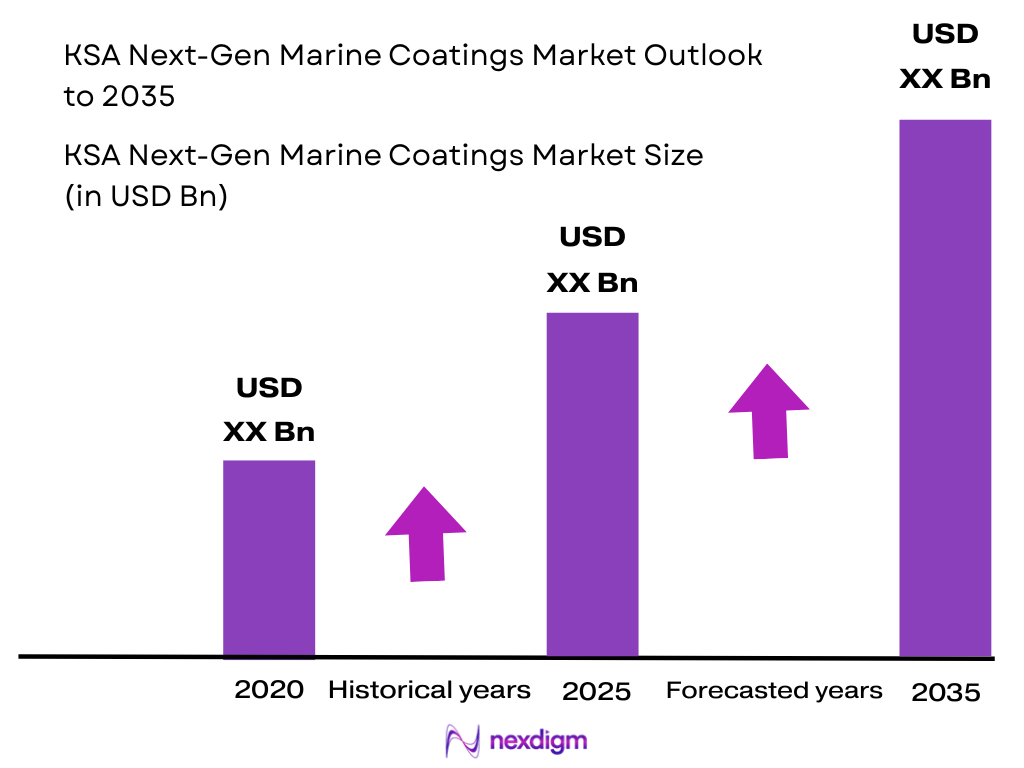
The KSA Next-Gen Marine Coatings Market is valued at ~USD XX million in 2024, supported by demand from commercial shipping, offshore oil & gas vessels, naval fleets, ship repair yards, ports, yachts and marine infrastructure. The market is driven by Saudi Arabia’s expanding maritime ecosystem, with the Kingdom operating 426 Saudi-flagged vessels with combined tonnage exceeding 13.5 million tonnes. The country’s maritime sector is further strengthened by port modernization, offshore energy activities and vessel fleet expansion, creating recurring requirements for corrosion protection, antifouling systems and advanced protective coatings.
Saudi Arabia’s marine coatings demand is concentrated around key maritime clusters including Jeddah, Dammam, Jubail, Yanbu and Ras Al Khair due to their proximity to major ports, industrial zones and offshore energy operations. Jeddah Islamic Port operates 62 berths and handles approximately 10.2 million TEUs annual container capacity, while industrial ports such as King Fahd Industrial Port Jubail support petrochemical and energy-related marine activities with 34 berths and approximately 70 million tonnes annual handling capacity. These locations generate demand for high-performance coatings for vessels, offshore assets and marine infrastructure exposed to corrosion, salinity and extreme temperatures.
Market Segmentation
By Technology Type
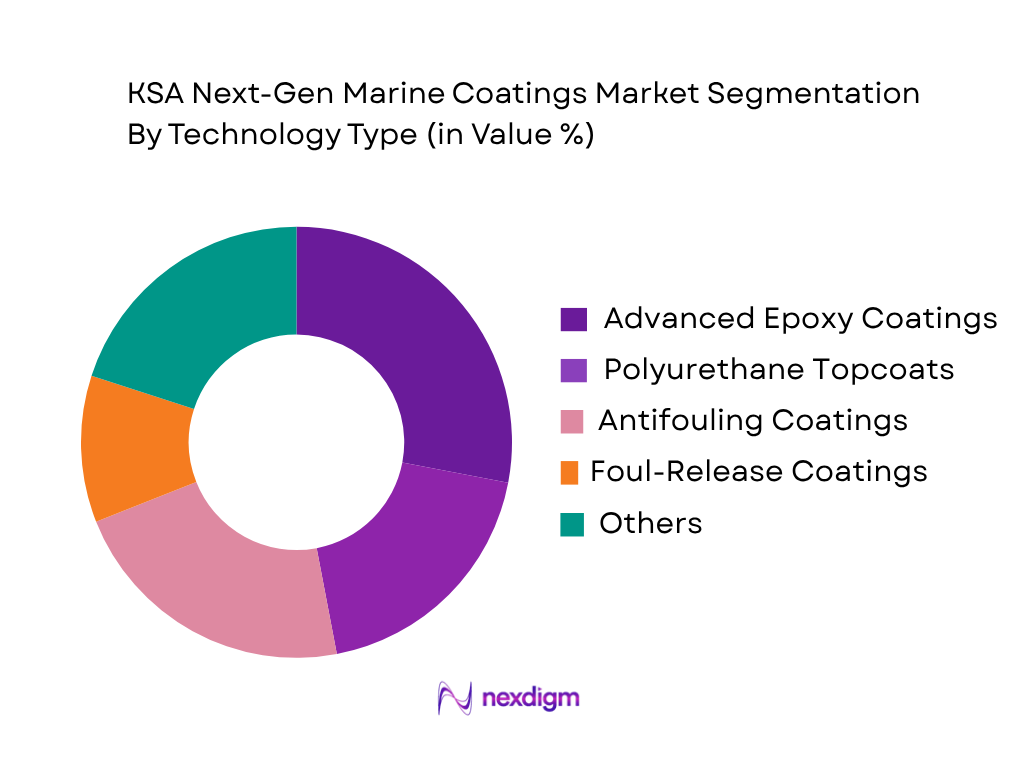
The KSA Next-Gen Marine Coatings Market is segmented into advanced epoxy coatings, polyurethane topcoats, antifouling coatings, foul-release coatings, zinc-rich protective coatings and other specialty marine coatings. Advanced epoxy coatings dominate with approximately 28% market share in 2024 due to their extensive usage in commercial vessels, offshore platforms, ship repair applications and industrial marine structures. Saudi Arabia’s exposure to high salinity environments across the Red Sea and Arabian Gulf increases demand for coatings with strong corrosion resistance and long service durability. Antifouling coatings represent another significant segment with 22% share, supported by continuous vessel operation in warm marine waters where biological fouling affects fuel efficiency and maintenance cycles. Polyurethane topcoats account for 19% share due to their application as protective finishing layers requiring UV resistance and color retention. The growing adoption of next-generation low-friction and environmentally compliant coatings is gradually increasing demand for foul-release technologies and advanced marine protection solutions.
By Application Area
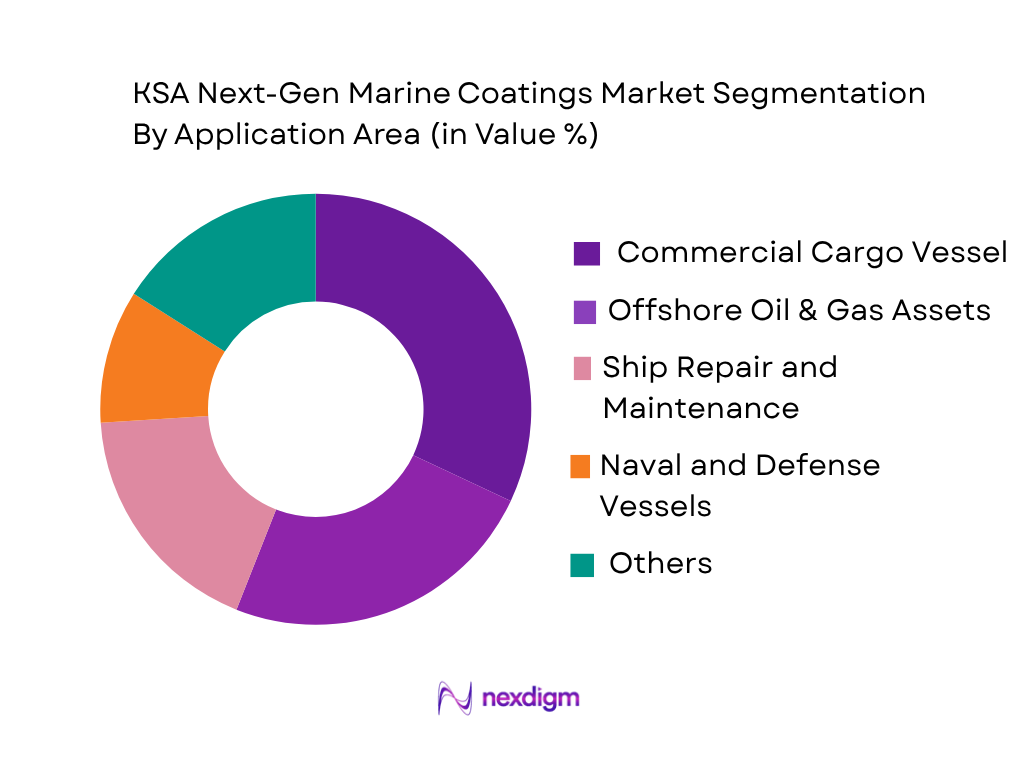
The KSA Next-Gen Marine Coatings Market is segmented into commercial vessels, offshore oil & gas assets, ship repair and maintenance, naval vessels, yachts and recreational boats, and port infrastructure. Commercial vessels represent the largest application segment with approximately 32% market share in 2024, driven by Saudi Arabia’s role in regional maritime logistics, crude oil transportation and international trade connectivity. The country’s largest shipping operator operates a diversified fleet, including large tanker vessels, supporting continuous coating maintenance requirements. Offshore oil & gas assets account for 24% share, supported by extensive offshore energy operations requiring protective coatings against seawater corrosion, temperature fluctuations and chemical exposure. Ship repair and maintenance contribute 18% share due to increasing localization of marine services and repair activities through industrial maritime development programs. Naval and defense vessels account for 10% share, supported by fleet modernization initiatives, while yacht and recreational marine applications represent a growing premium segment due to expansion of coastal tourism and luxury marine activities. Port and marine infrastructure applications contribute 7% share, supported by ongoing investments in port modernization and logistics infrastructure.
Competitive Landscape
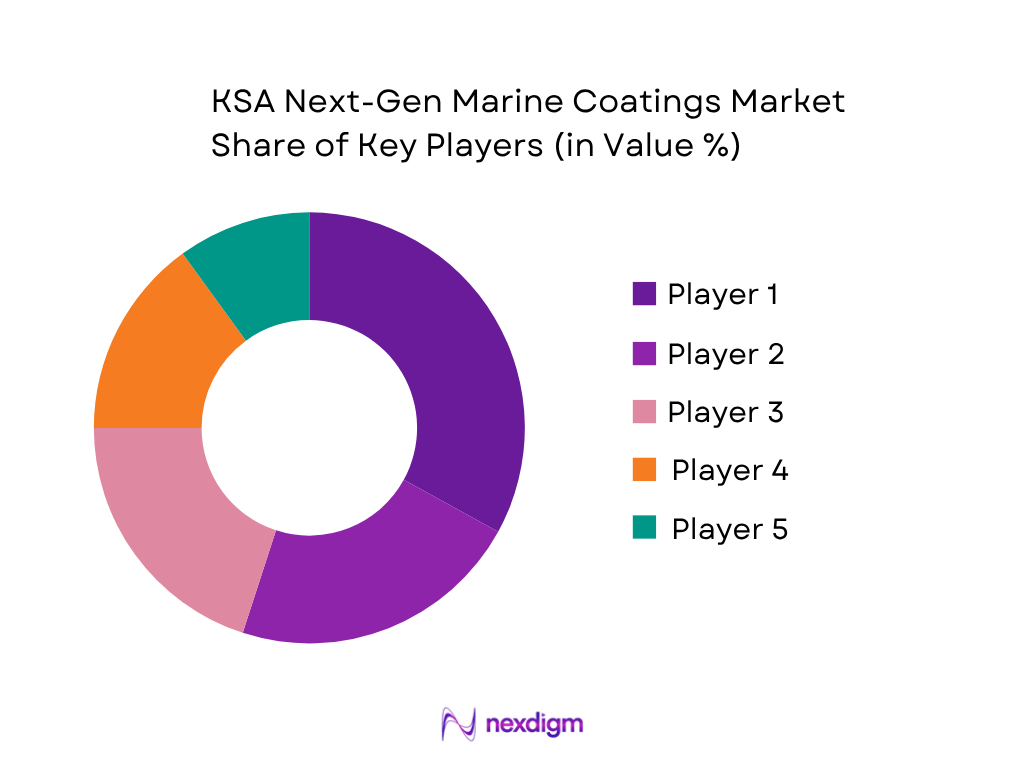
The KSA Next-Gen Marine Coatings Market is characterized by the presence of multinational coating manufacturers, regional distributors and specialized marine service providers supplying advanced protection systems for commercial vessels, offshore platforms, shipyards and naval applications. The competitive environment is influenced by technological capabilities in antifouling solutions, corrosion-resistant epoxy systems, low-friction coatings and environmentally compliant formulations. Companies with strong marine coating portfolios benefit from Saudi Arabia’s expanding maritime infrastructure, including port modernization, offshore energy activities and ship repair localization initiatives. Saudi Arabia’s maritime sector is being developed through investments in ports, shipbuilding and marine services under national diversification programs, increasing demand for specialized coating technologies.
| Company | Establishment Year | Headquarters | Marine Coating Portfolio | Key Application Focus | Technology Strength | Saudi Market Presence |
| AkzoNobel | 1792 | Amsterdam, Netherlands | ~ | ~ | ~ | ~ |
| PPG Industries | 1883 | Pennsylvania, USA | ~ | ~ | ~ | ~ |
| Jotun | 1926 | Sandefjord, Norway | ~ | ~ | ~ | ~ |
| Hempel | 1915 | Lyngby, Denmark | ~ | ~ | ~ | ~ |
| Sherwin-Williams | 1866 | Ohio, USA | ~ | ~ | ~ | ~ |
KSA Next-Gen Marine Coatings Market Analysis
Market Growth Drivers
Expansion of Saudi Maritime Trade and Port Modernization Projects
Saudi Arabia’s expanding maritime trade ecosystem is strengthening demand for next-generation marine coatings used across commercial vessels, port assets and marine infrastructure. The Kingdom’s ports handled 331.3 million tonnes of cargo in 2024, including 222.4 million tonnes of export cargo and 108.9 million tonnes of import cargo, creating recurring requirements for corrosion protection, antifouling systems and protective coatings for vessels operating in the Red Sea and Arabian Gulf. The country recorded 8,693 vessel arrivals in 2024, reflecting continued marine asset utilization and maintenance requirements. Major ports including Jeddah Islamic Port, King Fahd Industrial Port Jubail and King Fahd Industrial Port Yanbu are undergoing capacity enhancement and operational upgrades, supporting demand for advanced coating systems. Jeddah Islamic Port processed approximately 5.6 million TEUs in 2024, while industrial ports supporting petrochemical and energy exports require coatings capable of resisting saltwater corrosion and harsh climatic exposure. The expansion of logistics infrastructure under Saudi Arabia’s maritime development programs is increasing adoption of high-performance epoxy coatings, antifouling technologies and fuel-saving hull coatings that improve vessel efficiency and reduce maintenance frequency.
Offshore Oil and Gas Expansion and Shipbuilding Capacity Development
Saudi Arabia’s offshore energy activities and maritime industrial localization initiatives are creating long-term demand for advanced marine coating technologies. The Kingdom remains one of the world’s largest energy producers, with crude oil production capacity maintained around 12 million barrels per day, supporting extensive offshore platforms, supply vessels, tankers and marine support infrastructure requiring protective coatings. Offshore assets operating in Arabian Gulf waters face continuous exposure to seawater, temperature variations and corrosion risks, increasing demand for advanced protective epoxy coatings, zinc-rich systems and offshore-grade coatings. The development of the King Salman International Maritime Industries Complex (IMI) at Ras Al Khair is expected to strengthen domestic shipbuilding and repair capabilities, with planned capacity for building and maintaining approximately 100 vessels annually and supporting more than 80,000 direct and indirect jobs at full operational scale. Expansion of shipbuilding, repair and offshore services will increase consumption of marine coatings across vessel construction, dry-docking and maintenance applications. The growth of domestic marine industries is also supporting adoption of advanced coatings that meet international vessel performance and environmental requirements.
Market Challenges
Extreme Marine Climate Conditions and High Salinity Exposure in Red Sea and Arabian Gulf Waters
Saudi Arabia’s marine environment creates significant performance challenges for next-generation marine coatings due to high salinity, elevated temperatures and continuous exposure to aggressive corrosion conditions. Coastal regions including Jeddah, Yanbu, Dammam and Jubail experience harsh marine conditions where vessels and offshore structures require specialized protective systems. The Red Sea and Arabian Gulf contain high salt concentrations, accelerating corrosion risks for steel hulls, offshore platforms, pipelines and port infrastructure. Saudi Arabia’s coastal geography extends across approximately 2,640 kilometres of coastline, exposing a large volume of marine assets to demanding operating environments. Marine coating systems must provide long-term resistance against seawater corrosion, fouling organisms, ultraviolet radiation and temperature fluctuations. These conditions increase the requirement for advanced epoxy coatings, antifouling technologies and multi-layer protective coating systems. However, extreme environmental exposure also increases coating failure risks when incorrect formulations or application procedures are used. The need for specialized application expertise, frequent inspection cycles and high-performance materials increases operational complexity for ship operators, offshore companies and marine infrastructure owners.
Imported Specialty Coating Dependency and Advanced Technology Adoption Costs
The Saudi marine coatings market faces challenges due to dependence on imported specialty coating technologies, limited domestic manufacturing capacity for advanced marine formulations and higher adoption barriers for innovative coating solutions. Many high-performance marine coatings, including smart coatings, low-friction hull coatings and advanced antifouling systems, require specialized chemical formulations produced by international manufacturers. Saudi Arabia’s domestic chemical industry is highly developed, but marine-specific coating technologies remain concentrated among global suppliers. The country imported chemicals and related products valued at approximately USD 37 billion in 2024, reflecting the importance of international supply chains for specialized industrial materials. Dependence on imported raw materials such as resins, additives and specialty pigments can expose coating suppliers to logistics disruptions and global supply fluctuations. Additionally, advanced coating technologies often require specialized application equipment, trained personnel and controlled surface preparation processes, increasing implementation complexity. Saudi Arabia’s growing focus on industrial localization and domestic manufacturing development is expected to reduce supply-chain risks over the long term, but current market participants continue to face challenges related to technology transfer, skilled workforce availability and compliance with environmental regulations.
Market Opportunities
Advanced Antifouling Technologies and Low-Friction Hull Coatings
Saudi Arabia’s expanding maritime activity creates opportunities for advanced antifouling and fuel-efficient coating technologies that improve vessel performance and reduce maintenance requirements. Commercial vessels operating in warm Red Sea and Arabian Gulf waters experience accelerated marine organism attachment, increasing demand for advanced antifouling coatings and foul-release systems. Saudi ports recorded more than 8,600 vessel arrivals in 2024, creating a large operational base for technologies that enhance vessel efficiency and extend maintenance intervals. Low-friction hull coatings are gaining importance as shipping operators focus on reducing fuel consumption and improving operational efficiency. These coatings minimize surface resistance between vessels and seawater, supporting improved vessel performance during long-distance transportation routes. Saudi Arabia’s position along major global shipping corridors and its expanding maritime logistics infrastructure create opportunities for suppliers offering advanced hull protection solutions. Development of environmentally compliant antifouling technologies, silicone-based foul-release coatings and next-generation surface engineering solutions can support future market expansion. Increased demand from commercial shipping, offshore support vessels and naval applications provides opportunities for marine coating manufacturers to introduce technologically advanced products suited for Saudi Arabia’s marine conditions.
Smart Marine Coatings, Bio-Based Technologies and Local Marine Coating Manufacturing Expansion
Saudi Arabia’s maritime industrial localization initiatives are creating opportunities for smart marine coatings, sustainable formulations and domestic coating manufacturing capabilities. The development of maritime industrial clusters, including Ras Al Khair Maritime Industries Complex, is supporting the localization of shipbuilding, repair and marine supply chains. Saudi Arabia’s manufacturing sector contributed approximately USD 110 billion to economic output in 2024, creating a strong industrial foundation for expanding specialty chemical and coating production capabilities. Smart marine coatings incorporating self-monitoring, corrosion detection and advanced protective functions represent emerging opportunities for offshore platforms, naval vessels and commercial fleets. Bio-based and low-emission marine coatings are also gaining relevance as global maritime regulations encourage reduced environmental impact from coating systems. Local formulation and blending facilities can reduce dependency on imported products while improving supply reliability for Saudi shipyards and offshore operators. Opportunities exist for manufacturers developing nanotechnology-based protective systems, sustainable port coatings and specialized LNG vessel coatings as Saudi Arabia expands maritime infrastructure and strengthens its role in regional logistics and industrial development.
Future Outlook
The KSA Next-Gen Marine Coatings Market is expected to witness continued expansion due to increasing maritime infrastructure development, offshore energy activities, ship maintenance requirements and adoption of advanced coating technologies. Saudi Arabia’s strategic location between major global shipping routes and its focus on strengthening logistics capabilities are supporting long-term marine industry development. The country’s ports handled more than 331 million tonnes of cargo in 2024, highlighting the scale of maritime activity requiring continuous vessel and infrastructure protection solutions. Future demand will increasingly shift toward high-performance coatings offering longer service life, reduced maintenance cycles and improved fuel efficiency. Antifouling systems, foul-release coatings, smart marine coatings and environmentally compliant technologies are expected to gain adoption as vessel operators focus on operational efficiency and regulatory compliance. Offshore oil and gas assets will remain a major demand contributor due to Saudi Arabia’s extensive marine energy infrastructure. Localization of ship repair, marine manufacturing and coating application capabilities will create additional opportunities for domestic suppliers and international coating companies establishing regional partnerships. Development of maritime clusters around Ras Al Khair, Jubail, Dammam and Jeddah is expected to strengthen demand for specialized marine coating solutions.
Major Players
- AkzoNobel
- PPG Industries
- Jotun
- Hempel
- The Sherwin-Williams Company
- Nippon Paint Marine Coatings
- Kansai Paint Marine Coatings
- Chugoku Marine Paints
- Axalta Coating Systems
- RPM International
- Sika AG
- BASF Coatings
- International Paint
- Saudi Paints Company
- National Paints Factories Co.
Key Target Audience
- Marine coating manufacturers and technology providers
- Shipbuilding and ship repair companies
- Offshore oil and gas operators
- Commercial shipping companies and fleet owners
- Port authorities and marine infrastructure developers
- Investments and venture capitalist firms (Maritime technology investment funds, industrial investment funds)
- Government and regulatory bodies (Saudi Ports Authority – Mawani, Ministry of Transport and Logistic Services, Ministry of Energy)
- Naval and defense organizations
Research Methodology
Step 1: Identification of Key Variables
The initial research phase involves defining the ecosystem of the KSA Next-Gen Marine Coatings Market by identifying key stakeholders, including marine coating manufacturers, shipyards, offshore operators, port authorities, vessel owners and coating application service providers. Secondary research is conducted through government maritime databases, industrial publications and regulatory frameworks to identify demand variables such as vessel traffic, port activity, offshore asset development and marine maintenance requirements. Saudi Arabia’s maritime ecosystem is evaluated using indicators such as the 331 million tonnes of cargo handled through Saudi ports in 2024, 8,693 vessel arrivals, and more than 2.5 million containers processed, which establish the scale of marine coating demand.
Step 2: Market Analysis and Construction
This stage focuses on constructing the market model by analysing marine coating consumption across major applications including commercial vessels, offshore oil and gas assets, ship repair facilities, naval vessels, yachts and marine infrastructure. Demand assessment considers coating technology categories such as epoxy protective coatings, antifouling systems, polyurethane topcoats, foul-release coatings and smart marine coatings. Supply-side analysis evaluates international manufacturers, regional distributors and local marine service providers operating within Saudi Arabia. Port activity, offshore energy operations and ship maintenance cycles are incorporated to determine the consumption pattern of advanced marine coating solutions.
Step 3: Hypothesis Validation and Expert Consultation
Market assumptions are validated through discussions with industry participants including marine coating suppliers, ship repair companies, offshore service providers and vessel operators. Expert consultations focus on application trends, technology adoption barriers, environmental compliance requirements and procurement preferences. Primary insights are used to validate coating technology demand, replacement cycles, performance requirements and the impact of Saudi maritime infrastructure development initiatives on future market opportunities.
Step 4: Research Synthesis and Final Output
The final stage combines primary and secondary research findings to develop a comprehensive market assessment. Data triangulation is performed by comparing vessel activity, port infrastructure expansion, offshore industry requirements and coating technology adoption trends. The final analysis provides strategic insights into growth drivers, challenges, opportunities, competitive positioning and future demand areas within the KSA Next-Gen Marine Coatings Market.

- Executive Summary
- Research Methodology (Market Definition and Scope, Next-Generation Marine Coatings Classification, Market Sizing Framework, Top-Down Analysis, Bottom-Up Analysis, Demand-Side Assessment, Supply-Side Assessment, Primary Interviews with Marine Coating Manufacturers and End Users, Data Triangulation, Forecasting Model, Research Limitations)

- Definition and Scope
- Evolution of Marine Coatings Industry in Saudi Arabia
- Historical Development of Marine Protection Technologies
- Saudi Arabia Maritime Ecosystem Analysis
- Marine Coatings Value Chain Analysis
- Saudi Arabia Maritime Industry Overview

- Growth Drivers (Expansion of Saudi Maritime Trade, Development of King Salman International Maritime Industries Complex, Offshore Oil and Gas Expansion, Port Modernization Projects, Shipbuilding Capacity Development, Vessel Maintenance Requirements, Adoption of Fuel-Efficient Coatings, Marine Tourism Expansion)
- Market Challenges (Extreme Marine Climate Conditions, High Salinity Exposure in Red Sea and Arabian Gulf Waters, Imported Specialty Coating Dependency, Limited Domestic Marine Coating Production, Advanced Technology Adoption Costs, Skilled Marine Coating Applicator Shortage, Environmental Compliance Requirements, Raw Material Supply Chain Risks)
- Market Opportunities (Advanced Antifouling Technologies, Low-Friction Hull Coatings, Offshore Platform Protection Systems, LNG Vessel Coatings, Smart Marine Coating Solutions, Bio-Based Marine Coatings, Nanotechnology-Based Protective Systems, Sustainable Port Infrastructure Coatings, Local Marine Coating Manufacturing Expansion, Saudi Maritime Industrial Localization)
- Market Trends (Environmentally Compliant Coatings, Low-VOC Formulations, Silicone Foul-Release Technologies, Fuel-Saving Hull Coatings, Digital Coating Monitoring Systems, Smart Corrosion Detection Coatings, Sustainable Marine Maintenance Practices, Advanced Offshore Protection Systems)
- Government Regulations and Industry Standards (Saudi Vision 2030 Maritime Development Initiatives, Saudi Ports Authority Regulations, Royal Saudi Naval Force Standards, IMO Marine Environmental Regulations, Ballast Water Management Requirements, Anti-Fouling Systems Convention Compliance, VOC Emission Standards)
- SWOT Analysis
- Porter’s Five Forces Analysis
- PESTLE Analysis

- By Market Value (2020-2025)
- By Volume Consumption (2020-2025)
- By Coating Application Volume (2020-2025)
- By Average Selling Price (2020-2025)
- By End-Use Industry Consumption (2020-2025)

- By Technology Type (In Value %)
Advanced Epoxy Marine Coatings
Polyurethane Protective Topcoats
Antifouling Coatings
Foul-Release Coatings
Zinc-Rich Anti-Corrosion Coatings
Silicone-Based Marine Coatings
Bio-Based and Low-VOC Marine Coatings
Smart Marine Coatings - By Resin Chemistry (In Value %)
Epoxy Resin Coatings
Polyurethane Resin Coatings
Acrylic Resin Coatings
Silicone Resin Coatings
Alkyd Resin Coatings
Hybrid Resin Systems - By Application Area (In Value %)
Commercial Vessel Hull Protection
Offshore Oil & Gas Platforms
Offshore Support Vessels
Ship Repair and Dry Docking
Naval and Defense Vessels
Marine Terminals and Port Infrastructure
Subsea Structures and Equipment
Luxury Yacht and Recreational Marine Assets - By Vessel Type (In Value %)
Crude Oil Tankers
Product and Chemical Tankers
Bulk Carriers
Container Ships
Offshore Supply Vessels
LNG Carriers
Naval Ships
Yachts and Leisure Boats - By End User (In Value %)
Saudi Shipyards and Marine Repair Facilities
Shipping Companies and Fleet Operators
Offshore Energy Operators
Port Authorities and Terminal Operators
Defense and Naval Organizations
Marine Construction Companies
Yacht Builders and Maintenance Providers - By Coating Functionality (In Value %)
Corrosion Protection Coatings
Marine Fouling Prevention Coatings
Abrasion Resistant Coatings
Chemical Resistant Coatings
Fire Protection Marine Coatings
Fuel-Efficiency Enhancing Coatings
UV and Weather Resistant Coatings

- Market Positioning of Major Players (By Product Portfolio, Marine Application Coverage, Technology Capability, Distribution Reach)
- Cross Comparison Parameters (Product Portfolio Breadth, Marine Coating Technology Range, Antifouling Technology Capability, Offshore Protection Expertise, Shipyard Network Presence, Regional Distribution Coverage, R&D Investment Capability, Sustainable Coating Development Capability)
- Pricing Analysis (By Coating Type, Application Requirement, Vessel Category)
- SWOT Analysis of Major Players
- Detailed Profiles of Major Companies
Global Marine Coating Manufacturers
AkzoNobel N.V.
PPG Industries Inc.
Jotun A/S
Hempel A/S
The Sherwin-Williams Company
Nippon Paint Marine Coatings Co., Ltd.
Chugoku Marine Paints Ltd.
Kansai Paint Marine Co., Ltd.
BASF Coatings GmbH
Axalta Coating Systems
Regional and Specialty Coating Providers
Sika AG
RPM International Inc.
Carboline Company
Tnemec Company Inc.
National Paints Factories Co. Ltd.

- Saudi Shipyards and Marine Repair Facilities
- Shipping Companies and Fleet Operators
- Offshore Energy Operators
- Port Authorities and Terminal Operators
- Defense and Naval Organizations

- By Market Value (2026-2035)
- By Volume Consumption (2026-2035)
- By Coating Application Volume (2026-2035)
- By Average Selling Price (2026-2035)
- By End-Use Industry Consumption (2026-2035)


 Request a Sample
 Ask for Customization
 Get a Quote
 Enquire Now