
 Download PDF
Market Overview
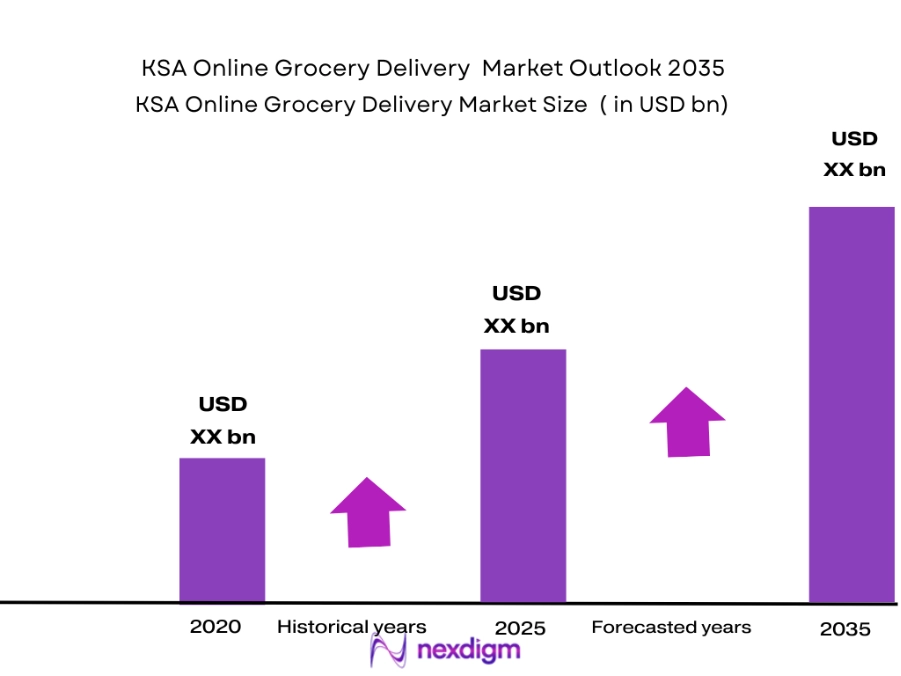
The KSA online grocery delivery market is valued at approximately USD ~ billion, supported by significant investments in e-commerce infrastructure, digital payment systems, and online grocery platforms. The market is driven by changing consumer behaviors, where consumers increasingly prefer the convenience of having groceries delivered to their hoes. Additionally, the COVID-19 pandemic has accelerated the adoption of online grocery shopping, pushing more consumers to seek safer, contactless ways of purchasing essential items. As of 2023, the market’s rapid growth reflects the country’s digital transformation and the government’s push to diversify its economy through non-oil sectors like technology and e-commerce.
The online grocery delivery market in KSA is primarily concentrated in major urban centers, particularly in Riyadh, Jeddah, and Dammam. Riyadh, being the capital and largest city, holds a dominant position due to its large population, high internet penetration, and robust infrastructure. Jeddah and Dammam follow closely, benefiting from their proximity to key ports and their large expat populations. These cities are key drivers of market growth as consumers in these urban centers exhibit high demand for convenience, rapid delivery, and varied product options. The market in these cities is supported by a mix of young, tech-savvy consumers and affluent families seeking convenience.
Market Segmentation
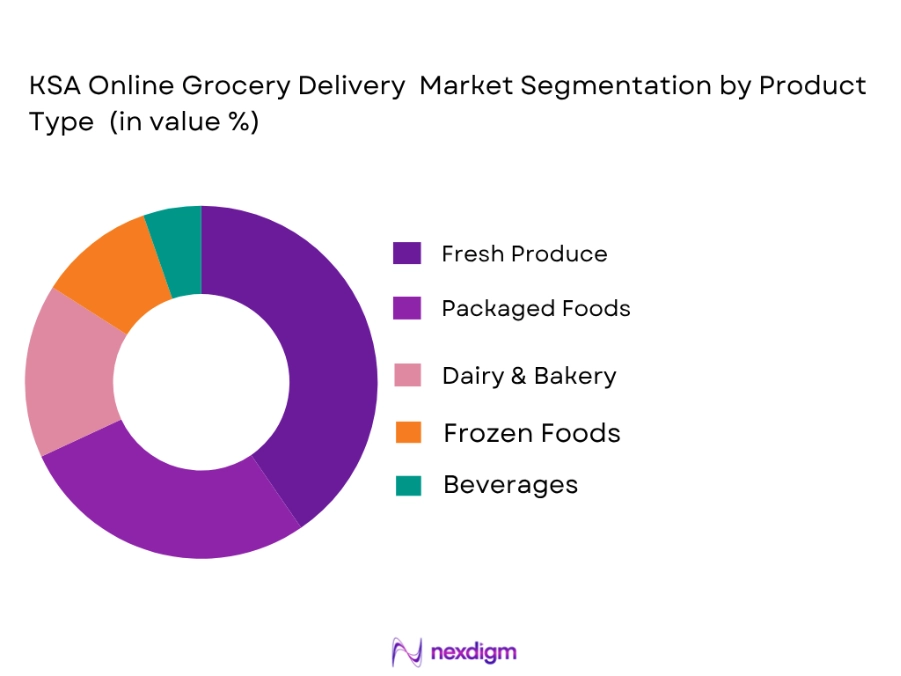
By Product Type
The KSA online grocery delivery market is segmented into fresh produce, dairy and bakery, beverages, packaged foods, frozen foods, household items, and personal care products. Packaged foods currently dominate the market due to their convenience, longer shelf life, and widespread availability across online platforms. Consumers in urban areas, particularly working professionals, gravitate towards packaged foods as they offer time-saving solutions without compromising on variety. Brands and online platforms cater to this demand with a wide range of products, including ready-to-eat meals, snacks, and instant foods, driving the dominance of this sub-segment.
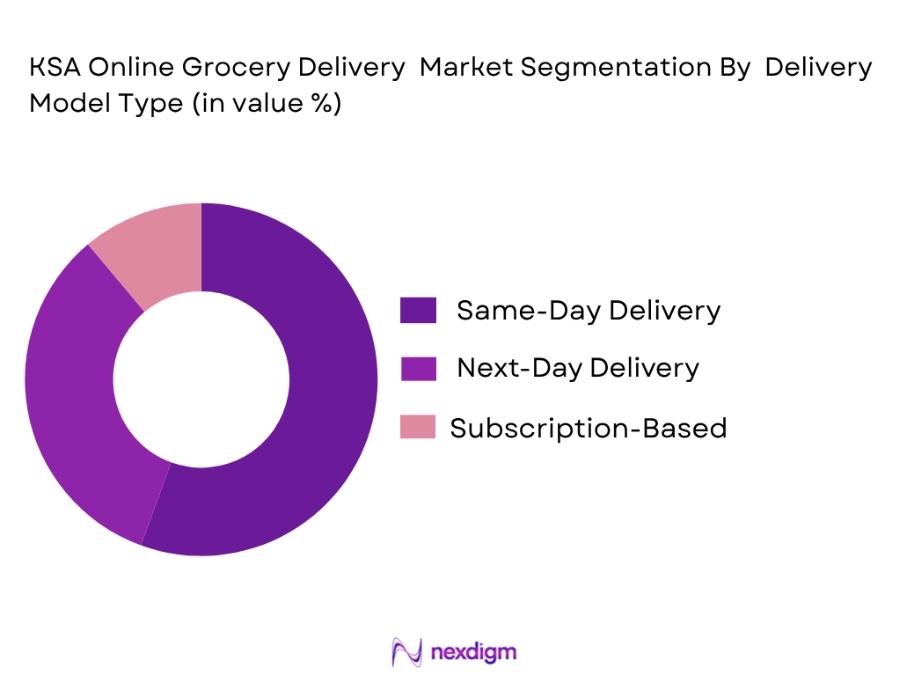
By Delivery Model
The market is also segmented by delivery model, including same-day delivery, next-day delivery, scheduled deliveries, and subscription-based deliveries. Same-day delivery has emerged as the dominant model, particularly in urban centers like Riyadh and Jeddah. The demand for same-day delivery is driven by consumers’ increasing preference for quick and convenient service. Same-day delivery allows consumers to get their groceries within hours of placing an order, appealing to those who need products quickly and efficiently. The competitive advantage for platforms offering this service lies in their logistics and ability to scale their operations to meet these demands.
Competitive Landscape
The KSA online grocery delivery market is characterized by the presence of both local and international players, with Carrefour, Lulu Hypermarket, and Noon KSA leading the charge. Carrefour, with its established retail network and strong brand presence, has successfully transitioned to the online grocery sector, providing customers with a seamless shopping experience. Lulu Hypermarket, another major local player, has aggressively expanded its online presence, catering to the growing demand for grocery deliveries. Newer entrants like Noon KSA and local platforms such as Instashop are also competing by offering competitive pricing, faster deliveries, and a wide range of products. The market remains highly competitive, with players differentiating themselves through customer experience, delivery speed, and service quality.
| Company Name | Establishment Year | Headquarters | Product Portfolio | Delivery Network | Revenue (2024) | Customer Base | Market Position |
| Carrefour KSA | 1995 | Riyadh, KSA | ~ | ~ | ~ | ~ | ~ |
| Lulu Hypermarket | 1995 | Dubai, UAE | ~ | ~ | ~ | ~ | ~ |
| Noon KSA | 2016 | Riyadh, KSA | ~ | ~ | ~ | ~ | ~ |
| Instashop KSA | 2015 | Riyadh, KSA | ~ | ~ | ~ | ~ | ~ |
| BigBasket KSA | 2018 | Riyadh, KSA | ~ | ~ | ~ | ~ | ~ |
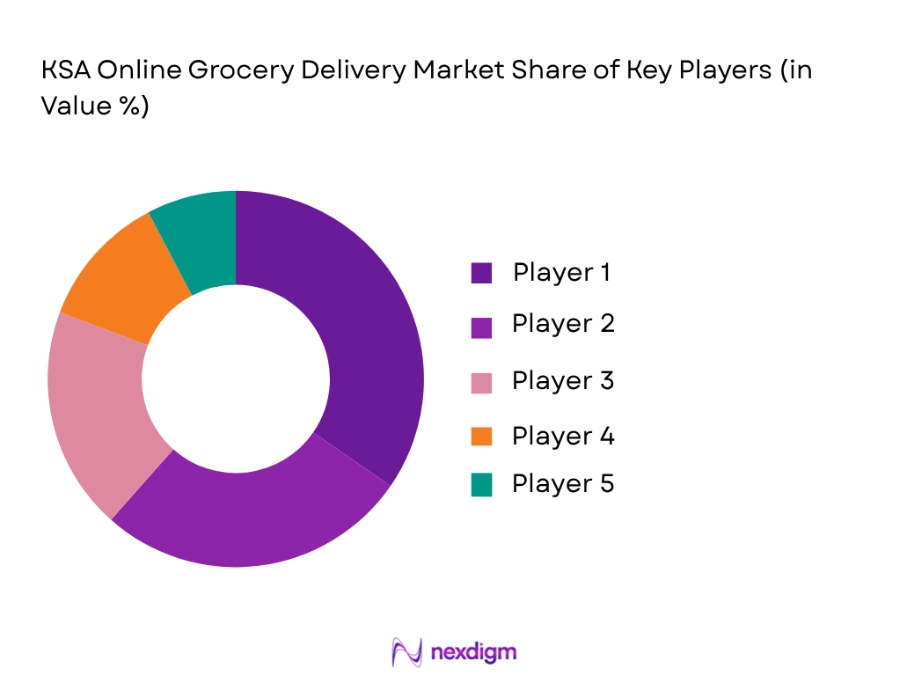
KSA Online Grocery Delivery Market Analysis
Growth Drivers
Increasing Health & Wellness Awareness and Demand for Convenience
In recent years, there has been a significant rise in health and wellness awareness among Saudi consumers. This shift has driven the demand for healthier food options such as organic produce, gluten-free products, and specialty health foods. As consumers become more conscious about their well-being, they are increasingly seeking convenient ways to shop for groceries that align with their health goals. The growth of online grocery delivery services offers a seamless way for consumers to access these products, contributing to the market’s expansion. Additionally, the time-saving aspect of online shopping further fuels its popularity, as more people prefer the convenience of getting fresh groceries delivered to their doorsteps rather than spending time in physical stores.
Rise in Connected/IoT‑Enabled Delivery Solutions
With the rise of the Internet of Things (IoT), online grocery delivery services in KSA have increasingly adopted connected and smart technologies to enhance customer experiences. IoT-enabled delivery solutions enable real-time tracking, optimized delivery routes, and improved inventory management. These technologies help companies reduce delivery times, minimize errors, and enhance service reliability, making them highly attractive to consumers. Smart refrigerators, real-time order tracking apps, and AI-driven recommendation engines are also enhancing consumer engagement and loyalty. As consumers demand faster, more reliable, and personalized shopping experiences, the integration of IoT into grocery delivery platforms has become a key driver for market growth in KSA, further enhancing the sector’s competitiveness.
Challenges
Logistics, Supply Chain Issues, and Last-Mile Delivery Challenges
Despite the rapid growth of the KSA online grocery delivery market, logistics and supply chain challenges remain significant hurdles. The complexity of managing a robust supply chain for perishable items like fresh produce, dairy, and meats is a major issue for delivery platforms. Additionally, last-mile delivery, particularly in densely populated urban areas like Riyadh and Jeddah, can result in delays and increased costs. Traffic congestion, inadequate infrastructure in certain areas, and the reliance on third-party logistics partners contribute to inefficiencies in the delivery process. Companies must invest in advanced logistics solutions, including improved inventory management systems, temperature-controlled storage, and better routing algorithms, to address these challenges and maintain customer satisfaction.
Regulatory and Quality Control Concerns
Online grocery services in KSA must comply with various regulatory requirements concerning food safety, labeling, and packaging. These regulations ensure the safety and quality of products being sold and delivered, particularly for perishable items. However, inconsistencies in regulatory enforcement and the complexity of navigating these regulations can create barriers for e-commerce platforms. Additionally, maintaining quality control throughout the supply chain is crucial, as consumers expect fresh and high-quality products delivered on time. Any failure in quality standards or food safety can damage the reputation of online grocery services and result in regulatory penalties, which further complicates the growth of the market.
Opportunities
Expansion of E‑Commerce & Omni‑Channel Retail Strategy
The expansion of e-commerce presents a significant opportunity for online grocery delivery services in KSA. As internet penetration continues to rise and mobile usage increases, more consumers are turning to digital platforms for their shopping needs. By adopting an omni-channel retail strategy, online grocery platforms can bridge the gap between digital and physical shopping experiences. This strategy allows customers to shop online while still benefiting from physical stores, creating a seamless shopping experience. E-commerce companies can leverage partnerships with brick-and-mortar stores to expand their reach and improve logistics, offering customers more options for ordering groceries, thus driving market growth in KSA.
Rise of Subscription-Based Grocery Delivery Models
Subscription-based grocery delivery models are rapidly gaining traction in KSA as consumers seek more convenient and predictable shopping experiences. These models allow customers to receive regular deliveries of groceries, either based on their preferences or curated by the service provider. Subscription models help reduce the frequency of purchasing, ensuring a steady and consistent revenue stream for businesses. Additionally, this model offers advantages such as personalized shopping experiences, discounts, and easy reordering. With the growing demand for convenience, online grocery platforms can capitalize on this trend by offering subscription services that cater to the needs of busy professionals and families, enhancing customer loyalty and driving market growth.
Future Outlook
Over the next five years, the KSA online grocery delivery market is expected to show significant growth, driven by increasing urbanization, rising internet and smartphone penetration, and the evolving preference for convenience in daily life. The demand for faster, more reliable delivery options will continue to propel the market, with same-day delivery models taking the lead. As e-commerce continues to thrive, the market will see further technological advancements in logistics, payment solutions, and personalized shopping experiences. The government’s initiatives to boost the digital economy, along with the growth of digital payments, will support further growth in the online grocery segment, especially as more consumers in smaller cities and rural areas come online.
Key Players
- Carrefour KSA
- Lulu Hypermarket
- Noon KSA
- Instashop KSA
- BigBasket KSA
- Danube
- Souq.com
- Walmart KSA
- Extra Stores
- Tamimi Markets
- BinDawood
- Ounass
- Nadec
- Spinneys KSA
- Rakuten KSA
Key Target Audience
- Investments and Venture Capitalist Firms
- Government and Regulatory Bodies
- Private Equity Firms
- Retail and E-commerce Industry Leaders
- Online Grocery Retailers
- Logistics and Delivery Service Providers
- Manufacturers of Packaged and Fresh Foods
- Consumer Goods Brands
Research Methodology
Step 1: Identification of Key Variables
This phase focuses on identifying critical variables, including consumer purchasing behavior, online grocery adoption, logistics, and technological advancements. Secondary data sources are used to outline the key market drivers and barriers, ensuring a comprehensive understanding of the factors influencing growth.
Step 2: Market Analysis and Construction
In this phase, historical data and current market trends are analyzed to construct a clear picture of the market’s size and growth trajectory. This includes examining the adoption rate of online grocery shopping, as well as understanding regional preferences and distribution patterns.
Step 3: Hypothesis Validation and Expert Consultation
Market hypotheses are tested through consultations with industry experts and key stakeholders from e-commerce, retail, and logistics sectors. Insights from these interviews will help validate assumptions and refine market projections.
Step 4: Research Synthesis and Final Output
The final phase involves integrating findings from the data analysis and expert consultations to form a detailed and accurate market outlook. This ensures that the report reflects both current market conditions and future trends in the KSA online grocery delivery market.

- Executive Summary
- Research Methodology (Market Definitions and Assumptions,
Abbreviations, Top‑Down & Bottom‑Up Sizing Approach, E‑Commerce & Retail Channel Data Sources, Primary Research Framework, Secondary Data Validation, Forecasting Models and Assumptions, Limitations and Sensitivity Analyses)

- Definition and Scope
- Ecosystem Genesis and Evolution of Online Grocery Adoption
- Macro‑Economic and Grocery Demand Drivers
- Consumer Behavior Trends in Online Grocery Shopping
- Import Dependency & Supply Chain Characteristics
- Retail & After‑Sales Service Infrastructure Mapping

- Growth Drivers
Increasing Health & Wellness Awareness and Demand for Convenience
Rise in Connected/IoT‑Enabled Delivery Solutions
Influence of Digital Payment Systems and E-Commerce Growth
Growing Disposable Incomes and Preference for Online Shopping - Challenges
Logistics, Supply Chain Issues, and Last-Mile Delivery Challenges
Regulatory and Quality Control Concerns
High Competition from Traditional Grocery Stores and Local Markets - Opportunities
Expansion of E‑Commerce & Omni‑Channel Retail Strategy
Rise of Subscription-based Grocery Delivery Models
Adoption of Smart Delivery Systems and AI Technologies
Growth of Eco-Friendly Delivery Solutions - Trends
Shift Towards Contactless Payments and Delivery Models
Increasing Demand for Organic and Fresh Produce Online
Growth in Subscription and Digital Grocery Content Bundles - Government Regulations & Standards
Food Safety and Quality Regulations
Import Regulations & Harmonized Tariff Schedules
Energy Efficiency and Environmental Sustainability Norms - SWOT Analysis
- Porter’s Five Forces
- Stakeholder Ecosystem

- By Retail Value, 2020-2025
- By Unit Shipments, 2020-2025
- By Average Selling Price (ASP) and Product Tier, 2020-2025
- By Channel Contribution, 2020-2025

- By Product (In Value %)
Fresh Produce
Packaged Foods
Dairy & Bakery
Frozen Foods
Beverages - By Delivery Model (In Value %)
Same-Day Delivery
Next-Day Delivery
Subscription-Based - By End‑User (In Value %)
Urban Consumers
Rural Consumers
Small and Medium Enterprises (SMEs)
Institutional Buyers (Hotels, Restaurants, etc.) - By Distribution Channel (In Value %)
Brand Flagship Stores
Multi‑Brand Grocery Retailers
Online Marketplaces
Direct‑to‑Consumer - By Price Tier (In Value %)
Premium
Mid‑Tier
Value

- Market Share by Value and Volume
- Cross‑Comparison Parameters (Product Portfolio Breadth, Technology Intensity Score, Distribution Network Reach, Retail Touchpoints & Dealer Penetration, Brand Positioning, Price Point Clustering, Service & Warranty Footprint, After‑Sales Revenue Streams, Manufacturing/Assembly Presence in GCC, Import Volume & Duty Classification, Supply Chain Resilience Index, Consumer Satisfaction & Return Rate, Revenue and Growth Metrics)
- SWOT of Major Players
- Pricing Tier Benchmark Analysis
- Major Competitors
Carrefour KSA
Lulu Hypermarket
Danube
Noon KSA
BigBasket KSA
Instashop KSA
Souq.com
Ounass
Extra Stores
Tamimi Markets
BinDawood
Nadec
Spinneys KSA
Rakuten KSA

- Trends and Preferences in Online Grocery Shopping
- Adoption of Advanced Delivery Solutions
- Growing Interest in Subscription Models for Grocery Delivery
- Impact of Technology on Consumer Choices and Behavior

- By Retail Value, 2026-2035
- By Unit Sales, 2026-2035
- By Average Selling Price (ASP) and Product Tier, 2026-2035
- By Channel Contribution, 2026-2035


 Request a Sample
 Ask for Customization
 Get a Quote
 Enquire Now