

 Download PDF
 Download PDF
- Insurance companies
- Insurtech platforms
- Digital aggregators
- Banks and fintech firms
- Automotive and mobility platforms
- E-commerce platforms
- Investment and venture capitalist firms
- Government and regulatory bodies
Market Overview
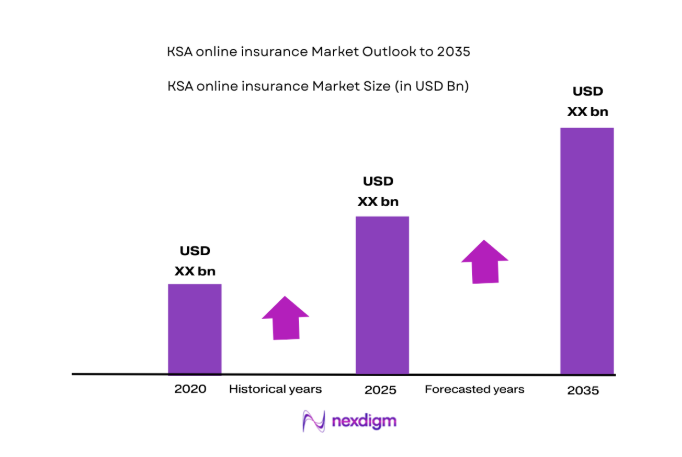
The KSA online insurance market recorded approximately USD ~ billion in digital gross written premiums based on a recent historical assessment, driven by mandatory motor and health insurance digitization and national e-policy enforcement. The market has expanded through aggregator platforms, mobile policy issuance, and insurer direct portals aligned with financial sector digitalization programs. Rapid smartphone penetration exceeding ~ million subscriptions and regulatory approval of online onboarding and claims workflows have accelerated fully digital insurance adoption across retail and SME policy segments.
Riyadh and Jeddah dominate digital insurance adoption due to concentration of insurers, aggregators, and financial technology infrastructure, alongside higher digitally active populations and enterprise density. These metropolitan areas host leading insurers and comparison platforms integrated with national digital identity and payment ecosystems, enabling instant underwriting and policy issuance. Strong employer-led health insurance coverage, expatriate workforce concentration, and higher vehicle ownership density have reinforced online policy demand in these cities relative to other regions.
Market Segmentation
By Product Type
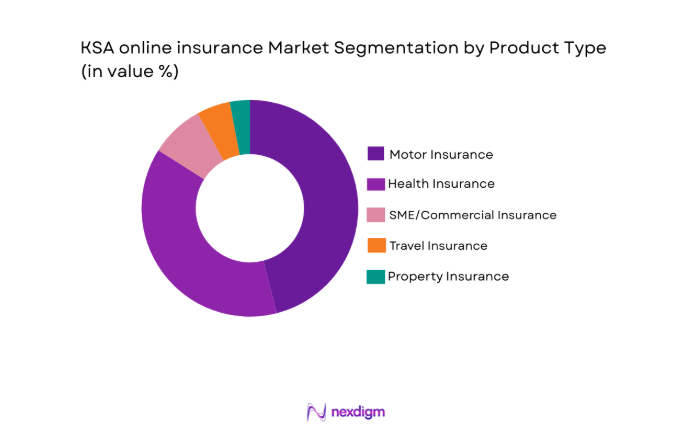
KSA online insurance market is segmented by product type into motor insurance, health insurance, travel insurance, property insurance, and SME/commercial insurance. Recently, motor insurance has a dominant market share due to factors such as regulatory mandates for vehicle coverage, high vehicle ownership, standardized policy structures, and price comparison transparency across aggregators. Mandatory motor insurance compliance has compelled insurers to digitize issuance and renewal journeys, while consumers prefer online purchase to compare premiums instantly. Telematics integration and automated underwriting for vehicle risk assessment further support digital distribution scalability. Motor policies also exhibit shorter renewal cycles, encouraging recurring online transactions and strengthening digital channel penetration relative to other insurance classes.
By Platform Type
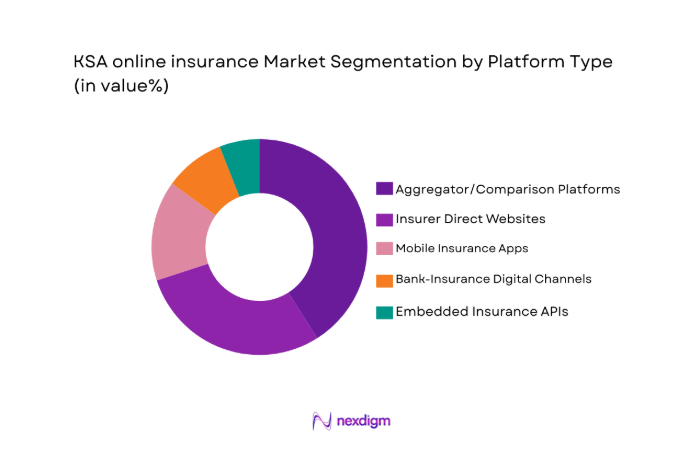
KSA online insurance market is segmented by platform type into insurer direct websites, aggregator/comparison platforms, mobile insurance apps, bank-insurance digital channels, and embedded insurance APIs. Recently, aggregator/comparison platforms have a dominant market share due to factors such as price transparency, multi-insurer access, and regulatory support for standardized online policy comparison. Consumers increasingly prefer aggregators to evaluate premiums, coverage, and insurer ratings simultaneously before purchase. Aggregators also benefit from strong digital marketing visibility and partnerships with insurers seeking lower acquisition costs. Integrated payment gateways and instant policy issuance have further reinforced aggregator leadership in online insurance distribution across motor and health segments.
Competitive Landscape
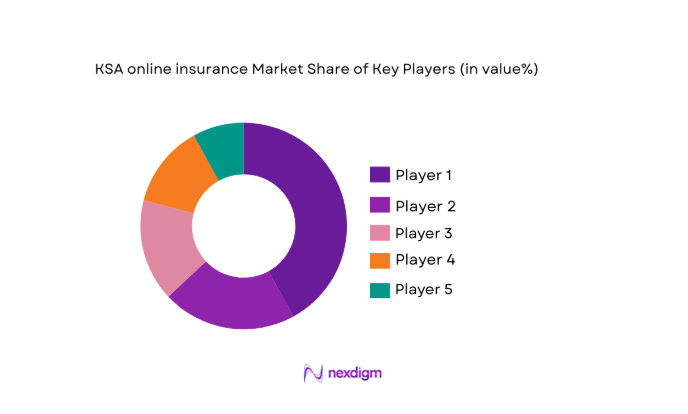
The KSA online insurance market is moderately consolidated, with leading insurers and digital aggregators controlling most online policy issuance volumes through strong brand recognition and regulatory approvals. Established insurers leverage capital strength and underwriting capabilities, while aggregators influence customer acquisition and pricing transparency. Partnerships between insurers and fintech platforms have intensified competition in motor and health insurance segments, encouraging rapid digitalization of claims and servicing infrastructure.
| Company Name | Establishment Year | Headquarters | Technology Focus | Market Reach | Key Products | Revenue | Digital Distribution Strength |
| Bupa Arabia | 1997 | Jeddah, Saudi Arabia | ~ | ~ | ~ | ~ | ~ |
| Tawuniya | 1986 | Riyadh, Saudi Arabia | ~ | ~ | ~ | ~ | ~ |
| MedGulf | 2007 | Riyadh, Saudi Arabia | ~ | ~ | ~ | ~ | ~ |
| Allianz Saudi Fransi | 2007 | Riyadh, Saudi Arabia | ~ | ~ | ~ | ~ | ~ |
| Rasan (Tameeni) | 2016 | Riyadh, Saudi Arabia | ~ | ~ | ~ | ~ | ~ |
KSA Online Insurance Market Analysis
Growth Drivers
Mandatory Motor and Health Insurance Digitization Enforcement
Mandatory motor and health insurance digitization enforcement has structurally transformed insurance distribution channels in the Kingdom by shifting policy issuance, renewal, and compliance verification toward online platforms integrated with national regulatory databases. Regulatory authorities have required insurers to implement electronic policy issuance and digital documentation submission processes, ensuring that every motor vehicle and expatriate employee maintains active coverage traceable through centralized digital systems. This compliance framework has compelled insurers to develop secure online portals and automated underwriting engines capable of real-time eligibility checks and premium calculation, which has simultaneously improved policy accessibility for consumers. Aggregator platforms have benefited from standardized policy data availability, enabling consumers to compare insurers transparently and select cost-efficient coverage through mobile and web interfaces. The digital enforcement environment has also reduced manual brokerage dependency and paper-based issuance costs, encouraging insurers to migrate customers toward direct online channels. Insurers have integrated national identity authentication and digital payment gateways into policy issuance journeys, allowing instant verification and transaction completion without physical documentation. Motor and health insurance represent the largest mandatory lines, creating a sustained baseline of digital policy demand that continually renews annually and reinforces online channel utilization. Employers purchasing expatriate health insurance increasingly use digital portals for workforce coverage administration, reinforcing institutional adoption alongside retail consumer usage. Continuous regulatory monitoring of active policies through digital registries ensures renewal compliance and encourages consumers to maintain coverage through convenient online mechanisms rather than physical branches. These structural regulatory drivers have created a stable, compliance-driven digital insurance ecosystem that sustains online insurance growth independent of cyclical economic conditions.
Rapid Expansion of Aggregator and Mobile Insurance Platforms
Rapid expansion of aggregator and mobile insurance platforms has accelerated online insurance adoption by simplifying policy discovery, comparison, and purchase journeys across motor and health insurance categories in the Kingdom. Digital aggregators aggregate offerings from multiple insurers, presenting standardized premium quotes and coverage details that enable consumers to evaluate alternatives quickly and select optimal policies based on price and benefits. Mobile-first platform design aligned with widespread smartphone penetration has allowed users to purchase and renew insurance instantly, reducing transaction friction and supporting impulse or time-sensitive purchases such as vehicle registration compliance. Insurers increasingly rely on aggregators to access digitally active customers at lower acquisition costs than traditional agent channels, creating mutually reinforcing growth incentives. Aggregator platforms also collect behavioral and pricing data across insurers, enabling algorithmic recommendation engines that improve customer conversion rates and personalization accuracy. Integration with national payment infrastructure and digital identity authentication allows policies to be issued immediately upon payment confirmation, reinforcing consumer trust in digital issuance reliability. Mobile insurance applications extend platform accessibility to younger and expatriate demographics who prefer app-based transactions and multilingual interfaces. Digital claims initiation and policy servicing tools embedded in apps further enhance lifecycle engagement, encouraging customers to remain within online ecosystems for renewals and endorsements. Insurers invest in application programming interfaces to connect their underwriting systems with aggregators and partners, increasing product availability across channels and strengthening digital distribution scale. These platform-driven efficiencies and accessibility advantages have made aggregator and mobile channels the primary engines of online insurance growth in the Kingdom.
Market Challenges
Consumer Trust Constraints in Fully Digital Claims Settlement
Consumer trust constraints in fully digital claims settlement remain a significant barrier to deeper online insurance penetration, particularly in motor and health insurance segments where claim outcomes directly affect financial protection expectations. Policyholders often perceive digital insurers and aggregator-led policies as commoditized products selected primarily on price rather than service reliability, leading to skepticism regarding claim approval fairness and reimbursement timeliness. Negative customer experiences shared through digital reviews and social media amplify perceptions of insurer reluctance to approve claims, discouraging some consumers from relying exclusively on online channels for coverage procurement. Complex claim documentation requirements and medical or vehicle damage assessments still necessitate physical verification processes in many cases, reducing the perceived completeness of digital service journeys. Consumers who encounter claim disputes or delays frequently attribute them to digital purchasing channels rather than insurer operational constraints, weakening trust in online policy acquisition. Aggregators typically lack direct claims management authority, requiring customers to interact with insurers post-purchase, which can create fragmented service experiences and accountability ambiguity. Insurers have invested in digital claims submission portals, but inconsistent processing standards across companies create variability in customer outcomes and reinforce trust gaps. The absence of universally standardized digital claims protocols across the market further complicates customer expectations and comparability of insurer performance. High-value medical and accident claims involve detailed investigation procedures that may not yet be fully digitized, sustaining consumer preference for insurers with established offline support networks. Until consistent, transparent, and rapid digital claims settlement performance becomes widespread, trust limitations will continue constraining online insurance market expansion.
Legacy IT Integration and Data Interoperability Limitations Among Insurers
Legacy IT integration and data interoperability limitations among insurers pose structural challenges to scaling seamless online insurance distribution and ecosystem connectivity across the Kingdom’s insurance sector. Many insurers historically deployed fragmented policy administration and underwriting systems developed for branch-based operations rather than real-time digital integration, creating technical barriers when connecting with aggregators and mobile platforms. Inconsistent data formats and underwriting rules across insurers require custom interfaces and manual reconciliation processes, increasing integration costs and slowing product deployment timelines. Aggregator platforms depend on standardized and continuously updated insurer data feeds to provide accurate pricing and coverage comparison, yet legacy systems often lack automated update capabilities, leading to discrepancies or outdated quotations. Insurers attempting to digitize operations face significant capital expenditure and operational disruption risks when migrating from legacy infrastructure to cloud-native or API-enabled platforms. Claims data integration with national healthcare and traffic databases remains uneven across insurers, limiting automation of eligibility verification and claim assessment workflows. These interoperability constraints also impede advanced analytics and personalized pricing models that rely on unified policyholder and risk data aggregation across channels. Smaller insurers with limited technology budgets face greater challenges modernizing infrastructure, potentially reducing competitive diversity in online channels. Regulatory reporting and compliance integration requirements add further complexity to system modernization projects, extending implementation timelines. Without comprehensive system harmonization and data standardization across insurers, the online insurance ecosystem will continue facing scalability and efficiency limitations.
Opportunities
Embedded Insurance Integration Within Digital Commerce and Mobility Ecosystems
Embedded insurance integration within digital commerce and mobility ecosystems presents a substantial opportunity to expand online insurance penetration by aligning coverage purchase with everyday digital transactions across the Kingdom’s rapidly digitizing consumer economy. E-commerce platforms, ride-hailing services, travel booking portals, and vehicle marketplaces can integrate insurance offerings directly into transaction workflows, enabling consumers to purchase coverage seamlessly alongside primary purchases without separate policy search processes. Motor insurance can be embedded during vehicle purchase or registration transactions, while travel insurance can be integrated into flight or hotel bookings, significantly increasing conversion rates through contextual relevance. API-based insurer connectivity enables real-time underwriting and pricing within partner platforms, reducing friction and enhancing customer convenience. Mobility and logistics platforms can offer usage-based or trip-specific insurance products tailored to short-duration risk exposures, expanding micro-insurance adoption. Digital wallets and payment super-apps operating in the Kingdom provide additional distribution channels capable of hosting embedded insurance modules accessible to large user bases. Embedded distribution partnerships also diversify insurer acquisition channels beyond aggregators, reducing dependency on price comparison competition. Consumers perceive embedded insurance as more intuitive and trustworthy when offered by familiar digital service providers integrated into routine transactions. Regulatory support for insurtech innovation and sandbox testing environments further facilitates experimentation with embedded models. These ecosystem integrations can significantly increase online insurance volumes by capturing customers at the point of need rather than requiring proactive policy search behavior.
AI-Driven Personalized and Usage-Based Insurance Product Development
AI-driven personalized and usage-based insurance product development represents a transformative opportunity to differentiate online insurance offerings and improve pricing accuracy within the Kingdom’s evolving digital insurance ecosystem. Advanced analytics and machine learning models can process telematics, behavioral, health, and transactional data to assess individual risk profiles more precisely than traditional actuarial methods. Motor insurance products based on driving behavior or mileage can offer fairer premiums and incentivize safer driving, increasing consumer acceptance of digital policies perceived as personalized rather than standardized. Health insurance personalization leveraging wellness and medical utilization data can enable tailored coverage bundles and preventive care incentives aligned with employer and individual needs. AI-based underwriting automation reduces policy issuance time and operational costs, allowing insurers to scale online distribution profitably. Personalized pricing and product design enhance customer satisfaction and retention, addressing trust barriers associated with generic policies selected primarily on price. Data-driven segmentation enables insurers to target underserved niches such as gig workers, SMEs, and expatriate segments with customized coverage solutions. Integration with wearable devices, connected vehicles, and digital health platforms expands data availability for dynamic risk assessment. Regulatory initiatives supporting digital innovation encourage insurers to pilot AI-enabled underwriting models within controlled environments. Over time, AI-driven personalization can shift online insurance competition from price-only comparison toward value-based differentiation and customer experience leadership.
Future Outlook
The KSA online insurance market is expected to expand steadily as insurers, aggregators, and digital platforms deepen integration across motor, health, and embedded insurance ecosystems. Continued regulatory digitization, national identity integration, and e-policy mandates will sustain online issuance growth. Advancements in AI underwriting, telematics, and mobile servicing are likely to enhance personalization and claims automation. Increasing embedded insurance adoption across mobility, e-commerce, and fintech platforms will further broaden digital insurance distribution and consumer reach.
Major Players
- Bupa Arabia
- Tawuniya
- MedGulf
- Allianz Saudi Fransi
- GIG Saudi
- Al Rajhi Takaful
- Walaa Cooperative Insurance
- Malath Cooperative Insurance
- Salama Cooperative Insurance
- Buruj Cooperative Insurance
- Arabia Insurance Cooperative Company
- United Cooperative Assurance
- Amana Cooperative Insurance
- Rasan (Tameeni)
- PolicyBazaar Saudi Arabia
Key Target Audience
Research Methodology
Step 1: Identification of Key Variables
Key variables including digital gross written premiums, policy volumes, platform adoption rates, and regulatory digitization metrics were identified through insurer disclosures, regulatory publications, and digital platform data mapping. Market boundaries were defined around online issuance and servicing channels across motor, health, and related insurance classes.
Step 2: Market Analysis and Construction
Market size and segmentation were constructed using insurer financial data, aggregator transaction estimates, and digital adoption benchmarks. Platform and product shares were derived from distribution channel analysis and policy issuance patterns across insurers and aggregators operating in the Kingdom.
Step 3: Hypothesis Validation and Expert Consultation
Findings were validated through consultation with insurance executives, digital platform operators, and regulatory specialists familiar with KSA insurance digitization trends. Expert inputs refined segmentation dominance, competitive positioning, and technology adoption trajectories across the online insurance ecosystem.
Step 4: Research Synthesis and Final Output
All quantitative and qualitative insights were synthesized into a structured analytical framework aligning market size, segmentation, drivers, and competitive dynamics. Consistency checks ensured alignment between regulatory context, digital adoption trends, and insurer operational capabilities shaping the KSA online insurance market.

- Executive Summary
- Research Methodology (Definitions, Scope, Industry Assumptions, Market Sizing Approach, Primary & Secondary Research Framework, Data Collection & Verification Protocol, Analytic Models & Forecast Methodology, Limitations & Research Validity Checks)

- Market Definition and Scope
- Value Chain & Stakeholder Ecosystem
- Regulatory / Certification Landscape
- Sector Dynamics Affecting Demand
- Strategic Initiatives & Infrastructure Growth

- Growth Drivers
Mandatory motor and health insurance compliance enforcement
Rapid digital adoption under Vision 2030 financial sector initiatives
Expansion of comparison platforms increasing price transparency
Growth of SME digital procurement channels
Rising expatriate and gig workforce requiring instant coverage - Market Challenges
Low consumer trust in fully digital claims settlement
Fragmented legacy insurer IT systems limiting integration
Price-driven competition compressing digital margins
Regulatory approval timelines for new digital products
Limited actuarial data for usage-based pricing models - Market Opportunities
Embedded insurance within e-commerce and mobility platforms
AI-driven personalized policy pricing and underwriting
Digital SME insurance bundles and subscription coverage - Trends
Shift toward aggregator-led policy acquisition journeys
Growth of mobile-first insurance purchase behavior
Expansion of telematics-based motor insurance offerings
Integration of national digital ID for instant onboarding
Rise of subscription and on-demand micro-insurance models - Government Regulations & Defense Policy
SAMA digital insurance and insurtech regulatory sandbox frameworks
Mandatory e-policy issuance and digital documentation standards
Data localization and cybersecurity compliance mandates - SWOT Analysis
- Stakeholder and Ecosystem Analysis
- Porter’s Five Forces Analysis
- Competition Intensity and Ecosystem Mapping

- By Market Value, 2020-2025
- By Installed Units, 2020-2025
- By Average System Price, 2020-2025
- By System Complexity Tier, 2020-2025

- By System Type (In Value%)
Motor Insurance Platforms
Health Insurance Portals
Travel Insurance Platforms
Property and Home Insurance Platforms
SME and Commercial Insurance Platforms - By Platform Type (In Value%)
Insurer Direct Websites
Aggregator and Comparison Platforms
Mobile Insurance Applications
Bank-Insurance Digital Channels
Embedded Insurance APIs - By Fitment Type (In Value%)
Standalone Digital Policy Purchase
Hybrid Assisted Digital Purchase
Fully Automated Underwriting Systems
Digital Renewal and Endorsement Systems
Claims and Servicing Portals - By End User Segment (In Value%)
Individual Retail Policyholders
SME and Microbusiness Owners
Corporate Group Policy Buyers
Expatriate Workforce Segments
Government and Semi-Government Entities - By Procurement Channel (In Value%)
Direct Insurer Online Sales
Aggregator Marketplace Sales
Broker-Led Digital Placement
Bank and Fintech Partnerships
Employer and Affinity Programs

- Market structure and competitive positioning
Market share snapshot of major players - Cross Comparison Parameters (Digital distribution reach, Product portfolio breadth, Pricing competitiveness, Claims digitalization level, Partner ecosystem strength, Mobile platform usability, Underwriting automation, Customer acquisition cost efficiency, Brand trust)
- SWOT Analysis of Key Competitors
- Pricing & Procurement Analysis
- Key Players
Bupa Arabia
The Company for Cooperative Insurance Tawuniya
MedGulf
GIG Saudi
Allianz Saudi Fransi
Al Rajhi Takaful
Walaa Cooperative Insurance
Malath Cooperative Insurance
Salama Cooperative Insurance
Buruj Cooperative Insurance
Arabia Insurance Cooperative Company
United Cooperative Assurance
Amana Cooperative Insurance
Rasan Information Technology Company Tameeni
PolicyBazaar Saudi Arabia

- Retail consumers prioritizing price comparison and instant issuance convenience
- SMEs seeking bundled liability and employee health digital policies
- Corporates adopting digital portals for group policy administration
- Expat and gig workers favoring mobile-first short-term coverage

- Forecast Market Value, 2026-2035
- Forecast Installed Units, 2026-2035
- Price Forecast by System Tier, 2026-2035
- Future Demand by Platform, 2026-2035
The KSA online insurance market reached about USD ~ billion in digital gross written premiums based on recent regulatory and insurer data. Online channels account for a significant portion of motor and health policy issuance in the Kingdom.
Motor insurance dominates the KSA online insurance market due to mandatory vehicle coverage requirements and frequent renewals. Digital aggregators enable easy comparison and instant issuance, reinforcing motor policy dominance in online channels.
Aggregators centralize multiple insurers, allowing transparent premium comparison and instant purchase. This improves customer acquisition efficiency and drives a large share of online insurance transactions in the Kingdom.
Major players in the KSA online insurance market include Bupa Arabia, Tawuniya, Allianz Saudi Fransi, and digital aggregator Rasan. These firms lead digital distribution through strong underwriting and platform capabilities.
Growth in the KSA online insurance market is driven by mandatory digital policy issuance and high smartphone penetration. Aggregator platforms and regulatory digitization programs continue expanding online insurance adoption.
Embedded insurance and AI-based personalized policies present key opportunities in the KSA online insurance market. Integration with mobility and e-commerce platforms is expected to expand digital insurance reach.


 Request a Sample
 Ask for Customization
 Get a Quote
 Enquire Now