
 Download PDF
Market Overview
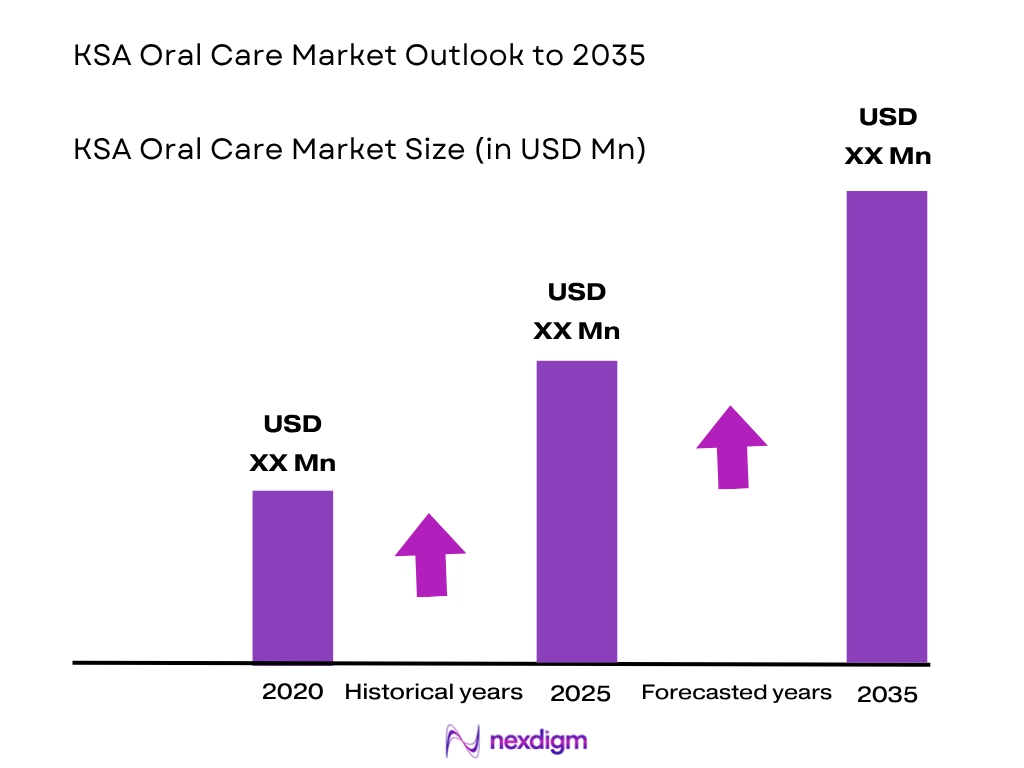
The KSA oral care market is valued at USD ~ million, as per Nexdigm’s research. Market demand is driven by daily-use products such as toothpaste, toothbrushes, mouthwash/rinse, denture products and dental accessories, with toothpaste identified as the largest revenue-generating segment. Population expansion supports recurring household consumption; Saudi Arabia’s population rose from 33.7 million to 35.3 million, adding 1.6 million people to the consumer base.
Riyadh, Jeddah and Dammam dominate the KSA oral care market because they combine high urban density, stronger purchasing power, broad pharmacy networks, dental-clinic concentration and higher exposure to premium personal-care formats. Nexdigm identifies these cities as the market’s key demand centers due to large urban populations and greater access to oral care products. Their dominance is reinforced by pharmacy-led recommendation behavior, modern retail penetration and e-commerce delivery coverage.
Market Segmentation
By Product Type
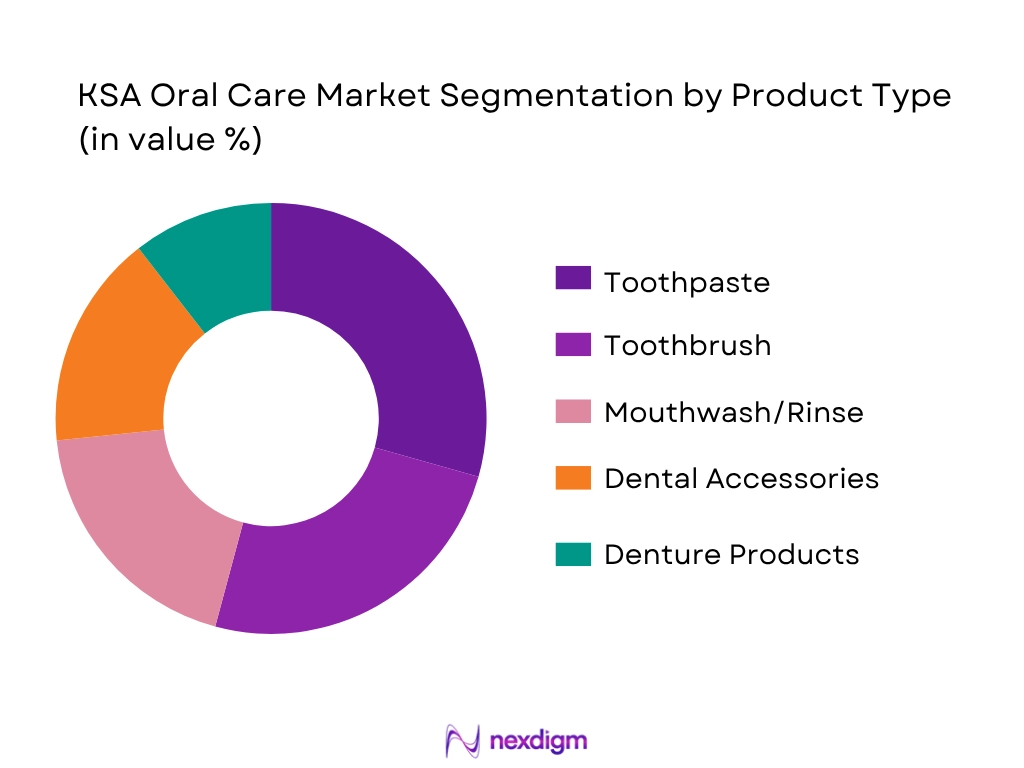
The KSA oral care market is segmented by product type into toothpaste, toothbrush, mouthwash/rinse, dental accessories and denture products. Toothpaste dominates because it is the highest-frequency oral care purchase, used across all income groups and age cohorts. The category benefits from anti-cavity, whitening, herbal/miswak, sensitivity and gum-care variants, making it both a necessity and a premiumization platform. Nexdigm Research states that toothpaste was the largest revenue-generating product segment and had a 29.37% revenue share.
By Distribution Channel
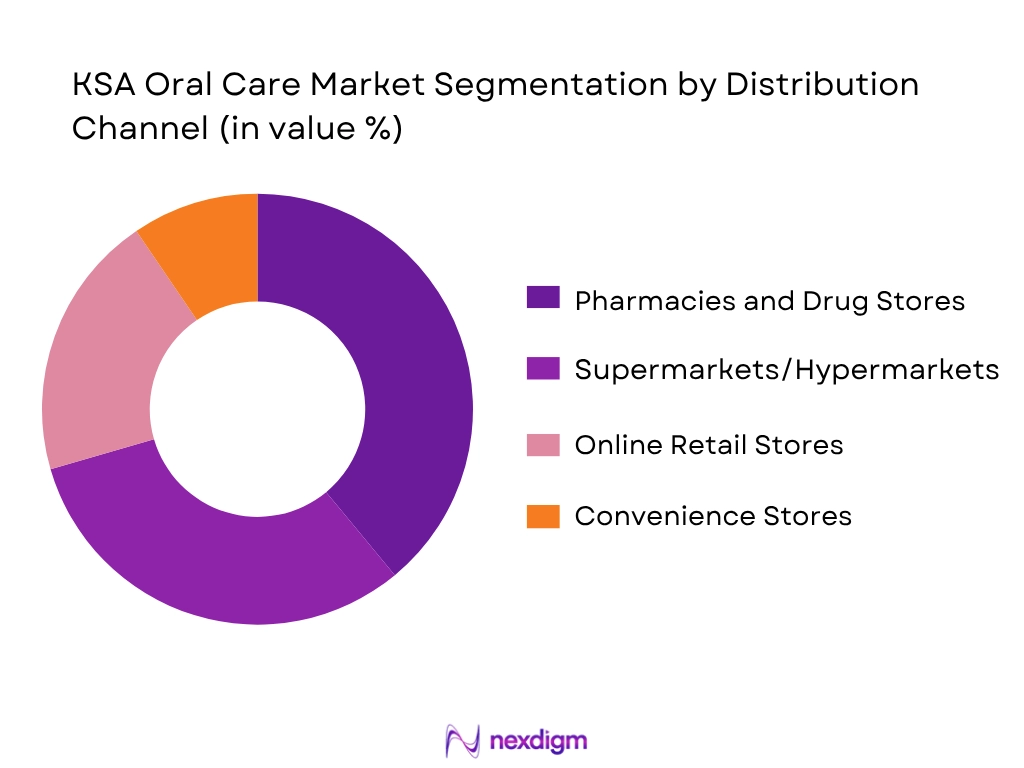
The KSA oral care market is segmented by distribution channel into pharmacies and drug stores, supermarkets/hypermarkets, online retail stores and convenience stores. Pharmacies and drug stores dominate because oral care is closely linked to dental pain, sensitivity, gum bleeding, medicated mouthwash and dentist/pharmacist recommendations. Chains such as Nahdi and Al-Dawaa strengthen repeat purchase through national networks, loyalty programs, pharmacist advice and online pharmacy delivery. This makes pharmacy-led retail particularly important for therapeutic and premium SKUs.
Competitive Landscape
The KSA oral care market is led by multinational FMCG and healthcare brands, supported by pharmacy chains, distributors and online marketplaces. Competition is concentrated around Colgate, Oral-B, Crest, Sensodyne, Parodontax, Listerine, Signal, Closeup, GUM, Dabur Miswak and Himalaya. Procter & Gamble, Colgate-Palmolive, Unilever, Johnson & Johnson, GSK/Haleon, Henkel, Church & Dwight, Lion, Sunstar, Dabur and Himalaya among leading participants.
| Company | Establishment Year | Headquarters | Key Brands in KSA | Product Strength | Channel Strength | Price Positioning | Clinical/Therapeutic Focus | Natural/Miswak Portfolio |
| Colgate-Palmolive | 1806 | New York, USA | ~ | ~ | ~ | ~ | ~ | ~ |
| Procter & Gamble | 1837 | Cincinnati, USA | ~ | ~ | ~ | ~ | ~ | ~ |
| Haleon | 2022 | Weybridge, UK | ~ | ~ | ~ | ~ | ~ | ~ |
| Johnson & Johnson | 1886 | New Brunswick, USA | ~ | ~ | ~ | ~ | ~ | ~ |
| Unilever | 1929 | London, UK | ~ | ~ | ~ | ~ | ~ | ~ |
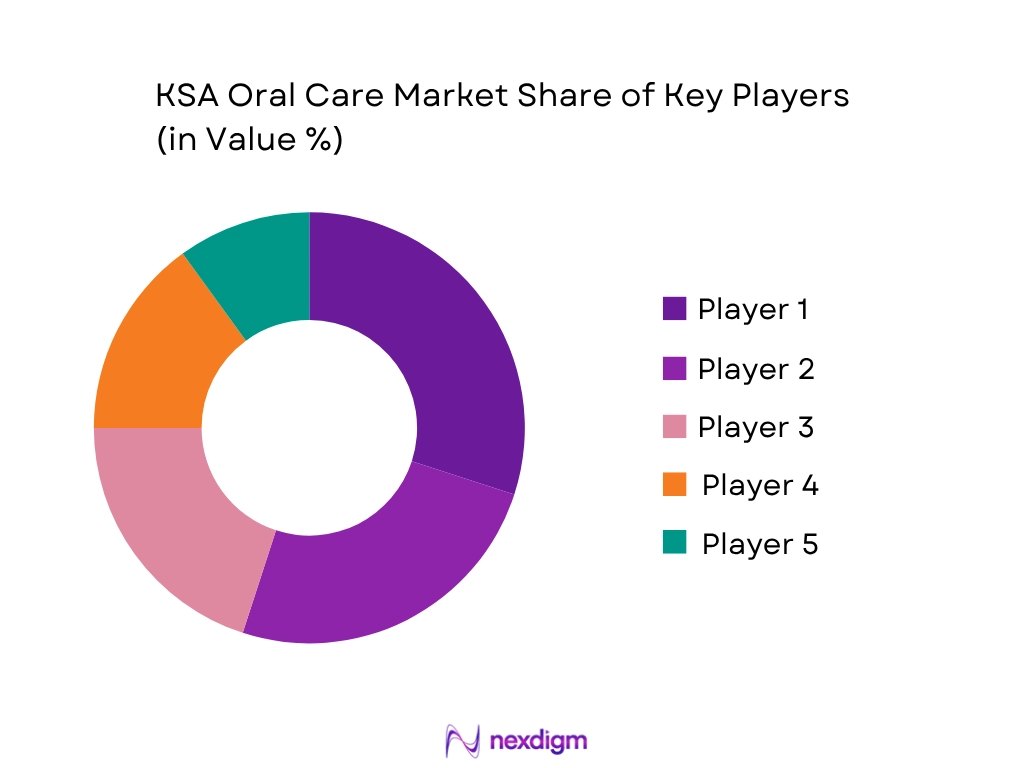
KSA Oral Care Market Analysis
Growth Drivers
Dental Caries Burden
Saudi Arabia’s oral care demand is structurally supported by a high dental disease burden among children and families. The Ministry of Health states that tooth decay affects 96 children per 100 aged six and 93.7 children per 100 aged twelve, making preventive oral hygiene products such as fluoride toothpaste, kids toothbrushes, mouthwash and dentist-recommended products essential household categories. The same MOH guidance recommends brushing 2 times daily for 2 minutes and regular dental visits every 6 months, directly supporting repeat purchase of toothpaste, toothbrushes and gum-care products. On the demand-base side, GASTAT reports Saudi Arabia’s population at 35.3 million people, up from 33.7 million, adding 1.6 million people to the addressable consumer pool. Saudi citizens exceeded 19.6 million, while non-Saudi residents reached 15.7 million, supporting both household and transient worker demand for daily oral hygiene SKUs. The macroeconomic base also supports category resilience: GASTAT reported real GDP growth of 1.3, non-oil activities growth of 4.3, and government activities growth of 2.6, indicating continued domestic consumption and service-sector activity relevant to pharmacies, supermarkets and healthcare retail.
Preventive Oral Hygiene Awareness
Preventive oral hygiene awareness is becoming a stronger demand driver because government health communication directly links brushing, toothpaste use, plaque control and dentist visits with reduced cavities and gum disease. The Ministry of Health states that brushing with a toothbrush and toothpaste is the best way to maintain oral and dental hygiene, prevent cavities and protect children’s health; it also identifies tooth decay among children aged 5 to 9 as a major cause of hospitalization and school absenteeism. This creates a clear public-health basis for daily-use products, particularly kids toothpaste, soft-bristle toothbrushes, fluoride toothpaste and electric toothbrushes. MOH specifically notes that children enjoy electric toothbrushes, which can encourage brushing, giving the market a product-led route to improve compliance. The macro backdrop strengthens preventive-care adoption: MOH’s state budget allocation for health stood at SAR 86,253,063 thousand, with commodities and services at SAR 17,241,679 thousand, showing continued institutional capacity for healthcare delivery and awareness. World Bank-linked data also reports Saudi household final consumption expenditure at USD 556,685,333,333, reflecting a large consumer-spending base for recurring hygiene products.
Market Challenges
Price Sensitivity
Price sensitivity remains a major challenge in the KSA oral care market because toothpaste, toothbrushes and mouthwash are recurring household purchases exposed to broader living-cost pressures. SAMA’s inflation report recorded average CPI growth of 1.7 and Q4 year-on-year CPI growth of 1.9, while housing, water, electricity, gas and other fuels increased by 9.2, absorbing a larger share of household budgets and increasing promotion dependence in mass oral care. IMF also noted that rents were rising at about 10 amid expatriate inflows and redevelopment in Riyadh and Jeddah, which is relevant because these cities are major retail demand centers for oral care. At the same time, Saudi Arabia’s population increased by 1.6 million people, with non-Saudis accounting for 75.6 per 100 of the population increase, adding a large price-conscious working-age consumer base that often prioritizes value packs, multipacks and promotional SKUs. The market impact is specific: premium sensitivity toothpaste, whitening mouthwash and electric brushes can grow, but mass toothpaste and toothbrush volumes remain highly dependent on discounts, pharmacy bundles and supermarket promotions.
Counterfeit/Parallel Imports
Counterfeit and parallel-import risks challenge the KSA oral care market because toothpaste, mouthwash, whitening strips and personal-care products require consumer trust, correct labeling, expiry integrity and compliant claims. SFDA reported 1,808 violations during inspection activity and financial fines totaling SAR 4,589,500, showing active enforcement pressure across regulated product categories. The Saudi Authority for Intellectual Property reported 422 suspected customs cases in cooperation with ZATCA and 3.4 million counterfeit products in customs shipments, indicating wider IP and border-control risks that affect branded FMCG and personal-care categories. For oral care brands, this creates three market-specific issues: consumers may receive non-compliant or expired products through informal sellers; authorized distributors face margin leakage from uncontrolled channels; and pharmacy/e-commerce platforms must invest in supplier verification. The challenge is amplified by Saudi Arabia’s import-reliant retail ecosystem and large expatriate population of 15.7 million, which expands demand diversity but also increases the complexity of SKU origin, Arabic labeling, storage compliance and claim verification.
Opportunities
Miswak-Herbal Positioning
Miswak-herbal oral care is a strong future growth opportunity because it connects modern toothpaste and mouthwash formats with Saudi Arabia’s religious, cultural and natural-care preferences. Saudi Press Agency reported that siwak demand surges during Ramadan and described siwak as traditionally used to cleanse teeth and gums, remove plaque and bacteria, freshen breath and support gum health. This gives oral care brands a culturally relevant platform for miswak toothpaste, herbal mouthwash, natural breath fresheners and travel-friendly oral hygiene products. The opportunity is supported by Saudi Arabia’s large domestic base of 35.3 million people and Saudi citizens exceeding 19.6 million, alongside strong religious-season consumption occasions. Hajj and Umrah traffic also reinforces demand for portable hygiene formats; CDC notes that more than 1.8 million pilgrims attended Hajj in 2023 and about 1.6 million came from outside KSA, while Umrah reached about 25 million pilgrims in 2022, with 8 million from outside KSA. These numbers support demand for small-pack oral care, miswak sticks, herbal toothpaste and impulse-format hygiene products in Makkah, Madinah, airports, pharmacies and convenience retail. Sources:
Sensitivity Care
Sensitivity care is a future growth opportunity because Saudi Arabia’s high cavity burden and preventive-care guidance create demand for therapeutic toothpaste, soft toothbrushes, gum-care products and dentist-recommended mouthwash. MOH states that plaque accumulation causes bacteria to breed, producing acids that attack teeth and lead to cavities; it also recommends toothbrush and toothpaste use 2 times daily for 2 minutes and dentist visits every 6 months. These recommendations directly support specialized oral care products addressing sensitivity, enamel protection, gum bleeding and post-treatment care. The opportunity is reinforced by healthcare capacity and consumer spending indicators: MOH’s health allocation reached SAR 86,253,063 thousand, while household final consumption expenditure reached USD 556,685,333,333, creating a large base for pharmacy-led health and hygiene purchases. Macroeconomic stability also matters for premium therapeutic SKUs: IMF reported inflation easing to 1.6 in May, while GASTAT reported non-oil activities growth of 4.3, supporting retail, healthcare and pharmacy-channel activity. For brands, this makes sensitivity care suitable for pharmacist recommendation, dental-clinic sampling, premium shelf placement and e-pharmacy subscriptions.
Future Outlook
The KSA oral care market is expected to expand steadily, with Nexdigm reporting a 6.54% CAGR for the long-range forecast period and market value expected to reach USD 640.8 million by the end of its forecast window. Growth will be supported by premium toothpaste, sensitivity care, electric toothbrushes, mouthwash, whitening formats, e-pharmacy penetration and stronger preventive oral-health awareness. Future demand will be shaped by four structural shifts: higher household spend on preventive care, stronger adoption of dentist-recommended SKUs, wider use of app-based pharmacy delivery and the rise of natural/herbal positioning through miswak and plant-based ingredients. Toothbrushes are expected to remain a fast-growing category, as it is identified as the most lucrative product segment during the forecast period.
Major Players
- Colgate-Palmolive
- Procter & Gamble
- Haleon
- Unilever
- Johnson & Johnson
- Church & Dwight
- Dabur
- Himalaya Wellness
- Sunstar
- Lion Corporation
- Henkel
- Reckitt
- Philips
- Hismile
- GUM
Key Target Audience
- Oral care product manufacturers
- FMCG and personal care companies
- Pharmacy chains and e-pharmacy platforms
- Supermarket and hypermarket retailers
- Dental clinic chains and oral healthcare providers
- Importers, distributors and wholesale suppliers
- Investments and venture capitalist firms
- Government and regulatory bodies: Saudi Food and Drug Authority, Ministry of Health, General Authority for Statistics, Saudi Standards, Metrology and Quality Organization
Research Methodology
Step 1: Identification of Key Variables
The initial phase involves mapping the KSA oral care ecosystem, including manufacturers, importers, pharmacy chains, modern trade retailers, online marketplaces, dental clinics and regulators. Key variables include product category, channel type, SKU pricing, oral-health incidence, consumer need state and regulatory classification.
Step 2: Market Analysis and Construction
Historical market values are reviewed using published market databases, company disclosures, retail channel mapping and oral-health indicators. The market is constructed through product-level analysis covering toothpaste, toothbrushes, mouthwash/rinse, dental accessories and denture products.
Step 3: Hypothesis Validation and Expert Consultation
Market assumptions are validated through interviews with distributors, pharmacy buyers, dentists, category managers and e-commerce sellers. These discussions help test segment dominance, pricing bands, promotional intensity, channel margins and therapeutic product adoption.
Step 4: Research Synthesis and Final Output
The final stage integrates top-down market sizing with bottom-up SKU and channel assessment. The output is validated against published market figures, regulatory developments, retail availability, competitor portfolios and consumer demand patterns to produce a decision-ready report.

- Executive Summary
- Research Methodology (Oral Care Product Definitions, SFDA Cosmetic Classification, GSO Compliance Assumptions, Primary Interviews with Retailers/Dentists/Distributors, Brand SKU Mapping, Pharmacy Shelf Audit, E-Commerce Price Scraping, Top-Down Market Sizing, Bottom-Up SKU Offtake Estimation, Limitations and Forecast Assumptions)

- Definition and Scope
- Market Genesis and Evolution
- Oral Hygiene Adoption Landscape
- Business Cycle
- Supply Chain and Value Chain Analysis
- Consumer Journey Across Preventive, Therapeutic, Cosmetic and Kids Oral Care
- Channel Ecosystem Across Pharmacies, Modern Trade, E-Commerce and Dental Clinics

- Growth Drivers (Dental Caries Burden, Preventive Oral Hygiene Awareness, Pharmacy Expansion, E-Commerce Adoption, Premiumization, Kids Oral Care Uptake)
- Market Challenges (Price Sensitivity, Counterfeit/Parallel Imports, Brand Switching, Low Flossing Penetration, SKU Cannibalization, Regulatory Documentation Burden)
- Opportunities (Miswak-Herbal Positioning, Sensitivity Care, Whitening Kits, Electric Brushes, Kids Preventive Care, Dentist-Endorsed Products)
- Market Trends (Clinical Claims, Natural Ingredients, Halal-Safe Personal Care, Bundle Promotions, App-Based Pharmacy Delivery, Influencer-Led Whitening Demand)
- Government Regulation (SFDA Notification, GSO Safety Requirements, Cosmetic Claims Compliance, Arabic Labeling, Import Conformity, Miswak Product Guidance)
- SWOT Analysis (Brand Equity, Distribution Depth, Clinical Credibility, Retail Margin Pressure)
- Stakeholder Ecosystem (Manufacturers, Importers, Distributors, Pharmacies, Hypermarkets, E-Pharmacies, Dental Clinics, Regulators)
- Porter’s Five Forces (Retailer Bargaining Power, Substitution by Traditional Miswak, Competitive Rivalry, New Entrant Barriers, Supplier Dependency)
- Competition Ecosystem (Global FMCG Brands, Therapeutic Oral Care Specialists, Herbal Players, Private Labels, Digital-First Brands)

- By Value (2020-2025)
- By Volume(2020-2025)
- By Average Selling Price (2020-2025)
- By Per Capita Oral Care Spend (2020-2025)
- By SKU Density Across Retail Channels (2020-2025)

- By Product Category (In Value%)
Toothpaste
Toothbrush
Mouthwash
Dental Floss and Interdental Cleaning
Teeth Whitening Products
Denture Care Products
Tongue Cleaners and Breath Fresheners - By Toothpaste Type (In Value%)
Fluoride Toothpaste
Sensitive Toothpaste
Whitening Toothpaste
Herbal and Miswak Toothpaste
Anti-Cavity Toothpaste
Gum Care Toothpaste
Kids Toothpaste
Multi-Benefit Toothpaste - By Toothbrush Type (In Value%)
Manual Toothbrush
Electric Toothbrush
Battery-Powered Toothbrush
Kids Toothbrush
Orthodontic Toothbrush
Soft-Bristle Toothbrush
Travel Toothbrush - By Consumer Need State (In Value%)
Cavity Prevention
Sensitivity Relief
Gum Protection
Whitening and Cosmetic Oral Care
Fresh Breath and Anti-Bacterial Care
Plaque and Tartar Control
Kids Oral Hygiene
Natural, Herbal and Miswak-Based Care - By Distribution Channel (In Value%)
Retail Pharmacies
Hypermarkets and Supermarkets
E-Pharmacies
Online Marketplaces
Convenience Stores
Dental Clinics
Wholesale and Institutional Channels - By Price Tier (In Value%)
Mass
Mid-Premium
Premium
Clinical/Therapeutic
Imported Specialty SKUs - By Age Group (In Value%)
Kids
Teens
Adults
Seniors
Family Packs - By Region (In Value%)
Central Region
Western Region
Eastern Region
Southern Region
Northern Region - By Pack Size and Format (In Value%)
Travel Size
Standard Tube
Value Pack
Pump Bottle
Refill Pack
Bundle Pack

- Market Share of Major Players (Value Share, Volume Share, Toothpaste Share, Toothbrush Share, Mouthwash Share, Pharmacy Channel Share)
- Cross Comparison Parameters (Product Portfolio Breadth, Therapeutic SKU Strength, Miswak/Herbal Portfolio, Whitening Portfolio, Kids Oral Care Range, Pharmacy Shelf Presence, E-Commerce Visibility, Average SKU Price Index)
- SWOT Analysis of Major Players (Brand Equity, Channel Reach, Clinical Positioning, Promotion Dependency)
- Pricing Analysis by SKU (Toothpaste Grams/ml, Mouthwash ml, Brush Type, Bundle Pricing, Discount Depth, Premium vs Mass Spread)
- Brand Positioning Matrix (Mass vs Premium, Clinical vs Cosmetic, Natural vs Science-Led, Adult vs Kids Focus)
- Distribution Benchmarking (Nahdi, Al-Dawaa, Amazon.sa, Noon, Carrefour, Panda, Tamimi, Dental Clinics)
- Detailed Profiles of Major Companies
Colgate-Palmolive
Procter & Gamble
Haleon
Unilever
Johnson & Johnson
Church & Dwight
Dabur
Himalaya Wellness
Sunstar
Lion Corporation
Henkel
Reckitt
Philips
Hismile
GUM

- Household Demand and Utilization (Brushing Frequency, Replacement Cycle, Family Pack Adoption, Mouthwash Usage, Flossing Penetration)
- Purchasing Power and Budget Allocation (Monthly Personal Care Spend, Pharmacy Basket Size, Promotional Sensitivity, Premium SKU Affordability)
- Dentist and Pharmacist Influence (Clinical Recommendation, Sensitivity Diagnosis, Gum-Care Advice, Kids Fluoride Guidance)
- Needs, Desires and Pain Points (Caries Prevention, Sensitivity, Bad Breath, Whitening, Gum Bleeding, Kids Compliance)
- Decision-Making Process (Brand Trust, Price Promotion, Dentist Recommendation, Ingredient Claims, Flavor, Pack Size, Online Reviews)

- By Value (2026-2035)
- By Volume (2026-2035)
- By Average Selling Price (2026-2035)
- By Per Capita Oral Care Spend (2026-2035)
- By Premium and Therapeutic SKU Contribution (2026-2035)


 Request a Sample
 Ask for Customization
 Get a Quote
 Enquire Now