

 Download PDF
Market Overview
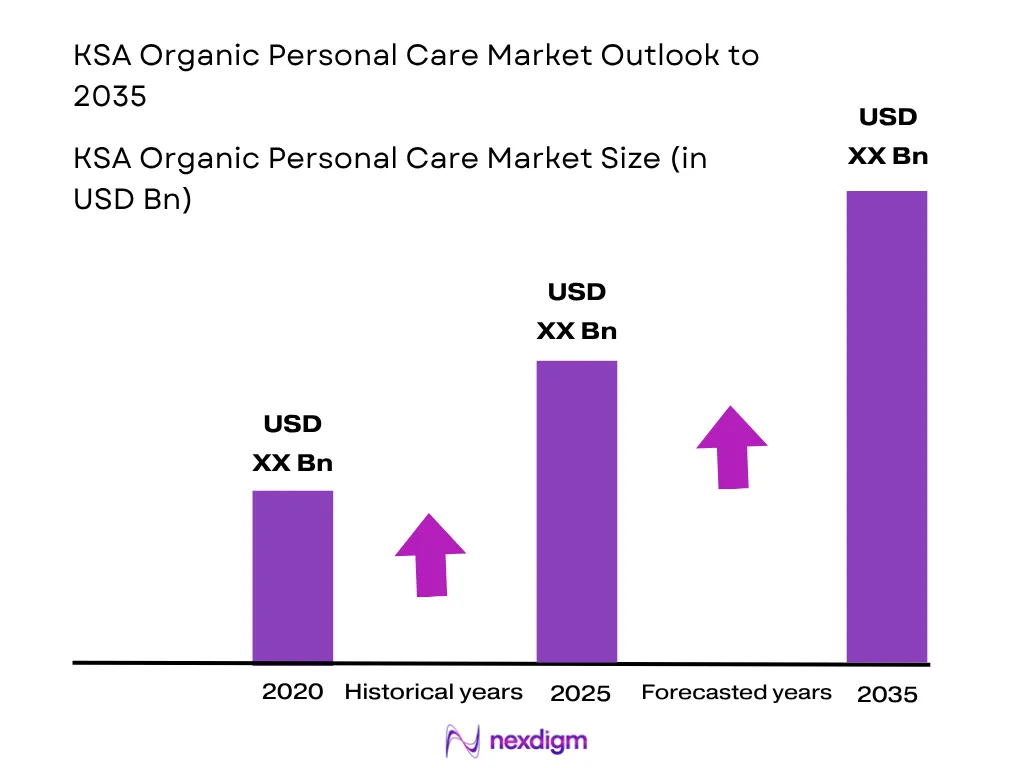
The KSA Organic Personal Care Market is valued at USD ~ billion, driven by rising consumer interest in natural and ethically sourced beauty products. In 2024, the market saw significant growth, fueled by the increasing awareness of harmful chemicals in conventional beauty products and a growing preference for eco-friendly alternatives. A key driver for this growth is the cultural shift towards health-conscious choices, aided by government-backed initiatives promoting sustainable and halal-certified organic products. The market’s trajectory is also supported by the expanding retail landscape, with both local and international brands entering the market.
Riyadh and Jeddah are the dominant cities in the KSA Organic Personal Care Market, primarily due to their status as economic and commercial hubs. Riyadh, as the capital, leads in consumer spending, with a high concentration of affluent buyers interested in luxury and organic products. Jeddah, being a gateway for imports, is pivotal for product distribution, with numerous international brands establishing a presence. The growing middle-class population in these cities, coupled with increasing disposable incomes, further supports the dominance of these regions in driving the market forward.
Market Segmentation
By Product Type
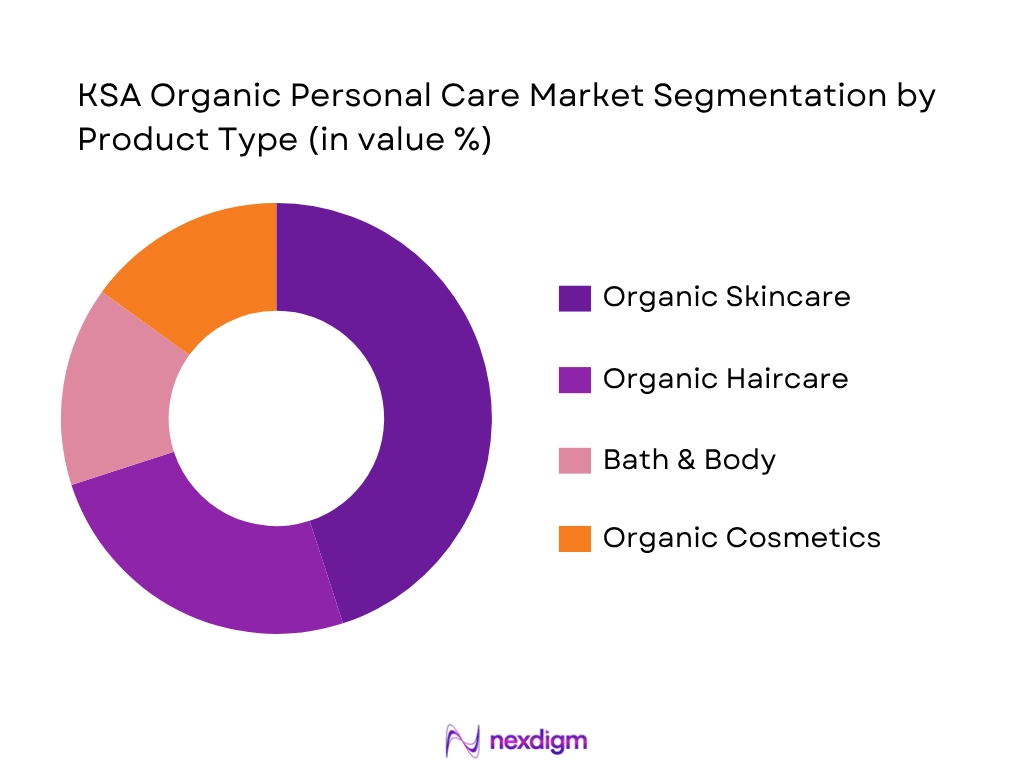
The KSA Organic Personal Care Market is segmented into skincare, haircare, bath & body products, and cosmetics. Among these, organic skincare products dominate the market share. This is primarily driven by the growing consumer preference for chemical-free and natural solutions that promise gentle and effective results. The demand for organic skincare products, particularly moisturizers, serums, and cleansers, is rising rapidly as consumers become more aware of the benefits of plant-based ingredients. Key brands in the market, such as Weleda and Lush, are focusing on providing a range of skincare solutions that appeal to health-conscious and environmentally aware consumers, reinforcing the segment’s dominance.
By Ingredient Origin
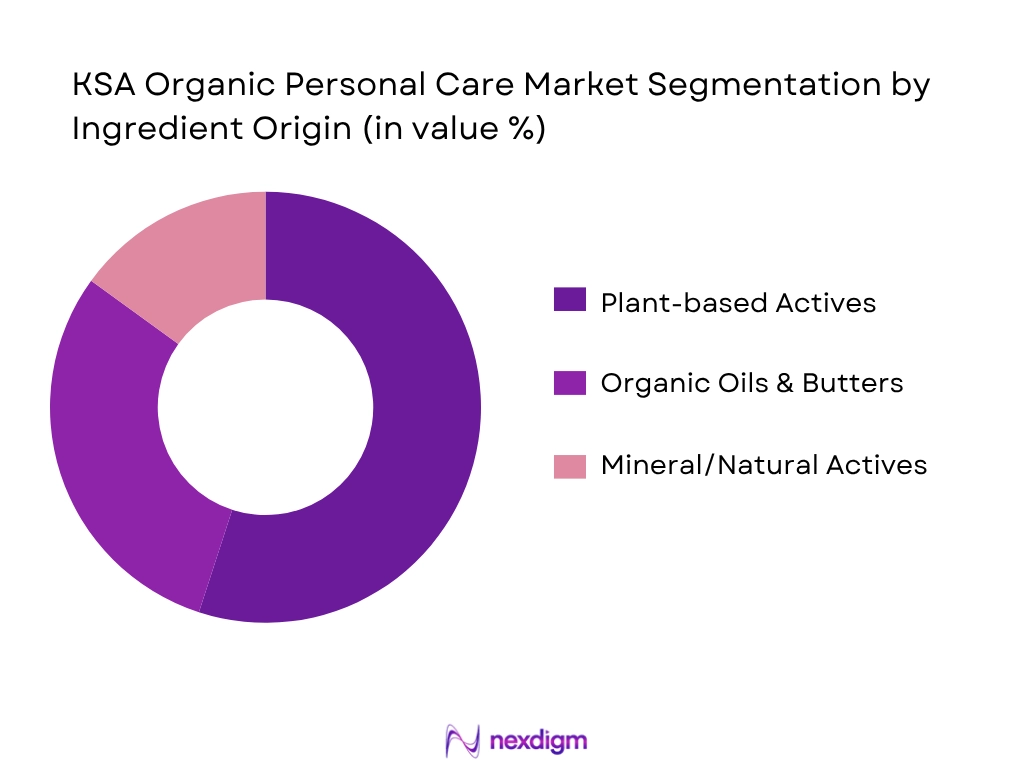
The KSA Organic Personal Care Market is also segmented by ingredient origin, including plant-based actives, organic oils, and natural minerals. Plant-based actives dominate the market share in this segment due to the growing consumer inclination towards products formulated with botanicals, which are perceived as safer and more effective. The use of botanicals such as aloe vera, chamomile, and tea tree oil in personal care products offers a holistic approach to skincare and haircare, aligning with the cultural emphasis on natural wellness. Brands are capitalizing on this trend by introducing organic, plant-powered formulations that resonate well with consumers seeking sustainable beauty solutions.
Competitive Landscape
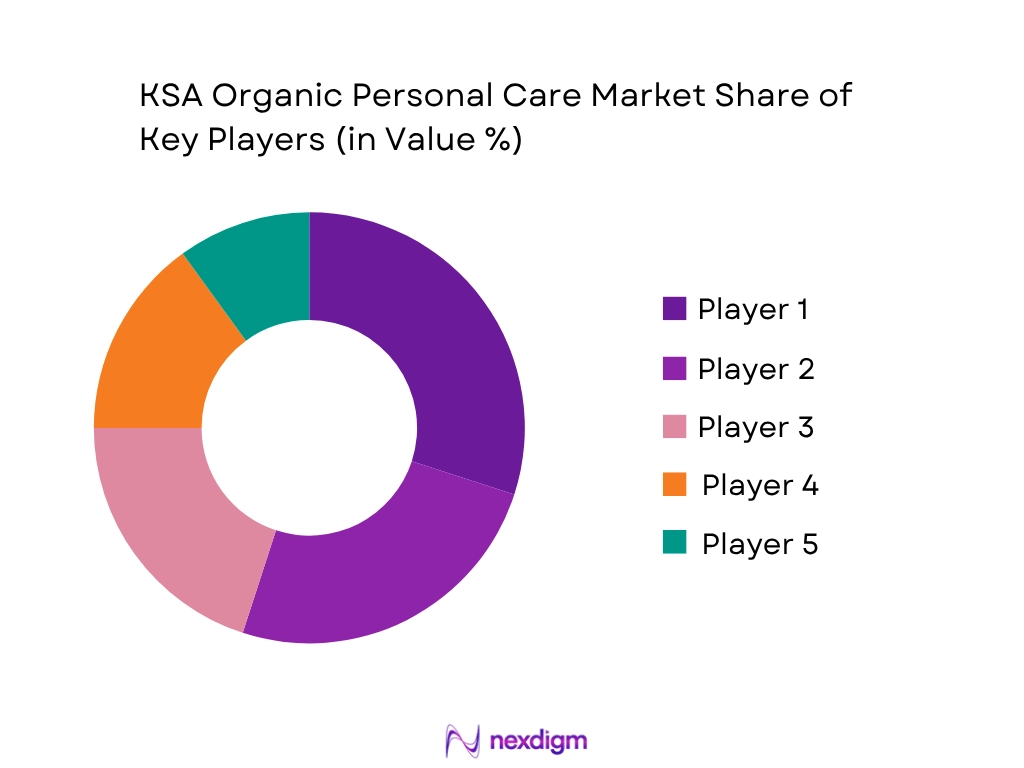
The KSA Organic Personal Care Market is dominated by a mix of international brands and local players, each leveraging strong brand recognition and distribution networks to secure market share. Companies such as Lush, Weleda, and The Body Shop lead the market by offering a diverse range of organic and cruelty-free products. Local players are also gaining traction by focusing on halal certification, which is increasingly in demand among consumers in Saudi Arabia. These players are leveraging local manufacturing capabilities, emphasizing their commitment to sustainability and ethical sourcing.
| Company | Year of Establishment | Headquarters | Product Range | Halal Certification | Organic Certification | Retail Reach |
| Lush | 1995 | UK | ~ | ~ | ~ | ~ |
| Weleda | 1921 | Switzerland | ~ | ~ | ~ | ~ |
| The Body Shop | 1976 | UK | ~ | ~ | ~ | ~ |
| Al Haramain | 1970 | KSA | ~ | ~ | ~ | ~ |
| Deyga Organics | 2016 | KSA | ~ | ~ | ~ | ~ |
KSA Organic Personal Care Market Analysis
Growth Drivers
Health & Wellness Awareness
The expansion of the Saudi organic personal care market is strongly linked to broader health and wellness trends in the Kingdom. In 2024, Saudi Arabia’s GDP per capita stood at USD 35,121.7, indicating relatively high average income levels that support discretionary spending on premium health‑ and wellness‑oriented products, including organic personal care goods, which appeal to affluent consumers seeking safer alternatives to conventional cosmetic products. Additionally, overall household final consumption expenditure in Saudi Arabia reached USD 688 billion (World Bank), reflecting significant consumer spending power that increasingly prioritizes products perceived as natural, non‑toxic, and beneficial for long‑term wellbeing. These health consciousness trends are corroborated by Euromonitor analysis highlighting heightened consumer demand towards natural and sustainable beauty care purchases fuelled by awareness of chemical sensitivities and lifestyle‑driven self‑care habits.
Sustainability & Eco‑Conscious Consumer Trends
Consumers in Saudi Arabia are increasingly adopting eco‑conscious purchasing behaviors, favouring products with sustainable credentials. With the Kingdom’s GDP at USD 1.24 trillion, a relatively low inflation rate of 1.7%, and strong internet usage reaching nearly 100 percent of the population, environmentally responsible brands are gaining traction, especially among younger, digitally engaged buyers. This cohort responds strongly to sustainability narratives, including packaging recyclability, cruelty‑free production, and “clean” ingredient lists. As traditional personal care brands expand into eco‑friendly lines and dedicated organic brands grow their presence, sustainability factors act as a strong differentiator influencing purchase decisions – supported by macroeconomic stability that enables discretionary spending. These patterns coincide with broader climate‑positive consumer sentiment and align with Vision 2030 social development goals tied to responsible consumption and natural resource stewardship in Saudi Arabia.
Market Challenges
High Price Differential (Organic Premium)
One of the most persistent barriers in the Saudi organic personal care market is the premium price point of certified organic products relative to conventional alternatives. While macroeconomic indicators show an overall GDP of USD 1.24 trillion and sizable consumer spending capacity, organic offerings often carry a significant price markup due to sourcing costs, certification fees, and smaller production scales. In cultures with strong price‑sensitive consumer segments, such premiums can limit adoption among price‑conscious consumers despite rising health awareness. Furthermore, this pricing gap persists even when broader household consumption expenditure is robust, indicating that value rather than price alone governs purchasing decisions. The result is slower conversion from conventional to organic personal care products, particularly outside major urban centres.
Regulatory Compliance Cost
Compliance with Saudi Arabia’s regulated framework for cosmetics and personal care products adds complexity and cost to market entry and ongoing operations. The Saudi Food and Drug Authority (SFDA) mandates registration and notification processes through its Unified Electronic System for products to be legally marketed. Companies must meet safety, labeling, and ingredient disclosure requirements under standards such as GSO 1943:2024 and GSO 2528:2024 before importation or sale, and often require local representation to complete procedures. These regulatory requirements incur administrative and certification expenses that disproportionately impact smaller organic brands with limited budgets. Although these frameworks safeguard consumer health, the cost and time burdens can slow product rollouts and reduce incentives for new entrants into the organic segment.
Opportunities
Private Label Organic Launches
The KSA organic personal care segment presents a growing opportunity for private label product launches by retailers seeking to capitalise on consumer preference for natural ingredients and sustainability credentials. With strong disposable income levels in Saudi households and significant final consumption expenditure, retailers can develop in‑house organic brands that offer better price accessibility than global premium organic lines, thereby capturing a broader consumer base. Private label products allow retailers to tailor formulations to local preferences (e.g., Halal certification, eco‑friendly packaging) and establish direct relationships with consumers through loyalty programmes and data‑driven marketing. This strategy can stimulate growth by reducing price barriers while retaining the perceived quality and authenticity associated with organic care products.
Retail Expansion
Expansion of retail footprint and distribution channels presents a substantial opportunity for organic personal care market growth in Saudi Arabia. While e‑commerce and specialty health‑beauty outlets are gaining traction, there remains untapped potential in broader retail networks including supermarkets, pharmacies, and dedicated organic sections. Diversifying access points increases product visibility and convenience for consumers outside affluent urban centres. As consumer spend on beauty and personal care continues to benefit from macroeconomic stability, retailers focusing on omnichannel strategies – combining physical presence with online distribution – can better meet evolving shopping behaviours. Enhanced visibility of organic personal care offerings, supported by targeted localized marketing, positions companies to convert consumers previously constrained by limited availability or lack of awareness.
Future Outlook
Over the next decade, the KSA Organic Personal Care Market is expected to see significant growth, driven by evolving consumer behavior towards healthier, natural, and sustainable beauty products. This growth is supported by increasing awareness about the benefits of organic ingredients, alongside the government’s continued push for eco-conscious practices. The trend toward halal certification in personal care products will continue to play a pivotal role in shaping market dynamics, with an increasing number of local and international brands tailoring their products to meet the demand for halal-certified organic goods. Additionally, the growth of e-commerce platforms and the rise in demand for sustainable packaging will further boost the market’s expansion.
Major Players
- Lush
- Weleda
- The Body Shop
- Al Haramain
- Deyga Organics
- SaafSkin
- Green People
- Kora Organics
- Juicy Chemistry
- RMS Beauty
- Herbivore Botanicals
- Tata Harper
- Organic Harvest
- Living Libations
- Dr. Hauschka
Key Target Audience
- Investments and Venture Capitalist Firms
- Government and Regulatory Bodies (Saudi Food and Drug Authority (SFDA), Saudi Standards, Metrology and Quality Organization (SASO))
- Organic Product Manufacturers
- Retailers and Distributors
- E-commerce Platforms
- Brand Owners and Managers
- Halal Certification Agencies
- Importers and Exporters
Research Methodology
Step 1: Identification of Key Variables
The initial phase involves defining the key market drivers, such as consumer demand for halal-certified organic products, ingredient sourcing preferences, and regional purchasing behavior. This phase also identifies the main stakeholders involved in the supply chain, including manufacturers, retailers, and distributors.
Step 2: Market Analysis and Construction
We collect data from secondary sources such as industry reports, trade publications, and publicly available financial reports from major players. Market share calculations and segmentation analysis are also conducted to determine how different product categories and ingredient types contribute to the overall market.
Step 3: Hypothesis Validation and Expert Consultation
Expert interviews and consultations are conducted with industry insiders, including organic product manufacturers, beauty retail managers, and regulatory bodies. These discussions provide deeper insights into the challenges and opportunities facing the organic personal care sector in KSA.
Step 4: Research Synthesis and Final Output
The final phase involves validating our findings with key stakeholders to ensure the accuracy of the data. This is complemented by analyzing future trends in consumer behavior and regulatory changes. The compiled insights are then used to develop a robust, data-backed market forecast and segmentation analysis.

- Executive Summary
- Research Methodology (Market Definitions and Assumptions; Organic Certification Frameworks and Definitions [COSMOS, USDA Organic, Halal, ISO 16128]; Data Sources; Primary vs Secondary Research Balancing; Market Size Estimation Models; Forecasting Methodology; Limitations and Validation Checks)

- Definition and Scope
- Organic Personal Care vs Conventional Personal Care Market
- Market Genesis and Historical Evolution
- Ecosystem Mapping
- KSA SFDA Regulatory Framework for Organic Personal Care Products

- Growth Drivers (Health & Wellness Awareness, Sustainability & Eco‑Conscious Consumer Trends, Digital Influence & Beauty Social Commerce, Youth Demographic Demand)
- Market Challenges (High Price Differential (Organic Premium), Regulatory Compliance Cost, Limited Local Production Infrastructure)
- Opportunities (Private Label Organic Launches, Retail Expansion (Specialized Organic Chains), Halal Organic Export Potential )
- Trends (Clean Beauty and Ingredient Transparency, Biodegradable and Recyclable Packaging Adoption, Omni‑channel Personalization Experiences)
- Regulatory Overview (SFDA Organic & Cosmetic Regulations, Labeling Compliance and Ingredient Disclosure, Import Standards and Halal Requirements)
- Ecosystem & Value Chain Analysis (Raw Material Export Dependencies, Contract Manufacturing Landscape, Retail & Omni‑Channel Influence)
- SWOT Analysis (Market Level)
- Porter’s Five Forces Analysis

- By Value (2020-2025)
- By Volume (2020-2025)
- By Average Price per SKU (2020-2025)
- By Import vs Local Production Split (2020-2025)

- By Product Category (In Value %)
Organic Skincare Products
Organic Haircare Products
Organic Bath & Body Products
Organic Color Cosmetics
Organic Fragrances & Deodorants - By Ingredient Origin (In Value %)
Plant‑Derived Actives
Organic Oils & Butters
Mineral and Natural Active Ingredients
Cruelty‑Free & Vegan Formulations - By Certification Type (In Value %)
COSMOS Certified
USDA Organic Certified
Halal Organic Certified - By Distribution Channel (In Value %)
Online Retail & E‑commerce Platforms
Specialty Organic Stores
Pharmacies and Drugstores
Supermarkets / Hypermarkets
Direct‑to‑Consumer - By Region (In Value %)
Riyadh Region
Jeddah / Makkah & Western Province
Eastern Province (Dammam/Khobar)
Southern & Northern Territories

- Market Share of Leading Players (by Value, by Volume, by Revenue)
- Cross‑Comparison Parameters (Company Overview; Organic SKU Revenue Share; Certification Portfolio; Distribution Network Depth; Digital Engagement Metrics; Pricing Tier Coverage; Retail & E‑commerce Penetration; R&D and Innovation Investment; Sustainability Index; Halal & Organic Label Compliance)
- Competitor Positioning Framework (Premium vs Value vs niche)
- Product Portfolio Breadth & Depth (Organic SKU Count)
- Competitive Intensity Matrix
- Pricing Structure Analysis (Organic vs Conventional SKUs, ASP by Category & Regional Emirate)
- Company Profiles – Key Players
Lux FX
INIKA Organic
L’Araboutique
Purity Cosmetics
SaafSkin
Organic Harvest
Forest Essentials
Juicy Chemistry
Deyga Organics
Green People
The Body Shop
Lush Fresh Handmade Cosmetics
Weleda
Dr. Organic
Khadi Natural

- Consumer Usage Patterns and Motivators
- Organic Product Awareness and Trust Markers
- Price Sensitivity and Value Perception
- Demographic & Behavioral Cohorts (age, income, household type, condition-led needs, wellness orientation)
- Decision‑Making Process for Organic Purchases (awareness source, trial trigger, review influence, conversion friction, repurchase trigger)
- Purchase Drivers & Barriers (seal trust, safety perception, efficacy, scent, value, availability)
- Usage Frequency/Patterns
- Brand Loyalty & Switching Behavior

- By Value (2026-2035)
- By Volume (2026-2035)
- By Average Organic SKU Price (2026-2035)
- By Premium vs Mass Organic Sub‑Segment Growth (2026-2035)


 Request a Sample
 Ask for Customization
 Get a Quote
 Enquire Now