
 Download PDF
Market Overview
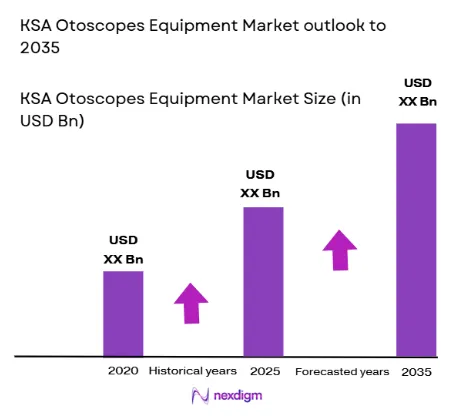
Based on a recent historical assessment, the KSA Otoscopes Equipment Market is valued at approximately USD ~ billion. This market is primarily driven by the growing demand for diagnostic equipment in healthcare settings, especially in hospitals and clinics. The rise in ear-related health issues among the population and the increasing awareness regarding the importance of regular ear examinations are significant contributing factors. Moreover, the shift toward advanced diagnostic tools such as digital and video otoscopes has further propelled the market growth, offering enhanced precision and patient comfort.
The Kingdom of Saudi Arabia, with its strong healthcare infrastructure, stands as a dominant player in the KSA otoscopes equipment market. Cities like Riyadh, Jeddah, and Dammam are leading the market due to their advanced medical facilities, high healthcare expenditure, and presence of world-class hospitals and clinics. Additionally, these regions have seen significant investments in medical technology and infrastructure development, making them key hubs for healthcare and medical equipment. The government’s efforts to promote healthcare accessibility in urban and rural areas also play a role in strengthening the demand for otoscopes.
Market Segmentation
By Product Type:
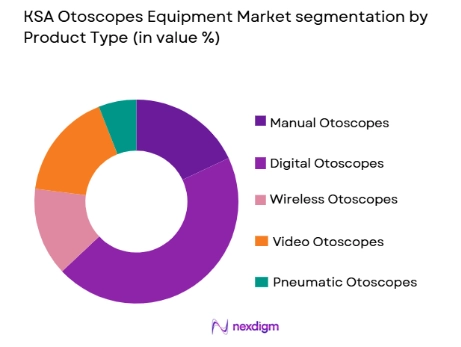
KSA Otoscopes Equipment Market is segmented by product type into manual otoscopes, digital otoscopes, wireless otoscopes, video otoscopes, and pneumatic otoscopes. Recently, digital otoscopes have gained a dominant market share due to factors such as increased consumer preference for accurate, efficient, and user-friendly diagnostic devices. The shift towards digital devices offers better image clarity and ease of use compared to traditional manual otoscopes. Furthermore, the integration of wireless features in digital otoscopes has made them more appealing to healthcare professionals looking for flexibility and convenience in their diagnostic processes.
By Platform Type:
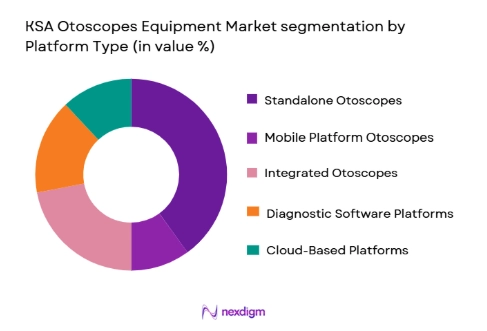
KSA Otoscopes Equipment Market is segmented by platform type into standalone otoscopes, mobile platform otoscopes, integrated otoscopes, diagnostic software platforms, and cloud-based platforms. Recently, standalone otoscopes have taken a dominant position in the market, owing to their simplicity, reliability, and cost-effectiveness. This type is favored in clinics and hospitals with traditional setups where basic functionality is needed. Furthermore, standalone otoscopes often come at a lower price point, making them the preferred choice in resource-constrained healthcare environments.
Competitive Landscape
The KSA Otoscopes Equipment Market is highly competitive, with key players consolidating their positions through strategic acquisitions, partnerships, and technology innovation. Major companies are focusing on offering advanced otoscope solutions that meet the growing demand for high-quality diagnostics in healthcare settings. As the market expands, these companies are investing in both product development and geographical expansion to cater to the rising demand for digital and portable otoscopes. The presence of established brands ensures strong competition, while newer entrants are striving to differentiate themselves with cost-effective and advanced technology solutions.
| Company Name | Establishment Year | Headquarters | Technology Focus | Market Reach | Key Products | Revenue (USD Billion) | Additional Parameter |
| Medtronic | 1949 | Ireland | ~ | ~ | ~ | ~ | ~ |
| Welch Allyn | 1915 | USA | ~ | ~ | ~ | ~ | ~ |
| Oticon Medical | 1904 | Denmark | ~ | ~ | ~ | ~ | ~ |
| HEINE Optotechnik | 1946 | Germany | ~ | ~ | ~ | ~ | ~ |
| 3M Health Care | 1902 | USA | ~ | ~ | ~ | ~ | ~ |
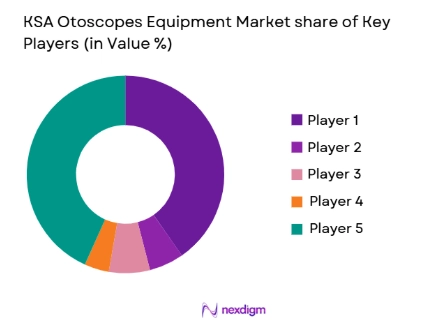
KSA Otoscopes Equipment Market Analysis
Growth Drivers
Rising Demand for Diagnostic Tools:
The KSA Otoscopes Equipment Market is primarily driven by the rising demand for advanced diagnostic tools. As the population becomes more aware of ear health, there is an increased preference for regular ear check-ups, particularly in hospitals and clinics. The increasing prevalence of ear-related diseases such as infections, hearing loss, and other ear ailments has driven the demand for reliable diagnostic tools like otoscopes. Moreover, government initiatives aimed at improving healthcare access in both urban and rural areas have resulted in increased healthcare spending, which has significantly benefited the otoscopes market. These factors have created a strong growth trajectory for the market, with continued expansion expected as healthcare infrastructure improves across the kingdom.
Technological Advancements in Otoscopes:
Another significant growth driver is the technological advancements that have been incorporated into modern otoscopes. The integration of digital and video technology into otoscopes allows for clearer imaging and greater diagnostic accuracy, making them the preferred choice in many medical settings. With wireless and portable otoscopes gaining popularity, healthcare providers can now offer more flexible and mobile diagnostic options. These innovations not only improve the quality of care but also enhance the efficiency of the diagnostic process. Furthermore, the rise of telemedicine and remote healthcare services has further fueled the demand for advanced otoscopes, as they allow for easy sharing of diagnostic images with specialists for remote consultations. These technological advancements ensure the sustained growth of the KSA Otoscopes Equipment Market.
Market Challenges
High Cost of Advanced Otoscopes:
One of the key challenges faced by the KSA Otoscopes Equipment Market is the high cost associated with advanced otoscopes. While digital and video otoscopes offer numerous benefits, including enhanced diagnostic capabilities, the price point of these devices can be prohibitive for smaller healthcare institutions or clinics, especially those in rural areas. The high upfront costs of these sophisticated systems, coupled with the expenses for maintenance and calibration, make them less accessible for certain segments of the market. Despite the growing adoption of advanced otoscopes, the financial barriers may limit their widespread use, especially in cost-sensitive environments where budget constraints exist. This challenge hampers the growth potential of the market in the short term.
Regulatory and Certification Hurdles:
Another significant challenge facing the KSA Otoscopes Equipment Market is the complex regulatory environment for medical devices. Manufacturers must comply with stringent regulations set by government agencies and health authorities, which often results in delays in product launches or market entry. Additionally, obtaining the necessary certifications for medical equipment can be time-consuming and costly. The ever-evolving nature of these regulations means that companies must stay up to date with the latest compliance requirements, which can further increase operational costs. As a result, the regulatory hurdles in the KSA market pose a significant challenge for companies seeking to introduce new otoscope models or expand their product lines.
Opportunities
Expanding Telemedicine Services:
A major opportunity for growth in the KSA Otoscopes Equipment Market lies in the expansion of telemedicine services. With the global shift towards digital healthcare, the KSA government has been actively promoting telemedicine initiatives to improve healthcare access, especially in remote areas. Otoscopes with wireless connectivity and cloud-based platforms are increasingly being used for teleconsultations, where healthcare professionals can remotely examine patients and share diagnostic images with specialists. This development not only enhances patient care but also reduces the burden on healthcare facilities by enabling remote consultations and reducing patient wait times. As the demand for telemedicine solutions increases, the otoscopes market stands to benefit from this growing trend, providing opportunities for both established players and new entrants to capture market share.
Growing Awareness of Ear Health:
Another opportunity lies in the growing awareness of ear health among the population. As public awareness campaigns about hearing loss and ear infections increase, more individuals are seeking regular ear check-ups, especially in urban centers where healthcare infrastructure is more developed. This growing focus on ear health has resulted in an increase in the number of medical professionals opting for advanced otoscopes to perform more accurate diagnoses. Furthermore, as the KSA government continues to invest in healthcare infrastructure, the availability of high-quality diagnostic equipment like otoscopes is expected to rise, creating additional demand. This presents an excellent opportunity for companies in the otoscopes market to expand their product offerings and cater to the growing number of healthcare providers looking to upgrade their diagnostic equipment.
Future Outlook
The KSA Otoscopes Equipment Market is expected to experience steady growth over the next five years, driven by the expansion of the healthcare sector, technological advancements, and increased government support for medical infrastructure development. The demand for advanced diagnostic tools such as digital otoscopes and video otoscopes is likely to rise, fueled by the growing awareness of ear health and the adoption of telemedicine. Technological developments in wireless connectivity and cloud-based solutions will continue to play a crucial role in shaping the market, enabling remote consultations and enhancing diagnostic accuracy. Moreover, the government’s continued investment in healthcare infrastructure and efforts to make healthcare more accessible will drive further market expansion.
Major Players
- Medtronic
- Welch Allyn
- Oticon Medical
- HEINE Optotechnik
- 3M Health Care
- KaVo Dental
- Riester GmbH
- Donaldson Company
- Clarity Medical
- MIR
- Kavo Kerr
- Ambu A/S
- Richard Wolf GmbH
- Fujifilm
- Bausch & Lomb
Key Target Audience
- Investments and venture capitalist firms
- Government and regulatory bodies
- Healthcare providers
- Hospitals and diagnostic centers
- Medical device distributors
- Audiologists and ENT specialists
- Telemedicine service providers
- Medical equipment suppliers
Research Methodology
Step 1: Identification of Key Variables
This step involves determining the key variables that affect the KSA Otoscopes Equipment Market, including product types, technological advancements, market trends, and regulatory factors.
Step 2: Market Analysis and Construction
Market data is gathered from both primary and secondary sources. This step includes analyzing historical data, identifying growth patterns, and constructing market models.
Step 3: Hypothesis Validation and Expert Consultation
The data and hypotheses generated are validated through consultations with industry experts, medical professionals, and market specialists to ensure the accuracy of the findings.
Step 4: Research Synthesis and Final Output
The final report is synthesized by combining the insights from various research phases. This includes synthesizing the data, performing additional analysis, and creating the final output for presentation.

- Executive Summary
- Research Methodology (Definitions, Scope, Industry Assumptions, Market Sizing Approach, Primary & Secondary Research Framework, Data Collection & Verification Protocol, Analytic Models & Forecast Methodology, Limitations & Research Validity Checks)

- Market Definition and Scope
- Value Chain & Stakeholder Ecosystem
- Regulatory / Certification Landscape
- Sector Dynamics Affecting Demand
- Strategic Initiatives & Infrastructure Growth

- Growth Drivers
Increasing prevalence of ear-related disorders
Rising healthcare expenditure
Technological advancements in diagnostic tools
Growing awareness of ear care
Adoption of telemedicine and mobile diagnostics - Market Challenges
High initial cost of advanced systems
Limited healthcare infrastructure in rural areas
Regulatory complexities in product approval
Lack of trained professionals in certain regions
Resistance to new technology adoption - Market Opportunities
Expanding home care and telemedicine markets
Growth in pediatric and geriatric patient demographics
Rising demand for non-invasive diagnostic devices - Trends
Integration of AI and machine learning in otoscopes
Growth of wireless and portable otoscopes
Adoption of cloud-based diagnostic platforms
Enhanced ergonomic design for user comfort
Increased focus on eco-friendly materials and sustainability - Government Regulations & Defense Policy
Stricter regulations on medical device safety
Government initiatives to improve healthcare access
Support for telemedicine expansion - SWOT Analysis
- Stakeholder and Ecosystem Analysis
- Porter’s Five Forces Analysis
- Competition Intensity and Ecosystem Mapping

- By Market Value, 2020-2025
- By Installed Units, 2020-2025
- By Average System Price, 2020-2025
- By System Complexity Tier, 2020-2025

- By System Type (In Value%)
Manual Otoscopes
Digital Otoscopes
Wireless Otoscopes
Video Otoscopes
Pneumatic Otoscopes - By Platform Type (In Value%)
Standalone Otoscopes
Mobile Platform Otoscopes
Integrated Otoscopes
Diagnostic Software Platforms
Cloud-Based Platforms - By Fitment Type (In Value%)
Handheld Otoscopes
Wall-Mounted Otoscopes
Desk-Based Otoscopes
Portable Otoscopes
Penlight Otoscopes - By EndUser Segment (In Value%)
Hospitals
Clinics
Diagnostic Laboratories
Ambulatory Surgical Centers
Home Care Settings - By Procurement Channel (In Value%)
Direct Sales
Retail Sales
Online Platforms
Distributors
Government Tenders - By Material / Technology (In Value%)
Plastic Otoscope Components
Metal Otoscope Components
LED Lighting Technology
Fiber Optic Technology
High-Resolution Cameras

- Market structure and competitive positioning
- Market share snapshot of major players
- CrossComparison Parameters (Market Share, Product Range, Technological Advancements, Customer Reach, Pricing Strategy, Distribution Channels, Regulatory Compliance, Service & Support, Innovation Index, Brand Reputation)
- SWOT Analysis of Key Players
- Pricing & Procurement Analysis
- Key Players
Medtronic
Welch Allyn
Oticon Medical
HEINE Optotechnik
Fujifilm
KaVo Dental
3M Health Care
Honeywell International
Richard Wolf GmbH
Riester GmbH
Clarity Medical
MIR
Kavo Kerr
Ambu A/S
Donaldson Company

- Hospitals require advanced diagnostic tools for accurate ear examinations
- Clinics are adopting cost-effective and portable otoscope solutions
- Home care settings seek user-friendly devices for self-diagnosis
- Ambulatory surgical centers focus on efficient, quick diagnostic equipment

- Forecast Market Value, 2026-2035
- Forecast Installed Units, 2026-2035
- Price Forecast by System Tier, 2026-2035
- Future Demand by Platform, 2026-2035


 Request a Sample
 Ask for Customization
 Get a Quote
 Enquire Now