
 Download PDF
Market Overview
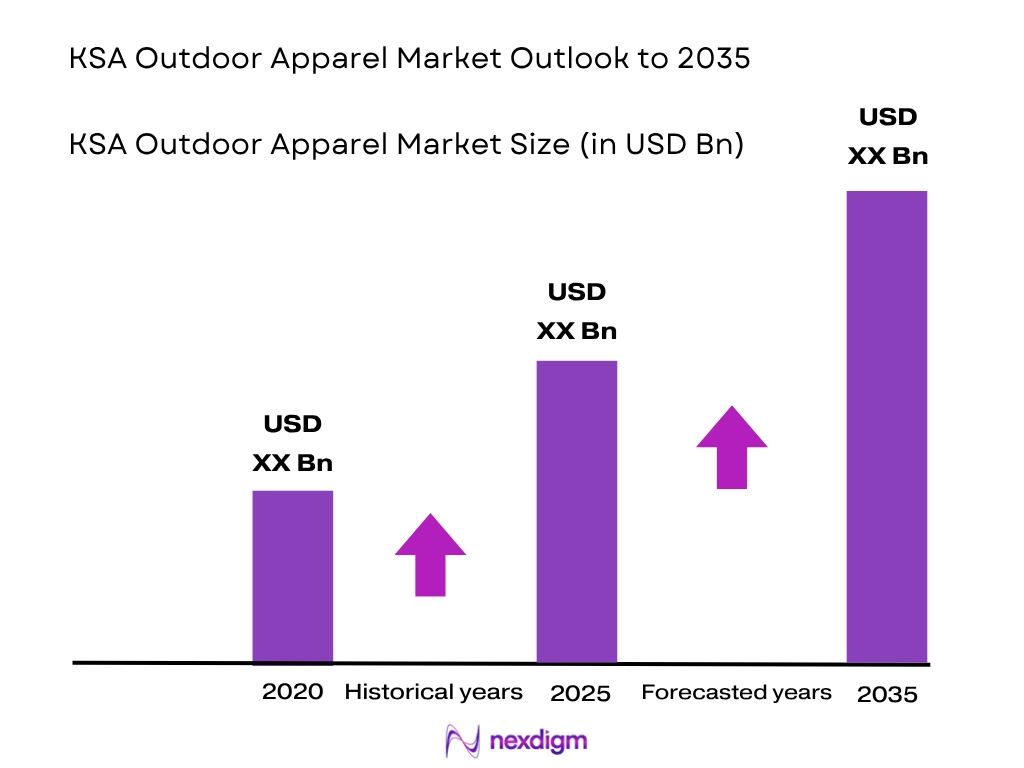
The KSA Outdoor Apparel market, inclusive of functional and performance outdoor clothing, reached an estimated USD ~ billion, based on Nexdigm’s comprehensive commercial market analysis evaluating Saudi Arabia’s outdoor apparel and equipment segment. This valuation reflects sustained demand from both domestic consumers and inbound tourism spending, showing strong revenue generation from apparel tailored to active, performance and outdoor contexts. Consumer focus on health, fitness, adventure tourism and protective functional wear has underpinned revenue growth, driven by rising participation in outdoor sports, lifestyle shifts towards active living and expanding retail access for global and specialty brands.
Major urban centers such as Riyadh, Jeddah and Dammam consistently dominate the KSA outdoor apparel market due to large population concentrations, higher disposable income levels, and robust retail infrastructure capable of supporting international brand stores, specialty outlets, and diversified sales channels. Population density in these cities supports extensive retail footprints, while active lifestyles driven by organized events, fitness cultures and outdoor recreation tourism further amplify demand for performance and specialized apparel. Additionally, these urban regions are hubs for expatriate communities and tourists who contribute to outdoor gear spending.
Market Segmentation
By Product Type
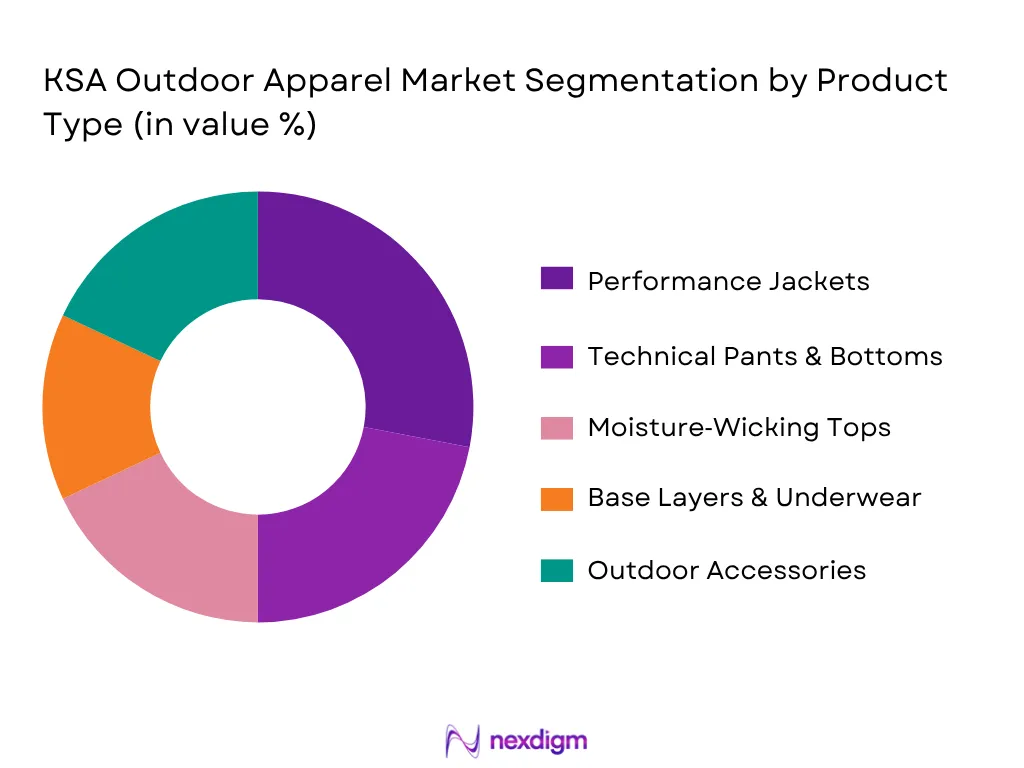
Within the product type segmentation, performance jackets hold the largest share of the KSA outdoor apparel market. The dominance stems from climate and activity profiles unique to the region; apparel combining UV protection, breathability and rugged durability is highly valued in desert, coastal and transitional weather scenarios. Performance jackets are often multi‑functional, serving both casual outdoor leisurewear and more technical use cases, while commanding premium price points. Consumer preferences have increasingly shifted toward outerwear that supports integrated performance features such as moisture management, wind resistance and heat regulation. Also, performance jackets are frequently showcased via multi‑channel retail branding, both through international sportswear brands and specialty outdoor stores, giving them visibility that reinforces their market share.
By Distribution Channel
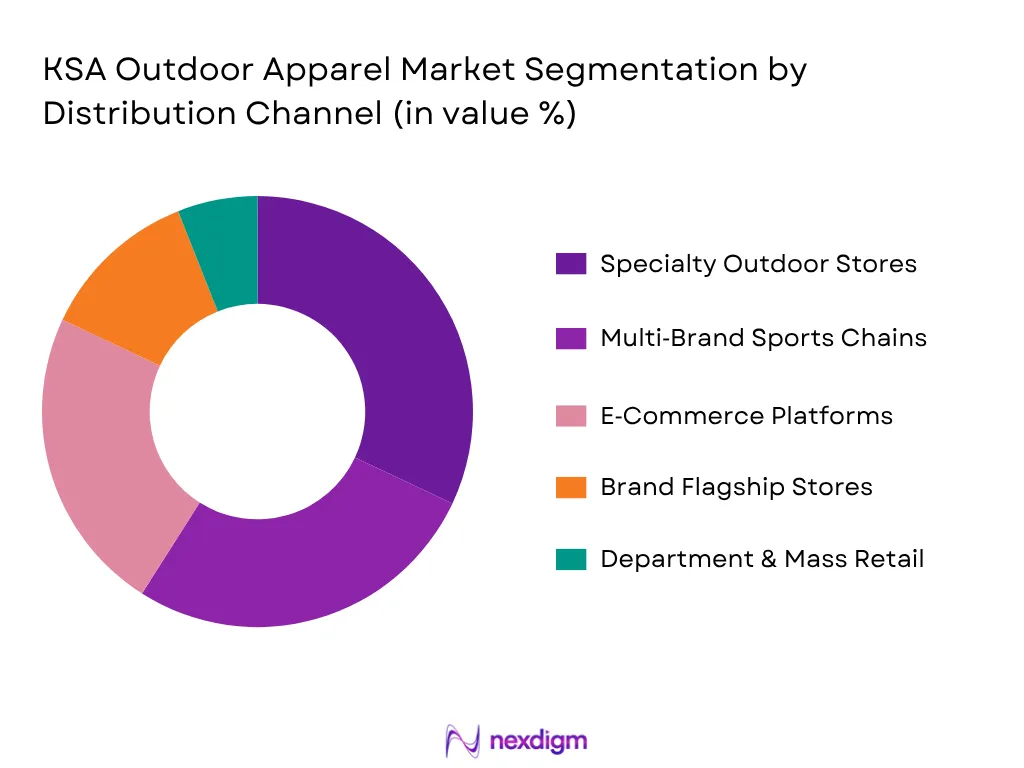
Specialty outdoor stores dominate distribution because they offer curated assortments of technical apparel tailored to activity needs (hiking, camping, trail and performance sports) that general mass stores do not provide. These retailers also provide experiential value in the form of expert staff guidance, fitting services and product demonstrations, which are essential for performance‑oriented consumers investing in higher‑function gear. In addition, specialty stores have historically secured exclusive access to international premium outdoor brands, reinforcing their leadership in this space. While e‑commerce channels are growing rapidly due to convenience and reach, in‑person specialty stores remain the preferred channel for high‑value purchases where tactile evaluation of materials and features matters.
Competitive Landscape
The KSA outdoor apparel market displays moderate competitive consolidation with significant presence of both global brands and regional distributors. Industry positioning reflects a blend of international performance labels alongside local players adapting products to cultural and climate‑specific requirements. The KSA outdoor apparel market is influenced heavily by major international brands known for performance and innovation. Global athletic leaders (Nike, Adidas) maintain prominent visibility due to wide product portfolios and strong direct‑to‑consumer platforms. Technical outdoor specialists like The North Face and Columbia further shape market dynamics through durable, adventure‑focused offerings. Decathlon leverages a value leadership model with broad reach and competitive pricing. Together, these players reinforce a competitive environment where international expertise in materials and design is key to differentiation. Regional and specialist dealers also compete by tailoring offerings to local cultural preferences and climate needs.
| Company Name | Establishment Year | Headquarters | Product Portfolio Width | Retail Footprint (KSA) | Technical Material Adoption | Online Channel Capability | Brand Recognition Score |
| Nike, Inc. | 1964 | USA | ~ | ~ | ~ | ~ | ~ |
| Adidas AG | 1949 | Germany | ~ | ~ | ~ | ~ | ~ |
| The North Face | 1966 | USA | ~ | ~ | ~ | ~ | ~ |
| Columbia Sportswear | 1938 | USA | ~ | ~ | ~ | ~ | ~ |
| Decathlon S.A. | 1976 | France | ~ | ~ | ~ | ~ | ~ |
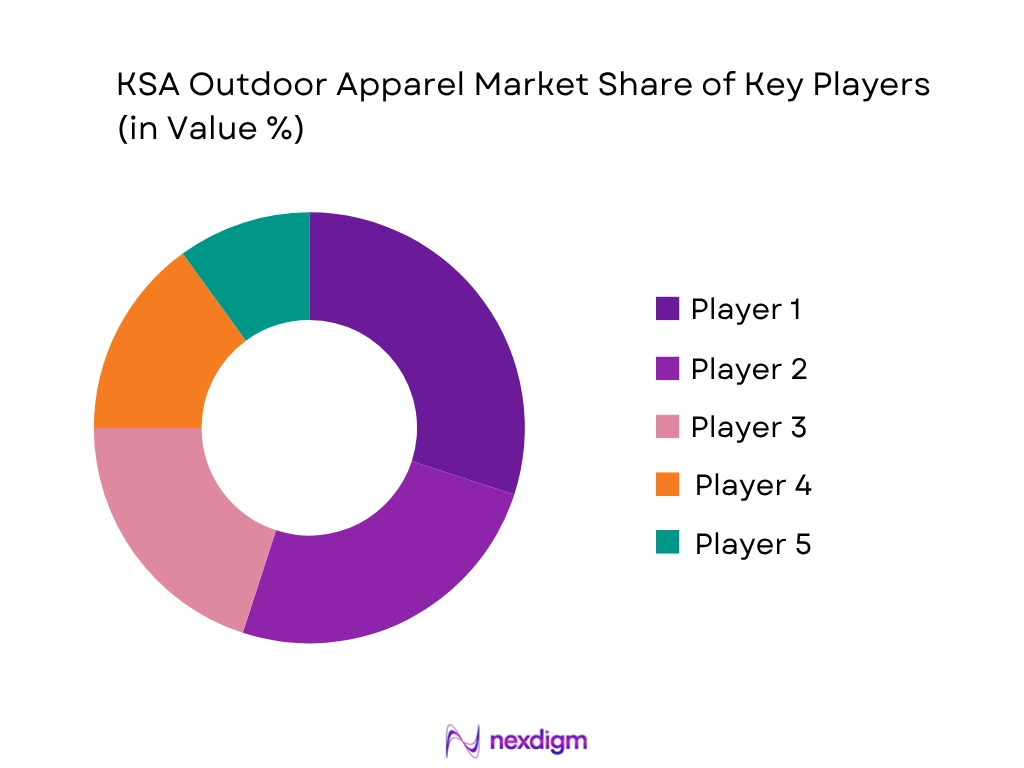
KSA Outdoor Apparel Market Analysis
Growth Drivers
Outdoor Participation Rates
Outdoor participation in Saudi Arabia is supported by widespread physical activity engagement across adult demographics, which directly influences demand for functional outdoor apparel. According to the General Authority for Statistics (GASTAT) 2024 Physical Activity Statistics, 58.5% of adults aged 18 and above engage in at least 150 minutes of physical activity per week, indicating significant lifestyle engagement that drives activewear and outdoor clothing consumption. This includes walking, cycling, and leisure sports in community settings, with participation highest among the 30–39 age group at 62.6% and lowest among those over 80 at 12.2%. Additionally, data show that 18.7% of children and adolescents (aged 5–17) engage in at least 60 minutes of physical activity daily, supporting a broader trend of youth involvement in activity likewise influencing family apparel purchases. Community sports initiatives increased activity events and participants by more than 120% in 2024 compared to 2023, engaging over 155,000 citizens and residents in 32 cities and governorates, further validating active lifestyle momentum. These participation dynamics provide a solid foundation for performance and outdoor apparel demand.
Health & Fitness Lifestyle
Saudi Arabia’s demographic structure and government health promotion efforts have increasingly shifted consumer behavior toward health, fitness, and active lifestyles, supporting demand for specialized outdoor apparel that provides performance and comfort. As of 2024, the General Authority for Statistics (GASTAT) reports that 58.5% of Saudi adults engage in weekly physical activity for at least 150 minutes, illustrating a significant cultural shift toward regular exercise and structured movement practices. Within this, the adult cohort aged 30–39 shows the highest physical activity engagement, reflecting a core segment driving fitness apparel purchases. Leisure and transportation‑oriented activity such as walking and cycling were among the most common forms of activity reported, signaling lifestyle changes beyond organized sports. Parallel macroeconomic data indicate that the Saudi population is 35,300,280 individuals as of the 2024 population estimate, ensuring a large consumer base with active lifestyle habits. These heightened participation rates in structured physical activity and community programs are reinforced by health policy initiatives promoting active living, indirectly boosting demand for performance apparel that supports workouts, outdoor excursions and fitness routines. The rise in physical events and sports programming further validates increased market engagement.
Market Challenges
Climatic Extremes
Saudi Arabia’s extreme climatic conditions present both a challenge and constraint for outdoor apparel adoption, as functional wear must be adapted to wide temperature fluctuations and harsh environments that dominate the country’s geography. According to climatic data from the National Center for Meteorology, Saudi Arabia experiences summer temperatures ranging between 35° and 45° Celsius from June to August, with minimal annual rainfall and a predominantly arid, desert climate across most regions. This means outdoor activities often require specialized clothing that can withstand intense heat and solar exposure while remaining breathable and protective. In desert interiors, heat can rise above 55°C, and precipitation levels remain very low across most urban population centers, requiring apparel that balances heat management with UV protection. Additionally, distinct cooling at night and variable microclimates across regions though less frequent complicate product requirements further, making a one‑size‑fits‑all outdoor apparel solution ineffective. Apparel designed for moderate climates may fail in these extremes, forcing manufacturers and brands to invest in high‑performance fabrics, increasing development complexity and cost. This climatic variability therefore acts as a constraint on broad apparel adoption and complicates supply chains and inventory management.
Cultural Design Considerations
In Saudi society, cultural norms and design preferences significantly influence apparel adoption and purchasing behavior, acting as a constraint on standard outdoor apparel designs. Cultural expectations around modesty in clothing shape the type and style of outdoor wear that consumers are willing to adopt, requiring brands to balance functional outdoor performance with cultural norms. While there has been increased participation in leisure and fitness activities, only 14% of women reported engaging in regular physical activity at recommended levels, compared with 23.2% of men, as per Saudi government statistics for 2024, indicating gender differences in activity habits that influence apparel demand segments. Such disparities necessitate diversified design approaches and tailored product ranges to adequately serve different demographic subgroups. Additionally, activity preference data show that leisure and transportation‑oriented activities, rather than structured competitive sports, are predominant, requiring apparel that aligns with societal comfort and modesty levels. These cultural dynamics necessitate deliberate product customization and more localized design strategies, which can limit standardized apparel offerings and complicate scaling across segments without localized adaptation. As a result, brands must invest in culturally appropriate design research and development, increasing launch timelines and development costs.
Opportunities
Performance Innovation
Performance innovation in outdoor apparel, driven by advances in textile technology and fabric science, presents a significant opportunity for brands addressing the specific environmental demands of Saudi Arabia. Saudi physical activity data from the General Authority for Statistics show that more than 58.5% of adults (aged 18+) engage in regular weekly physical activity, indicating a substantial base of consumers seeking apparel that supports performance, comfort and durability under active use conditions. This large active population creates demand for technical fabrics that offer moisture management, UV protection and thermal adaptability features that directly meet activity needs. Across the Kingdom’s vast territory, performance apparel that incorporates enhanced ventilation zones, breathable membranes and rapid dry technologies can significantly improve wearer experience for activities such as cycling, hiking, running and community sports. With a population exceeding 35 million people, there is notable scale for brands that can combine functional textile innovation with culturally tailored styling. As global fabric technology continues to evolve, including advanced knitting, integrated wearable tech and antimicrobial finishes, Saudi outdoor apparel brands and international players have the opportunity to capture adoption among professionals, enthusiasts and active lifestyle consumers seeking high‑performance garments that address both comfort and environmental challenges.
Climate Adaptive Apparel
Given the Kingdom’s predominantly arid to semi‑desert climate with intensely hot summers and minimal precipitation, there is a distinct opportunity for outdoor apparel solutions that are climate adaptive, integrating protective features designed expressly for high heat, UV exposure, and dryness. The National Center for Meteorology reports maximum temperatures between 35° and 45°C during summer months and very low rainfall (except in select highland regions), underscoring the climatic stressors that outdoor participants face. Apparel tailored for these conditions can improve heat management, protect against UV radiation, and enhance wearer comfort during prolonged exposure, aligning directly with the environmental realities experienced by users across most Saudi regions. As climate variability intensifies regionally, demand for garments with integrated cooling fibers, highly breathable materials, and protective sun shielding becomes more pronounced among outdoor participants, active community groups and lifestyle users. With population estimates exceeding 35 million, the scope for climate‑adaptive products that meet both function and cultural appropriateness is substantial. This presents a strategic opportunity for brands to differentiate through climate‑responsive engineering and performance fabric partnerships that resonate with the specific environmental conditions of Saudi Arabia.
Future Outlook
The KSA Outdoor Apparel Market is forecast to grow robustly over the next decade, by continued expansion of outdoor leisure and adventure tourism, driven by Vision 2030 initiatives and public participation programs encouraging fitness and recreation, rising disposable income levels and a youthful population that increasingly combines lifestyle fashion with performance functionality, ongoing digital adoption that expands e‑commerce penetration and enables direct brand engagement with consumers and technological innovation in performance fabrics optimized for Saudi Arabia’s distinct climate conditions, enhancing consumer value propositions. Across the forecast period, investors can expect expanded product diversification, increasingly localized designs that respect cultural norms while delivering technical benefits, and greater synergy between specialty retail channels and online marketplaces.
Major Players
- Nike, Inc.
- Adidas AG
- The North Face, Inc.
- Columbia Sportswear Company
- Decathlon S.A.
- Puma SE
- Under Armour, Inc.
- Salomon S.A.
- Reebok International Ltd.
- Asics Corporation
- New Balance Athletics, Inc.
- Patagonia, Inc.
- Black Yak Co., Ltd.
- Arc’teryx Equipment Inc.
- Outdoor Research LLC
Key Target Audience
- Sportswear & Outdoor Brand Manufacturers
- Retail Chain Executives (Apparel & Sporting Goods)
- Investments and Venture Capitalist Firms (e.g., Gulf Capital, STV)
- Government and Regulatory Bodies (e.g., Saudi Ministry of Sports, Saudi Standards, Metrology and Quality Org)
- Specialty Outdoor Retailers
- E‑Commerce Platform Strategy Teams
- Supply Chain & Logistics Managers (Apparel Sector)
- Brand Licensing & Distribution Partners
Research Methodology
Step 1: Identification of Key Variables
The research began with mapping all relevant stakeholders within the KSA outdoor apparel ecosystem. Extensive secondary research was conducted using industry databases, corporate filings and commercial research platforms to define key variables including product categories, channels, material innovations and regulatory factors.
Step 2: Market Analysis and Construction
Historical and current market data were compiled and analyzed to understand revenue trajectories, unit sales, channel performance and pricing trends. This phase focused on reconciling company‑reported data with market‑wide figures to establish an accurate baseline before forecasting.
Step 3: Hypothesis Validation and Expert Consultation
Market hypotheses were tested through structured consultations with industry experts, including apparel category managers, outdoor specialists and retail heads. These expert insights helped validate assumptions around consumer behavior, channel shifts and product adoption trends.
Step 4: Research Synthesis and Final Output
The final phase integrated quantitative insights with qualitative expert inputs to produce a validated market overview. Forecast models were refined using bottom‑up revenue aggregation and cross‑verified against external commercial forecasting sources to ensure robustness and reliability.

- Executive Summary
- Research Methodology (Market Definitions and Assumptions, Abbreviations, Top‑Down Sizing Approach, Bottom‑Up Validation Approach, Primary Research Framework, Secondary Data Sources, Forecast Modeling and Back‑Testing, Data Quality & Limitations)

- Definition and Scope
- Market Genesis and Evolution
- Outdoor Participation & Culture in Saudi Arabia
- Product Value Chain
- Distribution Ecosystem

- KSA Outdoor Apparel Market Analysis Growth Drivers (Outdoor Participation Rates, Health & Fitness Lifestyle, Tourism & Adventure Travel)
- Market Constraints (Climatic Extremes, Cultural Design Considerations, Supply Chain Fragmentation)
- Opportunities (Performance Innovation, Climate‑Adaptive Apparel, Local Brand Expansion)
- Emerging Trends (Sustainable/ Recycled Materials, Omni‑Channel Retail, Custom Fit Tech Apparel)
- Regulatory Environment (Saudi Textile Standards, Import Tariffs, Environmental Guidelines, Labeling Requirements, Trade Agreements, Advertising Claims)
- Porter’s Five Forces Analysis (New Entrants, Supplier Power, Buyer Power, Substitutes, Competitive Rivalry)
- SWOT Analysis (Strengths: Growing Outdoor Participation, Weaknesses: Import Reliance, Opportunities: Technical Innovations, Threats: Supply Chain Disruption)
- Value Chain & Supply Chain Analysis (Material Sourcing – Polyester, Nylon, Recycled Fibers, UV/Moisture Fabrics; Import vs Local Production; Capacity; Logistics & Distribution; Specialty & E‑Commerce Channels; Quality Testing; Returns Management)
- Consumer Purchase Behavior & Retail Analytics (Purchase Frequency, Basket Affinity, Brand Loyalty, Online vs Offline, Weather/Activity Buying Patterns, Price Sensitivity, Willingness to Pay for Tech & Sustainability)

- By Overall Market Value (2020-2025)
- By Volume (2020-2025)
- By ASP (2020-2025)
- By Market Density(2020-2025)
- By Penetration Metrics (2020-2025)

- By Product Category (In Value %)
Technical Jackets & Coats
Performance Pants & Bottoms
Breathable Tops & T‑Shirts
Base Layers & Thermal Wear
Outdoor Accessories (Gloves, Hats, UV Protection Gear) - By Material Technology (In Value %)
Synthetic Performance Fabrics (Moisture‑Wicking/Quick‑Dry)
Natural Fibers (Wool, Organic Cotton)
Hybrid/Blended Technical Fabrics - By Functionality (In Value %)
Hiking & Trekking
Camping & Expedition
Climbing & Mountain Sports
Desert & Trail Running
Water‑Resistant/UV Protection - By Distribution Channel (In Value %)
Specialty Outdoor Retailers
Multi‑Brand Sports Chains
E‑Commerce Platforms
Direct Brand Outlets
Department Stores & Hypermarkets - By End User (In Value %)
Men’s Performance Apparel
Women’s Performance Apparel
Youth & Kids Outdoor Apparel

- Market Share Analysis (Revenue & Volume Share, Global vs Local Brand Presence, Segment-Specific Market Dominance, Premium vs Mid-Tier Positioning)
- Key Player Benchmarking (Brand Portfolio, Product Range, Innovation & R&D Intensity, Retail & E‑Commerce Footprint, Marketing & Promotional Strategies, Sustainability Initiatives, Pricing Strategy, After-Sales Services)
- Cross‑Comparison Parameters (Technical Fabric Performance Ratings, Distribution Footprint, Climate Adaptiveness Scoring, Price Tier Positioning, Material Sourcing & Sustainability Index, Brand Recognition & Consumer Trust Score, Retail Experiences, After‑Sales Support & Warranty Policies)
- SWOT Analysis (Strengths: Growing Outdoor Participation, Weaknesses: Import Reliance, Opportunities: Technical Innovations, Threats: Supply Chain Disruption)
- Pricing & SKU Analysis (Price Positioning by Product Type, SKU Mix by Channel, Discounting & Promotion Impact, Competitive Pricing Benchmark, Product Tier Mapping)
- Innovation & Product Differentiation (Technical Apparel Development, Climate-Specific Design, Smart Fabrics & Wearables, Sustainable Material Adoption, Limited Edition & Capsule Collections)
- Entry & Competitive Intensity (Threat of New Entrants, Niche Brand Positioning, Channel Competition, Brand Loyalty Dynamics, Regional vs Global Brand Rivalry)
- Retail & E-Commerce Strategy Analysis (Specialty Retail vs Multi-Brand Chains, Online Penetration & Digital Marketing, Omnichannel Fulfillment, Customer Experience Differentiation, Store Footprint Optimization)
- Competitive Benchmarking of Key Players
Adidas AG
Nike, Inc.
The North Face, Inc.
Columbia Sportswear Company
Patagonia, Inc.
Under Armour, Inc.
Puma SE
Decathlon S.A.
Salomon S.A.
New Balance Athletics, Inc.
Reebok International Ltd.
Asics Corporation
Merrell
Arc’teryx Equipment Inc.
Black Yak Co., Ltd.

- Consumer Segmentation (Men, Women, Youth/Kids, Casual Outdoor Users, Performance-Oriented Adventurers)
- Purchase Drivers (Functionality, Climate Suitability, Brand Trust, Style & Modesty, Price vs Value Perception, Sustainability Consciousness)
- Buying Behavior (Frequency by Category, Seasonal & Weather-Driven Purchases, Multi-Category Basket Patterns, Online vs In-Store Preferences, Brand Loyalty & Repeat Purchase Patterns)
- Decision-Making Process (Research & Product Discovery, Peer & Influencer Recommendations, Price Comparison & Promotions, Technical Feature Evaluation, Fit & Comfort Considerations)
- Pain Points & Unmet Needs (Limited Local Technical Options, Sizing & Fit Challenges, Seasonal Stock Shortages, Lack of Customization, Scarcity of After-Sales Services)
- Consumer Awareness & Engagement (Social Media Influence, Brand Campaign Recall, Technical Material Awareness, Knowledge of Sustainable Practices, Digital Interaction & Online Reviews)
- Spending Patterns & Willingness-to-Pay (Premium vs Mid-Tier Apparel, Investment in Performance Gear, Seasonal Budget Allocation, Price Sensitivity Across Demographics, Preference for Sustainable/Technical Features)
- Retail Analytics Insights (Footfall & Conversion Metrics, Omni-Channel Engagement, Product Category Popularity, Cross-Selling Opportunities, Returns & Exchange Patterns)

- By Overall Market Value (2026-2035)
- By Volume (2026-2035)
- By ASP (2026-2035)
- By Market Density (2026-2035)
- By Penetration Metrics (2026-2035)


 Request a Sample
 Ask for Customization
 Get a Quote
 Enquire Now