
 Download PDF
Market Overview
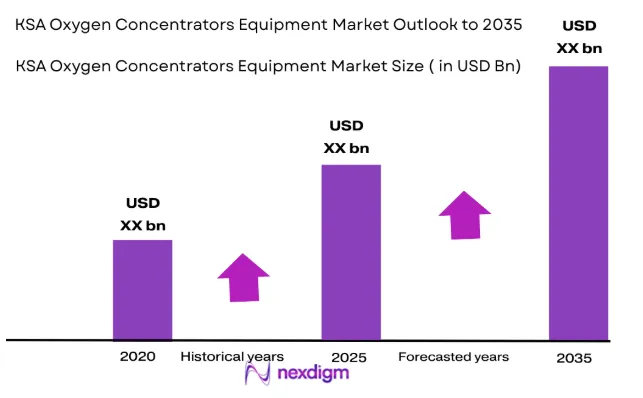
The KSA Oxygen Concentrators Equipment Market is valued at USD ~ billion, reflecting a steady growth trajectory. This market’s size is driven by the rising demand for respiratory medical devices, especially as a result of an aging population and a higher incidence of chronic respiratory diseases. With significant healthcare advancements and increasing healthcare accessibility, demand for oxygen concentrators has been escalating, especially in hospitals and home care settings. The market’s expansion is also supported by the growing awareness regarding the availability of oxygen therapy in medical facilities and home environments, offering easier access to oxygen therapy without the need for hospital visits.
Dominant cities in the KSA market include Riyadh, Jeddah, and Dhahran. These cities dominate the market due to their developed healthcare infrastructure and high concentration of healthcare institutions. Riyadh, being the capital, hosts numerous hospitals, clinics, and home care providers offering oxygen concentrators. Jeddah, with its proximity to the Red Sea and a higher number of expatriates, also contributes significantly to the market’s demand. Dhahran, being an industrial hub, has a substantial market for oxygen concentrators for both medical and non-medical uses, such as industrial applications in energy and aerospace sectors.
Market Segmentation
By Product Type
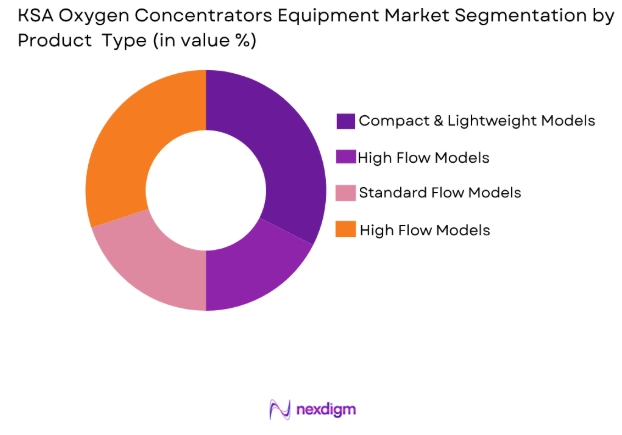
The Product Type segmentation in the KSA Oxygen Concentrators Equipment Market includes Portable Oxygen Concentrators and Stationary Oxygen Concentrators, each serving different patient needs.These devices are preferred for patients who need mobility and freedom while receiving oxygen therapy. They are ideal for home care settings and those with active lifestyles. Compact & Lightweight Models dominate the market, accounting for 65% of the share due to their portability, ease of use, and convenience for long-term use. High Flow Models make up 35%, offering higher oxygen output for more intensive needs, though they are less commonly used in everyday settings compared to the compact model. These models are typically used in healthcare institutions like hospitals and clinics, providing consistent, high-volume oxygen flow. The Standard Flow Models hold 40% of the market share, as they are often used in stable, long-term treatment environments. High Flow Models dominate this segment, accounting for 60%, as they are essential for critical care situations where high oxygen flow is required for patients with severe respiratory conditions.
By Application Type
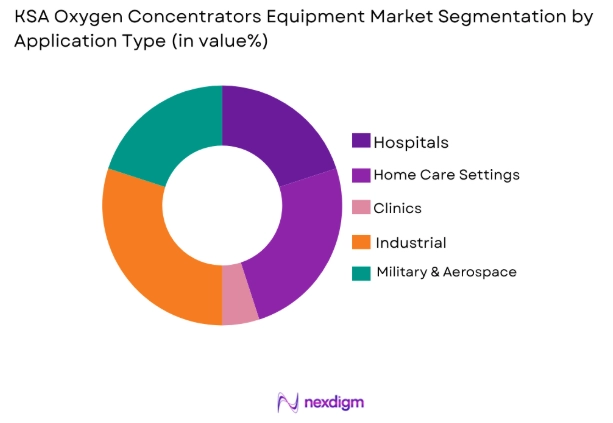
The market is divided into Medical and Non‑Medical applications. The Medical application segment holds the largest share. Medical oxygen concentrators are extensively used in hospitals, clinics, and especially home healthcare environments to treat patients with chronic respiratory diseases such as COPD and asthma. Growing awareness of home monitoring, increased healthcare expenditure, and government initiatives to improve medical access in Saudi Arabia have contributed to strong demand for medical concentrators. Non‑medical usage — including industrial and aerospace applications — supports additional market demand but remains secondary to medical needs.
Competitive Landscape
The competitive landscape of the KSA Oxygen Concentrators Equipment market is characterized by strong consolidation, with several leading global and regional players. These companies dominate the market through technological advancements, extensive distribution networks, and strong relationships with healthcare providers. The market is highly influenced by players that can offer high-quality, reliable oxygen concentrators at competitive prices, along with after-sales services and support.
| Company Name | Establishment Year | Headquarters | Technology Focus | Market Reach | Key Products | Revenue | Additional Market-Specific Parameter |
| Philips Healthcare | 1891 | Netherlands | ~ | ~ | ~ | ~ | ~ |
| Invacare Corporation | 1885 | USA | ~ | ~ | ~ | ~ | ~ |
| Drive DeVilbiss Healthcare | 1972 | USA | ~ | ~ | ~ | ~ | ~ |
| AirSep Corporation | 1992 | USA | ~ | ~ | ~ | ~ | ~ |
| ResMed | 1989 | USA | ~ | ~ | ~ | ~ | ~ |
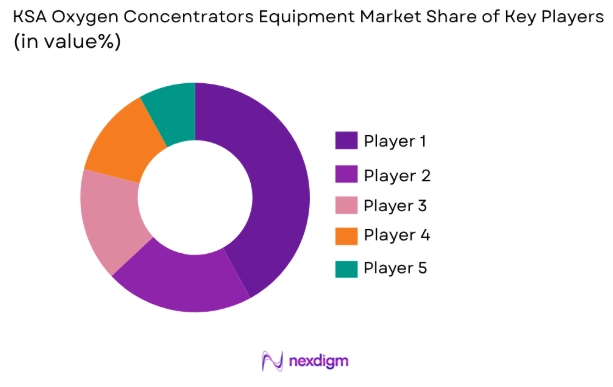
KSA Oxygen Concentrators Equipment Market Analysis
Growth Drivers
Increasing Prevalence of Respiratory Diseases
The increasing prevalence of respiratory diseases is one of the primary growth drivers for the KSA Oxygen Concentrators Equipment market. According to the World Health Organization (WHO), the incidence of chronic respiratory diseases such as Chronic Obstructive Pulmonary Disease (COPD) is on the rise globally, and Saudi Arabia is no exception. The prevalence of COPD in Saudi Arabia is projected to affect around 10.7% of the adult population by 2025, increasing the need for oxygen concentrators. Additionally, asthma affects about 6.5% of the Saudi population, further driving demand for oxygen therapy. The rise in respiratory conditions is exacerbated by urban air pollution and a sedentary lifestyle, contributing to the growing healthcare burden in the country. As respiratory diseases continue to rise, so does the demand for medical devices like oxygen concentrators to provide long-term, at-home respiratory support.
Technological Advancements in Oxygen Concentrators
Technological advancements in oxygen concentrators are contributing significantly to the growth of the market in Saudi Arabia. The introduction of energy-efficient models, lighter portable concentrators, and smarter devices integrated with IoT technologies are enhancing user experience and driving adoption. In 2022, the number of hospitals and healthcare facilities in Saudi Arabia adopting advanced medical technologies increased by 12%, according to data from the Saudi Ministry of Health. With these advancements, oxygen concentrators have become more accessible, user-friendly, and effective for long-term use in home healthcare. Moreover, smart oxygen concentrators with features like real-time monitoring and remote health tracking are becoming more common in the Kingdom’s medical devices market. These advancements help reduce the dependency on traditional oxygen therapy, making oxygen concentrators an essential tool for patients with chronic conditions.
Market Challenges
High Initial Cost of Equipment
One of the major challenges faced by the KSA Oxygen Concentrators Equipment market is the high initial cost of the equipment. The cost of a standard oxygen concentrator can range from SAR 4,000 to SAR 10,000, depending on the model and specifications, which can make it unaffordable for many patients, especially in rural areas. Despite government initiatives to support healthcare, the upfront cost remains a barrier to widespread adoption. According to the World Bank, the average per capita income in Saudi Arabia in 2024 is projected to be USD 22,000. This makes it a financial strain for lower-income families to invest in the equipment necessary for long-term respiratory care. With the cost of healthcare rising, individuals in lower-income brackets may be reluctant to purchase oxygen concentrators without government subsidies or insurance coverage, impacting overall market penetration.
Limited Awareness in Rural Areas
Another significant challenge in the KSA Oxygen Concentrators Equipment market is the limited awareness of oxygen therapy and concentrators in rural areas. While urban regions like Riyadh and Jeddah are familiar with these devices, rural areas remain underserved in terms of both awareness and healthcare infrastructure. According to the Saudi Ministry of Health, approximately 40% of Saudi Arabia’s rural population has limited access to specialized healthcare services, and there is a noticeable gap in oxygen concentrator availability. This lack of education on respiratory care and home oxygen solutions means that many patients in these areas still rely on less effective, outdated methods or do not use oxygen concentrators at all. Rural areas continue to face challenges in improving access to healthcare, which further hinders the growth of this essential market segment.
Market Opportunities
Rising Demand for Home Healthcare Solutions
The rising demand for home healthcare solutions is poised to significantly impact the KSA Oxygen Concentrators Equipment market. In Saudi Arabia, home healthcare services are growing at an accelerated pace, with a rise in the number of patients preferring to receive care in the comfort of their homes. The Saudi Ministry of Health reported that 30% of Saudi healthcare services are now being delivered at home, particularly among the elderly and those suffering from chronic respiratory diseases. As the healthcare system emphasizes home-based care, oxygen concentrators become crucial for patients requiring continuous oxygen therapy. Additionally, Saudi Arabia’s government has made strides in expanding health insurance coverage, including home healthcare solutions. This expansion supports the increasing adoption of oxygen concentrators by allowing more individuals to access these devices through their insurance plans. The growing trend of home healthcare coupled with the increasing elderly population in the Kingdom creates a strong opportunity for the market to expand.
Integration of Smart Technologies in Oxygen Concentrators
The integration of smart technologies in oxygen concentrators is a promising opportunity for growth in the KSA Oxygen Concentrators Equipment market. With advancements in IoT and artificial intelligence, oxygen concentrators now offer enhanced functionality, such as real-time health monitoring, remote diagnostics, and automatic flow adjustments based on the patient’s needs. These innovations are particularly appealing for patients with long-term respiratory conditions who require continuous monitoring. The Saudi healthcare sector is increasingly adopting digital health solutions, with the government focusing on enhancing the digital infrastructure within its healthcare system. By 2024, Saudi Arabia is expected to invest over SAR 2 billion in healthcare IT solutions, which includes telemedicine and remote patient monitoring technologies. This trend presents a significant opportunity for oxygen concentrator manufacturers to develop and market smart devices tailored to the growing demand for remote healthcare solutions.
Future Outlook
Over the next five years, the KSA Oxygen Concentrators Equipment market is expected to experience substantial growth. Factors such as increased demand for home healthcare solutions, government investments in healthcare infrastructure, and continuous advancements in oxygen concentrator technologies are expected to drive the market’s expansion. Additionally, the increasing prevalence of respiratory diseases like COPD, asthma, and the aging population are key drivers. Technological advancements such as energy-efficient devices, lightweight portable models, and smart oxygen concentrators will also enhance market growth.
Major Players
- Philips Healthcare
- Inogen
- Invacare Corporation
- OxyGo
- Linde Healthcare
- AirSep Corporation
- NuvoAir
- Drive DeVilbiss Healthcare
- CAIRE Inc.
- GCE Group
- Vita Oxygen
- Precision Medical
- ProCare Systems
- Medical Gas Solutions
- Breas Medical
Key Target Audience
- Investments and Venture Capitalist Firms
- Government and Regulatory Bodies (Ministry of Health, Saudi Food and Drug Authority)
- Healthcare Providers and Hospitals
- Medical Equipment Suppliers
- Home Healthcare Providers
- Distributors of Medical Devices
- Pharmaceutical Companies
- Medical Technology Innovators
Research Methodology
Step 1: Identification of Key Variables
This step involves constructing a detailed map of key market variables. We identify all major stakeholders, including manufacturers, distributors, healthcare providers, and regulatory bodies. Desk research is performed, and proprietary databases are used to gather market-specific data, including device shipments, pricing trends, and patient demographics.
Step 2: Market Analysis and Construction
Historical data is compiled and analyzed, focusing on oxygen concentrator adoption in hospitals and home healthcare settings. We assess market penetration rates and the balance of various product types in the market. Service quality assessments will be conducted through customer feedback to enhance the reliability of revenue estimates.
Step 3: Hypothesis Validation and Expert Consultation
Our hypotheses regarding market trends and forecasts are validated through consultations with industry experts. These consultations include interviews with key players, including oxygen concentrator manufacturers and healthcare providers. Expert insights will be leveraged to adjust and refine our data.
Step 4: Research Synthesis and Final Output
The final phase consolidates all research findings and cross-verifies data through multiple rounds of consultations. Interaction with various market players, including OEMs and distributors, allows us to validate the revenue data, product segmentation, and growth predictions. This ensures a comprehensive, accurate, and reliable market report.

- Executive Summary
- Research Methodology (Definitions, Scope, Industry Assumptions, Market Sizing Approach, Primary & Secondary Research Framework, Data Collection & Verification Protocol, Analytic Models & Forecast Methodology, Limitations & Research Validity Checks)

- Definition and Scope
- Overview Genesis
- Timeline of Major Players
- Business Cycle
- Supply Chain and Value Chain Analysis

- Growth Drivers
Increasing Prevalence of Respiratory Diseases
Technological Advancements in Oxygen Concentrators - Market Challenges
High Initial Cost of Equipment
Limited Awareness in Rural Areas - Market Opportunities
Rising Demand for Home Healthcare Solutions
Integration of Smart Technologies in Oxygen Concentrators - Trends
Focus on Lightweight and Portable Devices
Demand for Energy-Efficient Equipment - Government Regulations
- SWOT Analysis
- Porter’s Five Forces

- By Value, 2020-2025
- By Volume, 2020-2025
- By Average Price, 2020-2025

- By Product Type (In Value %)
Compact & Lightweight Models
High Flow Models
Standard Flow Models
High Flow Models - By Application (In Value %)
Hospitals
Home Care Settings
Clinics
Industrial
Military & Aerospace - By Distribution Channel (In Value %)
Direct Sales
Online Retail
Medical Equipment Suppliers - By Region (In Value %)
Central Region
Eastern Region
Western Region
Southern Region - By End-User (In Value %)
Hospitals
Home Care Settings
Clinics

- Market Share Analysis
- Cross Comparison Parameters (Price, Unit Demand, Technological Integration, Geographic Reach, Customer Satisfaction, Product Innovation, Regulatory Compliance, After-Sales Service Network, Distribution Strength, Installed Base, Device Portfolio Breadth, Power Efficiency, Warranty Support, Supply Chain Reliability, Digital Health Compatibility)
- SWOT Analysis of Key Competitors
- Pricing & Procurement Analysis
- Key Players
Philips Healthcare
Inogen
Invacare Corporation
OxyGo
Chart Industries
Linde Healthcare
AirSep Corporation
NuvoAir
Drive DeVilbiss Healthcare
CAIRE Inc.
GCE Group
Vita Oxygen
Precision Medical
ProCare Systems
Medical Gas Solutions

- Market Demand and Utilization
- Purchasing Power and Budget Allocations
- Regulatory and Compliance Requirements
- Needs, Desires, and Pain Point Analysis
- Decision-Making Process

- By Value, 2026-2025
- By Volume,2026-2025
- By Average Price,2026-2025


 Request a Sample
 Ask for Customization
 Get a Quote
 Enquire Now