
 Download PDF
Market Overview
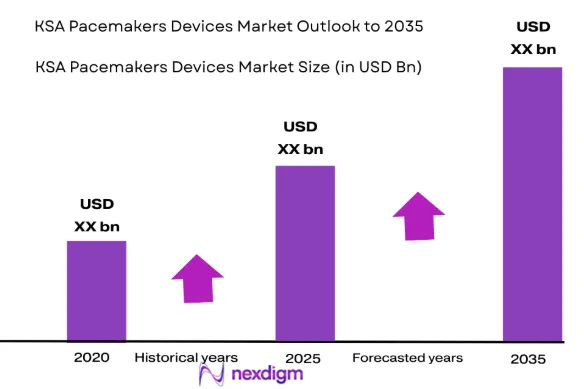
The KSA pacemakers devices market demonstrates steady expansion, with the total market value estimated at approximately USD ~ billion based on a recent historical assessment derived from aggregated procurement data, healthcare expenditure reports, and manufacturer disclosures. Growth is primarily driven by increasing incidences of cardiac arrhythmias, aging population demographics, and rising adoption of implantable cardiac rhythm management technologies. Additionally, government-backed healthcare investments and improved diagnostic capabilities are contributing to higher procedure volumes and device utilization across the country.
Major urban centers such as Riyadh, Jeddah, and Dammam dominate the market due to their advanced healthcare infrastructure, concentration of specialized cardiac centers, and higher patient inflow for complex cardiovascular treatments. These cities benefit from strong public and private hospital networks, availability of skilled electrophysiologists, and access to advanced imported medical technologies. Furthermore, Saudi Arabia’s centralized procurement systems and regulatory support enable faster adoption of innovative pacemaker devices in these metropolitan healthcare hubs.
Market Segmentation
By System Type
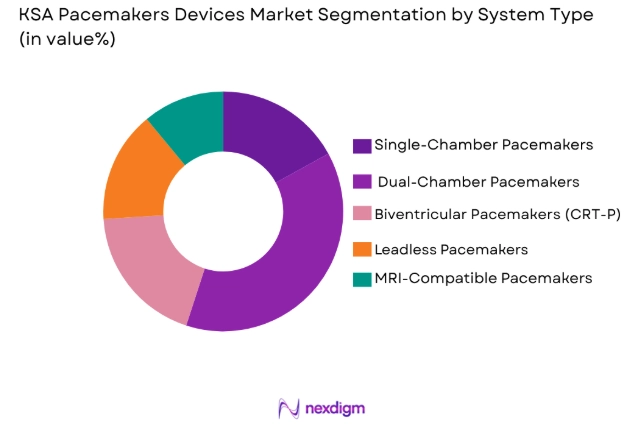
KSA pacemaker’s devices market is segmented by system type into single-chamber pacemakers, dual-chamber pacemakers, biventricular pacemakers (CRT-P), leadless pacemakers, and MRI-compatible pacemakers. Recently, dual-chamber pacemakers have a dominant market share due to their ability to coordinate atrial and ventricular pacing, ensuring better hemodynamic performance and improved patient outcomes. Their broad clinical applicability across varying arrhythmia conditions, strong physician preference, and established presence in major hospitals contribute to their leadership position. Additionally, continuous product improvements and reliable long-term performance further strengthen their adoption across Saudi Arabia’s healthcare system.
By End User Segment
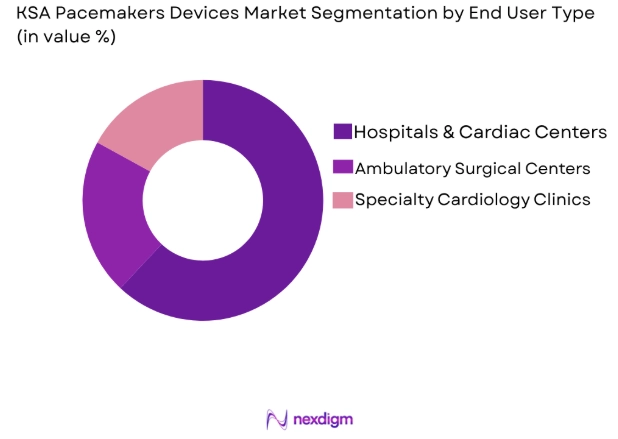
KSA pacemakers devices market is segmented by end user into hospitals & cardiac centers, ambulatory surgical centers, and specialty cardiology clinics. Recently, hospitals & cardiac centers have a dominant market share due to their advanced infrastructure, availability of skilled surgeons, and capability to perform complex implantation procedures. These facilities also benefit from government funding and centralized procurement systems, allowing access to high-end devices. Additionally, patient preference for comprehensive care and post-operative monitoring within hospital environments reinforces their leading position.
Competitive Landscape
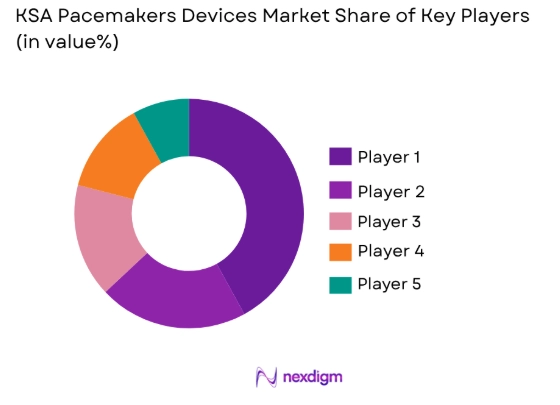
The competitive landscape of the KSA pacemakers devices market is moderately consolidated, with a few global players dominating through strong distribution networks, advanced product portfolios, and long-term partnerships with healthcare providers. Multinational corporations leverage technological superiority and regulatory compliance to maintain their position, while regional distributors support market penetration. Continuous innovation in leadless and MRI-compatible devices, along with service-based differentiation, plays a crucial role in sustaining competitiveness.
| Company Name | Establishment Year | Headquarters | Technology Focus | Market Reach | Key Products | Revenue | Implant Technology Type |
| Medtronic plc | 1949 | Ireland | ~ | ~ | ~ | ~ | ~ |
| Abbott Laboratories | 1888 | USA | ~ | ~ | ~ | ~ | ~ |
| Boston Scientific | 1979 | USA | ~ | ~ | ~ | ~ | ~ |
| Biotronik SE & Co. KG | 1963 | Germany | ~ | ~ | ~ | ~ | ~ |
| LivaNova PLC | 2015 | UK | ~ | ~ | ~ | ~ | ~ |
KSA Pacemakers Devices Market Analysis
Growth Drivers
Rising Burden of Cardiovascular Diseases in Saudi Arabia
The increasing prevalence of cardiovascular diseases, including arrhythmias and heart failure, is a major driver for the KSA pacemakers devices market. Lifestyle-related risk factors such as obesity, diabetes, and hypertension are becoming more common, significantly contributing to cardiac complications. The growing elderly population further intensifies demand, as age is a critical factor associated with heart rhythm disorders. Healthcare authorities have prioritized cardiovascular disease management, leading to enhanced screening and early diagnosis programs. As awareness increases, more patients are seeking timely interventions, including pacemaker implantation. Hospitals are also expanding their cardiology departments to accommodate rising patient volumes. Technological advancements have improved procedural success rates, encouraging adoption among physicians. Furthermore, insurance coverage expansion supports affordability for patients requiring these devices. This combination of clinical need and systemic support continues to drive sustained demand across the Saudi healthcare ecosystem.
Advancements in Pacemaker Technologies and Minimally Invasive Procedures
Continuous innovation in pacemaker technologies is significantly contributing to market growth in Saudi Arabia. The development of leadless pacemakers and MRI-compatible devices has transformed patient care by reducing complications and improving diagnostic compatibility. Minimally invasive implantation techniques have reduced recovery time and hospital stays, making procedures more accessible and efficient. Healthcare providers increasingly prefer advanced systems that offer remote monitoring and real-time data transmission capabilities. These features allow physicians to track patient conditions more effectively and reduce follow-up visits. Manufacturers are investing heavily in research and development to introduce smaller, more durable devices with longer battery life. The integration of artificial intelligence into cardiac rhythm management systems is further enhancing diagnostic accuracy. Additionally, partnerships between global manufacturers and local healthcare providers are accelerating technology adoption. These advancements collectively strengthen the growth trajectory of the market.
Market Challenges
High Cost of Advanced Pacemaker Devices and Procedures
The elevated cost associated with advanced pacemaker devices presents a significant challenge for the KSA pacemakers devices market. Leadless and MRI-compatible pacemakers, while technologically superior, are considerably more expensive than traditional systems. This creates financial pressure on healthcare providers, especially in private sector institutions. Although government funding supports public hospitals, budget constraints can limit procurement volumes. Patients without comprehensive insurance coverage may face affordability issues, delaying treatment decisions. Import dependency further increases costs due to logistics and regulatory compliance expenses. Additionally, maintenance and follow-up care contribute to the overall financial burden. Hospitals must balance cost efficiency with the need to adopt cutting-edge technologies. Price sensitivity in certain segments restricts widespread adoption of premium devices. These economic factors collectively act as a barrier to market expansion despite growing clinical demand.
Limited Availability of Skilled Cardiac Electrophysiologists
The shortage of specialized cardiac electrophysiologists in Saudi Arabia poses a notable challenge to the pacemakers devices market. Implantation of advanced pacemaker systems requires highly trained professionals with expertise in complex cardiac procedures. While major cities have access to skilled specialists, rural and semi-urban regions face significant gaps. This imbalance restricts access to timely treatment for patients outside metropolitan areas. Training programs and medical education initiatives are expanding, but the pace is insufficient to meet rising demand. Hospitals often rely on international experts, increasing operational costs and logistical complexities. Additionally, the adoption of newer technologies requires continuous training, further straining available resources. Limited expertise can also impact procedural outcomes and patient confidence. Addressing this workforce gap is critical for ensuring equitable access to pacemaker therapies across the country.
Opportunities
Expansion of Remote Cardiac Monitoring and Digital Health Integration
The integration of remote monitoring technologies presents a significant opportunity for the KSA pacemakers devices market. Modern pacemakers equipped with wireless connectivity enable continuous patient monitoring and data transmission to healthcare providers. This reduces the need for frequent hospital visits and enhances patient convenience. Saudi Arabia’s growing digital health ecosystem supports the adoption of such technologies through national health initiatives. Hospitals are increasingly investing in telemedicine platforms to improve patient management efficiency. Remote monitoring also enables early detection of device malfunctions or health complications, improving clinical outcomes. Government policies promoting digital transformation in healthcare further accelerate adoption. Collaborations between technology firms and medical device manufacturers are enhancing innovation in this space. As patient awareness of digital healthcare solutions increases, demand for connected pacemaker systems is expected to rise significantly.
Growing Private Healthcare Investments and Medical Tourism
Increasing investments in private healthcare infrastructure create substantial growth opportunities for the pacemakers devices market in Saudi Arabia. Private hospitals are expanding their capabilities to offer advanced cardiac care services, attracting both domestic and international patients. Medical tourism initiatives are gaining traction, positioning Saudi Arabia as a regional hub for specialized treatments. These facilities are more inclined to adopt premium pacemaker technologies to differentiate their services. Government incentives for private sector participation further support infrastructure development. Partnerships with global medical device manufacturers ensure access to the latest innovations. Improved service quality and reduced waiting times enhance patient experience. Additionally, rising disposable income levels encourage patients to opt for advanced treatment options. This evolving healthcare landscape provides a strong foundation for sustained market growth.
Future Outlook
The KSA pacemakers devices market is expected to witness steady growth driven by technological advancements and increasing cardiovascular disease burden. Adoption of leadless and AI-integrated pacemakers will accelerate due to improved clinical outcomes. Government initiatives under healthcare transformation programs will continue to strengthen infrastructure and accessibility. Demand for remote monitoring solutions is likely to rise alongside digital health integration. Additionally, private sector expansion and medical tourism will further support long-term market development.
Major Players
- Medtronic plc
- Abbott Laboratories
- Boston Scientific Corporation
- Biotronik SE & Co. KG
- LivaNova PLC
- MicroPort Scientific Corporation
- Lepu Medical Technology
- Osypka Medical GmbH
- Shree Pacetronix Ltd.
- Vitatron
- ZOLL Medical Corporation
- Cardiac Science Corporation
- Sorin Group
- Medico S.p.A.
- Pacetronix India Pvt Ltd
Key Target Audience
- Hospitals & cardiac care centers
- Medical device distributors
- Investment & venture capital firms
- Government & regulatory bodies
- Private healthcare providers
- Insurance companies
- Healthcare infrastructure developers
Research Methodology
Step 1: Identification of Key Variables
Key variables such as device adoption rates, healthcare expenditure, and patient demographics are identified. These variables form the foundation for market modeling and analysis. Both macroeconomic and industry-specific indicators are considered.
Step 2: Market Analysis and Construction
Market data is collected through secondary sources and validated through primary interviews. The data is structured to build a comprehensive market model. Segmentation and forecasting frameworks are applied systematically.
Step 3: Hypothesis Validation and Expert Consultation
Initial findings are validated through consultations with industry experts and stakeholders. Feedback is incorporated to refine assumptions and improve accuracy. This ensures reliability of insights and projections.
Step 4: Research Synthesis and Final Output
All validated data is synthesized into a structured report. Analytical tools are applied to derive actionable insights. The final output ensures clarity, accuracy, and strategic relevance for stakeholders.

- Executive Summary
- Research Methodology (Definitions, Scope, Industry Assumptions, Market Sizing Approach, Primary & Secondary Research Framework, Data Collection & Verification Protocol, Analytic Models & Forecast Methodology, Limitations & Research Validity Checks)

- Market Definition and Scope
- Value Chain & Stakeholder Ecosystem
- Regulatory / Certification Landscape
- Sector Dynamics Affecting Demand
- Strategic Initiatives & Infrastructure Growth

- Growth Drivers
Rising prevalence of cardiovascular diseases and arrhythmias in Saudi Arabia
Increasing adoption of advanced minimally invasive pacemaker technologies
Government investments in healthcare infrastructure under Vision 2030 - Market Challenges
High cost of advanced pacemaker devices and procedures
Limited availability of specialized cardiac electrophysiologists
Regulatory approval delays and import dependency - Market Opportunities
Growing demand for leadless and MRI-compatible pacemakers
Expansion of remote cardiac monitoring and telehealth integration
Increasing private sector participation in cardiac care facilities - Trends
Shift towards miniaturized and battery-efficient pacemaker systems
Integration of AI and remote diagnostics in cardiac rhythm management devices - Government Regulations
- SWOT Analysis
- Porter’s Five Forces

- By Market Value, 2020-2025
- By Installed Units, 2020-2025
- By Average System Price, 2020-2025
- By System Complexity Tier, 2020-2025

- By System Type (In Value%)
Single-Chamber Pacemakers
Dual-Chamber Pacemakers
Biventricular Pacemakers (CRT-P)
Leadless Pacemakers
MRI-Compatible Pacemakers - By Platform Type (In Value%)
Implantable Cardiac Pacemaker Systems
External Temporary Pacemakers
Remote Monitoring-Enabled Pacemakers
AI-Integrated Smart Pacemakers
Wireless Telemetry Pacemakers - By Fitment Type (In Value%)
Transvenous Pacemakers
Epicardial Pacemakers
Leadless Intracardiac Pacemakers
Subcutaneous Pacemaker Systems - By End User Segment (In Value%)
Hospitals & Cardiac Centers
Ambulatory Surgical Centers
Specialty Cardiology Clinics

- Market Share Analysis
- Cross Comparison Parameters (Product Innovation, Pricing Strategy, Distribution Network, Regulatory Compliance, After-Sales Support, Technology Integration, Market Presence)
- SWOT Analysis of Key Competitors
- Pricing & Procurement Analysis
- Key Players
Medtronic plc
Abbott Laboratories
Boston Scientific Corporation
Biotronik SE & Co. KG
LivaNova PLC
MicroPort Scientific Corporation
Lepu Medical Technology
Osypka Medical GmbH
Shree Pacetronix Ltd.
Vitatron (Medtronic Subsidiary)
ZOLL Medical Corporation
Cardiac Science Corporation
Sorin Group (now part of LivaNova)
Medico S.p.A.
Pacetronix India Pvt Ltd

- Hospitals dominate due to availability of advanced surgical infrastructure
- Cardiac centers show high adoption of technologically advanced pacemakers
- Ambulatory centers gaining traction for cost-effective procedures
- Specialty clinics expanding role in post-implantation monitoring and care

- Forecast Market Value, 2026-2035
- Forecast Installed Units, 2026-2035
- Price Forecast by System Tier, 2026-2035
- Future Demand by Platform, 2026-2035


 Request a Sample
 Ask for Customization
 Get a Quote
 Enquire Now