
 Download PDF
Market Overview
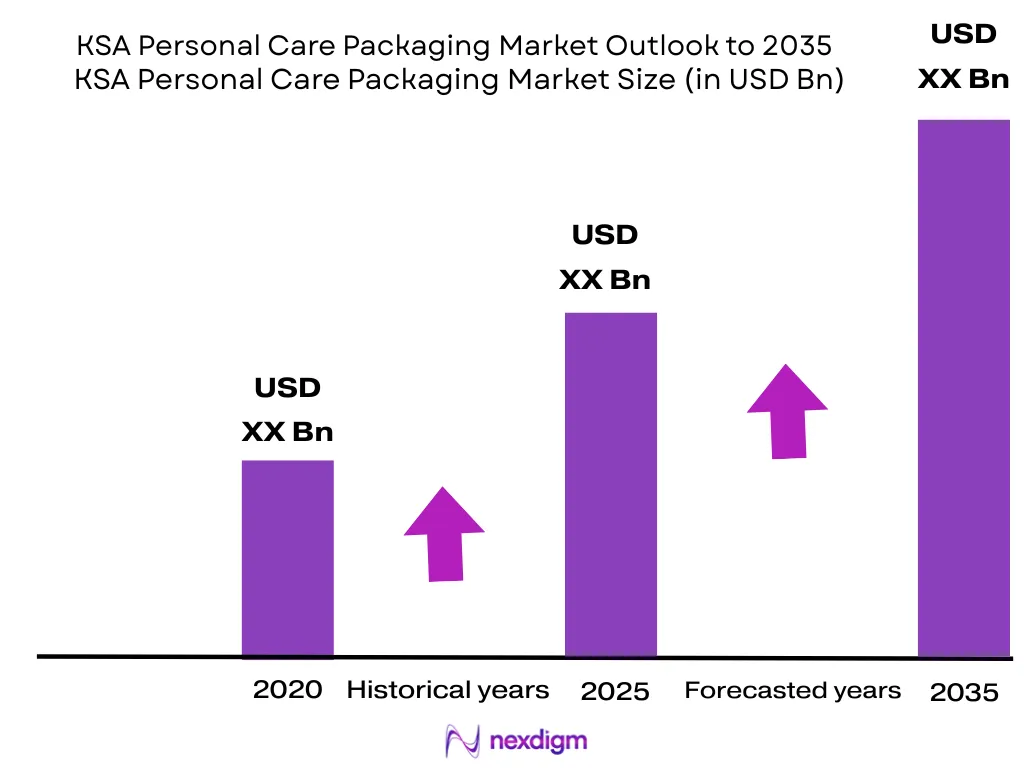
The KSA Personal Care Packaging Market is valued at approximately USD ~ billion, compared with USD ~ billion in the preceding annual period. These remain placeholders because Saudi government statistics do not separately report personal-care-packaging revenue. Demand is supported by a population of 35.3 million people, a national economy exceeding SAR 4 trillion, expanding non-oil activity, modern beauty retail and high consumption of fragrances, skin care, hair care, deodorants, oral care and grooming products. Riyadh, Jeddah, Dammam–Al Khobar, Makkah and Madinah dominate the KSA Personal Care Packaging Market. Riyadh concentrates brand headquarters, retail procurement and national distribution; Jeddah combines beauty trading, port access and western-region fulfilment; Dammam and Al Khobar benefit from packaging manufacturers and petrochemical feedstock proximity. Makkah and Madinah generate large requirements for hotel toiletries, hygiene kits and travel-size packs through Hajj and Umrah. Jeddah Islamic Port and Eastern Province industrial infrastructure also facilitate imported pumps, glass bottles and decoration components.
Market Segmentation
By Product Format
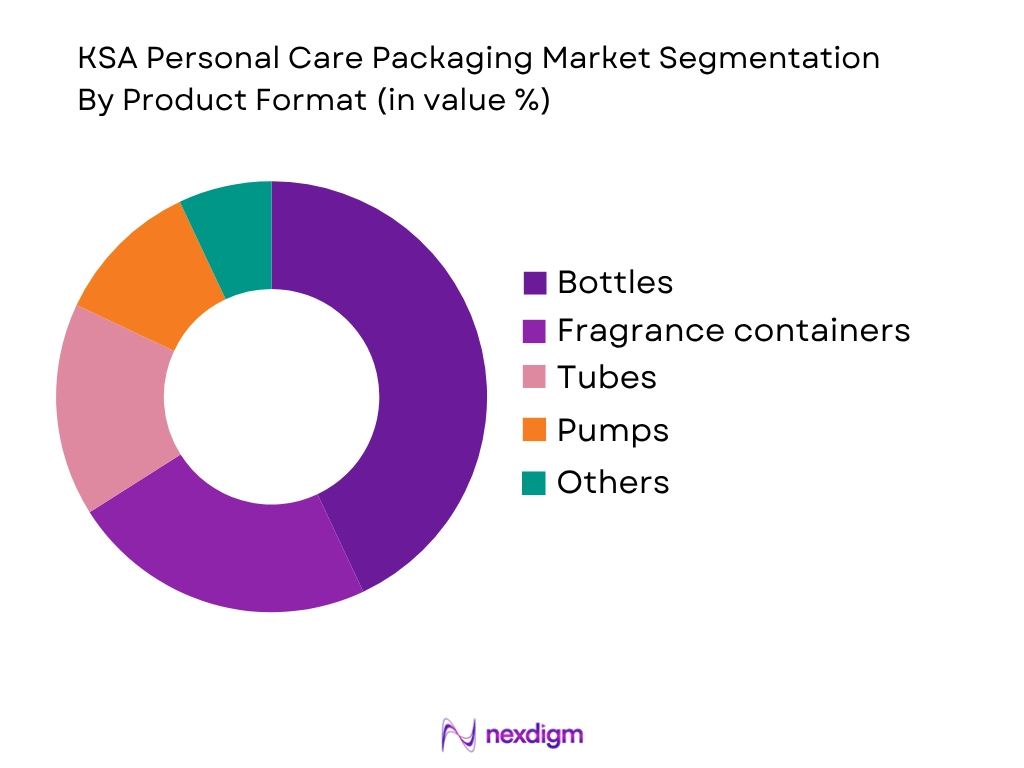
The KSA Personal Care Packaging Market is segmented into bottles, fragrance containers, tubes, jars, aerosol and roll-on packs, pumps and airless systems, sachets and refill pouches, and secondary packaging. Bottles hold the dominant market share because shampoos, conditioners, body washes, lotions, liquid soaps, hair oils and hotel amenities require high-volume PET, HDPE and polypropylene containers. Bottles support economy, mass and prestige portfolios and can be fitted with flip-top closures, disc-top caps, lotion pumps or fine-mist sprayers. Fragrance containers account for a comparatively high share of packaging value because Saudi perfume, oud and attar brands use decorated glass, crimp pumps, metal collars, weighted caps and rigid presentation boxes. Tubes remain important for facial cleansers, sunscreens, toothpaste and hair treatments. Airless systems are gaining relevance in serums and active skin care, while sachets and refill pouches support sampling, travel use and value-conscious consumers.
By Packaging Material
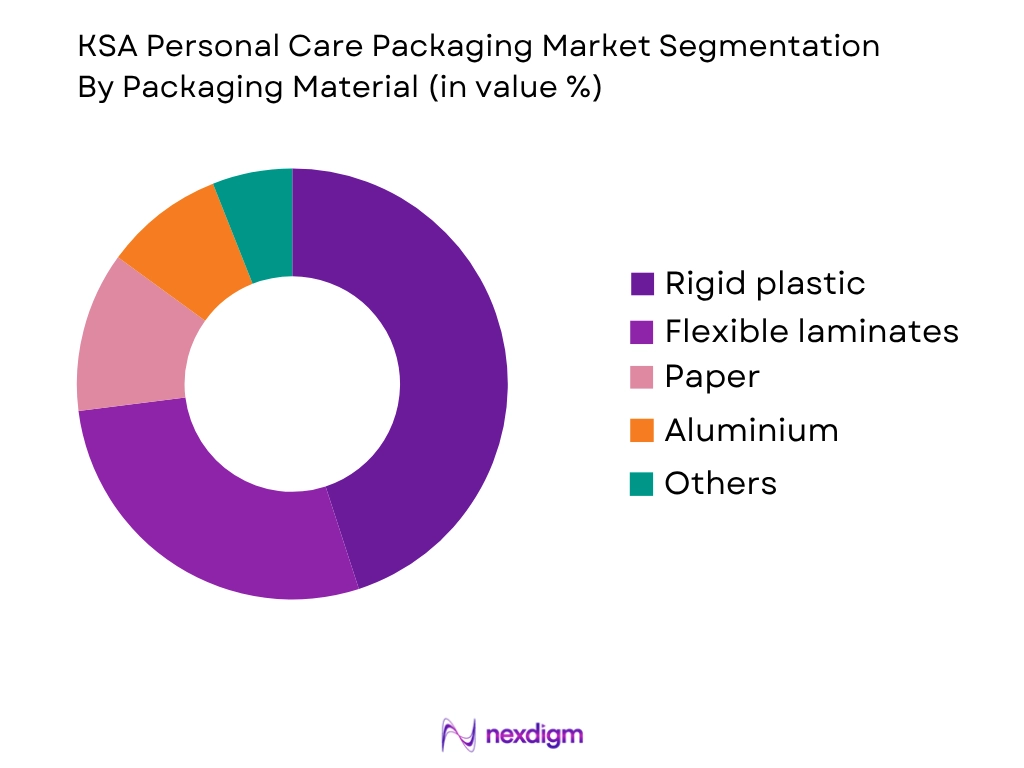
The KSA Personal Care Packaging Market is segmented into rigid plastic, glass, paper and paperboard, flexible laminates, aluminium and steel, and alternative materials. Rigid plastic holds the dominant market share because PET, HDPE and polypropylene provide low weight, moulding flexibility, chemical resistance and compatibility with mass-market toiletries. Saudi Arabia’s petrochemical base and domestic plastics-conversion ecosystem also support local production of bottles, closures and selected dispensing components. Glass has a stronger position than in many personal-care markets because perfume, oud, attar, facial oils and premium skin care depend on high-clarity or decorated glass. Paperboard is extensively used for perfume cartons, gift sets, skin-care sleeves and promotional kits. Flexible laminates serve sachets and refill pouches, while aluminium supports aerosols, tubes, collars and decorative closures. Future material choices will increasingly consider lightweighting, mono-material construction, refillability and compatibility with local collection and recycling systems.
Competitive Landscape
The KSA Personal Care Packaging Market includes Saudi integrated packaging groups, rigid-plastic manufacturers, carton and flexible-packaging converters, and global specialists in dispensing and premium packaging. Domestic suppliers compete through shorter lead times, Arabic artwork support, local mould maintenance and access to industrial cities. International businesses differentiate through airless pumps, fragrance dispensing, recyclable structures and multinational brand approvals. NAPCO National, established in 1956, operates across plastic, paper, corrugated packaging and recycled resins, illustrating the breadth of local packaging capability.
| Company | Establishment year | Headquarters | Core portfolio | Material capability | Dispensing capability | Decoration and tooling | Sustainability capability | KSA positioning |
| NAPCO National | 1956 | Dammam, Saudi Arabia | ~ | ~ | ~ | ~ | ~ | ~ |
| Saudi Plastic Factory | 1962 | Riyadh, Saudi Arabia | ~ | ~ | ~ | ~ | ~ | ~ |
| ALPLA | 1955 | Hard, Austria | ~ | ~ | ~ | ~ | ~ | ~ |
| Amcor | 1860s | Zurich, Switzerland | ~ | ~ | ~ | ~ | ~ | ~ |
| AptarGroup | 1992 | Crystal Lake, United States | ~ | ~ | ~ | ~ | ~ | ~ |
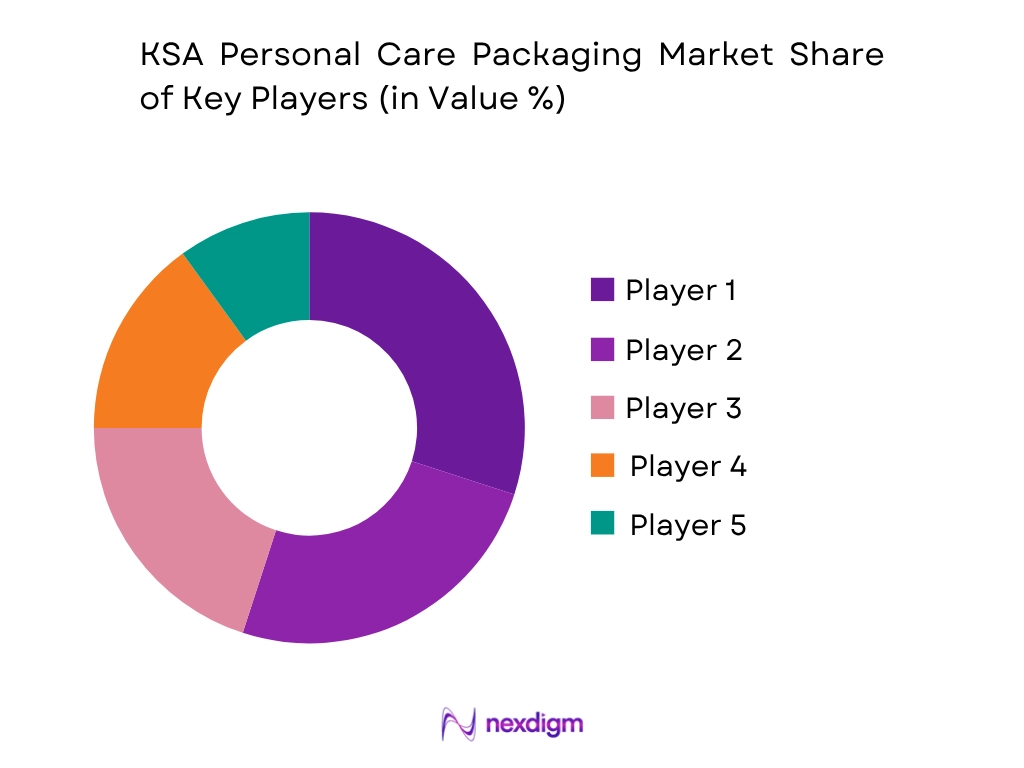
KSA Personal Care Packaging Market Analysis
Growth Drivers
Expanding Non-Oil Consumer Economy and Personal Care Distribution
Saudi Arabia’s expanding non-oil economy is increasing demand for bottles, jars, tubes, pumps, aerosol containers, sachets and cartons used across skin care, hair care, fragrances, grooming, oral care and bath products. The General Authority for Statistics recorded a population of 35,300,280 people in 2024. Real GDP increased by 1.3 units for every 100 units, while non-oil activities expanded by 4.3 units for every 100 units, supporting retail, logistics, hospitality and consumer-product manufacturing. In 2025, real GDP increased by 4.5 units for every 100 units, and non-oil activities expanded by 4.9 units, confirming continued diversification. Riyadh, Jeddah and the Eastern Province concentrate beauty retailers, pharmacies, personal-care brands, distributors and e-commerce fulfilment operations. High-frequency products such as shampoo, conditioner, deodorant, body wash and toothpaste generate recurring demand for standard plastic packs, while premium skin-care and fragrance products require glass, airless dispensers and decorated cartons. The Kingdom’s digital economy represented 16 units of every 100 units of GDP in 2024, strengthening online beauty sales and demand for lockable pumps, induction seals, tamper evidence and parcel-resistant secondary packaging. Packaging suppliers with local inventory, Arabic artwork support and multiple pack-size options are therefore positioned to serve both multinational and emerging Saudi brands.
Industrial Localisation and Domestic Packaging Conversion
Saudi Arabia’s industrial-localisation programme is supporting domestic production of plastic bottles, caps, flexible packaging, cartons and selected personal-care components. Current-price GDP reached SAR 1,016 billion in the first quarter of 2024, with wholesale and retail trade, restaurants and hotels contributing 10.4 units for every 100 units of economic activity. Non-oil activities increased by 3.4 units during the same period and by 4.6 units in the fourth quarter, demonstrating momentum in sectors connected to packaging demand. Riyadh industrial areas, Sudair, Dammam, Jubail and Jeddah provide access to petrochemical resins, moulding companies, printers, contract fillers and national distribution centres. Domestic conversion is particularly viable for PET and HDPE bottles, polypropylene closures, laminated films and folding cartons because these formats are consumed in high volumes across hair care, toiletries and fragrances. Local production reduces exposure to overseas freight, long minimum-order cycles and delayed replacement components. It also allows faster artwork revisions when brands change Arabic labels, warnings or product claims. Saudi converters can further support GCC distribution by producing destination-specific labels and cartons after importing specialised pumps, decorative glass or metallised caps. The opportunity favours suppliers that integrate mould design, printing, sleeving, filling-line trials, component testing and warehousing rather than competing only through basic container production.
Market Challenges
Imported Premium Components and Heat-Resistance Requirements
The KSA Personal Care Packaging Market remains dependent on imported airless pumps, fragrance sprayers, crimp systems, decorative glass, metal collars, elastomer seals and specialised printing equipment. These components are essential for premium fragrances, serums, sunscreens and dermocosmetics but can create long replenishment cycles and high minimum-order commitments. Saudi Arabia’s climate increases the technical burden because packaged products may face prolonged heat and ultraviolet exposure in warehouses, delivery vehicles and loading areas. Such conditions can cause panel deformation, closure loosening, fragrance evaporation, label lifting, stress cracking and pump failure. Every imported component therefore requires compatibility testing with alcohol, essential oils, oud extracts, surfactants and active ingredients. The national demand base magnifies the cost of failure: Saudi Arabia had 35,300,280 residents in 2024, and more than 6,254,751 Umrah performers were recorded in the third quarter alone. These consumers and visitors create substantial retail, hospitality and travel-packaging movements. A leaking pump or defective sprayer can affect large inventories across pharmacies, perfume stores, hotels and e-commerce channels. Smaller brands face greater exposure because a component failure may render custom cartons, labels and filled stock unusable. Local safety inventory, standard neck finishes, qualified substitute components and formal supplier-change procedures are therefore essential to reduce operational risk.
Regulatory Notification and Artwork-Control Complexity
Saudi cosmetic products must comply with Saudi Food and Drug Authority requirements covering notification, responsible parties, product identity, ingredients, labels, warnings and supporting technical records. The regulatory burden is packaging-specific because the container, label and secondary carton communicate the product name, function, nominal content, batch information, country of origin, responsible company and required precautions. Arabic-language information must remain accurate and legible across bottles, tubes, sachets and miniature packs. Product variants create additional complexity: changing a fragrance name, pack size, claim, ingredient declaration or manufacturer can require coordinated revisions to notification records, artwork, barcodes, cartons and online listings. SFDA continues to maintain cosmetic guidance and electronic licensing services, including updated guidance available through 2025. The issue is commercially significant because Saudi Arabia’s non-oil economy expanded by 4.3 units for every 100 units in 2024 and by 4.9 units in 2025, supporting entry by new local and international beauty businesses. More brands and variants increase the volume of artwork files requiring control. Packaging suppliers that provide bilingual artwork checking, version management, reserved coding space and traceability can therefore create greater value than converters supplying undecorated containers. Errors can delay customs clearance, require over-labelling, create obsolete stock or prevent products from entering pharmacies, department stores and formal e-commerce channels.
Market Opportunities
Refill Systems and Pilgrimage Hospitality Packaging
Saudi Arabia’s pilgrimage and hospitality ecosystem creates a future opportunity for refillable dispensers, larger back-of-house packs, travel-size toiletries and hygiene kits. GASTAT recorded 6,254,751 Umrah performers during the third quarter of 2024, while the Pilgrim Experience Program continued expanding digital services, accommodation coordination and visitor infrastructure. Hotels in Makkah and Madinah require shampoo, conditioner, shower gel, lotion, liquid soap and personal-hygiene packaging in high recurring volumes. Refillable wall dispensers and bulk refill pouches can reduce the number of individual miniature bottles handled by hotel operators, while tamper-control features preserve hygiene and guest confidence. Travel-size tubes, sachets and bottles remain relevant for pilgrims because they are compact, easy to distribute and suitable for short stays. Packaging suppliers can develop standardised amenity systems containing durable pump bottles, replaceable cartridges and high-capacity refill packs. The same systems can serve resorts, hospitals, gyms and serviced apartments. Commercial success depends on pump durability, dose consistency, ease of cleaning, leak prevention and multilingual information. Suppliers that combine primary containers with filling, coding, carton assembly and logistics can secure repeat institutional contracts. Current pilgrimage volumes provide the demand base, while future growth can be captured without relying on speculative visitor forecasts.
Circular Packaging and Local Recycling Partnerships
Saudi Arabia’s circular-economy strategy creates an opportunity for lightweight bottles, refill pouches, mono-material films, detachable pumps and packaging incorporating qualified recycled resin. The National Center for Waste Management is developing an integrated system intended to divert 90 units of every 100 units of waste from landfill by 2040. Although that target lies beyond the requested data window, current 2024–2026 licensing and investment activity provides the operational foundation: MWAN maintains permits for recyclable-waste sorting, processing, collection and transport, and licensed companies are active across Riyadh, Jeddah and the Eastern Province. Personal-care brands can use this infrastructure to establish collection pilots, recycler partnerships and packaging-material tracking. High-volume categories such as shampoo, conditioner, body wash and hand soap are suitable for opaque PCR bottles and at-home refill pouches where appearance and formula compatibility permit. Packaging redesign must remain technically rigorous because recycled resin can affect colour, odour, stress resistance and pump fit. Mono-material films must also retain seal strength and barrier performance under Saudi heat. Suppliers that provide resin declarations, component-level weight records, recyclability assessments and compatibility testing can become strategic sustainability partners. The first scalable opportunities are likely to be material reduction, refill formats and easier component separation rather than complete elimination of plastic packaging.
Future Outlook
The KSA Personal Care Packaging Market is forecast to expand at approximately ~% CAGR during the 2026–2035 period. This is a placeholder because no official Saudi source publishes a standalone packaging forecast. Growth will be shaped by non-oil diversification, cosmetics localisation, premium fragrance demand, e-commerce, tourism, pilgrimage hospitality and expansion of Saudi-owned beauty brands. Riyadh will remain the principal commercial and procurement centre. Brand headquarters, modern beauty retailers, pharmacies, e-commerce operations and national distribution centres make the city important for packaging specification and purchasing decisions. Jeddah will remain the leading western logistics and beauty-trading centre. Its port infrastructure supports imported glass, pumps, closures, films and decoration components, while its proximity to Makkah strengthens demand for pilgrimage amenities and travel-size hygiene formats. Dammam, Al Khobar and Jubail will become increasingly important for localised packaging production. Eastern Province suppliers benefit from petrochemical resin access, industrial estates and proximity to integrated plastic and flexible-packaging manufacturers. Luxury fragrance packaging will remain one of the highest-value opportunities. Saudi perfume houses require decorated glass, precision crimp pumps, metal collars, magnetic or weighted caps, presentation cartons and anti-counterfeit features. Oud and attar products will require specialised oil-resistant closures and controlled dispensing. Packaging suppliers that understand compatibility with concentrated oils and fragrance ingredients can differentiate through lower leakage and evaporation risk.
Major Players
- NAPCO National
- Saudi Plastic Factory
- Arabian Plastic Industrial Company
- Al Sharq Plastic Industries
- Zamil Plastic Industries
- Rowad National Plastic Company
- Takween Advanced Industries
- United Carton Industries Company
- Gulf Packaging Industries
- Obeikan Investment Group
- AptarGroup
- ALPLA
- Berry Global
- Amcor
- Huhtamaki
Key Target Audience
- Personal care, cosmetics and toiletries manufacturers
- Perfume, oud and attar houses
- Personal care packaging manufacturers and converters
- Contract manufacturers and private-label producers
- Pharmacy, beauty-retail and e-commerce groups
- Hotels, pilgrimage operators and travel-amenity suppliers
- Investments and venture capitalist firms
- Government and regulatory bodies (Saudi Food and Drug Authority, Ministry of Industry and Mineral Resources, Saudi Authority for Industrial Cities and Technology Zones, Saudi Standards Metrology and Quality Organization, National Center for Waste Management and Zakat Tax and Customs Authority)
Research Methodology
Step 1: Identification of Key Variables
The first phase establishes an ecosystem map covering personal-care brands, perfume houses, packaging converters, resin suppliers, contract fillers, retailers, pilgrimage operators, importers and regulators. Critical variables include packaging units per product, material weight, domestic conversion capacity, dispensing-system usage, imported-component dependence, fragrance-packaging intensity and retail-channel mix.
Step 2: Market Analysis and Construction
Historical demand is analysed using cosmetics consumption, packaging production, imports, population, tourism, pilgrimage and company revenues. The top-down model converts finished-product demand into packaging units. The bottom-up model aggregates bottles, jars, tubes, pumps, glass fragrance packs, flexible packaging, cartons, decoration and filling revenue.
Step 3: Hypothesis Validation and Expert Consultation
Market hypotheses are validated through computer-assisted telephone interviews with packaging manufacturers, fragrance houses, skin-care brands, contract manufacturers, retailers and hotel suppliers. Interviews assess component sourcing, custom tooling, SFDA requirements, Arabic labelling, heat resistance, minimum orders, local manufacturing and GCC distribution.
Step 4: Research Synthesis and Final Output
The final phase triangulates GASTAT indicators, SFDA guidance, company disclosures, trade data and primary interviews. Market estimates are reconciled across packaging revenue, units and material consumption. Forecast assumptions incorporate localisation, pilgrimage demand, refill adoption, premium fragrance, e-commerce, private labels and non-oil economic activity.

- Executive Summary
- Research Methodology (Market Definitions and Assumptions, Personal Care Packaging Taxonomy, Abbreviations, Market Sizing Approach, Top-Down Personal Care Consumption Analysis, Bottom-Up Packaging Converter Aggregation, Packaging Units per Finished Product, Supply-Side Capacity Assessment, Demand-Side Procurement Assessment, Import–Export Reconciliation, Primary Industry Interviews, Data Triangulation, Forecasting Framework, Scenario Analysis, Limitations and Future Conclusions)

- Definition and Scope
- Market Evolution and Industry Genesis
- Timeline of Major Industry Developments
- Personal Care Packaging Business Cycle
- Cosmetics, Toiletries and Fragrance Manufacturing Ecosystem
- Domestic Packaging Conversion Ecosystem
- Imported Components and Luxury Packaging Ecosystem

- Growth Drivers (Young Consumer Base, Premium Beauty Consumption, Fragrance and Oud Culture, Women’s Workforce Participation, E-Commerce Expansion, Tourism and Pilgrimage Demand, Retail Modernisation, Industrial Localisation and GCC Distribution)
- Market Challenges (Imported Luxury Component Dependence, High Custom Tooling Costs, Heat and UV Exposure, Short Product-Launch Cycles, Multicomponent Recycling Constraints, Formula Compatibility Risks, Arabic Artwork Complexity and Regulatory Notification Requirements)
- Market Opportunities (Luxury Fragrance Packaging, Refillable Skin-Care Systems, Pilgrimage Amenities, Airless Packaging, PCR Resin, Smart Authentication, Arabic Digital Packaging, Travel-Size Formats, Contract Manufacturing and GCC Export Packaging)
- Market Trends (Prestige Glass Packaging, Minimalist Clinical Design, Oud-Inspired Decoration, Refill Pouches, Airless Pumps, Metallised Closures, Digital Printing, QR Authentication, Sustainable Amenities and Omnichannel Packaging)
- SWOT Analysis
- Porter’s Five Forces Analysis
- PESTLE Analysis

- By Market Value (2020-2025)
- By Packaging Units (2020-2025)
- By Packaging Material Consumption (2020-2025)

- By Product Format (In Value %)
Bottles
Jars
Plastic Tubes
Laminated Tubes
Aluminium Tubes
Sachets
Flat Pouches - By Packaging Material (In Value %)
Polyethylene Terephthalate
Recycled Polyethylene Terephthalate
High-Density Polyethylene
Low-Density Polyethylene
Polypropylene - By Sales and Distribution Channel (In Value %)
Supermarkets and Hypermarkets
Pharmacies and Drugstores
Health and Beauty Retailers
Department Stores
Specialty Beauty Retailers
Perfume and Oud Retailers
Professional Salons and Spas - By Geographic Market (In Value %)
Riyadh
Makkah
Madinah
Eastern Province
Jeddah
Dammam

- Market Share of Major Players
- Cross Comparison Parameters (Personal Care Packaging Portfolio Breadth, Luxury Fragrance and Dispensing Capability, Saudi Manufacturing and Warehousing Footprint, Sustainable Material and PCR Capability, Custom Moulding and Decoration Capability, Refill and Pilgrimage Amenities Capability, GCC Distribution and Export Reach, Saudi Personal Care Brand Customer Coverage)
- SWOT Analysis of Major Players
- Detailed Profiles of Major Companies
NAPCO National
3P Gulf Group
Saudi Plastic Factory
Arabian Plastic Industrial Company
Al Sharq Plastic Industries
Zamil Plastic Industries
Rowad National Plastic Company
Takween Advanced Industries
United Carton Industries Company
Gulf Packaging Industries
Obeikan Investment Group
AptarGroup
ALPLA
Berry Global
Amcor

- Packaging Attribute Preference Assessment
- Premium versus Functional Packaging Preference
- Luxury Fragrance Unboxing Preference
- Oud and Attar Packaging Preference
- Refillable Packaging Acceptance
- Recycled-Content Packaging Perception
- Glass versus Plastic Preference

- By Market Value (2026-2035)
- By Packaging Units (2026-2035)
- By Packaging Material Consumption (2026-2035)


 Request a Sample
 Ask for Customization
 Get a Quote
 Enquire Now