

 Download PDF
Market Overview
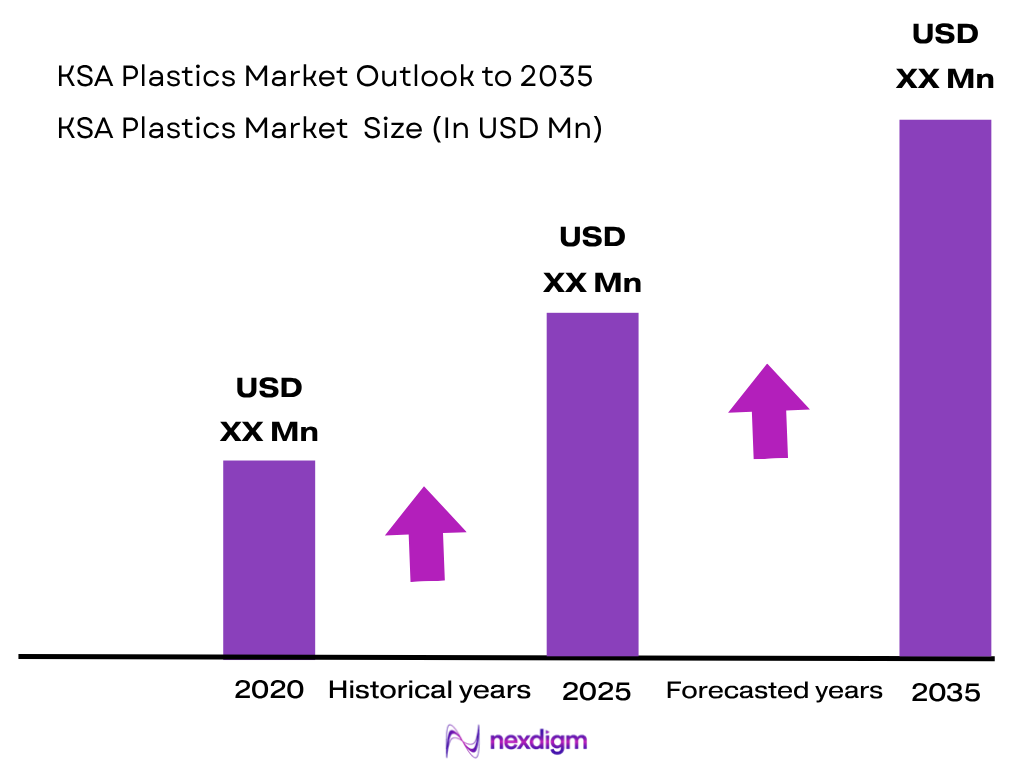
The KSA Plastics Market is valued at approximately USD ~XX billion, supported by an integrated petrochemical feedstock base, downstream conversion, packaging, construction and industrial applications. Polymer production at SABIC increased from 9.1 million tonnes to 9.9 million tonnes, while polymer sales moved from 15.4 million tonnes to 15.8 million tonnes across the two latest reported annual periods. Saudi Arabia’s National Industrial Strategy identifies high-value packaging, engineering plastics, recycling, pipes, automotive components and medical applications as priority conversion segments.
Jubail, Dammam, Riyadh, Rabigh, Jeddah and Yanbu form the dominant KSA plastics ecosystem because they combine petrochemical feedstock availability, industrial infrastructure, plastic conversion facilities, logistics and proximity to major end users. SABIC operates major industrial activities in Jubail and Yanbu, while Petro Rabigh operates an integrated complex capable of producing 18.4 million tonnes of petroleum-based products and 2.4 million tonnes of ethylene- and propylene-based derivatives. Napco National operates from Dammam and has developed 20 industrial facilities and 14 distribution centers, reinforcing the Eastern Province’s downstream position.
Market Segmentation
By Polymer Type
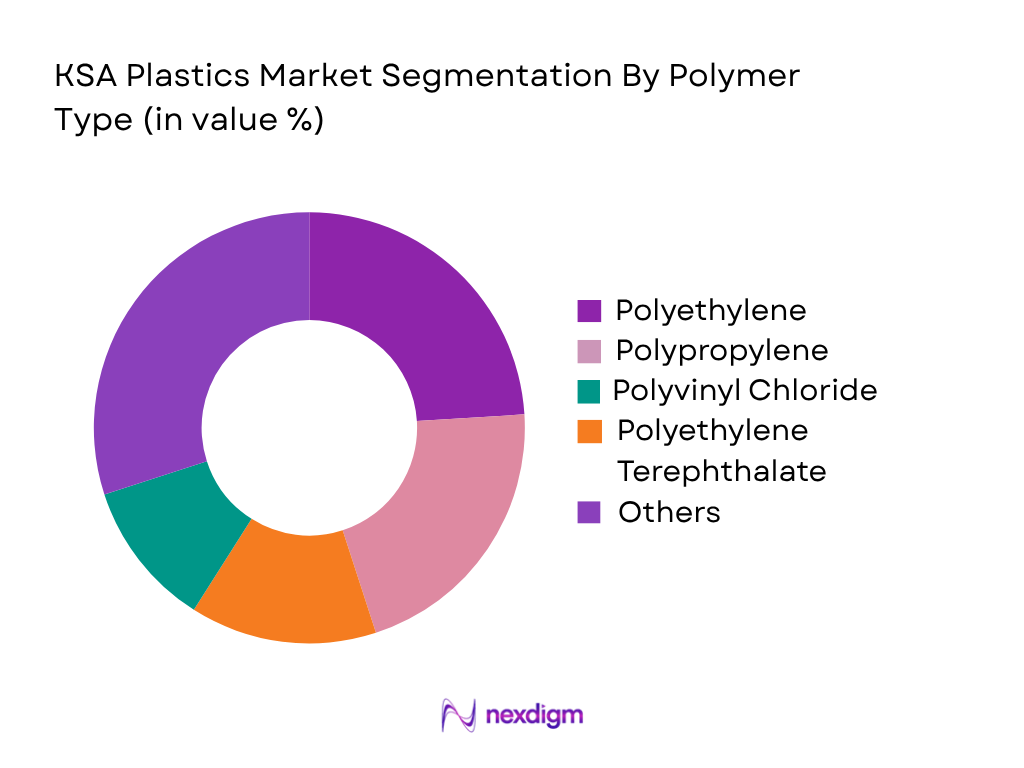
The KSA Plastics Market is segmented by polymer type into polyethylene, polypropylene, polyvinyl chloride, polyethylene terephthalate, polystyrene, polyurethane, engineering plastics and recycled plastics. Polyethylene represents the dominant sub-segment, supported by Saudi Arabia’s large domestic olefins and polyolefins production base and its widespread use in flexible packaging, bottles, industrial films, pipes, agricultural films and consumer applications. SABIC identifies polyethylene among the polymer categories in which it holds a global leadership position and supplies PE across packaging, construction, agriculture and other end markets. The Saudi National Industrial Strategy also prioritizes high-value packaging, plastic pipes and fittings, recycling and engineering-plastic applications, which strengthens polyethylene consumption across both conventional and emerging downstream activities. Saudi industrialization policy is explicitly seeking deeper conversion of locally available petrochemical feedstocks into higher-value products rather than relying principally on basic resin exports. This integration between feedstock, resin manufacturing and domestic plastic conversion supports polyethylene’s broad application base and reinforces its leading position within the Saudi plastics industry.
By End-Use Industry
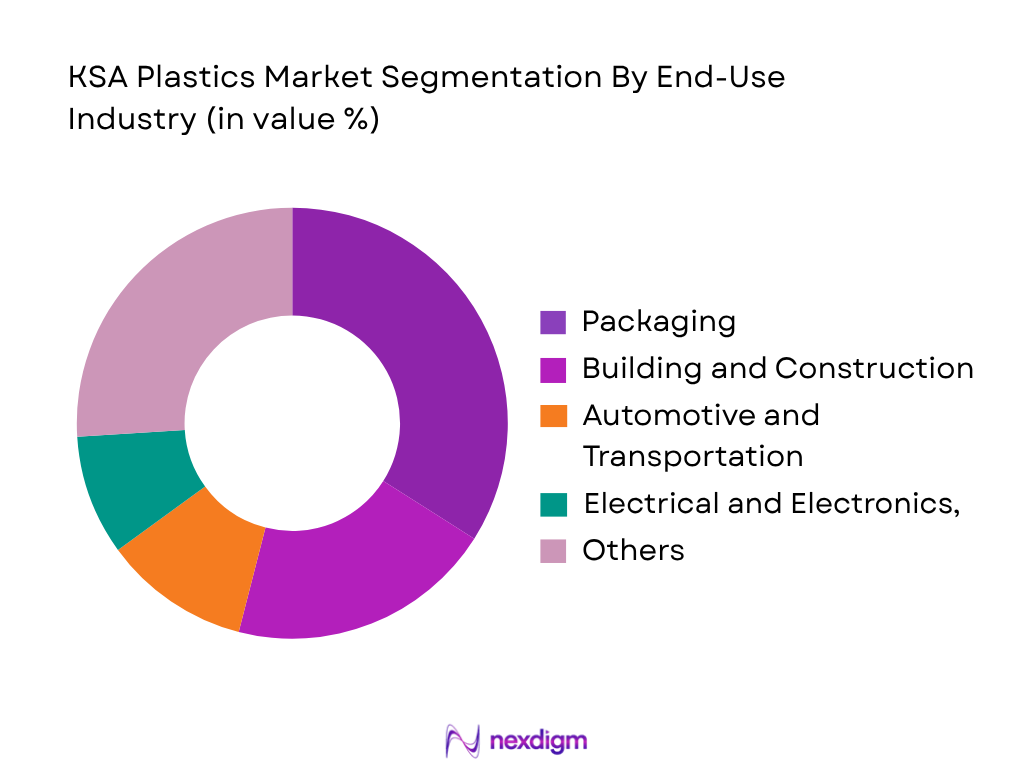
The KSA Plastics Market is segmented by end-use industry into packaging, building and construction, automotive and transportation, electrical and electronics, healthcare, agriculture, consumer goods, industrial applications and energy and utilities. Packaging represents the dominant end-use sub-segment, driven by extensive consumption of PE, PP, PET, PVC, PS and other polymers across flexible films, bottles, caps, closures, pouches, cups, pails, crates, stretch films and industrial containers. SABIC specifically identifies packaging as a major application area for its polymer portfolio, including conventional, circular and bio-renewable materials. Saudi Arabia’s National Industrial Strategy also prioritizes high-value packaging within plastics and rubber conversion, indicating policy support for downstream capacity expansion and higher-value manufacturing. Napco National’s presence across plastic films, flexible packaging, recycled resins and packaging products demonstrates the depth of the domestic conversion ecosystem. Food and beverage processing, consumer products, logistics, personal care and industrial distribution further sustain packaging demand, while recyclability and lightweighting increasingly influence material selection and converter technology investment.
Competitive Landscape
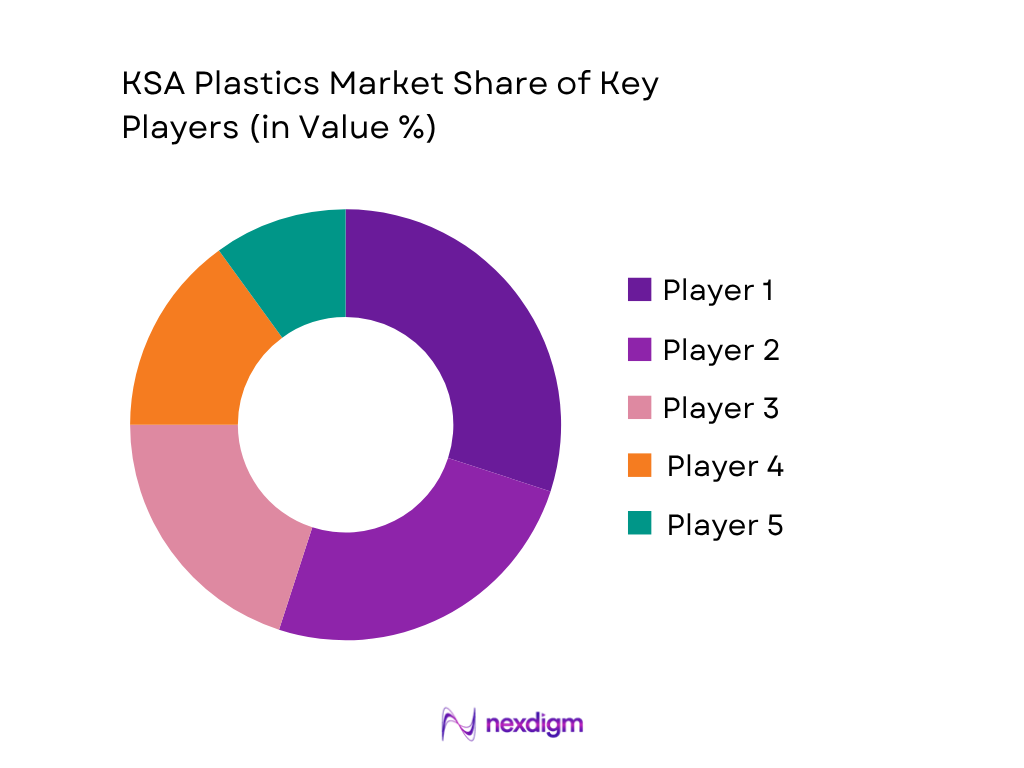
The KSA Plastics Market combines large integrated petrochemical producers with downstream packaging, plastic conversion and recycling companies. SABIC, Tasnee and Petro Rabigh occupy strong upstream and polymer-linked positions, while Napco National and Zamil Plastic Industries compete across conversion, packaging and industrial plastic applications. Competitive differentiation increasingly depends on feedstock integration, polymer breadth, processing capability, end-use specialization, export reach and circular-economy capabilities. Saudi industrial policy is encouraging participants to expand from commodity resin production toward high-value conversion and specialized plastic applications.
| Company | Establishment Year | Headquarters | Polymer / Product Focus | Feedstock Integration | Conversion Capability | Key End-Use Industries | Recycling / Circularity Capability | KSA Manufacturing Position |
| SABIC | 1976 | Riyadh | ~ | ~ | ~ | ~ | ~ | ~ |
| Tasnee | 1985 | Riyadh | ~ | ~ | ~ | ~ | ~ | ~ |
| Petro Rabigh | 2005 | Rabigh | ~ | ~ | ~ | ~ | ~ | ~ |
| Napco National | 1956 | Dammam | ~ | ~ | ~ | ~ | ~ | ~ |
| Zamil Plastic Industries | 1980 | Dammam | ~ | ~ | ~ | ~ | ~ | ~ |
KSA Plastics Market Analysis
Growth Drivers
Integrated Petrochemical and Downstream Plastics Manufacturing Ecosystem
Saudi Arabia’s established petrochemical-to-plastics value chain remains a fundamental growth driver for the KSA Plastics Market because domestic converters can operate alongside a large industrial manufacturing base and established polymer feedstock ecosystem. The Ministry of Industry and Mineral Resources reported that Saudi plastics and rubber conversion capacity stands at approximately 2.7 million tonnes per annum, providing a substantial foundation for packaging films, pipes, containers, injection-molded products, industrial plastics and engineered components. Industrial activity continued expanding during 2024, when the Ministry issued 18 new licenses for rubber and plastic product manufacturing in January alone, while 9 rubber and plastics factories began production during the same month. The Kingdom had 11,672 factories operating or under construction at that point, demonstrating the broader manufacturing ecosystem supporting downstream polymer demand. Macroeconomic fundamentals provide additional industrial depth: World Bank data places Saudi Arabia’s 2024 GDP at USD 1,239.8 billion and GDP per capita at USD 35,121.7, while IMF data records a population of 35.3 million people. Together, domestic resin availability, expanding conversion capacity and industrial-scale manufacturing create sustained demand for polyethylene, polypropylene, PVC, PET, engineering plastics and recycled polymers.
Expansion of Construction, Housing and Water Infrastructure Applications
Construction and utility infrastructure are materially increasing consumption opportunities for PVC, HDPE, PP-R, geomembranes, insulation plastics, waterproofing products and other construction-related polymer applications in Saudi Arabia. The Vision 2030 Housing Program recorded 850,485 residential product contracts in 2024, including 414,406 ready-made units, 254,623 self-construction contracts, 105,112 off-plan sales contracts and 76,344 land ownership contracts. Water-sector development reinforces this demand. The Ministry of Environment, Water and Agriculture reported completion of 36 water-service projects during 2024, involving 894,000 linear metres of transmission lines and networks, together with 29 storage tanks providing 109,500 cubic metres of capacity. Another 12 wastewater projects delivered 293,000 linear metres of lines and networks and treatment facilities capable of handling 52,000 cubic metres per day. These physical infrastructure additions directly require durable piping, fittings, membranes, liners and polymer-based construction components. Saudi Arabia’s USD 1,239.8 billion GDP in 2024 and USD 35,121.7 GDP per capita, reported by the World Bank, provide a strong macroeconomic base for continued residential, municipal and infrastructure investment supporting plastic conversion demand.
Market Challenges
Limited Depth in Specialized Downstream Plastic Conversion
The KSA Plastics Market has a strong upstream petrochemical position, but the development of specialized downstream conversion remains a structural challenge because converting commodity polymers into high-value engineering, healthcare, automotive, electrical and advanced packaging products requires dedicated processing technologies and technical capabilities. The Ministry of Industry and Mineral Resources identifies approximately 2.7 million tonnes per annum of current plastics and rubber conversion capacity, demonstrating that the downstream base is materially smaller than Saudi Arabia’s broader petrochemical manufacturing ecosystem. Industrial entry is continuing but remains incremental: in January 2024, only 18 of the 152 new industrial licenses issued were for rubber and plastic products, while 9 rubber and plastics plants were among 79 factories that commenced production during the month. These figures indicate continued investment while highlighting the need for deeper specialization in compounding, engineering resins, medical plastics and automotive components. The challenge is significant within an economy with USD 1,239.8 billion in GDP and GDP per capita of USD 35,121.7 in 2024, according to the World Bank, because domestic industrial diversification increasingly requires more value-added conversion rather than dependence on basic polymer production and imported finished plastic components.
Developing Recycling Infrastructure and Circular-Plastics Supply Chains
Establishing consistent recycled-resin supply remains a challenge for the KSA Plastics Market because circular plastics require reliable waste collection, sorting, contamination control, recycling technology and standardized feedstock quality before recycled PE, PP and PET can be used at industrial scale. Saudi Arabia’s waste-management infrastructure is expanding, but it remains in an active development phase. The Vision 2030 Annual Report for 2025 identified more than 1,300 licensed entities operating across waste activities and 145 recycling facilities, covering the wider waste-management ecosystem rather than plastics alone. The National Center for Waste Management continued strengthening regulation during 2024, reducing permit-review periods for applications requiring site visits to 5 working days and applications without field visits to 48 hours, indicating continuing institutional development of recycling activity. MWAN’s 2026 licensing records also identify dedicated plastic-recycling facilities, including an active Dammam installation with a declared processing capacity of 2 tonnes per day, illustrating that specialized capacity is being established but remains fragmented across individual operators. The challenge exists in a country with 35.3 million residents and a USD 1,239.8 billion 2024 economy, making consistent national-scale collection and recycled-polymer quality essential for meaningful circular-plastics adoption.
Market Opportunities
Expansion of Plastic Pipes, Fittings and Water-Infrastructure Applications
Saudi Arabia’s ongoing expansion of water, wastewater and desalination infrastructure creates a significant future opportunity for producers of HDPE pipes, PVC pipes, PP-R systems, fittings, geomembranes and other corrosion-resistant plastic infrastructure products. Current government activity demonstrates the size of the physical demand base without relying on future projections. The Ministry of Environment, Water and Agriculture reported that 36 water-service projects were completed during 2024, delivering 894,000 metres of pipelines and networks, 29 storage tanks with 109,500 cubic metres of storage, and pumping facilities totaling 546,080 cubic metres per day. Wastewater infrastructure added another 12 completed projects, incorporating 293,000 metres of networks, treatment capacity of 52,000 cubic metres per day and lifting-station capacity of 277,700 cubic metres per day. Broader water infrastructure recorded in 2026 includes 11,000 kilometres of desalinated-water transmission pipelines and 127,500 kilometres of distribution networks, demonstrating an extensive installed system requiring expansion, maintenance and replacement materials. With Saudi Arabia recording USD 1,239.8 billion in GDP and USD 35,121.7 GDP per capita in 2024, these current infrastructure indicators provide a substantial platform for future growth in locally manufactured plastic piping and utility products.
Localization of High-Value Plastic Conversion and Construction Products
The KSA Plastics Market has a future growth opportunity in converting domestically available polymers into higher-value packaging, engineered components, construction products, compounds and specialty plastic applications rather than concentrating primarily on commodity resin output. Existing 2024 activity provides a clear demand and investment base. The Ministry of Industry and Mineral Resources issued 18 new rubber and plastics manufacturing licenses in January 2024, while 9 factories in the segment entered production, demonstrating ongoing additions to downstream conversion capability. At the demand end, the Housing Program recorded 850,485 residential product contracts during 2024, comprising 414,406 ready-made units, 254,623 self-construction contracts and 105,112 off-plan sales, supporting future demand for plastic piping, insulation, profiles, waterproofing materials, electrical conduits and household plastic components. Saudi Arabia’s industrial strategy also identifies current plastics and rubber conversion capability of approximately 2.7 million tonnes per annum, providing an existing manufacturing platform from which more specialized applications can be developed. The macroeconomic environment further supports localization: the World Bank reports USD 1,239.8 billion of GDP and USD 35,121.7 GDP per capita for 2024, while the IMF records a 35.3 million population base, supporting domestic consumption and industrial-scale downstream investment.
Future Outlook
The KSA Plastics Market is forecast to expand at approximately ~XX% CAGR during 2026-2035, supported by Saudi Arabia’s strategy of moving further downstream from basic petrochemical production into high-value plastic conversion. Demand is expected to broaden across packaging, engineering plastics, construction products, pipes, automotive components, healthcare products and recycling. Circular materials and specialized polymer grades should also become progressively more important as domestic converters upgrade their product portfolios.
Saudi Arabia’s National Industrial Strategy provides a particularly strong long-term framework for plastics conversion. The strategy identifies 20 prioritized plastics and rubber conversion sub-segments and applications and proposes substantial expansion across high-value packaging, recycled plastics, engineering plastics, energy applications, pipes and fittings, automotive components and medical equipment. The strategy indicates that overall plastics and rubber conversion capacity could move from a current base of approximately 2.7 million tonnes per annum toward 11.5 million tonnes per annum, highlighting the scale of planned downstream industrialization.
Major Players
- SABIC
- National Industrialization Company (Tasnee)
- Petro Rabigh
- Saudi Polymers Company
- Sipchem
- Napco National
- Zamil Plastic Industries
- Rowad National Plastic Company
- Takween Advanced Industries
- Arabian Plastic Industrial Company (APICO)
- Al Watania Plastics
- Saudi Plastic Factory Company
- Gulf Packaging Industries
- Filling and Packing Materials Manufacturing Company (FIPCO)
- Obeikan Investment Group
Key Target Audience
- Petrochemical and Polymer Resin Producers
- Plastic Converters and Finished Plastic Product Manufacturers
- Flexible and Rigid Packaging Manufacturers
- Construction, Pipe and Infrastructure Product Manufacturers
- Automotive, Healthcare and Industrial Plastic Component Manufacturers
- Investments and Venture Capitalist Firms
- Polymer Distributors, Compounders and Recycling Companies
- Government and Regulatory Bodies (Ministry of Industry and Mineral Resources, Saudi Standards, Metrology and Quality Organization, National Center for Waste Management, Ministry of Environment, Water and Agriculture, Saudi Authority for Industrial Cities and Technology Zones, Royal Commission for Jubail and Yanbu)
Research Methodology
Step 1: Identification of Key Variables
The initial stage involves constructing a comprehensive ecosystem map covering polymer manufacturers, petrochemical producers, plastic converters, packaging companies, recyclers, distributors and major end-use industries. Secondary research is used to identify key variables including polymer production, domestic resin availability, conversion capacity, import-export flows, processing technologies, end-use consumption and recycled-material adoption. These variables establish the analytical boundaries of the KSA Plastics Market.
Step 2: Market Analysis and Construction
Historical market development is assessed using polymer output, resin sales, manufacturing capacity, converter activity, imports, exports and consumption across major applications. A top-down approach analyzes petrochemical and polymer supply, while a bottom-up model evaluates resin usage by packaging, construction, automotive, healthcare, agriculture and industrial converters. The two approaches are reconciled to construct the market and individual segmentation frameworks.
Step 3: Hypothesis Validation and Expert Consultation
Market hypotheses are validated through structured interviews and CATIs with resin producers, plastic converters, distributors, packaging manufacturers, recyclers, equipment suppliers and major polymer-consuming industries. Discussions focus on resin grade selection, utilization levels, processing technology, localization, customer requirements, recycled-content adoption and supply constraints. Primary information is then triangulated against Saudi industrial statistics, company filings and published operational disclosures to strengthen market reliability.
Step 4: Research Synthesis and Final Output
The final phase integrates supply-side, demand-side and trade findings into a consolidated KSA Plastics Market model. Polymer output is reconciled with converter resin procurement, downstream product manufacturing, imports and exports. Segment-level conclusions are cross-validated across polymer type and end-use industry before preparing competitive positioning, future demand scenarios and strategic recommendations. This process ensures consistency between the market’s upstream petrochemical base and downstream conversion activity.

- Executive Summary
- Research Methodology (Market Definition and Scope, KSA Plastics Market Classification, Polymer Type Assessment, Plastic Product Classification, Processing Technology Analysis, End-Use Industry Mapping, Domestic Polymer Production Assessment, Plastic Conversion Capacity Evaluation, Import-Export Analysis, Virgin and Recycled Polymer Assessment, Plastic Recycling Ecosystem Analysis)

- Definition and Scope
- KSA Plastics Industry Evolution and Development of Petrochemical-to-Plastic Conversion Ecosystem
- Polymer Feedstock, Resin Production and Plastic Conversion Industry Structure
- KSA Plastics Value Chain Analysis
- KSA Plastics Supply Chain Analysis
- Petrochemical Feedstock, Polymer Resin, Plastic Conversion, Finished Plastic Product and Recycling Ecosystem Analysis
- Plastic Manufacturing Integration Assessment Across Packaging, Construction, Automotive, Healthcare, Agriculture and Industrial Applications

- Growth Drivers (Integrated Petrochemical Feedstock Base, Expansion of Downstream Plastic Conversion, Food and Beverage Packaging Demand, Construction and Infrastructure Development, Water Network Expansion, Automotive Manufacturing Localization, Healthcare Manufacturing Expansion, E-Commerce Packaging Demand, Domestic Industrial Diversification)
- Market Challenges (Global Polymer Oversupply, Commodity Resin Cyclicality, Imported Specialty Resin Dependence, Plastic Waste Collection Constraints, Recycled Feedstock Quality Variability, Converter Margin Pressure, Sustainability Compliance Requirements, Alternative Material Competition, Technical Skill Requirements)
- Market Opportunities (Engineering Plastics Localization, High-Barrier Packaging, Automotive Plastic Components, Medical-Grade Plastics, Plastic Pipes and Utility Applications, Specialty Compounding, Masterbatch Production, Recycled PET, Recycled PE and PP, Advanced Recycling, Circular Polymer Production, Finished Plastic Product Import Substitution)
- Market Trends (Downstream Value Addition, Mono-Material Packaging, Packaging Lightweighting, Recycled Content Integration, Circular Polymer Adoption, Specialty Polymer Conversion, High-Performance Plastic Applications, Local Automotive Component Manufacturing, Advanced Plastic Recycling, Design-for-Recycling)
- Regulatory and Standards Landscape (SASO Plastic Product Requirements, SABER Product Conformity Requirements, Saudi Quality Mark Requirements, Waste Management Regulations, Environmental Compliance Requirements, Plastic Recycling Requirements, Industrial Licensing Requirements, Customs Compliance, Packaging Conformity Standards, Circular Economy Framework)
- SWOT Analysis
- Porter’s Five Forces Analysis
- PESTLE Analysis
- Stakeholder Ecosystem
- Competition Ecosystem

- By Market Value (2020-2025)
- By Plastic Consumption Volume (2020-2025)
- By Domestic Polymer Offtake Volume (2020-2025)
- By Plastic Conversion Volume (2020-2025)
- By Finished Plastic Product Output (2020-2025)
- By Virgin Polymer Consumption Volume (2020-2025)
- By Recycled Polymer Consumption Volume (2020-2025)

- By Polymer Type (In Value %)
Polyethylene
High-Density Polyethylene
Low-Density Polyethylene
Linear Low-Density Polyethylene
Polypropylene
Homopolymer Polypropylene
Random Copolymer Polypropylene
Impact Copolymer Polypropylene
Polyvinyl Chloride
Rigid PVC
Flexible PVC
Polyethylene Terephthalate
Bottle-Grade PET
Sheet-Grade PET
Polystyrene
General Purpose Polystyrene
High Impact Polystyrene
Expanded Polystyrene
Polyurethane
Engineering Plastics
Recycled Plastics - By Plastic Product Type (In Value %)
Flexible Plastic Films
BOPP Films
PE Films
Stretch Films
Shrink Films
Plastic Bags, Sacks and Pouches
Rigid Plastic Packaging
PET Bottles and Preforms
HDPE Bottles and Containers
PP Cups, Tubs and Trays
Plastic Pipes and Fittings
Industrial Plastic Containers
Plastic Sheets and Profiles
Automotive Plastic Components
Electrical and Electronics Plastic Components
Medical Plastic Products
Plastic Compounds and Masterbatches - By Processing Technology (In Value %)
Film Extrusion
Sheet Extrusion
Pipe and Profile Extrusion
Injection Molding
Blow Molding
Injection Stretch Blow Molding
Thermoforming
Rotational Molding
Compression Molding
Foam Processing
Fiber and Filament Extrusion
Compounding
Masterbatch Production
Biaxial Orientation
Multi-Layer Co-Extrusion - By End-Use Industry (In Value %)
Packaging
Food and Beverage
Building and Construction
Automotive and Transportation
Electrical and Electronics
Healthcare and Medical Devices
Agriculture and Irrigation
Consumer Goods and Household Products
Industrial and Petrochemical Applications
Energy and Utilities
Water Infrastructure
Textiles and Fibers
E-Commerce and Logistics
Pharmaceuticals and Personal Care - By Application Type (In Value %)
Flexible Food Packaging
Rigid Food and Beverage Packaging
Water and Beverage Bottles
Industrial Packaging
Water Supply Pipes
Sewerage and Drainage Pipes
Gas Distribution Pipes
Electrical Conduits
Thermal Insulation
Waterproofing Membranes
Geomembrane Liners
Automotive Interior Components
Automotive Exterior Components
Electrical Housings and Components
Agricultural Greenhouse Films
Irrigation Systems
Medical Consumables - By Region (In Value %)
Central Region
Eastern Region
Western Region
Northern Region
Southern Region
Riyadh Manufacturing Cluster
Jubail-Dammam Industrial Cluster
Jeddah Industrial Cluster
Rabigh Conversion Cluster
Yanbu Industrial Cluster

- Market Share of Major Players (By Revenue, Polymer Type, Product Category, Production Volume, Conversion Capacity, End-Use Industry, Manufacturing Footprint, Export Presence)
- Cross Comparison Parameters (Polymer and Plastic Product Portfolio Breadth, Installed Production and Conversion Capacity, Polymer Processing Technology Mix, Domestic Feedstock Integration, End-Use Industry Coverage, KSA Manufacturing and Distribution Footprint, Export Market Reach, Recycled and Circular Polymer Capability)
- SWOT Analysis of Major Players
- Competitive Positioning Matrix
- Product and Technology Portfolio Benchmarking
- Production Capacity and Polymer Category Benchmarking
- Manufacturing and Conversion Technology Assessment
- End-Use Industry and Customer Integration Assessment
- Detailed Profiles of Major Companies
SABIC
National Industrialization Company
Petro Rabigh
Saudi Polymers Company
Sipcheml
Napco National
Zamil Plastic Industries
Rowad National Plastic Company
Takween Advanced Industries
Arabian Plastic Industrial Company
Al Watania Plastics
Saudi Plastic Factory Company
Gulf Packaging Industries
Filling and Packing Materials Manufacturing Company
Obeikan Investment Group

- Large Plastic Converter Procurement Assessment
- Packaging Manufacturer Resin Requirement Analysis
- Pipe and Fittings Manufacturer Demand Assessment
- Automotive Component Manufacturer Plastic Requirement Analysis
- Construction Plastic Product Manufacturer Assessment
- FMCG and Beverage Packaging Demand Analysis
- Healthcare and Pharmaceutical Plastic Demand Assessment
- Industrial Plastic Product Manufacturer Analysis
- Plastic Distributor and Trader Ecosystem Assessment
- Recycled Polymer Buyer Requirement Analysis

- By Market Value (2026-2035)
- By Plastic Consumption Volume (2026-2035)
- By Domestic Polymer Offtake Volume (2026-2035)
- By Plastic Conversion Volume (2026-2035)
- By Finished Plastic Product Output (2026-2035)
- By Virgin Polymer Demand Volume (2026-2035)
- By Recycled Polymer Demand Volume (2026-2035)
- By Engineering and Specialty Polymer Demand Volume (2026-2035)


 Request a Sample
 Ask for Customization
 Get a Quote
 Enquire Now