
 Download PDF
Market Overview
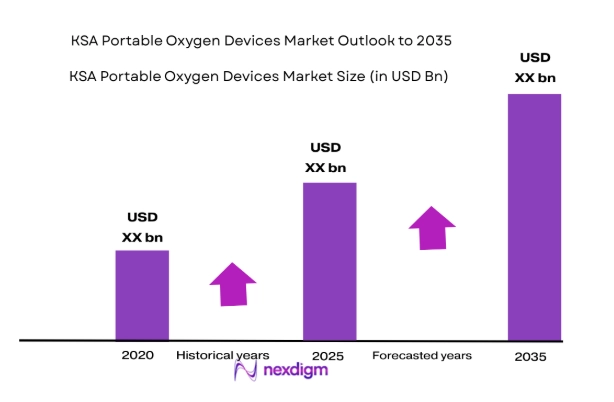
The KSA portable oxygen devices market is a rapidly growing segment of the healthcare industry, driven by an increasing prevalence of respiratory diseases and the rising demand for home healthcare solutions. Based on a recent historical assessment, the market is valued at approximately USD ~ million in 2024. Growth is fueled by technological advancements in oxygen concentrators and portable systems, alongside an aging population that increasingly requires at-home medical care. Additionally, the market benefits from the government’s focus on healthcare infrastructure and support for innovative medical technologies.
The dominance of cities like Riyadh, Jeddah, and Dhahran is attributed to their well-established healthcare infrastructure, proximity to major medical facilities, and high urban population. These cities also benefit from robust healthcare systems, supported by both government and private sector investments in advanced medical technologies. Furthermore, regions with a higher concentration of elderly residents and patients with chronic respiratory conditions are also witnessing a surge in demand for portable oxygen devices. The continuous expansion of homecare services in these areas plays a key role in fostering market growth.
Market Segmentation
By System Type
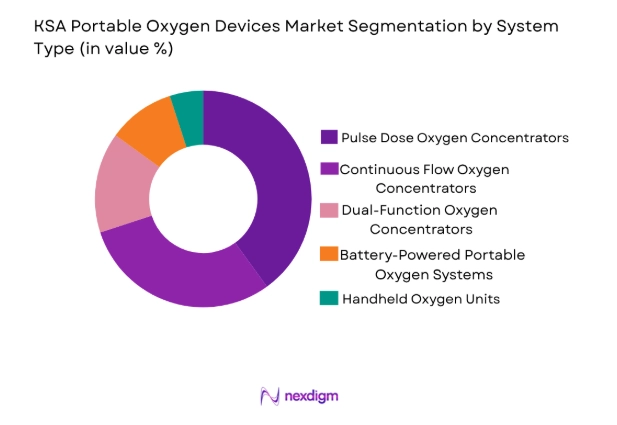
The market is segmented into pulse dose oxygen concentrators, continuous flow oxygen concentrators, dual-function oxygen concentrators, battery-powered portable oxygen systems, and handheld oxygen units. Pulse dose oxygen concentrators dominate due to their portability, energy efficiency, and suitability for homecare use. Their ability to deliver oxygen only during inhalation enhances battery life and convenience, making them highly preferred among patients requiring long-term oxygen therapy.
By Platform Type
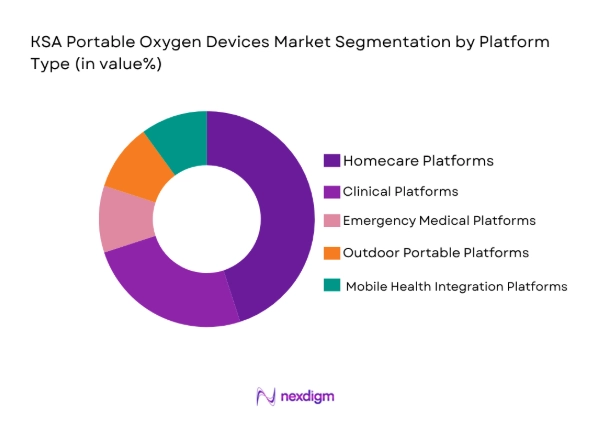
The KSA Portable Oxygen Devices market is segmented into home care platforms, clinical platforms, emergency medical platforms, outdoor portable platforms, and mobile health integration platforms. Home care platforms dominate the segment due to the increasing preference for in-home treatment, cost efficiency, and rising demand from elderly patients requiring continuous oxygen support. The expansion of home healthcare services and supportive government initiatives have further accelerated adoption. Additionally, advancements in user-friendly portable devices have made home-based oxygen therapy more accessible, reducing dependency on hospital-based care. \
Competitive Landscape
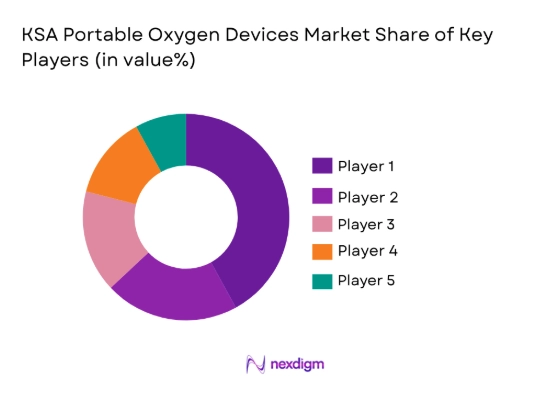
The competitive landscape of the KSA portable oxygen devices market is characterized by a high level of consolidation, with major players focusing on expanding their product portfolios and improving their technological capabilities. Companies are investing in innovative solutions to cater to the increasing demand for advanced, compact, and efficient portable oxygen devices. The presence of global players and regional companies significantly influences the market dynamics, with companies often leveraging strategic partnerships and collaborations to strengthen their market position.
| Company Name | Establishment Year | Headquarters | Technology Focus | Market Reach | Key Products | Revenue (USD) | Market-specific Parameter |
| Philips Healthcare | 1891 | Netherlands | ~ | ~ | ~ | ~ | ~ |
| Invacare Corporation | 1885 | USA | ~ | ~ | ~ | ~ | ~ |
| Medtronic | 1949 | Ireland | ~ | ~ | ~ | ~ | ~ |
| Linde Healthcare | 1879 | Germany | ~ | ~ | ~ | ~ | ~ |
| Air Liquide | 1902 | France | ~ | ~ | ~ | ~ | ~ |
KSA Portable Oxygen Devices Market Analysis
Growth Drivers
Increasing Prevalence of Respiratory Diseases
The rising prevalence of respiratory diseases, particularly chronic obstructive pulmonary disease (COPD) and asthma, is a key growth driver for the portable oxygen devices market. As the number of people suffering from these conditions increases, the demand for continuous oxygen therapy solutions also grows. The aging population, with a higher susceptibility to respiratory illnesses, further drives this demand. Furthermore, lifestyle factors such as air pollution and smoking habits contribute to the increasing prevalence of these diseases, creating a sustained need for portable oxygen devices. The growing awareness of respiratory health management and the need for homecare solutions also supports market expansion, encouraging patients to invest in more efficient, reliable, and portable devices for daily use.
Government Support and Infrastructure Development
Government initiatives in the healthcare sector play a significant role in driving the growth of the portable oxygen devices market. These initiatives include funding for healthcare infrastructure development, increasing healthcare accessibility, and promoting advanced medical technologies. Governments across KSA are prioritizing the development of home healthcare systems to reduce hospital congestion and provide more affordable care to patients. Regulatory frameworks supporting medical device certification and patient safety also encourage the use of advanced oxygen therapy devices. These efforts, coupled with public health campaigns to raise awareness about chronic respiratory diseases, are contributing to the rapid growth of the market.
Market Challenges
High Cost of Portable Oxygen Devices
The high cost of portable oxygen devices remains a significant challenge in the KSA market. Many patients, particularly in rural areas, are unable to afford advanced oxygen concentrators and portable systems due to their high initial purchase costs and maintenance expenses. This cost barrier is particularly limiting in lower-income households, where access to advanced medical devices is restricted. Despite technological advancements that have reduced the overall size and weight of devices, the financial accessibility of these products remains a critical concern. The cost of continuous maintenance, including regular servicing and the replacement of consumables, further adds to the financial burden on users. This challenge is expected to slow the adoption of these devices among certain segments of the population.
Regulatory and Certification Barriers
Regulatory and certification challenges also present a significant hurdle to the growth of the portable oxygen devices market in KSA. The regulatory requirements for the approval of medical devices, including oxygen therapy systems, can be complex and time-consuming. Manufacturers must navigate through stringent processes to meet the standards set by regulatory bodies. The slow pace of regulatory approvals can delay the introduction of new, innovative products to the market, limiting the variety of available options for consumers. Furthermore, the lack of uniformity in certification standards across different regions complicates the market landscape for both local and international players.
Opportunities
Expansion of Home Healthcare Market
One of the most promising opportunities in the KSA portable oxygen devices market is the expansion of the home healthcare sector. With increasing healthcare costs and the demand for more personalized care, patients are increasingly opting for home-based healthcare solutions. The use of portable oxygen devices in homecare settings enables patients with chronic respiratory conditions to manage their health more effectively without frequent hospital visits. This shift toward home healthcare is supported by advancements in portable oxygen technology, which make these devices more compact, efficient, and affordable. The growing preference for home-based care and the ability to provide continuous oxygen therapy at home is expected to significantly boost market growth.
Technological Advancements in Oxygen Therapy Devices
Technological innovations are opening new opportunities in the portable oxygen devices market. Advancements such as miniaturization, increased battery life, and the integration of smart features (like connectivity and monitoring) are making portable oxygen devices more user-friendly and efficient. These innovations provide greater convenience and flexibility for patients, especially those with active lifestyles. Furthermore, the increasing integration of IoT and AI in these devices enables real-time monitoring and more personalized treatment, improving patient outcomes. As technology continues to evolve, there will be increased demand for more advanced, feature-rich portable oxygen devices that cater to a wider range of patient needs.
Future Outlook
The future of the KSA portable oxygen devices market is promising, with continued growth expected over the next five years. Key factors contributing to this growth include advancements in device technology, increased government support for home healthcare, and the rising prevalence of respiratory conditions. As technology continues to improve, portable oxygen devices are becoming more compact, efficient, and accessible. Regulatory support for home healthcare initiatives and increasing patient awareness will further drive demand. These developments suggest a bright future for the portable oxygen devices market, with substantial growth opportunities ahead.
Major Players
- Philips Healthcare
- Invacare Corporation
- Medtronic
- Linde Healthcare
- Air Liquide
- Drive DeVilbiss Healthcare
- ResMed
- Graham-Field Health Products
- GCE Healthcare
- Chart Industries
- OxyCare
- Vyaire Medical
- Inogen
- VitalAire
- Allied Healthcare Products
Key Target Audience
- Investments and venture capitalist firms
- Government and regulatory bodies
- Homecare service providers
- Hospitals and healthcare facilities
- Medical device distributors
- Insurance companies
- Pharmaceutical companies
Research Methodology
Step 1: Identification of Key Variables
This step involves identifying the key variables influencing the portable oxygen devices market, such as market demand, technological trends, and regulatory factors.It also includes evaluating macroeconomic indicators, healthcare expenditure patterns, and demographic trends impacting oxygen therapy demand.Additionally, device adoption rates across different end-user segments are analyzed to establish baseline assumptions.
Step 2: Market Analysis and Construction
A detailed analysis of market trends, segmentation, and the competitive landscape is conducted to construct a comprehensive market model.This step incorporates historical data triangulation and forecasting models to estimate current and future market size.
Supply chain dynamics, pricing benchmarks, and distribution channel efficiencies are also assessed to refine market estimates.
Step 3: Hypothesis Validation and Expert Consultation
Industry experts are consulted to validate the findings and refine the market hypotheses, ensuring that the research is based on accurate and up-to-date data. Primary interviews with manufacturers, distributors, and healthcare professionals are conducted to verify assumptions.
Feedback from regulatory authorities and procurement specialists further strengthens the reliability of the insights.
Step 4: Research Synthesis and Final Output
The collected data is synthesized into a final report that provides insights into market trends, forecasts, and actionable recommendations for stakeholders. Advanced analytical tools are used to ensure consistency and eliminate data discrepancies across segments.
The final output is structured to support strategic decision-making, investment planning, and competitive benchmarking.

- Executive Summary
- Research Methodology
(Definitions, Scope, Industry Assumptions, Market Sizing Approach, Primary & Secondary Research Framework, Data Collection & Verification Protocol, Analytic Models & Forecast Methodology, Limitations & Research Validity Checks)

- Market Definition and Scope
- Value Chain & Stakeholder Ecosystem
- Regulatory / Certification Landscape
- Sector Dynamics Affecting Demand
- Strategic Initiatives & Infrastructure Growth

- Growth Drivers
Increasing Prevalence of Respiratory Disorders
Growing Geriatric Population
Expanding Homecare Services - Market Challenges
High Cost of Portable Oxygen Devices
Regulatory & Certification Challenges
Limited Awareness in Rural Areas - Market Opportunities
Expansion of Homecare Market
Technological Advancements in Portable Oxygen Devices
Strategic Partnerships & Collaborations - Trends
Shift Toward Compact & Portable Devices
Integration of IoT in Oxygen Systems - Government Regulations
- SWOT Analysis
- Porter’s Five Forces

- By Market Value, 2020-2025
- By Installed Units, 2020-2025
- By Average System Price, 2020-2025
- By System Complexity Tier, 2020-2025

- By System Type (In Value%)
Pulse Dose Oxygen Concentrators
Continuous Flow Oxygen Concentrators
Dual-Function Oxygen Concentrators
Battery-Powered Portable Oxygen Systems
Handheld Oxygen Units
- By Platform Type (In Value%)
Home Care Platforms
Clinical Platforms
Emergency Medical Platforms
Outdoor Portable Platforms
Mobile Health Integration Platforms - By Fitment Type (In Value%)
Personal Fitment
Clinical Fitment
Transport Fitment
Emergency Fitment - By End User Segment (In Value%)
Hospitals & Healthcare Providers
Homecare Settings
Emergency Medical Services

- Market structure and competitive positioning
- Market share snapshot of major players
- CrossComparison Parameters (Market Share, Product Portfolio Breadth, Technology Integration Level, Battery Life Performance, Oxygen Delivery Efficiency, Regulatory Compliance Standards, Pricing Strategy, Distribution Network Strength, End-User Coverage, After-Sales Service Quality, Innovation Capability, R&D Investment Intensity, Product Reliability, Portability & Weight Efficiency, Digital Connectivity Features, Brand Reputation, Supply Chain Efficiency, Customization Capability, Warranty & Support Services, Geographic Presence)
- SWOT Analysis of Key Competitors
- Pricing & Procurement Analysis
- Key Players
Philips Healthcare
Invacare Corporation
Medtronic
Linde Healthcare
Air Liquide
Drive DeVilbiss Healthcare
ResMed
Graham-Field Health Products
GCE Healthcare
Chart Industries
OxyCare
Vyaire Medical
Inogen
VitalAire
Allied Healthcare Products

- Increasing use in homecare settings
- Demand from aging population for oxygen therapy
- Healthcare providers focusing on home respiratory care
- Outdoor enthusiasts seeking portable solutions

- Forecast Market Value, 2026-2035
- Forecast Installed Units, 2026-2035
- Price Forecast by System Tier, 2026-2035
- Future Demand by Platform, 2026-2035


 Request a Sample
 Ask for Customization
 Get a Quote
 Enquire Now