
 Download PDF
 Download PDF
Market Overview
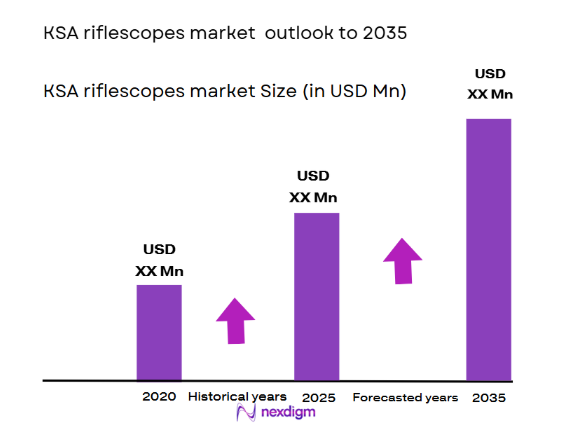
The KSA Riflescopes market size is estimated to reach USD ~million, driven by increasing defense expenditure and demand from civilian hunting and sports enthusiasts. The market is characterized by steady growth, with advanced technologies like thermal and night vision scopes driving adoption. The evolving security landscape and modernization of defense systems continue to bolster the demand for riflescopes in military and law enforcement sectors.
Key regions driving the market include Saudi Arabia, with a strong focus on military and defense upgrades. The Kingdom’s increasing investment in defense infrastructure and security forces supports the growing demand for high-performance riflescopes. Additionally, the rise in outdoor activities and hunting in rural areas further contributes to the expansion of the market.
Market Segmentation
By Product Type
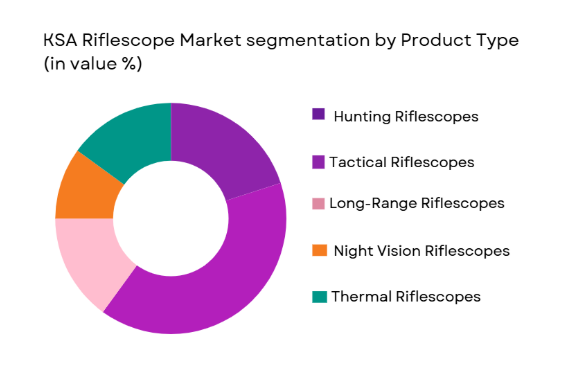
The KSA Riflescopes market is segmented by product type into hunting riflescopes, tactical riflescopes, long-range riflescopes, night vision riflescopes, and thermal riflescopes. Recently, tactical riflescopes have had a dominant market share due to factors such as increasing military expenditure, enhanced security demands, and technological advancements in precision targeting systems. Tactical riflescopes are favored for their durability, adaptability, and advanced features, such as reticle illumination and high-magnification zoom. These features align with the operational requirements of military and law enforcement agencies, which have led to greater adoption.
By Platform Type
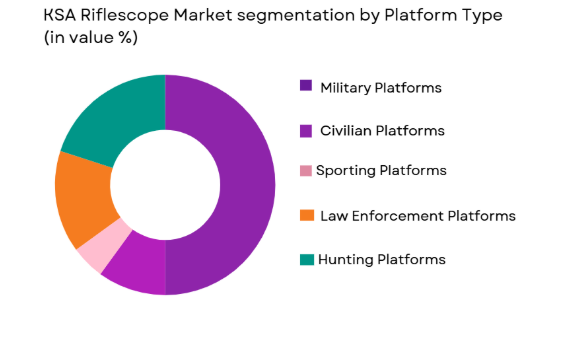
The KSA Riflescopes market is segmented by platform type into military platforms, civilian platforms, sporting platforms, law enforcement platforms, and hunting platforms. Military platforms dominate the market share, largely due to the Kingdom’s ongoing defense modernization initiatives and its focus on increasing military capabilities. The demand for riflescopes in military platforms is driven by the need for enhanced precision and effectiveness in various combat situations. Technological advancements, such as thermal and night vision scopes, further fuel the adoption of riflescopes in military applications.
Competitive Landscape
The KSA Riflescopes market is competitive, with significant contributions from established global and regional players. The presence of key manufacturers in the market drives technological innovation and quality improvements, which are crucial for military, law enforcement, and civilian adoption. Mergers and acquisitions are common as companies strive for innovation and market share. The top companies maintain strong brand loyalty, leveraging distribution networks and offering superior after-sales support.
| Company Name | Establishment Year | Headquarters | Technology Focus | Market Reach | Key Products | Revenue (USD) | Market-Specific Parameter |
| Leupold & Stevens | 1907 | USA | ~ | ~ | ~ | ~ | ~ |
| Vortex Optics | 2002 | USA | ~ | ~ | ~ | ~ | ~ |
| Trijicon | 1981 | USA | ~ | ~ | ~ | ~ | ~ |
| Nikon Corporation | 1917 | Japan | ~ | ~ | ~ | ~ | ~ |
| Bushnell Performance | 1948 | USA | ~ | ~ | ~ | ~ | ~ |
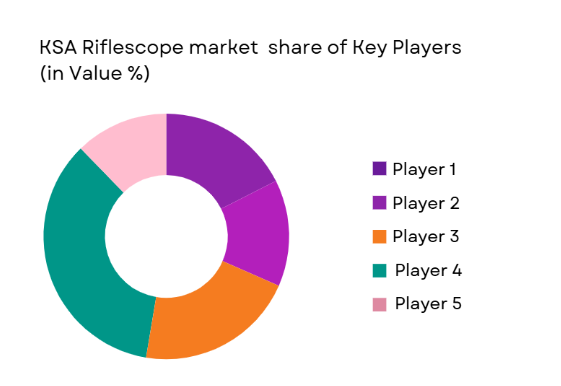
KSA riflescopes Market Analysis
Growth Drivers
Technological Advancements
Technological advancements in optics and lens coatings are significantly driving growth in the KSA Riflescopes market. Newer, more advanced models, such as those with thermal and night vision capabilities, are increasingly popular for both military and civilian use. With military modernization programs and defense upgrades, there is a growing demand for high-performance riflescopes. This is further driven by the need for better targeting accuracy, especially in low-visibility conditions. Additionally, the integration of smart features like ballistic calculators and reticle illumination is expanding riflescope capabilities, offering users more flexibility and precision. As these technologies become more affordable and accessible, it has led to increased adoption in both military and civilian sectors, thereby pushing market growth. Furthermore, the demand for long-range riflescopes with superior magnification and clarity is becoming increasingly essential for precision shooting. The rising number of armed forces operations and security threats in the region also contributes to this demand for cutting-edge riflescope technology.
Military and Defense Spending
Military and defense expenditure is another significant driver of the KSA Riflescopes market. The Kingdom of Saudi Arabia has consistently increased its defense budget in response to evolving security challenges in the Middle East. This includes the modernization of armed forces and increasing the capability of military units with advanced equipment such as riflescopes. The government’s commitment to investing in advanced military technologies translates directly into increased demand for sophisticated and reliable riflescopes. Additionally, the Kingdom’s focus on enhancing the capabilities of its security and military forces contributes to the steady demand for riflescopes, particularly tactical and long-range optics. The strategic importance of defense readiness in the region underscores the need for superior precision tools that can meet the operational requirements of modern warfare. As part of the broader vision for military self-sufficiency, this growth in defense spending is expected to continue driving demand for high-quality riflescopes in the coming years.
Market Challenges
High Cost of Advanced Riflescopes
One of the primary challenges faced by the KSA Riflescopes market is the high cost of advanced riflescope models, particularly those with features like thermal and night vision capabilities. While these technologies provide significant performance benefits, they come at a premium price. This makes them less accessible to a broader segment of consumers, especially in the civilian market. For many hunters, sporting enthusiasts, and law enforcement agencies, the high initial investment in advanced riflescopes limits their purchasing power. This cost barrier can slow the adoption of these high-end models, limiting market expansion. Although military and law enforcement agencies are likely to prioritize these advanced models for their operational needs, the consumer segment faces challenges in acquiring these products. The higher cost of ownership for maintenance, upgrades, and compatibility with modern firearms also adds to the overall expense. Therefore, overcoming this pricing challenge will be critical for broadening the market for advanced riflescopes.
Regulatory and Import Restrictions
Regulatory challenges also pose a significant barrier to market growth in KSA. The import and export of riflescopes are subject to stringent regulations, particularly in relation to the military and defense sectors. Many riflescope models, especially those equipped with advanced technologies like night vision or thermal capabilities, fall under stricter export controls due to their potential military applications. This restricts the availability of certain high-performance products in the local market. The regulatory environment can also cause delays in product approvals, particularly for new technologies that require certification and compliance with local standards. This bureaucratic hurdle creates uncertainty for manufacturers and delays market entry for new products. While local regulations aim to ensure security and control, they can significantly impact the flow of advanced optics technologies into the country. As a result, manufacturers and distributors must navigate complex regulatory frameworks, adding an extra layer of complexity to market operations.
Opportunities
Rising Consumer Demand for Sporting Riflescopes
One of the key opportunities in the KSA Riflescopes market is the growing interest in sporting activities, particularly hunting. With the increasing number of sporting enthusiasts and hunters, there is a rising demand for riflescopes tailored to these specific applications. Modern hunters and sports shooters seek high-quality optics for improved targeting accuracy, precision, and visibility in varying environmental conditions. This shift toward more specialized sporting riflescopes creates a significant opportunity for manufacturers to develop and offer products designed for the civilian market. Innovations in product features, such as lightweight designs, ruggedness, and ease of use, are likely to attract new consumers. Additionally, the growing interest in outdoor recreation in the region, coupled with favorable government initiatives to promote tourism and leisure activities, is expected to drive growth in the market for sporting riflescopes. This expanding consumer base is an untapped opportunity for riflescope manufacturers to diversify their product lines and increase their market penetration.
Advancements in Riflescope Technologies for Military Use
Another opportunity lies in the ongoing advancements in riflescope technologies for military applications. With the ever-evolving nature of modern warfare, military forces require precision optics that can adapt to a variety of environments and operational needs. As a result, there is a growing demand for riflescopes equipped with cutting-edge technologies such as thermal imaging, ballistic calculators, and advanced rangefinders. These technologies not only improve the effectiveness of military personnel but also enhance the safety and operational efficiency of defense forces. As part of the Kingdom’s defense modernization efforts, there is significant potential for growth in the demand for advanced riflescopes. Additionally, the increasing trend of military forces incorporating drones and other unmanned systems into their operations further drives the need for adaptable and high-performing optics that can seamlessly integrate with new technologies. This creates an opportunity for manufacturers to develop next-generation riflescopes that meet the unique demands of modern defense operations.
Future Outlook
The KSA Riflescopes market is expected to witness continued growth driven by technological innovations, military modernization programs, and increased demand from civilian sectors. Over the next five years, advancements in riflescope technologies, such as smart optics and enhanced thermal imaging, are likely to fuel market expansion. Additionally, supportive government initiatives to strengthen defense infrastructure will create opportunities for manufacturers to increase their presence in the defense sector. As security concerns and outdoor sporting activities rise, the demand for high-quality riflescopes will continue to be robust, particularly for military and law enforcement applications. Furthermore, consumer preference for technologically advanced riflescopes is expected to increase, fostering further market development. Overall, the outlook for the KSA Riflescopes market remains positive, with strong growth anticipated in both military and civilian segments.
Major Players
- Leupold & Stevens
- Vortex Optics
- Trijicon
- Nikon Corporation
- Bushnell Performance
- Zeiss Group
- Aimpoint AB
- ATN Corp.
- Barska
- Burris Company
- Steiner Optics
- Nightforce Optics
- Sightmark
- Hawke Optics
- Pulsar
Key Target Audience
- Investments and venture capitalist firms
- Government and regulatory bodies
- Military forces
- Law enforcement agencies
- Private security firms
- Sporting goods retailers
- Outdoor activity enthusiasts
- Firearm manufacturers
Research Methodology
Step 1: Identification of Key Variables
In this step, we identify the key factors influencing the KSA Riflescopes market, including technological advancements, military expenditure, and consumer preferences.
Step 2: Market Analysis and Construction
We analyze market trends, historical data, and current demand to construct a reliable market model and forecast future growth.
Step 3: Hypothesis Validation and Expert Consultation
We validate market assumptions by consulting with industry experts, manufacturers, and stakeholders.
Step 4: Research Synthesis and Final Output
We synthesize data into actionable insights and create a final market report that captures all relevant trends and projections.

- Executive Summary
- Research Methodology (Definitions, Scope, Industry Assumptions, Market Sizing Approach, Primary & Secondary Research Framework, Data Collection & Verification Protocol, Analytic Models & Forecast Methodology, Limitations & Research Validity Checks)

- Market Definition and Scope
- Value Chain & Stakeholder Ecosystem
- Regulatory / Certification Landscape
- Sector Dynamics Affecting Demand
- Strategic Initiatives & Infrastructure Growth

- Growth Drivers
Rising Military Expenditure
Increase in Armed Conflicts in the Region
Growing Demand for Precision Riflescopes
Advancements in Optical Technology
Expansion of Hunting and Shooting Sports - Market Challenges
Regulatory Restrictions on Firearms and Accessories
High Cost of Advanced Riflescopes
Technological Barriers in Low-light Visibility
Lack of Standardization Across Manufacturers
Economic Downturns Affecting Defense Budgets - Market Opportunities
Increased Military Procurement Budgets
Growing Popularity of Competitive Shooting Sports
Technological Advancements in Night Vision and Thermal Imaging - Trends
Integration of Smart Technologies in Riflescopes
Miniaturization of Riflescope Components
Emergence of Hybrid and Adaptive Sighting Systems
Adoption of AR/VR Technology in Firearm Training
Shift Towards Lightweight and Compact Designs - Government Regulations & Defense Policy
Tightened Gun Control Laws
Increased Investment in National Security
Standardization of Military Equipment - SWOT Analysis
- Stakeholder and Ecosystem Analysis
- Porter’s Five Forces Analysis
- Competition Intensity and Ecosystem Mapping

- By Market Value, 2020-2025
- By Installed Units, 2020-2025
- By Average System Price, 2020-2025
- By System Complexity Tier, 2020-2025

- By System Type (In Value%)
Precision Riflescopes
Hunting Riflescopes
Tactical Riflescopes
Long-range Riflescopes
Red Dot Sights - By Platform Type (In Value%)
Military Rifles
Hunting Rifles
Sniper Rifles
Sporting Rifles
Airsoft Rifles - By Fitment Type (In Value%)
Fixed Magnification Riflescopes
Variable Magnification Riflescopes
Thermal Riflescopes
Digital Riflescopes
Clip-on Riflescopes - By End-user Segment (In Value%)
Military
Law Enforcement
Hunting & Shooting Sports
Civilian Defense
Wildlife Conservation - By Procurement Channel (In Value%)
Direct Sales
Distributors
Online Retail
Specialized Dealers
OEM Partnerships - By Material / Technology (In Value%)
Glass
Thermal Sensors
Electronic Components
Aluminum Alloy
Plastic Components

- Market structure and competitive positioning
Market share snapshot of major players - Cross Comparison Parameters (Price, Quality, Magnification Range, Durability, Technology, Customer Support, Brand Reputation, Market Reach, Innovation, Customization Options)
- SWOT Analysis of Key Players
- Pricing & Procurement Analysis
- Key Players
Leupold & Stevens
Vortex Optics
Nightforce Optics
Bushnell
Sightmark
ATN Corp
Aimpoint
EOTech
Trijicon
Burris Optics
Steiner Optics
Meopta
Primary Arms
Pulsar
Zeiss

- Growing Demand from Military and Defense Sectors
- Civilian Adoption for Recreational Hunting
- Increasing Focus on Precision in Shooting Sports
- Rising Interest in Wildlife Conservation Initiatives

- Forecast Market Value, 2026-2035
- Forecast Installed Units, 2026-2035
- Price Forecast by System Tier, 2026-2035
- Future Demand by Platform, 2026-2035


 Request a Sample
 Ask for Customization
 Get a Quote
 Enquire Now