

 Download PDF
Market Overview
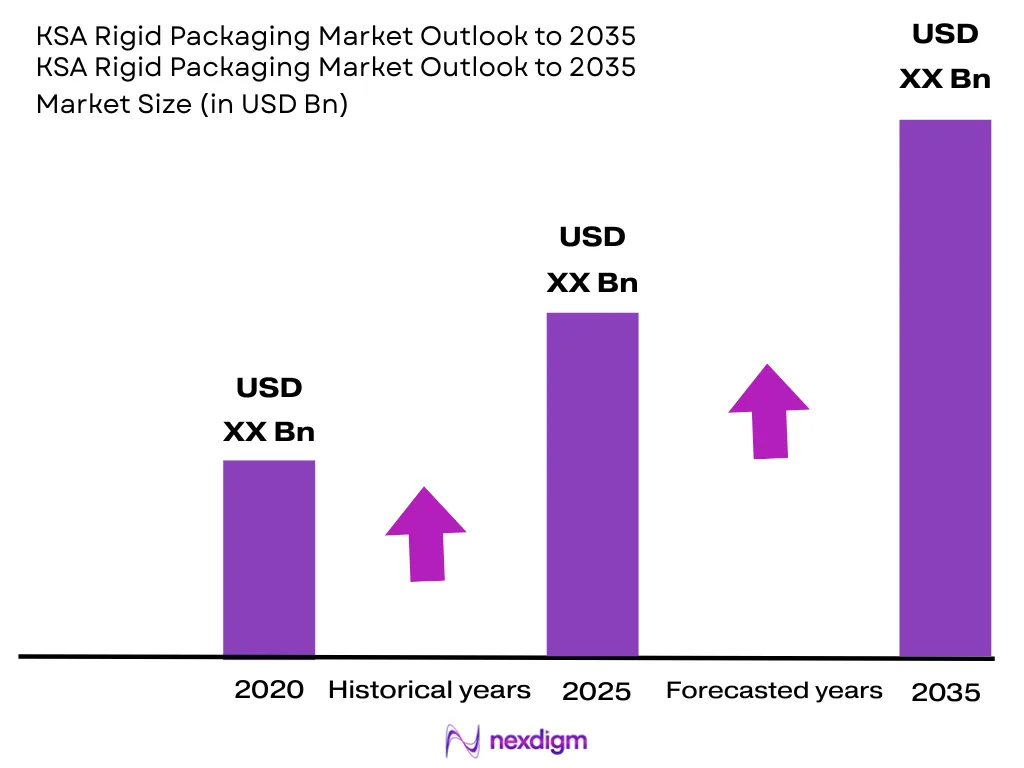
The KSA Rigid Packaging Market was valued at USD ~ Billion in 2024 and is anticipated to expand at a CAGR of ~% during 2026–2035. The market is primarily driven by rising food, beverage, and pharmaceutical packaging demand, continued urbanization and industrial diversification under Vision 2030, and the central role of SABIC in shaping resin pricing, application development, and preferential allocation of circular material streams across the Kingdom’s converter base. Saudi Arabia records approximately 95 kilograms of per capita plastic consumption, the highest in the Gulf Cooperation Council according to the Gulf Petrochemicals and Chemicals Association, underscoring the country’s position as the region’s largest plastic packaging market. Bottles and jars accounted for 47.43% of rigid plastic packaging output in 2025, while caps and closures represent the fastest-growing packaging type at a 6.07% CAGR, driven by the growing requirement for serialized, matched, and coded closures across pharmaceutical and premium food and beverage applications.
Market Segmentation
By Material
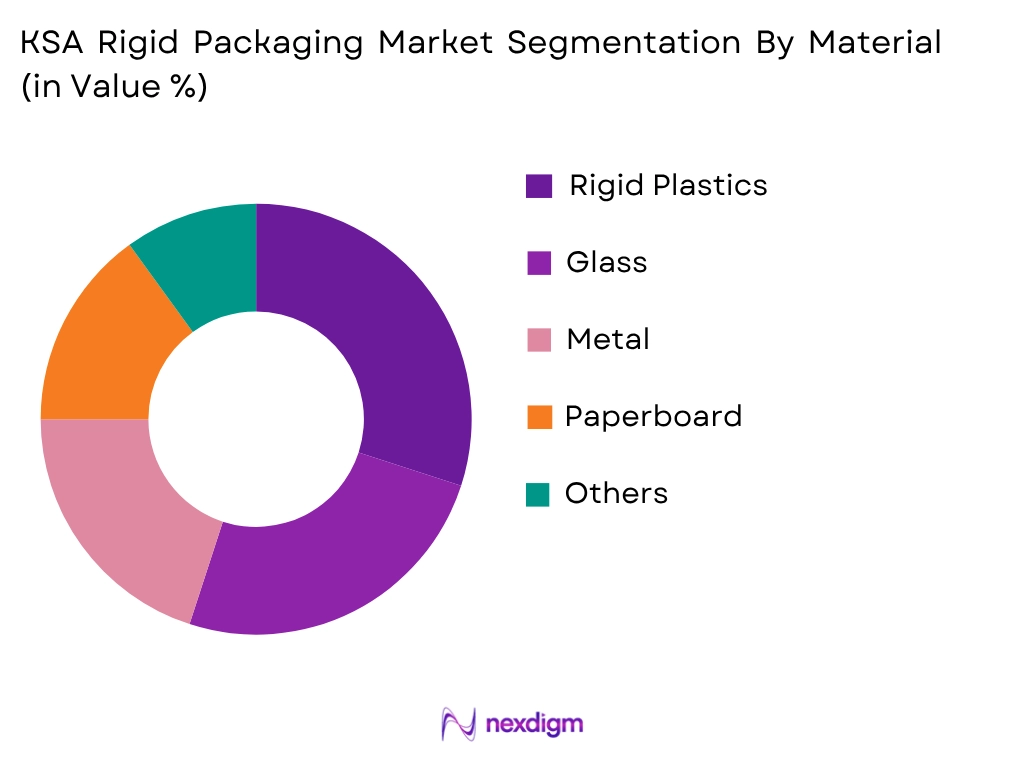
Rigid Plastics (PET, HDPE, PP) dominate the KSA Rigid Packaging Market, underpinned by SABIC’s central role in resin pricing and application development and by the Kingdom’s position as the largest plastic consumer in the GCC. Despite growing sustainability pressure, a January 2022 survey found that Saudi Arabia’s FMCG companies were still largely opting for 100% virgin plastic packaging, and the country’s recycled PET (R-PET) market has remained bearish as prices have fallen steadily in line with stagnant demand patterns, illustrating the gap between circular material availability and current adoption rates. SABIC’s ISCC-certified TRUCIRCLE resins are addressing this gap by allowing brand owners to claim recycled content without physically segregating molecules, a mass-balance approach that is gradually easing the transition toward higher recycled content across bottles, closures, and rigid containers. Glass and Metal retain meaningful share in premium beverage and personal care segments where reusability and long shelf life carry particular commercial value.
By Packaging Type
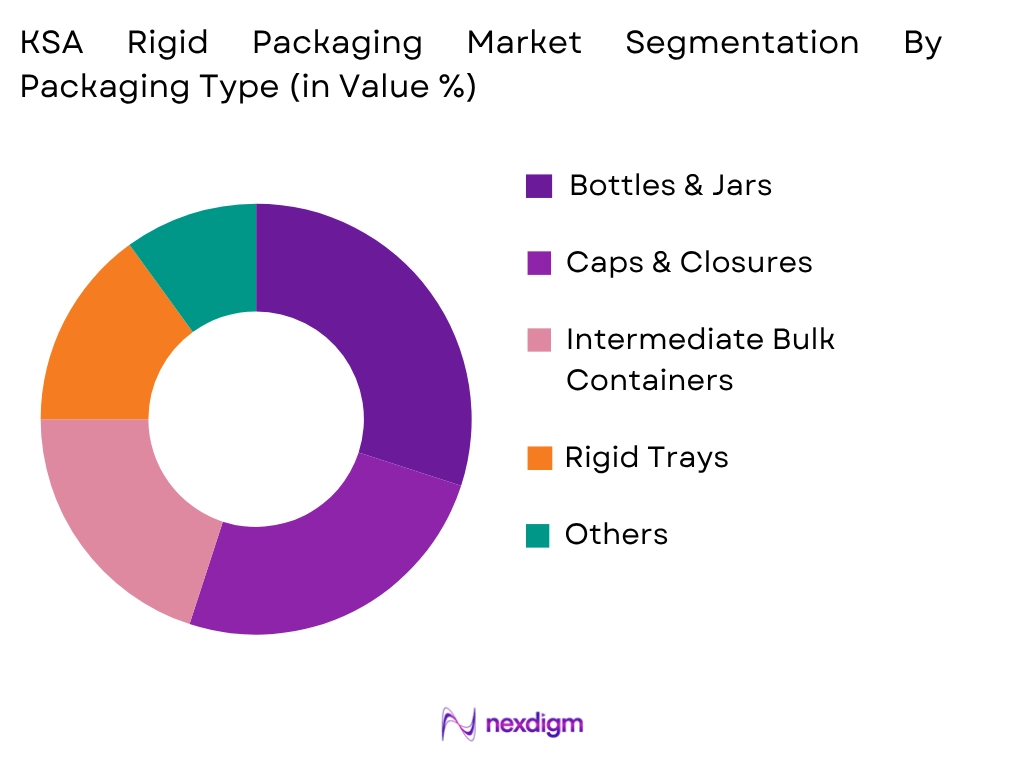
Bottles & Jars represent the largest packaging type in the KSA Rigid Packaging Market, accounting for 47.43% of rigid plastic packaging output in 2025, reflecting their widespread use across food and beverage, personal care, and pharmaceutical applications, and supported by aseptic blow-molding lines costing more than USD 5 million that favor established incumbents such as Obeikan Investment Group in securing multi-year contracts with juice and dairy brands. Caps & Closures represent the fastest-growing packaging type at a 6.07% CAGR, as each serialized pack increasingly demands a matched, coded closure, with induction-seal liners and closure weights under 2.5 grams sharpening design requirements and pushing converters toward multi-cavity hot-runner molds with tighter tolerances. Intermediate Bulk Containers are gaining share as demand for chemical and food-ingredient packaging rises in tandem with Vision 2030 megaproject activity, while Rigid Trays are climbing alongside the expansion of ready-meal consumption across the Kingdom’s fast-growing modern retail and foodservice sectors.
Competitive Landscape
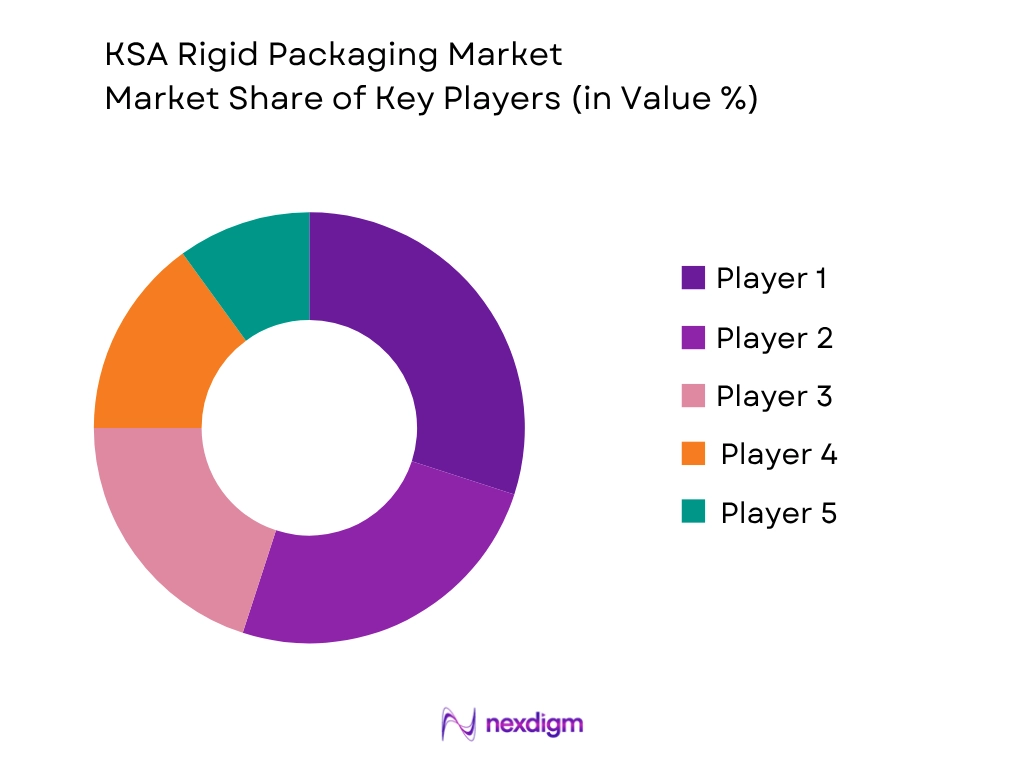
The KSA Rigid Packaging Market is moderately fragmented, shaped by a mix of large, integrated petrochemical incumbents, diversified Saudi conglomerates, and selective inbound interest from global packaging majors. SABIC sets the overall tone for the market through resin pricing, application development, and preferential allocation of TRUCIRCLE-certified circular material streams to converters across the Kingdom. Obeikan Investment Group, established in 1982, has grown into a prominent diversified Saudi conglomerate spanning packaging, media, real estate, and education, and has recently pursued both sustainability and diversification initiatives, including a 2025 technology tie-up with Teradix to embed AI-based eProcurement across eight packaging plants and a January 2026 term sheet with Northern Graphite for a USD 200 million anode plant signaling strategic hedging into the electric vehicle supply chain. Napco National significantly expanded its market position through its August 2025 acquisition of Arabian Flexible Packaging, forming an integrated rigid-flexible packaging platform that enables one-stop bids for quick-commerce clients. Zamil Plastic Industries and OCTAL Holding, the latter a global leader in PET resin and sheet production headquartered in neighboring Oman, further round out the market’s leading players, with international majors including Amcor, ALPLA, and Sealed Air localizing through joint ventures and licensing arrangements to serve the Kingdom’s food, beverage, and pharmaceutical converters.
| Company | Established | Headquarters | Primary Product Portfolio | Rigid Packaging Portfolio | Manufacturing Presence | Major End-Use Industries | Key Strategic Focus | Certifications & Compliance |
| Obeikan Investment Group | 1982 | ~
|
~ | ~ | ~ | ~ | ~ | ~ |
| SABIC | 1976 | ~
|
~ | ~ | ~ | ~ | ~ | ~ |
| Napco National | 1985 | ~
|
~ | ~ | ~ | ~ | ~ | ~ |
| Zamil Plastic Industries Company Ltd. | 1976 | ~ | ~ | ~ | ~ | ~ | ~ | ~ |
| OCTAL Holding SAOC | 2006 | ~
|
~ | ~ | ~ | ~ | ~ | ~ |
KSA Rigid Packaging Market Analysis
Growth Drivers
Vision 2030 Industrial Diversification and Localization Incentives
Saudi Arabia’s Vision 2030 economic diversification agenda continues to drive investment across the Kingdom’s rigid packaging manufacturing base, supported by “Saudi Made” incentives that reimburse up to 20% of international marketing costs for qualifying manufacturers seeking to build export-oriented capacity. Sidel signed a memorandum of understanding with Saudi authorities in May 2025 to explore local food and beverage packaging equipment production, focusing on advanced manufacturing and technology transfer, while HP’s confirmation of its first advanced-manufacturing site in Saudi Arabia is fostering a domestic ecosystem for digital printing inks, coatings, and spare parts relevant to rigid packaging decoration. These localization initiatives, combined with SABIC’s central role in resin supply and application development, are strengthening the Kingdom’s position as a regional rigid packaging manufacturing hub rather than a purely import-dependent market.
Growth in Food, Beverage and Pharmaceutical Packaging Demand
Rising consumption of bottled water, juice, and dairy products continues to anchor demand for the KSA Rigid Packaging Market, with bottles and jars accounting for 47.43% of rigid plastic packaging output in 2025. Aseptic blow-molding lines, which cost in excess of USD 5 million to establish, are enabling incumbent manufacturers such as Obeikan to secure multi-year supply contracts with major juice and dairy brands, reflecting the premium placed on advanced aseptic capability within the market. Caps and closures represent the fastest-growing packaging type at a 6.07% CAGR, driven by the increasing requirement for serialized, matched, and coded closures across pharmaceutical packaging and premium food and beverage applications, as brand owners and regulators alike place growing emphasis on tamper evidence and product traceability.
Market Challenges
Continued Reliance on Virgin Plastic Limiting Sustainability Transition
Despite Saudi Arabia’s position as the GCC’s largest plastic consumer at approximately 95 kilograms per capita, the Kingdom’s transition toward recycled and circular rigid packaging materials remains slow; a January 2022 industry survey found that Saudi FMCG companies were still largely opting for 100% virgin plastic packaging rather than recycled content alternatives. The country’s R-PET market has remained bearish as prices have fallen steadily in line with stagnant demand patterns, reflecting limited near-term commercial incentive for converters to invest in recycled material sourcing absent stronger regulatory or brand-driven pull. This dynamic creates a structural tension between the Kingdom’s stated sustainability ambitions under Vision 2030 and the practical economics currently governing rigid packaging material selection across most FMCG categories.
Capital Intensity and Consolidation Pressure Among Mid-Sized Converters
Mid-sized rigid packaging converters operating in Saudi Arabia face mounting capital hurdles as they work to comply with emerging Extended Producer Responsibility levies, a compliance burden that is accelerating consolidation and strategic alliances across the market as smaller players seek to shield margins. The high capital intensity required for advanced manufacturing capability, exemplified by aseptic blow-molding lines costing more than USD 5 million, creates substantial barriers to entry and scale for smaller converters, reinforcing the competitive advantages held by large, well-capitalized incumbents such as Obeikan, SABIC-affiliated producers, and Napco National, whose 2025 acquisition of Arabian Flexible Packaging further illustrates the consolidation trend reshaping the Kingdom’s packaging converter landscape.
Market Opportunities
Integrated Rigid-Flexible Packaging Platforms
Napco National’s August 2025 acquisition of Arabian Flexible Packaging, forming an integrated rigid-flexible packaging platform capable of enabling one-stop bids for quick-commerce clients, illustrates a clear strategic opportunity for rigid packaging converters to expand into adjacent flexible packaging capability. As Saudi Arabia’s e-commerce and quick-commerce sectors continue to expand, converters that can offer combined rigid and flexible packaging solutions from a single integrated platform stand to capture growing share of brand owners’ packaging spend, particularly as retailers and fast-moving consumer goods companies increasingly favor suppliers capable of servicing multiple packaging format requirements simultaneously.
Recycled Content and Circular Material Innovation Under SABIC TRUCIRCLE
SABIC’s ISCC-certified TRUCIRCLE resins, which allow brand owners to claim recycled content without physically segregating molecules through a mass-balance certification approach, present a significant opportunity for rigid packaging converters to begin meeting rising sustainability expectations without the capital investment required for dedicated mechanical recycling infrastructure. As Vision 2030 megaprojects continue to drive chemical and food-ingredient sector growth, demand for intermediate bulk containers is expected to rise correspondingly, creating additional opportunity for converters that can combine circular material credentials with the industrial-grade packaging capability required to serve the Kingdom’s expanding chemical and food-ingredient manufacturing base.
Future Outlook
The KSA Rigid Packaging Market is expected to witness sustained expansion over the forecast period, supported by continued Vision 2030-driven industrial diversification, rising food, beverage, and pharmaceutical packaging demand, and growing investment in aseptic and advanced manufacturing capability by the Kingdom’s leading converters. Growing adoption of SABIC’s ISCC-certified circular resins, alongside continued consolidation through mergers and acquisitions such as Napco National’s integration of rigid and flexible packaging capability, will further shape the competitive landscape. The market is also likely to benefit from Saudi Arabia’s growing role as a regional manufacturing and export hub, as localization incentives, technology transfer partnerships, and SABIC’s central position in the regional resin supply chain continue to attract both domestic investment and selective inbound interest from global packaging majors.
Major Players
- Obeikan Investment Group
- SABIC
- Napco National
- Zamil Plastic Industries Company Ltd.
- OCTAL Holding SAOC
- Takween Advanced Industries Company
- 3P Gulf Group
- Al Watania Plastic
- National Plastic Factory
- Arabian Plastic Industrial Company Ltd.
- ALPLA
- Greif, Inc.
- Berry Global Group
- Crown Holdings
- Tetra Pak
Key Target Audience
- Rigid Packaging Manufacturers and Converters
- Food & Beverage Manufacturers
- Pharmaceutical and Healthcare Companies
- Personal Care and Cosmetics Manufacturers
- Industrial and Chemical Manufacturers
- Investment and Venture Capitalist Firms
- Government and Regulatory Bodies (Saudi Standards, Metrology and Quality Organization – SASO, Saudi Food and Drug Authority – SFDA)
- Raw Material and Resin Suppliers
Research Methodology
Step 1: Identification of Key Variables
The research process begins with identifying the complete ecosystem of the KSA Rigid Packaging Market, including resin and raw material suppliers, packaging converters, food, beverage, and pharmaceutical manufacturers, distributors, and regulatory authorities. Extensive secondary research is conducted using company reports, government publications, trade associations, customs statistics, industry journals, and proprietary databases to determine the variables influencing market demand, pricing, production, consumption, and technological developments.
Step 2: Market Analysis and Construction
Historical market information is collected and analyzed to estimate market size, import volumes, application-wise demand, and pricing trends. A combination of top-down and bottom-up approaches is used to estimate market revenues and validate segment-level performance. Consumption patterns across food, beverage, industrial, pharmaceutical, and personal care applications are evaluated to establish an accurate representation of the industry.
Step 3: Hypothesis Validation and Expert Consultation
The preliminary findings are validated through Computer-Assisted Telephone Interviews (CATIs) and structured discussions with packaging converters, procurement managers, sustainability officers, regulatory experts, and senior executives operating within the Saudi packaging industry. These interviews help verify market assumptions, competitive developments, technology adoption trends, pricing dynamics, and future investment opportunities while refining the overall market estimates.
Step 4: Research Synthesis and Final Output
The final stage integrates insights obtained from primary interviews with quantitative information collected through secondary sources. Data triangulation techniques are applied to reconcile differences between supply-side and demand-side estimates, ensuring robust market forecasting. The report is then reviewed through multiple quality assurance checkpoints to deliver a comprehensive analysis covering market size, segmentation, competitive landscape, future outlook, and strategic recommendations for industry stakeholders.

- Executive Summary
- Research Methodology (Market Definitions and Assumptions, Abbreviations, Market Sizing Approach, Top-Down Analysis, Bottom-Up Analysis, Demand-Side Assessment, Supply-Side Assessment, Primary Industry Interviews, Secondary Research Validation, Data Triangulation, Forecasting Framework, Limitations and Future Conclusions)

- Definition and Scope
- Market Evolution and Industry Genesis
- Timeline of Major Industry Developments
- Rigid Packaging Industry Value Chain Analysis
- Supply Chain Analysis

- Growth Drivers (Vision 2030 Industrial Diversification and Localization Incentives, Growth in Food, Beverage and Pharmaceutical Packaging Demand, Urbanization and Construction-Linked Consumption Growth, Rising Bottled Water and Juice Consumption, Aseptic Packaging Investment for Dairy and Juice, Expansion of Serialized Caps and Closures for Anti-Counterfeiting)
- Market Challenges (Continued Reliance on Virgin Plastic Limiting Sustainability Transition, Capital Intensity and Consolidation Pressure Among Mid-Sized Converters, Emerging EPR Levy Compliance Costs, Bearish Recycled PET (R-PET) Market Demand, Feedstock Price Volatility, High Barriers to Entry for Aseptic Blow-Molding Capacity)
- Market Opportunities (Integrated Rigid-Flexible Packaging Platforms, Recycled Content and Circular Material Innovation Under SABIC TRUCIRCLE, Growth in Intermediate Bulk Containers Tied to Vision 2030 Megaprojects, Local Digital Printing and Decoration Investment, Export-Readiness Certification (ISCC Plus, BRCGS), Public-Private Sustainability Partnerships)
- Market Trends (Consolidation Through Mergers and Acquisitions, Growth of ISCC-Certified Circular Resins, Rising Adoption of Servo Injection and Stretch-Blow Automation, Lightweighting of Caps and Closures, Growth of Aseptic Blow-Molding Capacity, Integration of AI-Based eProcurement Across Packaging Plants)
- Government Regulations (SASO (Saudi Standards, Metrology and Quality Organization) Packaging Standards, SFDA Food and Pharmaceutical Contact Packaging Requirements, Emerging Extended Producer Responsibility (EPR) Levies, Vision 2030 Saudi Made Localization Incentives, National Industrial Development and Logistics Program (NIDLP), Import Compliance and Product Registration Requirements)
- Import and Export Analysis (Trade Volume, Major Import Sources, Export Destinations, HS Code Analysis, Trade Balance)
- Raw Material Availability Analysis (Domestic Polyolefin and PET Resin Production, SABIC Feedstock Supply Chain, Imported Glass and Metal Packaging Feedstocks, Recycled PET (R-PET) Availability, Regional Petrochemical Supply Chain Access)
- Technology Landscape (Servo Injection Molding Technology, Stretch-Blow Molding Robotics, Real-Time Thickness Sensing, Aseptic Blow-Molding Technology, AI-Based eProcurement and Plant Digitalization)
- Sustainability Assessment (ISCC-Certified Circular Resin Adoption, Recycled PET (R-PET) Integration, Scrap Reduction Through Automation, Carbon Footprint Reduction in Manufacturing, Circular Economy Alignment)
- PESTLE Analysis
- SWOT Analysis
- Porter’s Five Forces Analysis
- Stakeholder Ecosystem
- Competition Ecosystem

- By Market Value (2020-2025)
- By Volume Consumption (2020-2025)
- By Average Selling Price (2020-2025)

- By Material (In Value %)
Rigid Plastics (PET, HDPE, PP)
Glass
Metal (Aluminum & Steel)
Paperboard - By Packaging Type (In Value %)
Bottles & Jars
Cups & Containers
Rigid Trays
Caps & Closures
Intermediate Bulk Containers (IBCs) - By Application (In Value %)
Food Packaging
Beverage Packaging
Industrial & Chemical Packaging
Pharmaceutical Packaging
Personal Care Packaging - By End User (In Value %)
Food & Beverage Manufacturers
Pharmaceutical Companies
Personal Care & Cosmetics Manufacturers
Industrial & Chemical Manufacturers
Contract Packaging Organizations - By Region (In Value %)
Riyadh
Jeddah
Dammam
Makkah
Others

- Market Share of Major Players (By Value, Volume, Material Type, Packaging Type, Application)
- Cross Comparison Parameters (Resin and Material Portfolio Breadth, Aseptic and Advanced Manufacturing Capability, Recycled/Circular Content Portfolio, Application Technical Support, Manufacturing Capacity, Regulatory Compliance & Certifications, Customer Base, Innovation & New Product Launch Frequency)
- SWOT Analysis of Major Players
- Pricing Analysis by Product Category and Material Type
- Production Capacity Analysis
- Manufacturing Footprint Analysis
- Distribution Network Analysis
- Innovation Benchmarking
- Detailed Profiles of Major Companies
Obeikan Investment Group
SABIC
Napco National
Zamil Plastic Industries Company Ltd.
OCTAL Holding SAOC
Takween Advanced Industries Company
3P Gulf Group
Al Watania Plastic
National Plastic Factory
Arabian Plastic Industrial Company Ltd.
ALPLA
Greif, Inc.
Berry Global Group
Crown Holdings
Tetra Pak

- Consumption Pattern Analysis (Industrial Usage, Batch Size, Product Category Penetration, Seasonal Demand, Reformulation Activity)
- Purchasing Criteria (Barrier Performance, Regulatory Compliance, Cost Efficiency, Recycled Content Availability, Aseptic Capability, Supply Reliability)
- Procurement and Supplier Selection Analysis
- Recycled Content and Circular Material Adoption Assessment
- Premium Aseptic vs Standard Rigid Packaging Demand
- Product Attribute Preference Analysis (Barrier Properties, Seal Integrity, Print and Decoration Quality, Weight Efficiency, Recyclability, Anti-Counterfeit Compatibility)
- Sustainability & ESG Influence on Procurement Decisions
- Pain Point Analysis
- Decision-Making Process

- By Market Value (2026-2035)
- By Volume Consumption (2026-2035)
- By Average Selling Price (2026-2035)


 Request a Sample
 Ask for Customization
 Get a Quote
 Enquire Now