
 Download PDF
 Download PDF
Market Overview
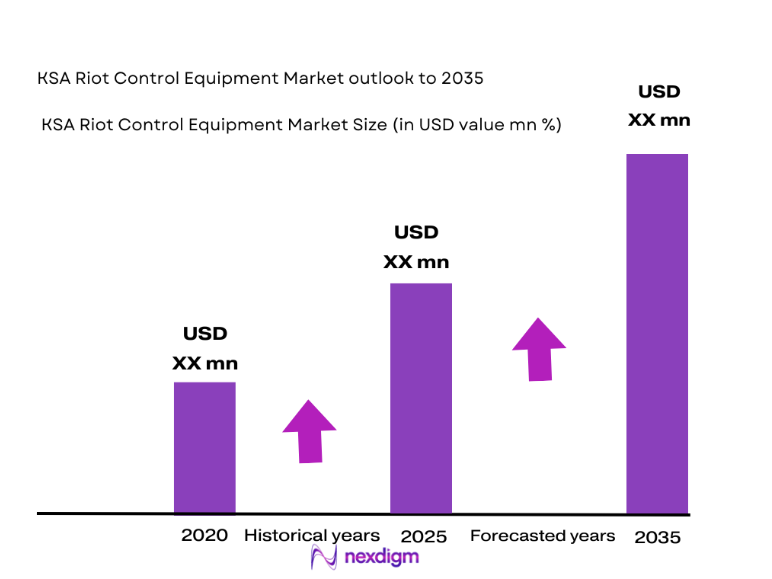
The KSA riot control equipment market is driven by increasing demand for advanced security solutions to address public order challenges. With growing concerns about civil unrest, terrorist activities, and urban violence, the market for riot control equipment has expanded substantially. The demand for sophisticated systems, including non-lethal weapons, surveillance, and armored vehicles, is fueled by the increasing need for law enforcement agencies to respond swiftly and effectively. Based on a recent historical assessment, the market value for riot control equipment in KSA is estimated at USD ~ million, supported by both public and private sector investments in security infrastructure.
The KSA riot control equipment market is dominated by urban centers such as Riyadh, Jeddah, and Mecca, which face heightened security threats. These regions’ prominence is attributed to their strategic importance in terms of government institutions, international commerce, and religious tourism. Additionally, the region’s ongoing security enhancements, fueled by urbanization, have led to higher demand for riot control solutions. The KSA government’s active role in fortifying domestic security ensures the dominance of these key cities in the broader market landscape.
Market Segmentation
By Product Type
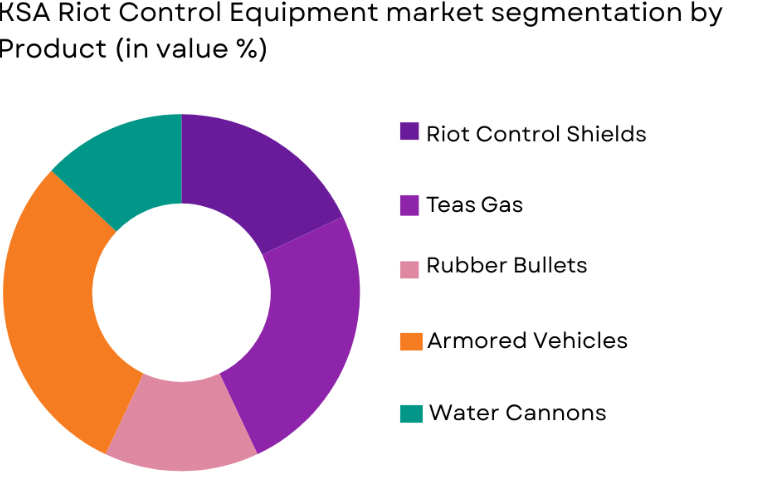
The KSA riot control equipment market is segmented by product type into riot control shields, tear gas, rubber bullets, armored vehicles, and water cannons. Among these, armored vehicles have garnered a dominant market share due to their essential role in ensuring the safety of law enforcement personnel during high-risk confrontations. The demand for armored vehicles is driven by their versatility, ability to withstand various threats, and capacity to transport personnel safely in dangerous environments. As cities face evolving security challenges, the government has prioritized investments in armored vehicles, strengthening their market presence.
By Platform Type
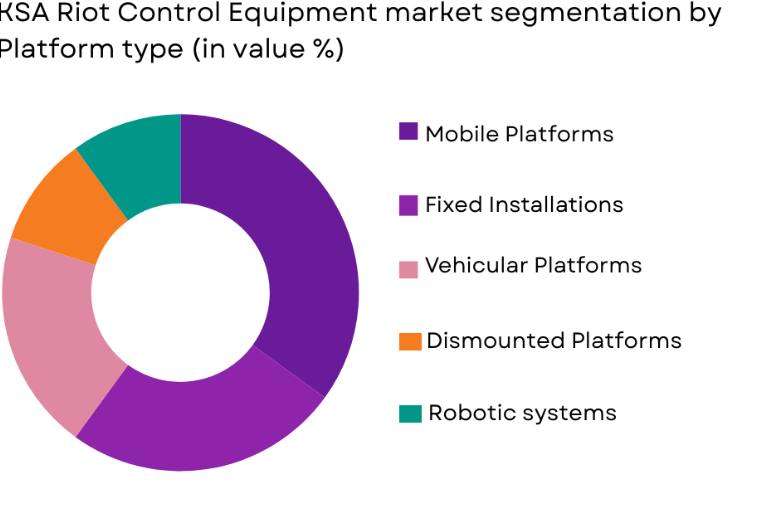
The KSA riot control equipment market is segmented by platform type into mobile platforms, fixed installations, vehicular platforms, dismounted platforms, and robotic systems. Among these, mobile platforms dominate the market due to their versatility and ability to be deployed rapidly in dynamic situations. The growing need for quick-response capabilities during riots and civil unrest has driven the demand for mobile platforms, such as riot control vehicles and armored personnel carriers. These platforms offer the flexibility to handle large crowds and can be equipped with various non-lethal tools to disperse crowds effectively.
Competitive Landscape
The competitive landscape in the KSA riot control equipment market is marked by strong consolidation, with a few key players leading the market through their technological innovations, brand recognition, and extensive distribution networks. Major players in the market influence purchasing decisions by offering high-quality, reliable products tailored to the security needs of the region. These players are also involved in long-term partnerships with the Saudi government and law enforcement agencies.
| company Name | Establishment Year | Headquarters | Technology Focus | Market Reach | Key Products | Revenue | Product Innovation Focus |
| Rheinmetall Defence | 1998 | Riyadh | ~ | ~ | ~ | ~ | ~ |
| Honeywell | 2005 | Jeddah | ~ | ~ | ~ | ~ | ~ |
| General Dynamics | 2010 | Riyadh | ~ | ~ | ~ | ~ | ~ |
| SAAB AB | 2000 | Mecca | ~ | ~ | ~ | ~ | ~ |
| L3 Technologies | 2015 | Riyadh | ~ | ~ | ~ | ~ | ~ |
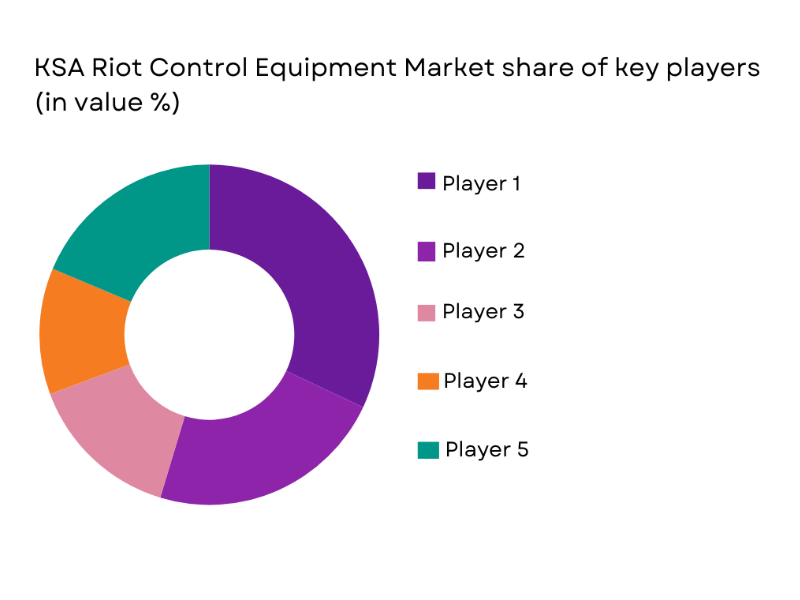
KSA Riot Control Equipment Market Analysis
Growth Drivers
Technological Advancements in Riot Control Equipment
The KSA riot control equipment market is experiencing significant growth due to the continuous technological advancements in riot control systems. Innovations in non-lethal weapons, surveillance systems, and armored vehicles have allowed law enforcement agencies to maintain public order without resorting to excessive force. These advancements enable the efficient and precise deployment of riot control measures, leading to better outcomes in high-risk situations. Furthermore, the development of systems that integrate AI and IoT for enhanced situational awareness is enhancing the effectiveness of law enforcement agencies in dealing with civil unrest. Additionally, the evolution of energy-based systems, such as direct-energy weapons, is changing the landscape of riot control by offering new, non-lethal methods to incapacitate crowds. These technological innovations are expected to drive continued growth in the market, as both the government and private sector invest in advanced riot control solutions to address increasingly complex security challenges.
Growing Urbanization and Security Concerns
Another key growth driver for the KSA riot control equipment market is the rapid urbanization and the subsequent rise in security concerns. As the urban population increases, there is a corresponding need for enhanced public safety measures, particularly in high-density areas. Cities such as Riyadh, Jeddah, and Mecca are witnessing significant infrastructure development, along with an increase in mass gatherings, protests, and other civil activities. This has escalated the demand for riot control equipment to maintain public order and safeguard critical infrastructure. The KSA government has recognized these challenges and is investing heavily in the development of advanced riot control systems to protect both the citizens and the country’s vital institutions. These investments are crucial in responding to emerging threats posed by increased social unrest and political movements in the region.
Market Challenges
High Cost of Equipment and Maintenance
One significant challenge facing the KSA riot control equipment market is the high cost associated with acquiring, maintaining, and upgrading advanced equipment. While the demand for sophisticated riot control systems is rising, the high initial investment required for such systems limits their accessibility, especially for smaller law enforcement agencies or regions with less robust budgets. Additionally, ongoing maintenance costs for specialized equipment, including armored vehicles and automated riot control systems, place a significant financial burden on both government entities and private security providers. This challenge is compounded by the technical complexity of some equipment, which requires specialized training and skilled personnel for effective operation and upkeep. As the market continues to expand, addressing the affordability of these systems will be crucial to ensuring broad adoption and sustainability.
Regulatory and Compliance Hurdles
Another challenge hindering the growth of the KSA riot control equipment market is the regulatory and compliance issues surrounding the use of certain riot control technologies. As governments seek to balance public safety with human rights, strict regulations governing the use of non-lethal weapons, such as tear gas and rubber bullets, have been implemented in many regions. These regulations often limit the types of equipment that can be deployed in various situations, making it challenging for law enforcement agencies to respond effectively to public unrest. Furthermore, the evolving nature of global and local regulations regarding the use of force in public demonstrations means that riot control technology manufacturers must constantly adapt their products to comply with new laws. These regulatory hurdles create uncertainties in the market and may slow down the adoption of newer technologies or cause delays in the procurement process.
Opportunities
Increasing Demand for Non-Lethal Weapons
One of the key opportunities for the KSA riot control equipment market is the growing demand for non-lethal weapons. As governments worldwide seek to maintain public order while minimizing fatalities and injuries, the use of non-lethal riot control equipment has gained traction. Non-lethal options such as water cannons, rubber bullets, and tear gas provide law enforcement agencies with the means to handle unrest without resorting to deadly force. This shift toward non-lethal weapons is being driven by international human rights organizations, which are advocating for the reduction of violence during civil unrest. For KSA, this trend presents a significant opportunity to invest in non-lethal technologies that not only improve crowd management capabilities but also enhance the country’s image as a leader in humane and effective security solutions. As a result, market players who focus on developing and enhancing non-lethal technologies will likely benefit from the growing demand for these systems in the region.
Expansion of Urban Security Initiatives
Another opportunity for growth in the KSA riot control equipment market lies in the expansion of urban security initiatives. As urbanization continues to accelerate in the country, there is a rising need for advanced security solutions to protect the growing population and critical infrastructure. Large-scale urban development projects, such as smart cities and mega developments, require sophisticated security systems to prevent and manage potential civil disturbances. These initiatives create fertile ground for the adoption of advanced riot control equipment, as municipalities look to safeguard their citizens while fostering a conducive environment for economic growth. The KSA government’s ongoing investments in urban development and smart city projects, along with its commitment to modernizing public safety infrastructure, will provide lucrative opportunities for market players to cater to the growing demand for advanced riot control systems in urban areas.
Future outlook
The future outlook for the KSA riot control equipment market is positive, with expected growth driven by technological advancements and increasing government investments in security infrastructure. As urbanization accelerates and social unrest becomes more prevalent, the demand for advanced, non-lethal riot control solutions will rise. Technological innovations, such as AI-powered surveillance systems and energy-based non-lethal weapons, are expected to play a crucial role in shaping the future market. Additionally, with evolving regulatory frameworks supporting the deployment of these systems, the market will see continued investment and adoption in the coming years.
Major Players
- Rheinmetall Defence
- Honeywell
- General Dynamics
- SAAB AB
- L3 Technologies
- Lockheed Martin
- Thales Group
- BAE Systems
- Northrop Grumman
- Leonardo
- Raytheon Technologies
- Elbit Systems
- Kongsberg Gruppen
- Israel Aerospace Industries
- MTU Aero Engines
Key Target Audience
- Investments and venture capitalist firms
• Government and regulatory bodies
• Security agencies and law enforcement
• Urban planning and development authorities
• Defense and military procurement units
• Private security companies
• International defense contractors
• Municipal corporations
Research Methodology
Step 1: Identification of Key Variables
Key variables such as market demand, technological trends, and government regulations are identified to ensure the research addresses all relevant factors.
Step 2: Market Analysis and Construction
The market is analyzed through both primary and secondary research methods to build a comprehensive understanding of the current landscape.
Step 3: Hypothesis Validation and Expert Consultation
Expert consultations are conducted to validate assumptions and ensure that the research reflects real-world insights and trends.
Step 4: Research Synthesis and Final Output
All gathered data is synthesized to produce the final report, ensuring accuracy and relevance for stakeholders.

- Executive Summary
- Research Methodology (Definitions, Scope, Industry Assumptions, Market Sizing Approach, Primary & Secondary Research Framework, Data Collection & Verification Protocol, Analytic Models & Forecast Methodology, Limitations & Research Validity Checks)

- Market Definition and Scope
- Value Chain & Stakeholder Ecosystem
- Regulatory / Certification Landscape
- Sector Dynamics Affecting Demand
- Strategic Initiatives & Infrastructure Growth

- Growth Drivers
Technological advancements in riot control systems
Increasing urbanization and public safety concerns
Government investments in law enforcement and security
Rising demand for non-lethal weaponry
Heightened focus on urban security infrastructure - Market Challenges
High initial capital investment
Maintenance and operational costs of advanced systems
Regulatory and compliance issues in using non-lethal weapons
Public perception and human rights concerns
Availability of skilled personnel for system operation - Market Opportunities
Growing demand for automated and robotic systems
Expansion of non-lethal weapon technologies
Government urban security initiatives - Trends
Integration of AI and IoT in riot control systems
Shift towards eco-friendly and non-toxic riot control solutions
Increasing role of unmanned systems in crowd management
Rise in smart surveillance solutions
Enhanced modularity in riot control systems - Government Regulations & Defense Policy
Regulation of non-lethal weapon usage
Changes in international defense policy
Strengthened policies for domestic security - SWOT Analysis
- Stakeholder and Ecosystem Analysis
- Porter’s Five Forces Analysis
- Competition Intensity and Ecosystem Mapping

- By Market Value, 2020-2025
- By Installed Units, 2020-2025
- By Average System Price, 2020-2025
- By System Complexity Tier, 2020-2025

- By System Type (In Value%)
Riot shields
Armored vehicles
Water cannons
Tear gas dispensers
Rubber bullets - By Platform Type (In Value%)
Mobile platforms
Fixed installations
Vehicular platforms
Dismounted platforms
Robotic systems - By Fitment Type (In Value%)
Standalone systems
Integrated systems
Mobile-fit systems
Vehicle-mounted systems
Personnel-mounted systems - By EndUser Segment (In Value%)
Saudi Arabian National Guard
Ministry of Interior
Local law enforcement agencies
Private security contractors
International defense contractors - By Procurement Channel (In Value%)
Direct procurement by government
Procurement through defense contractors
Private sector procurement
International procurement
Government-approved resellers - By Material / Technology (in Value%)
Advanced composite materials
non-lethal weapons
Automated riot control systems
Surveillance and monitoring systems
Energy-based non-lethal technologies

- Market structure and competitive positioning
- Market share snapshot of major players
- Cross Comparison Parameters (Product innovation, technology adoption, pricing strategy, market penetration, regional reach, service offerings, customer base, government contracts, supply chain network)
- SWOT Analysis of Key Players
- Pricing & Procurement Analysis
- Key Players
Taurus International
Saab AB
Lockheed Martin Corporation
Harris Corporation
L3 Technologies
General Dynamics Corporation
Boeing
Northrop Grumman Corporation
Textron Systems
FN Herstal
Thales Group
BAE Systems
Rheinmetall AG
SOMATEX Medical Technologies GmbH
Raytheon Technologies
Elbit Systems

- Demand from local law enforcement agencies
- Government’s priority in public safety
- Private sector investments in security solutions
- International defense collaborations

- Forecast Market Value, 2026-2035
- Forecast Installed Units, 2026-2035
- Price Forecast by System Tier, 2026-2035
- Future Demand by Platform, 2026-2035


 Request a Sample
 Ask for Customization
 Get a Quote
 Enquire Now