
 Download PDF
Market Overview
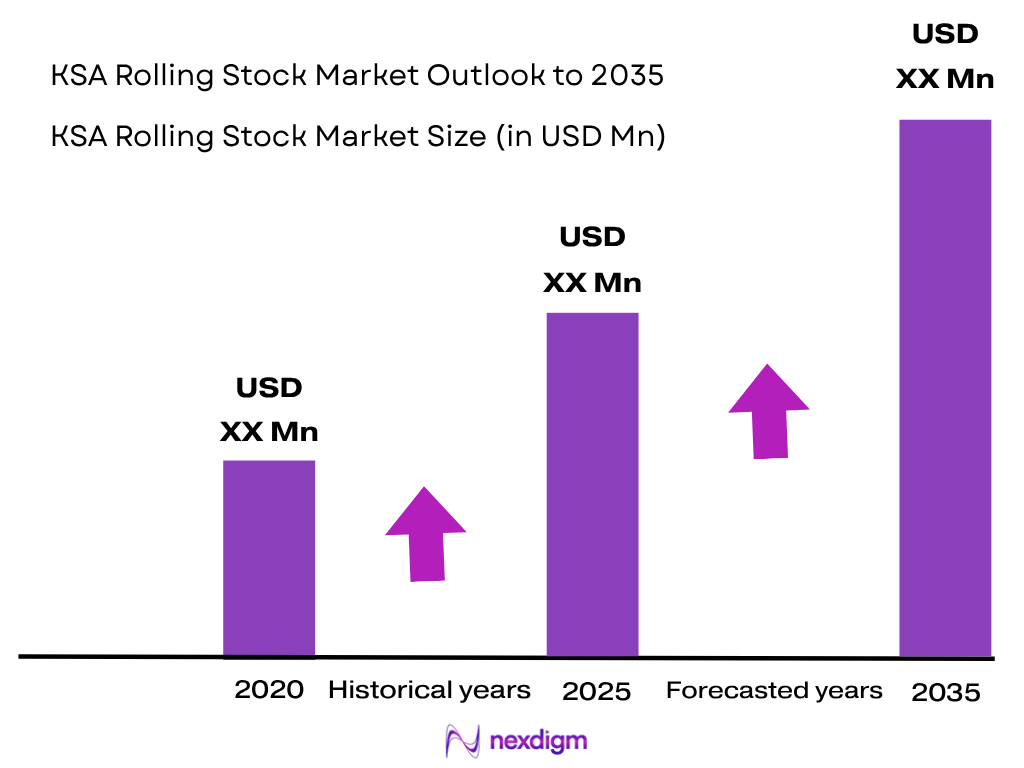
The KSA Rolling Stock Market is valued at ~USD XX billion in 2024, supported by expansion of passenger rail, freight transportation, metro systems, and railway localization initiatives under Saudi Vision 2030. The market is driven by Saudi Arabia Railways (SAR) network expansion, increasing freight movement requirements, and replacement demand for aging rolling stock. Saudi Arabia is targeting expansion of its railway network to approximately 13,000 km, alongside an expected increase in freight volumes and passenger movement, creating sustained demand for locomotives, freight wagons, passenger coaches, and maintenance-related rolling stock components.
The KSA Rolling Stock Market is concentrated around Riyadh, Jeddah, Mecca, Medina, Dammam, and industrial logistics corridors due to their strategic importance in passenger mobility, pilgrimage transportation, and freight connectivity. Riyadh dominates due to metro development, government mobility initiatives, and its role as the national administrative hub. Jeddah, Mecca, and Medina generate demand through high passenger movement associated with religious tourism and intercity rail services, while Eastern Province cities support freight rail demand through industrial and port-linked logistics activities operated by SAR.
Market Segmentation
By Rolling Stock Type
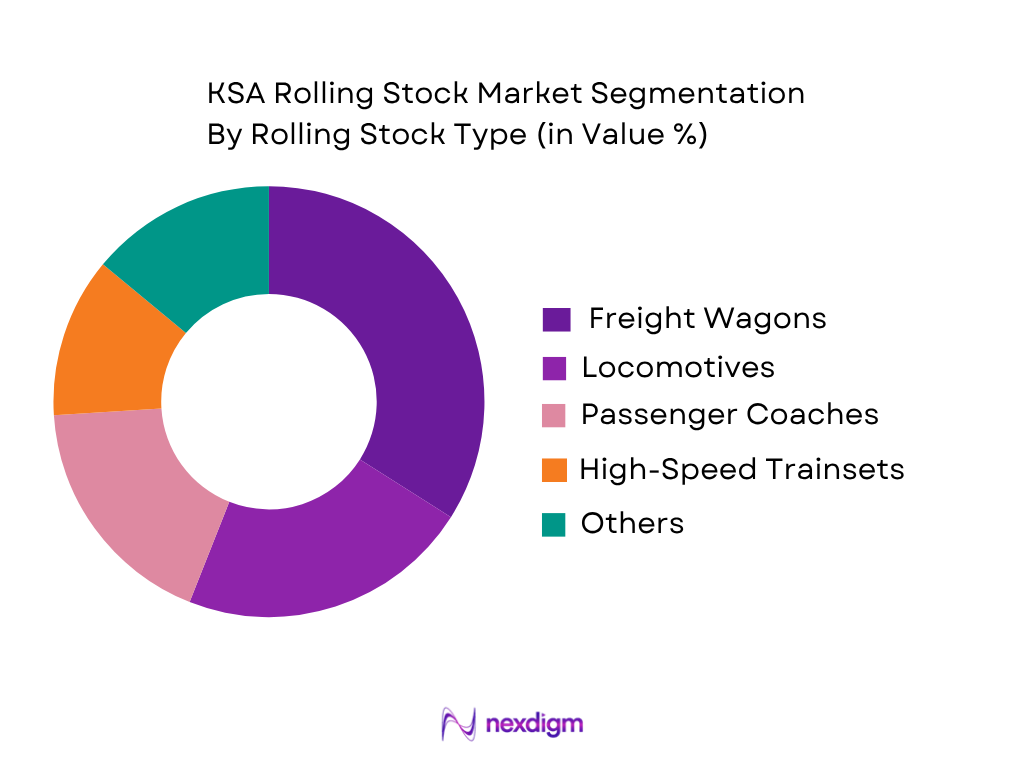
The KSA Rolling Stock Market is segmented into freight wagons, locomotives, passenger coaches, high-speed trainsets, metro vehicles, and maintenance vehicles. Freight wagons represent the largest segment with approximately 34% market share in 2024, supported by Saudi Arabia’s focus on logistics infrastructure, mining transportation, industrial connectivity, and freight corridor expansion. SAR operates freight services connecting industrial regions and ports, while national logistics strategies aim to increase rail-based freight transportation. Locomotives maintain significant demand due to heavy-haul freight requirements and long-distance operations. Passenger coaches and high-speed trainsets are supported by Haramain High-Speed Railway operations and increasing intercity mobility demand. Metro and urban transit vehicles are gaining importance due to Riyadh Metro development and urban transportation modernization initiatives.
By Propulsion Type
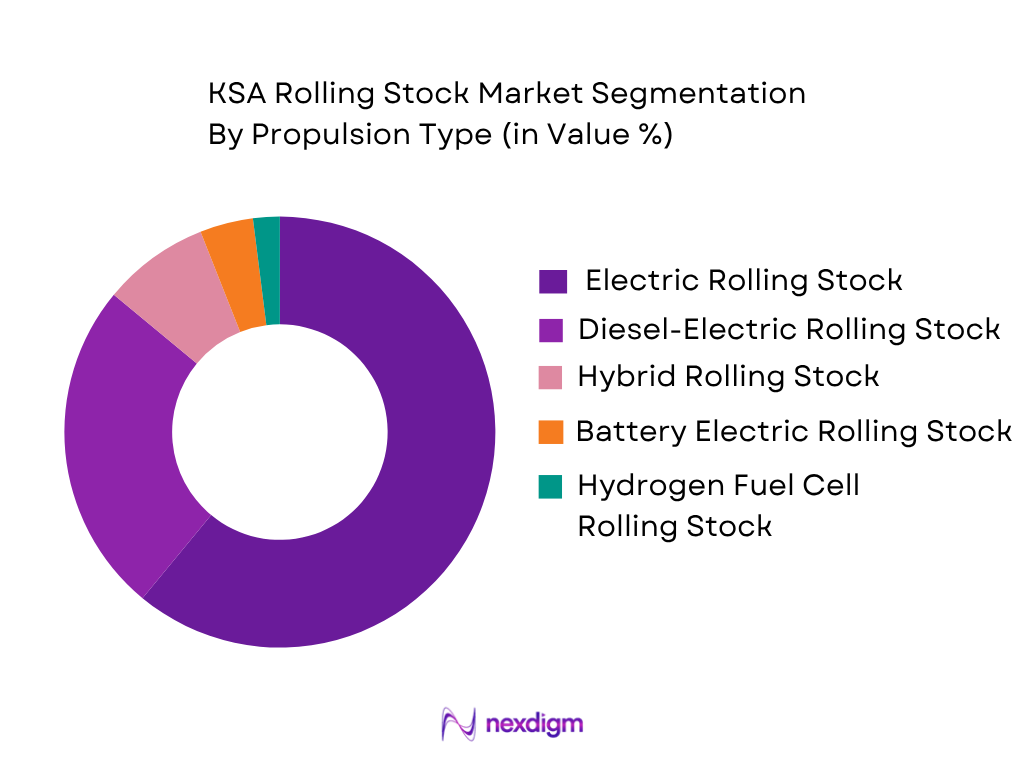
The KSA Rolling Stock Market is segmented by propulsion technology into diesel-electric, electric, hybrid, battery electric, and hydrogen fuel cell systems. Diesel-electric rolling stock dominates with approximately 61% market share in 2024, primarily due to extensive freight operations, long-distance routes, and existing railway infrastructure designed around diesel traction. Saudi Arabia’s freight rail network currently relies heavily on diesel locomotives for mineral and industrial transportation. Electric rolling stock adoption is increasing due to urban rail projects, metro systems, and future sustainability objectives. Hybrid, battery-electric, and hydrogen-based technologies remain emerging segments as Saudi Arabia evaluates cleaner transportation solutions aligned with decarbonization targets and railway modernization programs.
Competitive Landscape
The KSA Rolling Stock Market is dominated by international rolling stock manufacturers and railway technology suppliers due to limited domestic manufacturing capability. Major players participate through direct supply agreements, joint ventures, maintenance contracts, and localization partnerships. Companies such as Alstom, Siemens Mobility, CRRC, Stadler, and CAF support Saudi Arabia’s passenger rail, metro, freight, and high-speed rail requirements. The market is also influenced by Saudi Railway Company (SAR), which manages national railway operations and encourages localization of rolling stock components and maintenance capabilities.
| Company | Establishment Year | Headquarters | Key Rolling Stock Offerings | Presence in KSA | Major Technology Focus | Railway Application | Localization Activities |
| Alstom | 1928 | France | ~ | ~ | ~ | ~ | ~ |
| Siemens Mobility | 1847 | Germany | ~ | ~ | ~ | ~ | ~ |
| CRRC Corporation | 2015 | China | ~ | ~ | ~ | ~ | ~ |
| CAF | 1917 | Spain | ~ | ~ | ~ | ~ | ~ |
| Stadler Rail | 1942 | Switzerland | ~ | ~ | ~ | ~ | ~ |
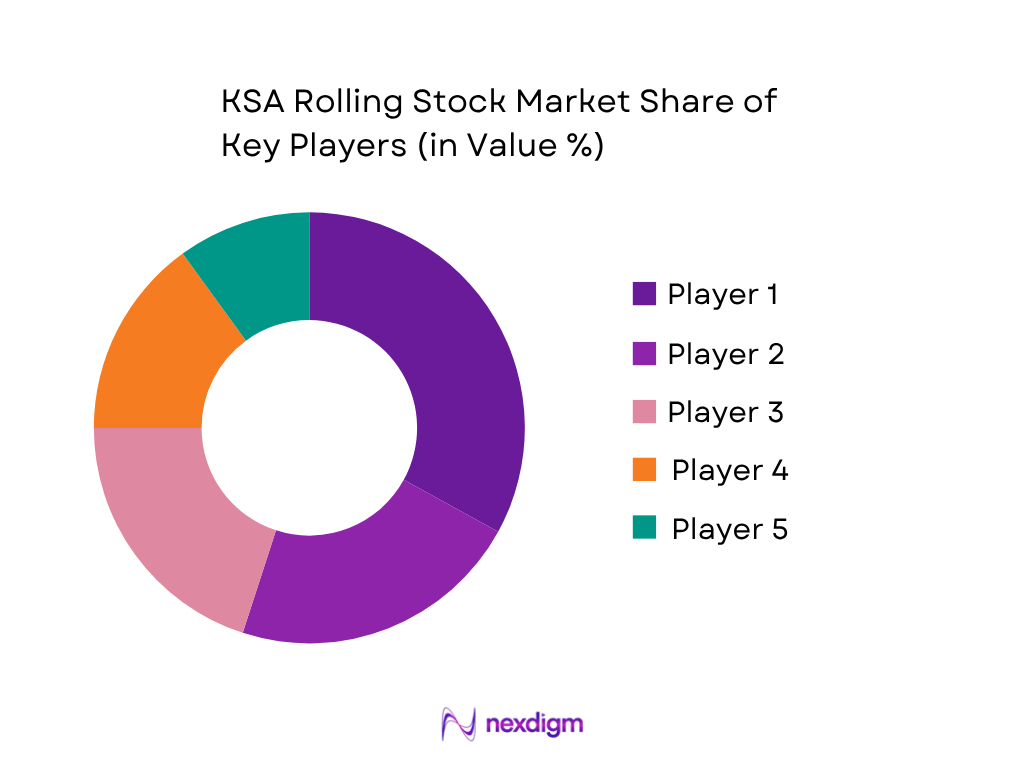
KSA Rolling Stock Market Analysis
Growth Drivers
Freight Railway Network Expansion
The expansion of freight railway infrastructure is a major growth driver for the KSA Rolling Stock Market as Saudi Arabia continues transforming into a regional logistics hub under Vision 2030. Freight rail demand is supported by industrial activity, mining transportation, petrochemical movement, and port connectivity requirements. The Saudi railway network currently connects key industrial zones, ports, and economic centers, with freight operations increasingly requiring additional locomotives, freight wagons, and specialized rolling stock. The development of logistics corridors linking the Red Sea and Arabian Gulf regions is strengthening demand for heavy-haul railway equipment. Saudi Arabia handled more than 7 million TEUs of container throughput at major ports in 2024, increasing the requirement for efficient inland transportation solutions. The government is also prioritizing transportation infrastructure development, with logistics identified as a strategic economic sector. Expansion of freight rail capacity is expected to encourage procurement of advanced locomotives, automated freight systems, and high-capacity wagons. The increasing movement of minerals, industrial goods, and containers through railway corridors will continue supporting rolling stock requirements across freight applications.
Saudi Landbridge Railway Development
The Saudi Landbridge Railway project represents a significant opportunity for rolling stock demand by creating a railway connection between the Red Sea coast and eastern Saudi Arabia. The project is designed to enhance freight connectivity between Jeddah Islamic Port, Riyadh, and Dammam, improving domestic logistics efficiency and reducing dependency on road transportation. Saudi Arabia recorded merchandise exports exceeding USD 320 billion in 2024, supported by petroleum, chemicals, and industrial products, creating demand for reliable freight transportation infrastructure. The railway corridor requires advanced freight locomotives, high-capacity wagons, signaling-compatible rolling stock, and maintenance systems. The project aligns with Saudi Arabia’s objective of increasing logistics competitiveness and strengthening its position as a trade hub connecting Asia, Europe, and Africa. Development of this railway corridor will generate long-term requirements for freight rolling stock modernization, fleet expansion, and technology integration. Increased cargo movement between ports and industrial regions will support demand for efficient railway transportation solutions.
Market Challenges
High Dependence on Imported Rolling Stock
The KSA Rolling Stock Market faces challenges due to limited domestic manufacturing capabilities and dependence on international suppliers for advanced railway vehicles, propulsion systems, and specialized components. Saudi Arabia currently relies heavily on global rolling stock manufacturers for passenger trains, locomotives, metro vehicles, and railway technologies. Advanced systems such as traction equipment, signaling integration, bogies, and braking technologies require specialized engineering capabilities that are primarily supplied through international partnerships. Saudi Arabia imported machinery and transport-related equipment worth billions of dollars in 2024, reflecting continued reliance on external industrial supply chains. This dependency increases exposure to international supply disruptions, currency fluctuations, and longer procurement timelines. Localization initiatives under Vision 2030 aim to increase domestic industrial participation; however, developing a complete rolling stock manufacturing ecosystem requires significant investment in technology transfer, skilled workforce development, and supplier networks. Limited local production capacity remains a key barrier for faster fleet expansion and maintenance independence.
Extreme Desert Climate Conditions
Extreme desert environmental conditions create operational and maintenance challenges for rolling stock operating in Saudi Arabia. Railway vehicles must withstand high temperatures, sand exposure, dust accumulation, and demanding operating environments across large desert corridors. Summer temperatures in several Saudi regions regularly exceed 45°C, requiring specialized cooling systems, thermal management technologies, and climate-resistant components. Sand infiltration can affect traction motors, braking systems, electrical equipment, and mechanical components, increasing maintenance requirements. The country’s railway operators require rolling stock designed with enhanced filtration systems, corrosion resistance, and durable materials to maintain operational reliability. Desert conditions also increase lifecycle maintenance complexity compared with moderate climates, requiring specialized inspection procedures and spare component availability. These environmental requirements increase engineering complexity for imported rolling stock and require manufacturers to customize designs according to Saudi operational conditions.
Market Opportunities
GCC Railway Connectivity
The development of GCC-wide railway connectivity presents a major opportunity for the KSA Rolling Stock Market by increasing demand for interoperable passenger and freight rolling stock. Regional railway integration aims to connect Saudi Arabia with neighboring Gulf countries, improving cross-border logistics and passenger transportation. GCC countries continue investing in transport infrastructure as part of economic diversification strategies. Saudi Arabia’s strategic geographic position makes it a central component of regional rail connectivity, requiring locomotives, passenger coaches, freight wagons, and advanced signaling-compatible vehicles. Increased regional trade activity and cross-border cargo movement will support demand for standardized rolling stock capable of operating across different railway networks. The integration of railway systems will also encourage adoption of modern technologies including digital signaling, automated operations, and smart fleet management solutions. GCC railway connectivity creates opportunities for manufacturers offering high-performance rolling stock designed for long-distance desert operations.
High-Speed Rail Expansion
High-speed rail expansion represents a significant opportunity for rolling stock suppliers in Saudi Arabia due to increasing passenger mobility demand and tourism growth. The success of the Haramain High-Speed Railway demonstrates the country’s capability to operate advanced passenger rail systems connecting major cities and religious tourism destinations. Saudi Arabia welcomed more than 100 million domestic and international visitors in 2023, increasing demand for efficient intercity transportation networks. Future expansion of high-speed rail corridors can create demand for high-speed trainsets, advanced passenger coaches, maintenance technologies, and digital railway systems. High-speed rail development supports national objectives to improve connectivity between economic centers and reduce dependence on road transportation. Advanced rolling stock equipped with energy-efficient propulsion, passenger comfort systems, and predictive maintenance technologies will become increasingly important as railway networks expand. The growing focus on sustainable mobility and tourism infrastructure strengthens opportunities for high-speed rolling stock deployment.
Future Outlook
The KSA Rolling Stock Market is expected to expand through continued railway infrastructure development, freight corridor expansion, metro network growth, and modernization of existing fleets. Future demand will be influenced by Saudi Vision 2030 objectives, logistics sector development, railway localization programs, and adoption of advanced railway technologies. Increasing focus on sustainable transportation will support opportunities for electric, hybrid, battery-powered, and digitally enabled rolling stock solutions.
Major Players
- Alstom
- Siemens Mobility
- CRRC Corporation
- Stadler Rail
- Construcciones y Auxiliar de Ferrocarriles
- Hitachi Rail
- Talgo
- Hyundai Rotem
- Wabtec Corporation
- Knorr-Bremse
- Saudi Railway Company
- Saudi Arabian Military Industries
- Thales
- Huawei
- Mitsubishi Electric
Key Target Audience
- Railway Operators and Rolling Stock Fleet Owners
- Government and Regulatory Bodies (Saudi Arabia Transport General Authority, Ministry of Transport and Logistic Services, Saudi Railways Organization)
- Metro and Urban Transit Authorities (Riyadh Metro Authority, Royal Commission for Riyadh City)
- Rolling Stock Manufacturers and Railway Technology Providers
- Railway Infrastructure Developers and EPC Contractors
- Logistics and Freight Transportation Companies
- Investments and Venture Capitalist Firms
- Railway Component Suppliers and Maintenance Service Providers
Research Methodology
Step 1: Identification of Key Variables
The initial phase involves developing a comprehensive ecosystem map of the KSA Rolling Stock Market covering railway operators, rolling stock manufacturers, infrastructure developers, government authorities, technology providers, and component suppliers. Secondary research is conducted using railway databases, government transportation reports, infrastructure development documents, and industry publications to identify critical variables influencing rolling stock demand, including fleet modernization, railway expansion, freight movement, passenger mobility, and technology adoption.
Step 2: Market Analysis and Construction
This stage focuses on developing the market framework through assessment of rolling stock categories, propulsion technologies, applications, and end-user segments. Historical industry developments, railway infrastructure investments, fleet deployment patterns, passenger rail growth, freight transportation trends, and upcoming railway projects are analyzed to estimate market dynamics. Supply-side and demand-side indicators are evaluated to determine the relationship between rolling stock requirements and railway network expansion.
Step 3: Hypothesis Validation and Expert Consultation
Market assumptions and identified trends are validated through discussions with industry stakeholders, including railway operators, rolling stock manufacturers, technology suppliers, and infrastructure specialists. These consultations provide operational insights regarding procurement processes, fleet replacement cycles, maintenance requirements, localization initiatives, and future railway technology adoption. Expert inputs are integrated to strengthen market understanding and validate key findings.
Step 4: Research Synthesis and Final Output
The final stage involves consolidation of quantitative and qualitative information collected from multiple industry sources. Rolling stock supply analysis, competitive benchmarking, segment evaluation, and future opportunity assessment are combined to create a detailed market outlook. The findings are reviewed through data triangulation to ensure accuracy, consistency, and reliability of the KSA Rolling Stock Market analysis.

- Executive Summary
- Research Methodology (Market Definition and Scope, Rolling Stock Ecosystem Mapping, Market Sizing Framework, Top-Down Market Assessment, Bottom-Up Demand Analysis, Supply-Side Evaluation, Railway Operator Interviews, Government Infrastructure Assessment, Data Validation Framework, Forecasting Methodology, Assumptions and Limitations)

- Definition and Scope
- Evolution of Saudi Arabia Railway Transportation System
- Historical Development of National Railway Infrastructure
- Major Railway Projects Landscape
- Rolling Stock Ecosystem Analysis

- Growth Drivers (Freight Railway Network Expansion, Saudi Landbridge Railway Development, Haramain High-Speed Railway Growth, Riyadh Metro Operations, Logistics Sector Expansion, Passenger Mobility Demand)
- Market Challenges (High Dependence on Imported Rolling Stock, Extreme Desert Climate Conditions, Railway Infrastructure Compatibility Requirements, High Maintenance Complexity, Long Procurement Periods, Limited Local Rolling Stock Manufacturing Capability)
- Market Opportunities (GCC Railway Connectivity, High-Speed Rail Expansion, Hydrogen Train Adoption, Battery Electric Rolling Stock, Railway Automation, Smart Maintenance Technologies)
- Market Trends (Railway Digitalization, Predictive Maintenance Adoption, Artificial Intelligence-Based Train Monitoring, Sustainable Rail Transportation, Autonomous Railway Technologies, Connected Rolling Stock Systems)
- Government Regulations and Industry Standards (Saudi Railway Safety Standards, Transport General Authority Regulations, Railway Operation Licensing, Environmental Compliance Requirements, Rolling Stock Certification Standards, Procurement Framework)
- SWOT Analysis
- Porter’s Five Forces Analysis
- PESTLE Analysis

- By Market Value (2020-2025)
- By Rolling Stock Fleet Volume (2020-2025)
- By Rolling Stock Procurement Value (2020-2025)
- By Passenger Train Fleet Deployment (2020-2025)
- By Freight Wagon Fleet Deployment (2020-2025)
- By Railway Infrastructure Investment Impact (2020-2025)
- By New Rolling Stock Deliveries (2020-2025)
- By Replacement and Modernization Demand (2020-2025)

- By Rolling Stock Type (In Value %)
Locomotives
Freight Wagons
Passenger Coaches
High-Speed Trains
Metro Rolling Stock
Light Rail Vehicles
Diesel Multiple Units
Electric Multiple Units
Maintenance and Service Vehicles - By Propulsion Technology (In Value %)
Diesel-Electric Rolling Stock
Electric Rolling Stock
Hybrid Rolling Stock
Battery Electric Rolling Stock
Hydrogen Fuel Cell Rolling Stock
Alternative Energy Powered Rolling Stock - By Application Type (In Value %)
Passenger Transportation
Freight Transportation
Urban Transit
High-Speed Intercity Transportation
Industrial Railway Operations
Mining and Heavy Haul Transportation - By Railway Network Type (In Value %)
Mainline Railway
High-Speed Railway
Metro Railway
Light Rail Transit
Freight Corridor Network
Industrial Railway Network - By End User (In Value %)
Saudi Railway Company
Public Transport Authority
Metro Operators
Mining and Industrial Companies
Logistics and Freight Operators
Government Transportation Agencies - By Region (In Value %)
Riyadh Region
Makkah Region
Madinah Region
Eastern Province
Northern Borders Region
Tabuk Region

- Market Share Analysis of Major Players (By Rolling Stock Type, Technology Type, Application, Procurement Contracts)
- Cross Comparison Parameters (Rolling Stock Portfolio Strength, High-Speed Train Manufacturing Capability, Freight Wagon Technology, Metro Rail Solutions Portfolio, Railway Electrification Expertise, Maintenance and Service Network Presence, Digital Railway Technology Capability, International Railway Project Experience)
- SWOT Analysis of Major Players
- Detailed Profiles of Major Companies
Alstom
Siemens Mobility
CRRC Corporation
Stadler Rail
Hitachi Rail
CAF
Talgo
Hyundai Rotem
Wabtec Corporation
Thales
Saudi Railway Company (SAR)
Saudi Arabia Railways
Riyadh Metro Operator
Etihad Rail
Knorr-Bremse Rail Systems

- Passenger Rail Demand Assessment
- Freight Rail Demand Assessment
- Passenger Demographic Analysis
- Industrial End User Analysis
- Railway Operator Requirements Assessment
- Rolling Stock Purchase Decision Factors

- By Market Value (2026-2035)
- By Rolling Stock Fleet Volume (2026-2035)
- By Rolling Stock Procurement Value (2026-2035)
- By Passenger Train Fleet Deployment (2026-2035)
- By Freight Wagon Fleet Deployment (2026-2035)
- By Railway Infrastructure Investment Impact (2026-2035)
- By New Rolling Stock Deliveries (2026-2035)
- By Replacement and Modernization Demand (2026-2035)


 Request a Sample
 Ask for Customization
 Get a Quote
 Enquire Now