
 Download PDF
Market Overview
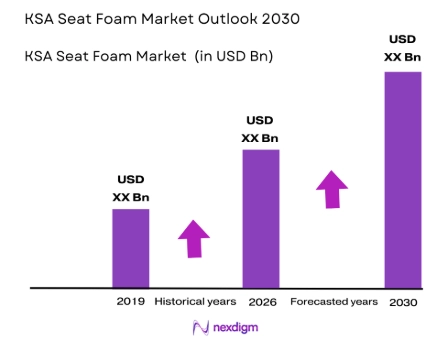
The KSA seat foam market is valued at USD ~ million, supported by continuous growth in the automotive and furniture sectors. The demand for seat foam is driven by the rising production of vehicles, specifically within the automotive sector, as well as the expanding furniture market due to urbanization and higher disposable incomes. The increasing use of high-quality, durable, and comfortable seat foam in both luxury and economy vehicles, as well as in high-end furniture products, plays a key role in driving this market. Rising consumer demand for comfort and ergonomics in seating solutions further accelerates market growth.
In the KSA seat foam market, major cities like Riyadh, Jeddah, and Dammam lead the demand for seat foam due to their industrial growth, strong automotive manufacturing hubs, and large-scale furniture production facilities. The Western and Eastern regions of Saudi Arabia dominate the market due to their proximity to large ports, such as the King Abdulaziz Port and King Fahd Port, facilitating the import of raw materials and the export of finished products. These regions’ high population density, expanding urbanization, and thriving infrastructure sectors further contribute to the market’s growth.
Market Segmentation
By Product Type
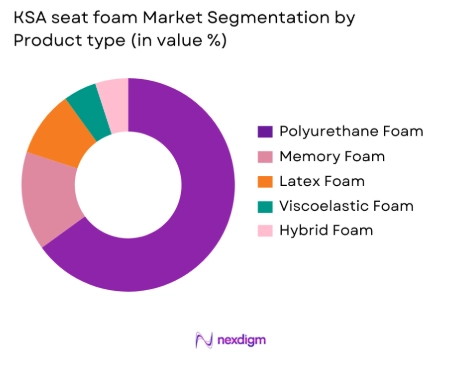
The KSA seat foam market is segmented by product type into polyurethane foam, memory foam, latex foam, viscoelastic foam, and hybrid foam. Among these, polyurethane foam holds a dominant share due to its cost-effectiveness, versatility, and widespread application in automotive seating, mattresses, and furniture. Polyurethane foam is favored by manufacturers for its ease of production, lightweight nature, and durability. As a result, it is widely used in both high-end automotive seating and affordable furniture options, contributing significantly to the market’s revenue.
By End-user
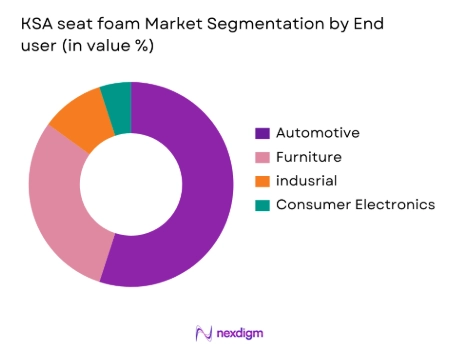
The market is further segmented by end-use industry, with major segments including automotive, furniture, industrial, and consumer electronics. The automotive industry is the dominant segment due to the increasing production of both traditional vehicles and electric vehicles (EVs). Seat foam is crucial in the automotive sector for providing comfort and safety in seating arrangements. The demand for high-performance foams with features like energy absorption, temperature regulation, and cushioning has led to the dominance of this segment in the market. As vehicle production continues to rise, the automotive segment is expected to maintain its position as the largest revenue generator.
Competitive Landscape
The KSA seat foam market is dominated by both regional players and global companies. Leading firms include local manufacturers such as Al Jazira Foam Industries, Gulf Foam Factory, and international brands like BASF and Dow Chemical. These companies leverage their strong brand presence, technological advancements, and established distribution networks to maintain their dominance in the market. The increasing demand for high-quality and sustainable seat foam products has also led to a consolidation of major players in the region
| Company Name | Establishment Year | Headquarters | Revenue (2024, USD) | Product Portfolio | Market Reach | Manufacturing Facilities |
| Al Jazira Foam | 1980 | Riyadh, KSA | ~ | ~ | ~ | ~ |
| Gulf Foam Factory | 1995 | Jeddah, KSA | ~ | ~ | ~ | ~ |
| BASF | 1865 | Ludwigshafen, Germany | ~ | ~ | ~ | ~ |
| Dow Chemical | 1897 | Midland, USA | ~ | ~ | ~ | ~ |
| Fadco Foam | 1990 | Dammam, KSA | ~ | ~ | ~ | ~ |
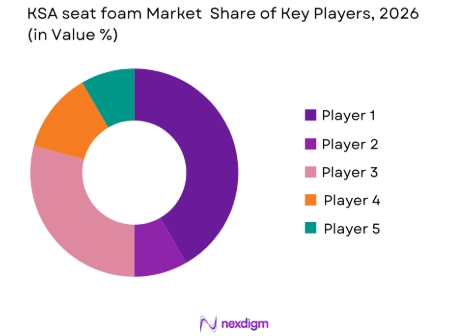
KSA Seat Foam Market Analysis
Growth Drivers
Rising Demand for Comfortable Seating in Automotive
The demand for comfortable and ergonomic seating in the automotive sector has surged due to rising disposable incomes, especially in the KSA, with an estimated ~ million vehicles sold in 2024. This increased vehicle production results in a higher demand for quality seat foam materials. Additionally, the KSA government’s Vision 2030 plan, which aims to boost the automotive industry, continues to support this growth by investing in infrastructure and enhancing local manufacturing capabilities. As vehicle sales in the region are expected to continue their upward trajectory, so does the demand for automotive seating solutions that provide comfort and safety.
Technological Advancements in Foam Manufacturing
Technological advancements in foam manufacturing have led to the development of high-performance seat foam materials that are lighter, more durable, and provide better comfort. For example, the introduction of memory foam and viscoelastic foam has made automotive seats more comfortable, especially for long rides. The global increase in R&D spending, which hit USD ~trillion in 2024, has fueled the development of such foam technologies. These innovations cater to the growing need for better seating solutions in vehicles and furniture, aligning with the rising demand for premium automotive interiors and the expansion of vehicle production in the KSA.
Market Challenges
Volatility in Raw Material Prices
Volatility in raw material prices, especially for polyols and isocyanates, which are critical components in polyurethane foam manufacturing, continues to be a significant challenge in the seat foam market. For instance, the global price of polyols saw a 12% increase from 2023 to 2024, largely due to supply chain disruptions and geopolitical tensions. These fluctuations directly affect the cost structure for seat foam manufacturers, making it difficult to maintain stable production costs. This issue has been particularly evident in the KSA, where raw material costs contribute significantly to the overall foam product cost.
Environmental Impact and Sustainability Challenges
The seat foam industry faces increasing scrutiny over its environmental impact, particularly concerning the disposal of non-biodegradable foam materials. The environmental effects of foam waste are becoming a pressing issue, especially in regions with high consumption like KSA. In 2022, it was reported that the KSA generated ~ million tons of plastic waste, and much of this includes polyurethane foam products. Regulatory bodies in the region have started emphasizing recycling and sustainable practices, forcing manufacturers to rethink the end-of-life cycle of their products. This challenge is amplified by the region’s limited recycling infrastructure for such materials.
Opportunities
Growing Demand for Automotive Electric Vehicle Seat Foams
The rise in electric vehicle (EV) production has created new opportunities for the seat foam market in the KSA. As of 2022, the KSA’s automotive industry saw significant strides in EV development, with the government pushing to establish the kingdom as a leader in sustainable mobility. EV manufacturers require specialized seat foams for enhanced comfort, ergonomics, and energy efficiency. The demand for lightweight materials that also offer sound insulation properties, energy absorption, and durability is expected to grow rapidly as the number of EVs on the road increases. With the government incentivizing the EV sector through its Vision 2030, this shift offers a robust opportunity for seat foam manufacturers.
Source: Ministry of Investment of Saudi Arabia Link
Innovations in Smart Seat Technology
Smart seat technology, which includes features such as heated, cooling, and massaging foam seats, is becoming a major trend in the automotive and furniture sectors. The increasing demand for comfort and luxury features is fuelling growth in this area. The global automotive seating market, valued at USD 50 billion in 2022, is witnessing a growing integration of smart seat technologies. KSA’s automotive market is adopting these innovations, driven by consumer preference for advanced, tech-enabled vehicles. The demand for foam products that integrate smart functionalities, such as memory foam with heating or cooling capabilities, is expected to continue to rise in the coming years.
Future Outlook
Over the next five years, the KSA seat foam market is expected to experience significant growth, primarily driven by advancements in foam technology, the rising demand for ergonomic seating solutions, and the growing automotive industry, particularly electric vehicle (EV) production. The transition to eco-friendly materials and energy-efficient automotive technologies is likely to further support market growth. The increasing emphasis on consumer comfort and luxury will also boost demand for high-performance seat foam products, contributing to an expanding market size in the forecast period.
Major Players
- Al Jazira Foam Industries
- Gulf Foam Factory
- BASF
- Dow Chemical
- Fadco Foam
- Al-Watania Foam
- Polyfoam Middle East
- Saudi Foam Company
- Advanced Foam Industries
- United Foam Products
- Airlite Plastics
- Recticel
- Dynmatic Chemicals
- Mapei
- Carpenter Co.
Key Target Audience
- Investments and Venture Capitalist Firms
- Automotive Manufacturers and OEMs
- Furniture Manufacturers and Distributors
- Raw Material Suppliers
- Government and Regulatory Bodies
- Manufacturers of Foam Chemicals
- Distributors and Retailers of Seating Solutions
- Exporters and Importers of Foam Products
Research Methodology
Step 1: Identification of Key Variables
The initial phase of this research involves identifying the key variables that drive the KSA seat foam market. This includes understanding the major product types, such as polyurethane foam and memory foam, and determining the most prominent end-use industries, particularly automotive and furniture. The research also takes into account economic and demographic factors that influence demand.
Step 2: Market Analysis and Construction
In this phase, historical data regarding the production and demand for seat foam in various industries, including automotive and furniture, is collected. The data analysis includes evaluating the growth of the automotive sector and identifying regional trends in foam consumption across different KSA cities and regions.
Step 3: Hypothesis Validation and Expert Consultation
Market hypotheses will be tested through expert consultations and interviews with key stakeholders in the KSA seat foam market. These discussions will provide critical insights into market conditions, technological advancements, and the evolving preferences of consumers, thus refining the market’s growth trajectory.
Step 4: Research Synthesis and Final Output
After gathering data and expert feedback, the final synthesis of information will be carried out. This will involve validation through interviews with leading seat foam manufacturers, automotive industry executives, and furniture producers to ensure accurate and actionable insights, creating a comprehensive market outlook.

- Executive Summary
- Research Methodology (Market Definitions and Assumptions, Abbreviations, Market Sizing Approach, Consolidated Research Approach, Understanding Market Potential Through In-Depth Industry Interviews, Primary Research Approach, Limitations and Future Conclusions)

- Definition and Scope
- Genesis and Evolution of the KSA Seat Foam Market
- Timeline of Major Players and Innovations
- Business Cycle
- Supply Chain and Value Chain Analysis

- Growth Drivers
Rising Demand for Comfortable Seating in Automotive
Technological Advancements in Foam Manufacturing
Consumer Preferences for Sustainable and Eco-friendly Foam Materials
- Market Challenges
Volatility in Raw Material Prices (Polyols, Isocyanates)
Environmental Impact and Sustainability Challenges
- Opportunities
Growing Demand for Automotive Electric Vehicle Seat Foams
Innovations in Smart Seat Technology - Trends
Increasing Shift Towards Recyclable and Bio-based Foams
Growth in Ergonomically Designed Seating Products - Government Regulation
Environmental Regulations on Foam Disposal
Compliance with Automotive Safety Standards

- By Value, 2019-2025
- By Volume, 2019-2025
- By Average Price, 2019-2025

- By Product Type, (In Value %)
Polyurethane Foam
Memory Foam
Latex Foam
Viscoelastic Foam
Other (Hybrid Foam, etc.) - By End-Use Industry, (In Value %)
Automotive
Furniture
Industrial
Consumer Electronics - By Region, (In Value %)
Central Region
Eastern Region
Western Region
Southern Region - By Foam Density, (In Value %)
Low Density
Medium Density
High Density
- By Application, (In Value %)
Luxury/High-End Seating
Economy Seating
Ergonomic Products

- Market Share of Major Players by Value/Volume, 2024
- Cross Comparison Parameters (Company Overview, Business Strategies,
Recent Developments and Innovations Strength, Weakness, Opportunities, and Threats)
- SWOT Analysis of Major Players
- Pricing Analysis
- Porter’s Five Forces
- Detailed Profiles
Al Jazira Foam Industries
Gulf Foam Factory
Fadco Foam
Al Bawani Group (Foam Division)
Foam Factory Saudi Arabia
Al-Shraq Foam
Tawuniya Foam Solutions
Jeddah Foam Manufacturing Co.
Arabian Fibers & Foams Ltd.
Saudi Foam Co.
United Foam Products
Al-Watania Foam
Al-Faisal Foam Industries
Advanced Foam Industrie
Al-Futtaim Foam Products

- Market Demand and Utilization
- Forecast of Demand by End-User Industry
- Purchasing Power and Budget Allocations
- Consumer and Business Purchasing Trends

- By Value, 2026-2030
- By Volume, 2026-2030
- By Average Price, 2026-2030


 Request a Sample
 Ask for Customization
 Get a Quote
 Enquire Now