
 Download PDF
 Download PDF
Market Overview
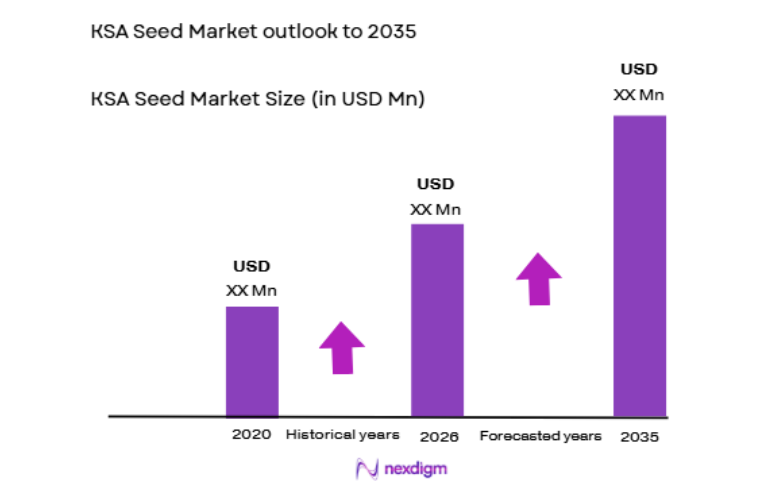
The KSA seed market is valued at USD ~ million based on a recent historical assessment. This growth is driven by the increasing demand for high-quality seeds that are suited to the country’s arid climate and agricultural needs. The adoption of advanced seed technologies, including hybrid and genetically modified seeds, is contributing to higher crop yields and enhanced resilience to pests and diseases. Additionally, government initiatives to support food security and sustainable agriculture are further accelerating the market’s expansion.
The major cities driving the seed market in KSA include Riyadh and Jeddah, which are hubs for agricultural activity and home to several large-scale farms. These regions dominate due to their access to advanced agricultural technologies, infrastructure, and government-backed initiatives such as the Saudi Vision 2030 plan, which aims to enhance food self-sufficiency. Additionally, these cities benefit from a favorable business environment that encourages investments in agriculture and seed production.
Market Segmentation
By Product Type
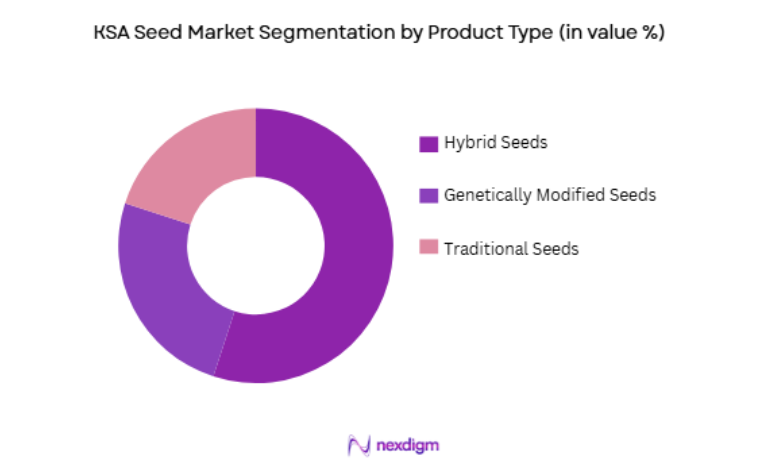
The KSA seed market is segmented by product type into hybrid seeds, genetically modified (GM) seeds, and traditional seeds. Hybrid seeds currently dominate the market due to their superior resistance to diseases, higher yield potential, and adaptability to the harsh climate conditions in KSA. These seeds offer better productivity and require fewer resources such as water and fertilizers, which is crucial in an arid environment. The increased demand for efficient and sustainable agriculture practices is fueling the preference for hybrid seeds among large-scale commercial farmers.
By Seed Category
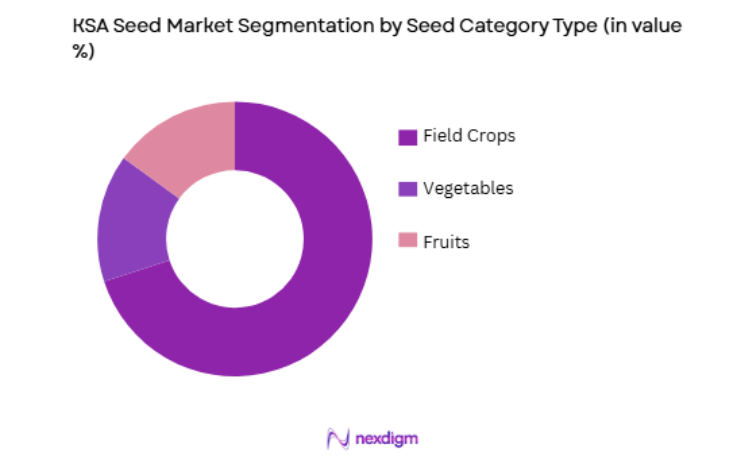
The market is also segmented by seed category into field crops, vegetables, and fruits. Field crops have a significant market share due to their importance in ensuring food security in KSA, where staple crops like wheat and barley are essential. These crops require seeds that can thrive in the region’s climate and provide high yields. The adoption of high-quality field crop seeds is supported by government programs aimed at increasing domestic food production, thus boosting their demand across the country.
Competitive Landscape
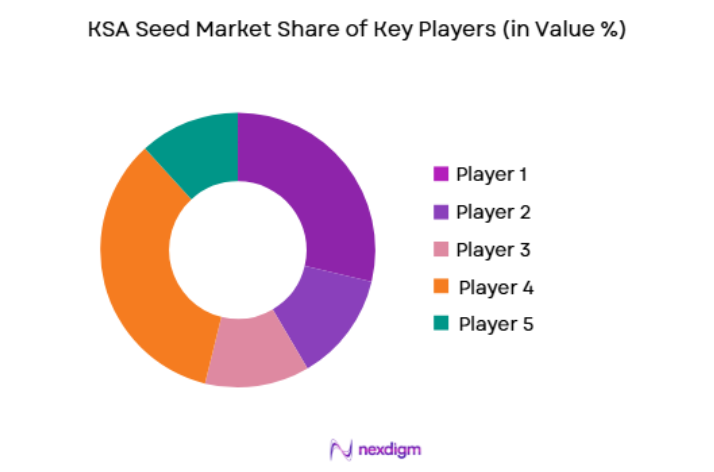
The KSA seed market is highly competitive, with both global and local players vying for market share. There is a trend toward consolidation, with larger companies acquiring smaller firms to expand their reach and product offerings. The market’s major players are focusing on advanced seed technologies, such as hybrid and GM seeds, to address the challenges posed by the region’s climate. The growing demand for high-yield seeds and government incentives further intensifies competition in the market.
| Company Name | Establishment Year | Headquarters | Technology Focus | Market Reach | Key Products | Revenue (USD) | R&D Investment (%) |
| Bayer CropScience | 2002 | Germany | ~ | ~ | ~ | ~ | ~ |
| Syngenta | 2000 | Switzerland | ~ | ~ | ~ | ~ | ~ |
| Arysta Lifescience | 2007 | Japan | ~ | ~ | ~ | ~ | ~ |
| Al Dahra | 1992 | UAE | ~ | ~ | ~ | ~ | ~ |
| Kingdom Seeds | 2003 | KSA | ~ | ~ | ~ | ~ | ~ |
KSA Seed Market Analysis
Growth Drivers
Government Support for Agricultural Development
The Saudi government’s support for agricultural development is a major growth driver in the KSA seed market. With initiatives like Saudi Vision 2030, the government aims to increase the country’s food self-sufficiency and reduce its reliance on imports. This has led to increased investments in agriculture, including subsidies for the adoption of high-quality seeds. The focus on sustainable farming and the encouragement of technology-driven agricultural practices have led to higher demand for advanced seed varieties, particularly hybrid and GM seeds. These efforts to modernize the agricultural sector and improve yields are driving significant growth in the seed market. Additionally, the government’s commitment to improving food security, such as the establishment of agricultural research centers, ensures the availability of high-quality seeds that meet the country’s diverse agricultural needs.
Technological Advancements in Seed Development
Technological advancements in seed development are also contributing to the growth of the KSA seed market. The development of hybrid and genetically modified seeds has been crucial in enabling the country to increase agricultural productivity in its challenging environment. These seeds are engineered to be more resistant to diseases, pests, and environmental stress, which is essential in the arid climate of KSA. The market is seeing a growing shift towards the adoption of these advanced seed varieties due to their potential to maximize crop yields while minimizing resource consumption. As farmers look for ways to improve the efficiency of their agricultural practices, the demand for innovative seed technologies is expected to rise, further accelerating the growth of the market.
Market Challenges
Climate and Water Scarcity Issues
One of the major challenges facing the KSA seed market is the country’s climate and water scarcity. The region’s arid conditions and limited rainfall make agriculture difficult, as crops require a significant amount of water to thrive. While hybrid and GM seeds are designed to withstand such conditions, they still require water, which is a scarce resource in the region. Despite advances in irrigation technologies, the reliance on desalinated water for agriculture remains expensive and unsustainable in the long term. The challenge of maintaining a stable water supply for agriculture limits the growth potential of the seed market, especially in regions that face water shortages. As the demand for water-efficient seeds grows, the market must continue to innovate and offer solutions that can thrive under these challenging conditions.
High Cost of Advanced Seed Varieties
The high cost of advanced seed varieties, including hybrid and genetically modified seeds, is a significant challenge for farmers in KSA. While these seeds offer better yields and resistance to environmental stress, their cost can be a barrier, especially for smaller farmers. Despite government subsidies and initiatives aimed at promoting the adoption of advanced seed varieties, many farmers still face financial constraints that prevent them from investing in high-quality seeds. The high cost of acquiring these seeds makes them less accessible to small and medium-sized farmers, limiting the market’s growth potential. As a result, the market must explore ways to reduce the cost of advanced seeds to make them more affordable to a larger segment of the farming population.
Opportunities
Expansion of Organic and Sustainable Farming
There is a growing opportunity in the KSA seed market due to the rising demand for organic and sustainable farming practices. As consumers become more health-conscious and environmentally aware, the demand for organic produce is increasing. The Saudi government is also encouraging sustainable farming practices through various initiatives and subsidies, creating a favorable environment for the growth of organic farming. This shift towards organic farming presents an opportunity for seed companies to develop and offer organic seed varieties that cater to this demand. The expansion of organic farming will not only help meet consumer demand but also contribute to the overall sustainability of the agricultural sector in KSA. This presents a significant opportunity for seed companies to capitalize on the growing trend and further diversify their product offerings.
Integration of Agri-Tech Solutions
The integration of agri-tech solutions with seed development offers a promising opportunity for growth in the KSA seed market. Technologies such as precision farming, drone-assisted agriculture, and automated irrigation systems are being increasingly adopted in KSA to optimize farming practices and improve efficiency. These technologies enable farmers to monitor and manage their crops more effectively, leading to higher yields and better resource utilization. Seed companies that align their offerings with these technological advancements can capture a larger share of the market. The demand for seeds that are compatible with agri-tech solutions is expected to rise, providing seed companies with the opportunity to innovate and offer value-added products that meet the evolving needs of farmers in the region.
Future Outlook
The KSA seed market is expected to continue its growth trajectory over the next five years, driven by technological advancements, government initiatives, and increasing demand for sustainable agricultural practices. Hybrid and genetically modified seeds will continue to dominate the market, while the demand for organic and eco-friendly seeds is expected to grow as consumers seek healthier food options. The integration of agri-tech solutions will further optimize farming practices, contributing to increased crop yields and efficiency. With continued government support and a focus on food security, the future outlook for the seed market in KSA remains positive.
Major Players
- Bayer CropScience
- Syngenta
- Arysta Lifescience
- Al Dahra
- Kingdom Seeds
- Dow AgroSciences
- Rasi Seeds
- Monsanto
- Novozymes
- Kaveri Seed
- SeedWorks International
- AgriGold Seeds
- Krishi Rasayan Exports
- Reliance Industries
- DuPont Pioneer
Key Target Audience
- Investments and venture capitalist firms
- Government and regulatory bodies
- Large-scale farmers and agricultural enterprises
- Seed distributors and retailers
- Agri-tech companies
- Agricultural cooperatives
- Food processing companies
- Research and development organizations
Research Methodology
Step 1: Identification of Key Variables
Identifying the critical market variables, including product types, regional influences, and technological factors, that drive the seed market.
Step 2: Market Analysis and Construction
Conducting an in-depth analysis of the market size, trends, and future projections to construct a comprehensive market model.
Step 3: Hypothesis Validation and Expert Consultation
Validating market hypotheses through consultations with industry experts, agricultural professionals, and government bodies to ensure accurate market insights.
Step 4: Research Synthesis and Final Output
Synthesizing the collected data and expert opinions into a final comprehensive report that offers actionable insights for stakeholders.

- Executive Summary
- Research Methodology (Definitions, Scope, Industry Assumptions, Market Sizing Approach, Primary & Secondary Research Framework, Data Collection & Verification Protocol, Analytic Models & Forecast Methodology, Limitations & Research Validity Checks)

- Market Definition and Scope
- Value Chain & Stakeholder Ecosystem
- Regulatory / Certification Landscape
- Sector Dynamics Affecting Demand

- Growth Drivers
Government Support for Agricultural Development
Technological Advancements in Seed Production
Increasing Demand for High-Yield Varieties - Market Challenges
Climate Change and Weather Variability
Supply Chain and Distribution Issues
Regulatory and Certification Barriers - Market Opportunities
Expanding Organic Farming Trends
Rising Investment in Agricultural Research
Growing Demand for Bio-based Seeds - Trends
Adoption of Precision Farming Technologies
Shift Toward Sustainable Agricultural Practices
Integration of Digital Platforms for Seed Distribution - Government regulations
- SWOT analysis
- Porters 5 forces

- By Market Value, 2020-2025
- By Installed Units, 2020-2025
- By Average System Price, 2020-2025
- By System Complexity Tier, 2020-2025

- By System Type (In Value%)
Hybrid Seeds
Open Pollinated Seeds
Genetically Modified Seeds
Certified Seeds
Vegetable Seeds - By Platform Type (In Value%)
Agricultural Land Platforms
Greenhouse Platforms
Hydroponic Platforms
Vertical Farming Platforms
Aquaponic Platforms - By Fitment Type (In Value%)
Field Application
Greenhouse Application
Hydroponic Application
Urban Farming Application
Commercial Application - By EndUser Segment (In Value%)
Farmers
Agricultural Cooperatives
Government Organizations

- Market Share Analysis
- Cross Comparison Parameters (System Type, Platform Type, Procurement Channel, EndUser Segment, Fitment Type, Seed Variety, Regional Market Dynamics, Technology Adoption, Production Capacity, Distribution Network)
- SWOT Analysis of Key Competitors
- Pricing & Procurement Analysis
- Key Players
Al-Dahra Agriculture
Bayer CropScience
Syngenta KSA
Monsanto
Al-Ahsa Agriculture Company
Al-Balqa for Seeds
National Seed Company
Raya Seeds
Al-Qassim Seeds
Agri-Tech Co.
Takii Seed
Enza Zaden
Oasis Farms
Riyadh Agriculture
Saudi Agricultural and Livestock Investment Company

- Increasing Demand from Small-scale Farmers
- Large Corporations Investing in Seed Production
- Government Initiatives to Support Agricultural Growth
- Focus on Sustainable and Organic Farming Practices

- Forecast Market Value, 2026-2035
- Forecast Installed Units, 2026-2035
- Price Forecast by System Tier, 2026-2035
- Future Demand by Platform, 2026-2035


 Request a Sample
 Ask for Customization
 Get a Quote
 Enquire Now