
 Download PDF
Market Overview
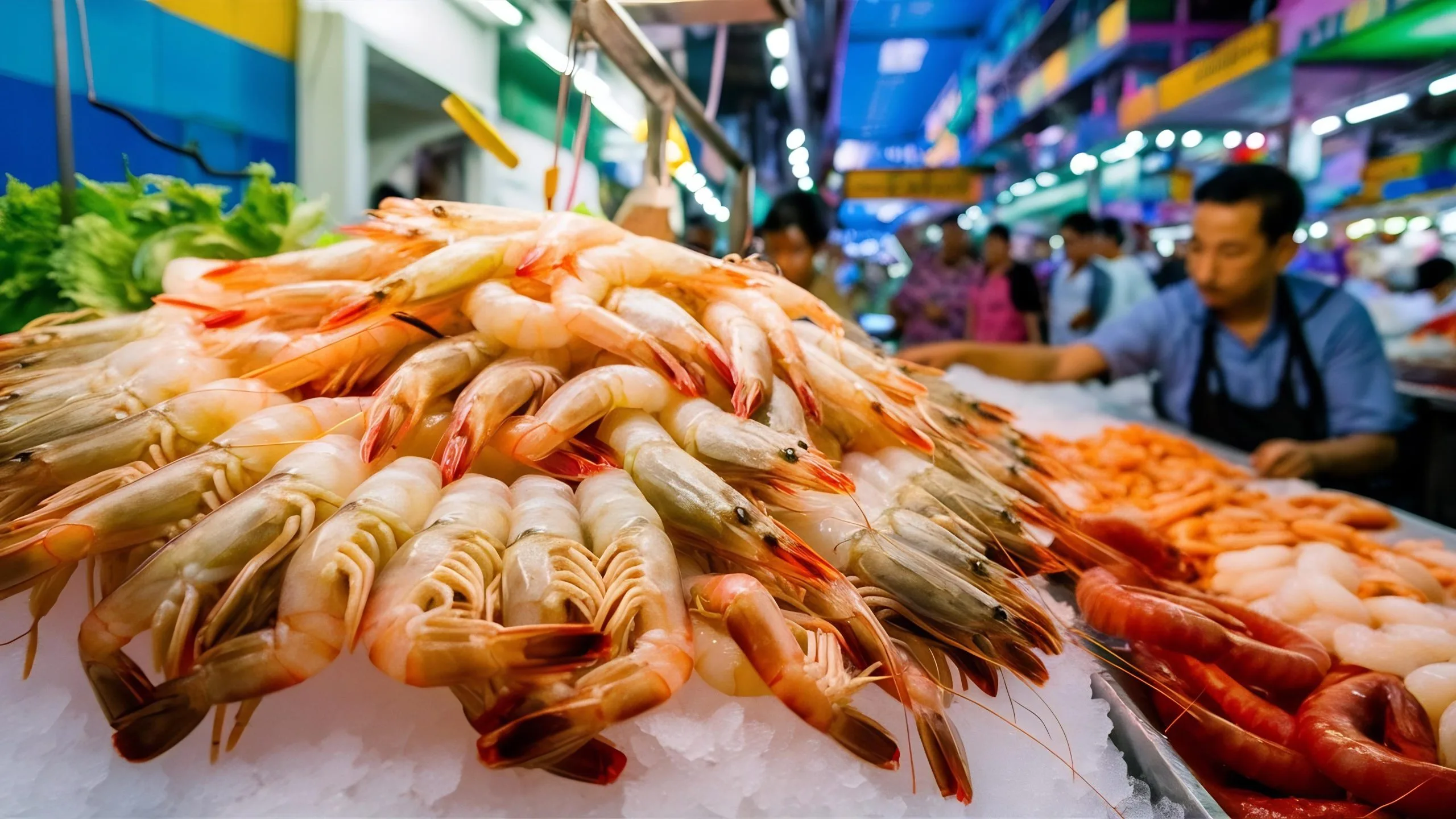
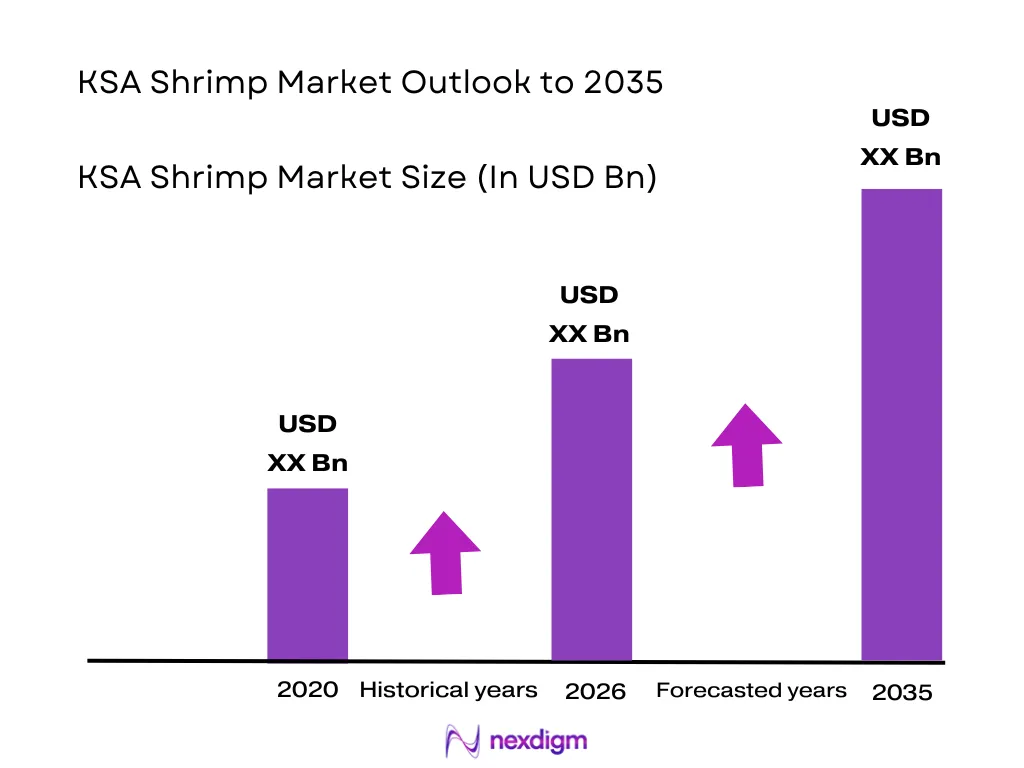
The KSA Shrimp Market is valued at approximately USD ~ billion, supported by the Kingdom’s expanding aquaculture ecosystem, increasing seafood consumption, and export-focused shrimp production. Saudi Arabia has become one of the leading aquaculture producers in the Middle East, with aquaculture production exceeding 140,000 metric tons. Shrimp represents one of the country’s key commercial aquaculture species due to large-scale coastal farming infrastructure, hatchery development, processing facilities, and cold-chain investments. Government initiatives focused on food security, local seafood production, and aquaculture expansion continue to support shrimp farming development across the Kingdom.
The Western Region dominates the KSA Shrimp Market due to favorable Red Sea coastal conditions, established aquaculture infrastructure, and proximity to major seafood logistics networks. Al Lith is considered a key shrimp production hub due to the presence of integrated aquaculture facilities, hatcheries, and processing units. Jeddah supports domestic distribution and international seafood movement through advanced port and cold-chain infrastructure. Jazan is also emerging as an aquaculture development region due to coastal resources and government-supported fisheries initiatives, while Riyadh remains a major consumption center driven by retail, hospitality, and foodservice demand.
Market Segmentation
By Species Type
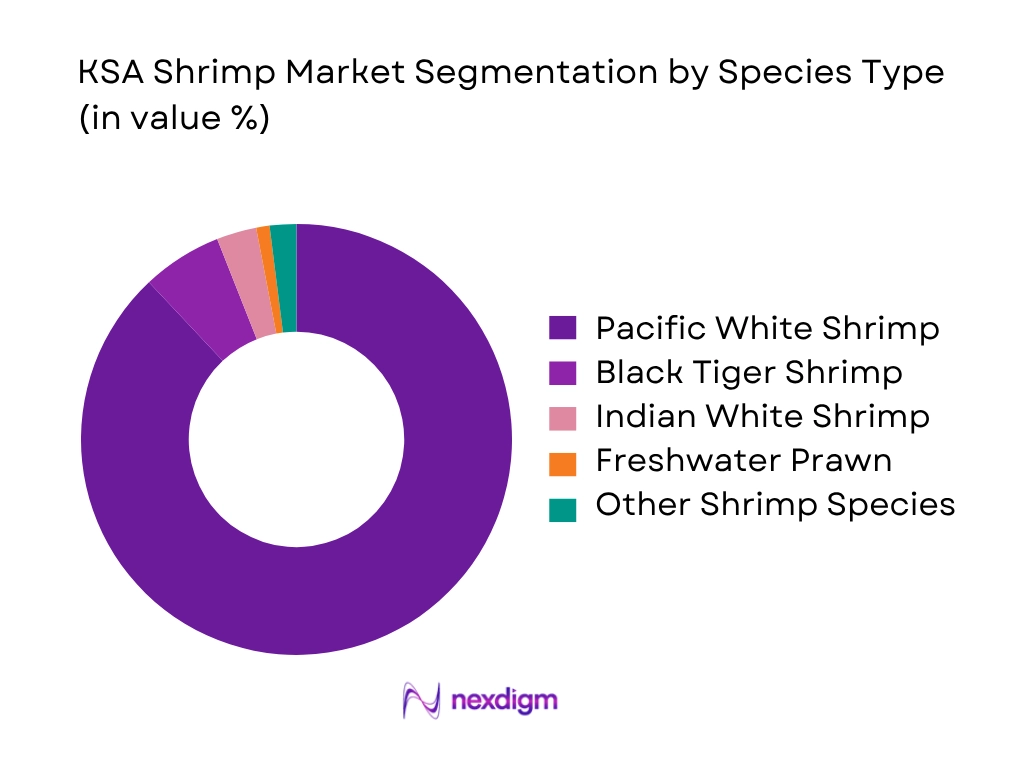
The KSA Shrimp Market is segmented by species type into Pacific White Shrimp, Black Tiger Shrimp, Indian White Shrimp, Freshwater Prawn, and Other Shrimp Species. Pacific White Shrimp dominates the KSA Shrimp Market under species segmentation due to its strong adaptability to intensive aquaculture systems, faster growth cycle, and efficient production performance. Shrimp farmers prefer this species because it provides consistent harvest output and supports large-scale commercial farming operations. Its uniform size, processing efficiency, and acceptance across export markets further strengthen demand. The adoption of improved broodstock management, biosecurity practices, and modern farming techniques has increased the preference for Pacific White Shrimp among producers.
By Product Form
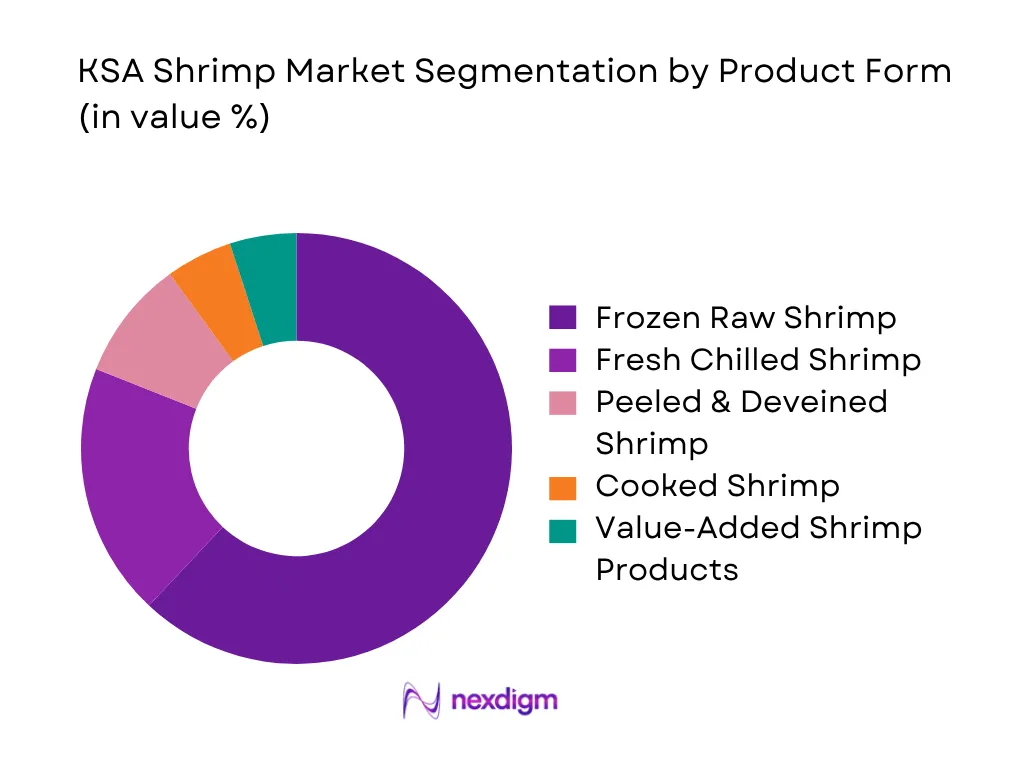
The KSA Shrimp Market is segmented by product form into Frozen Raw Shrimp, Fresh Chilled Shrimp, Peeled & Deveined Shrimp, Cooked Shrimp, and Value-Added Shrimp Products. Frozen Raw Shrimp dominates the KSA Shrimp Market under product form segmentation due to its suitability for export distribution, longer storage life, and strong adoption across retail and foodservice channels. The product format enables producers to maintain quality during long-distance transportation and international trade. Growing cold-chain infrastructure and seafood processing capabilities have further supported frozen shrimp production. Demand from hotels, restaurants, supermarkets, and international buyers continues to strengthen the dominance of frozen shrimp products.
Competitive Landscape
The KSA Shrimp Market is concentrated among integrated aquaculture operators focusing on farming efficiency, hatchery development, processing infrastructure, and export capabilities. Companies operating in the industry are investing in advanced farming technologies, disease management systems, sustainability certifications, and value-added processing facilities. Competition is increasingly influenced by production scale, biosecurity standards, cold-chain strength, product innovation, and ability to meet domestic as well as international seafood quality requirements.
| Company | Establishment Year | Headquarters | Core Focus | Hatchery Capability | Processing Facility | Export Presence | Sustainability Focus | Product Portfolio |
| National Aquaculture Group (NAQUA) | 1982 | Saudi Arabia | ~ | ~ | ~ | ~ | ~ | ~ |
| Saudi Fisheries Company | 1980 | Saudi Arabia | ~ | ~ | ~ | ~ | ~ | ~ |
| JAZADCO | 1968 | Saudi Arabia | ~ | ~ | ~ | ~ | ~ | ~ |
| Tabuk Fisheries Company | 1986 | Saudi Arabia | ~ | ~ | ~ | ~ | ~ | ~ |
| Arabian Shrimp Company | 2000s | Saudi Arabia | ~ | ~ | ~ | ~ | ~ | ~ |
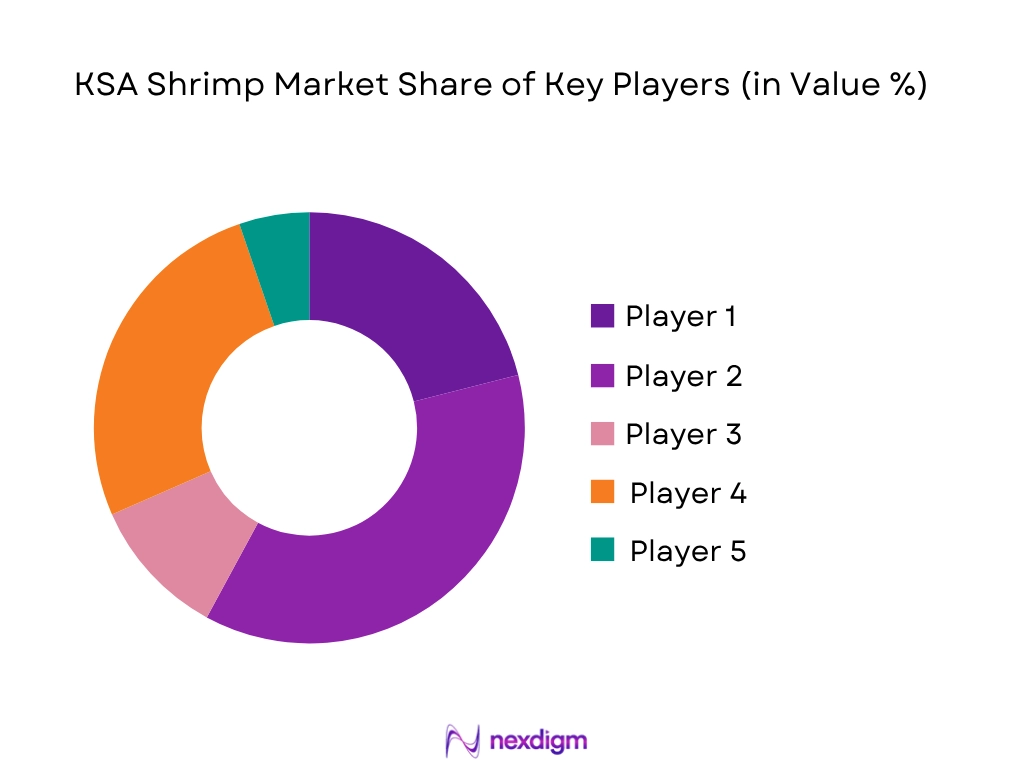
KSA Shrimp Market Analysis
Growth Drivers
Expansion of Aquaculture Under Vision 2030
Saudi Arabia’s shrimp sector is supported by national aquaculture expansion programs focused on increasing domestic seafood production and improving food security. Government initiatives have encouraged investment in coastal aquaculture zones, hatchery facilities, processing infrastructure, and farming technologies. The development of integrated aquaculture systems has allowed producers to improve productivity and increase commercial shrimp output. Continuous investments in advanced farming methods, quality control systems, and seafood infrastructure are strengthening the country’s position as a regional aquaculture hub.
Growth of Export-Oriented Aquaculture Production
The increasing focus on seafood exports is strengthening the KSA Shrimp Market. Saudi Arabia benefits from strategic access to Middle Eastern, Asian, and European seafood markets through established logistics networks. Export-focused production has encouraged investment in processing facilities, cold-chain systems, and internationally accepted quality standards. Rising demand for premium farmed shrimp products globally has encouraged producers to improve product consistency, traceability, and sustainability practices.
Market Challenges
Dependence on Imported Aquaculture Inputs
The KSA Shrimp Market faces challenges due to reliance on imported aquaculture inputs such as specialized feed ingredients, genetics, and farming technologies. Shrimp farming requires consistent availability of high-quality inputs to maintain productivity and disease resistance. Supply chain disruptions and dependency on international suppliers can affect operational planning. Development of local feed production capabilities and technology partnerships remains important for improving long-term industry resilience.
Disease and Biosecurity Risks
Disease management remains a critical challenge in shrimp farming due to the biological sensitivity of intensive aquaculture operations. Maintaining water quality, controlling pathogens, and ensuring strict biosecurity standards require continuous investment. Producers need advanced monitoring systems and preventive measures to protect shrimp stocks and maintain stable production. Failure to manage disease risks can affect harvest volumes, operational efficiency, and export reliability.
Market Opportunities
Development of Value-Added Shrimp Products
Increasing demand for convenient seafood products is creating opportunities for value-added shrimp processing in Saudi Arabia. Products such as peeled, cooked, marinated, and ready-to-cook shrimp offer higher commercial potential compared to basic frozen formats. Growth in organized retail, hotels, restaurants, and premium foodservice channels is encouraging processors to diversify product portfolios and invest in advanced processing technologies.
Expansion of Sustainable Aquaculture Practices
Sustainable aquaculture development presents strong opportunities for the KSA Shrimp Market as global seafood buyers increasingly focus on responsible sourcing. Adoption of efficient farming systems, improved water management, traceability solutions, and sustainability certifications can enhance international competitiveness. Environmentally responsible shrimp farming practices are expected to support premium positioning and long-term industry development.
Future Outlook
The KSA Shrimp Market is expected to experience strong development due to continued aquaculture investment, increasing seafood demand, and expansion of export opportunities. Improvements in hatchery technology, farming systems, processing infrastructure, and sustainability practices are expected to strengthen production capabilities. Growing demand for premium shrimp products through retail and foodservice channels will encourage innovation in value-added formats. The industry is expected to focus on productivity enhancement, environmental management, and global competitiveness.
Major Players
- National Aquaculture Group (NAQUA)
- Arabian Shrimp Company
- Saudi Fisheries Company
- Jazan Energy and Development Company (JAZADCO)
- Tabuk Fisheries Company
- Tharawat Seas Company
- Asmak
- Al-Watania Agriculture
- Gulf Shrimp Company
- National Fish Company
- Al Jaraf Fisheries
- Emirates AquaTech
- Al Kabeer Group
- Al Qudra Holding
- Aqua Bridge Group
Key Target Audience
- Shrimp Farming Companies and Aquaculture Operators
- Seafood Processing and Export Companies
- Shrimp Hatchery and Broodstock Suppliers
- Aquaculture Feed Manufacturers
- Cold Chain and Seafood Logistics Providers
- Investments and Venture Capitalist Firms
- Government and Regulatory Bodies
- Retail Chains, Hypermarkets and HoReCa Procurement Organizations
Research Methodology
Step 1: Identification of Key Variables
The initial stage involved identifying major variables affecting the KSA Shrimp Market, including production capacity, farming systems, consumption patterns, export demand, processing capabilities, and regulatory frameworks. Secondary research was conducted using industry databases, government publications, company information, and trade sources to understand the complete shrimp ecosystem.
Step 2: Market Analysis and Construction
Historical market assessment was conducted through analysis of shrimp production trends, consumption behavior, trade movement, and distribution networks. Market construction followed bottom-up and top-down approaches by evaluating production output, processing activity, and demand generation across domestic and international channels.
Step 3: Hypothesis Validation and Expert Consultation
Market assumptions were validated through interactions with aquaculture producers, processors, distributors, exporters, and industry stakeholders. These consultations provided insights regarding production practices, operational challenges, technology adoption, and market expansion opportunities within the shrimp industry.
Step 4: Research Synthesis and Final Output
The final stage involved consolidating collected information and validating findings through data triangulation. Industry insights, trade analysis, and operational information were combined to generate a comprehensive assessment covering market dynamics, segmentation, competition, and future opportunities.

- Executive Summary
- Research Methodology (Market Definitions and Assumptions, Abbreviations, Research Framework, Bottom-Up Market Estimation, Top-Down Validation, Aquaculture Production Assessment, Seafood Consumption Mapping, Trade Flow Analysis, Primary Interviews with Shrimp Farmers, Hatchery Operators, Seafood Processors and Exporters, Forecasting Model, Limitations and Assumptions)

- Definition and Scope
- Evolution of Shrimp Aquaculture Industry in KSA
- Industry Ecosystem and Stakeholder Mapping
- Shrimp Production Lifecycle Analysis
- Supply Chain and Value Chain Analysis
- Broodstock, Hatchery and Nursery Landscape

- Growth Drivers
Expansion of Aquaculture Under Vision 2030
Rising Domestic Seafood Consumption
Growth of Export-Oriented Aquaculture Production
Expansion of Modern Processing Infrastructure
Technological Advancements in Shrimp Farming - Market Challenges
Dependence on Imported Aquaculture Inputs
Disease Outbreak and Biosecurity Risks
Water Resource Constraints
Supply-Demand Gap in Seafood Production
Requirement for Skilled Aquaculture Workforce - Market Opportunities
Development of Value-Added Shrimp Products
Expansion of Shrimp Export Markets
Sustainable Aquaculture Adoption
Advanced Hatchery and Genetics Development
Integrated Aquaculture Infrastructure Investments - Market Trends
SPF Broodstock Adoption
Biofloc and RAS Farming Technologies
Smart Aquaculture Monitoring Systems
Premium Frozen Shrimp Demand
Traceability and Sustainability Certification Adoption - Government Regulations
Ministry of Environment, Water and Agriculture Aquaculture Framework
Saudi Food and Drug Authority Seafood Standards
Export Certification Requirements
Aquaculture Licensing Procedures
Food Safety and Traceability Regulations - Porter’s Five Forces Analysis
- PESTLE Analysis
- Pricing Analysis
- Competition Ecosystem

- By Value, 2020-2025
- By Volume (Metric Tons), 2020-2025
- By Average Realization Price (SAR/Kg), 2020-2025

- By Species Type (In Value %)
Pacific White Shrimp (Litopenaeus Vannamei)
Black Tiger Shrimp
Indian White Shrimp
Freshwater Prawn
Other Shrimp Species - By Farming System (In Value %)
Extensive Farming
Semi-Intensive Farming
Intensive Farming
Super-Intensive Farming
Recirculating Aquaculture Systems (RAS) - By Product Form (In Value %)
Frozen Raw Shrimp
Fresh Chilled Shrimp
Peeled & Deveined Shrimp
Cooked Shrimp
Value-Added Shrimp Products - By End User (In Value %)
Household Retail Consumers
Hotels
Restaurants
Catering Companies
Food Processing Companies
Institutional Buyers - By Distribution Channel (In Value %)
Hypermarkets & Supermarkets
Traditional Retail Stores
Seafood Specialty Stores
HoReCa Supply Channels
Online Seafood Platforms
Direct Farm-to-Business Sales - By Shrimp Size Category (In Value %)
U-15
16-20
21-30
31-40
41-50
51-60
Above 60 - By Region (In Value %)
Western Region
Central Region
Eastern Region
Northern Region
Southern Region

- Market Share Analysis of Major Players on the Basis of Revenue, Production Volume and Export Volume
- Cross Comparison Parameters (Company Overview, Shrimp Farming Capacity, Hatchery Capacity, Processing Capacity, Export Presence, Farm Area Under Cultivation, Feed Production Capability, Product Portfolio, Value-Added Processing Capability, Cold Chain Infrastructure, Distribution Reach, Sustainability Certifications, Biosecurity Standards, Strategic Partnerships, EBITDA Margins, Expansion Pipeline)
- Competitive Benchmarking Matrix
- SWOT Analysis of Major Players
- Pricing Analysis by Shrimp Size Category and Product Form
- Detailed Profiles of Major Companies
National Aquaculture Group (NAQUA)
Arabian Shrimp Company
Saudi Fisheries Company
Jazan Energy and Development Company (JAZADCO)
Tabuk Fisheries Company
Tharawat Seas Company
Asmak
Al-Watania Agriculture
Gulf Shrimp Company
National Fish Company
Al Jaraf Fisheries
Emirates AquaTech
Al Kabeer Group
Al Qudra Holding
Aqua Bridge Group

- Consumption Pattern Analysis
- Retail vs Foodservice Demand Analysis
- Buyer Preference Mapping
- Export Buyer Requirement Assessment
- Purchase Decision Parameters
- Quality and Traceability Expectations

- By Value, 2026-2035
- By Volume (Metric Tons), 2026-2035
- By Average Realization Price (SAR/Kg), 2026-2035


 Request a Sample
 Ask for Customization
 Get a Quote
 Enquire Now