

 Download PDF
Market Overview
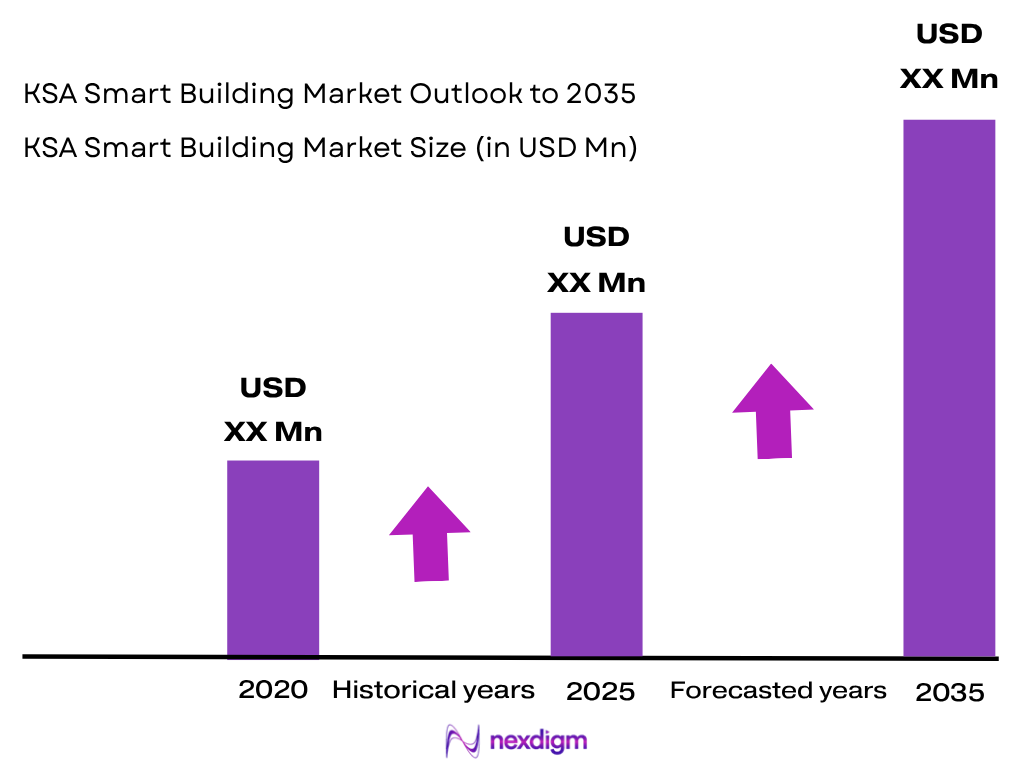
The KSA Smart Building Market is supported by the country’s expanding digital infrastructure, large-scale urban development, energy-efficiency priorities, and transformation of commercial and public buildings into connected assets. Saudi Arabia recorded a population of approximately 34 million and GDP of about USD 1.1 trillion, while its urban development agenda continues to increase demand for integrated building management, intelligent HVAC, connected lighting, access control, smart metering, and IoT-enabled facility management. The market size is estimated at ~USD XX billion in 2024, with continued deployment across new construction and retrofit projects.
Riyadh, Jeddah, and the Eastern Province represent important demand centers because of their concentration of commercial buildings, government facilities, hospitality assets, mixed-use developments, industrial facilities, and major infrastructure programs. Riyadh benefits from its position as the national administrative and business center, while Jeddah combines commercial, residential, hospitality, and transportation development. The Eastern Province benefits from industrial and energy-sector infrastructure. Saudi Arabia’s digital transformation agenda, including smart-city and mega-project development, is creating additional requirements for building automation, energy management, intelligent security, connected HVAC, and centralized facility-management platforms.
Market Segmentation
By Component
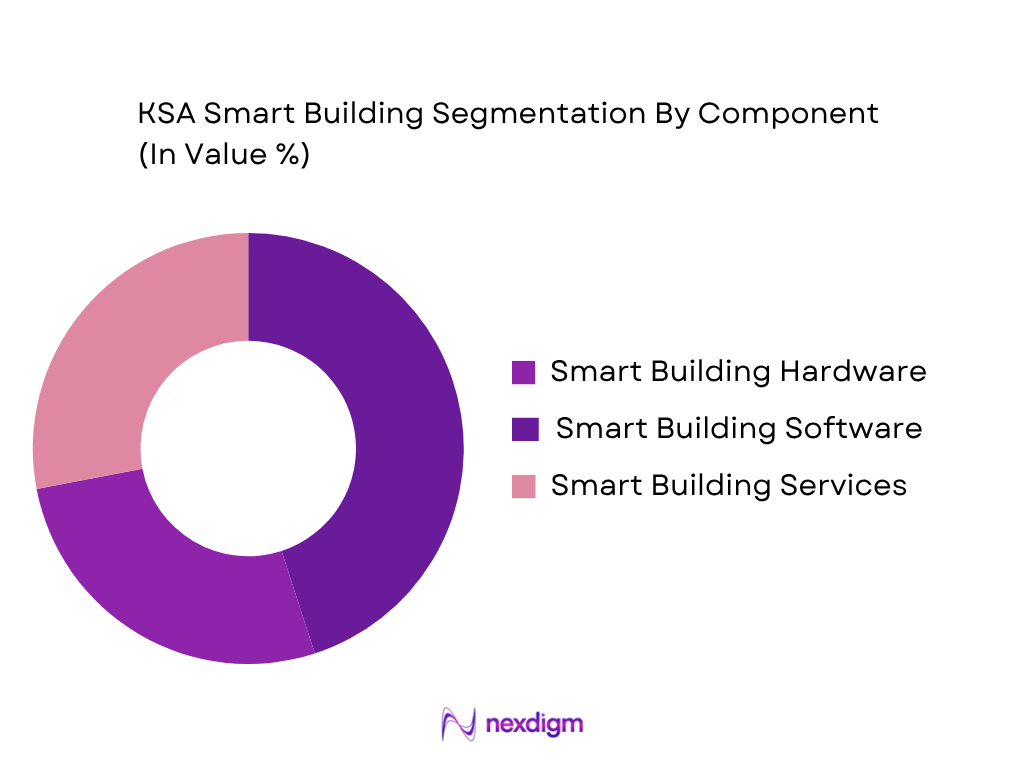
The KSA Smart Building Market is segmented by component into smart building hardware, smart building software, and smart building services. Smart building hardware is expected to represent the dominant segment, with a market share of ~XX% in 2024, supported by continued installation of sensors, controllers, gateways, smart meters, HVAC controls, lighting controls, security devices, and building automation equipment. New commercial and hospitality projects require substantial physical infrastructure before software platforms and ongoing services can be deployed. Hardware demand is also supported by retrofit activity in existing buildings, where property owners replace conventional meters, thermostats, lighting controls, access systems, and standalone equipment with connected alternatives. The growing integration of IoT devices creates additional demand for sensors capable of monitoring temperature, occupancy, air quality, energy consumption, equipment performance, and water usage. Smart building hardware is therefore closely connected with the physical modernization of building systems. Software and services remain important because connected equipment requires centralized monitoring, analytics, automation, cybersecurity, commissioning, integration, and maintenance. The increasing complexity of multi-system building environments is expected to support software and service adoption alongside hardware deployment.
By Building Technology
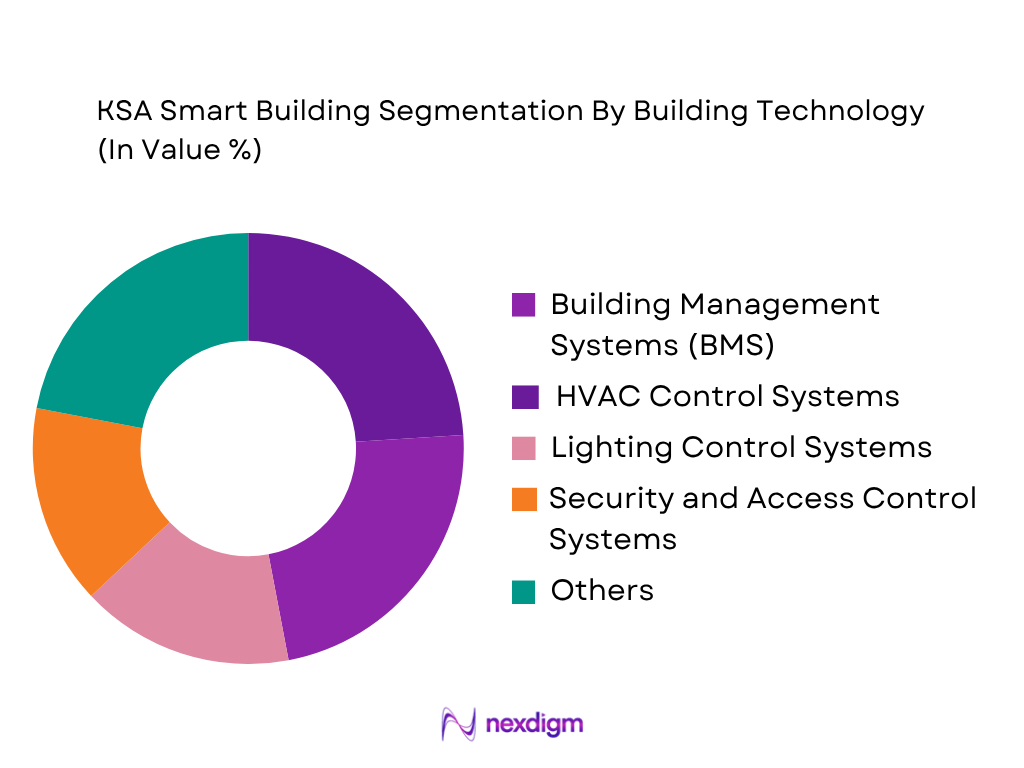
The KSA Smart Building Market is segmented by building technology into building management systems, HVAC automation and controls, intelligent lighting systems, energy management systems, smart metering systems, IoT sensors and connectivity, access control systems, video surveillance systems, fire and life safety systems, and occupancy and space management systems. Building Management Systems are expected to hold the largest share at ~XX% in 2024, reflecting their role as a centralized layer connecting multiple building subsystems. BMS platforms can integrate HVAC, lighting, energy monitoring, alarms, equipment status, and selected security functions, allowing facility operators to monitor and control building assets through a unified interface. Their importance increases in large commercial buildings, hotels, hospitals, airports, government facilities, and mixed-use developments where multiple systems must operate together. Saudi Arabia’s extensive use of centralized cooling and sophisticated MEP infrastructure further increases the importance of automated monitoring and control. HVAC optimization, energy monitoring, occupancy information, and predictive maintenance can also be incorporated into increasingly sophisticated BMS architectures. Other technologies such as IoT sensors, smart meters, intelligent lighting, and access control complement the BMS layer by generating operational data and enabling automated responses.
Competitive Landscape
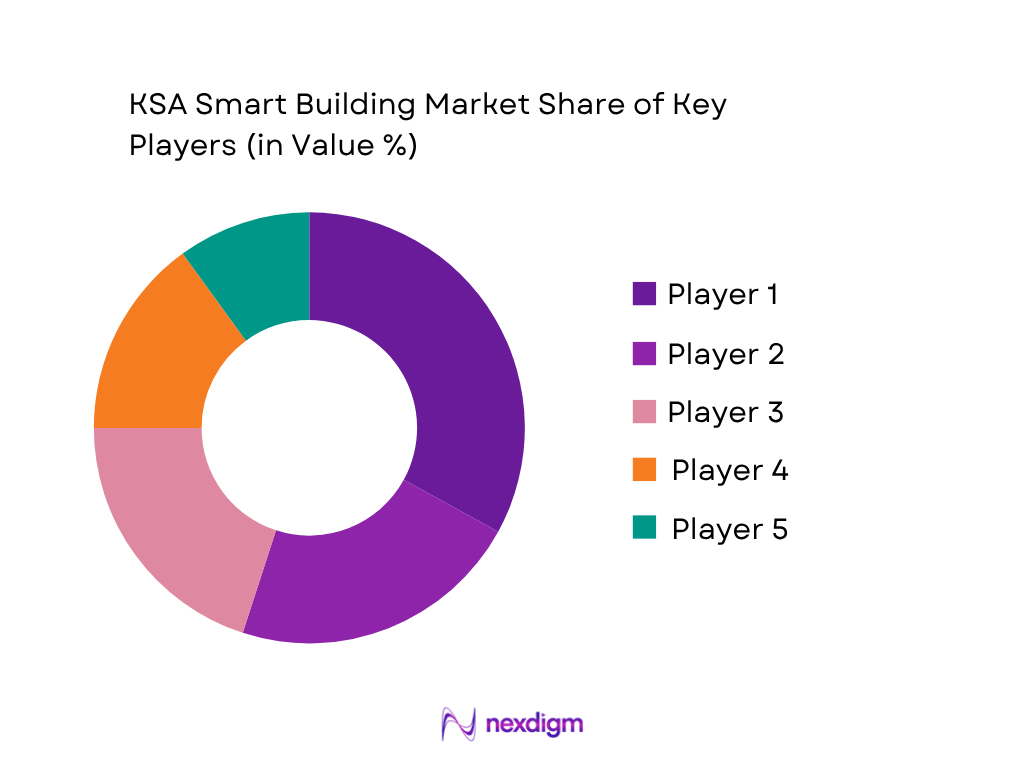
The KSA Smart Building Market includes international building-technology companies, automation specialists, electrical-equipment manufacturers, HVAC technology providers, networking companies, and systems integrators. Competition is shaped by BMS capabilities, HVAC automation, energy-management functionality, IoT integration, cybersecurity, interoperability, project execution, and local technical support. Major international suppliers participate through direct operations, channel partners, technology distributors, engineering contractors, and systems-integration relationships. Large developments also create opportunities for companies capable of integrating multiple building systems rather than supplying individual components.
| Company | Establishment Year | Headquarters | Core Smart Building Offering | BMS Capability | HVAC Automation | IoT & Connectivity | Energy Management | KSA Presence |
| Siemens AG | 1847 | Munich, Germany | ||||||
| Honeywell International Inc. | 1906 | Charlotte, USA | ||||||
| Schneider Electric SE | 1836 | Rueil-Malmaison, France | ||||||
| Johnson Controls International plc | 1885 | Cork, Ireland | ||||||
| ABB Ltd. | 1988 | Zurich, Switzerland |
KSA Smart Building Market Analysis
Growth Drivers
Vision 2030 Smart-City Development and Mega-Project Expansion
The KSA Smart Building Market is being supported by the Kingdom’s broader economic diversification and urban transformation agenda, which is generating demand for connected building infrastructure across commercial, hospitality, residential, transportation, and mixed-use developments. The IMF reported that Saudi Arabia’s non-oil real GDP expanded by 4.5% in 2024, with construction, retail, and hospitality among the sectors supporting non-oil activity. The National Center for Housing annual report recorded more than 60 registered sustainable-building projects and more than 250 million m² of registered sustainable-building area, demonstrating increasing incorporation of energy and water efficiency into the built environment. NEOM’s THE LINE project is planned as a 170 km hyper-connected urban development, with the Saudi government stating that it aims to contribute SAR 180 billion to domestic GDP and create 380,000 jobs by 2030. These developments require centralized building management, IoT connectivity, intelligent HVAC control, automated lighting, occupancy monitoring, digital twins, and integrated facility-management platforms. The Ministry of Commerce also recorded 521,969 newly issued commercial registrations in 2024, compared with 368,038 in 2023, with construction among the leading activities. Together, these indicators demonstrate a substantial pipeline of economic and built-environment activity relevant to smart-building technology adoption.
Energy Efficiency Requirements and Rising Demand for Intelligent HVAC and Facility Management
Energy optimization is a particularly relevant growth driver for the KSA Smart Building Market because building operators require technologies capable of controlling cooling, ventilation, lighting, and other energy-intensive systems under demanding climatic conditions. The World Bank reports 100% access to electricity for Saudi Arabia in 2024 and records electricity consumption at approximately 11,159.7 kWh per capita in its latest available data series, illustrating the scale of electricity dependence within the built environment. The same World Bank dataset records Saudi Arabia’s energy use at approximately 7,959.8 kg of oil equivalent per capita in the corresponding latest observation. In parallel, the IMF reported that Saudi Arabia’s non-oil economy grew 4.5% in 2024, with construction and hospitality contributing to economic activity, expanding the number of facilities requiring operational management. Saudi Arabia’s Housing Program reported more than 250 million m² of registered sustainable-building projects, with sustainability assessment services being automated and integrated with the Ejar platform. These developments create practical applications for building-management systems, smart meters, HVAC optimization, automated lighting, occupancy analytics, predictive maintenance, and centralized energy dashboards. Smart-building technologies can therefore become part of the operational infrastructure required to manage increasingly complex commercial and residential assets.
Market Challenges
High System Integration Complexity and Legacy Building-System Interoperability
The KSA Smart Building Market faces integration challenges because large buildings frequently combine HVAC controls, lighting systems, access control, fire and life-safety equipment, elevators, energy meters, and facility-management platforms from different technology generations and vendors. This increases the engineering requirement for gateways, communication protocols, centralized data models, and cybersecurity controls. The challenge is particularly relevant as Saudi Arabia expands both new developments and modernization of existing assets. The Saudi Ministry of Commerce recorded 1,606,169 active commercial registrations across the Kingdom at the end of 2024, illustrating the broad operating base of commercial establishments requiring technology infrastructure. Its records also show 521,969 new commercial registrations during 2024, indicating continuing additions to the commercial ecosystem. Meanwhile, SAMA reported that non-retail financing momentum in 2024 was concentrated in building and construction and services, while corporate real-estate credit recovered. This combination of new construction and existing asset activity means technology providers must support both greenfield deployments and retrofit environments. For smart-building integrators, interoperability with existing BMS, HVAC controllers, meters, sensors, and security systems can increase commissioning requirements and extend deployment complexity.
Cybersecurity, Data Governance and Specialized Engineering Requirements
Cybersecurity and data governance represent structural challenges for the KSA Smart Building Market because connected buildings continuously generate operational data through sensors, access systems, HVAC controllers, cameras, meters, and IoT gateways. Greater connectivity expands the number of digital interfaces that need authentication, monitoring, patching, and access controls. The requirement becomes more significant as Saudi Arabia expands digital infrastructure and smart-city applications across large developments. The Saudi Central Bank reported that Saudi Arabia’s banking and financial system maintained strong capitalization and that credit continued expanding in 2024, while the Ministry of Commerce recorded 65,965 newly registered limited-liability companies and 70,548 new owners of such companies in 2024, reflecting continuing business formation and technology demand. At the national infrastructure level, the World Bank reports 100% electricity access in 2024, emphasizing the dependence of buildings and connected systems on reliable digital and physical infrastructure. Smart-building operators must consequently address cybersecurity architecture alongside conventional building engineering. Integration teams require expertise across OT systems, IT networks, cloud platforms, IoT devices, HVAC controls, and building-management software. These requirements can increase implementation complexity, particularly where multiple vendors must exchange data securely while maintaining continuous building operations.
Market Opportunities
Smart Building Retrofit Programs and AI-Based Energy Optimization
Retrofit activity provides an opportunity for the KSA Smart Building Market because existing buildings can adopt connected controls without requiring complete replacement of their physical infrastructure. Building owners can progressively introduce smart meters, IoT sensors, HVAC optimization, occupancy analytics, automated lighting, predictive maintenance, and centralized energy-management platforms. The Housing Program’s 2024 annual report recorded more than 60 registered sustainable-building projects and more than 250 million m² of registered sustainable-building area, while its sustainability program automated assessment services and integrated them with the Ejar platform. The World Bank records 100% electricity access in Saudi Arabia and approximately 11,159.7 kWh of electricity consumption per capita in its latest available series, indicating substantial electricity use that can be managed through intelligent building controls. The IMF reported 4.5% non-oil real GDP growth in 2024, with construction and hospitality supporting activity, expanding the operational base for technology-enabled buildings. These conditions create an addressable environment for AI-assisted HVAC optimization, digital energy dashboards, automated fault detection, predictive maintenance, and occupancy-based control. Retrofit solutions can also allow property owners to phase investments across individual buildings, floors, equipment systems, or campuses rather than undertaking a single large-scale technology replacement.
Digital Twins, Connected Hospitality and Data-Center Automation
Digital twins and connected infrastructure represent another opportunity for the KSA Smart Building Market as major developments require real-time visibility across increasingly complex physical assets. Saudi Arabia’s economic diversification is creating demand across hospitality, construction, services, transportation, and technology-intensive facilities. The IMF reported that non-oil real GDP grew 4.5% in 2024, specifically identifying construction, retail, and hospitality as contributors to non-oil activity. NEOM’s THE LINE is planned as a 170 km hyper-connected development, providing a high-profile use case for integrated digital infrastructure, automated building systems, intelligent mobility interfaces, and real-time operational data. The Housing Program reported 250 million m² of registered sustainable-building projects, reinforcing the movement toward digitally supported building-performance management. Digital twins can connect BIM models, BMS data, IoT sensors, HVAC equipment, energy meters, maintenance records, and occupancy information to provide a unified operational representation of buildings and districts. Similar technologies can support data centers through equipment monitoring, environmental control, predictive maintenance, and power-management applications. Connected hospitality properties can use these capabilities for room automation, centralized HVAC management, water monitoring, asset maintenance, and facility operations. These applications provide multiple pathways for smart-building technology providers beyond conventional automation installations.
Future Outlook
Over the next decade, the KSA Smart Building Market is expected to develop around connected building infrastructure, intelligent energy management, automated HVAC operation, AI-enabled analytics, digital twins, predictive maintenance, and cybersecurity. New developments will increasingly incorporate smart infrastructure during the design and construction stage, while existing commercial and institutional buildings create opportunities for retrofit solutions. The expansion of digitally managed hospitality, healthcare, transportation, government, industrial, and mixed-use assets should increase demand for integrated building-management platforms. Smart-building deployment is also expected to move toward interoperable systems capable of connecting equipment from multiple technology suppliers.
Major Players
- Siemens AG
- Honeywell International Inc.
- Schneider Electric SE
- Johnson Controls International plc
- ABB Ltd.
- Legrand SA
- Trane Technologies plc
- Lutron Electronics Co., Inc.
- Crestron Electronics, Inc.
- Delta Controls
- KMC Controls
- Emerson Electric Co.
- Cisco Systems, Inc.
- Distech Controls
- Huawei Technologies Co., Ltd.
Key Target Audience
- Commercial Property Developers and Building Owners
- Facility Management and Integrated Facilities Management Companies
- Real Estate Investment and Asset Management Firms
- Investments and Venture Capitalist Firms
- Government and Regulatory Bodies (Saudi Energy Efficiency Center, Ministry of Municipalities and Housing, Saudi Standards, Metrology and Quality Organization, Civil Defense)
- Hospitality and Hotel Developers
- Healthcare and Institutional Facility Operators
- Data Center, Industrial and Infrastructure Operators
Research Methodology
Step 1: Identification of Key Variables
The initial phase involves constructing an ecosystem map encompassing smart building technology providers, systems integrators, property developers, facility managers, MEP contractors, technology distributors, and building owners within the KSA Smart Building Market. The assessment identifies variables covering BMS deployment, HVAC automation, intelligent lighting, energy management, IoT connectivity, security systems, building type, and new-build versus retrofit activity.
Step 2: Market Analysis and Construction
In this phase, historical information pertaining to the KSA Smart Building Market is compiled across hardware, software, integration, and services. The analysis evaluates building technology deployments, connected-device adoption, BMS installations, HVAC automation requirements, smart-meter integration, and demand across commercial, hospitality, healthcare, government, industrial, residential, and infrastructure buildings.
Step 3: Hypothesis Validation and Expert Consultation
Market hypotheses are validated through discussions with building automation manufacturers, technology suppliers, systems integrators, facility-management companies, MEP contractors, property developers, and building operators. These consultations are used to assess technology adoption, project specifications, integration requirements, procurement practices, retrofit demand, and competitive positioning within the KSA Smart Building Market.
Step 4: Research Synthesis and Final Output
The final phase triangulates information obtained from company disclosures, government publications, construction and infrastructure data, technology documentation, project information, and industry interviews. The resulting analysis reconciles bottom-up deployment estimates with demand-side and supply-side indicators to establish the market structure, segmentation, competitive landscape, and future development framework.

- Executive Summary
- Research Methodology (Market Definitions and Assumptions, KSA Smart Building Market Scope, Smart Building Technology Classification, Building Automation System Mapping, HVAC Automation Assessment, Intelligent Lighting Evaluation, Energy Management System Assessment, IoT Sensor and Connectivity Analysis, Building Management Software Assessment, Access Control and Security System Evaluation, Fire and Life Safety Integration, Occupancy and Space Management Assessment, Smart Metering Analysis, Cloud and Edge Computing Architecture, AI and Predictive Analytics Assessment, Digital Twin Deployment Assessment, New-Build and Retrofit Assessment, Demand-Side Assessment, Supply-Side Assessment, Top-Down Market Sizing, Bottom-Up Market Sizing, Primary Industry Interviews, Data Triangulation, Forecasting Framework, Market Limitations)

- Definition and Scope
- KSA Smart Building Industry Evolution and Development of Building Automation Systems, HVAC Controls, Intelligent Lighting, Energy Management Platforms, IoT-Enabled Building Infrastructure, Connected Security Systems, Smart Metering, Cloud-Based Building Management, AI-Enabled Facility Management, Digital Twin Applications, Predictive Maintenance, Smart Building Analytics, Integrated Command Centers, Net-Zero Building Technologies and Connected Building Operations
- Smart Building Value Chain Analysis
- Smart Building Supply Chain Analysis

- Growth Drivers (Vision 2030 Smart-City Development, NEOM and Mega-Project Development, Commercial Real Estate Expansion, Energy Efficiency Requirements, Rising HVAC Optimization Demand, Government Digital Transformation, IoT Infrastructure Expansion, Hospitality Development, Data Center Development, Building Modernization, Intelligent Facility Management Adoption)
- Market Challenges (High System Integration Complexity, Legacy Building-System Interoperability, Cybersecurity Requirements, Specialized Engineering Requirements, Fragmented Technology Protocols, Retrofit Constraints, Long Building Asset Replacement Cycles, Data Governance Requirements, High HVAC System Dependence, Complex Multi-Vendor Integration)|
- Market Opportunities (Smart Building Retrofit Programs, AI-Based Energy Optimization, Digital Twin Deployment, Predictive Maintenance, Smart HVAC Systems, Integrated Energy Management Platforms, Connected Hospitality Infrastructure, Data Center Automation, Smart Building Cybersecurity, IoT-Based Occupancy Analytics, Intelligent Water Management, Smart Building-as-a-Service, Net-Zero Building Management)
- Market Trends (AI-Enabled Building Optimization, Cloud-Based BMS, Digital Twins, Predictive Maintenance, Open-Protocol Building Automation, IoT Sensor Deployment, Smart HVAC Controls, Intelligent Lighting, Occupancy Analytics, Integrated Facility Management, Connected Security, Edge Computing, Building Cybersecurity, Automated Energy Optimization)
- Government Regulations and Standards (Saudi Building Code SBC 601 Energy Conservation, Saudi Building Code SBC 602 Energy Conservation, Saudi Energy Efficiency Center Requirements, Saudi Standards Specifications and Quality Organization Requirements, Civil Defense Fire and Life Safety Requirements, Building Energy Performance Requirements, Thermal Insulation Requirements, HVAC Efficiency Requirements, Smart Metering Requirements, Data and Cybersecurity Requirements)
- SWOT Analysis
- Porter’s Five Forces Analysis
- PESTLE Analysis
- Stakeholder Ecosystem
- Competition Ecosystem

- By Market Value (2020-2025)
- By Number of Smart Buildings (2020-2025)
- By Connected Building Devices (2020-2025)
- By Building Automation System Deployments (2020-2025)
- By Smart Building Technology Installation Volume (2020-2025)
- By New-Build Smart Building Deployments (2020-2025)

- By Component (In Value %)
Smart Building Hardware
Smart Building Software
Smart Building Services - By Building Technology (In Value %)
Building Management Systems
HVAC Automation and Controls
Intelligent Lighting Systems
Energy Management Systems
Smart Metering Systems
IoT Sensors and Connectivity
Access Control Systems
Video Surveillance Systems
Fire and Life Safety Systems
Occupancy and Space Management Systems - By Building Type (In Value %)
Commercial Offices
Retail and Shopping Centers
Hotels and Hospitality Buildings
Residential Buildings
Healthcare Facilities
Educational Institutions
Government Buildings
Industrial Facilities
Data Centers
Transportation Facilities
Mixed-Use Developments - By Application (In Value %)
Energy Management
HVAC Optimization
Intelligent Lighting
Security and Surveillance
Access Control
Fire and Life Safety
Indoor Air Quality Monitoring
Occupancy and Space Optimization
Water Management
Predictive Maintenance
Facility Management - By Deployment Model (In Value %)
New Construction
Existing Building Retrofit
Building Modernization
Smart Building-as-a-Service
Cloud-Based Smart Building Deployment
On-Premise Smart Building Deployment
Hybrid Smart Building Deployment

- Market Share of Major Players (By KSA Revenue, Building Automation Revenue, Hardware Revenue, Software Revenue, Services Revenue, BMS Deployments, HVAC Automation Deployments, Intelligent Lighting Deployments, Energy Management Deployments, Security Integration, IoT Integration, Project Portfolio, Distribution Reach, Systems Integration Capability, Technical Support Capability)
- Cross Comparison Parameters (BMS Platform Integration Capability, HVAC Automation and Chiller Plant Optimization, Energy Management and Smart Meter Integration, IoT Sensor and Connectivity Portfolio, Open Protocol and Interoperability Capability, AI Analytics and Predictive Maintenance Capability, Cybersecurity and OT Security Capability, KSA Project Execution and After-Sales Support)
- SWOT Analysis of Major Players
- Detailed Profiles of Major Companies
Siemens AG
Honeywell International Inc.
Schneider Electric SE
Johnson Controls International plc
ABB Ltd.
Legrand SA
Trane Technologies plc
Lutron Electronics Co., Inc.
Crestron Electronics, Inc.
Delta Controls
KMC Controls
Emerson Electric Co.
Cisco Systems, Inc.
Distech Controls
Huawei Technologies Co., Ltd.

- Building Owner Smart Technology Requirement Assessment
- Commercial Property Energy Management Assessment
- Facility Management Technology Requirement Analysis
- HVAC Automation and Optimization Requirement Assessment
- Smart Security and Access Control Requirement Analysis
- Building Retrofit Technology Demand Assessment
- Hospitality Smart Room and Facility Requirement Analysis

- By Market Value (2026-2035)
- By Number of Smart Buildings (2026-2035)
- By Connected Building Devices (2026-2035)
- By Building Automation System Deployments (2026-2035)
- By Smart Building Technology Installation Volume (2026-2035)
- By New-Build Smart Building Deployments (2026-2035)


 Request a Sample
 Ask for Customization
 Get a Quote
 Enquire Now
