
 Download PDF
Market Overview
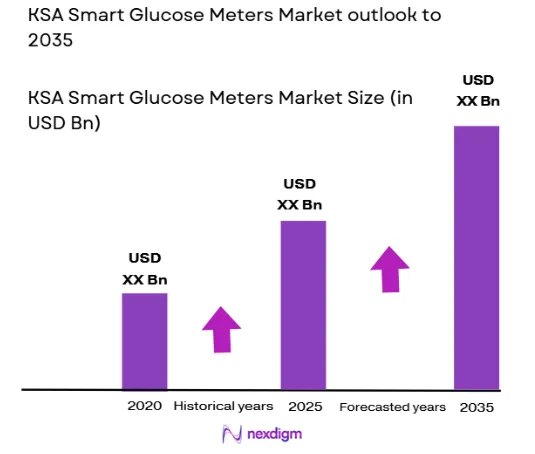
The KSA Smart Glucose Meters market reached approximately USD ~ billion in market value based on a recent historical assessment supported by data from diabetes technology adoption studies and regional healthcare expenditure reviews. Market expansion is primarily driven by increasing diabetes prevalence, growing awareness of continuous glucose monitoring, and rising demand for connected healthcare devices. Expanding digital health initiatives and the integration of smartphone-enabled monitoring solutions have further strengthened the adoption of smart glucose monitoring systems across healthcare facilities and homecare settings.
Major metropolitan healthcare ecosystems such as Riyadh, Jeddah, and Dammam dominate the KSA Smart Glucose Meters market due to advanced hospital infrastructure, strong digital health initiatives, and high concentrations of specialized diabetes care centers. These cities host major tertiary hospitals and private healthcare networks that actively adopt smart diagnostic technologies. The presence of established distribution networks, better insurance coverage for chronic disease management, and strong government-backed healthcare modernization programs further reinforce technology adoption across these urban healthcare hubs.
Market Segmentation
By System Type
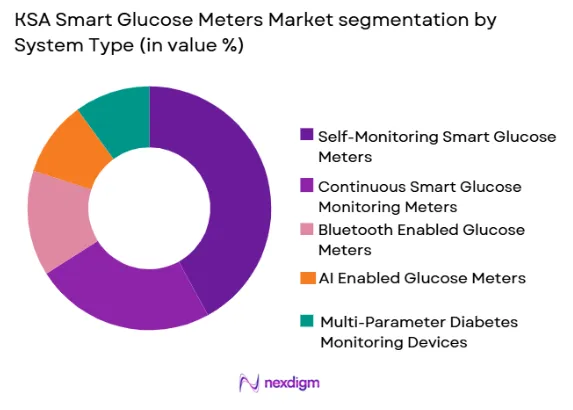
KSA Smart Glucose Meters market is segmented by system type into self-monitoring smart glucose meters, continuous smart glucose monitoring meters, Bluetooth enabled glucose meters, AI enabled glucose meters, and multi-parameter diabetes monitoring devices. Recently, self-monitoring smart glucose meters have a dominant market share due to their affordability, widespread physician familiarity, strong retail availability, and compatibility with homecare treatment models. The presence of test strip ecosystems, reimbursement familiarity, and ease of use among elderly diabetic populations has also reinforced adoption. Hospitals continue recommending these devices due to proven clinical accuracy and low learning barriers. Continuous monitoring devices are expanding but remain cost sensitive. AI enabled and multi-parameter devices are emerging but still limited to premium patient groups. Overall, accessibility, cost efficiency, and existing clinical protocols make self-monitoring smart meters the leading category.
By Platform Type
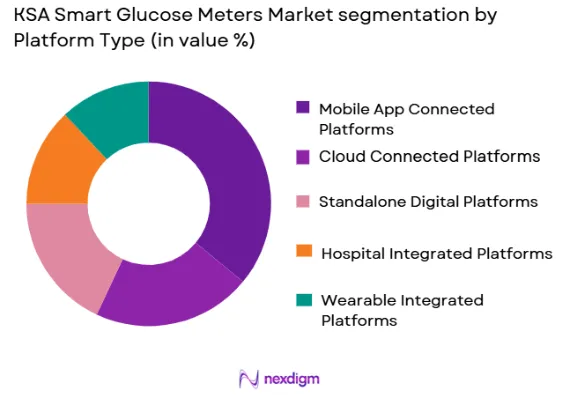
KSA Smart Glucose Meters market is segmented by platform type into mobile app connected platforms, cloud connected platforms, standalone digital platforms, hospital integrated platforms, and wearable integrated platforms. Recently, mobile app connected platforms have a dominant market share due to strong smartphone penetration, patient preference for real-time tracking, and integration with digital health applications. Mobile integration allows easier physician consultations and remote data sharing, supporting telemedicine growth. Cloud platforms are growing with hospital adoption but require stronger data governance. Standalone systems remain relevant among price-sensitive consumers. Hospital integrated platforms are limited to institutional procurement cycles. Wearable platforms are expanding but remain premium priced. Smartphone ecosystem compatibility and user familiarity therefore position mobile platforms as the dominant digital interface for smart glucose monitoring adoption.
Competitive Landscape
The KSA Smart Glucose Meters market is moderately consolidated and dominated by global diabetes technology manufacturers that maintain strong partnerships with regional distributors and healthcare providers. International medical device companies play a major role in introducing advanced monitoring technologies, including continuous glucose monitoring sensors and smartphone-integrated platforms. Competitive strategies focus on improving sensor accuracy, extending device battery life, and integrating artificial intelligence-based analytics to enhance patient outcomes. Local distributors also play a critical role in device supply, regulatory compliance, and hospital procurement partnerships.
| Company Name | Establishment Year | Headquarters | Technology Focus | Market Reach | Key Products | Revenue | Connected Device Capability |
| Abbott Diabetes Care | 1888 | United States | ~ | ~ | ~ | ~ | ~ |
| Roche Diabetes Care | 1896 | Switzerland | ~ | ~ | ~ | ~ | ~ |
| Medtronic Diabetes | 1949 | United States | ~ | ~ | ~ | ~ | ~ |
| Dexcom Inc | 1999 | United States | ~ | ~ | ~ | ~ | ~ |
| Ascensia Diabetes Care | 2016 | Switzerland | ~ | ~ | ~ | ~ | ~ |
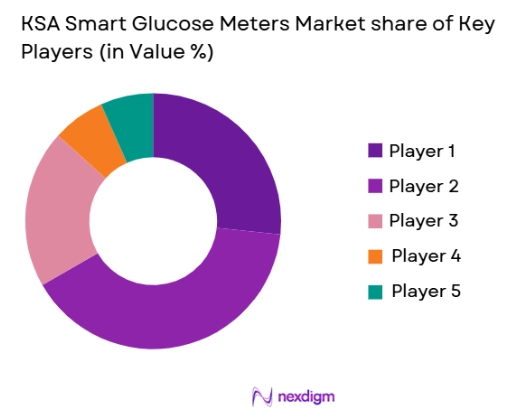
KSA Smart Glucose Meters Market Analysis
Growth Drivers
Rising Diabetes Prevalence Across Saudi Arabia Driving Demand for Continuous Monitoring
Saudi Arabia continues to experience a significant diabetes burden, directly accelerating demand for continuous glucose monitoring (CGM) systems. According to the International Diabetes Federation, the number of adults living with diabetes in Saudi Arabia reached 4,274,100 individuals in 2023, placing the country among the top 10 globally. This is reinforced by demographic and macroeconomic indicators: the World Bank reports Saudi Arabia’s population reached 36,947,000 in 2024, with urban population exceeding 31,000,000, increasing lifestyle-related diseases. Additionally, IMF data shows GDP per capita stood at USD 32,500 in 2024, supporting higher healthcare spending capacity. The Saudi Ministry of Health recorded over 2,200,000 outpatient visits linked to diabetes management in 2023, highlighting sustained monitoring needs. Increasing life expectancy, recorded at 77.9 years in 2024 (World Bank), further intensifies chronic disease management, making continuous monitoring devices essential for long-term care. These combined epidemiological and macroeconomic indicators strongly justify increased adoption of CGM technologies across the healthcare system.
Increasing Adoption of Remote Patient Monitoring Solutions
Remote patient monitoring (RPM) adoption is accelerating due to Saudi Arabia’s expanding digital infrastructure and healthcare demand. The World Bank reports mobile cellular subscriptions reached 172 per 100 people in 2024, translating to over 63,000,000 connections, enabling widespread use of connected health devices. Saudi Arabia’s healthcare workforce exceeded 350,000 professionals in 2023 (Ministry of Health), creating a strong base for digital patient management. Additionally, over 25,000,000 e-health transactions were recorded annually between 2022 and 2024, reflecting increasing reliance on digital care. IMF data highlights healthcare spending stability supported by oil revenues exceeding USD 200,000,000,000 in 2024, ensuring sustained funding for RPM technologies. Aging population trends, with individuals aged 60+ surpassing 2,000,000 in 2024 (World Bank), further increase chronic disease monitoring needs. These indicators collectively demonstrate a strong foundation for RPM adoption, directly driving demand for continuous glucose monitoring systems integrated with remote healthcare platforms.
Market Challenges
High Cost of Advanced Continuous Glucose Monitoring Systems
Despite strong demand drivers, high costs of advanced CGM systems remain a key barrier in Saudi Arabia. While IMF data shows GDP per capita reached USD 32,500 in 2024, income distribution disparities persist, with World Bank data indicating that over 20% of the population falls within lower-income brackets relative to urban cost of living. Healthcare expenditure per capita stood at approximately USD 1,400 in 2023 (World Bank), which must cover a wide range of services, limiting affordability for premium monitoring devices. Additionally, Saudi Arabia imports over USD 12,000,000,000 worth of medical devices annually (General Authority for Statistics, 2023), increasing dependency on foreign technology and associated costs. Inflation in healthcare services, recorded at 3.4 index growth in 2024 (GASTAT), further pressures affordability. These economic constraints reduce accessibility to advanced CGM systems, particularly for uninsured or lower-income populations, slowing widespread adoption despite strong clinical need.
Limited Reimbursement Coverage for Smart Monitoring Devices
Limited reimbursement frameworks for advanced monitoring devices present a structural challenge in Saudi Arabia’s healthcare system. Although total health expenditure reached SAR 222,000,000,000 in 2024, a significant portion is allocated to hospital infrastructure and workforce rather than device reimbursement (Ministry of Finance). The World Bank reports out-of-pocket healthcare expenditure accounted for USD 17,000,000,000 in 2023, indicating patients still bear substantial costs. Public insurance coverage expansion remains ongoing, with over 11,000,000 insured individuals under the Council of Cooperative Health Insurance in 2024, leaving gaps in advanced device coverage. Additionally, IMF fiscal reports highlight prioritization of large-scale infrastructure projects over specialized reimbursement programs. This imbalance limits accessibility to CGM devices, particularly for middle-income groups. As a result, despite strong healthcare funding, reimbursement limitations continue to restrict adoption of smart monitoring technologies across broader patient populations.
Market Opportunities
Expansion of Telemedicine Creating Demand for Connected Monitoring Devices
The rapid expansion of telemedicine in Saudi Arabia presents a major opportunity for connected CGM devices. The Ministry of Health reported over 30,000,000 teleconsultations conducted between 2022 and 2024 through national platforms. Internet penetration reached 99% in 2024, covering over 36,000,000 individuals (CST), enabling seamless remote care delivery. The World Bank indicates fixed broadband subscriptions exceeded 8,500,000 in 2024, supporting high-speed data transmission for real-time monitoring. Additionally, Saudi Arabia’s urban population surpassed 31,000,000, increasing demand for convenient healthcare access. Government digital health investments exceeding SAR 15,000,000,000 annually further strengthen telemedicine infrastructure. These indicators demonstrate a robust ecosystem for integrating CGM devices with telehealth platforms, enabling continuous patient monitoring, improved disease management, and reduced hospital visits, thereby driving future growth of connected monitoring solutions.
Localization of Medical Device Manufacturing Within Saudi Arabia
Localization of medical device manufacturing under Vision 2030 offers strong growth potential for the CGM market. Saudi Arabia imported medical devices worth over USD 12,000,000,000 in 2023 (GASTAT), highlighting dependence on external suppliers and opportunity for domestic production. The National Industrial Development and Logistics Program reported over SAR 1,000,000,000 allocated to healthcare manufacturing initiatives in 2024. Additionally, IMF data shows industrial sector contribution exceeded USD 150,000,000,000 in 2024, supporting diversification efforts. The Saudi Food and Drug Authority approved over 1,500 new medical device registrations between 2022 and 2024, reflecting regulatory expansion. Workforce development is also progressing, with over 2,000,000 individuals employed in industrial sectors (World Bank, 2024). These indicators collectively support local manufacturing capabilities, reducing import dependency, improving supply chain efficiency, and enabling cost-effective production of CGM devices, thereby accelerating long-term market growth.
Future Outlook
The KSA Smart Glucose Meters market is expected to experience steady expansion over the next five years as healthcare digitalization and chronic disease management programs continue to evolve. Technological advancements in biosensor accuracy, artificial intelligence-based analytics, and smartphone connectivity will significantly enhance device capabilities. Government healthcare modernization initiatives and increasing investments in digital health infrastructure will support wider adoption of remote monitoring technologies. Growing patient awareness and improved accessibility through retail and online channels will further strengthen demand for smart glucose monitoring devices across Saudi Arabia.
Major Players
- Abbott Diabetes Care
- Roche Diabetes Care
- Medtronic Diabetes
- Dexcom Inc
- Ascensia Diabetes Care
- LifeScan Inc
- Terumo Medical Corporation
- Sinocare Inc
- i-SENS Inc
- AgaMatrix Inc
- Bionime Corporation
- Trividia Health Inc
- Ypsomed AG
- Nova Biomedical
- GlucoRx Limited
Key Target Audience
- Medical device manufacturers
- Pharmaceutical companies focused on diabetes care
- Hospital procurement departments
- Private healthcare networks
- Digital health technology providers
- Insurance providers and healthcare payers
- Investments and venture capitalist firms
- Government and regulatory bodies
Research Methodology
Step 1: Identification of Key Variables
Primary market variables including device adoption rates, healthcare expenditure, diabetes prevalence, and digital health infrastructure were identified through industry publications, government healthcare reports, and healthcare technology databases.
Step 2: Market Analysis and Construction
Comprehensive analysis was conducted using historical healthcare spending data, device shipment information, and diabetes management program adoption patterns to construct an accurate representation of the KSA Smart Glucose Meters market.
Step 3: Hypothesis Validation and Expert Consultation
Industry experts, healthcare professionals, and device distributors were consulted to validate assumptions related to device adoption, regulatory dynamics, and evolving technology trends influencing the smart glucose monitoring ecosystem.
Step 4: Research Synthesis and Final Output
All collected data was synthesized using analytical frameworks to generate structured insights regarding market structure, segmentation trends, competitive dynamics, and long-term opportunities within the KSA Smart Glucose Meters market.

- Executive Summary
- Research Methodology (Definitions, Scope, Industry Assumptions, Market Sizing Approach, Primary & Secondary Research Framework, Data Collection & Verification Protocol, Analytic Models & Forecast Methodology, Limitations & Research Validity Checks)

- Market Definition and Scope
- Value Chain & Stakeholder Ecosystem
- Regulatory / Certification Landscape
- Sector Dynamics Affecting Demand
- Strategic Initiatives & Infrastructure Growth

- Growth Drivers
Rising diabetes prevalence across Saudi Arabia driving demand for continuous monitoring
Government digital healthcare transformation initiatives under Vision programs
Increasing adoption of remote patient monitoring solutions
Growing awareness of preventive diabetes management
Technological advancements in AI enabled glucose tracking devices - Market Challenges
High cost of advanced continuous glucose monitoring systems
Limited reimbursement coverage for smart monitoring devices
Data privacy concerns related to connected health devices
Patient resistance toward wearable monitoring devices
Supply chain dependency on imported medical electronics - Market Opportunities
Expansion of telemedicine creating demand for connected monitoring devices
Localization of medical device manufacturing within Saudi Arabia
Integration of glucose monitoring with broader digital health ecosystems - Trends
Integration of AI driven predictive glucose alerts
Growth of smartphone synchronized monitoring apps
Shift toward minimally invasive and painless monitoring technologies
Subscription based glucose monitoring service models
Increasing partnerships between device makers and digital health firms - Government Regulations & Defense Policy
Saudi FDA regulations for digital medical device approvals
National diabetes prevention programs supporting monitoring adoption
Data protection regulations governing connected healthcare devices - SWOT Analysis
- Stakeholder and Ecosystem Analysis
- Porter’s Five Forces Analysis
- Competition Intensity and Ecosystem Mapping

- By Market Value, 2020-2025
- By Installed Units, 2020-2025
- By Average System Price, 2020-2025
- By System Complexity Tier, 2020-2025

- By System Type (In Value%)
Self-Monitoring Blood Glucose Smart Meters
Continuous Glucose Monitoring Integrated Smart Meters
Bluetooth Enabled Glucose Monitoring Devices
AI Enabled Predictive Glucose Monitoring Systems
Multi Parameter Smart Diabetes Monitoring Devices - By Platform Type (In Value%)
Mobile App Connected Devices
Cloud Connected Monitoring Platforms
Standalone Digital Meter Platforms
Hospital Information System Integrated Platforms
Wearable Device Integrated Platforms - By Fitment Type (In Value%)
Handheld Portable Devices
Wearable Patch Sensors
Arm Mounted Monitoring Devices
Smartwatch Integrated Monitoring Devices
Implantable Glucose Sensors - By EndUser Segment (In Value%)
Hospitals and Diabetes Specialty Clinics
Homecare Patients
Diagnostic Laboratories
Telehealth Monitoring Providers
Corporate Healthcare Programs - By Procurement Channel (In Value%)
Direct Hospital Procurement
Retail Pharmacies
Online Medical Device Platforms
Government Healthcare Tenders
Distributor and Dealer Networks - By Material / Technology (in Value %)
Electrochemical Biosensor Technology
Optical Glucose Sensing Technology
Enzymatic Test Strip Technology
Nanotechnology Based Sensors
AI Enabled Predictive Monitoring Software

- Market structure and competitive positioning
- Market share snapshot of major players
- Cross Comparison Parameters (Product Portfolio Breadth, CGM Technology Capability, AI Integration Level, Regional Distribution Strength, Pricing Strategy, Regulatory Certifications, R&D Investment, Digital Platform Integration, After Sales Support Network, Strategic Partnerships)
- SWOT Analysis of Key Players
- Pricing & Procurement Analysis
- Key Players
Roche Diabetes Care
Abbott Diabetes Care
Medtronic Diabetes
Dexcom Inc
Ascensia Diabetes Care
LifeScan Inc
Terumo Medical Corporation
Sinocare Inc
i-SENS Inc
AgaMatrix Inc
Bionime Corporation
Trividia Health Inc
Ypsomed AG
GlucoRx Limited
Nova Biomedical

- Hospitals adopting integrated glucose monitoring within electronic medical records
- Homecare users driving volume demand due to chronic diabetes management
- Telehealth providers utilizing smart meters for remote patient tracking
- Corporate wellness programs adopting glucose screening for employee health

- By Market Value, 2020-2025
- By Installed Units, 2020-2025
- By Average System Price, 2020-2025
- By System Complexity Tier, 2020-2025


 Request a Sample
 Ask for Customization
 Get a Quote
 Enquire Now