
 Download PDF
 Download PDF
Market Overview
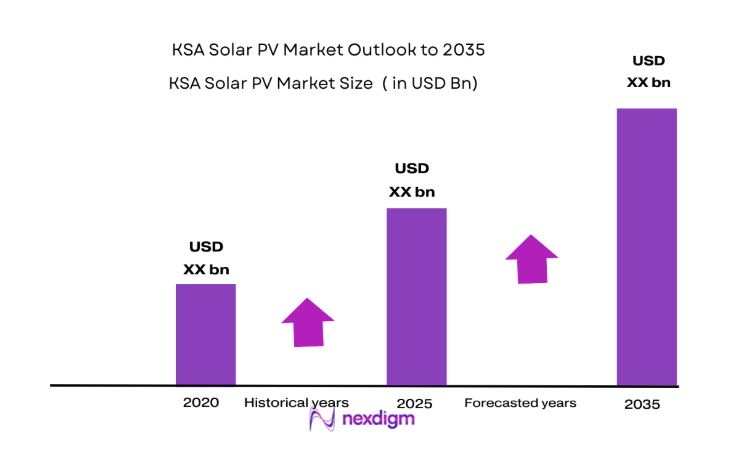
The KSA Solar PV market has shown substantial growth driven by favorable government policies and increasing investments in renewable energy infrastructure. The market size, based on recent historical assessments, is expected to reach a value of USD ~ billion, reflecting the rising demand for clean energy and the Kingdom’s ambitious targets to reduce carbon emissions. This growth is further propelled by technological advancements in solar photovoltaic systems and incentives for solar energy developers, making solar power an increasingly attractive option for energy generation.
The Kingdom of Saudi Arabia, with cities such as Riyadh and Jeddah, is leading the solar PV market due to its vast desert landscapes and high levels of sunlight, making it an ideal location for solar power generation. The country has committed to diversifying its energy sources and reducing dependency on fossil fuels, with solar energy playing a central role in achieving its Vision 2030 goals. Additionally, strategic initiatives like the National Renewable Energy Program are further driving growth, making Saudi Arabia a key player in the region’s renewable energy landscape.
Market Segmentation
By System Type:
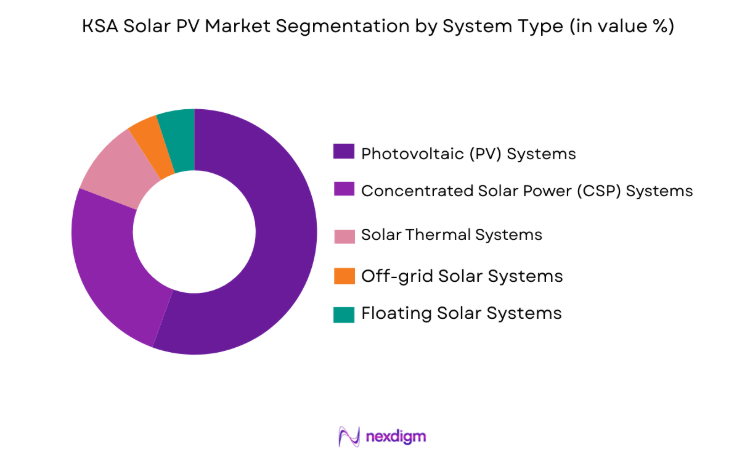
The KSA Solar PV market is segmented by system type into photovoltaic (PV) systems, concentrated solar power (CSP) systems, and solar thermal systems. Among these, PV systems dominate the market due to the rapidly decreasing cost of photovoltaic technology and the increasing demand for grid-connected solar solutions in both urban and rural areas. The KSA government’s focus on PV for large-scale utility projects, residential applications, and commercial installations has further accelerated its adoption.
By Platform Type:
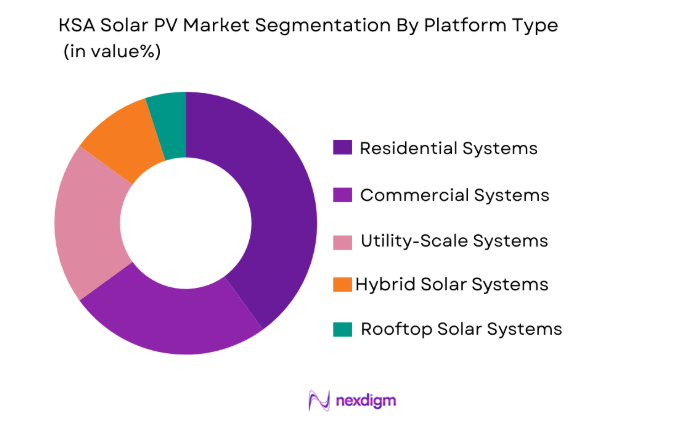
The KSA Solar PV market is segmented by platform type into residential systems, commercial systems, utility-scale systems, hybrid solar systems, and rooftop solar systems. The residential systems sub-segment is leading the market share due to increasing consumer awareness of renewable energy benefits, government incentives, and a strong push for energy independence. The affordability of rooftop solar systems and the availability of financing options are further contributing to this dominance.
Competitive Landscape
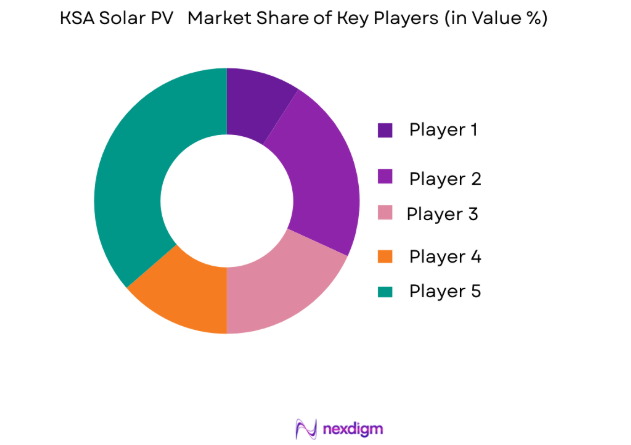
The competitive landscape of the KSA Solar PV market is characterized by a mix of domestic and international players. Key players are actively involved in utility-scale solar projects, and their influence is increasing due to collaborations with the government and local developers. The market is witnessing significant consolidation, with larger companies acquiring smaller firms to expand their project portfolios and service capabilities.
| Company Name | Establishment Year | Headquarters | Technology Focus | Market Reach | Key Products | Revenue (USD) | Key Strategic Initiative |
| First Solar | 1999 | USA | ~ | ~
|
~ | ~ | ~ |
| JinkoSolar | 2006 | China | ~ | ~ | ~ | ~ | ~ |
| Trina Solar | 1997 | China | ~ | ~ | ~ | ~ | ~ |
| Hanwha Q Cells | 1999 | South Korea | ~ | ~ | ~ | ~ | ~ |
| LG Electronics | 1958 | South Korea | ~ | ~ | ~ | ~ | ~ |
KSA Solar PV Market Analysis
Growth Drivers
Government Support for Renewable Energy:
The Saudi government’s commitment to achieving a 50% renewable energy target by 2030 is a significant driver for the growth of the solar PV market. The creation of policies such as the National Renewable Energy Program and initiatives like the Renewable Energy Project Development Office (REPDO) have attracted both domestic and international investments. Furthermore, subsidies and incentives for solar energy developers make projects more financially feasible. These initiatives are designed to stimulate solar energy production and consumption, ensuring that solar power plays a central role in the country’s energy mix, contributing significantly to the country’s economic diversification goals under Vision 2030. The favorable regulatory environment and the government’s aggressive energy diversification goals create a stable investment climate for solar PV in Saudi Arabia.
Technological Advancements in Solar PV:
Technological advancements in photovoltaic systems are another major growth driver for the solar PV market. Innovations in solar panel efficiency, storage solutions, and integration with grid systems are making solar power more accessible and cost-effective. The rise of bifacial solar panels, which capture sunlight from both sides, and advancements in energy storage technologies like lithium-ion batteries, are enhancing the performance and reliability of solar energy. As technology continues to evolve, solar PV will become more integrated into the grid, enabling it to contribute to both off-grid and grid-connected applications. These advancements not only lower the costs of solar energy but also enhance its attractiveness to commercial and residential customers.
Market Challenges
High Initial Capital Investment:
One of the significant challenges faced by the KSA Solar PV market is the high initial capital investment required for solar projects. The cost of purchasing and installing solar systems remains a barrier to entry for many businesses and residential consumers despite the government’s incentives and subsidies. Large-scale solar projects, in particular, require significant upfront investments in infrastructure, which may deter smaller developers and investors. The substantial initial costs of solar installations, along with the financial barriers that still exist for financing renewable energy projects, present a challenge for widespread adoption. Although the cost of solar technology has been decreasing, the financial commitment required to install solar systems can still be a daunting hurdle for many potential market participants, especially in less urbanized areas.
Regulatory Delays and Permitting Issues:
While the government has created an attractive regulatory environment for solar projects, delays in obtaining permits and regulatory approvals can hinder the growth of the solar PV market. These delays can result in missed opportunities for developers and create uncertainty for investors. The long permitting process, coupled with local regulatory complexities, can delay project timelines and inflate costs. Additionally, inconsistencies in the approval process across various regions of Saudi Arabia may contribute to inefficiencies. Regulatory challenges related to land acquisition, grid connection procedures, and environmental assessments can further slow the deployment of solar energy projects, thereby affecting the market’s growth potential.
Opportunities
Expanding Solar Storage Solutions:
The growing interest in solar energy storage systems presents a significant opportunity for the KSA Solar PV market. As the country aims to integrate more renewable energy into its grid, the need for efficient and reliable energy storage systems is becoming increasingly important. Solar power generation is intermittent, and energy storage solutions provide the ability to store excess energy produced during the day for use during nighttime or cloudy periods. With advancements in battery technology and decreasing costs, storage solutions are becoming more viable for both residential and commercial applications. Companies focusing on energy storage systems will be well-positioned to capitalize on this demand, enabling a more stable and reliable energy grid. The development of smart grid technologies, which incorporate solar storage solutions, will also foster the integration of solar power with other energy sources, providing further growth potential for solar developers.
Opportunities in Rural Electrification:
There is an increasing opportunity for solar PV systems to be deployed in rural areas, where access to the grid is limited. Saudi Arabia’s rural regions often lack the necessary infrastructure for reliable electricity supply, and solar PV offers a cost-effective and sustainable solution to meet this demand. Solar energy can help these regions reduce dependency on diesel generators, which are expensive and environmentally harmful. The Saudi government’s support for rural electrification initiatives further boosts the potential for solar adoption in these areas. This presents a significant growth opportunity for solar developers and energy companies, as it enables them to tap into an underserved market. Solar-powered microgrids and off-grid systems will likely see a surge in demand, creating an important niche for solar energy providers in Saudi Arabia.
Future Outlook
The future outlook for the KSA Solar PV market remains optimistic, driven by continued government support, technological advancements, and growing energy demand. Over the next five years, Saudi Arabia is expected to increase its solar capacity significantly, with large-scale projects and residential installations both on the rise. Technological improvements in solar panel efficiency and energy storage systems are anticipated to make solar energy more reliable and cost-effective. Regulatory frameworks will continue to evolve, ensuring a stable and attractive environment for investors and developers. As Saudi Arabia progresses towards its Vision 2030 goals, the solar PV market is expected to experience substantial growth, contributing significantly to the country’s renewable energy targets.
Major Players
- First Solar
- JinkoSolar
- Trina Solar
- Hanwha Q Cells
- LG Electronics
- SunPower Corporation
- Canadian Solar
- LONGi Solar
- Sharp Corporation
- JA Solar
- Yingli Green Energy
- Risen Energy
- First Solar
- Suntech Power
- Vestas
Key Target Audience
- Investments and venture capitalist firms
- Government and regulatory bodies
- Energy producers and developers
- Utility companies
- Large-scale solar developers
- Financial institutions and banks
- Private investors in renewable energy
- Commercial and residential end-users
Research Methodology
Step 1: Identification of Key Variables
The first step involves identifying the key variables that impact the solar PV market in Saudi Arabia, including technological trends, government policies, and market demand.
Step 2: Market Analysis and Construction
This step involves analyzing market data, constructing a market model, and segmenting the market based on system type, platform type, and regional demand.
Step 3: Hypothesis Validation and Expert Consultation
Expert consultation is used to validate market assumptions and hypotheses regarding growth drivers, market barriers, and technological advancements.
Step 4: Research Synthesis and Final Output
Finally, the research findings are synthesized into a comprehensive market report, detailing insights, opportunities, challenges, and forecasts for the solar PV market in Saudi Arabia.

- Executive Summary
- Research Methodology (Definitions, Scope, Industry Assumptions, Market Sizing Approach, Primary & Secondary Research Framework, Data Collection & Verification Protocol, Analytic Models & Forecast Methodology, Limitations & Research Validity Checks)

- Market Definition and Scope
- Value Chain & Stakeholder Ecosystem
- Regulatory / Certification Landscape
- Sector Dynamics Affecting Demand

- Growth Drivers
Government incentives and subsidies for solar energy
Rising electricity demand and energy diversification goals
Technological advancements in solar PV efficiency - Market Challenges
High initial capital investment
Intermittency of solar energy generation
Regulatory and permitting delays - Market Opportunities
Increasing adoption of solar storage solutions
Potential for large-scale solar projects
Integration with smart grid technologies - Trends
Growth in distributed solar energy systems
Increasing use of energy storage with solar PV
Rise of solar PV in rural electrification - Government Regulations

- By Market Value, 2020-2025
- By Installed Units, 2020-2025
- By Average System Price, 2020-2025
- By System Complexity Tier, 2020-2025

- By System Type (In Value%)
Photovoltaic (PV) Systems
Concentrated Solar Power (CSP) Systems
Solar Thermal Systems
Off-grid Solar Systems
Floating Solar System - By Platform Type (In Value%)
Residential Systems
Commercial Systems
Utility-Scale Systems
Hybrid Solar Systems
Rooftop Solar Systems - By Fitment Type (In Value%)
On-grid Solutions
Off-grid Solutions
Hybrid Solutions
Integrated Solutions
Modular Solutions - By EndUser Segment (In Value%)
Residential
Commercial
Industrial
Government

- Market Share Analysis
- CrossComparison Parameters (System Type, Platform Type, Procurement Channel, EndUser Segment, Fitment Type)
- SWOT Analysis of Key Competitors
- Pricing & Procurement Analysis
- Porter’s Five Forces
- Key Players
First Solar
JinkoSolar
LONGi Solar
Canadian Solar
JA Solar
Trina Solar
Sungrow Power Supply
Hanwha Q Cells
Risen Energy
Siemens Gamesa
GE Renewable Energy
Vestas
SMA Solar Technology
Acciona Energia
Abengoa Solar

- Growing demand for residential solar installations
- Commercial sector’s interest in reducing energy costs
- Government’s focus on clean energy for sustainability
- Industrial sector’s shift towards green energy solutions

- Forecast Market Value, 2026-2035
- Forecast Installed Units, 2026-2035
- Price Forecast by System Tier, 2026-2035
- Future Demand by Platform, 2026-2035


 Request a Sample
 Ask for Customization
 Get a Quote
 Enquire Now